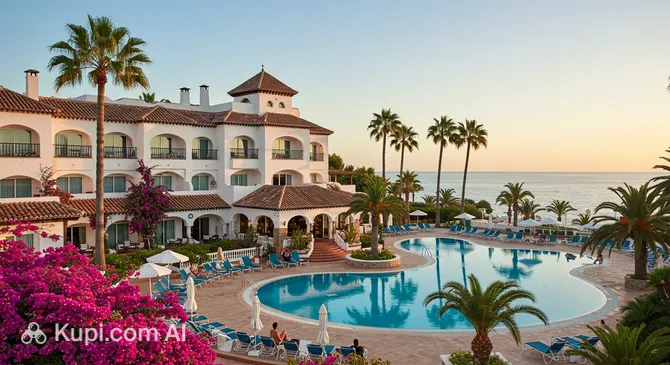
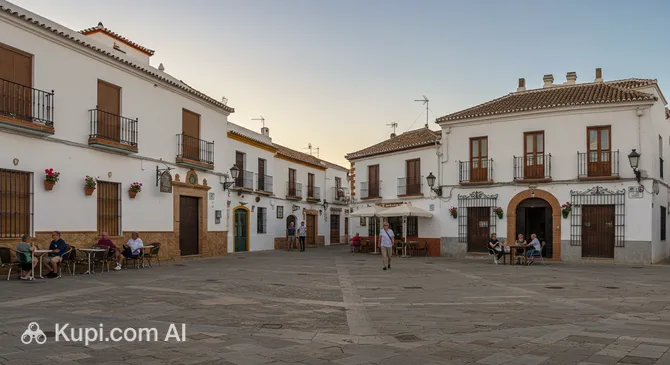
Estepona is a captivating coastal town that perfectly blends traditional Andalusian charm with modern resort amenities. Often referred to as the "Garden of the Costa del Sol," this vibrant destination is renowned for its meticulously maintained urban center, where streets are lined with colorful flower pots and lush vegetation. It offers a more relaxed and authentic atmosphere compared to some of its busier neighbors, making it an ideal retreat for families and couples alike.
Located in the province of Málaga in southern Spain, the city sits at the foot of the majestic Sierra Bermeja mountains, facing the Mediterranean Sea. This privileged geographical position grants it a unique microclimate with over 325 days of sunshine per year. With a population of approximately 74,000 residents, it maintains a lively yet welcoming community feel throughout the seasons.
Estepona. Illustration.
Source: Kupi.com AI
The history of Estepona is deeply reflected in its architecture and urban layout. The Old Town is a maze of white-washed houses and pedestrianized squares that invite visitors to lose themselves in a bygone era. Unlike many other coastal developments, the city has successfully preserved its pueblo character while embracing growth.
Travelers are drawn to several key attractions, most notably the stunning Orchidarium, a modern glass-domed botanical garden housing thousands of orchid species and a cascading waterfall. The city also boasts an extensive coastline, with the popular Playa de la Rada offering golden sands and clear waters right next to the town center. Whether you are strolling along the palm-lined promenade or enjoying tapas in the Plaza de las Flores, Estepona promises a delightful and memorable Spanish getaway.
Weather Overview
Estepona enjoys a privileged Mediterranean climate that makes it an attractive destination throughout the year. The town is known for its distinct seasonal patterns, offering visitors hot, dry summers and mild winters. During the peak summer months of July and August, average temperatures climb to around 25.6°C, with daily highs often reaching nearly 30°C. Rainfall is virtually non-existent during this time, guaranteeing long, sunny days perfect for enjoying the beaches.
In contrast, the winter season remains gentle compared to many other European destinations. January is typically the coolest month, with an average temperature of 11.2°C and lows rarely dropping below 8°C. While the weather remains relatively comfortable, this period sees an increase in precipitation, with December and January averaging about 9 wet days each. Spring and autumn offer a pleasant balance, with temperatures in May and October hovering around 18°C to 19°C.
For travelers planning their wardrobe and activities, checking the detailed weather in Estepona is highly recommended. Overall, you can expect warm, sun-filled summers with no rain and mild winters with occasional precipitation.
Average monthly temperature
Average monthly precipitation
Interesting Facts
Beyond the main attractions, Estepona holds many fascinating secrets that delight those who look closer. The city is full of artistic touches and geographical quirks that set it apart from typical resort towns.
Playa del Cristo. Illustration.
Source: Kupi.com AI
Traveler photos:
Open-Air Art Museum: The city has transformed its neighborhoods into an outdoor gallery through the "Route of Artistic Murals." Over 60 massive paintings adorn the facades of apartment buildings, including one of the largest vertical murals in Spain, turning simple walks into an immersive artistic experience.
A Unique Sunset Spot: Unlike most beaches on the Costa del Sol which face south, Playa del Cristo is located in a sheltered cove that faces west. This rare orientation protects the shore from strong winds and makes it one of the few spots in the region where you can watch the sun set directly into the sea.
Verses in the Streets: A stroll through the historic center reveals the charming "Poetry Route." Ceramic plaques displaying poems by acclaimed national and international authors are scattered throughout the old town, inviting pedestrians to enjoy literature while wandering among the flower-filled streets.
Asymmetrical Architecture: The local bullring stands out architecturally because of its unique elliptical and asymmetrical shape. Designed by Juan Mora Urbano, its irregular form was created to integrate with the sloping terrain and maximize spectator comfort, distinguishing it from traditional circular arenas.
How to Get There
Reaching this beautiful coastal destination is quite convenient, primarily due to its proximity to major transport hubs in the region. While there are no direct flights or trains into the town itself, excellent road connections make the final leg of the journey smooth. For a complete overview of all travel options, you can consult the detailed guide on how to get to Estepona.
The city of Estepona does not have its own airport, but you can fly into Malaga Airport (IATA: AGP) in the city of Malaga, which is about 64.6 km from Estepona. As the main international gateway to the Costa del Sol, it handles a vast number of connections from across Europe and beyond. The journey from the airport by taxi or rental car typically takes around 50 to 60 minutes via the AP-7 toll road. If you choose to travel by bus, expect the trip to take approximately 1 hour and 15 minutes to 1.5 hours, depending on the service and stops. Another nearby option is North Front Airport (IATA: GIB) in Gibraltar, located just 35.3 km away. By car, this drive takes roughly 45 minutes, though you should factor in extra time for border crossing procedures.
For clarity, here is a summary of the main airports:
Traveling by train is another popular choice for exploring Andalusia, although the city of Estepona does not have a railway station. The most convenient hub is the María Zambrano Station in the city of Malaga, situated about 71.8 km from Estepona. This major station connects the region with high-speed trains from Madrid and other Spanish cities. From there, a taxi ride to Estepona takes about one hour, while taking a bus from the adjacent bus station generally requires between 1.5 and 2 hours.
Below is a list of the nearest railway stations offering access to the area:
Estepona is filled with delightful spots that cater to nature lovers, beachgoers, and history enthusiasts alike. One of the city's most striking modern landmarks is the Orchidarium Estepona. Housed within three futuristic glass domes, this botanical garden is a visual masterpiece featuring a 30-meter high waterfall and a collection of over 1,300 species of orchids from around the world. It provides a lush, tropical escape right in the heart of the town and is a must-visit for anyone appreciating unique flora and architectural beauty.
Orchidarium Estepona. Illustration.
Source: Kupi.com AI
Traveler photos:
For those who enjoy scenic walks by the sea, the Estepona Promenade offers the perfect setting. Stretching along the coastline, this wide, palm-lined avenue is adorned with colorful flower beds and offers spectacular views across the Mediterranean, often reaching as far as Gibraltar and the African coast on clear days. It is a lively hub where locals and tourists gather to stroll, cycle, or simply relax on the benches to watch the sunrise.
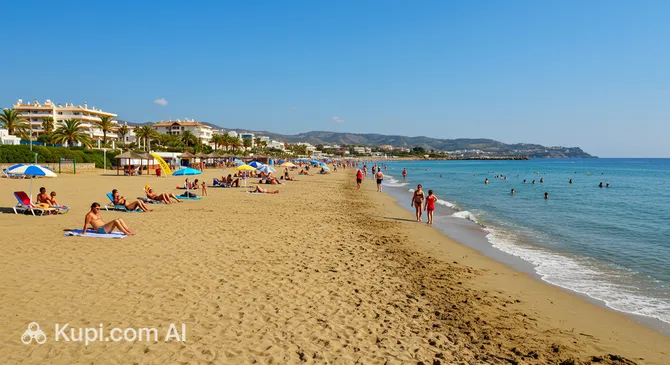
Just steps away from the main streets lies La Rada Beach, the town's most popular stretch of sand. Extending for over 2 kilometers, this Blue Flag beach is celebrated for its fine grey sand, clean waters, and excellent facilities, including showers, lifeguards, and numerous chiringuitos (beach bars). Its central location makes it incredibly convenient for a day of sunbathing followed by a meal in the town center without needing any transport.
La Rada Beach. Illustration.
Source: Kupi.com AI
Traveler photos:
To experience the authentic pulse of the city, a visit to Plaza Antonia Guerrero is highly recommended. Located in the pedestrianized historic center, this charming square is surrounded by traditional architecture and often serves as a venue for local events and cultural activities. It is a wonderful place to sit and soak in the atmosphere of daily life in Estepona, surrounded by the beautifully preserved streets that define the town's character.
Local Cuisine
The culinary scene in Estepona is a delightful reflection of its dual identity as a traditional fishing village and a fertile agricultural hub. Deeply rooted in the Mediterranean diet, the local gastronomy relies heavily on fresh ingredients, particularly seafood caught daily at the port and vegetables grown in the surrounding countryside. This combination creates flavors that are simple, robust, and incredibly healthy, making every meal a celebration of the region's natural bounty.
When exploring the local menus, the espeto de sardinas is an absolute must-try. These are skewers of fresh sardines seasoned with sea salt and cooked over an open wood fire, a tradition typically found at the beach bars known as chiringuitos. Another signature dish is ajoblanco, a cold and refreshing soup made from almonds, garlic, olive oil, and bread, often served with grapes or melon. Unlike the tomato-based gazpacho, this white soup is a specialty of the Málaga province and is perfect for cooling down on a warm Andalusian day. Visitors should also look out for pescaíto frito, a platter of various small fish lightly battered and fried to crispy perfection.
To accompany these savory dishes, the local drink of choice is often Tinto de Verano. This refreshing mixture of red wine and lemon soda is widely preferred by locals over the more tourist-famous Sangria, especially during the summer. For a post-meal treat, the region is famous for its sweet wines made from the Moscatel grape, produced in the nearby Sierras de Málaga. These wines are rich and aromatic, offering a perfect ending to a traditional feast.
Nido Beach Club & Restaurant. Illustration.
Source: Kupi.com AI
Traveler photos:
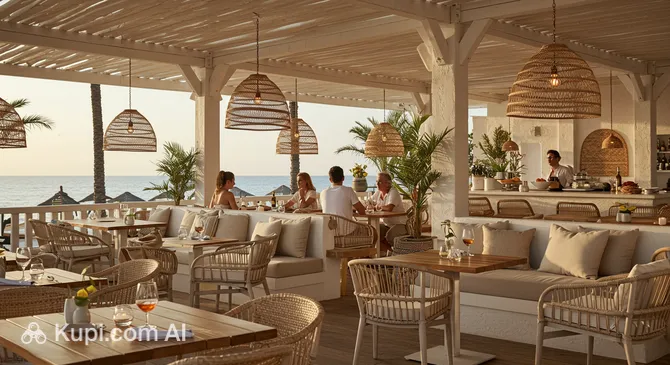
Dining in the city offers a variety of atmospheres, from the bustling tapas bars in the historic center to relaxed terraces by the sea. The narrow, flower-filled streets of the Old Town are perfect for "tapas hopping," where you can sample small plates of cured ham, cheese, and olives at different venues. For those seeking a more sophisticated seaside experience, places like Nido Beach Club & Restaurant provide an elegant setting to enjoy high-quality Mediterranean cuisine with stunning views of the coast. Whether eating street food or dining in a restaurant, the emphasis in Estepona is always on freshness and sharing good food with company.
Travel Tips
Welcome to Estepona, a destination where the relaxed Andalusian pace meets the vibrancy of the Costa del Sol. To help you settle into this "Garden of the Costa del Sol" and navigate its flower-filled streets with ease, we have compiled a set of practical guidelines for your stay.
Clothing and Footwear: The Mediterranean climate calls for light, breathable fabrics like linen or cotton during the hot summer months, along with a high-SPF sunscreen and a hat. If you are visiting in winter, bring layers and a light jacket, as evenings can be cool. Most importantly, pack comfortable walking shoes; the Old Town is a maze of charming but uneven cobblestone streets that are best explored on foot, and high heels can be challenging here.
Getting Around: Estepona’s historic center is largely pedestrianized and compact, making walking the best option. For longer distances or visiting nearby urbanizations, the local bus service (Avanza) is reliable. Taxis are readily available at designated ranks, and ride-hailing apps like Uber and Cabify operate in the area. If you rent a car to explore the wider Málaga province, be aware that street parking in the center is scarce; look for the convenient underground parking lots or the designated "low-cost" parking areas on the outskirts.
Money Matters: The official currency is the Euro (€). While credit and debit cards (Visa and Mastercard) are widely accepted in most restaurants and shops, it is wise to carry some cash for small purchases at local kiosks, traditional tapas bars, or the weekly markets. ATMs are plentiful. Tipping is not mandatory in Spain, but leaving a modest tip of around 5-10% for good service is a kind gesture that is appreciated.
Health and Safety: Estepona is a very safe town for tourists, but standard precautions against pickpocketing should be taken in crowded areas like the Wednesday market. Pharmacies are marked with a green cross; they typically operate during business hours, with at least one 24-hour "farmacia de guardia" available on a rotating basis. The general emergency number for police, fire, or ambulance is 112, and operators often speak English.
Communication: Spanish is the official language. Due to the large expatriate community and tourism, English is widely spoken in hotels, restaurants, and shops. However, learning a few basic phrases like "Hola" (Hello) and "Gracias" (Thank you) goes a long way in showing respect. Free Wi-Fi is often available in public squares and cafes, and EU citizens can roam freely; others can easily buy a prepaid SIM card at local phone shops.
Local Etiquette: Spaniards operate on a later schedule than many other Europeans. Lunch is typically the main meal, served between 2:00 PM and 4:00 PM, while dinner is rarely eaten before 8:30 PM or 9:00 PM. Many smaller shops still observe the "siesta" and close between 2:00 PM and 5:00 PM, reopening until late in the evening. When greeting locals, a handshake is standard, though friends often greet with two kisses on the cheeks.
What to Avoid: Do not walk around the town center, shops, or restaurants in swimwear or shirtless; this is considered disrespectful and is reserved strictly for the beach or pool areas. Also, avoid expecting full dinner service at 6:00 PM; most kitchens will be closed or only serving cold tapas at that hour.
Local Insight: If you plan to explore the famous "Route of Artistic Murals," stop by the Tourist Office in Plaza de las Flores first. They provide a specific map locating all the giant wall paintings, ensuring you don't miss the hidden masterpieces scattered across the neighborhoods away from the main tourist trail.
By keeping these tips in mind, you will be well-prepared to embrace the local lifestyle and enjoy everything this coastal gem has to offer. Whether you are hunting for murals or savoring a late-night dinner under the stars, Estepona is ready to welcome you with open arms.
Entertainment & Nightlife
While Estepona is often celebrated for its tranquil, family-friendly vibe during the day, the city transforms after sunset into a lively destination with entertainment options to suit every taste. The nightlife here is distinct from the high-octane glamour of nearby Puerto Banús; instead, it offers a more relaxed, authentic, and fun atmosphere where locals and visitors mingle freely. The action is primarily concentrated in two main areas: the charming historic center for early evening drinks and tapas, and the bustling Marina (Puerto Deportivo) for late-night revelry.
The Puerto Deportivo is undoubtedly the heartbeat of the city's nightlife. As midnight approaches, the marina comes alive with music pumping from various bars and clubs lining the waterfront. This area is pedestrian-friendly, allowing you to easily hop from one venue to another. For lovers of live music, Louie Louie is a legendary institution in the port. Known for its rock, blues, and soul concerts, it attracts a crowd that appreciates quality live performances and a great atmosphere. It is the perfect spot to enjoy a cold beer and dance to live bands before a DJ takes over later in the night.
Louie Louie. Illustration.
Source: Kupi.com AI
Traveler photos:
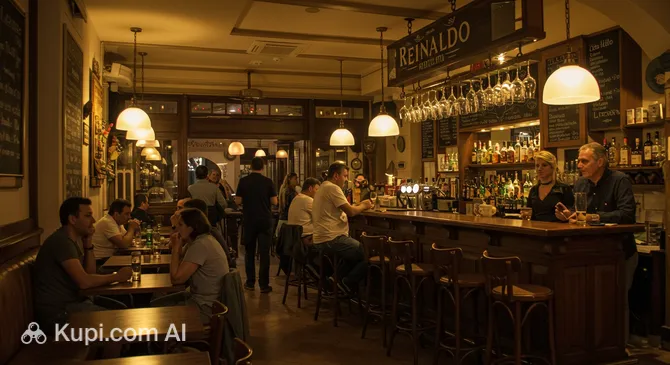
Another staple of the marina's scene is Reinaldo, a vibrant cocktail bar that has been serving patrons for decades. Famous for its mojitos and upbeat vibe, it is often the meeting point for groups starting their night. The outdoor terrace is ideal for people-watching during the warmer months, while the interior heats up with Latin and chart music as the night progresses. The dress code in the port is generally smart-casual; while you don't need to dress as formally as in Marbella, beachwear is not appropriate for the clubs.
If you prefer a more laid-back evening near the beach, Chanchalay Bar offers a relaxed setting with a bohemian touch, perfect for enjoying a sunset drink or a casual evening with friends. For those seeking a lively gastropub atmosphere, Tacos and Tequilas provides a fun mix of food and drinks that bridges the gap between dining and partying, making it a great pre-clubbing stop.
Reinaldo. Illustration.
Source: Kupi.com AI
Traveler photos:
Practical advice for enjoying Estepona at night includes timing your evening like a local. Bars typically start filling up around 11:00 PM, and nightclubs often don't get busy until 1:00 AM or 2:00 AM, staying open until dawn on weekends. Prices are generally reasonable, with beers costing around €3-€5 and cocktails between €7-€10. Getting around is safe and easy; the marina has a designated taxi rank at the main entrance, and ride-hailing apps are active. The town is considered very safe for night walks, though it is always wise to stick to well-lit main streets when returning to your accommodation.
Beyond the nightlife, Estepona offers diverse daytime entertainment. Cultural enthusiasts can visit the Felipe VI Auditorium, which hosts theater productions and concerts, or explore the unique museums located within the Bullring, such as the Ethnographic Museum and the Paleontological Museum. For families and adventure seekers, the nearby Selwo Aventura theme park offers a safari-like experience with animals in semi-wild conditions, providing a thrilling contrast to the beach routine.
Parks & Museums
Beyond its sun-drenched beaches, Estepona reveals a rich tapestry of green sanctuaries and cultural institutions that showcase the city's heritage and biodiversity. This destination, affectionately known as the "Garden of the Costa del Sol," offers visitors a chance to explore lush landscapes and delve into history through its well-curated museums and historical sites.
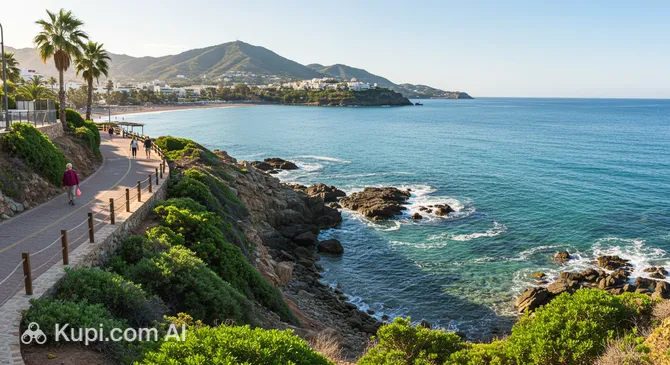
One of the most significant outdoor assets is the Estepona Coastal Path (Senda Litoral). This ambitious project connects the entire coastline through a series of wooden walkways and paved paths, allowing pedestrians and cyclists to travel along the sea edge for kilometers. It is more than just a walking route; it is a linear park where you can enjoy uninterrupted views of the Mediterranean, spot migratory seabirds, and access quieter stretches of the coast away from the urban center.
Estepona Coastal Path. Illustration.
Source: Kupi.com AI
Traveler photos:
For a different kind of natural experience, the Parque de los Pedregales (San Isidro Park) offers a retreat into the foothills of the Sierra Bermeja. Located a short drive inland, this expansive park is characterized by its rugged terrain, native pine forests, and spectacular views of the coast and Gibraltar. It serves as a popular spot for family picnics, hiking, and enjoying the tranquility of the Andalusian countryside.
Culturally, the city punches above its weight with several fascinating museums. The Archaeological Museum, situated in the old Town Hall at Plaza Blas Infante, is a highlight for history buffs. Its collection spans from the Paleolithic era to the Middle Ages, with the star exhibit being the "Venus of Estepona," a clay figurine dating back more than 5,000 years. The museum provides excellent context on the Roman and Moorish civilizations that once thrived here.
Another unique venue is the Paleontological Museum, located near the Bullring. It houses one of Europe's most important collections of Pliocene marine fossils. Visitors can marvel at the remains of ancient whales, sharks, and sea urchins that inhabited the area millions of years ago when the basin was submerged under the sea. It is particularly engaging for children and science enthusiasts.
Historical Landmarks
The streets of the historic center are dotted with architectural gems. The Castillo de San Luis is a must-see ruin of a 16th-century fortress built by the Catholic Monarchs to defend the coast against Berber pirates. Although only parts of the walls and towers remain, they stand as a testament to the town's strategic military past. Nearby, the Torre del Reloj (Clock Tower) rises above the rooftops; originally the minaret of a mosque, it was repurposed and now serves as an iconic symbol of the city.
Insider Tip
For a truly unique experience, visit the Corominas Necropolis Interpretation Center located within the Parque de los Pedregales. This underground museum is built inside a modern tumulus and preserves a 5,000-year-old megalithic burial site found nearby. The atmospheric lighting and the preservation of the dolmens in their original arrangement create a mystical journey into prehistory that few tourists know about.
Getting Around
Public transport in Estepona is relatively simple and straightforward, primarily relying on a bus network, as the city does not have a metro, tram, or train system. For most visitors staying within the historic center or along the main promenade, the town is compact enough to be explored comfortably on foot. However, to reach the outer residential areas, nearby urbanizations, or neighboring coastal towns, the bus service is the most practical option.
The local bus system is operated by the company Avanza (often still referred to locally as "Portillo"). There are two main urban lines that circulate within the municipality. Line 1 (L-1) is a circular route that connects the eastern and western parts of the town, passing key locations such as the health center, schools, and major avenues. Line 2 (L-2) serves the Mar y Sierra area and connects it with the center. These buses are generally modern, air-conditioned, and comfortable, offering a reliable way to navigate the city's expansion.
Regarding payment, you have two main choices. You can purchase a single ticket directly from the driver when boarding the bus. It is important to carry cash, specifically coins or small bills (usually nothing larger than €5 or €10), as drivers often cannot change large banknotes. The price for a single urban trip is typically around €1.20 to €1.30.
For those planning to use the bus frequently or travel to nearby cities like Marbella or Malaga, it is highly recommended to obtain the Consorcio de Transporte Metropolitano travel card. This green wallet-sized card offers significant discounts on fares compared to single tickets and allows for transfers between lines. You cannot buy this card on the bus; instead, it must be purchased at authorized tobacco shops (estancos) or kiosks within the city. To use it, simply validate the card by tapping it on the reader next to the driver when you board.
Taxis are another convenient alternative, especially for late-night travel or when carrying luggage. Official taxis are white, display a green light on the roof when available, and operate on a taximeter system. There are several designated taxi ranks (paradas de taxi) located at strategic points such as the Avenida Juan Carlos I and the port area. Ride-hailing apps like Uber and Cabify also operate in the area, offering the advantage of fixed prices and card payments via smartphone.
Given the city's flat coastal geography, cycling has become an increasingly popular way to get around. The extension of the coastal path and the promenade makes it easy to bike from one end of the town to the other while enjoying sea views. There are several private rental shops offering both standard and electric bikes. While there is no public bike-sharing scheme, the infrastructure for cyclists continues to improve.
Finally, keep in mind that bus schedules can vary by season, with increased frequency during the summer months and reduced service on Sundays and holidays. It is advisable to check the current timetables at the bus stops or on the official Avanza website. While there are no historic trams or cable cars, the focus here is on efficiency and road-based connectivity, ensuring you can easily reach the beaches, the marina, and the charming old town.
Accommodation
Where to Stay:
Accommodation in Estepona is diverse and high-quality, catering to a wide spectrum of preferences ranging from budget-conscious backpackers to luxury travelers. The city offers a balanced mix of traditional guesthouses (hostals), modern mid-range hotels, luxury beachfront resorts, and a vast selection of self-catering apartments. Unlike some of the more commercialized parts of the Costa del Sol, Estepona maintains a charm that is reflected in its hospitality sector, often blending modern amenities with Andalusian character.
When choosing where to stay, the location largely depends on the type of holiday you desire. The Historic Center (Old Town) is ideal for those who want to be immersed in the local culture, surrounded by flower-filled streets, tapas bars, and plazas, all within walking distance of the beach. For visitors seeking sea views and immediate access to the sand, the properties along the Paseo Marítimo are perfect. Meanwhile, the Marina area is excellent for those who want to be close to the nightlife and Sunday market. On the outskirts of the town, particularly towards the "New Golden Mile," you will find larger resort-style hotels that offer extensive facilities, golf courses, and spas.
A notable example of the accommodation available in the area is Hotel Bahía. Located conveniently to offer easy access to both the beach and the town's amenities, it represents the comfortable and welcoming style of hospitality that the region is known for. Establishments like this often provide a relaxing base for exploring the coast while ensuring a high standard of service.
Hotel Bahía. Illustration.
Source: Kupi.com AI
Traveler photos:
Price Range and Booking
Prices in Estepona can vary significantly depending on the season and the type of property. Budget options and small guesthouses typically range from €50 to €90 per night. Mid-range hotels usually cost between €100 and €180, while luxury resorts and high-end rentals can exceed €250 per night, especially in summer. Booking is most commonly done through major online platforms like Booking.com or Airbnb, though many local hotels offer better rates or perks if you book directly through their websites.
Booking Tip: Estepona is a highly sought-after destination, particularly during the peak summer months of July and August. To secure the best rates and availability, it is highly recommended to book your accommodation at least 3 to 4 months in advance. If you plan to visit during Easter week (Semana Santa) or the local fair in July, booking even earlier is advisable as the town reaches full capacity.
Nearby Cities
For those looking to explore the surroundings, Estepona serves as an excellent base for day trips to several interesting nearby locations:
Located just a short drive along the coast, Marbella is a favorite destination that combines luxury with history. While it is famous for the glitz and glamour of Puerto Banús, the city also boasts a beautifully preserved Old Town (Casco Antiguo). Here, visitors can wander through narrow, cobblestone streets lined with flower pots and enjoy traditional Andalusian cuisine in the charming Plaza de los Naranjos.
For a different experience, Mijas offers the quintessential charm of a "pueblo blanco" (white village). Perched high in the mountains, this town provides breathtaking panoramic views of the Mediterranean coastline. It is well-known for its oval-shaped bullring, colorful pottery workshops, and the unique donkey taxis that have become a symbol of the village, making it a delightful spot for a relaxed afternoon.
Families often enjoy a visit to Benalmadena, which features a wide array of attractions. The town is home to the stunning Colomares Castle, a monument dedicated to Christopher Columbus, and the expansive Paloma Park. Additionally, a cable car ride to the summit of Mount Calamorro offers spectacular vistas, while the lively marina provides plenty of dining and entertainment options.
These nearby destinations offer a glimpse into the diverse culture and landscapes of the region.
Shopping & Souvenirs
Shopping:
Shopping in Estepona is a delightful experience that mirrors the town's relaxed and authentic character. Unlike the massive commercial centers found in larger cities, the retail scene here focuses on independent boutiques, family-run businesses, and charming local stores. Visitors can expect a pleasant stroll through pedestrianized streets where fashion, craftsmanship, and gastronomy blend seamlessly, offering everything from high-quality leather goods to traditional Andalusian souvenirs.
The heart of the shopping district is located in the historic center, particularly along Calle Terraza and Calle Real. These bustling thoroughfares are lined with a variety of shops selling clothing, shoes, accessories, and jewelry. As you wander through these flower-filled lanes, you will find yourself near Plaza Antonia Guerrero, a lively square that serves as a central point for the commercial area. The surrounding streets are perfect for window shopping, allowing you to discover unique items while enjoying the picturesque architecture of the Old Town.
Plaza Antonia Guerrero. Illustration.
Source: Kupi.com AI
Traveler photos:
For those accustomed to large department stores, it is important to note that Estepona does not have a major shopping mall within the city center. While there are smaller commercial areas and supermarkets on the outskirts, serious shoppers looking for international high-street chains often travel to the nearby shopping complexes in Marbella or Algeciras. However, the town center offers plenty of variety for daily needs and holiday treats without the overwhelming crowds of a mega-mall.
Markets are a quintessential part of the local lifestyle and a major attraction for tourists. The most popular is the Wednesday Market (Mercadillo), held at the fairgrounds, where hundreds of stalls sell everything from fresh fruit and vegetables to clothes and household goods. On Sundays, the focus shifts to the Marina (Puerto Deportivo), which hosts a vibrant market dedicated to crafts, leather bags, jewelry, and gifts. This market is an excellent place to find handmade treasures while enjoying views of the boats.
When looking for souvenirs to take home, traditional Andalusian products are the best choice. The region is famous for its high-quality leather work, so look for belts, bags, and wallets. Ceramics are another local specialty, with colorful bowls and plates making for beautiful gifts. Foodies should consider buying locally produced olive oil, wines from the Málaga mountains, or gourmet canned goods, which can be found in specialized delicatessens scattered around the town.
Store opening hours in Estepona generally follow the traditional Spanish schedule. Shops typically open around 10:00 AM and close for the midday break (siesta) between 1:30 PM and 5:00 PM, reopening until 8:30 PM or 9:00 PM. During the summer months, many stores stay open even later to accommodate the evening crowds. Payment is convenient, with major credit and debit cards accepted almost everywhere, although carrying some cash is advisable for small purchases at markets or kiosks.
Travelers residing outside the European Union may be eligible for a VAT refund (Tax-Free shopping) on purchases of goods to be taken home. Look for the "Tax Free" sign in shop windows and ask the merchant for the necessary refund forms at the time of purchase. This system allows you to reclaim a percentage of the tax paid upon leaving the EU, making your shopping experience even more rewarding.