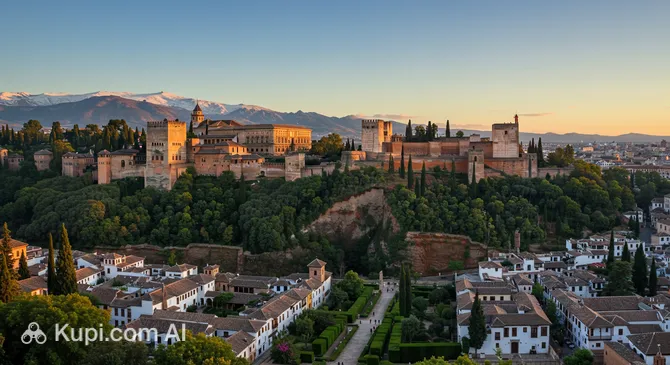
Granada is one of the most enchanting destinations in the Andalusia region of Spain. It is a place where diverse cultures have intertwined for centuries, creating a unique atmosphere that captivates every visitor. The city is renowned for its grand architecture, vibrant street life, and the breathtaking backdrop of snow-capped peaks that frame its historic center.
Granada. Illustration.
Source: Kupi.com AI
Located at the foot of the majestic Sierra Nevada mountains, the city sits at the confluence of four rivers, providing a stunning natural setting. With a population of approximately 232,000, Granada offers the energy of a lively university city while maintaining a close connection to its scenic surroundings. The climate here is generally continental, with hot summers and crisp, cool winters that make it a year-round destination.
The history of Granada is most famously reflected in the Alhambra, a magnificent hilltop fortress and palace complex that stands as a testament to the city's Moorish past. Beyond this iconic landmark, visitors can explore the winding, narrow streets of the Albayzín district, a UNESCO World Heritage site that preserves the charm of the medieval era and offers spectacular views of the city below.
Whether you are drawn by the stunning Islamic architecture, the famous free tapas culture, or the proximity to both ski resorts and the Mediterranean coast, Granada promises an unforgettable travel experience. It is a city that invites you to linger, explore, and immerse yourself in its timeless beauty.
Weather Overview
Granada experiences a continental Mediterranean climate, characterized by distinct seasonal contrast due to its altitude and inland location. The weather in Granada typically ensures plenty of sunshine, though visitors should be prepared for significant temperature shifts depending on the time of year. Generally, you can expect hot, dry summers and cool, crisp winters, with precipitation concentrating mostly in the transitional seasons.
Summer is the hottest period, particularly in July and August, when average temperatures reach approximately 26°C and daily highs frequently exceed 32°C. These months are extremely dry, often seeing zero millimeters of rainfall and only 2 to 3 wet days, making them ideal for sun-seekers, though the midday heat can be intense.
Winters are significantly colder, with January seeing average temperatures drop to 6.5°C and nighttime lows falling to around 1.5°C. While winter days are often clear, March tends to be the wettest month, featuring up to 13 rainy days. Spring and autumn offer milder averages between 10°C and 20°C, providing comfortable conditions for exploring the city's outdoor attractions.
Average monthly temperature
Average monthly precipitation
Interesting Facts
Beyond the world-famous palaces and historic districts, Granada holds many fascinating secrets and legends that often go unnoticed by the casual observer. Here are some intriguing details to look out for during your visit to this Andalusian gem.
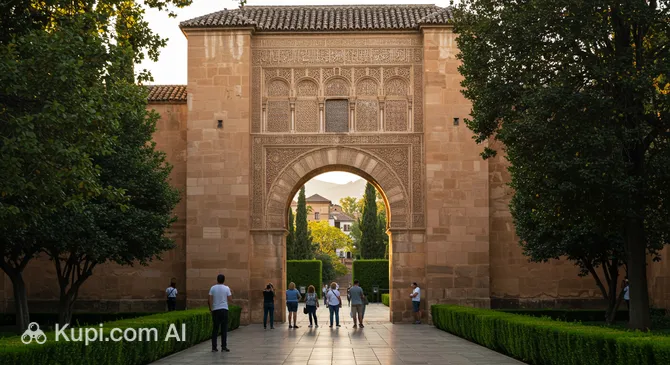
Gate of Justice. Illustration.
Source: Kupi.com AI
Traveler photos:
The Gate of Justice, the grand entrance to the Alhambra, features two mysterious symbols carved into its arches: a hand and a key. According to an ancient legend, the day the hand reaches down to grasp the key, the fortress will fall and the world will come to an end.
Granada literally translates to "pomegranate" in Spanish, and the city takes its name seriously. As you walk through the streets, keep an eye out for the fruit's symbol everywhere—it appears on the city's coat of arms, is painted on ceramic street signs, and is even carved into the top of stone bollards throughout the town.
The Palace of Charles V is not just an architectural marvel but also an acoustic wonder. Its circular courtyard is designed in such a way that if two people stand at diagonally opposite corners, they can whisper to the wall and hear each other perfectly, a phenomenon known as the "whispering gallery."
In the Sacromonte neighborhood, many residents still live in traditional cave houses carved directly into the hillside. This unique way of life has existed for centuries, and you can explore the history of these troglodyte dwellings at the Sacromonte Caves Museum.
How to Get There
Reaching this Andalusian gem is quite convenient, with several transport options connecting it to the rest of Spain and Europe. Whether you prefer flying directly or taking a scenic train ride, you can find detailed information on all ways to reach the city to plan your journey effectively.
The most direct way to arrive is via Federico García Lorca Granada-Jaén Airport (IATA: GRX), commonly known as Granada Airport. It is located approximately 16 km from the city center. While it is a smaller facility compared to other Spanish hubs, it handles both domestic and some international flights. A taxi or bus ride from here to the heart of Granada typically takes about 45 minutes. For travelers seeking more flight connections, the Málaga-Costa del Sol Airport (IATA: AGP) is a major international gateway. Located in the city of Malaga, Malaga Airport is about 98 km away. It serves millions of passengers annually and offers excellent bus and train links to Granada, with the transfer taking approximately 2 hours.
For clarity, here is a summary of the main airports:
Travelers can also arrive comfortably by train. The city is served by the Granada Railway Station, which is conveniently situated just 0.7 km from the city center, making it very easy to reach your accommodation upon arrival. This station connects Granada to major Spanish cities, including Madrid and Barcelona, often via high-speed AVE trains. If you are coming from the Costa del Sol, you might also pass through María Zambrano Station in Malaga, which is a significant regional hub located about 90 km away.
Below is a list of relevant railway stations in the region:
Granada is a city where history comes alive, offering a stunning array of monuments that showcase its rich Moorish and Christian heritage. From hilltop fortresses to Renaissance masterpieces, the city's landmarks are visually spectacular and deeply significant. Exploring these sites provides a window into the diverse cultures that have shaped Andalusia over the centuries.
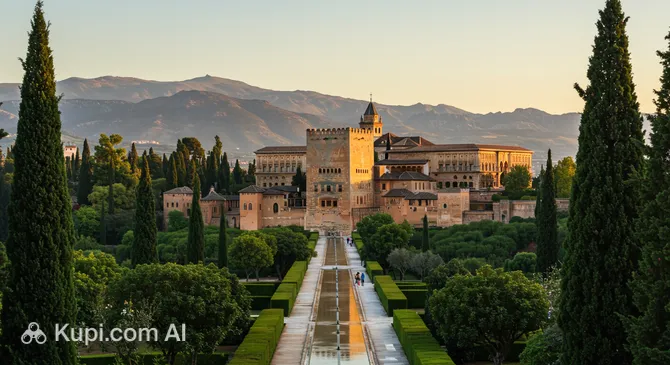
Undoubtedly the most iconic site is the Alhambra, a sprawling palace and fortress complex that dominates the city skyline. Constructed by the Nasrid dynasty, it is a masterpiece of Islamic architecture, featuring intricate stucco work, beautiful courtyards, and reflecting pools. Visitors can wander through the royal chambers and defensive towers, immersing themselves in the luxury of the medieval sultans. It is essential to book tickets well in advance, as this UNESCO World Heritage site is one of the most visited attractions in Spain.
Alhambra. Illustration.
Source: Kupi.com AI
Traveler photos:
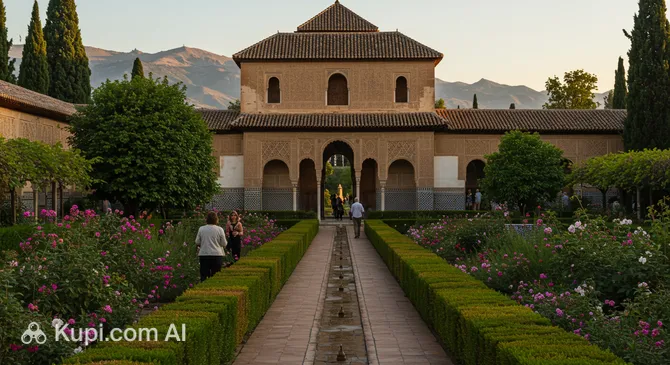
Just adjacent to the fortress lies the Generalife, which served as the summer palace and country estate for the Nasrid rulers. Famous for its lush, terraced gardens, fountains, and ornamental flowerbeds, it offers a peaceful retreat from the bustle of the main palace complex. The interplay of water and greenery here was designed to simulate paradise on earth, making it a perfect spot for a relaxing stroll with magnificent views of the Albayzín district across the valley.
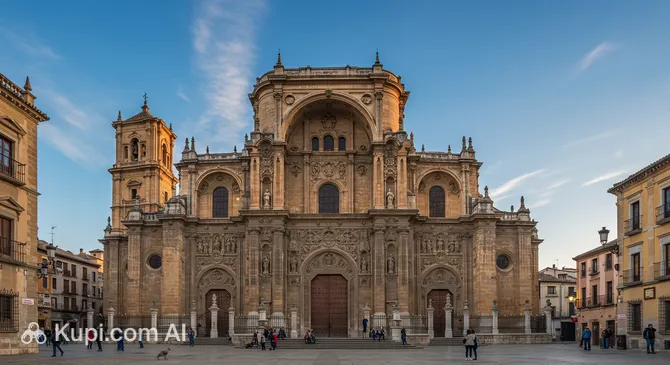
In the heart of the city stands the imposing Granada Cathedral, a striking example of Spanish Renaissance architecture. Built over the site of the former Great Mosque, its vast interior features grand white columns and gold-leaf details that contrast sharply with the intimate style of the Moorish palaces. It is a testament to the Christian reconquest and serves as a monumental focal point in the city center.
Granada Cathedral. Illustration.
Source: Kupi.com AI
Traveler photos:
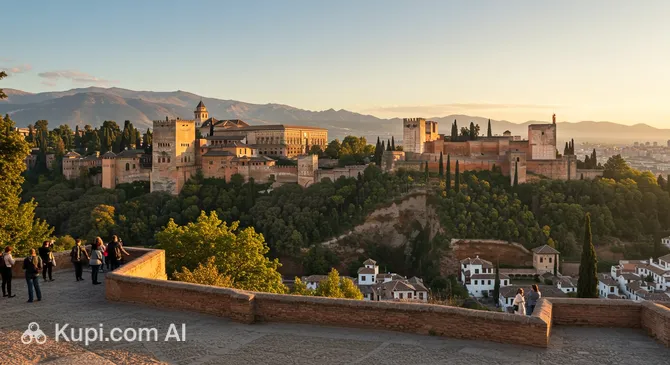
For those seeking the perfect panoramic photo, the San Nicolás Viewpoint is an absolute must-visit. Located high in the winding streets of the Albayzín neighborhood, this plaza offers the most famous view of the Alhambra against the dramatic backdrop of the Sierra Nevada mountains. It is particularly magical at sunset, when locals and tourists gather to watch the ancient walls turn red and gold in the fading light, often accompanied by the sounds of street musicians playing flamenco guitar.
San Nicolás Viewpoint. Illustration.
Source: Kupi.com AI
Traveler photos:
Finally, history enthusiasts should not miss the Royal Chapel of Granada, located right next to the cathedral. This Isabelline Gothic mausoleum holds the remains of the Catholic Monarchs, Queen Isabella I and King Ferdinand II, who were pivotal figures in Spanish history. The chapel houses their grand marble tombs as well as a fascinating collection of their personal items, including Queen Isabella's crown and art collection.
Local Cuisine
Local Cuisine:
The culinary scene in Granada is legendary, not just for the quality of its food but for its unique serving traditions. This is one of the few remaining cities in Spain where the culture of free tapas is strictly upheld. When you order a drink—whether it is a glass of wine, a beer, or a soft drink—you are almost invariably served a complimentary small plate of food. This turns dining into a dynamic social event known as "ir de tapas," where locals and visitors hop from bar to bar, sampling different specialties with each round.
Among the must-try local dishes is Habas con Jamón, a simple yet flavorful combination of tender broad beans sautéed with high-quality cured ham, often topped with a fried egg. Another refreshing classic is Remojón Granadino, a salad that reflects the region's Moorish heritage, made with oranges, flaked salt cod, black olives, and spring onions. For those with a hearty appetite, the Plato Alpujarreño is a mountain staple featuring potatoes, fried eggs, peppers, ham, and blood sausage, perfect for refueling after a day of exploring.
No meal in Granada is complete without a sweet finish. The city is famous for Piononos, small sponge cakes rolled into a cylinder, soaked in syrup, and topped with toasted cream. These treats originated in the nearby town of Santa Fe and are a favorite accompaniment to coffee. To wash it all down, locals often choose Cerveza Alhambra, the city's beloved local beer, or a refreshing Tinto de Verano, a mix of red wine and lemon soda that is especially popular during the warm summer months.
La Sitarilla. Illustration.
Source: Kupi.com AI
Traveler photos:
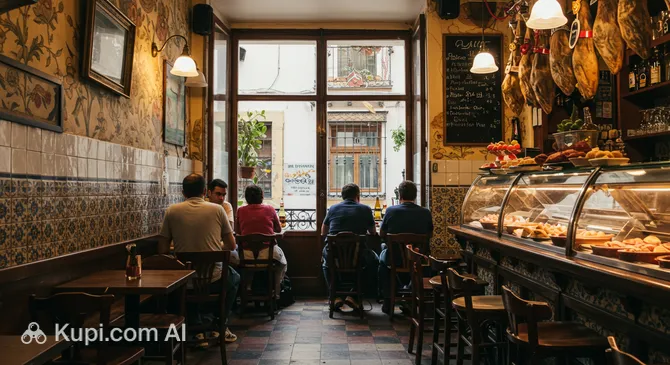
To experience the authentic atmosphere of Granada's tapas culture, you can visit traditional establishments scattered throughout the city center. La Sitarilla is a well-known spot that captures the essence of local dining with its generous portions and lively vibe. For those who appreciate savory roasted ham, Ávila Tapas II is another celebrated bar where the food and ambiance offer a genuine taste of Andalusian hospitality.
Travel Tips
Visiting Granada is a dream for many travelers, but the city's unique geography and distinct cultural rhythms require a bit of insider knowledge to navigate smoothly. Here are some practical tips to help you prepare for your trip and make the most of your adventure in this Moorish jewel of Andalusia.
Clothing and Gear: Comfortable walking shoes are non-negotiable here; the historic Albayzín and Sacromonte districts are famous for their steep slopes and cobblestone streets that are unforgiving to heels or flimsy sandals. If you visit in summer, bring a hat and high-SPF sunscreen to protect against the intense Andalusian sun, but in winter, pack a warm coat and layers, as temperatures drop significantly at night due to the proximity of the Sierra Nevada mountains.
Transportation: The city center is compact and best explored on foot, but for the hilly areas, use the bright red microbuses (Alhambra Bus) which are specifically designed to navigate the narrow, winding alleys. Taxis are affordable and easy to hail, but avoid renting a car for city driving; access to the historic center is restricted for non-residents, and finding parking is both difficult and expensive.
Finances: The local currency is the Euro (€). While credit and debit cards are widely accepted in most restaurants and shops, it is highly recommended to carry some cash for small purchases in traditional tapas bars or for buying souvenirs. Tipping is not mandatory in Spain, but leaving small change or rounding up the bill is a polite and appreciated gesture for good service.
Health and Safety: Granada is generally a very safe city, but as in any popular tourist destination, you should keep a close eye on your belongings in crowded areas like Plaza Nueva or on buses to avoid pickpockets. Pharmacies are marked with a green cross, and you can always find a 24-hour "Farmacia de Guardia" for emergencies; additionally, the tap water is safe, clean, and delicious to drink.
Communication: Spanish is the primary language, and while English is spoken at major attractions and hotels, it is less common in authentic local bars and smaller shops. downloading a translation app is useful, and locals will appreciate it if you use basic phrases like "Hola" (Hello), "Gracias" (Thank you), and "Por favor" (Please).
Local Etiquette: Embrace the local schedule, which means dining much later than you might be used to; lunch is typically served between 2:00 PM and 4:00 PM, and dinner rarely starts before 8:30 PM. When enjoying the free tapas culture, remember that the tapa is a gift from the house; it is polite to accept whatever is served rather than demanding a specific dish, unless you are ordering from the menu.
What to Avoid: Be cautious near the Cathedral and main tourist paths if women offer you a sprig of rosemary "for luck." This is a common tourist trap that often leads to aggressive demands for money or serves as a distraction for pickpockets, so it is best to politely decline and keep walking.
Additional Tip: If the Alhambra is on your itinerary, you must book your tickets weeks or even months in advance. It is one of the most visited monuments in Europe, and tickets sell out extremely quickly; relying on buying them on the day of your visit is risky and often results in disappointment.
Armed with these practical tips, you are ready to immerse yourself in the relaxed yet vibrant atmosphere of Granada. Whether you are climbing the hills for a sunset view or hopping between tapas bars, a little preparation ensures your experience will be as magical as the city itself.
Entertainment & Nightlife
Granada transforms into a vibrant hub of activity as the sun sets, fueled largely by its massive university population and the Andalusian love for socializing late into the night. The city's nightlife is diverse, ranging from intimate flamenco venues to pulsating electronic clubs, ensuring there is something for every type of traveler. The energy here is contagious, often starting with the traditional tapas crawl and extending well into the early morning hours.
For those seeking a lively atmosphere, the area around Calle Pedro Antonio de Alarcón is the epicenter of student nightlife. This district is packed with affordable pubs, rock bars, and casual eateries where the crowd is young and the mood is energetic. In contrast, Calle Elvira and the lower parts of the Albayzín offer a more bohemian vibe, with tea houses turning into cocktail spots and bars playing everything from reggae to jazz.
If you are looking to experience the soul of Andalusia, an evening of flamenco is essential. Casa Ana Flamenco Tablao provides an authentic setting to witness the passion and intensity of this art form, making it a perfect start to a cultural night out. For a more modern night out involving live music and DJ sets, Sala El Tren is a legendary venue known for its eclectic programming, ranging from rock concerts to drum and bass nights.
Sala El Tren. Illustration.
Source: Kupi.com AI
Traveler photos:
Those who prefer a classic pub atmosphere with good music and a wide selection of drinks should head to Continental Café Pub Granada. It is a popular meeting point for both locals and visitors. Another excellent spot for a relaxed evening drink is La Telefónica, which offers a cozy environment to unwind after a day of sightseeing.
Timing is everything in Granada. The night starts late; locals typically finish dinner around 11:00 PM, and clubs often do not fill up until 2:00 AM or later. Dress codes are generally casual and relaxed, reflecting the city's student-friendly nature, though some upscale clubs may require smarter attire. Prices are quite reasonable compared to other major Spanish cities, with beer and mixed drinks being very affordable.
Regarding safety, the city center is generally safe for night walks, especially where there are crowds. However, the winding streets of the Albayzín can become disorienting and dimly lit late at night. It is advisable to take a taxi back to your accommodation if you are staying in the upper parts of the historic districts. Taxis are white with a green diagonal stripe on the front door and can be easily hailed or called via phone.
While the nightlife is thrilling, Granada offers plenty of daytime entertainment as well. Families and science enthusiasts will find the Science Park to be a fascinating destination with interactive exhibits and a planetarium. For nature lovers, the Biodome Granada offers an immersive experience into various ecosystems, making for a perfect educational break from historical sightseeing.
Parks & Museums
While the monumental architecture of the Alhambra often takes center stage, Granada offers a refreshing balance of tranquil green spaces and diverse museums that delve deeper into its scientific and cultural heritage. Beyond the famous palace gardens, travelers can discover romantic parks, interactive educational centers, and unique ethnographic sites that reveal the city's multifaceted character.
For a peaceful escape just steps away from the Alhambra complex, Carmen de los Mártires is a true hidden gem. This 19th-century estate features a romantic mix of French and English-style gardens, complete with shaded walkways, ornamental fountains, and a picturesque lake. It is a delightful place to wander away from the crowds, where you might even encounter peacocks roaming freely among the lush vegetation.
Carmen de los Mártires. Illustration.
Source: Kupi.com AI
Traveler photos:
Nature lovers willing to tackle a steep hike will be rewarded at the San Miguel Alto Viewpoint. Located at the highest point of the city near a secluded hermitage, this natural area offers a more rugged and authentic experience compared to the busy urban viewpoints. It is an exceptional spot to watch the sunset, providing a sweeping panorama that encompasses the Albayzín, the Alhambra, and the sprawling city below.
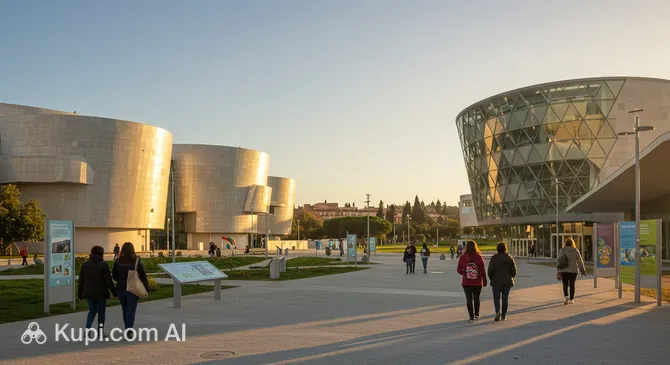
In terms of cultural institutions, the Science Park stands out as Andalusia's premier interactive museum. Spanning over 70,000 square meters, it offers a fascinating journey through the human body, the universe, and the laws of physics. It is an ideal destination for curious minds of all ages, featuring a digital planetarium and an observation tower that offers great views of the Sierra Nevada.
Science Park. Illustration.
Source: Kupi.com AI
Traveler photos:
To understand the unique history of Granada's cave-dwelling communities, a visit to the Sacromonte Caves Museum is essential. Located in the Barranco de los Negros, this ethnographic museum consists of several preserved caves that showcase the traditional lifestyle, crafts, and history of the inhabitants who lived here for centuries. It provides an intimate look at the cultural roots of the Sacromonte district.
Another significant site is the Sacromonte Abbey, a historic religious complex located on Mount Valparaíso. It houses a museum featuring religious art, tapestries, and the famous "Lead Books," which are tied to the city's legends of martyrdom. The journey to the abbey itself is a pilgrimage through history, offering a quiet and spiritual atmosphere.
For a glimpse into the daily life of the ancient Moorish city, seek out El Bañuelo. These 11th-century Arab baths are among the oldest and best-preserved in Spain, hidden beneath a private house, featuring iconic star-shaped skylights in the vaulted ceilings. Additionally, nature enthusiasts visiting the Science Park should not miss the Biodome Granada, an immersive indoor zoo that recreates various tropical habitats and focuses on biodiversity conservation.
Getting Around
Navigating Granada is straightforward and convenient, thanks to an efficient public transport network designed to handle both the modern city avenues and the ancient, winding streets of the historic quarters. The system is primarily composed of an extensive bus network and a single light rail line, often referred to as the Metro, which connects the city center with the metropolitan area and key transport hubs.
The bus system, operated by Transportes Rober, is the most useful mode of travel for tourists. It is divided into two main types: the standard large red buses that serve the wider avenues, and the specialized red microbuses, known as the "Alhambra Bus." These smaller vehicles are essential for reaching the city's top attractions, as they are specifically designed to maneuver through the narrow, steep alleys of the Albayzín and Sacromonte districts. Look for lines C30 and C32 to reach the Alhambra, and C31 and C34 for the Albayzín.
The Granada Metro is a modern light rail system that runs partially underground in the city center and above ground in the outskirts. While it is less critical for exploring the immediate historic core, it is very practical for traveling between the main bus station, the railway station, and the city center. It is clean, fast, and punctual, making it a great option for longer distances across the city.
For payment, purchasing a single ticket for every trip can be costly. Instead, visitors are highly advised to buy a rechargeable travel card known as the "Credibús." This card significantly reduces the cost per journey and can be shared between multiple people; you simply tap it once for each passenger upon boarding. You can purchase and recharge these cards at tobacco shops (estancos), newsstands, and on the buses themselves, though it is often easier to have it ready before boarding.
When using the bus, always enter through the front door and validate your ticket or tap your card on the reader near the driver. If you are using the Metro, you must purchase a ticket or use your travel card at the vending machines located at every station before boarding. Public transport generally operates from around 6:00 AM until 11:00 PM or midnight, with the Metro extending its service hours on Fridays, Saturdays, and before public holidays.
Taxis are another popular and affordable alternative in Granada. They are easily recognizable by their white color with a diagonal green stripe on the front doors. You can hail them on the street if the green light on the roof is on, or find them at designated ranks throughout the city. Ride-hailing apps are also available but are less dominant than traditional taxis. Additionally, the "Granada City Tour" tourist train offers a hop-on, hop-off service that loops around the major monuments, providing a comfortable way to tackle the city's steep hills without the physical exertion.
Accommodation
Accommodation:
Finding the perfect place to stay in Granada is part of the experience, as the city offers a diverse range of accommodation options that cater to every budget and travel style. From charming boutique hotels housed in restored Moorish palaces to modern luxury resorts and budget-friendly hostels, there is something for everyone. Whether you prefer the buzzing atmosphere of the city center or the romantic, winding streets of the historic quarters, the variety of lodgings ensures a comfortable visit.
For travelers who want to be in the heart of the action, the City Center (Centro) is the most convenient area. Staying here places you within walking distance of the Cathedral, major shopping streets, and the famous tapas bars. Alternatively, the Albayzín district offers a magical, historic atmosphere with stunning views of the Alhambra, though visitors should be mindful that its steep, cobbled streets can be challenging with heavy luggage. The Realejo, the old Jewish quarter, is another fantastic option, blending local charm with a trendy vibe and easy access to the Alhambra complex.
If you are looking for a more luxurious or relaxing stay, the city boasts several high-end establishments that offer premium amenities. The Granada Palace Hotel is a notable option for those seeking a resort-style experience with spacious rooms and elegant architecture. Similarly, the Tandal Urban Resort provides a sophisticated retreat, combining modern comfort with the unique character of the region.
Granada Palace Hotel. Illustration.
Source: Kupi.com AI
Traveler photos:
Accommodation prices in Granada are generally reasonable compared to other major European destinations, though they can fluctuate significantly depending on the season. Budget travelers can find affordable hostels and guesthouses, while mid-range and luxury options offer excellent value for money. It is highly recommended to book your accommodation well in advance, especially if you plan to visit during peak times such as Semana Santa (Holy Week) or the spring season, when the city is busiest. Most reservations can be easily made via major online booking platforms, which often offer flexible cancellation policies.
Nearby Cities
For those looking to explore the surroundings, Granada serves as an excellent base for day trips to several interesting nearby locations. The region offers a diverse mix of coastal retreats and historic inland towns, allowing travelers to experience the broader cultural and natural beauty of Andalusia within just a short drive.
One of the most popular escapes is Almuñécar, located on the stunning Costa Tropical. This coastal town combines relaxing beaches with a rich historical heritage, featuring the imposing Castle of San Miguel and ancient Roman aqueducts. It is an ideal spot for those wanting to mix seaside leisure with cultural sightseeing. Nearby, Motril serves as the main commercial hub of the coast. Known for its port and sugar cane history, it offers access to wide beaches and delicious fresh seafood, making it a worthwhile stop for gastronomy lovers.
Heading inland, Priego de Córdoba is a hidden gem often referred to as the "City of Water" due to its numerous natural springs and fountains. It is renowned for its spectacular Baroque architecture and the charming Barrio de la Villa, a maze of flower-filled white streets that rivals the beauty of Granada's own Albayzín. This town provides a peaceful and picturesque contrast to the bustling coastal resorts.
City
Population
Distance
Maracena
22 358
4 km
Huetor Vega
12 120
5 km
Armilla
24 629
5 km
Churriana de la Vega
16 026
6 km
Peligros
11 624
6 km
These nearby destinations offer a glimpse into the diverse culture and landscapes of the region, from the refreshing breeze of the Mediterranean to the architectural treasures hidden in the Andalusian hills.
Shopping & Souvenirs
Shopping in Granada is a delightful experience that mirrors the city's unique blend of cultures. From bustling modern avenues lined with international fashion brands to narrow, aromatic alleyways reminiscent of a Moroccan souk, the options are diverse and colorful. Visitors can find everything from high-end clothing to exquisite traditional handicrafts that reflect the region's rich Moorish and Andalusian heritage.
The heart of the commercial activity lies in the Granada City Center. Two of the most prominent streets for fashion lovers are Calle Recogidas and Calle Mesones. Calle Recogidas is a wide, busy avenue hosting major international chains, while Calle Mesones is a charming pedestrian street paved with marble, perfect for a leisurely stroll among boutiques and shoe shops. For a completely different vibe, the Alcaicería is a must-visit. Once the Great Bazaar of Granada where silk was traded, today it is a labyrinth of narrow streets near the Cathedral, packed with souvenir shops selling textiles, jewelry, and local crafts.
For those who prefer a modern, all-in-one shopping experience, the city and its outskirts offer excellent shopping centers. The most significant is Nevada Shopping, located just a short distance from the city center in the town of Armilla. It is one of the largest malls in the region, housing hundreds of stores, a wide variety of restaurants, and leisure facilities. It is easily accessible by the Metro and provides a perfect escape for a day of retail therapy.
Nevada Shopping. Illustration.
Source: Kupi.com AI
Traveler photos:
When it comes to markets, the Mercado de San Agustín offers an authentic taste of local life. Located conveniently near the Cathedral, this indoor food market is where locals buy fresh produce, high-quality jamón, cheeses, and olives. Recently, it has also evolved into a gourmet destination where you can sample freshly prepared dishes made from the market's own ingredients.
If you are looking for unique souvenirs to take home, Granada is famous for Taracea, an intricate art form of marquetry involving inlaying wood, bone, and metal to create geometric patterns on boxes, chessboards, and furniture. Another traditional buy is Fajalauza ceramics, characterized by their distinctive blue and green hand-painted designs. Additionally, the influence of the Arab culture makes spices, herbal teas, and leather goods popular choices, especially in the shops of the lower Albayzín.
Regarding practical information, opening hours generally follow the traditional Spanish schedule. Small local shops typically open from 10:00 AM to 1:30 PM or 2:00 PM, close for the afternoon "siesta," and reopen from 5:00 PM to 8:30 PM. However, major department stores, franchises on the main streets, and shopping malls like Nevada Shopping usually remain open continuously from 10:00 AM to 10:00 PM. Most shops are closed on Sundays, except during special holiday periods.
Payment is convenient, with credit and debit cards being widely accepted even for small amounts. Contactless payment is the norm. For travelers residing outside the European Union, the Tax-Free shopping scheme is available. Look for the "Tax Free" sign in store windows; if you spend over a certain amount, you can request a refund form to reclaim the VAT (IVA) at the airport upon your departure.