Support

Puente Genil

About

Puente Genil is a vibrant and welcoming town situated in the heart of Andalusia, Spain. Located in the province of Córdoba, this municipality sits strategically on the banks of the Genil River, which geographically divides the town and has played a crucial role in its development. With a population of approximately 30,000 inhabitants, it offers a lively yet relaxed atmosphere, serving as a commercial and cultural hub for the surrounding region.

The town is rich in heritage, blending architectural beauty with archaeological treasures. Those interested in the history of Puente Genil will be captivated by the Roman Villa of Fuente Álamo, a significant archaeological site located just outside the city. It is famous for its magnificent and well-preserved mosaics, which are considered some of the most important in the country. Of course, the city's namesake, the historic bridge over the Genil River, remains a central landmark connecting the district of Miragenil with the main town.
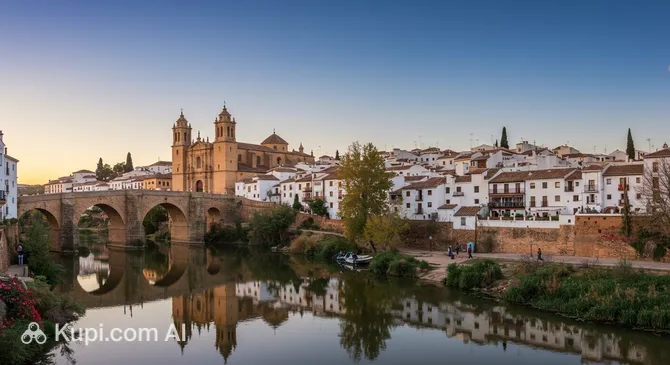
Puente Genil. Source: Kupi.Binoculars

Beyond its monuments, Puente Genil is renowned for its unique local industries and traditions. It is often celebrated as the world capital of quince jelly (carne de membrillo), a sweet delicacy that is a staple of the local gastronomy. The town is also globally famous for its artistic street lighting industry; many of the spectacular light displays seen in cities around the world during Christmas originate here. Visitors are also often drawn to the local Holy Week celebrations, known as "La Mananta," which are distinct for their biblical figures and intense emotional expression.

Whether you are exploring the ancient Roman ruins, tasting the local sweet treats, or simply enjoying a walk along the riverbanks, Puente Genil offers a delightful slice of authentic Andalusian life. It is a perfect destination for travelers seeking a blend of culture, history, and warm hospitality.

Weather Overview

Puente Genil experiences a typical inland Andalusian climate, characterized by hot, dry summers and mild, relatively humid winters. Visitors can expect substantial temperature variations throughout the year, making it important to pack accordingly depending on the season. The summer months are particularly intense, with July and August seeing average temperatures climb to around 28°C, and daily highs frequently reaching nearly 36°C.

In contrast, the winter season offers a cooler respite without being excessively harsh. January is typically the coldest month, with average temperatures sitting around 10°C and lows dropping to approximately 5°C. Rainfall is most frequent during the transition from winter to spring, with March seeing the highest number of wet days. For a more detailed breakdown to help plan your daily activities, you can check the weather in Puente Genil before your trip.

Spring and autumn are often considered the most pleasant times to visit, offering a comfortable balance. May, for instance, boasts a delightful average temperature of roughly 21°C, while October remains mild at about 20°C. Overall, travelers should anticipate scorching heat with almost no rain during mid-summer, while the cooler months bring moderate precipitation and brisk mornings.

Interesting Facts

While many know Puente Genil for its famous quince jelly, the town holds fascinating secrets that go far beyond its culinary reputation. Digging deeper into its past reveals a history of innovation and cultural uniqueness that surprises many visitors.

  • A Pioneer of Light: Puente Genil was one of the very first towns in all of Spain, and the first in Andalusia, to have public electric street lighting. In 1889, a local hydroelectric plant harnessed the power of the Genil River, sparking a legacy that eventually evolved into the town's modern status as a global leader in decorative Christmas lighting.

  • Two Towns Become One: The city as it exists today is the result of a historic merger between two separate settlements that faced each other across the river. For centuries, the river marked the border between the provinces of Córdoba and Seville, separating "La Puente de Don Gonzalo" from "Miragenil" until they were officially united by a royal decree in 1834.

  • A Legend of Flamenco: The town is the birthplace of Antonio Fernández Díaz, known as "Fosforito," one of the most revered figures in the history of flamenco. He was awarded the prestigious "Golden Key of Cante" (Llave de Oro del Cante), an extremely rare honor granted only five times in history, solidifying Puente Genil's importance in musical heritage.

  • The Tradition of the "Cuarteles": Unlike typical Easter celebrations elsewhere, the local festivities involve unique meeting halls known as "Cuarteles." Here, members of Biblical Corporations gather throughout Lent—not just during Holy Week—to recite poetry, sing, and share traditional meals, keeping a centuries-old social custom alive that is distinct to this municipality.

How to Get There

Planning a trip to this charming Andalusian town is the first step toward an unforgettable experience. Located centrally in the region, the municipality is well-connected by road and rail networks, making it accessible from major Spanish cities. For a detailed breakdown of routes and transportation options, you can read more about how to get to Puente Genil to ensure a smooth journey.

The city of Puente Genil does not have its own airport, but international visitors have several convenient options nearby. The most popular choice is usually Malaga Airport (AGP) in Malaga, situated approximately 83 km away. It is a major international hub with numerous connections. The journey from there by taxi or bus typically takes around 1 hour and 45 minutes. Another excellent alternative is Seville Airport (SVQ) in Seville, located about 100 km from the town. Travelers arriving here can expect a transfer time of approximately 2 hours and 10 minutes by road.

For clarity, here is a summary of the main airports:

Airport Name City Passenger Traffic Km from City
Malaga AirportMalagaVery Large82.7
Seville AirportSevilleLarge99.9
Granada AirportGranadaMedium90.4
Jerez AirportJerez de la FronteraMedium135.5
North Front AirportGibraltarSmall146.9

Traveling by train is often the most efficient method for reaching the area. You can arrive directly at Puente Genil Railway Station (often referred to as Puente Genil-Herrera), which is located about 6 km from the city center and serves the high-speed AVE lines connecting southern Spain. Alternatively, you might consider arriving at Cordoba Central Railway Station in the city of Cordoba, which is a major rail hub about 55.5 km away. From Cordoba, it is easy to catch a connecting bus or taxi to reach your final destination in under an hour.

Below is a list of the nearest railway stations:

Station City Passenger Traffic Km to Center
María Zambrano StationMalagaVery Large80.8
Cordoba Central Railway StationCordobaLarge55.5
Granada Railway StationGranadaLarge105.0
Jaén Railway StationJaénMedium96.4
Puente Genil Railway StationPuente GenilMedium6.0

Main Attractions

For travelers exploring this part of Andalusia, the Villa Romana de Fuente Álamo is undoubtedly the crown jewel of local heritage. Located just a short distance from the town center, this archaeological site dates back to the 4th century and offers a fascinating glimpse into the life of the Roman aristocracy. It is particularly interesting to tourists for its collection of remarkably well-preserved mosaics, including the renowned "Three Graces" and scenes from the life of Bacchus, which are considered some of the finest examples of Roman geometric and figurative art in Spain.

No visit would be complete without crossing the Puente de Miragenil, the historic stone bridge that gives the city its name. Originally constructed in the 16th century, though it has undergone various modifications over time, this architectural landmark spans the Genil River and connects the main town with the district of Miragenil. It is a perfect spot for a leisurely stroll, offering visitors picturesque views of the riverbanks and a chance to capture the most iconic photographic angle of the municipality.

Dominating the landscape from a nearby hill, the Castillo Anzur stands as a silent sentinel over the region. This medieval fortress, with its origins in the 10th century during the Arab period, played a crucial strategic role in history as a watchtower. Today, it attracts hikers and history enthusiasts alike who make the trek up to the ruins. The climb is rewarded with sweeping panoramic views of the endless olive groves and the town below, making it a spectacular location for sunset viewing.

To fully understand the depth of the region's past, the Museo Histórico Municipal is an essential stop. Housed in the beautifully restored Convent of La Victoria, the museum displays a wide array of artifacts recovered from local sites, including pieces from Fuente Álamo and Castillo Anzur. It is an interesting destination for culture lovers, providing a comprehensive narrative of the area's human settlement from prehistoric times through the Middle Ages to the present day.

Local Cuisine

The gastronomy of Puente Genil is a delightful reflection of its fertile surroundings and deep Andalusian roots. As part of the province of Córdoba, the local cuisine relies heavily on excellent olive oil, fresh vegetables from the Genil River valley, and high-quality meats. However, the town has a unique culinary identity that sets it apart, most notably due to its status as a world leader in fruit processing.

The absolute star of the local table is Carne de Membrillo (quince jelly). Puente Genil is famous globally for its production of this sweet preserve, and tasting it is essential for any visitor. It is traditionally served as a dessert, often paired with fresh cheese to create a perfect balance of sweet and savory flavors, or used as a filling in various local pastries. You will find it in almost every grocery store and on many restaurant menus, serving as a proud symbol of the city.

For savory main dishes, the town offers exceptional versions of Cordovan classics. A must-try is Salmorejo, a thick, cold tomato cream garnished with hard-boiled eggs and cured ham, which is particularly refreshing during the hot summer months. Another favorite is the Flamenquín, a substantial roll of pork loin wrapped around jamón serrano and sometimes cheese, breaded and deep-fried to golden perfection. These heavy dishes are often lightened by the presence of pipirrana, a fresh salad made with tomatoes, peppers, onions, and cucumber.

The drink culture in Puente Genil is heavily influenced by its location within the prestigious Montilla-Moriles wine region. Wine enthusiasts should not miss the opportunity to try the local Fino, a dry and crisp white wine, or the sweet and dark Pedro Ximénez, which is ideal for dessert. The custom of "tapeo"—going from bar to bar to enjoy small plates with a glass of wine or beer—is the best way to experience the local atmosphere, with numerous lively establishments located in the town center and near the riverbanks.

Travel Tips

Welcome to Puente Genil! To ensure your visit to this charming town in the province of Córdoba is as enjoyable and smooth as possible, we have compiled a list of essential practical advice. These tips will help you navigate local customs and logistics with the ease of a seasoned traveler.

  1. Clothing and Gear: The climate in Spain's interior can be extreme. In summer, lightweight, breathable fabrics, a hat, and high-SPF sunscreen are essential to combat temperatures that often exceed 35°C. Winters are mild but humid, so a medium-weight jacket and layers are recommended. Comfortable walking shoes are a must for exploring the cobblestone streets and the archaeological site of Fuente Álamo.

  2. Transportation: The town center is compact and best explored on foot. There is no metro or tram system, but a local bus service connects the main neighborhoods. Taxis are affordable and reliable. Crucially, the high-speed train station (Puente Genil-Herrera) is located about 6 km outside the city; ensure you have a taxi number handy or pre-arrange a transfer to reach the center.

  3. Finances: The local currency is the Euro (€). While most restaurants and supermarkets accept credit and debit cards, it is highly advisable to carry cash for small tapas bars, buying sweets from convents, or small purchases at kiosks. ATMs are widely available. Tipping is not mandatory but rounding up the bill or leaving a few coins is a polite gesture.

  4. Health and Safety: Puente Genil is a safe destination for tourists. Pharmacies are marked with a flashing green cross; if one is closed, a list of 24-hour duty pharmacies (farmacia de guardia) is usually displayed on the door. The general emergency number is 112. Tap water is safe to drink and of good quality.

  5. Communication: The primary language is Spanish. While staff in hotels may speak English, it is less common in local bars and shops. Learning a few basic phrases like "Hola" (Hello), "Gracias" (Thank you), and "La cuenta, por favor" (The bill, please) will go a long way. Prepaid SIM cards can be purchased at phone shops or tobacco stands (estancos).

  6. Local Etiquette: Adjust your schedule to the local rhythm. Lunch is typically the main meal, served between 2:00 PM and 3:30 PM, while dinner is rarely eaten before 9:00 PM. Respect the siesta hours (roughly 2:00 PM to 5:00 PM) when many smaller shops close and the streets become quiet.

  7. What to Avoid: Do not expect to dine at 6:00 PM; most kitchens will be closed. Also, avoid rushing your service in restaurants. Dining in Andalusia is a social, leisurely activity, and servers will typically not bring the bill until you explicitly ask for it, as rushing a guest is considered rude.

  8. Local Insight: If you visit during late autumn or winter, pay attention to the street decorations. Puente Genil is famous for its artistic lighting industry, and the Christmas displays here are often spectacular previews of what will appear in major cities worldwide. Also, don't leave without buying a block of artisanal carne de membrillo (quince jelly).

With these practical tips in hand, you are fully prepared to immerse yourself in the authentic culture and warm hospitality of Puente Genil. Enjoy your journey through this unique and flavorful corner of Andalusia!

Entertainment & Nightlife

Nightlife in Puente Genil is characterized by a relaxed, social atmosphere that centers heavily on gathering with friends and enjoying the town's vibrant street life. Unlike the high-energy clubbing scenes of major coastal cities, the evening entertainment here is more about "tapeo"—hopping from bar to bar to enjoy drinks and small bites—followed by long, leisurely conversations at pubs or terraces. The local vibe is welcoming and authentic, offering a genuine slice of Andalusian culture where people of all ages mix freely until the early hours.

The heart of the action is undoubtedly Avenida Manuel Reina, affectionately known by locals as "La Matallana." This main artery and its surrounding pedestrian streets are lined with numerous cafes, bars, and pubs that come alive as the sun sets. On weekends and warm summer nights, the terraces here are packed with locals enjoying the cool evening air. The dress code is generally smart-casual; people tend to dress up a bit when going out for dinner or drinks, but the atmosphere remains unpretentious and friendly.

For those looking to experience the local scene, Voulé Restaurant, Music & Events is a popular choice on the main avenue. It transitions seamlessly from a dining spot serving quality local cuisine to a lively venue for late-night drinks and music, making it a one-stop destination for a full night out. Another excellent option is Fifteen Bar, situated on Avenida de Europa. It is well-regarded for its modern ambiance and extensive selection of drinks, attracting a crowd that enjoys a sophisticated yet comfortable setting for socializing.

If you prefer a more cultural evening, the historic Teatro Circo is the town's premier venue for the performing arts. Built in the early 20th century, this charming theater hosts a variety of events throughout the year, ranging from plays and concerts to flamenco performances. It is a perfect starting point for a night out, allowing you to enjoy a show before heading to the nearby bars for a nightcap. During the day, entertainment options include visiting the local archaeological museums or taking a relaxing walk through the Parque de los Pinos.

From a practical standpoint, nightlife in Puente Genil kicks off late. Dinner is typically served from 9:00 PM or 10:00 PM onwards, and bars do not start filling up until after midnight. Prices are generally very affordable compared to larger Spanish cities, with beer and wine costing significantly less. The town is very safe for walking at night, especially in the well-lit center around La Matallana. However, if you are staying on the outskirts or need to get home late, local taxis are readily available and can be called via phone or found at designated ranks.

Parks & Museums

While Puente Genil is deeply rooted in history, it also offers refreshing green spaces and cultural venues that allow visitors to connect with its natural environment and artistic heritage. The town provides a nice balance between outdoor relaxation in its parks and intellectual enrichment through its museums, making it a well-rounded destination for travelers.

For those seeking a breath of fresh air, the Parque de los Pinos is the city's most beloved green lung. Situated on an elevated area, this park offers a cool retreat under the shade of mature pine trees, making it a favorite spot for locals to escape the summer heat. It features well-maintained walking paths, gardens, and recreational areas for children, all while providing excellent views over the town. Another significant natural site nearby is the Laguna de Tíscar, a protected Natural Reserve located a few kilometers from the center. This seasonal wetland is a haven for birdwatchers, attracting migratory species such as flamingos and ducks, particularly after the rainy season.

To delve deeper into the local culture, the Museo Histórico Municipal is an essential stop. Housed in the former Convent of La Victoria (Los Frailes), a building with its own architectural charm, the museum preserves the city's archaeological legacy. Its collections range from prehistoric tools to Islamic ceramics, with a special focus on the Roman artifacts recovered from the nearby Villa of Fuente Álamo. It serves as the primary custodian of the region's collective memory.

Another unique cultural venue is the Complejo Industrial de La Alianza. This site is a testament to Puente Genil's industrial past, specifically its pioneering role in electricity and flour production. The complex includes an old hydroelectric plant and a flour factory, offering a fascinating look at the 19th-century industrial architecture that shaped the town's economy. It stands as a monument to the innovation that once made this municipality a leader in modernization in southern Spain.

Beyond the museums, the city's streets are lined with remarkable religious architecture. The Parroquia de Nuestra Señora de la Purificación is the main church, boasting a majestic tower and an interior rich in artistic detail. Nearby, the Ermita de Jesús Nazareno holds a special place in the hearts of locals as the home of the city's patron saint, known affectionately as "El Terrible." These sites are not only places of worship but also repositories of sacred art and sculpture.

For a truly authentic experience, try to visit the surroundings of the river during the "golden hour" before sunset. A walk along the Paseo Fluvial offers a peaceful atmosphere where you can see the old stone bridge reflected in the water, providing a perfect moment of tranquility before heading into town for dinner.

Getting Around

Navigating Puente Genil is relatively simple due to its compact size, with the public transport system primarily designed to support the local population and connect the center with key external transit hubs. Given the city's scale, there is no metro, tram, or trolleybus network. The backbone of public mobility is the municipal bus service, supplemented by a reliable fleet of taxis. For most visitors, the town center is best explored on foot, but motorized transport is essential for reaching the high-speed railway station located on the outskirts.

The urban bus system consists of specific lines that loop through the main neighborhoods, crossing the river to the Miragenil district and servicing the local hospital. The most important route for tourists is the shuttle bus connecting the city center with the Puente Genil-Herrera railway station, which is situated approximately 6 kilometers away. This service is generally timed to coincide with the arrival and departure of major high-speed trains, offering a convenient and inexpensive transfer option compared to private transport.

Payment on local buses is traditional and straightforward. There are no complex digital ticketing systems or tourist passes for short stays. You simply purchase a single ticket directly from the driver when you board. The fare is very affordable, usually costing just over one euro. It is essential to carry cash, preferably coins or small bills, as drivers rarely have change for notes larger than 20 euros. Residents use rechargeable travel cards, but for a visitor staying a few days, paying in cash per ride is the standard practice.

Taxis are a highly recommended alternative, particularly if you are traveling with heavy luggage or arriving outside of standard bus hours. The local taxis are white, clearly marked, and operate on a meter system, ensuring fair pricing. You can find taxi ranks at strategic points such as the Paseo del Romeral and the train station. If you do not see one waiting, you can easily order one by phone through the local "Radio Taxi" service. This is often the fastest way to travel between the high-speed train station and your hotel.

In terms of operating hours, the bus service runs primarily during the day, starting early in the morning and winding down by late evening, usually around 9:00 PM or 10:00 PM. Frequencies are lower on weekends and public holidays. Since there are no car-sharing apps or widespread bike rental schemes currently operating in the city, walking is the primary alternative for short distances. The historic center is pedestrian-friendly, and most major attractions, shops, and restaurants are within a comfortable walking distance of each other.

Accommodation

Accommodation in Puente Genil is practical, welcoming, and reflective of the town's authentic Andalusian character. While it does not boast the vast array of luxury resorts found in major coastal destinations, visitors will find a sufficient selection of comfortable options that cater to various needs. The offering primarily consists of mid-range hotels, traditional guesthouses known as hostales, and an increasing number of modern tourist apartments. These establishments typically focus on providing personalized service and good value for money, making the town an accessible base for exploring the wider region of Córdoba.

When choosing where to stay, location plays a key role in the experience. The most convenient area for tourists is the town center, particularly near the lively Avenida Manuel Reina (La Matallana) and the historic quarter. Staying here places you within walking distance of the main shops, restaurants, and the scenic Genil River promenade. Alternatively, there are options located slightly on the outskirts or near the main access roads; these are often quieter and more convenient for travelers arriving by car who prioritize easy parking and quick access to the surrounding highways.

For a reliable and comfortable stay, Hotel El Carmen is a well-known establishment in the municipality. It is frequently chosen by visitors for its spacious facilities, which include an outdoor swimming pool—a welcome feature during the hot Andalusian summers—and its capacity to host large events. Another well-regarded option is Hotel Las Acacias, which is frequently praised for its functional amenities and proximity to the center, making it a reliable pick for both business travelers and tourists seeking a straightforward, comfortable lodging experience.

A crucial tip for booking accommodation in Puente Genil revolves around its calendar of festivities. If you plan to visit during Holy Week (Semana Santa) to witness the unique "Mananta" celebrations, it is essential to book your room months in advance. During this period, the town transforms, and demand for rooms skyrockets as visitors and family members return home, often filling every available bed in the municipality.

Generally, the price range for accommodation in Puente Genil is very reasonable compared to larger Spanish tourist hubs. Most properties fall into the budget to mid-range category, offering excellent quality relative to the cost. While many establishments are available on major international booking platforms, some smaller, family-run hostales may still appreciate direct contact via phone or email for reservations. Regardless of where you choose to stay, you can expect a warm reception and a genuine slice of local hospitality.

Nearby Cities

For those looking to explore the surroundings, Puente Genil serves as an excellent base for day trips to several interesting nearby locations:

City Population Distance (km)
Cordoba32207156
Lucena4271224
Antequera4134845
Ecija3983833
Montilla2263325

One of the most compelling destinations is the provincial capital, Cordoba. Located less than an hour away, it is home to the breathtaking Mosque-Cathedral (Mezquita), a UNESCO World Heritage site that stands as a powerful symbol of Islamic and Christian history. Visitors can lose themselves in the winding streets of the Jewish Quarter, admire the Roman Bridge, and enjoy the vibrant colors of the city's famous patios.

Another fantastic option is Antequera, often referred to as the "heart of Andalusia" due to its central location. This city offers a remarkable mix of history and nature, featuring the ancient Dolmens—prehistoric burial mounds with UNESCO status—and the Alcazaba fortress. Just outside the city lies El Torcal, a nature reserve known for its surreal, wind-sculpted limestone rock formations that look like they belong on another planet.

For those interested in gastronomy and viticulture, a short trip to Montilla is highly recommended. As the center of the Montilla-Moriles wine region, it is the perfect place to tour traditional bodegas and taste the local wines, which are similar to sherry but have their own distinct character. The town also boasts a rich history connected to the Great Captain, Gonzalo Fernández de Córdoba.

These nearby destinations offer a glimpse into the diverse culture and landscapes of the region.

Shopping & Souvenirs

Shopping in Puente Genil offers a delightful mix of traditional Andalusian commerce and modern convenience. While you will not find the massive department stores typical of major metropolises, the town boasts a vibrant commercial life that prides itself on personal service and local quality. The experience here is less about international luxury brands and more about discovering unique boutiques, family-run establishments, and exceptional regional products that reflect the identity of the province of Córdoba.

The heartbeat of the city's retail scene is undoubtedly Avenida Manuel Reina, known locally as "La Matallana." This bustling avenue serves as an open-air commercial center where visitors can find everything from fashion and footwear to accessories and electronics. Walking along this street and its adjacent pedestrian zones allows you to browse popular Spanish high-street brands alongside independent shops. For a more historic atmosphere, Calle Don Gonzalo in the old town offers a selection of traditional businesses set amidst beautiful architecture, perfect for a leisurely afternoon stroll.

Unlike larger cities, Puente Genil does not rely heavily on enclosed mega-malls. Instead, the shopping experience is integrated into the urban fabric. However, for those looking for larger supermarkets, furniture stores, or specialized chains, the commercial parks located on the outskirts of the town provide these services. These areas are easily accessible by car or taxi and complement the boutique offerings of the city center.

For a taste of authentic local life, the Mercado de Abastos (Municipal Market) is a must-visit. Here, stalls overflow with fresh produce from the fertile Genil river valley, high-quality meats, and fresh fish. It is the perfect place to see how locals shop for their daily meals. Additionally, the town hosts a lively weekly street market (mercadillo) on Fridays at the fairgrounds (Recinto Ferial). This colorful market is a treasure trove for bargain hunters, offering clothes, shoes, textiles, and fresh fruit at very competitive prices.

When it comes to souvenirs, the undisputed star is Carne de Membrillo (quince jelly). As the world's leading producer of this sweet delicacy, Puente Genil offers the best quality you can find, often sold in beautiful artisan packaging that makes for a perfect gift. Other excellent choices include bottles of local wine from the Montilla-Moriles region and premium extra virgin olive oil. Visitors interested in the town's rich traditions might also look for ceramics or religious craftsmanship associated with the famous Holy Week celebrations.

Store opening hours generally follow the traditional Spanish schedule. Shops typically open from 10:00 AM to 1:30 PM, close for the afternoon break (siesta), and reopen from 5:00 PM to 8:30 PM or 9:00 PM. On Saturdays, many businesses open only in the morning, and most are closed on Sundays. Regarding payment, major credit and debit cards are widely accepted in most stores and supermarkets, though carrying some cash is advisable for small purchases at the market or in smaller kiosks.

Travelers residing outside the European Union should be aware of the tax-free shopping opportunities. If you make a significant purchase in a store that displays the "Tax Free" sign, you may be eligible for a VAT refund. Be sure to ask the shop assistant for the necessary electronic document (DIVA) to process your refund at the airport upon leaving the EU.

Reached the end of the page?

That means the route is fully explored