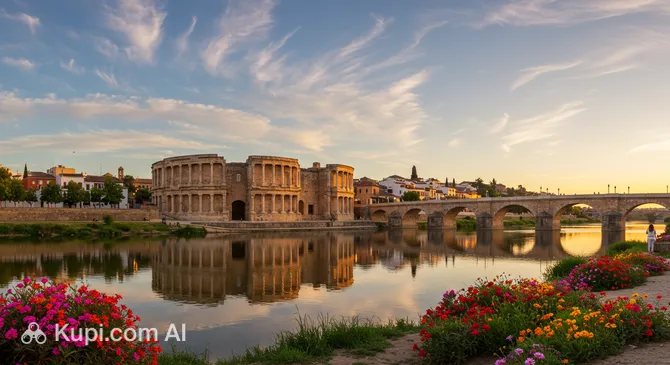
Merida is a captivating destination that serves as the capital of the autonomous community of Extremadura. Often described as an open-air museum, this city offers a unique journey back in time, boasting some of the best-preserved Roman ruins in all of Spain. Its atmosphere is a delightful blend of ancient grandeur and modern Spanish life, making it a must-visit for history enthusiasts and culture seekers alike.
Merida. Illustration.
Source: Kupi.com AI
Geographically, Merida is situated in the province of Badajoz, resting along the banks of the Guadiana River. With a population of approximately 60,000 residents, it maintains a welcoming, manageable size that allows visitors to easily explore its treasures on foot. The city typically enjoys a Mediterranean climate with hot summers and mild winters, creating excellent conditions for sightseeing throughout much of the year.
The city was originally founded in 25 BC as Emerita Augusta, and its legacy is palpable in every corner. To truly understand the depth of its past, one should explore the history of Merida, which reveals how it became one of the most important cities in the Roman Empire. Today, travelers flock to see the magnificent Roman Theatre, which still hosts performances during the annual classical theatre festival, and the impressive Aqueduct of los Milagros, standing as a testament to ancient engineering.
Whether you are admiring the columns of the Temple of Diana or crossing the longest Roman bridge still in use, Merida promises an unforgettable experience. It is a place where the past is vibrantly alive, inviting you to discover the secrets of a bygone era while enjoying the warmth of local hospitality.
Weather Overview
Merida experiences a climate marked by distinct seasonal variations, generally offering plenty of opportunities for outdoor exploration. The city is known for its intense heat during the summer and relatively mild conditions during the winter. To help you choose the best time for your visit, it is useful to check the detailed forecast and historical trends for the weather in Merida.
The summer months of July and August are the hottest, with average maximum temperatures reaching approximately 35°C and almost zero precipitation, making it essential to stay hydrated while sightseeing. In contrast, January is typically the coldest month, with average lows dipping to 4.5°C, though it rarely freezes. The spring and autumn months provide a comfortable middle ground; for example, May sees a pleasant average temperature of 20.3°C. Expect hot, dry summers and cooler winters with occasional rain, particularly in April and November which tend to have the highest number of wet days.
Average monthly temperature
Average monthly precipitation
Interesting Facts
Beyond the impressive ruins visible at first glance, Merida holds fascinating secrets that reveal the ingenuity and layers of its history. Here are some intriguing facts that make this ancient city even more captivating.
Temple of Diana. Illustration.
Source: Kupi.com AI
Traveler photos:
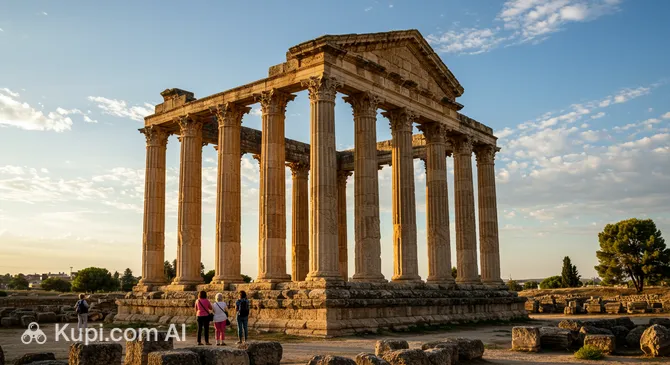
The Temple of Diana owes its incredible preservation to a unique historical repurposing. In the 16th century, a nobleman built a Renaissance palace directly inside the ancient structure, using the Roman columns as the framework for his home, which effectively prevented the temple from being dismantled for building materials.
The Roman Theatre of Mérida holds the distinction of being the oldest theatre in the world that is still functioning for its original purpose. While many ancient theatres are silent ruins, this venue comes alive every summer for the International Classical Theatre Festival, hosting performances on the original stage just as it did 2,000 years ago.
Locals gave the Acueducto de los Milagros (Aqueduct of the Miracles) its name because they were awestruck by its structural resilience. For centuries, inhabitants believed it was a divine miracle that such slender, soaring pillars could remain standing against the elements and time without collapsing.
The Roman Bridge of Mérida is a marvel of longevity, having served as a vital crossing for pedestrians and traffic for nearly two millennia. It was only in 1991 that the bridge was finally closed to vehicular traffic to preserve its structure, making it one of the longest-serving bridges in history.
How to Get There
Planning a trip to this historic gem in Extremadura requires choosing the right entry point, as the city itself does not have an airport. To help you organize your journey, you can read more about how to get to Merida and the various transport options available.
The city of Merida does not have its own airport, but you can fly into Badajoz Airport (IATA: BJZ) in the city of Badajoz, which is about 42 km away. This is a regional facility with limited traffic, and the transfer by road typically takes approximately 45 to 50 minutes. For a wider range of international flights, many visitors opt for Seville Airport (IATA: SVQ) in Seville, located approximately 171 km away. While further afield, it offers more connections; the travel time is generally around 2 hours by car or close to 3 hours by public transport. Another major alternative is Lisbon Portela Airport (IATA: LIS) in Lisbon, Portugal, situated about 243 km from the city.
For clarity, here is a summary of the main airports:
Traveling by train is often the most convenient method for reaching the city center directly. You can arrive at Mérida Railway Station, which is situated just 0.4 km from the heart of the city, making it incredibly easy to start sightseeing immediately upon arrival. For those traveling from southern Spain, a common connection point is Santa Justa Railway Station in Seville, about 173 km away. From there, you can catch a direct train or bus service to complete your journey to Merida.
Below is a list of the nearest and most significant railway stations:
Merida is a treasure trove of antiquity, where every corner reveals a new layer of history. The city's archaeological ensemble is one of the most extensive in Spain, offering visitors a direct line to the Roman Empire's grandeur. Below are some of the essential sites that define this UNESCO World Heritage destination.
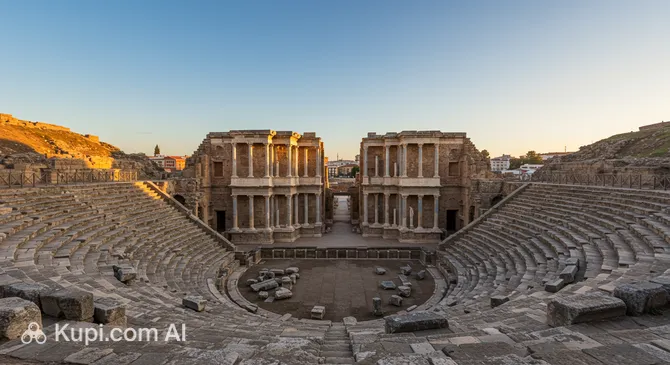
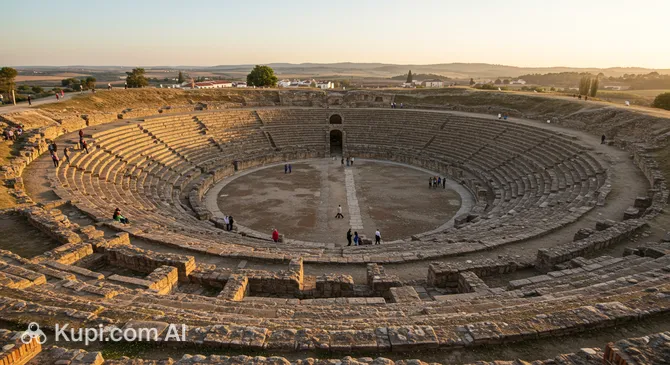
Undoubtedly the crown jewel of the city is the Roman Theatre of Mérida. Constructed under the patronage of Agrippa around 16-15 BC, it remains one of the best-preserved venues of its kind in the world. Visitors are often struck by the magnificence of the stage wall, adorned with marble columns and statues of gods and emperors. It is not merely a ruin but a living cultural space that still hosts the prestigious International Classical Theatre Festival every summer, allowing you to sit on the same stone benches as spectators did two millennia ago.
Roman Theatre of Mérida. Illustration.
Source: Kupi.com AI
Traveler photos:
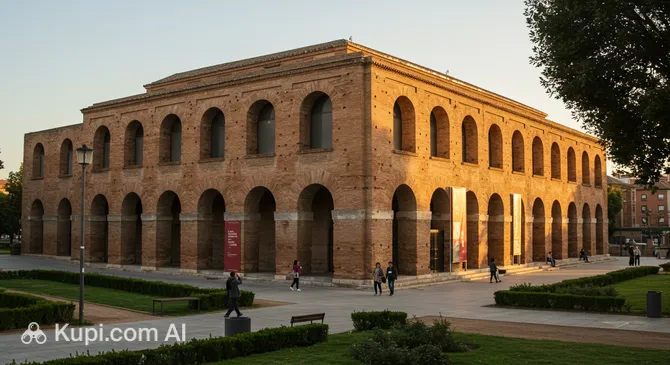
Standing in contrast to the ancient ruins is the National Museum of Roman Art, a masterpiece of modern architecture designed by Rafael Moneo. The building itself is a stunning attraction, featuring soaring brick arches that echo Roman engineering. Inside, it houses an exceptional collection of artifacts excavated from the city, including colossal statues, intricate mosaics, and everyday objects that provide a vivid picture of life in Augusta Emerita. It is the perfect place to contextualize the ruins you see throughout the city.
National Museum of Roman Art. Illustration.
Source: Kupi.com AI
Traveler photos:
For a sense of the scale of ancient entertainment, the Roman Circus of Mérida is a must-visit. Located just outside the original city walls, this massive arena once held up to 30,000 spectators who cheered for thrilling chariot races. It is one of the few Roman circuses where the original layout—including the central barrier or spina and the starting gates—is still clearly visible. Walking through the arena offers a unique perspective on the leisure activities that captivated the Roman public.
Roman Circus of Mérida. Illustration.
Source: Kupi.com AI
Traveler photos:
To understand the domestic life of the era, you should explore the House of the Mithraeum and Columbarium Area. This site features the remains of a noble Roman house built around three courtyards. It is particularly famous for the "Cosmological Mosaic," a stunningly detailed floor depicting the forces of nature and the heavens. The site also includes a funerary area, offering a poignant look at how the ancients honored their dead.
Local Cuisine
The culinary scene in Merida is a delightful reflection of the broader Extremadura region, characterized by simple yet flavorful dishes rooted in high-quality local ingredients. The cuisine here is hearty and traditional, often revolving around the products of the land, particularly the famous Iberian pig. For food lovers, the city offers an authentic taste of rural Spain, where ancient recipes have been passed down through generations.
One cannot visit Merida without indulging in the region's crown jewel: Jamón Ibérico de Bellota. This cured ham, made from pigs fed on acorns in the local pastures, is renowned worldwide for its rich, nutty flavor. Beyond ham, the local menu features excellent meat dishes such as Caldereta de Cordero, a savory lamb stew seasoned with paprika and garlic, and Cochifrito, crispy fried suckling pig. For a lighter or vegetarian-friendly option, Zorongollo, a salad made of roasted red peppers, onions, and garlic, is a refreshing choice, often served as a starter or side dish.
Another signature dish that embodies the humble origins of the local gastronomy is Migas Extremeñas. Originally a shepherd's meal, it consists of day-old breadcrumbs fried in olive oil with garlic, peppers, and chunks of chorizo or bacon. It is a comforting and filling dish, often topped with a fried egg. In the warmer months, locals cool down with Gazpacho Extremeño or Ajo Blanco, cold soups that are perfect for beating the summer heat.
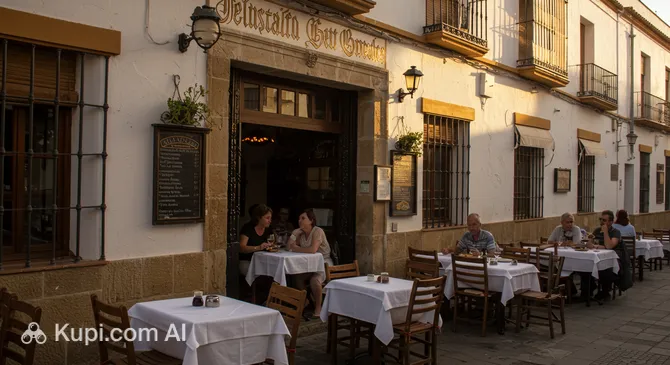
Sybarit Gastroshop Restaurant. Illustration.
Source: Kupi.com AI
Traveler photos:
To accompany these meals, visitors should explore the local wines. Merida is part of the Ribera del Guadiana appellation, which produces robust reds and crisp whites that pair perfectly with the regional fare. After a meal, it is customary to sip on a digestif, with acorn liqueur (Licor de Bellota) being a local favorite that offers a sweet finish to the dining experience.
The dining culture in Merida is vibrant and social, with a strong emphasis on tapas. The area around the Plaza de España and the adjacent streets is teeming with bars and terraces where you can hop from one place to another, sampling small plates. For those looking for a modern twist on traditional flavors, Sybarit Gastroshop Restaurant offers a curated experience that highlights local products in a contemporary setting. Alternatively, Agallas Gastro & Food is known for its creative approach to regional classics, making it a popular spot for both locals and tourists seeking a memorable meal.
Travel Tips
Visiting Merida is like stepping into a living history book, where Roman heritage blends seamlessly with modern Spanish life. To help you navigate this "Little Rome" with ease and confidence, we have compiled a set of practical tips designed to make your journey as smooth and enjoyable as possible.
Clothing and Gear: Merida is located in one of the hottest regions of Spain. If you visit in summer, lightweight, breathable fabrics, a wide-brimmed hat, and high-SPF sunscreen are absolute necessities to survive the midday sun. Winters are generally mild but can be damp, so a waterproof jacket and layers are recommended. Most importantly, bring sturdy, broken-in walking shoes; you will be traversing ancient cobblestones and uneven archaeological sites all day.
Transportation: The city center is compact and pedestrian-friendly, making walking the best way to get around. Most major monuments are within a comfortable distance of each other. While there is a network of urban buses and plenty of taxis, you likely won't need them unless your accommodation is on the outskirts. If you arrive by car, it is wise to park it in a secure garage upon arrival and forget about it until you leave, as navigating the narrow historic streets can be stressful.
Finances: The local currency is the Euro (€). Credit and debit cards (Visa and Mastercard) are widely accepted at hotels, restaurants, and most attractions. However, it is always useful to carry some cash for small purchases, coffee, or tips. ATMs are readily available throughout the city. Tipping is not mandatory in Spain, but leaving small change or rounding up the bill at bars and cafes is a common and appreciated gesture.
Health and Safety: Merida is generally a very safe city for tourists. Standard precautions against pickpocketing should be taken in crowded areas or during festivals, but violent crime is rare. Pharmacies are marked with a green cross and are well-stocked; look for a Farmacia de Guardia if you need assistance outside regular hours. The general emergency number for police, fire, or ambulance is 112.
Communication: The official language is Spanish. While staff at major museums, hotels, and tourist offices usually speak English, it is less common in smaller local bars or shops. Learning a few basic phrases like "Hola" (Hello), "Gracias" (Thank you), and "La cuenta, por favor" (The bill, please) will go a long way with the locals. Free Wi-Fi is standard in most accommodations and cafes, and buying a local SIM card is easy at phone shops in the city center.
Local Etiquette: Spaniards are warm and social. A simple greeting when entering a shop or elevator is polite. Be aware of the local schedule: lunch is the main meal of the day, typically eaten between 2:00 PM and 3:30 PM, while dinner is served late, rarely before 8:30 PM or 9:00 PM. Many smaller shops may close for siesta in the afternoon (roughly 2:00 PM to 5:00 PM), so plan your shopping accordingly.
What to Avoid: Do not climb, sit, or lean on ancient walls or columns unless it is explicitly permitted (like the seating in the Roman Theatre). These monuments are thousands of years old and fragile. Also, avoid expecting "fast food" speed in traditional restaurants; dining here is a social activity meant to be enjoyed slowly, so relax and go with the flow.
Smart Sightseeing: To save money and time, purchase the Combined Ticket (Entrada Conjunta). This single pass grants you access to the main monuments, including the Theatre, Amphitheatre, and Alcazaba, at a significantly lower price than buying individual tickets for each site. It is a fantastic value for anyone planning to see more than two attractions.
With these tips in hand, you are ready to explore the wonders of Merida like a pro. Embrace the laid-back rhythm of the city, respect its incredible heritage, and enjoy every moment of your time travel adventure in Extremadura.
Entertainment & Nightlife
While Merida is world-famous for its ancient history, when the sun goes down, the city reveals a lively and sociable side that surprises many visitors. The nightlife here is not about massive nightclubs or thumping techno beats; instead, it revolves around a vibrant bar culture, open-air terraces, and social gatherings that last well into the early hours. The atmosphere is authentically Spanish—relaxed, loud, and incredibly welcoming, driven by a mix of local residents and a spirited student population.
The epicenter of evening entertainment is undoubtedly the area around the Plaza de España and the adjacent streets, particularly Calle John Lennon. This zone is packed with bars and pubs where people spill out onto the sidewalks with drinks in hand. It is the perfect place to start your night with some tapas and beers before moving on to lively music venues. The crowd is diverse, ranging from young groups of friends to older couples enjoying a late-night digestif, creating a safe and inclusive environment for everyone.
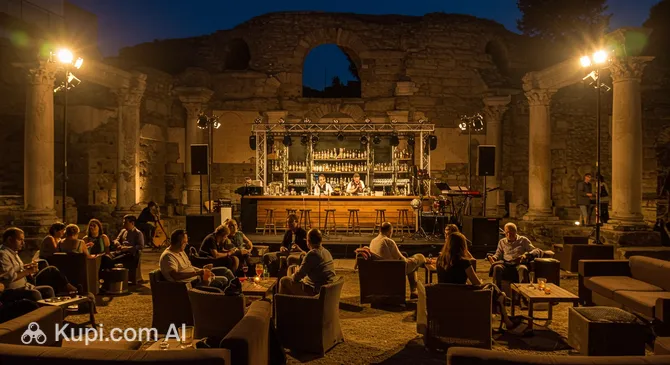
For those looking to enjoy live music and a sophisticated atmosphere, Jazz Bar Merida is a standout venue. It is a cultural staple in the city's nightlife scene, offering excellent cocktails and regular performances that range from jazz and blues to acoustic sets. It provides a cozy retreat from the busier streets and is ideal for travelers who appreciate a good drink accompanied by quality tunes.
Jazz Bar Merida. Illustration.
Source: Kupi.com AI
Traveler photos:
If you prefer a more energetic vibe with a mix of food and drinks, Braseria ChapaTapa is a popular choice among locals. It bridges the gap between a dining spot and a night bar, making it a great place to transition from dinner to partying. Alternatively, for a more alternative and relaxed setting, the Shangri-La Vegetarian Bar offers a unique charm with its eclectic decor and friendly service, proving that nightlife in Merida caters to all tastes.
Regarding practicalities, nightlife in Merida kicks off late. Bars typically start filling up around 11:00 PM, and the few dance venues or late-night pubs do not get busy until 1:00 AM or 2:00 AM. The dress code is generally casual to smart-casual; you will feel comfortable in jeans and a nice top, though people tend to dress up a bit more on Friday and Saturday nights. Prices are very reasonable compared to larger Spanish cities like Madrid or Barcelona, with beers and mixed drinks costing significantly less.
Safety is rarely a concern in Merida. The city center is well-lit and populated, making it safe to walk around at night. However, as in any tourist destination, it is wise to keep an eye on your belongings in crowded bars. If you are staying outside the historic center or simply feel tired, taxis are affordable and easy to find at designated ranks near the main plazas, or you can ask a bartender to call one for you.
During the daylight hours, entertainment shifts towards culture and leisure. Beyond the ancient ruins, you can enjoy a peaceful stroll through López de Ayala Park, a green oasis perfect for relaxation. For those interested in shopping, La Heredad Commercial Park offers a variety of stores and modern amenities. Of course, the pinnacle of cultural entertainment in the city is the Classical Theatre Festival held in summer, which transforms the nights into a celebration of art and history.
Parks & Museums
Parks & Museums:
While the streets of Merida themselves feel like an immense gallery, the city boasts dedicated spaces where history and nature converge. From expansive archaeological sites that reveal the layers of urban evolution to riverside parks perfect for a sunset stroll, these areas offer a fascinating change of pace from the monumental grandeur of the main ruins.
One of the most compelling visits for archaeology enthusiasts is the Morería Archaeological Area. Located near the river, this sprawling site acts as a window into the city's continuous habitation. Unlike other monuments that freeze a specific moment in time, Morería showcases a timeline that stretches from the Roman era through the Visigothic period and into the Islamic occupation. Visitors can walk among the foundations of ancient houses, paved streets, and workshops, visualizing the daily life of common citizens across centuries.
For those seeking fresh air and scenic views, the Park of the Seven Chairs offers a delightful escape along the banks of the Guadiana River. Situated between the historic Roman Bridge and the modern Lusitania Bridge, this linear park is a favorite among locals for jogging, walking, and picnicking. Its curious name comes from the remains of a Roman building found here, which locals historically mistook for seven stone seats. It provides a perfect vantage point to admire the city's skyline and the majestic flow of the river.
Merida excels at integrating its heritage into public green spaces. The area surrounding the Acueducto de los Milagros is a prime example, having been transformed into a large open park where families gather on weekends. The contrast of the towering Roman arches against the vibrant greenery creates a stunning backdrop for a leisurely afternoon. Similarly, the López de Ayala Park serves as the city's traditional garden, filled with exotic trees, fountains, and open-air terraces that host cultural events, making it a vibrant hub of social life in the heart of the modern city.
Getting Around
Due to its compact size and the pedestrian-friendly nature of its historic center, the most efficient way to navigate Merida is on foot. Most of the major archaeological sites, museums, and restaurants are located within a short walking distance of each other. However, for those looking to reach the outskirts, the hospital, or their accommodation if it is located further away, the city offers a reliable urban bus service. There is no metro, tram, or trolleybus system in the city.
The urban bus network consists of several lines that connect the residential neighborhoods with the city center and key facilities like the train and bus stations. The buses are generally modern, red or white in color, and comfortable. Operating hours typically run from approximately 7:00 AM to 11:00 PM on weekdays, with reduced frequency on weekends and public holidays. Schedules are usually posted at bus stops, though it is advisable to allow for some flexibility in timing.
For payment, the system is straightforward. You can purchase a single ticket (billete sencillo) directly from the driver when boarding the bus; it is recommended to carry small change or coins, as drivers may not be able to change large bills. The price for a single trip is very affordable, generally hovering around €1.20. If you plan to use the bus frequently, you can opt for a rechargeable travel card (Bonobús), which significantly reduces the cost per trip. These cards can be purchased and topped up at local tobacconists (estancos) or authorized kiosks.
Taxis are a popular and convenient alternative, especially for traveling with luggage or late at night. Official taxis in Merida are white, easily identifiable by the city's coat of arms on the door and a green light on the roof indicating availability. You can hail them on the street if the light is green, find them at designated ranks (paradas de taxi) located at strategic points like the Plaza de España and the railway station, or book one via telephone. Rides are metered, and while credit card payment is increasingly accepted, carrying some cash is always a good backup.
A special feature designed specifically for visitors is the Tourist Train. This vehicle runs a circular route connecting the most significant monuments, offering a comfortable way to see the sights without the physical exertion of walking between them. It provides audio commentary and is an excellent option for families with children or those with limited mobility who still wish to experience the full scope of the city's archaeological heritage.
While car rentals are available, driving within the historic center is not recommended due to narrow streets, restricted access zones, and limited parking. If you arrive by car or rent one to explore the surrounding Extremadura region, it is best to park in a public car park on the perimeter and explore the city itself by walking or using public transport. Cycling is also a pleasant option, and while there is no massive public bike-share scheme, you can find private rental shops to hire a bike for a day of exploration.
Accommodation
Finding the perfect place to stay in Merida is generally a straightforward experience, as the city offers a range of accommodation options that cater to various tastes and budgets. The hospitality scene here reflects the city's character, blending historic charm with modern comfort. Visitors can choose from high-end hotels housed in restored historic buildings, reliable mid-range chains, comfortable tourist apartments, and budget-friendly hostels, many of which cater to pilgrims walking the Vía de la Plata (Silver Route).
For most travelers, the historic center is the most convenient area to base themselves. Staying within the old city walls places you just a few steps away from the main archaeological sites, such as the Roman Theatre and the Temple of Diana. This area is pedestrian-friendly and bustling with cafes and restaurants, allowing you to immerse yourself fully in the local atmosphere. Alternatively, accommodation located near the Guadiana River offers a more tranquil setting, often providing scenic views of the parks and the Roman Bridge while still being within walking distance of the major attractions.
Since Merida is a popular destination for cultural tourism, particularly during specific events, booking in advance is highly recommended. This is especially critical if you plan to visit during the International Classical Theatre Festival in July and August or during Holy Week (Semana Santa). During these peak times, the city fills up quickly, and securing a room can be difficult if left to the last minute.
Regarding costs, Merida is generally quite affordable compared to larger Spanish capitals. Budget travelers can find economical hostels and guesthouses, while mid-range hotels offer excellent value for money with modern amenities. For those seeking a touch of luxury, there are premium options that often feature pools and on-site dining, perfect for relaxing after a day of sightseeing under the Extremaduran sun. Reservations can easily be made through major online booking platforms or directly with the establishments.
Nearby Cities
Nearby Cities:
Merida's central location in the province of Badajoz makes it an excellent base for exploring the wider region of Extremadura. The surrounding area is dotted with historic towns, agricultural hubs, and cultural landmarks that are easily accessible by car or regional transport. Whether you are interested in medieval architecture, wine tourism, or simply seeing more of authentic Spain, there are several worthwhile destinations just a short journey away.
The provincial capital, Badajoz, is located to the west, sitting directly on the border with Portugal. It offers a fascinating mix of Spanish and Portuguese influences, along with an impressive Moorish citadel. To the north lies Caceres, a city renowned for its medieval walled center, which, like Merida, is a UNESCO World Heritage site. For those interested in enotourism, the nearby town of Almendralejo is known as the headquarters of the Ribera del Guadiana wine region and the "City of Cava," making it a perfect spot for a gastronomic day trip.
Below is a table of nearby cities, detailing their population and distance from Merida to help you plan your excursions:
City
Population
Distance
Montijo
15 483
24 km
Almendralejo
33 741
26 km
Villafranca de los Barros
12 534
40 km
Don Benito
37 310
42 km
Miajadas
9 503
46 km
Shopping & Souvenirs
Shopping in Merida offers a pleasant and relaxed experience that perfectly complements a day of sightseeing. While the city may not have the massive retail districts of Spain's largest capitals, it provides a charming selection of stores that range from popular high-street fashion brands to small, family-run boutiques selling local crafts. The main commercial activity is concentrated in the pedestrian-friendly historic center, making it easy to browse for gifts and essentials while walking between monuments.
The heart of the city's retail life is Calle Santa Eulalia. This lively pedestrian street begins near the Plaza de España and serves as the primary open-air shopping artery. Here, visitors will find a mix of well-known Spanish clothing franchises, shoe stores, and accessory shops. The surrounding side streets are also worth exploring for smaller, independent businesses that offer unique items and a more personalized service.
Given the city's immense historical heritage, souvenirs often reflect its Roman legacy. Visitors can find beautifully crafted replicas of Roman ceramics, mosaics, and jewelry in specialized gift shops near the National Museum of Roman Art and the Roman Theatre. These items make for distinctive keepsakes that are far more meaningful than standard trinkets. Additionally, local artisans often sell leather goods and pottery, showcasing the traditional craftsmanship of the Extremadura region.
For food lovers, taking home a taste of the region is a must. Extremadura is famous for its high-quality gastronomic products, and Merida has plenty of specialized grocery stores and gourmet shops. Top items to look for include Jamón Ibérico (cured ham), Torta del Casar (a creamy sheep's milk cheese), and tins of Pimentón de la Vera (smoked paprika). Local wines from the Ribera del Guadiana appellation also make excellent gifts.
For those seeking a more comprehensive shopping experience with larger surface stores, electronics, and home goods, La Heredad Commercial Park is the main destination. Located on the outskirts of the city, this retail park offers a variety of supermarkets and warehouse-style outlets, providing a convenient option for stocking up on supplies or finding items that might not be available in the city center.
When planning a shopping trip, it is important to keep the local schedule in mind. Most smaller shops in the city center close for siesta, typically between 2:00 PM and 5:30 PM, although they stay open late into the evening, often until 8:30 PM or 9:00 PM. Larger chains and commercial centers like La Heredad usually remain open throughout the day without a break.