Support

Cascais

About

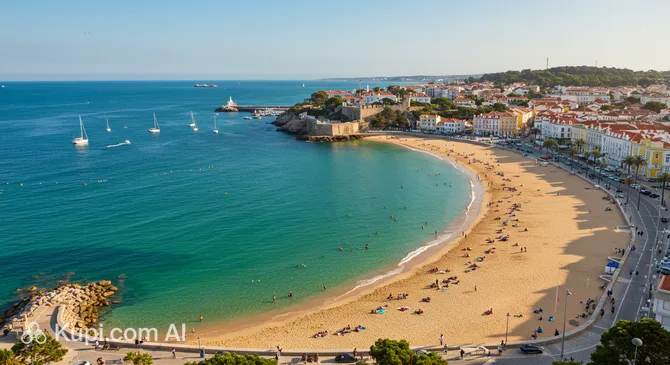
Cascais is a captivating coastal destination that perfectly blends traditional charm with modern sophistication. Situated on the western edge of the Lisbon District in Portugal, this former fishing village has evolved into one of the country's most prestigious resort towns. Known for its sandy beaches and busy marina, it offers a refreshing escape with a cosmopolitan flair.

Cascais. Source: Kupi.Binoculars

Blessed with a mild Atlantic climate and bathed in sunshine for most of the year, the city attracts visitors seeking both relaxation and adventure. With a population of approximately 214,000 residents, it maintains a lively yet relaxed atmosphere. The history of Cascais is deeply intertwined with royalty and maritime traditions, which is evident in its elegant 19th-century architecture and the imposing Cidadela de Cascais.

Travelers are often drawn to the dramatic cliff formation known as Boca do Inferno (Hell's Mouth) and the pristine sands of Guincho Beach, a world-renowned spot for surfing. Whether you are strolling through the picturesque historic center or enjoying fresh seafood by the sea, Cascais promises an unforgettable holiday experience just a short distance from the capital.

Weather Overview

Cascais enjoys a temperate maritime climate, characterized by pleasant conditions that make it a year-round destination. The proximity to the Atlantic Ocean ensures that extreme temperatures are rare, offering a comfortable atmosphere for exploration. Visitors looking for specific forecasts can consult the detailed weather in Cascais to help plan their daily activities.

The summer months of July and August are the warmest and driest, with average temperatures around 20°C and highs reaching up to 22.6°C. During this peak season, rainfall is virtually non-existent, often recording 0 wet days, which is ideal for beachgoers. In contrast, the winter season from December to February is cooler but still mild, with average temperatures settling between 12.5°C and 13.1°C. Travelers should expect more frequent showers during this period, with approximately 7 to 10 wet days per month.

Interesting Facts

Beyond its sun-soaked beaches and elegant marina, Cascais holds a treasure trove of fascinating stories. From espionage origins to royal residents, the town's history is far more colorful than it appears at first glance.

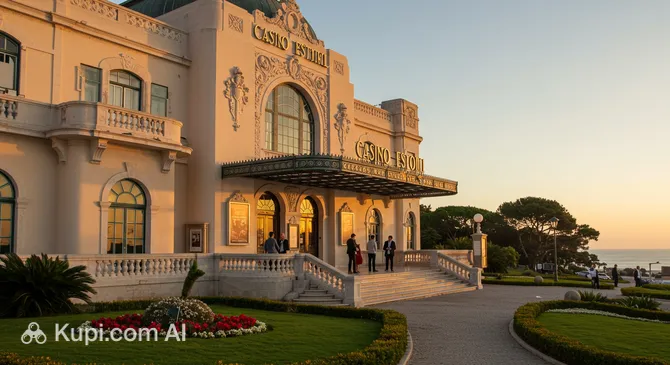
Casino Estoril. Source: Kupi.Binoculars
  • The town has a legendary connection to the world of espionage. During World War II, the Casino Estoril was a notorious gathering spot for spies and diplomats. It was here that author Ian Fleming found the inspiration for his character James Bond and the novel Casino Royale, based on the high-stakes atmosphere he witnessed.

  • Cascais was a technological pioneer in Portugal. In 1878, it became the very first location in the country to have electric streetlights. This innovation was installed to illuminate the Citadel for the birthday celebrations of King Luís I, who had established his summer residence there.

  • In the mid-20th century, the region earned the nickname "Coast of Kings." Following periods of unrest in Europe, Cascais became a sanctuary for exiled monarchs from Italy, Spain, Bulgaria, and Romania, cementing its reputation as a sophisticated retreat for aristocracy.

  • The dramatic chasm known as Boca do Inferno is steeped in local folklore. Legend says a sorcerer created the "Hell's Mouth" to swallow a knight who was trying to elope with a woman the sorcerer desired, trapping them in the crashing waves forever.

How to Get There

Reaching this charming coastal town is straightforward, thanks to its proximity to major transport hubs in Portugal. Whether you are arriving by air or considering an overland journey, there are several options to suit your travel plans. For a comprehensive guide on all available routes and transport modes, you can read more about how to get to Cascais on our detailed page.

The most convenient entry point for international travelers is undoubtedly Lisbon Portela Airport (IATA: LIS). Located in the capital city of Lisbon, it is situated just 23.9 km away from Cascais. As the country's main gateway, it handles a large volume of passengers annually. The journey from the airport to the coast is quick; a taxi or private transfer typically takes approximately 56 minutes, depending on traffic. Another option for those exploring the southern region first is Faro Airport (IATA: FAO) in Faro. However, it is significantly further away, at a distance of about 228 km. Traveling from Faro to Cascais by road would take roughly 6 hours.

For clarity, here is a summary of the main airports:

Airport Name City Passenger Traffic Km from City
Lisbon Portela AirportLisbonLarge23.9
Porto AirportPortoLarge286.9
Faro AirportFaroMedium227.9
Badajoz AirportBadajozSmall224.8

For those considering arrival by train from neighboring Spain, it is important to note that the direct options listed are located across the border. The city of Cascais does not have a long-distance railway station listed in this specific network, but you can arrive at Badajoz Railway Station in the city of Badajoz, which is about 211 km from Cascais. From there, you can get a taxi or bus, which takes about 5.5 hours to reach the Portuguese coast. This route is less common for direct arrivals but serves as a connection point for wider Iberian travel.

Below is the information for the nearest railway stations listed:

Station City Passenger Traffic Km to Center
Mérida Railway StationMeridaMedium266.3
Cáceres Railway StationCaceresMedium273.3
Huelva StationHuelvaMedium270.1
Badajoz Railway StationBadajozSmall210.9

Main Attractions

Cascais offers a delightful array of sights, ranging from historic palaces to modern art havens and serene natural escapes. The town's compact center makes it easy to explore these highlights on foot, allowing visitors to soak in the atmosphere of the Portuguese Riviera.

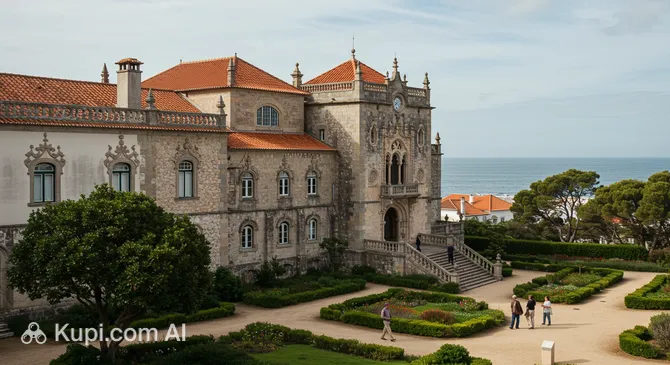
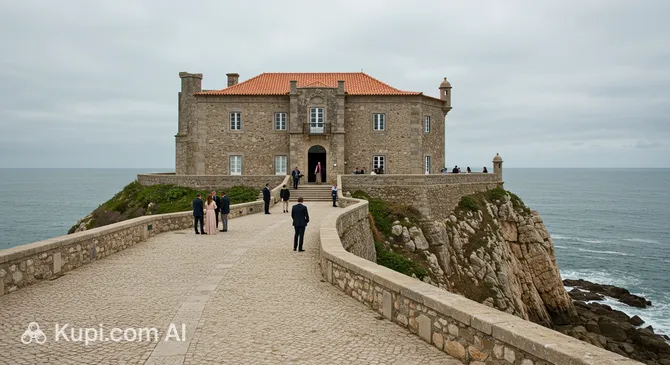
One of the most iconic landmarks is the Condes de Castro Guimarães Museum. Housed in the striking Torre de São Sebastião, this revivalist palace sits right by the water's edge. It is fascinating not only for its eclectic architecture, which features cloister arches and a medieval-style tower, but also for its interior. Visitors can explore a rich collection of Indo-Portuguese furniture, ancient books, and art, all while enjoying views of the private beach directly below the palace.

Condes de Castro Guimarães Museum. Source: Kupi.Binoculars

For art enthusiasts, the Paula Rego House of Stories is an unmissable stop. This museum is dedicated to the works of Paula Rego, one of Portugal's most renowned artists. The building itself is a masterpiece of modern architecture, designed by Pritzker Prize-winner Eduardo Souto de Moura. Its two distinctive red pyramid towers have become a symbol of the town's cultural scene. Inside, you will find a rotating collection of Rego's paintings and drawings, known for their powerful and often storytelling nature.

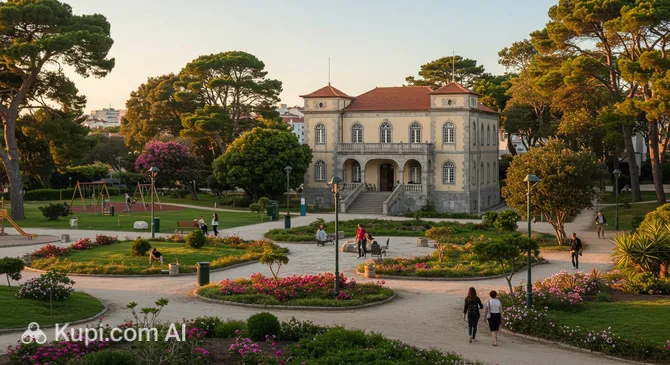
If you are looking for a peaceful retreat away from the bustling streets, Marechal Carmona Park provides the perfect green sanctuary. This extensive garden combines the grounds of two former aristocratic estates and is filled with shady trees, expansive lawns, and flowerbeds. It is a favorite spot for families and nature lovers, famous for the resident peacocks and roosters that roam freely. The park also hosts a small library and a cafe, making it an ideal place for a relaxing afternoon picnic.

Marechal Carmona Park. Source: Kupi.Binoculars

Finally, no visit is complete without admiring the scenic beauty of Santa Marta Beach. Although small, this cove is incredibly photogenic, framed by the Santa Marta Lighthouse and the historic Casa de Santa Maria. The clear waters and the dramatic backdrop of the lighthouse museum make it a popular location for photography and a quick refreshing dip during the warmer months.

Local Cuisine

The culinary scene in Cascais is deeply rooted in its heritage as a fishing village, offering some of the freshest seafood in Portugal. The Atlantic Ocean provides a daily bounty that defines the local menus, making it a paradise for fish lovers. A simple yet exquisite pleasure here is enjoying freshly grilled fish, such as sea bass (robalo) or sea bream (dourada), seasoned only with sea salt and served with boiled potatoes and vegetables to let the natural flavors shine.

Among the signature dishes you must try is Polvo à Lagareiro, a traditional recipe featuring tender octopus roasted with abundant olive oil and garlic, typically accompanied by "punched" baked potatoes. For a lighter starter or a shared snack, Amêijoas à Bulhão Pato (clams in a garlic, coriander, and white wine sauce) is a local favorite that perfectly captures the essence of the coast.

To accompany these maritime delights, the drink of choice is often a chilled glass of Vinho Verde. This young, slightly effervescent "green wine" from northern Portugal pairs exceptionally well with seafood. For a non-alcoholic option, you will find freshly squeezed fruit juices everywhere, but the local culture revolves heavily around coffee. Ending a meal with a strong espresso, known locally as a bica, is a mandatory ritual for the Portuguese.

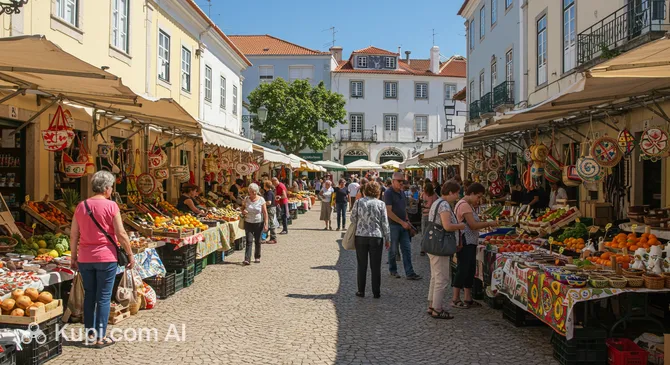
Vila Market. Source: Kupi.Binoculars

The food culture in Cascais blends relaxed seaside dining with sophisticated gastronomy. For an authentic experience, the Vila Market (Mercado da Vila) is a central hub. Here, you can not only see the catch of the day and fresh regional produce but also dine at one of the several themed restaurants located within the market complex, which are popular with both locals and tourists.

Dining out in Cascais can range from cozy, hidden gems to scenic spots with ocean views. If you are looking for a place with a vibrant atmosphere to enjoy small plates and drinks, Taberna Clandestina is a well-regarded spot in the town center. Alternatively, for those who want to combine shopping with dining by the sea, Casa da Guia offers a selection of restaurants perched on the cliffs, providing stunning panoramas while you eat.

Travel Tips

Welcome to Cascais, a destination where seaside elegance meets relaxed Portuguese charm. To ensure your visit to this sunny coastal town is as smooth and enjoyable as possible, we have compiled a list of essential practical tips to help you navigate local life like a pro.

  1. Clothing and Gear: The Atlantic climate is generally mild, but the ocean breeze can be cool, especially in the evenings. Pack layers so you can adapt easily, and bring a windbreaker if you plan to visit the cliffs at Boca do Inferno. Most importantly, the town is paved with traditional Portuguese cobblestones (calçada portuguesa), which are beautiful but can be uneven and slippery; comfortable flat shoes with good grip are an absolute must for exploring the center.

  2. Transportation: Cascais is very compact and best explored on foot. For longer distances along the coast, you do not need to rent a car; instead, take advantage of the BiCas system, which offers free bicycle rentals for daily use. To visit Lisbon, the urban train is the most efficient and scenic option, running frequently along the river. Ride-hailing apps like Uber and Bolt are also widely available and generally affordable for short trips.

  3. Finances: The official currency is the Euro (€). While international credit and debit cards are accepted in most restaurants and shops, some smaller traditional cafés or market stalls may only take cash or the local "Multibanco" cards. It is wise to carry some small bills and coins. Tipping is not mandatory but is appreciated; leaving 5-10% or rounding up the bill is standard for good service.

  4. Health and Safety: Cascais is a safe destination, but standard precautions against pickpocketing should be taken in crowded areas or on the train to Lisbon. Pharmacies are identified by a green cross and are well-stocked; you can find 24-hour service lists on their doors. For emergencies, dial 112. Don't forget high-SPF sunscreen, as the sun reflection off the water and white buildings can be intense even on cloudy days.

  5. Communication: The official language is Portuguese, but English is spoken exceptionally well in Cascais due to its history as a tourist and expat hub. However, learning a few words goes a long way: say "Bom dia" (Good morning) and "Obrigado" (Thank you, if you are male) or "Obrigada" (if you are female). Free Wi-Fi is available in many public squares and cafes, and prepaid SIM cards can be easily bought at Vodafone or MEO stores in the Cascais Villa shopping center.

  6. Local Etiquette: Portuguese people are polite and somewhat formal. It is customary to greet shopkeepers when entering and leaving a store. When dining, be patient; service is often relaxed and not rushed. Dinner is typically eaten later than in northern Europe, with restaurants filling up around 8:00 PM or 9:00 PM.

  7. What to Avoid: Avoid assuming that Spanish is the same as Portuguese or that locals prefer to speak it; sticking to English is often better if you don't speak Portuguese. Also, avoid walking in the designated cycle paths (ciclovias) along the coast, as they are heavily used by cyclists and runners who expect the lane to be clear.

  8. Additional Tip: If you plan to visit multiple museums, look into the Bairro dos Museus (Museum Quarter) pass. It grants access to several top cultural sites within the town, including the Paula Rego House of Stories and the Citadel, often at a better value than buying individual tickets.

By keeping these practicalities in mind, you will be free to focus on what really matters: soaking up the sun, enjoying the fresh Atlantic air, and discovering the unique rhythm of life in Cascais. Have a wonderful trip!

Entertainment & Nightlife

As the sun sets over the Atlantic, the atmosphere in Cascais shifts from a relaxed beach town to a lively and sophisticated hub of evening entertainment. The nightlife here is less about thumping mega-clubs and more about chic bars, open-air socializing, and elegant venues. The heart of the action is undoubtedly the historic center, particularly around Largo de Camões (often just called "The Square") and the trendy "Yellow Street" (Rua Nova da Alfarrobeira), where locals and visitors mingle until late.

For music lovers seeking an intimate and soulful experience, the Cascais Jazz Club is a standout venue. Located near the citadel, this spot is renowned for its cozy ambiance and high-quality live performances, making it a perfect place to unwind with a glass of wine and smooth tunes. It attracts a mature, appreciative crowd and offers a refreshing alternative to the noisier pubs in the main square.

Cascais Jazz Club. Source: Kupi.Binoculars

If you are looking for expertly crafted cocktails in a stylish setting, Mana is a must-visit. This bar has gained popularity for its creative drink menu and vibrant yet laid-back vibe, ideal for starting your night or enjoying a long conversation with friends. For those who crave a grander spectacle, the legendary Casino Estoril is just a short drive or train ride away. As one of the largest casinos in Europe, it offers not just gaming tables but also spectacular shows, concerts, and a glittering nightclub atmosphere.

Practical advice for enjoying the night includes dressing smart-casual, as many venues in Cascais have a polished aesthetic. Bars typically stay open until 2:00 AM or 3:00 AM, while clubs may go later. The town is very safe for night walks, but if you are staying outside the center, ride-hailing apps like Uber and Bolt are readily available and affordable. Prices can be slightly higher than in Lisbon, reflecting the area's upscale reputation.

While evenings are for socializing, daytime entertainment in Cascais offers plenty of active fun beyond the beaches. Families and groups can head to Playbowling Cascais for a competitive afternoon of bowling and arcade games. Alternatively, the Parque das Gerações Skatepark is a dynamic spot to watch local skaters or enjoy the ocean views, adding a youthful energy to this historic coastal town.

Parks & Museums

Beyond its golden coastlines and bustling marina, Cascais prides itself on a rich tapestry of cultural heritage and meticulously maintained green spaces. The city is often referred to as a "Museum Quarter" due to its high concentration of galleries, while its surrounding nature offers a refreshing counterpoint to the urban center.

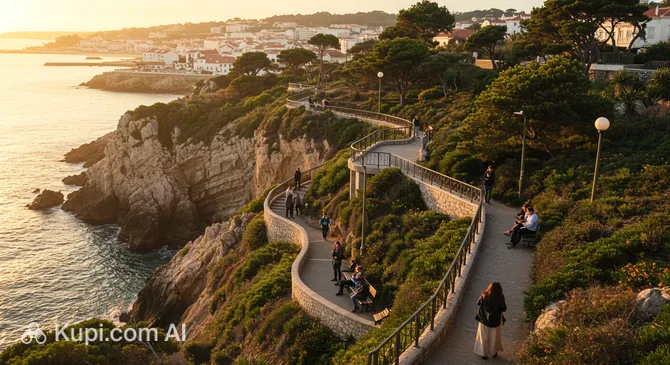
For those seeking tranquility away from the beach crowds, the Penhas do Marmeleiro Urban Park is a fantastic discovery. Situated on a rocky elevation, this space has been transformed into a sustainable ecological park. Raised wooden walkways guide visitors through native vegetation, offering a peaceful route for walking or jogging without disturbing the local flora. It provides a unique perspective of the area's geology and is a favorite among locals for a quiet sunset stroll.

Penhas do Marmeleiro Urban Park. Source: Kupi.Binoculars

Adventure seekers and nature lovers will appreciate the Pedra Amarela Base Camp. Located within the Sintra-Cascais Natural Park, this facility is designed for outdoor activities and environmental education. It serves as an excellent starting point for hiking and mountain biking, connecting visitors directly with the rugged beauty of the region's hills. It is an ideal spot for those looking to experience the wilder side of the Portuguese landscape.

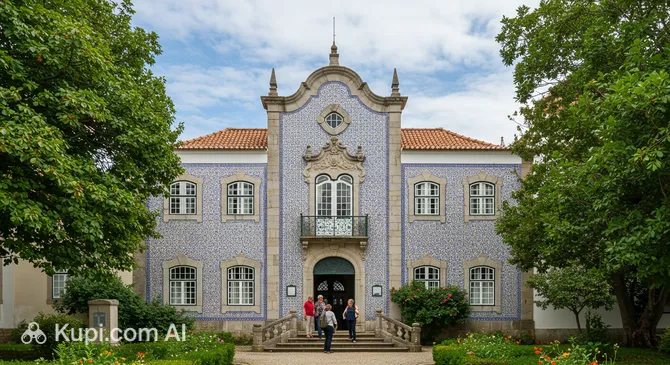
In terms of culture, the Santa Maria House Museum stands as a prime example of 19th-century residential architecture. Built by an Irish aristocrat and later acquired by a grand industrialist, the house is famous for its stunning collection of painted tiles (azulejos) and oil paintings. Its location is arguably one of the most picturesque in town, perched right beside the lighthouse and overlooking the ocean inlet, making the views from its windows as captivating as the art inside.

Santa Maria House Museum. Source: Kupi.Binoculars

Another significant cultural venue is the Dom Luís I Foundation. Located within the Citadel of Cascais historic complex, this center is a hub for contemporary art and cultural dialogue. It hosts a variety of temporary exhibitions, concerts, and conferences, bridging the gap between the town's royal history and modern artistic expression. It is a must-visit for travelers interested in the current intellectual pulse of the city.

For a truly authentic and lesser-known experience, take a walk along the Vineyards Trail. This route offers a rare glimpse into the region's wine-producing heritage, specifically the famous Carcavelos wine, leading you through rural landscapes that feel worlds away from the resort atmosphere of the center.

Getting Around

Public transport in Cascais is efficient, modern, and well-integrated into the wider network of the Lisbon metropolitan area, making it easy for visitors to explore the coastline and neighboring towns without a car. While the historic center is compact and best discovered on foot, a reliable system of trains and buses connects travelers to popular beaches, the natural park, and the capital.

The backbone of the local transport system is the urban train (CP - Comboios de Portugal). The Cascais Line runs along the scenic coast, connecting the town center directly to Lisbon's Cais do Sodré station. This railway does not just serve as a commuter link but is also a tourist attraction in itself, offering sweeping ocean views for much of the journey. Trains run frequently, often every 20 minutes, from early morning until late at night, acting as the primary mode of travel for those day-tripping to or from the capital.

For exploring the municipality and reaching destinations like Guincho Beach or the Sintra hills, the bus network is essential. These services are largely operated by Carris Metropolitana, easily recognizable by their yellow branding. The main bus terminal is located centrally, just beneath the Cascais Villa shopping center, adjacent to the train station. From here, you can catch routes that loop around the town or head towards the rugged western coastline.

To pay for your journeys, the most convenient option is the rechargeable Navegante Occasional card (formerly known as Viva Viagem). This paper card can be purchased for a nominal fee at automatic vending machines in the train station or at ticket offices. Tourists are advised to use the "Zapping" method, where you load a monetary value onto the card (e.g., €5 or €10), which is then deducted as you travel. This is generally cheaper than buying single tickets onboard and can be used on both the train and Carris Metropolitana buses. Remember to always validate your card by tapping it on the readers before boarding the train or immediately upon entering a bus.

A unique and highly popular feature of the city's transport is the BiCas bike-sharing system. Managed by the local mobility authority, these "bicycles of Cascais" are available for free daily use. Visitors can pick one up at designated stations (such as near the train station or the marina) by presenting a valid ID and sometimes leaving a small deposit. It is an eco-friendly and fun way to ride along the dedicated coastal cycle path (ciclovia) to Guincho.

For those preferring more direct and private transport, taxis are widely available and can be found at designated ranks; they are typically beige or black with a green roof. Alternatively, ride-sharing apps like Uber and Bolt operate extensively in the area, offering a convenient way to get around, especially for evening trips or reaching secluded restaurants. While car rentals are an option, parking in the center can be challenging and expensive during peak summer months, making the combination of walking, buses, and ride-shares the most stress-free choice.
Accommodation

Where to Stay:

Accommodation in Cascais caters to a wide spectrum of travelers, ranging from opulent five-star palaces to charming boutique guesthouses and budget-friendly hostels. As a premier resort town, the standard of hospitality is generally high, reflecting its history as a retreat for royalty and aristocracy. Visitors can choose between staying in the heart of the historic center, which offers immediate access to restaurants and beaches, or opting for the quieter, more scenic outskirts near the golf courses and rugged coastline.

For those who prioritize convenience and atmosphere, the historic center is the most popular choice. Staying here means you are within walking distance of the train station, the marina, and the main sandy coves. Alternatively, the area surrounding the Guincho coast is perfect for nature lovers and surfers who prefer a more secluded and dramatic setting, often requiring a car or bike to reach the town center. The neighboring area of Estoril, just a short walk or train ride away, also offers excellent hotel options, often at slightly more competitive rates while still being close to the action.

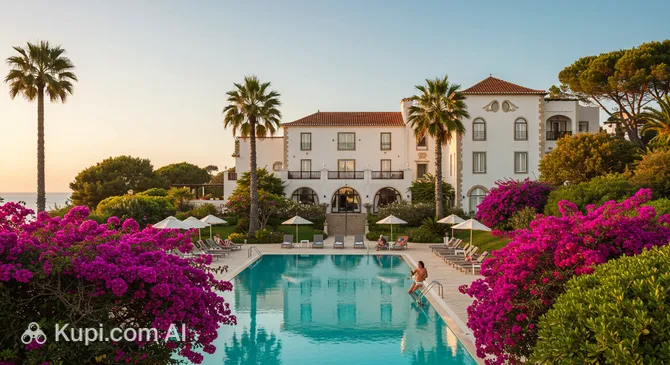
Travelers seeking a blend of leisure and independence might consider the Vila Bicuda Resort. Located near the Quinta da Marinha area, this property is a fine example of the region's resort-style accommodation, offering spacious villas and suites surrounded by landscaped gardens. It is particularly well-suited for families or those planning an extended stay who value self-catering facilities alongside hotel amenities.

Vila Bicuda Resort. Source: Kupi.Binoculars

Booking Tips: Cascais is an extremely popular summer destination, and the best properties often fill up months in advance. If you plan to visit during the peak season of July and August, it is highly recommended to book your accommodation well ahead of time to secure your preferred dates and better rates. During the shoulder seasons of spring and autumn, availability is better, and you may find attractive deals even for luxury stays.

Price Range: generally reflects the town's upscale reputation. While budget options like hostels and local guesthouses (Alojamento Local) are available, prices for mid-range and luxury hotels can be higher than the national average, especially in summer. Most accommodations can be easily booked via major online platforms, though contacting smaller guesthouses directly can sometimes yield a more personalized service or a better price.

Nearby Cities

For those looking to explore the surroundings, Cascais serves as an excellent base for day trips to several interesting nearby locations. The region is rich in history and natural beauty, offering diverse experiences just a short distance from the coast.

The most popular day trip is undoubtedly to Lisbon, the Portuguese capital, which is easily accessible by a scenic train ride. Visitors can explore the historic neighborhoods of Alfama and Baixa, ride the iconic yellow trams, or visit world-class monuments like the Jerónimos Monastery in Belém. It is a vibrant city that perfectly balances traditional charm with cosmopolitan energy.

Another unmissable destination is Sintra, a fairy-tale town nestled in the cool hills of the Serra de Sintra. Famous for its romantic 19th-century architecture, it is home to the colorful Pena Palace and the mysterious gardens of Quinta da Regaleira. The magical atmosphere and lush forests make it a UNESCO World Heritage site that provides a striking contrast to the beachside setting of Cascais.

City Population Distance (km)
Lisbon2,719,00023
Sintra377,83513
Loures205,05424
Almada177,26821
Amadora175,13616

These nearby destinations offer a glimpse into the diverse culture and landscapes of the region, ensuring that your visit to Portugal is filled with memorable discoveries.

Shopping & Souvenirs

Shopping:

Cascais offers a delightful blend of traditional charm and modern convenience, catering to every taste from luxury seekers to souvenir hunters. The town center is a pedestrian-friendly maze of streets, particularly the lively Rua Frederico Arouca, which is lined with boutique clothing stores, artisan shops, and inviting cafes. Here, visitors can find high-quality leather goods, linens, and typical Portuguese handicrafts while enjoying the vibrant street atmosphere.

For a unique retail experience with a view, Casa da Guia is an essential stop. Located on the cliffs overlooking the ocean, this historic 19th-century mansion has been transformed into a charming commercial hub. It features a collection of small boutiques selling fashion, home décor, and design pieces, all surrounded by lush gardens and spectacular Atlantic panoramas. It is the perfect place to browse for exclusive items before relaxing at one of the cliffside eateries.

Casa da Guia. Source: Kupi.Binoculars

Travelers looking for a more extensive range of international brands and services should head to CascaiShopping. As one of the largest shopping centers in the region, it houses over 200 stores, including major fashion retailers, electronics shops, and a cinema complex. Its distinctive architecture and decor often pay homage to the local seaside culture, creating a pleasant environment for a full day of retail therapy away from the sun.

Those interested in local flavors and authentic products must visit the Vila Market (Mercado da Vila). While it is famous for its fresh fish and produce, the market also hosts themed fairs on specific days, ranging from antiques and books to gourmet food products. It is an excellent spot to purchase regional delicacies such as honey, cheeses, and Portuguese wines to take home as gifts. Don't forget to look for items made of cork or traditional hand-painted ceramics, which are iconic souvenirs of Portugal.

Reached the end of the page?

That means the route is fully explored