Support

Huelva

About

Huelva is a captivating port city located in the southwestern corner of Andalusia, Spain. Situated along the Gulf of Cádiz coast, where the Odiel and Tinto rivers converge, this provincial capital offers a unique blend of maritime heritage and industrial history. Unlike some of its more crowded neighbors, the city provides a tranquil yet vibrant setting where visitors can experience authentic local culture.
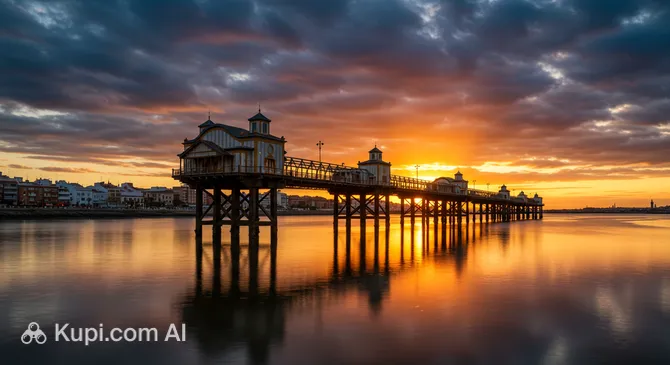
Huelva. Source: Kupi.Binoculars

With a population of approximately 142,000 inhabitants, the city maintains a welcoming atmosphere, distinct from the busy tourist hubs of the region. Visitors are often drawn to its incredible light, characteristic of the Costa de la Luz, and its mild climate which makes exploration pleasant year-round. The city serves as an excellent base for exploring the surrounding natural landscapes, including the marshes of the Odiel.

The history of Huelva is rich and multifaceted, dating back to the ancient Tartessians and heavily influenced by the British mining companies of the 19th century. Perhaps most notably, the region played a pivotal role in the discovery of the Americas, as it was here that Christopher Columbus planned his famous voyage. This deep connection to exploration is felt throughout the city and its monuments.

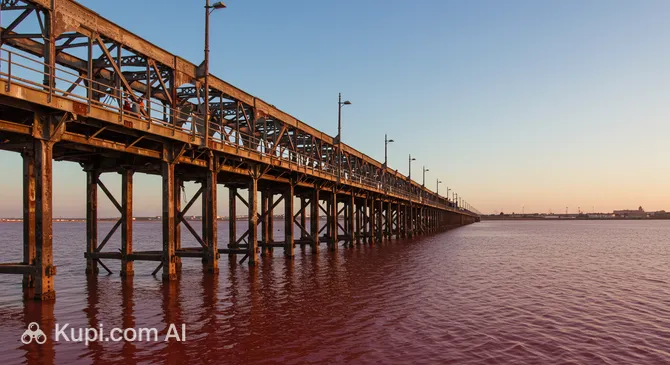
Modern travelers will find plenty to admire, from the impressive Muelle de Rio Tinto, an iron pier that stretches gracefully into the water—a perfect spot for sunset views—to the lively Plaza de las Monjas in the city center. The city also acts as a gateway to the stunning Doñana National Park, a UNESCO World Heritage site known for its diverse ecosystem and wildlife.

Whether you are interested in following the footsteps of explorers or simply enjoying fresh seafood by the estuary, Huelva invites you to discover its hidden treasures. It is a perfect destination for those seeking a genuine experience full of culture, history, and natural beauty.
Weather Overview

Huelva enjoys a warm climate typical of the southern Spanish coast, characterized by hot, sunny summers and mild winters. The city is known for its abundant sunshine, making it an attractive destination throughout the year. For travelers planning their trip and packing lists, checking the detailed weather in Huelva is recommended to ensure you are prepared for the specific conditions during your stay.

Summers in the region are dry and hot, particularly in July and August, when average maximum temperatures climb to around 34°C. During these months, rainfall is virtually non-existent, with zero wet days recorded, ensuring uninterrupted beach days and outdoor activities. The heat is often tempered by the coastal breeze, but visitors should still be prepared for high temperatures.

Winters remain pleasant and generally mild compared to the rest of Europe. In January, the coolest month, temperatures typically range from a low of 7.2°C to a high of 15.9°C. While the summer is extremely dry, the cooler months do bring occasional rain, with March seeing the highest frequency of wet days, averaging about 9 days of precipitation. Overall, expect hot summers with clear skies and mild winters with occasional rainfall.

Interesting Facts

Beyond the popular historic sites, Huelva holds many fascinating secrets that reveal its unique blend of cultures and deep connection to global history. From its surprising British heritage to its status as a pioneer in Spanish sports, the city offers curious travelers plenty of hidden gems to uncover.
Riotinto Pier. Source: Kupi.Binoculars
  • Huelva is the birthplace of football in Spain. The local team, Recreativo de Huelva, was founded in 1889 by British workers from the mining companies, earning it the title of "El Decano" (The Dean). This sporting legacy is a point of immense pride for the locals and predates famous clubs like Real Madrid or FC Barcelona.

  • The city features a neighborhood that looks entirely like a Victorian English village. The Barrio Reina Victoria, also known as Barrio Obrero, was built by the Rio Tinto Company to house its workers. This British influence also left behind the spectacular Riotinto Pier, an engineering marvel constructed to load ore that now serves as a stunning promenade over the river.

  • The striking Monument to Christopher Columbus at Punta del Sebo was actually a gift from the United States. Erected in 1929 by the Columbus Memorial Foundation, this massive cubist sculpture stands 37 meters tall and symbolizes the figure of a navigator looking west toward the New World.

  • Just minutes from the city center lies a natural sanctuary where thousands of pink flamingos reside. The Marismas del Odiel is a UNESCO Biosphere Reserve that serves as a crucial stopover for migratory birds, offering a wild and colorful spectacle right on the city's doorstep.

How to Get There

Reaching this part of Andalusia is relatively straightforward, although the city itself does not have an airport. Visitors typically arrive via neighboring cities or by train. You can find detailed information on all transport options in our guide on how to get to Huelva.

Since Huelva does not have its own airport, the most convenient entry points are the major hubs in nearby Seville and Faro (Portugal). Seville Airport (SVQ), located in the city of Seville, is approximately 95 km from Huelva. It is a major international gateway, and the drive to Huelva by taxi or rental car typically takes about 1 hour and 15 minutes. Alternatively, travelers can fly into Seville Airport and then take a bus or train to their final destination.

Another excellent option is Faro Airport (FAO), situated in Faro, Portugal, also about 95 km away. This international airport serves the Algarve region and is very close to the Spanish border. The journey from Faro Airport to Huelva takes approximately 1 hour and 15 minutes by car via the highway. For those looking for regional connections, Jerez Airport in Jerez de la Frontera is another possibility, located roughly 97 km away.

For clarity, here is a summary of the main airports:

Airport Name City Passenger Traffic Km from City
Faro AirportFaroLarge95.0
Seville AirportSevilleLarge94.6
Jerez AirportJerez de la FronteraMedium97.3
North Front AirportGibraltarMedium188.3
Badajoz AirportBadajozSmall181.2

Traveling by train is a comfortable way to arrive directly in the city. Huelva Station is located within Huelva itself, just 1.2 km from the city center, making it very convenient for travelers. It offers connections to Madrid and other regional destinations. However, for more frequent high-speed connections, many visitors choose to arrive at Santa Justa Railway Station in the city of Seville, which is about 87 km away. From Seville, you can easily transfer to a train or bus heading to Huelva.

Below is an overview of the nearest railway stations:

Station City Passenger Traffic Km to Center
Santa Justa Railway StationSevilleHigh87.0
Jerez Railway StationJerez de la FronteraMedium97.2
Cádiz StationCadizMedium100.0
Huelva StationHuelvaSmall1.2
Badajoz Railway StationBadajozSmall180.8

Main Attractions

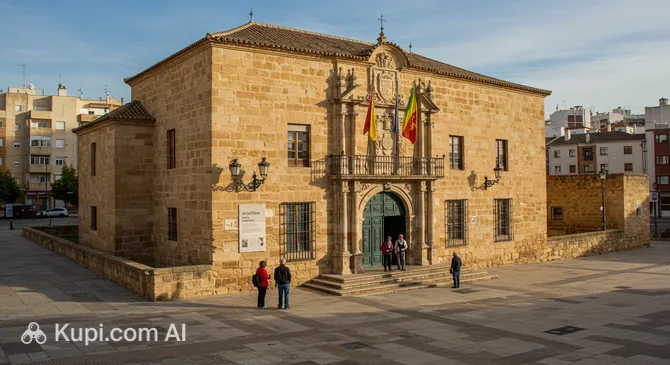
One of the most emblematic buildings in the city is the Casa de Colón. Originally constructed in the late 19th century as a luxury hotel for British businessmen associated with the mining industry, it now serves as a vibrant conference and exhibition center. Tourists are drawn to its colonial-style architecture and beautiful interior gardens, which host the annual Huelva Ibero-American Film Festival, making it a cultural cornerstone of the city.

Casa de Colón. Source: Kupi.Binoculars

For a deep dive into the region's rich heritage, the Huelva Museum is an essential stop. The facility is divided into sections dedicated to archaeology and fine arts, showcasing artifacts that trace the area's history from the enigmatic Tartessian civilization to the Roman era. Visitors particularly appreciate the ancient mining tools found in the Riotinto mines and the impressive collection of paintings by local artists.

Huelva Museum. Source: Kupi.Binoculars

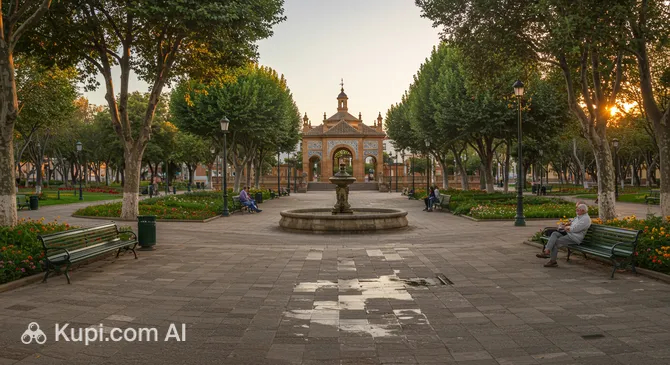
Nature lovers seeking a break from the urban bustle should visit Moret Park. Known as the "green lung" of Huelva, this expansive urban park offers a mix of landscaped gardens, wooded areas, and archaeological remains. It is a fantastic spot for a leisurely walk, a family picnic, or simply enjoying the panoramic views of the marshes from its elevated points, providing a peaceful retreat within the city limits.

Moret Park. Source: Kupi.Binoculars

To experience the city's modern maritime connection, a stroll along the Paseo de la Ría is highly recommended. This contemporary promenade runs along the Odiel river estuary, featuring architectural pergolas that mimic the waves of the sea. It is a favorite gathering place for locals and tourists alike to watch the sunset, enjoy the breeze, and admire the industrial yet scenic landscape of the riverfront.

Local Cuisine

The gastronomy of Huelva is a spectacular fusion of the sea and the mountains, widely celebrated for the exceptional quality of its ingredients. The absolute queen of local tables is the Gamba Blanca (white prawn), renowned for its intense flavor and typically served simply boiled with coarse salt to preserve its natural taste. Another staple is the choco (cuttlefish), which is so essential to the local identity that residents are affectionately nicknamed "choqueros." It is often enjoyed fried as strips or in the traditional stew habas con chocos (broad beans with cuttlefish).

From the nearby Sierra de Aracena comes the world-famous Jamón de Jabugo (Iberian ham), a cured meat delicacy that melts in the mouth and is considered among the best in the world. Visitors should also look for coquinas (wedge clams) sautéed with garlic, parsley, and white wine, as well as mojama (cured tuna), often referred to as the "ham of the sea." For a sweet finish, the region is a major producer of strawberries and red fruits, which are a common and delicious dessert option.

To accompany these savory dishes, the local choice is undoubtedly a wine from the Condado de Huelva Denomination of Origin. These fruity, young white wines pair perfectly with the fresh seafood and fish dishes. For something unique, you might try a Vino Naranja, an orange-infused wine that is typical of the region and often served as an aperitif or with dessert.

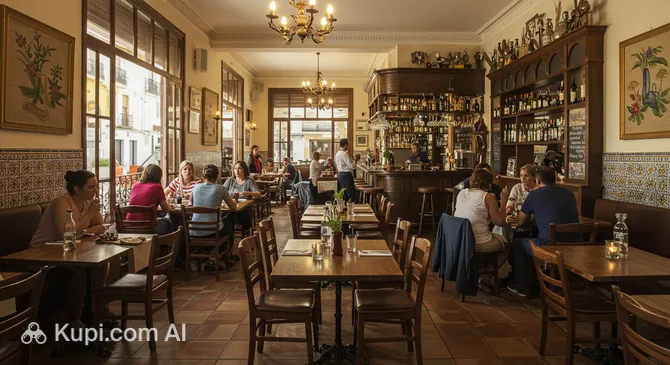
Azabache Restaurant. Source: Kupi.Binoculars

Dining in Huelva is a social affair, often centered around sharing tapas and raciones (larger portions) in a lively atmosphere. For an authentic taste of traditional Andalusian cuisine, you can visit Azabache Restaurant, a well-regarded spot known for its fresh seafood and high-quality regional classics. The city's food scene ranges from bustling food markets, like the Mercado del Carmen, to relaxed terraces where locals gather for hours.

The tapas culture is vibrant, allowing visitors to sample a wide variety of flavors in a single meal. If you are looking for a casual place with an extensive selection of bite-sized treats, Bar Pappis is a popular choice among locals for its creative and generous tapas. Whether you choose a sit-down meal or a tapas crawl, the culinary experience in Huelva is defined by freshness and tradition.

Travel Tips

Welcome to Huelva! To ensure your visit to this sun-drenched Andalusian gem is as smooth and enjoyable as possible, we have compiled a set of essential guidelines. These practical insights will help you navigate local customs, logistics, and daily life like a seasoned traveler.

  1. Clothing and Gear: Given the intense sunshine, especially in summer, lightweight and breathable clothing is essential, along with a high-quality sunscreen, sunglasses, and a hat. If visiting in winter, bring layers and a light jacket, as evenings can be cool and humid near the river. Since the city center and the famous Muelle de Rio Tinto are best explored on foot, pack comfortable walking shoes.
  2. Transportation: Huelva is a very walkable city, and you can easily reach most central attractions on foot. For longer distances, the local bus network (Emtusa) is reliable and affordable. Taxis are readily available and can be hailed on the street or via phone. While you do not need a car for the city itself, renting one is highly recommended if you plan to explore the nearby beaches of Punta Umbría or the Doñana National Park.
  3. Finances: The local currency is the Euro (EUR). Credit and debit cards are widely accepted in most hotels, shops, and restaurants, but it is wise to carry some cash for small purchases in traditional bars or kiosks. ATMs are plentiful throughout the city. Tipping is not mandatory in Spain, but leaving small change or rounding up the bill is a polite gesture if the service was good.
  4. Health and Safety: Huelva is generally a very safe city for tourists, though standard precautions against pickpocketing should be taken in crowded areas. Pharmacies are marked with a green cross; they are well-stocked, and there is always one on "guardia" duty (open 24 hours) on a rotating basis. For any emergencies, dial 112, which is the general emergency number for police, fire, and ambulance services.
  5. Communication: Spanish is the primary language, and the local Andalusian accent can be fast and distinct. English is not as widely spoken here as in major tourist hubs like Madrid or Barcelona, so learning a few basic phrases like "Hola" (Hello), "Por favor" (Please), and "Gracias" (Thank you) will go a long way. Free Wi-Fi is often available in cafes and public squares, and buying a local SIM card is easy at phone shops in the center.
  6. Local Etiquette: Andalusians are warm and friendly; a common greeting is a handshake or two kisses on the cheeks (usually for women or between a man and a woman who know each other). Dining times are significantly later than in northern Europe: lunch is typically served between 2:00 PM and 4:00 PM, and dinner often starts after 9:00 PM. Do not be surprised by the volume of conversation in bars; it is a sign of a lively and happy atmosphere.
  7. What to Avoid: Try not to expect dinner service before 8:30 PM, as most kitchens will be closed. Avoid rushing the service in restaurants; dining here is a leisurely social activity meant to be enjoyed slowly. Also, do not assume shops are open in the mid-afternoon; many smaller local businesses close for siesta between 2:00 PM and 5:00 PM.
  8. Additional Tip: Embrace the "tapas" culture by moving from bar to bar rather than staying in one place for a full meal. This is how locals socialize, especially around the Plaza de las Monjas. Also, if you visit the markets, never touch the produce yourself; always ask the vendor to serve you.

Armed with these practical tips, you are ready to immerse yourself in the authentic rhythm of Huelva. We hope your stay is filled with wonderful discoveries, delicious flavors, and the warm hospitality that defines this corner of Spain.

Entertainment & Nightlife

For visitors interested in shopping, Huelva offers a diverse mix of modern facilities and traditional commerce. The largest retail destination is the Holea Shopping Center, an open-air complex located on the outskirts of the city. It features a wide range of international fashion brands, a cinema, and numerous dining options, making it a comprehensive leisure hub for the region.

Closer to the city center, the Costa Luz Shopping Center provides another convenient option, anchored by a large department store. Apart from these malls, the pedestrian streets around Calle Concepción invite travelers to explore local boutiques and shoe shops, reflecting the city's commercial vitality.

The nightlife in Huelva is vibrant and welcoming, with many venues situated near the center and the Alameda Sundheim area. A popular spot to start the evening is La Tribu Bar, known for its extensive cocktail menu and relaxed atmosphere. It serves as a common meeting point for locals before they head out to late-night venues.

For those seeking a more energetic experience, the Theatre Social Club offers a dynamic setting for dancing and music. This venue is a staple of the local night scene, frequently hosting events and DJ sets. If you prefer a quieter form of relaxation, a stroll through Zafra Park provides a peaceful open-air museum experience with its collection of sculptures.

Parks & Museums

Huelva offers a delightful balance of urban greenery and preserved heritage, providing visitors with serene spaces to relax and cultural venues that tell the story of its rich past. From landscaped gardens near the estuary to centuries-old religious buildings housing artistic treasures, the city invites exploration beyond its main thoroughfares.

One of the city's notable green spaces is Antonio Machado Park. Located strategically near the port area, this park serves as a transitional space between the city and the estuary. It is an excellent spot for a peaceful walk, offering visitors landscaped pathways and a chance to enjoy the maritime breeze away from the traffic. It is particularly popular for its proximity to the water, allowing for a seamless connection with the city's seafaring identity.

Another significant urban area is the Parque de la Luz Square. This vast open space functions as a vital community hub in the Fuentepiña neighborhood. Unlike a traditional enclosed garden, it is a lively plaza where locals gather, children play, and the daily rhythm of Huelva can be observed. It offers a more authentic, residential atmosphere for travelers looking to step off the beaten tourist track and observe local life.

While the provincial museum covers the archaeological timeline, the city's churches act as impressive galleries reflecting its cultural and artistic history. The Church of Saint Peter, Huelva is the oldest religious building in the city. Constructed on the remains of a former mosque, this Mudéjar-style temple stands atop a hill, offering both architectural beauty and commanding views. Its interior preserves a wealth of religious art and history that dates back to the 14th century, making it a must-visit for history enthusiasts.

Equally important is the Church of the Immaculate Conception. Situated in the heart of the pedestrian center, this church is a prime example of the Baroque style and holds the distinction of being the first temple in Spain dedicated to the Immaculate Conception. Inside, visitors can admire significant works of religious imagery, including sculptures by renowned Andalusian artists, effectively serving as a museum of sacred art.

Deeply rooted in local tradition is the Monument to the Virgin of El Rocío. Located in the Plaza del Punto, this impressive sculptural group captures the emotion and grandeur of the El Rocío pilgrimage, one of the most important cultural and religious events in Andalusia. The monument depicts the procession with dynamic realism, offering tourists a glimpse into the passionate folklore of the region.

For a truly atmospheric experience, try visiting the square surrounding the Church of Saint Peter at sunset. The whitewashed walls of the church glow in the golden light, and the quiet, elevated location provides a perfect moment of reflection before heading back down to the bustling city center for dinner.

Getting Around

Public Transport:

Navigating Huelva is remarkably straightforward, largely due to the city's compact size and pedestrian-friendly layout. For many visitors, walking is the most efficient and enjoyable way to explore the historic center and the main shopping districts. However, when you need to travel further afield, such as to the university, the hospitals, or the outlying neighborhoods, the city offers a reliable and efficient public bus network. There is no metro, tram, or trolleybus system in the city, as the bus service covers all necessary routes effectively.

The urban bus service is managed by the municipal company, EMTUSA. These buses are easily recognizable, typically painted in blue and white, and connect the city center with key locations like the train station and the Holea Shopping Center. The network consists of several lines that operate frequently throughout the day. Bus stops are well-marked, often featuring maps and timetables to help you plan your journey. For tourists, lines connecting the center to the bus station and the outer commercial areas are usually the most relevant.

Regarding payment, you have a few options. A single ticket can be purchased directly from the driver when you board the bus; it is advisable to carry small change, as drivers may not be able to break large bills (usually anything over 20 euros). The price for a single trip is approximately €1.10. If you plan to use the bus frequently during your stay, it is highly recommended to purchase a travel card known as the Bonobús. This rechargeable card significantly reduces the cost per trip to around €0.65 and allows for transfers between lines within a certain time window.

Travel cards cannot be bought on the bus itself. Instead, you should visit a local tobacco shop (look for the brown and yellow "Tabacos" sign) or an authorized kiosk to purchase and top up the card. To validate your trip, simply tap your card on the reader located near the driver's cabin when you board. Public transport generally operates from around 7:00 AM until 11:00 PM, though frequencies may decrease on weekends and holidays. Night bus services are limited, so it is best to check the specific schedule if you plan to stay out late.

For those preferring a more direct mode of transport, taxis are widely available and reasonably priced compared to larger European cities. Official taxis are white with a diagonal blue stripe on the front doors and a green light on the roof indicating availability. You can hail them on the street, find them at designated ranks (stops) near major plazas and stations, or book one via telephone. Ridesharing apps are less common here than in major capitals, so traditional taxis remain the standard choice for private transport.

A unique and historic feature of local transport is La Canoa. While not a standard commuter vehicle, this traditional passenger ferry connects the Huelva wharf with the town of Punta Umbría during the summer months. It is a beloved local icon and offers a scenic alternative to the bus for those heading to the beach, turning a simple commute into a pleasant boat ride through the Odiel Marshes.

Finally, the city's flat terrain makes it excellent for cycling. While there isn't a massive public bike-sharing scheme comparable to larger metropolises, the network of bike lanes continues to expand, connecting the city center with the Paseo de la Ría and university areas. Renting a bike can be a fantastic way to enjoy the waterfront promenade and the nearby natural parks at your own pace.

Accommodation

Accommodation in Huelva caters to a variety of travelers, ranging from those visiting for business to tourists exploring the rich history of the province. The city offers a solid selection of lodging options, primarily consisting of modern mid-range hotels, functional guesthouses (known locally as hostales), and an increasing number of private tourist apartments. While it lacks the abundance of sprawling luxury resorts found in nearby coastal towns, visitors will find comfortable and well-equipped facilities that provide excellent value for money.

The most convenient area for tourists to stay is the **City Center**, particularly around the Plaza de las Monjas and the pedestrianized shopping streets. Staying here places you within walking distance of key attractions, such as the train station and the vibrant dining scene. For those who prefer easy access to the highway for day trips to the beaches or the mountains, the areas surrounding the main avenues leading out of the city offer modern hotels with easier parking facilities.

Regarding pricing, Huelva is generally more affordable than other major Andalusian capitals like Seville or Málaga. Travelers can typically find high-quality accommodation at moderate prices, especially outside of the peak summer months. Booking is usually straightforward through major online platforms or directly with the establishments. However, it is highly advisable to book well in advance if you plan to visit during major local events, such as the **Colombinas Festival** in early August or during Holy Week, when demand spikes significantly.

Nearby Cities

For those looking to explore the surroundings, Huelva serves as an excellent base for day trips to several interesting nearby locations:

Moguer is a charming town steeped in literary history, widely known as the birthplace of the Nobel Prize-winning poet Juan Ramón Jiménez. Visitors can explore the museum dedicated to his life and work, wander through its whitewashed streets, and admire the Monastery of Santa Clara, a national monument with deep ties to the discovery of the Americas.

Almonte offers a unique cultural experience, primarily due to the famous village of El Rocío located within its municipality. This hamlet, with its unpaved sandy streets and Wild West appearance, hosts one of Spain's most significant religious pilgrimages. It also serves as a key gateway to the stunning Doñana National Park, making it a perfect destination for both cultural immersion and nature observation.

Ayamonte sits picturesquely at the mouth of the Guadiana River, directly across from Portugal. This border town features a delightful historic center filled with lively squares and churches. It is also the access point to the beautiful beaches of Isla Canela and Punta del Moral, offering a relaxing mix of riverside scenery and coastal leisure.

City Population Distance (km)
Lepe2861723
Almonte2544838
Moguer226439
Aljaraque220787
Ayamonte2172541

These nearby destinations offer a glimpse into the diverse culture and landscapes of the region.

Shopping & Souvenirs

Shopping in Huelva offers a delightful mix of traditional Andalusian charm and modern retail convenience. While the city may not be a massive metropolis, it provides a relaxed atmosphere where visitors can browse everything from high-street fashion to artisanal local products. The experience is characterized by friendly service and walkable districts, making it easy to combine a day of sightseeing with some retail therapy.

The heart of the city's commercial life beats in the pedestrianized streets of the historic center. The main artery is Calle Concepción, along with the adjacent Calle Berdigón and Calle Palacios. This area, often referred to as an "Open Air Shopping Center," is lined with a variety of boutiques, shoe stores, and perfumeries. It is a bustling spot where locals go to update their wardrobes or simply enjoy a window-shopping stroll amidst beautiful architecture.

For those who prefer having everything under one roof, the city boasts excellent modern facilities. The Holea Shopping Center is a favorite destination, offering an extensive selection of international clothing brands, accessories, and leisure options in a contemporary open-air setting. It is the perfect place to find the latest trends or enjoy a break at one of its many cafes.

Another key spot is the Costa Luz Shopping Center, which is anchored by the renowned El Corte Inglés department store. This location is ideal for travelers looking for high-quality electronics, cosmetics, and gourmet food items, all within a more traditional indoor mall environment.

To truly understand the local culture, a visit to the Mercado del Carmen is essential. This vibrant food market is a sensory explosion of fresh colors and scents, showcasing the region's best produce. While it is primarily a place for groceries, it is the best spot to see the famous fresh seafood, including the white prawns, and to soak up the lively daily rhythm of the Onubenses.

When it comes to souvenirs, Huelva specializes in gastronomic treasures. The most prized item to bring back is undoubtedly Jamón de Jabugo (Iberian ham), which can be vacuum-packed for travel. Bottles of Vino del Condado or the unique orange wine (Vino Naranja) also make for distinct gifts. For non-edible keepsakes, look for traditional ceramics or leather goods, which reflect the deep craftsmanship roots of Andalusia.

Store opening hours typically follow the traditional Spanish schedule. Small local shops usually open around 10:00 AM, close for siesta between 1:30 PM and 5:00 PM, and then reopen until 8:30 PM or 9:00 PM. In contrast, major shopping malls and department stores generally remain open all day from 10:00 AM to 10:00 PM without a break. Credit and debit cards are widely accepted, though carrying some cash is useful for small purchases in markets or kiosks.

Travelers residing outside the European Union are eligible for a Value Added Tax (VAT) refund on purchases of certain goods. Look for stores displaying the "Tax Free" sign and ask for a refund form at the checkout. The digital DIVA system at airports and ports has streamlined the validation process, making it easier to claim your refund before leaving Spain.

Reached the end of the page?

That means the route is fully explored