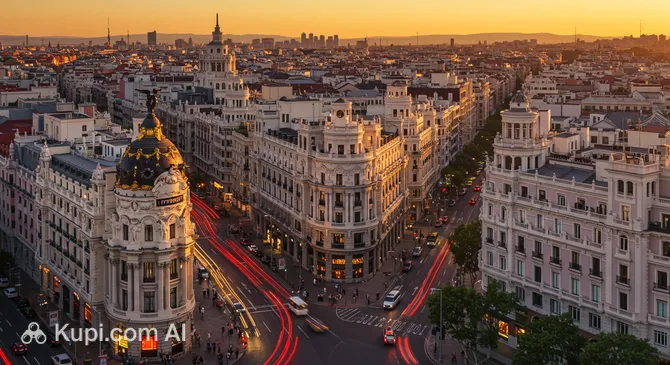
Madrid, the vibrant capital of Spain, is a city renowned for its infectious energy, rich cultural tapestry, and open-minded atmosphere. As the political, economic, and cultural heart of the nation, it offers a dynamic blend of historic grandeur and modern urban life that captivates visitors from the moment they arrive.
Situated on the high central plateau of the Iberian Peninsula, Madrid holds the distinction of being the highest capital city in the European Union. This unique geographical location contributes to its dry climate, characterized by hot summers and cool winters. With a metropolitan population of over 6 million people, it is a bustling hub that nevertheless maintains a welcoming and relaxed charm.
Madrid. Illustration.
Source: Kupi.com AI
The history of Madrid is deeply woven into its streets and architecture, evolving from a 9th-century fortress into a majestic imperial center. Visitors can admire this heritage in landmarks like the breathtaking Royal Palace, which is one of the largest in Europe, or by wandering through the historic Madrid of the Austrians district.
Art lovers will find themselves in paradise here, particularly within the famous Golden Triangle of Art. This area is home to the world-class Prado Museum, the Reina Sofía, and the Thyssen-Bornemisza. Beyond art, the city invites you to relax in the expansive El Retiro Park or enjoy the lively ambiance of the Plaza Mayor.
Whether you are seeking culinary delights in a local tapas bar, exploring artistic masterpieces, or simply soaking up the sun in a grand plaza, Madrid promises an unforgettable travel experience full of life and color.
Weather Overview
The climate in the Spanish capital is characterized by hot, dry summers and cool winters, making it a year-round destination with distinct seasonal vibes. During the peak summer months of July and August, the city heats up significantly, with average temperatures hovering around 26°C and daily highs often reaching 34°C. Rain is exceptionally rare during this time, with barely any wet days recorded.
In contrast, the winter season brings brisk weather, particularly in January when the average temperature drops to approximately 5.8°C and nights can be as cold as 1°C. For travelers planning their wardrobe, checking the weather in Madrid is advisable, especially during the transitional months of spring and autumn. April and November, for instance, are milder but tend to be the dampest times of the year, seeing up to 10 wet days per month.
Average monthly temperature
Average monthly precipitation
Interesting Facts
Beyond the main attractions, Madrid holds many fascinating secrets and curiosities that often escape the casual observer. Digging a little deeper reveals unique historical quirks and record-breaking landmarks that add layers of intrigue to the Spanish capital.
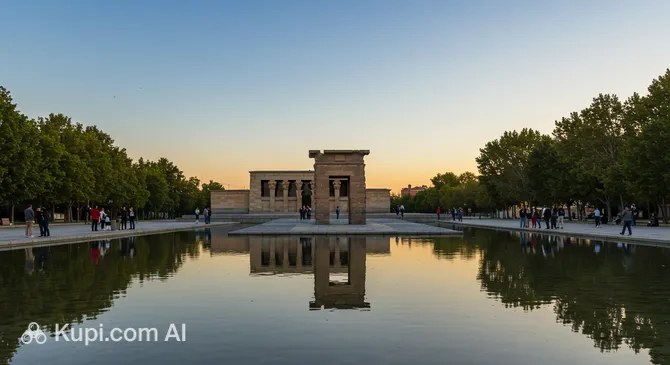
You might be surprised to learn that the city is home to an authentic piece of ancient Egypt. The Temple of Debod is a 2,200-year-old shrine dedicated to the gods Amun and Isis. It was gifted to Spain by the Egyptian government in 1968 and rebuilt stone by stone in the Parque del Oeste.
Madrid houses the oldest restaurant in the world, according to the Guinness Book of World Records. Sobrino de Botín has been operating continuously since 1725 and has kept its wood-fired oven burning for nearly three centuries. Legend has it that the famous artist Francisco de Goya worked there as a waiter before finding fame.
The famous Retiro Park contains a rare and somewhat controversial monument. The Fountain of the Fallen Angel (Fuente del Ángel Caído) is one of the few public statues in the world dedicated to Lucifer. Interestingly, the statue stands at exactly 666 meters above sea level, a coincidence that has fueled many local urban legends.
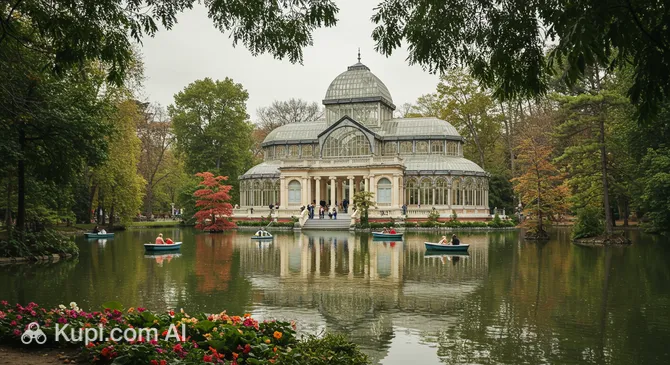
The stunning Crystal Palace was not originally intended as an art venue. Built in 1887, this magnificent glass and iron structure was designed as a gigantic greenhouse to showcase exotic flora from the Philippines, which was a Spanish colony at the time.
Madrid is often referred to as the "highest capital" in the European Union. While it sits on a high plateau, its official center is marked at the Puerta del Sol square. Look for the "Kilometre Zero" plaque on the pavement, which serves as the starting point for measuring the distances of all national radial roads in the country.
Temple of Debod. Illustration.
Source: Kupi.com AI
Traveler photos:
How to Get There
Reaching the Spanish capital is straightforward thanks to its status as a major global transportation hub. Whether you are arriving by air or rail, the city offers excellent connections to the rest of Europe and beyond. For detailed information on all available routes and tips, you can read more about how to get to Madrid.
The primary gateway for international travelers is Adolfo Suárez Madrid-Barajas Airport (IATA: MAD). Located just 14.1 km from the city center, it is a massive international hub handling millions of passengers annually. The journey to the heart of the city typically takes around 41 minutes by taxi or shuttle, depending on traffic conditions. For those looking for alternative entry points, Valladolid Airport (IATA: VLL) is the next closest option listed, situated in the city of Valladolid, approximately 172.7 km away from Madrid. Traveling from there to the capital takes roughly 2 to 2.5 hours by road, making Barajas the far superior choice for direct access.
For clarity, here is a summary of the main airports:
Madrid is also the center of the Spanish railway network, boasting two major stations that connect it to the rest of the country. Atocha Railway Station is the busiest and most iconic hub, located just 1.9 km from the city center. It serves the majority of high-speed AVE trains arriving from the south and east. Alternatively, Chamartín Station handles trains primarily from the north and northwest and is situated about 6.4 km from the center. Both stations are well-integrated into the local metro system, making the final leg of your journey seamless.
Below is a list of the closest and most significant railway stations:
Madrid is a city where history and modernity coexist seamlessly, offering visitors an incredible array of sights ranging from regal architecture to world-class art. Exploring its streets feels like walking through a living museum, where every corner reveals a new story or a masterpiece waiting to be admired.
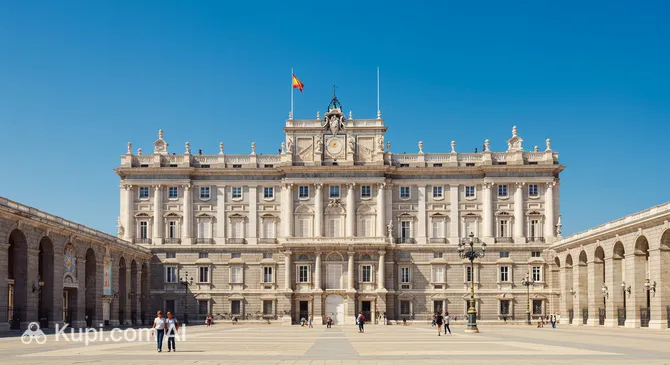
One of the most imposing landmarks in the city is the Royal Palace of Madrid. As the official residence of the Spanish royal family, it stands as a testament to the nation's history, although it is now used primarily for state ceremonies. With over 3,000 rooms, it is the largest functioning royal palace in Europe. Visitors can marvel at the lavishly decorated halls, the Royal Armory, and the stunning views of the Campo del Moro gardens.
Royal Palace of Madrid. Illustration.
Source: Kupi.com AI
Traveler photos:
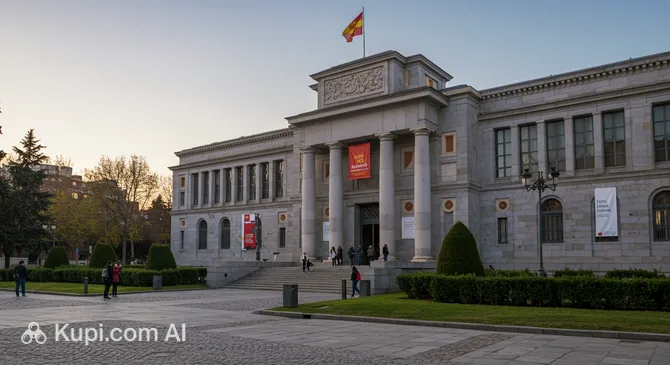
For art enthusiasts, the Prado National Museum is an absolute must-see. It houses one of the world's finest collections of European art, dating from the 12th to the early 20th century. Walking through its galleries, you will encounter masterpieces by Spanish greats like Goya, Velázquez, and El Greco, alongside works by other European masters. It is the jewel of Madrid's Golden Triangle of Art and offers a profound cultural experience.
Prado National Museum. Illustration.
Source: Kupi.com AI
Traveler photos:
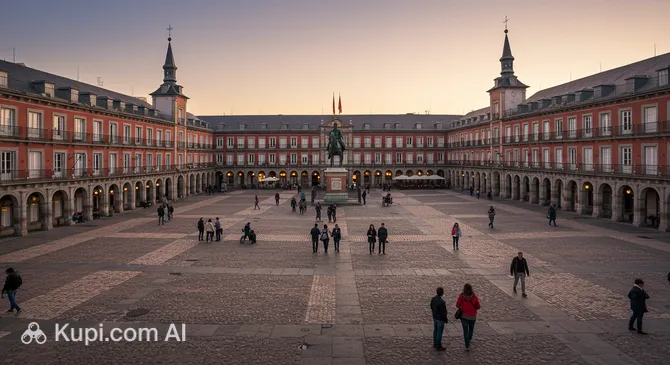
At the heart of the historic district lies the magnificent Plaza Mayor. This rectangular square, surrounded by three-story residential buildings with 237 balconies facing inward, has been the center of life in Madrid for centuries. Once the site of markets, bullfights, and public executions, it is now a lively gathering place filled with cafes and street performers. It is the perfect spot to enjoy a calamari sandwich and soak in the vibrant atmosphere.
Plaza Mayor. Illustration.
Source: Kupi.com AI
Traveler photos:
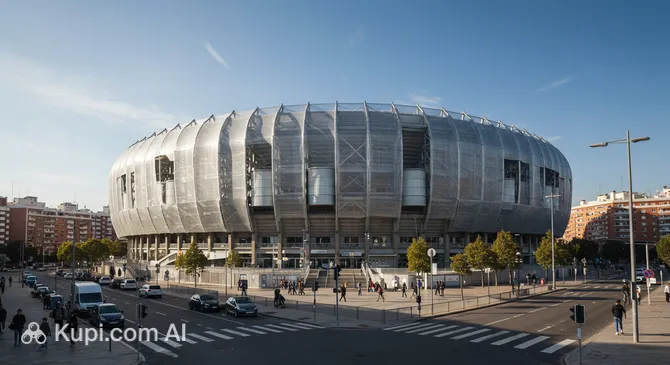
Sports fans will find their sanctuary at the Santiago Bernabéu Stadium, the legendary home of Real Madrid C.F. Even if you cannot catch a match, the stadium tour is incredibly popular, allowing you to visit the trophy room, walk through the players' tunnel, and see the pitch up close. It is a modern coliseum that captures the passion the city holds for football.
Santiago Bernabéu Stadium. Illustration.
Source: Kupi.com AI
Traveler photos:
Just across from the Royal Palace stands the Almudena Cathedral. Unlike many other European cathedrals that took centuries to build, this one was completed in 1993, resulting in a unique blend of architectural styles. Its neo-Gothic interior and bright, colorful ceiling pop art offer a distinct contrast to the classic exterior, making it a fascinating stop for architecture lovers.
Local Cuisine
Local Cuisine:
The culinary landscape of Madrid is a reflection of its history as a melting pot of cultures, offering a hearty and unpretentious gastronomy that prioritizes flavor and social enjoyment. Eating here is not just about sustenance; it is a ritual of socializing, often standing up at a bar counter or moving from one venue to another in a tradition known as tapeo.
One cannot speak of local food without mentioning Cocido Madrileño, the city's most emblematic dish. This robust chickpea-based stew is typically served in courses: first the savory broth with noodles, followed by the chickpeas and vegetables, and finally the meats, which include chorizo, blood sausage, and pork. It is a comforting winter meal that warms the soul. Another staple, particularly popular as a quick bite, is the Bocadillo de Calamares. These crispy, deep-fried squid rings served in a crusty baguette are a simple yet delicious classic, best enjoyed in the narrow streets surrounding the main squares.
For a sweet treat, the famous Churros con Chocolate are mandatory. Unlike the versions found elsewhere, local churros are often teardrop-shaped and made to be dipped into a cup of thick, rich hot chocolate, making for a perfect breakfast or late-night snack.
When it comes to drinks, the locals have a deep affection for Vermut de grifo (vermouth on tap). This fortified wine, infused with botanicals, is traditionally enjoyed as an aperitif before lunch, often accompanied by olives or potato chips. If you prefer beer, ask for a caña, which is a small glass of draft beer perfectly sized to stay cold until the last sip.
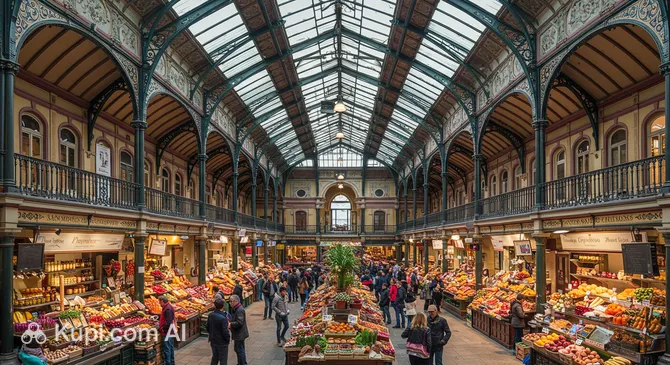
The food culture in Madrid thrives in its bustling markets, which have evolved into gourmet gastronomic centers. A prime example is the historic San Miguel Market. Located within an early 20th-century iron structure, it offers a stunning array of fresh tapas, oysters, and wines, allowing visitors to sample high-quality ingredients in a vibrant atmosphere.
San Miguel Market. Illustration.
Source: Kupi.com AI
Traveler photos:
Beyond the markets, the city is dotted with traditional taverns and modern bars where the atmosphere is electric. Whether you are dining at a centuries-old establishment or a trendy spot like Inclán Brutal Bar, the key to dining in Madrid is to take your time, share plates with friends, and soak in the lively noise of a city that loves to eat.
Travel Tips
Getting ready for your Madrid adventure? To help you navigate the Spanish capital with ease and confidence, we have compiled a list of essential practical tips. These insights will ensure you spend less time worrying about logistics and more time enjoying the city's infectious energy.
Clothing and Gear: Madrid experiences extreme temperatures, so pack accordingly. In summer, lightweight, breathable fabrics, sunglasses, and a hat are essential to survive the intense heat, while winters require a warm coat and scarf. Since the best way to explore the city is on foot, bring your most comfortable walking shoes. Note that while general dress is casual, you should cover your shoulders and knees when visiting religious sites.
Transportation: The public transport system is one of the best in Europe. The Metro de Madrid is fast, safe, and covers nearly every corner of the city. Purchase a Tarjeta Multi (a rechargeable contactless card) at any station, which can be shared by multiple people. Taxis are white with a red diagonal stripe on the front door and are reliable, but ride-hailing apps like Uber and Cabify are also widely used. Avoid renting a car for city exploration as traffic and parking can be headache-inducing.
Finances: The currency is the Euro (€). Credit and debit cards are accepted almost everywhere, even for small amounts like a coffee. However, it is wise to carry a small amount of cash for older tapas bars or small purchases. Tipping is not mandatory in Spain; locals typically leave small change or round up the bill, rather than adding a fixed percentage like in other countries.
Health and Safety: Madrid is generally a very safe city, but pickpocketing can be an issue in tourist hotspots like Puerta del Sol, Plaza Mayor, and on the metro. Always keep your belongings zipped up and in front of you. Pharmacies are marked with a flashing green cross; look for a Farmacia de Guardia for 24-hour service. The general emergency number for police, fire, or ambulance is 112.
Communication: While English is widely spoken in hotels and major attractions, it is less common in traditional neighborhoods and older establishments. Learning a few basic Spanish phrases like "Hola" (Hello), "Gracias" (Thank you), and "La cuenta, por favor" (The bill, please) goes a long way. Free Wi-Fi is often available in public squares and cafes, but buying a local SIM card is recommended for reliable navigation.
Local Etiquette: The Spanish schedule is unique. Lunch is typically eaten between 2:00 PM and 3:30 PM, and dinner is rarely served before 8:30 PM or 9:00 PM. When entering a shop or elevator, it is polite to say "Hola" or "Buenos días". Greetings between acquaintances often involve two kisses on the cheeks, starting with the right, though a handshake is standard for first-time meetings.
What to Avoid: Do not expect to eat dinner at 6:00 PM; most authentic kitchens will be closed, and you will likely end up in a "tourist trap" serving subpar food. Also, avoid buying drinks or goods from illegal street vendors, as this can lead to fines for the buyer as well.
Golden Hour for Museums: Many of Madrid's top museums, including the Prado and Reina Sofía, offer free entry during specific hours, usually in the last two hours before closing or on Sunday afternoons. Check the official schedules in advance to save on ticket costs while enjoying world-class art.
With these tips in hand, you are all set to embrace the local rhythm and charm of Madrid. Whether you are navigating the metro like a pro or dining late into the night with locals, your trip to this magnificent city is sure to be smooth and memorable.
Entertainment & Nightlife
Madrid is famous worldwide for its nightlife, or la marcha, a cultural phenomenon that keeps the city awake well into the early morning hours. The energy here is contagious, and the Spanish capital offers an incredible variety of options, from traditional taverns and sophisticated rooftop bars to thumping techno clubs. Unlike many other European cities where the night winds down after midnight, in Madrid, that is often when the real fun begins.
The city is divided into several distinct nightlife districts, each with its own unique personality. Malasaña is the heart of the hipster and indie scene, filled with retro bars and rock clubs reminiscent of the Movida Madrileña movement of the 80s. For a more cosmopolitan and LGBTQ+-friendly vibe, Chueca offers lively streets packed with stylish cafes and dance floors. If you prefer something more upscale, the Salamanca district is home to exclusive clubs with strict dress codes, often frequented by celebrities and the local elite.
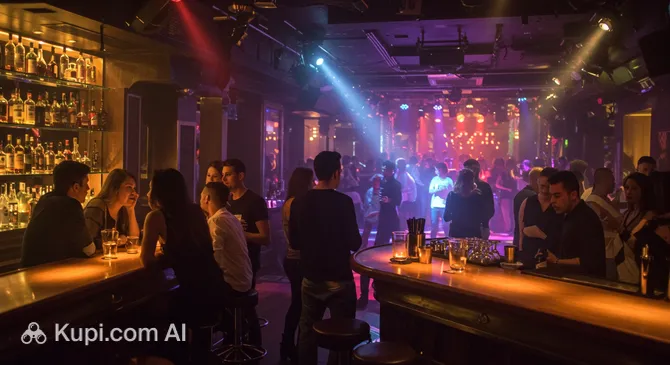
For a truly immersive night out, you can visit Calle 365 Madrid. This venue is famous for its speakeasy concept and ever-changing thematic decor, transporting guests to different parts of the world while they enjoy exotic cocktails. It creates a secret, magical atmosphere that stands out from the typical bar experience.
Calle 365 Madrid. Illustration.
Source: Kupi.com AI
Traveler photos:
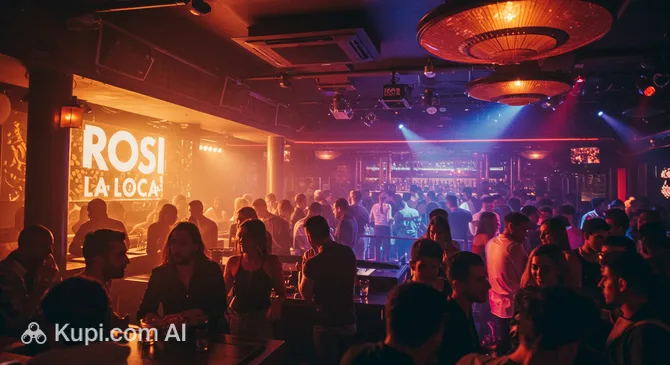
Another spot that captures the city's whimsical side is Rosi La Loca. Known for its vibrant, Alice in Wonderland-esque interior and creative presentation of drinks, it is a perfect place to start the evening with high energy and visual delight. The crowd in these areas is usually a mix of locals and tourists, creating a welcoming and diverse environment.
Rosi La Loca. Illustration.
Source: Kupi.com AI
Traveler photos:
Timing is everything when navigating Madrid's nightlife. Dinner is rarely served before 9:00 PM, bars start to fill up around 11:00 PM, and nightclubs often do not get busy until 2:00 AM or 3:00 AM. Prices are generally reasonable compared to other major capitals; a beer might cost €3-€5, while mixed drinks in clubs can range from €10 to €15. Regarding safety, the city is quite secure at night, especially in the busy center, but it is always wise to keep an eye on your belongings and avoid poorly lit, deserted streets.
Getting around after dark is straightforward. The metro typically runs until 1:30 AM, but after that, you can rely on the extensive network of night buses known as Búhos (Owls). Taxis are also abundant; look for white cars with a red diagonal stripe and a green light on the roof indicating availability. Ride-hailing apps are also a convenient and safe option for getting back to your hotel.
While the nights are electric, the city also offers plenty of daytime entertainment. The Gran Vía is known as the Broadway of Madrid, hosting major musical productions and theater shows year-round. For families or thrill-seekers, Warner Park Madrid provides a fantastic escape with world-class roller coasters and attractions located just outside the city limits.
Warner Park Madrid. Illustration.
Source: Kupi.com AI
Traveler photos:
Parks & Museums
Madrid is a city that effortlessly balances its dynamic urban energy with serene green spaces and an artistic heritage that rivals any capital in the world. For travelers, this means you can spend your morning marveling at masterpieces by European legends and your afternoon relaxing under the shade of centuries-old trees in a royal garden.
The most famous green lung of the city is undoubtedly Retiro Park. Once a private retreat for royalty, this UNESCO World Heritage site is now a beloved public space covering over 125 hectares. It is the perfect place to rent a rowboat on the Great Pond or wander through the elegant rose garden. Inside the park, you will find the stunning Crystal Palace, a glass structure that often hosts contemporary art installations and reflects beautifully onto the lake in front of it.
Retiro Park. Illustration.
Source: Kupi.com AI
Traveler photos:
For those seeking a wilder and more expansive natural experience, Casa de Campo is the ideal destination. Historically a royal hunting estate, it is five times the size of New York's Central Park. It offers excellent trails for hiking and cycling, and it is also home to the Madrid Zoo Aquarium and an amusement park. A popular way to arrive is by taking the Teleférico (cable car), which provides panoramic views of the city skyline.
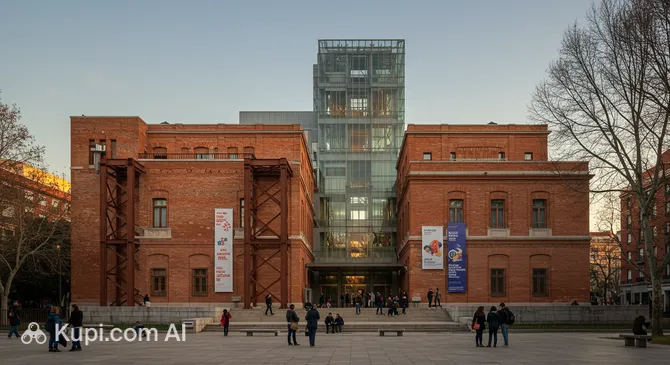
Culturally, Madrid is anchored by the "Golden Triangle of Art." While the Prado focuses on classical masters, the Museo Reina Sofía is the headquarters for modern and contemporary art. Housed in a former hospital with a sleek modern expansion, it is home to Pablo Picasso’s monumental Guernica, as well as significant works by Dalí and Miró. It is an essential stop for understanding Spain's 20th-century history through the eyes of its artists.
Museo Reina Sofía. Illustration.
Source: Kupi.com AI
Traveler photos:
Completing the triangle is the Thyssen-Bornemisza National Museum. This collection fills the historical gaps between the Prado and the Reina Sofía, offering an incredible journey through Western art history. Here, you can admire everything from 13th-century Italian primitives to German Expressionism and American Pop Art, making it one of the most comprehensive private collections turned public in the world.
For a more intimate cultural experience, consider visiting the Sorolla Museum. Located in the former mansion of the "painter of light," Joaquín Sorolla, this museum preserves his studio and living quarters exactly as they were. The vibrant Andalusian-style gardens and the luminous canvases on display offer a peaceful and authentic glimpse into the life of one of Spain's most cherished artists.
Getting Around
Navigating Madrid is remarkably easy thanks to its highly efficient, clean, and integrated public transportation network. The system is designed to move millions of people daily, making it the most convenient way for visitors to explore the city without the hassle of traffic or parking.
The backbone of the network is the Metro de Madrid, which is one of the largest and oldest underground systems in Europe. With over 300 stations and 12 lines, it places almost every major attraction within a short walk of a stop. The trains are frequent, modern, and air-conditioned, running daily from 6:00 AM to 1:30 AM. For destinations in the suburbs or nearby towns, the Cercanías commuter trains (operated by Renfe) are the fastest option, connecting key hubs like Atocha and Chamartín with the metropolitan area.
Complementing the rail network is an extensive fleet of blue buses operated by EMT. These are perfect for travelers who prefer to see the city streets while they commute. Buses generally run from 6:00 AM to 11:30 PM. Once the regular service ends, the city switches to a network of night buses known affectionately as Búhos (Owls), which depart from Plaza de Cibeles and ensure you can get home safely after a late night out.
To use any of these services, you must acquire a Tarjeta Multi. This is a red, rechargeable, contactless smart card that can be purchased for a small fee at automatic machines in metro stations or tobacco shops (estancos). It is not personal, meaning one card can be shared by a group of people traveling together. You simply load it with tickets—the most popular option for tourists is the 10-trip ticket (Metrobús), which is valid on both the Metro (Zone A) and EMT buses and offers significant savings over single fares.
For those planning extensive travel, the Tourist Travel Pass (Abono Turístico) is an excellent alternative. It allows unlimited travel on all forms of transport within the chosen zone (Zone A covers the entire city center) for a set number of consecutive days, ranging from 1 to 7 days. You can buy this pass directly at metro stations, and it includes the cost of the card itself.
Validation is simple: tap your card on the reader at the turnstiles when entering the metro or Cercanías stations, and on the card reader next to the driver when boarding a bus. Unlike in some other cities, you generally do not need to tap out when exiting the metro, unless you are transferring to a special surcharge zone, though you must keep your ticket until you leave the station.
If you prefer to travel above ground on two wheels, the city offers BiciMAD, a public electric bike rental scheme. The white electric bicycles are docked at stations throughout the city and are a fantastic way to tackle the city's gentle slopes without exhaustion. While originally designed for residents, tourists can use the system by registering for an occasional use account via the app or at the station totem.
Taxis are another reliable alternative, easily engaging in the city flow. Official taxis are white with a red diagonal band on the front door. They run on a meter, and availability is indicated by a green light on the roof. Ride-sharing apps are also widely available and operate smoothly. Finally, for a unique perspective, consider taking the Teleférico de Madrid (Cable Car). It connects the Parque del Oeste with Casa de Campo, offering sweeping panoramic views of the Royal Palace and the city skyline as you glide over the Manzanares River.
Accommodation
Accommodation:
Finding the perfect place to stay in Madrid is part of the adventure, as the city offers an impressive diversity of accommodation options to suit every taste and budget. From grand, historic hotels housed in 19th-century palaces to trendy boutique hostels and modern vacation rentals, the Spanish capital is well-equipped to host its millions of annual visitors. Whether you are looking for five-star luxury or a cozy backpacker base, you will find a welcoming bed in this hospitable city.
Choosing the right neighborhood is key to defining your experience. First-time visitors often prefer the Centro district, particularly near Puerta del Sol and Gran Vía, where most major attractions are within walking distance. For a more upscale and quiet experience, the Salamanca district offers elegant streets lined with luxury boutiques and fine dining. Meanwhile, the neighborhoods of La Latina and Lavapiés are perfect for travelers who want to be immersed in the local bohemian vibe, surrounded by some of the best tapas bars and nightlife in the city.
For those interested in staying in one of the city's most vibrant culinary districts, L&H La Latina is an excellent choice. Located in the heart of the La Latina neighborhood, it places guests just steps away from the famous El Rastro market and a plethora of traditional taverns. Alternatively, travelers looking for modern amenities and convenient access to major transport routes might consider Hotel Mercader, which offers a comfortable stay with good connections to the city center and the airport.
L&H La Latina. Illustration.
Source: Kupi.com AI
Traveler photos:
When planning your trip, it is highly recommended to book your accommodation in advance, especially if you are visiting during the peak seasons of spring (April-May) or early autumn (September-October). Prices can fluctuate significantly depending on demand. Generally, budget travelers can find hostel beds or simple pensions ranging from €25 to €60 per night. Mid-range hotels typically cost between €90 and €160, while luxury establishments can start from €250 and go up significantly. Booking is most commonly done through major online platforms, though contacting smaller hotels directly can sometimes yield better rates or special offers.
Nearby Cities
Nearby Cities:
While the capital itself offers endless entertainment, the surrounding Community of Madrid is dotted with significant urban centers that form part of the greater metropolitan area. These cities, located just a short distance from the center, are vibrant hubs in their own right, often boasting their own cultural events, universities, and business districts. Thanks to the efficient regional transport network, visiting them is quick and convenient.
Most of these neighboring cities are connected to the capital by the Cercanías commuter train system or intercity buses, making the journey seamless for travelers. Below is a list of the closest major cities that you might consider visiting or passing through during your stay:
City
Population
Distance
Erandio
24 489
7 km
Leganés
187 762
11 km
Getafe
183 219
12 km
Alcorcón
170 817
13 km
Majadahonda
72 179
15 km
Shopping & Souvenirs
Shopping:
Shopping in Madrid is an exhilarating experience that rivals any major European capital, offering a diverse mix of international luxury, high-street fashion, and charming traditional craftsmanship. Whether you are looking for the latest trends, unique vintage finds, or artisanal goods, the city provides endless opportunities to indulge in retail therapy. From bustling avenues lined with flagship stores to quiet neighborhood boutiques, the options cater to every style and budget.
For those who love the energy of the city, the Gran Vía is the undisputed epicenter of shopping. This iconic avenue is home to massive flagship stores of popular Spanish and international brands, making it a convenient one-stop destination for fashion lovers. If you prefer a more exclusive experience, head to the Salamanca district, specifically along Calle de Serrano and Calle de José Ortega y Gasset. Often referred to as the "Golden Mile," this area features high-end luxury boutiques and designer labels housed in elegant 19th-century buildings.
If you prefer the convenience of having everything under one roof, the city boasts several impressive shopping centers. Plaza Norte 2 is a favorite among locals and tourists alike, known for its opulent architectural style reminiscent of a palace, complete with marble floors and a vast dome. It houses a wide variety of fashion chains, cinemas, and dining options. Another unique destination is Madrid Xanadú, which combines extensive retail space with leisure activities, including a massive indoor ski slope, making it a perfect spot for families.
Plaza Norte 2. Illustration.
Source: Kupi.com AI
Traveler photos:
No shopping trip to Madrid would be complete without visiting its vibrant markets. The most famous is El Rastro, a sprawling open-air flea market held every Sunday and on public holidays in the La Latina neighborhood. Here, you can hunt for antiques, second-hand clothes, books, and quirky curiosities amidst a lively street atmosphere. For a more gastronomic experience, the San Miguel Market offers high-quality food products and gourmet souvenirs that are perfect for taking a taste of Spain back home.
When it comes to souvenirs, look beyond the typical fridge magnets. The city is famous for its handcrafted fans (abanicos) and espadrilles, which are both practical and beautiful. Foodies should consider buying tins of smoked paprika, high-quality saffron, or the city's signature violet-flavored candies (caramelos de violeta), which come in pretty decorative boxes and have been a local favorite for roughly a century.
Store opening hours in the city are generally quite liberal. Major department stores and shops in tourist areas typically stay open from 10:00 AM to 9:00 PM or 10:00 PM, often without closing for lunch. However, smaller boutiques and traditional shops may close for a "siesta" between 2:00 PM and 5:00 PM. Payment is easy, with credit and debit cards widely accepted even for small amounts, though having some cash for markets like El Rastro is advisable.
Travelers from outside the European Union can take advantage of tax-free shopping. Spain uses the DIVA system, which allows for digital validation of tax-free forms. If you spend over a certain amount in participating stores, ask for a tax-free check, which you can later validate at the airport kiosks before leaving the EU to receive a VAT refund.