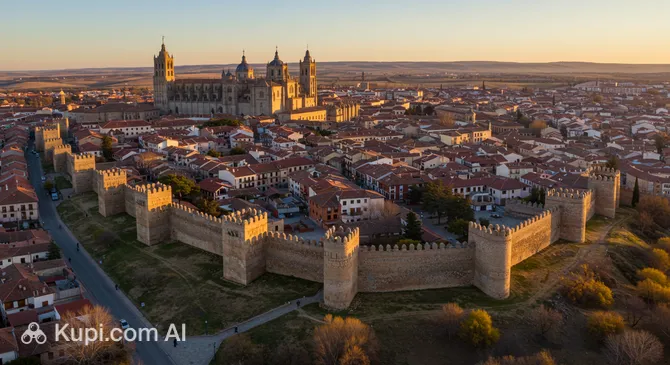
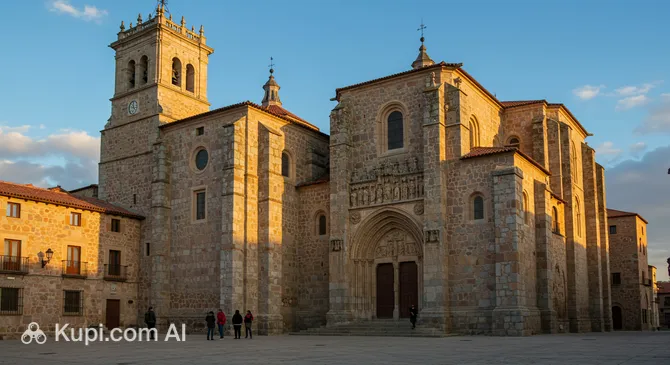
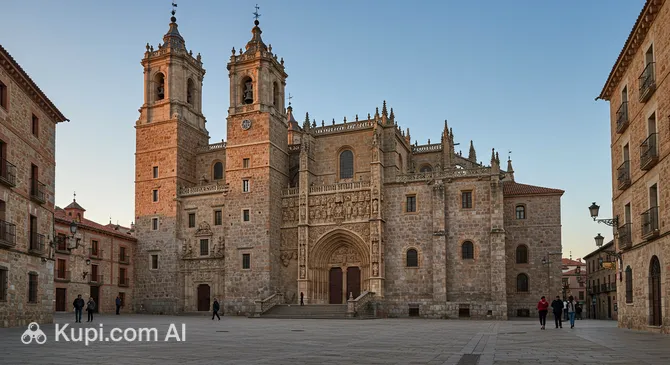
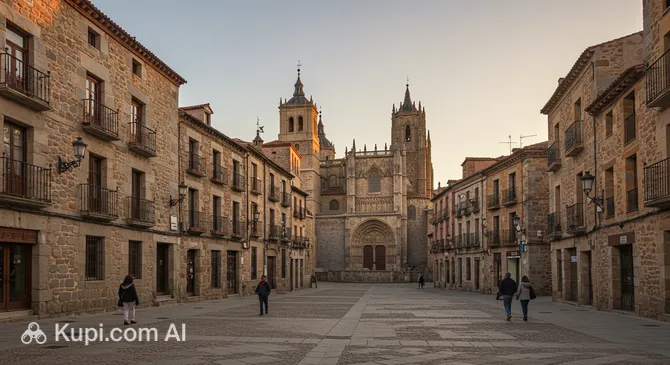
Avila is a magnificent medieval city that instantly captivates visitors with its remarkably preserved heritage and timeless atmosphere. Often referred to as the "Town of Stones and Saints," it stands as a testament to the enduring spirit of Castile. Located in the rolling hills of the Province of Ávila, it holds the distinction of being the highest provincial capital in Spain, situated over 1,130 meters above sea level. This unique geographical position contributes to its crisp, fresh air and distinct continental climate.
Avila. Illustration.
Source: Kupi.com AI
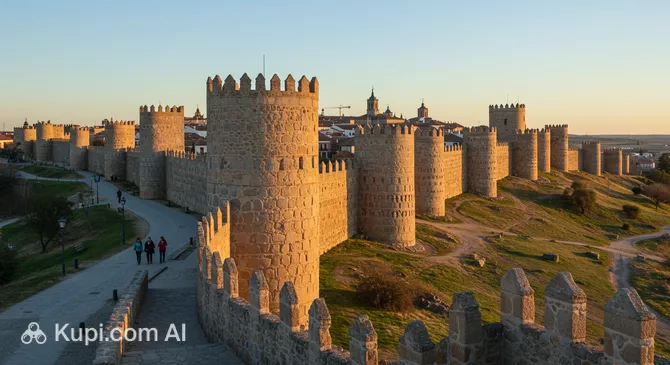
The most striking feature of the city is undoubtedly its imposing city walls, which are considered among the best-preserved medieval fortifications in Europe. Enclosing the old town, these walls create a stunning silhouette against the sky, especially at sunset. The history of Avila is visible in every corner, from the ancient stones of the fortifications to the majestic Cathedral of Ávila, which is celebrated as the first Gothic cathedral built in the country.
Beyond its architectural wonders, the city is deeply connected to Saint Teresa of Jesus, a prominent mystic and writer, making it a significant pilgrimage site. With a population of nearly 58,000 residents, the city maintains a welcoming and intimate vibe, allowing travelers to explore its narrow, cobblestone streets with ease. Whether you are admiring the Romanesque churches or enjoying local cuisine, a visit to Avila promises an unforgettable journey into the heart of Spanish culture.
Weather Overview
Due to its high altitude, the city experiences a continental climate characterized by distinct seasonal contrasts. Winters are typically cold, with January averages around 3.7°C and minimum temperatures often dipping slightly below freezing. Conversely, summers are warm and sunny, with July and August seeing average temperatures of 22.5°C and highs reaching up to 29°C, making it a popular time for exploring the outdoor fortifications.
Rainfall volume is generally low year-round, often recording just 1-2mm per month, though the frequency of wet days varies significantly. Spring and autumn are the wettest periods in terms of frequency, with March and April seeing up to 13 wet days. To help you pack the right clothing for your trip, it is helpful to review the current weather in Avila before departure. Overall, expect warm, dry summers perfect for walking tours, and cold winters that require warm layers.
Average monthly temperature
Average monthly precipitation
Interesting Facts
Beyond the main attractions, Avila holds many fascinating secrets and legends that enrich its medieval charm. From defensive architectural quirks to stories of childhood escapades, the city offers curious details that often escape the casual observer.
Walls of Ávila. Illustration.
Source: Kupi.com AI
Traveler photos:
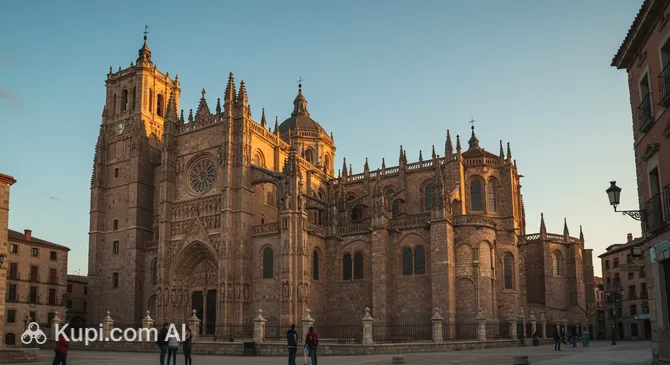
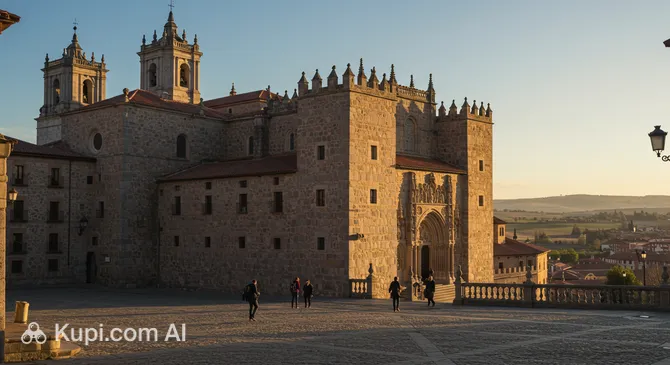
The Avila Cathedral is a unique example of a "fortress-temple." Its apse, known as the Cimorro, is integrated directly into the city's defensive fortifications, serving as a massive turret that allowed soldiers to protect the town during sieges.
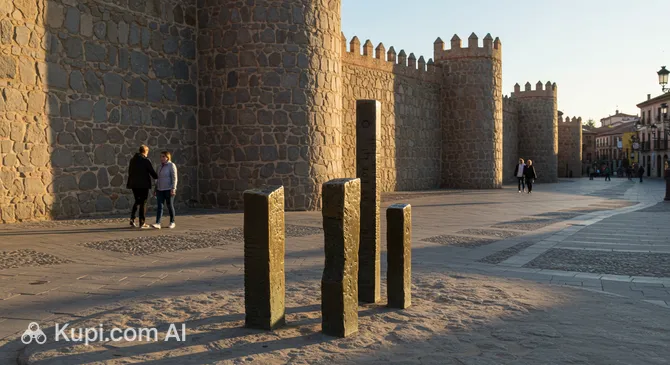
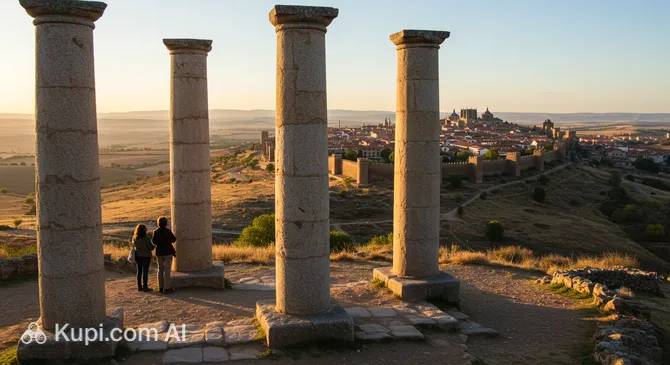
The Cuatro Postes Viewpoint is not just a scenic spot; legend says it is the exact location where a young Saint Teresa of Ávila was caught by her uncle while attempting to run away with her brother to seek martyrdom in Moorish lands.
The famous Walls of Ávila are often cited as the largest fully illuminated monument in the world. The perimeter stretches for over 2.5 kilometers and includes 88 towers and 9 gates, remaining virtually intact since the 11th century.
Avila is famous for a sweet local delicacy called Yemas de Santa Teresa. These small, orange balls are made exclusively from egg yolks and sugar, a confectionery tradition that originated in the city's convents and has become a symbol of its gastronomy.
How to Get There
Reaching this historic walled city is straightforward, with several convenient transport options available. Since the city does not have its own commercial airport, most international visitors choose to fly into Adolfo Suárez Madrid-Barajas Airport (MAD) in Madrid. Located approximately 96 km from Avila, it is the busiest international gateway in the region. The journey from the airport by taxi or rental car typically takes about 1 hour and 30 minutes via the AP-6 motorway. You can find more about how to get to Avila and the various transfer options on our detailed page.
Another viable option is Valladolid Airport (VLL), situated in the city of Valladolid, roughly 117 km away. While smaller than the Madrid hub, it serves as a useful alternative for certain domestic and European flights. Travel time from Valladolid to Avila by road is usually just under 1 hour and 45 minutes.
For clarity, here is a summary of the main airports:
Traveling by train is a very popular and scenic way to arrive. The city is served by the Ávila Railway Station, which is conveniently located just 0.2 km from the city center, allowing travelers to start exploring almost immediately. Direct trains frequently run from Madrid, departing from major hubs such as Chamartín Station and Atocha Railway Station. The train ride from Madrid is comfortable and offers beautiful views of the Spanish countryside, taking approximately 1.5 hours depending on the service chosen.
Below is a list of the nearest and most significant railway stations:
Avila is a treasure trove of history, where every stone seems to whisper stories of knights, saints, and kings. While the iconic city walls are the first thing to catch your eye, the city's interior is packed with religious and architectural masterpieces that are equally compelling. Here are some of the most fascinating places you should visit to truly understand the spirit of this Castilian gem.
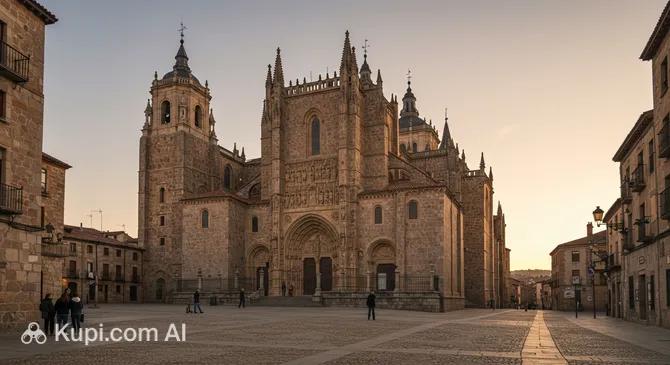
Integrated directly into the city's defensive fortifications, the Avila Cathedral is a sight unlike any other. It is widely considered the first Gothic cathedral in Spain, yet its design retains a distinct military character. The apse, known as the Cimorro, actually forms one of the towers of the city wall, serving a dual purpose as a house of worship and a defensive stronghold. Inside, visitors are treated to a stunning mix of red and white granite, beautiful stained glass, and an intricately carved retro-choir that showcases the artistic transition from Romanesque to Gothic styles.
Avila Cathedral. Illustration.
Source: Kupi.com AI
Traveler photos:
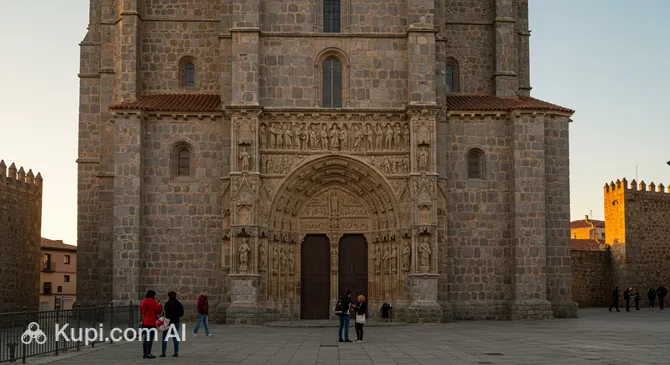
Just outside the city walls stands the magnificent Basilica of San Vicente, a masterpiece of Romanesque architecture. Built on the site where three martyrs—San Vicente and his sisters—were believed to have been executed during Roman times, the basilica is renowned for its warm, sandstone glow and elaborate sculptural details. The highlight for many is the Cenotaph of the Saints, an exquisite limestone shrine located under the crossing, which depicts scenes from the martyrs' lives with incredible artistry.
Basilica of San Vicente. Illustration.
Source: Kupi.com AI
Traveler photos:
For those interested in the spiritual heritage of the city, the Convent and Birthplace of Saint Teresa of Ávila is an essential stop. Constructed in the 17th century over the noble house where the famous mystic was born, the church is a splendid example of Spanish Baroque architecture. The complex includes a fascinating museum that houses relics and manuscripts, offering a deep dive into the life and legacy of one of the Catholic Church's most influential figures. The atmosphere here is one of peace and reflection, making it a moving experience regardless of your personal beliefs.
Convent and Birthplace of Saint Teresa of Ávila. Illustration.
Source: Kupi.com AI
Traveler photos:
A bit further from the center lies the Royal Monastery of Santo Tomás, a place of great historical weight. This Dominican monastery served as a summer palace for the Catholic Monarchs, Ferdinand and Isabella, and the silence of its three beautiful cloisters is profound. It is perhaps most poignant as the final resting place of their only son, Prince Don Juan, whose stunning alabaster tomb rests near the main altar. The monastery also houses a surprising Museum of Oriental Art, featuring collection pieces from the Far East, adding an unexpected cultural twist to your visit.
Royal Monastery of Santo Tomás. Illustration.
Source: Kupi.com AI
Traveler photos:
Local Cuisine
The gastronomy of Avila is a direct reflection of its geography and climate: hearty, flavorful, and designed to warm the soul. As a city located in the high plateaus of Castile, the local cuisine relies heavily on high-quality meats and legumes. The undisputed king of the table is the Chuletón de Ávila, a massive T-bone steak from the local Avileña-Black Iberian cattle. Typically grilled lightly with just a sprinkle of sea salt, this dish attracts meat lovers from all over the country and is a culinary icon you simply cannot miss.
Another signature dish that defines the local palate is Patatas Revolconas. This humble yet delicious starter consists of mashed potatoes seasoned with paprika and topped with crispy pork belly cracklings, known locally as torreznos. It is a staple comfort food, often served as a tapa alongside a glass of wine. For those seeking something spoon-based to combat the mountain chill, the Judías del Barco—large, buttery white beans stewed with chorizo and blood sausage—are an exquisite choice.
The dining culture in Avila is vibrant and revolves around the social art of "tapeo," where friends move from bar to bar enjoying small bites with their drinks. The heart of this activity is often found around the historic Mercado Chico Square, a bustling hub surrounded by arcades and terraces. Here, the atmosphere is lively, and it is the perfect place to immerse yourself in the daily rhythm of the city while sampling local specialties.
Mercado Chico Square. Illustration.
Source: Kupi.com AI
Traveler photos:
For a memorable dining experience, the city offers a variety of establishments ranging from traditional taverns to modern eateries. If you are looking to enjoy generous portions and a friendly atmosphere, Los Metros que nos Faltaban is a popular spot known for its long sandwiches and vibrant bar scene. For a more formal sit-down meal, particularly if you want to try the famous steak or other regional roasts, restaurants like Los Candiles and Bococo Restaurant are excellent choices that pride themselves on using top-tier local ingredients.
To accompany these robust meals, locals often choose wines from the nearby Sierra de Gredos region, particularly those under the D.O. Cebreros label, which are gaining international recognition for their high-quality Garnacha grapes. If you prefer non-alcoholic options, the local water is renowned for its purity, but you will also find refreshing lemonades and fruit juices. No meal in Avila is complete without a sweet finish, and while the famous Yemas are the classic souvenir, many restaurants also serve excellent homemade desserts like cheesecake or curd with honey.
Travel Tips
Visiting Avila is like stepping back into a medieval fairytale, but a little preparation goes a long way to ensure your journey through the "Town of Stones and Saints" is as smooth as it is magical. Here are some practical tips to help you navigate the city's unique geography and customs with the confidence of a seasoned traveler.
Clothing and Gear: Due to Avila's status as the highest provincial capital in Spain, the weather can be unpredictable. Even in summer, temperatures drop significantly at night, so always bring a jacket or sweater for the evenings. The city is paved with historic cobblestones, making comfortable, flat walking shoes essential; avoid high heels. If you plan to visit religious sites like the cathedral, ensure your shoulders and knees are covered.
Transportation: The best way to explore the historic center is on foot. Most major attractions are concentrated within the city walls and are easily walkable. Public buses are available for reaching outer areas, and taxis can be found at designated ranks (stops), but driving a rental car inside the walled area is not recommended due to narrow, restricted streets and limited parking.
Finances: The local currency is the Euro (€). While credit and debit cards are widely accepted in most hotels, restaurants, and shops, it is wise to carry some cash for small purchases, such as buying Yemas de Santa Teresa at a convent or paying for a coffee in a small bar. ATMs are plentiful, and tipping is not mandatory but appreciated; rounding up the bill is a common gesture.
Health and Safety: Avila is a very safe city for tourists, with low crime rates, though standard precautions against pickpocketing in crowded areas apply. Pharmacies are marked with a flashing green cross; if you need one outside regular hours, look for a sign on the door indicating the nearest farmacia de guardia (on-duty pharmacy). The general emergency number for police, fire, or ambulance is 112.
Communication: Spanish (Castilian) is the primary language. While staff at major tourist sites and hotels usually speak English, it is less common in smaller local shops and traditional taverns. Learning a few basic phrases like "Hola" (Hello), "Por favor" (Please), and "La cuenta, por favor" (The bill, please) will be warmly received by locals. Free Wi-Fi is often available in public squares and cafes.
Local Etiquette: Spaniards typically eat later than many other Europeans. Lunch is the main meal of the day, usually served between 2:00 PM and 3:30 PM, while dinner rarely starts before 9:00 PM. When entering shops or elevators, it is polite to greet others. In religious spaces, maintain silence and remove hats (for men).
What to Avoid: Do not try to rush your meals; dining in Avila is a social experience meant to be enjoyed slowly. Also, avoid driving your car through the city gates without checking for restrictions first, as many areas are pedestrian-only or reserved for residents, and fines can be steep.
Bonus Tip: To save money on sightseeing, consider purchasing the Visit Ávila tourist card. It provides access to multiple monuments, including the walls, the cathedral, and several basilicas, for a single reduced price. It is a great value option if you plan to see the main highlights.
By keeping these practicalities in mind, you will be well-equipped to enjoy everything this stunning walled city has to offer. Embrace the local rhythm, savor the crisp mountain air, and let the history of Avila unfold around you without a hitch.
Entertainment & Nightlife
Nightlife in Avila is characterized by a relaxed and convivial atmosphere that revolves more around conversation, gastronomy, and socializing than high-energy clubbing. The city comes alive after sunset, particularly on weekends, when locals of all ages take to the streets to enjoy the fresh evening air. The main form of entertainment here is the "tapeo"—hopping from bar to bar to enjoy drinks accompanied by small plates of food. This social ritual typically begins around 8:30 PM and can last well past midnight, with the vibe being welcoming and casual. There is no strict dress code; smart-casual attire is perfect for fitting in with the local crowd.
The epicenter of evening activity is undoubtedly the historic center, specifically the area surrounding the Mercado Chico Square. As the sun sets, the terraces here fill up with people enjoying wine and beer under the illuminated facades of medieval buildings. Another bustling zone is Calle San Segundo, located just outside the cathedral walls. This street is lined with numerous bars and taverns where the atmosphere is lively but safe. For a truly authentic experience, you should visit Los Metros que nos Faltaban. This popular bar is famous for its distinct style and is a favorite among locals for starting the night with a few drinks and their signature long sandwiches.
Los Metros que nos Faltaban. Illustration.
Source: Kupi.com AI
Traveler photos:
For those who prefer a quieter evening or a romantic stroll, the city offers beautifully lit streets that feel like a journey back in time. A walk through San Antonio Park offers a peaceful retreat with lovely green spaces, perfect for unwinding after a dinner in the city center. The park is safe and well-maintained, making it a pleasant spot for a night walk. Generally, Avila is a very safe city for tourists to walk around at night. However, if you are staying outside the walls or need to return to your hotel late, taxis are readily available at designated ranks or can be called by phone. Prices are reasonable, and drivers are generally reliable.
While the nightlife is the main draw after dark, the city also offers cultural entertainment during the day. Visitors can explore various museums and exhibition halls that showcase the region's rich history. For instance, the Palacio de Polentinos, with its stunning Plateresque facade, is a remarkable site to visit. Although it currently houses the General Military Archive, its architectural beauty makes it a worthy stop on your daytime itinerary before you transition into the evening's social activities.
Parks & Museums
While the imposing stone fortifications define the city's silhouette, Avila also offers serene green spaces and profound cultural institutions that provide a deeper look into its heritage. Beyond the medieval streets, visitors can find tranquil gardens for relaxation and museums that preserve the spiritual and historical essence of this Castilian capital.
For a breath of fresh air, the San Antonio Park is the city's most beloved green lung. Located just a short walk from the walled center, this park offers a peaceful respite with its wide, tree-lined avenues, ornamental fountains, and shaded benches. It is a favorite spot for locals to take a leisurely stroll or escape the midday sun. The park also features a bandstand and several statues, creating a charming atmosphere that contrasts with the austere stone architecture of the old town.
Another essential outdoor stop is the Cuatro Postes Viewpoint. Although primarily a religious monument consisting of four Doric columns, it serves as a magnificent open-air balcony located on the left bank of the Adaja River. It provides the most iconic panoramic view of the walled city, making it a perfect natural setting for photography, especially at sunset. The area around the shrine allows for a pleasant walk where you can appreciate the rugged landscape that surrounds the city.
Cuatro Postes Viewpoint. Illustration.
Source: Kupi.com AI
Traveler photos:
Delving into the city's cultural depth, the Monastery of the Incarnation stands out as a crucial museum for history enthusiasts. This is where Saint Teresa of Jesus lived for thirty years, and today it functions as a museum dedicated to her life. Visitors can explore the cells where she stayed, view her personal belongings, and see manuscripts written by her hand. The museum offers an intimate glimpse into the daily life of the 16th-century monastic community and the mystic's spiritual journey.
Monastery of the Incarnation. Illustration.
Source: Kupi.com AI
Traveler photos:
Equally significant is the Convent of Saint Joseph (Discalced Carmelites), the first convent founded by Saint Teresa in her reform of the Carmelite Order. Designated a National Monument, it houses the Teresian Museum, which holds important relics and religious art. The architecture here is notably austere and simple, reflecting the humble spirit of the reform, yet it remains one of the most spiritually charged locations in the city.
For a lesser-known cultural experience, take a walk along the banks of the Adaja River near the Adaja Gate. This area offers a quiet, natural path with stunning views of the walls from below, providing a sense of the sheer scale of the fortifications that isn't always apparent from within the city center.
Getting Around
Navigating Avila is pleasantly simple, largely because the city is compact and human-scaled. While the historic center inside the walls is best explored on foot to fully appreciate its medieval charm and narrow cobblestone streets, the city does offer a reliable public transport network. This system is particularly useful for reaching the train station, the hospital, or the university campus, which are located outside the main walled enclosure. There is no metro or tram system in the city; instead, public transportation relies entirely on a network of urban buses.
The urban bus service, often referred to locally as Avilabús, consists of several lines that connect the peripheral neighborhoods with the city center. The buses are modern and comfortable, typically running from early morning until late evening, roughly between 7:00 AM and 10:30 PM. Frequencies vary by line, but on main routes, you can expect a bus every 15 to 30 minutes on weekdays. Service is generally reduced on weekends and public holidays, so it is advisable to check the schedule at the bus stops if you are traveling on a Sunday.
Regarding payment, the system is straightforward. You can purchase a single ticket directly from the driver when boarding the bus; it is highly recommended to carry cash and small change, as drivers may not be able to change large banknotes. The price for a single journey is very affordable, typically costing just over one euro. For visitors planning to stay longer or use the bus frequently, a rechargeable travel card (Bonobús) is available. These cards significantly reduce the cost per trip and can be purchased and topped up at local tobacconists (estancos) or designated kiosks.
For a more scenic and tourist-oriented experience, look out for the Murallito, a tourist train (tram-bus) that offers a delightful loop around the city. This vehicle is a favorite among visitors because it navigates the perimeter of the famous city walls, providing excellent photo opportunities without the physical exertion of walking up and down the hills. The route usually includes a stop at the Cuatro Postes viewpoint, allowing passengers to hop off for a panoramic view before continuing the ride. Audio guides are often available on board to explain the history of the monuments you pass.
Taxis are a convenient alternative, especially if you are arriving with heavy luggage or need to travel late at night when buses are no longer running. Official taxis are white and can be found at designated ranks in strategic locations, such as the railway station and the Plaza de Santa Teresa (Mercado Grande). You can also order one by phone or via local apps. They run on a meter system, and rates are reasonable for short cross-town trips. While car rentals are available, driving inside the walled city is discouraged for tourists due to the complex network of one-way streets, pedestrian zones, and very limited parking.
Accommodation
Finding the perfect place to stay in Avila is an integral part of the travel experience, as the city offers accommodation options that are as historic and atmospheric as the streets themselves. The range of choices is broad, catering to all budgets and preferences, from modest guesthouses and modern apartments to luxurious hotels housed in restored 16th-century palaces. Generally, visitors must choose between two distinct areas: staying inside the ancient city walls (Intramuros) or in the more modern commercial areas just outside them (Extramuros).
Staying inside the walled enclosure is the most romantic option, allowing you to immerse yourself fully in the medieval ambiance. Here, the evenings are quiet and evocative, and you are just steps away from major landmarks like the cathedral. Many of the hotels in this zone are located in renovated noble houses, offering a unique opportunity to sleep surrounded by centuries of history. However, keep in mind that parking in this area can be difficult, and prices tend to be slightly higher due to the premium location.
Alternatively, the area immediately outside the walls, particularly around the Plaza de Santa Teresa (also known as Mercado Grande), is highly convenient for travelers. This zone serves as the main hub of the city, offering easy access to the Church of San Pedro and the main entrance gates to the old town. Staying here often provides better access to public transport, taxis, and parking facilities, making it a practical choice for those arriving by car or train. The accommodations here range from reliable chain hotels to charming, family-run hostales that offer excellent value for money.
Church of San Pedro. Illustration.
Source: Kupi.com AI
Traveler photos:
Price-wise, Avila is generally more affordable than larger Spanish cities like Madrid or Barcelona. You can find comfortable mid-range options for a very reasonable price, though rates can rise significantly during peak times. The busiest periods are usually the summer months, Holy Week (Semana Santa), and the festivals dedicated to Saint Teresa in October. During these times, the city fills up with pilgrims and tourists, so it is highly advisable to book your accommodation well in advance to secure your preferred location.
Most accommodations can be easily booked via major online platforms, which is recommended to compare prices and check for parking availability—a crucial detail if you are driving. Whether you choose a room with a view of the illuminated walls or a cozy spot in the modern city center, the hospitality in Avila is warm and welcoming, ensuring a restful stay after a day of exploring.
Nearby Cities
For those looking to explore the surroundings, Avila serves as an excellent base for day trips to several interesting nearby locations:
One of the most essential visits is to Segovia, located approximately 58 km away. Like Avila, this city is a UNESCO World Heritage site and offers a breathtaking journey through history. It is world-famous for its colossal Roman Aqueduct, which cuts through the city center, and the Alcázar of Segovia, a fairytale castle that rises dramatically on a rocky crag. It is an ideal destination for those who wish to continue exploring the deep medieval roots of Castile.
For a different kind of experience, Las Rozas de Madrid is situated about 70 km from Avila. This city is widely known as a premier shopping destination, hosting Las Rozas Village, a luxury outlet center that attracts fashion enthusiasts from all over the country. Alternatively, Collado Villalba, roughly 57 km away, is known as the "Capital of the Sierra." It serves as a gateway to the Sierra de Guadarrama, offering access to beautiful mountain landscapes and hiking trails for nature lovers.
City
Population
Distance
El Espinar
9 662
37 km
San Martín de Valdeiglesias
8 812
40 km
San Lorenzo de El Escorial
18 454
46 km
Guadarrama
16 921
50 km
Alpedrete
15 006
55 km
These nearby destinations offer a glimpse into the diverse culture and landscapes of the region.
Shopping & Souvenirs
Shopping
Shopping in Avila offers a charming and relaxed experience that perfectly mirrors the city's medieval character. Unlike the bustling commercial hubs of larger metropolises, the retail scene here is intimate and deeply rooted in tradition. Visitors will not find endless rows of high-fashion flagship stores, but rather a delightful selection of family-run boutiques, artisan workshops, and specialty food shops. The city is particularly renowned for its high-quality local gastronomy and handicrafts, making it an excellent place to find unique gifts that reflect the authentic spirit of Castile.
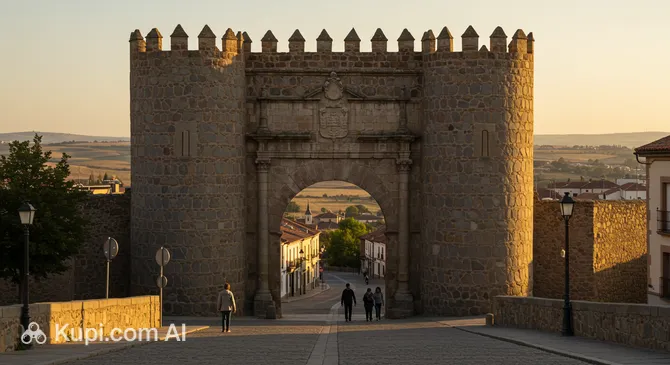
The main shopping activity is concentrated in the historic center and the streets immediately surrounding it. A good starting point is the area near the Alcázar Gate, which serves as a grand entrance to the walled city. From here, you can stroll down Calle San Segundo and Calle Duque de Alba, where you will find a variety of stores selling clothing, accessories, and religious items. Inside the walls, the streets leading away from the cathedral, such as Calle Vallespín, are lined with souvenir shops and traditional bakeries that invite you in with the scent of fresh pastries.
Alcázar Gate. Illustration.
Source: Kupi.com AI
Traveler photos:
For those seeking a more modern shopping experience with familiar international brands, the city has a main shopping center known as Centro Comercial El Bulevar. Located in the northern part of the city, outside the historic walls, this mall houses a wide range of fashion retailers, a hypermarket, and several electronics and home goods stores. It provides a convenient one-stop destination for travelers who need to purchase travel essentials or clothes from well-known chains in a comfortable, climate-controlled environment.
Markets play a significant role in the daily life of the locals. The historical heart of commerce is the Mercado Chico Square, which has hosted markets for centuries. While it is now more of a social hub with restaurants, it retains the atmosphere of a traditional trading place. For fresh produce, the Mercado de Abastos offers stalls filled with local meats, fruits, and vegetables. Additionally, a popular street market is held on Fridays in the area near the Plaza de Toros, where you can browse through stalls selling everything from textiles and shoes to fresh seasonal products.
When it comes to souvenirs, the undisputed star is the Yemas de Santa Teresa. These sweet, orange egg-yolk confections are the city's most famous product and are sold in beautiful boxes at pastry shops (pastelerías) throughout the town. Beyond sweets, Avila is known for its excellent ceramics and pottery, often decorated with traditional motifs. Leather goods and religious handicrafts dedicated to Saint Teresa are also popular keepsakes. For foodies, vacuum-packed cured meats, such as chorizo or salchichón, and local sheep cheese make for delicious edible souvenirs.
Store opening hours in Avila typically follow the traditional Spanish schedule. Small shops generally open from 10:00 AM to 2:00 PM and reopen in the afternoon from 5:00 PM to 8:30 PM. Many smaller businesses close for the midday "siesta" break and on Sunday afternoons. However, the larger supermarkets and the shops within the El Bulevar shopping mall usually remain open all day from 10:00 AM to 10:00 PM, Monday through Saturday. Payment by credit and debit card (Visa and Mastercard) is widely accepted, even for small amounts, though carrying some cash is always useful for small markets or kiosks.
Travelers from outside the European Union are eligible for a VAT refund (tax-free shopping) on purchases made in Spain. There is no minimum spend required to claim the refund. Look for the "Tax Free" sign in shop windows and ask the merchant for the electronic tax-free form (DIVA) when making a purchase. You can then validate this form at customs or digital kiosks at the airport before leaving the EU to receive your refund.