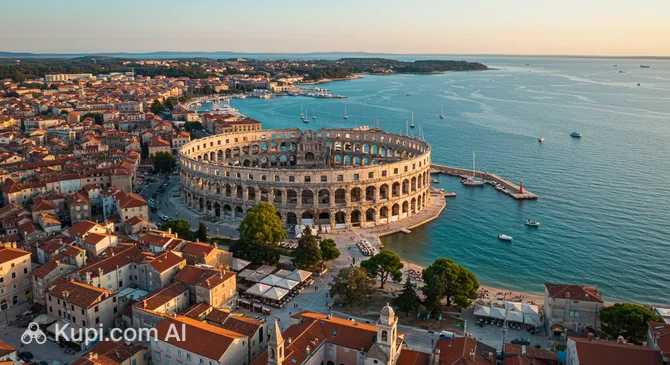
Situated at the southern tip of the Istrian peninsula, Pula is a captivating destination known for its protected harbor, beach-lined coast, and Roman ruins. As the largest city in the region, it stands out as a vibrant cultural and economic center in Croatia, offering a unique blend of ancient heritage and modern Mediterranean life.
The city enjoys a mild climate and is home to a population of approximately 57,000 residents. Its strategic geographical location has made it a significant port throughout the ages, influencing its diverse architecture and traditions. Today, visitors are drawn not only by its historical significance but also by the stunning natural beauty that surrounds the urban area.
Pula. Illustration.
Source: Kupi.com AI
The fascinating history of Pula stretches back thousands of years, with the Roman period leaving the most indelible mark on the cityscape. Walking through the streets feels like an open-air museum, where ancient monuments stand alongside contemporary cafes and shops.
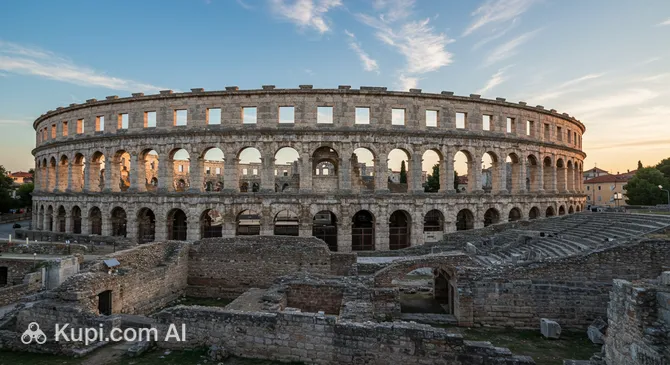
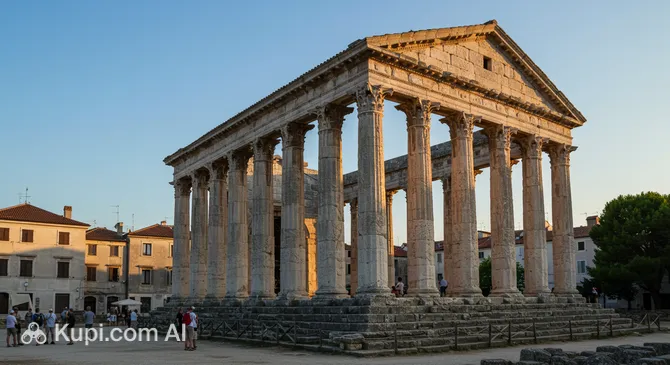
The most iconic landmark is undoubtedly the Pula Arena, one of the best-preserved Roman amphitheaters in the world, which once hosted gladiator fights and now serves as a spectacular venue for concerts and festivals. Other notable attractions include the well-preserved Temple of Augustus in the city forum and the majestic Arch of the Sergii.
Whether you are an architecture enthusiast eager to explore ancient ruins or a traveler looking to relax by the crystal-clear waters of the Adriatic Sea, Pula promises an unforgettable experience. We invite you to discover the charm and timeless beauty of this Istrian gem.
Weather Overview
Pula enjoys a mild Mediterranean climate, characterized by warm, sunny summers and cool, damp winters. To ensure you pack appropriate clothing for your trip, it is helpful to review the typical weather in Pula throughout the year.
The summer months are the most popular time to visit, offering the highest temperatures and the least rain. August is generally the hottest month, with an average temperature of 25.2°C and highs reaching nearly 28°C. This season is quite dry, with July and August experiencing only about 6 to 7 wet days per month, creating ideal conditions for beach days and outdoor exploration.
Winters are significantly cooler, though temperatures rarely drop below freezing. January is usually the coldest month, with averages around 7.3°C and lows near 5.4°C. The cooler season also brings more frequent rainfall; November and December are particularly damp, often seeing up to 14 wet days per month, so a raincoat is recommended.
Spring and autumn provide a comfortable middle ground. May warms up to a pleasant average of 17.1°C, while September retains some of the summer heat with an average of 20.6°C. Overall, visitors can expect hot, dry summers perfect for swimming, and mild but wetter winters suitable for cultural sightseeing.
Average monthly temperature
Average monthly precipitation
Interesting Facts
Beyond the sun-soaked beaches and prominent Roman ruins, Pula holds many fascinating secrets and historical curiosities waiting to be uncovered. Digging a little deeper into the city's past reveals stories of underground worlds, literary giants, and narrow escapes for its most famous monuments.
Zerostrasse. Illustration.
Source: Kupi.com AI
Traveler photos:
Beneath the city streets lies an intricate network of tunnels known as Zerostrasse. Built during World War I to shelter the population from air raids, this underground system connects the city center with nearby fortifications and is spacious enough to hold thousands of people.
The magnificent Pula Arena was nearly lost in the 16th century when Venetian authorities proposed dismantling it stone by stone to rebuild it in Venice. The monument was saved only through the persistent efforts of the local senator Gabriele Emo, whose name is honored on a plaque at the site.
The famous Irish author James Joyce lived in Pula during the winter of 1904-1905. He worked as an English teacher for Austro-Hungarian naval officers at the Berlitz School, and today, a bronze statue of him sits at a café table near the Arch of the Sergii.
Pula's industrial skyline transforms into a modern art installation at night known as the "Lighting Giants." The massive cranes of the Uljanik Shipyard are illuminated by a sophisticated light show designed by Dean Skira, creating a stunning visual display visible from around the bay.
The Italian poet Dante Alighieri visited the city and was so struck by its ancient Roman necropolis that he mentioned Pula in his masterpiece, the Divine Comedy. He references the site in the Inferno, comparing the scattered tombs to the scene in the sixth circle of hell.
How to Get There
Reaching this historic Istrian city is convenient thanks to its well-connected transport network, whether you prefer flying or traveling by land. For a detailed overview of routes and travel advice, you can read more about how to get to Pula on our dedicated page.
The most direct way to arrive is by flying into Pula Airport (PUY), which is conveniently located just 6.5 km from the city center. It is a regional hub that welcomes a significant number of seasonal flights, and the transfer to the city takes approximately 30 minutes by taxi or shuttle bus. Alternatively, travelers often use Rijeka Airport (RJK), situated in the city of Rijeka about 68.8 km away. The journey from there to Pula typically takes around 2 hours by road. For those arriving from further afield, the Venice Marco Polo Airport (VCE) in Venice is a large international gateway located approximately 138 km from Pula, with a travel time of roughly 3 hours and 45 minutes.
For clarity, here is a summary of the main airports:
If you prefer rail travel, please note that while Pula is connected to the railway network, the major international hubs listed are located in neighboring cities. You can arrive at Trieste Centrale Station (TXB) in the city of Trieste, which is about 88.1 km from Pula. From there, you can get a taxi or bus, which takes about 2.5 hours. Another option is the Ljubljana Railway Station (LJR) in Ljubljana, situated approximately 142.3 km away, requiring a transfer time of roughly 4 hours by road to reach the coast.
Below is a list of the closest major railway stations:
Pula is a treasure trove of antiquity, where ancient history seamlessly blends with modern life. The city's streets are lined with remarkable monuments that tell the story of its Roman, Venetian, and Austrian past, offering visitors a unique cultural experience.
The most iconic sight in the city is undoubtedly the Pula Arena. This magnificent Roman amphitheater, built in the 1st century AD, is one of the six largest surviving Roman arenas in the world. In ancient times, it hosted gladiator fights for thousands of spectators. Today, it serves as a spectacular open-air venue for concerts, the Pula Film Festival, and historical reenactments, allowing visitors to walk on the same ground where history was made.
Pula Arena. Illustration.
Source: Kupi.com AI
Traveler photos:
Another testament to Roman engineering is the Temple of Augustus, located on the vibrant Forum Square. Dedicated to the first Roman emperor, this well-preserved structure stands as a graceful example of classical architecture. It has survived centuries of change and now houses a collection of ancient stone and bronze sculptures. The square itself remains the central gathering place of the city, surrounded by cafes and historic buildings, perfect for soaking up the local atmosphere.
Temple of Augustus. Illustration.
Source: Kupi.com AI
Traveler photos:
For those seeking panoramic views, a climb to the Pula Fortress is a must. Known locally as the Kaštel, this star-shaped fortress was constructed by the Venetians in the 17th century on the highest hill in the city center. It was designed to defend the harbor and today houses the Historical and Maritime Museum of Istria. Walking along its walls offers a strategic vantage point over the historic center and the shimmering Adriatic Sea.
Families and marine life enthusiasts should not miss the Pula Aquarium. Uniquely situated within the 130-year-old Fort Verudela, it combines military heritage with marine conservation. The aquarium displays the diverse underwater world of the Adriatic and Mediterranean, including tropical fish and sharks. It is also home to a Sea Turtle Rescue Centre, which rehabilitates injured turtles, making it an educational and inspiring visit for all ages.
Local Cuisine
The culinary scene in Pula is a delightful reflection of its geography and history, blending traditional Istrian flavors with strong Italian influences. The region is world-renowned for its high-quality ingredients, particularly its award-winning olive oil and exquisite truffles. A must-try dish for any visitor is fuži or pljukanci, types of hand-rolled pasta typically served with a rich sauce made from black or white truffles, or a savory meat stew known as žgvacet.
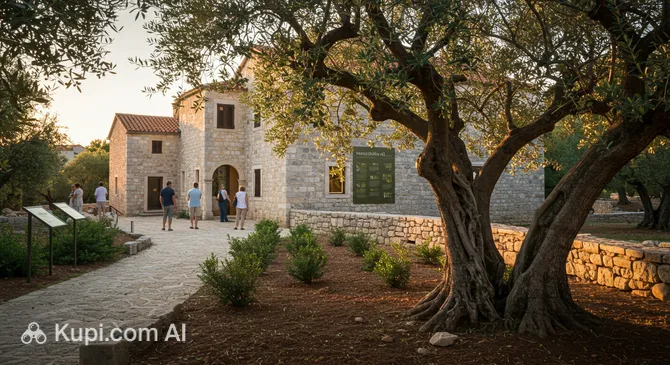
Seafood lovers will feel right at home, as the Adriatic Sea provides a daily bounty of fresh ingredients. Local menus frequently feature grilled fish, scampi, and mussels, often prepared simply with olive oil and herbs to let the natural flavors shine. Another staple of the local diet is Istrian pršut, a dry-cured ham cured in the bora wind without smoke. To learn more about the region's "liquid gold" and taste different varieties, a visit to the Istrian Olive Oil Museum offers a fascinating insight into the history and production of this essential staple.
Istrian Olive Oil Museum. Illustration.
Source: Kupi.com AI
Traveler photos:
No meal in Pula is complete without sampling the local wines. The region is famous for Malvazija, a refreshing white wine with floral notes that pairs perfectly with seafood, and Teran, a robust ruby-red wine often enjoyed with meat dishes. For an aperitif or digestif, locals often sip on biska, a traditional brandy made from mistletoe and pomace, or medica, a sweet honey brandy.
The food culture here is relaxed and social. While there are plenty of upscale restaurants, many locals prefer eating at a konoba, a traditional tavern that serves home-style food in a rustic setting. For those looking to explore a variety of local wines and tapas-style bites, Veritas Food & Wine is a popular spot to unwind. Whether you are grabbing a quick bite at Agrippina Street Food or sitting down for a multi-course dinner, the hospitality in Pula is always warm and welcoming.
Travel Tips
Preparing for a trip to Pula is the first step toward an unforgettable holiday, but knowing a few local nuances can make your experience significantly smoother and more enjoyable. To help you navigate the city with ease and confidence, we have compiled a list of essential practical tips.
Clothing and Gear: Pula has a Mediterranean climate, so lightweight, breathable clothing is essential for the summer, along with a high-quality sunscreen and a hat. Since the beaches here are mostly rocky or pebbled and sea urchins are common in the crystal-clear water, water shoes are an absolute must for swimming. Comfortable walking shoes are also necessary for navigating the ancient cobblestone streets. If you plan to visit religious sites like the Pula Cathedral, remember to dress modestly, covering your shoulders and knees.
Transportation: The historic city center is compact and best explored on foot, as many attractions are close to one another. For reaching beaches and resorts like Verudela or Stoja, the local bus system, operated by Pulapromet, is reliable and affordable. There are no trams or metro lines. While renting a car is excellent for exploring the wider Istria region, parking in Pula's center can be scarce and expensive during peak season, so consider using ride-hailing apps or taxis for short city trips.
Finances: The official currency in Croatia is the Euro (€). While credit and debit cards are widely accepted in hotels, restaurants, and supermarkets, it is wise to carry some cash for small purchases at bakeries, souvenir stalls, or the local market. ATMs (look for Bankomat) are plentiful. Tipping is not mandatory but is appreciated; rounding up the bill or leaving about 10% for good service is standard practice.
Health and Safety: Pula is generally a very safe destination for tourists. Tap water is potable and safe to drink throughout the country. Pharmacies are marked with a green cross and are known as Ljekarna; they are well-stocked, and pharmacists usually speak English. For any medical emergencies, dial 112. When swimming, pay attention to safety flags and local warnings regarding currents.
Communication: The official language is Croatian, but due to the region's history and proximity to Italy, Italian is also widely spoken and understood. English is spoken fluently by almost everyone in the tourism industry. Free Wi-Fi is available in many public spots in the city center. EU residents can roam like at home, while travelers from outside the EU can easily buy a prepaid SIM card at newsstands like Tisak.
Local Etiquette: Croatians are generally relaxed and hospitable. A handshake is the standard greeting. Coffee culture is a serious affair here; locals do not grab a coffee "to go" but rather sit in cafes for hours to socialize. Join them, take your time, and enjoy the moment. When entering a shop, a simple "Dobar dan" (Good day) is polite and appreciated.
What to Avoid: Do not walk around the historic city center in your swimwear or without a shirt. This is considered disrespectful, and many Croatian coastal cities, including Pula, enforce fines for inappropriate dress in public urban areas. Also, avoid referring to the region solely as "the Balkans" without context; locals are proud of their specific Istrian and Mediterranean identity.
Additional Tip: Visit the Pula City Market (Tržnica) in the morning to experience the true pulse of the city. Housed in a historic secessionist building, it is the best place to buy fresh local fruits, vegetables, and the famous Istrian olive oil directly from producers.
Armed with these practical insights, you are ready to explore the ancient streets and stunning coastlines of Pula without a worry. We hope these tips help you embrace the local lifestyle and create lasting memories in this beautiful Istrian city.
Entertainment & Nightlife
As the sun sets over the Adriatic, Pula transforms from a historical open-air museum into a vibrant hub of evening entertainment. While it may not have the frantic pace of some other Croatian party destinations, the city offers a diverse and lively nightlife scene that caters to everyone from jazz enthusiasts to electronic music fans.
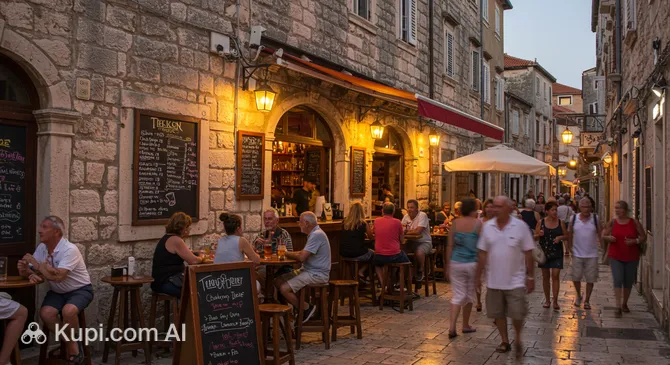
The heart of the action is typically found in the city center. The streets around the Forum and Kandlerova Street are lined with bustling cafes that turn into lively bars as the night progresses. In the summer months, the atmosphere is electric, with people spilling out onto the cobblestones to enjoy warm breezes and cold drinks. For a more relaxed vibe, the Verudela peninsula offers beach bars where you can sip cocktails by the sea.
For those looking to start their evening with great music and a wide selection of drinks, Bass Bar Pula is a popular choice near the city center. It is known for its friendly staff and relaxed ambiance, making it a perfect spot to warm up before heading out to bigger venues. Another excellent option for beer lovers is the Zaobilaznica Pub, which offers a robust selection of brews in a welcoming setting.
Bass Bar Pula. Illustration.
Source: Kupi.com AI
Traveler photos:
If you are in the mood for dancing late into the night, Pula has several clubs that stay open until the early morning hours. Cargo Club is a well-known venue that often hosts DJs and themed parties, attracting a mix of locals and tourists. Alternatively, Stella Club offers a vibrant atmosphere for those who want to experience the local party scene. The dress code in most places is "smart casual"—comfortable but neat; there is rarely a need for formal attire.
When it comes to practicalities, nightlife in Pula usually kicks off around 10:00 PM for bars, while clubs get busy after midnight. Prices are generally moderate compared to Western Europe. The city is very safe for night walks, even in the late hours. However, if you are staying outside the center, such as in Verudela or Stoja, it is best to take a taxi back. Local taxi services are reliable, and ride-hailing apps are often available.
Beyond the nightlife, Pula offers plenty of entertainment during the day. Families can enjoy a fun-filled day at Aquapark Pula, which features slides and pools suitable for all ages. For those who prefer retail therapy, Max City is the largest shopping mall in the region, offering a wide range of international brands, a cinema, and various dining options to cool off during the hot afternoon hours.
Parks & Museums
Beyond its bustling ancient center, Pula offers a variety of green sanctuaries and cultural institutions that provide a deeper look into the city's heritage and natural beauty. Visitors can easily escape the urban pace by exploring the lush parks or diving into the rich history preserved within the city's museums and galleries.
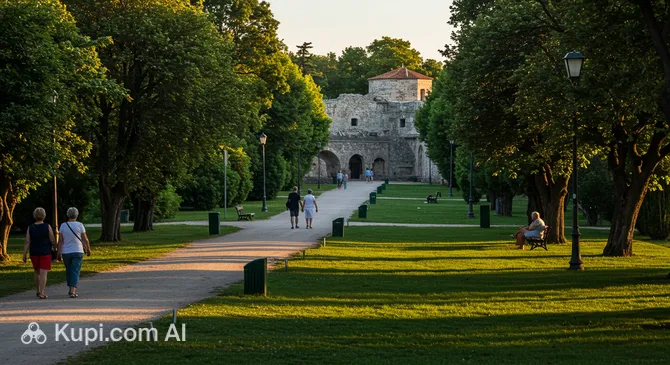
For a refreshing break close to the city center, Monte Zaro Park is the largest and oldest park in Pula. Situated on a hill, it offers plenty of shade and features a historic observatory, making it a pleasant spot for a leisurely stroll. Just outside the main urban area lies the Šijana Forest, known locally as the Kaiserwald. This protected forest park was once a retreat for Austro-Hungarian nobility and today serves as a perfect recreational area with cycling trails and picnic spots.
Monte Zaro Park. Illustration.
Source: Kupi.com AI
Traveler photos:
Nature lovers seeking more dramatic scenery should visit the Verudela Canyon. Located on the Verudela peninsula, this geological formation drops steeply into the sea, offering spectacular views and a rugged landscape that contrasts beautifully with the manicured gardens of nearby resorts.
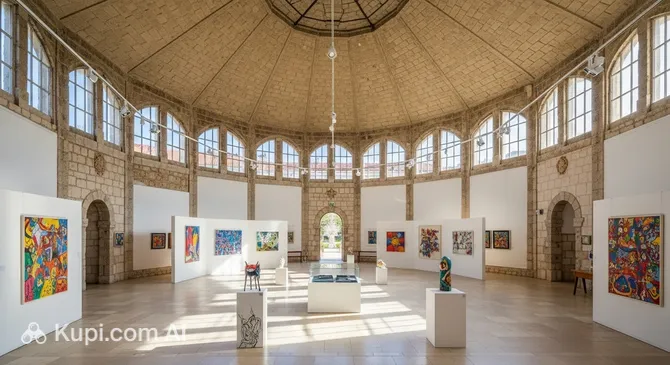
Pula's cultural scene is equally impressive. The Sacred Hearts Museum and Gallery is a unique venue housed in a former church that was closed for decades before being renovated. It now hosts major temporary exhibitions, concerts, and lectures, blending historical architecture with modern artistic expression. Another essential stop is the Historical and Maritime Museum of Istria, located within the Venetian fortress. It holds a vast collection of artifacts that chronicle the region's maritime and military history.
Sacred Hearts Museum and Gallery. Illustration.
Source: Kupi.com AI
Traveler photos:
Walking through the city reveals even more historical treasures. You can pass through the Twin Gates, an ancient Roman monument that once served as a main entrance to the city and now leads to the archaeological museum grounds. Nearby, the recently restored Roman Theatre of Pula sits on the hillside, offering a glimpse into the entertainment of antiquity distinct from the larger Arena. For religious architecture, the Cathedral of the Assumption of the Blessed Virgin Mary stands as a testament to the city's spiritual continuity, featuring a mix of architectural styles from different epochs.
For a truly authentic natural experience, head to Seagull's Rocks (Galebove stijene). This rocky cove is a favorite among locals for cliff jumping and swimming in azure waters, offering a wilder and more secluded atmosphere than the main city beaches.
Getting Around
Navigating Pula is relatively straightforward, as the city operates a reliable and efficient public bus network that connects the historic center with residential areas and popular tourist resorts like Verudela and Stoja. There is no metro, tram, or trolleybus system in the city; instead, the bright orange and yellow buses operated by the local company, Pulapromet, serve as the main mode of public transit. These buses are frequent, clean, and comfortable, making them an excellent option for reaching beaches or accommodations located outside the immediate downtown area.
For payment, travelers have a few convenient options. You can purchase a single-ride ticket directly from the bus driver, but keep in mind that this is usually the most expensive option and often requires cash in small denominations. A more economical choice is to buy tickets in advance at newsstands (such as Tisak or iNovine) or at the main bus station. For those planning to use the bus frequently, a contactless value card (Vrijednosna karta) is available, which significantly reduces the cost per ride and can be topped up as needed. Approximate prices for a single ride range from €1.50 to €2.00, depending on where the ticket is purchased.
When using the bus, it is standard practice to enter through the front door and validate your ticket immediately using the machines located near the driver. If you have a contactless card, simply tap it on the reader. The buses generally operate from the early morning, around 05:00, until shortly before midnight. Schedules can vary by season, with more frequent connections provided during the busy summer months to accommodate the influx of visitors.
Beyond the bus system, taxis and ride-sharing apps are widely available and offer a comfortable alternative, especially for late-night travel or trips with heavy luggage. Services like Uber and Bolt operate in the city, alongside local taxi companies such as Cammeo, providing transparent pricing and ease of booking. However, during the peak tourist season, traffic congestion can occur, so allow extra time for your journeys.
For a more active way to explore, renting a bicycle is a popular choice, particularly for visiting the coastline and the nearby nature parks. The city promotes cycling with its Bičikleta bike-sharing system, which allows users to rent electric and mechanical bikes from various stations across the town. Additionally, since the historic center is compact and pedestrian-friendly, walking remains the best way to admire the ancient architecture and soak up the local atmosphere without worrying about schedules or parking.
Accommodation
Accommodation:
Finding the perfect place to stay in Pula is relatively easy, as the city offers a diverse array of accommodation options to suit every budget and travel style. Visitors can choose from historic boutique hotels in the city center, modern private apartments, budget-friendly hostels, and sprawling resort complexes located along the coast. The region is also well-known for its excellent campsites, which are particularly popular among nature lovers and road-trippers.
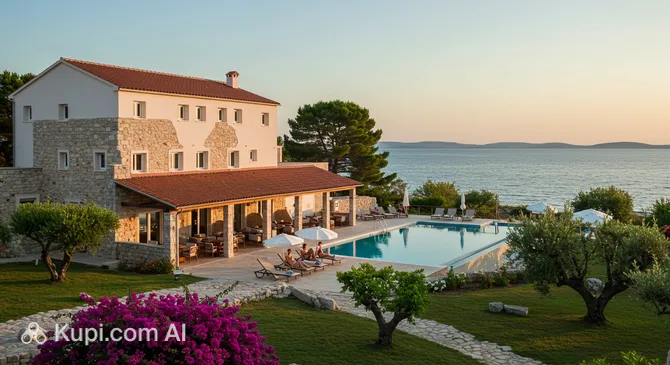
For those who want to be in the heart of the action, staying in the city center is the best choice. This area places you within walking distance of the ancient monuments, the main bus station, and the evening buzz of the cafes. However, if your primary goal is a relaxing beach holiday, the Verudela Peninsula is the most sought-after resort area. Located just a short bus ride or drive from downtown, it is home to numerous hotels, pebbled beaches, and recreational facilities.
Histria Pula. Illustration.
Source: Kupi.com AI
Traveler photos:
Among the well-known establishments in the coastal zone is Histria Pula, a prominent resort hotel situated right by the sea. It is celebrated for its panoramic views of the Adriatic and its comprehensive amenities, including wellness centers and seawater pools. Another excellent option for families and groups is Verudela Park, which offers a comfortable stay amidst Mediterranean vegetation, providing easy access to the beaches and the popular aquarium.
Regarding costs, prices in Pula fluctuate significantly with the seasons. During the peak summer months of July and August, rates are at their highest, and availability drops quickly. Therefore, a crucial booking tip is to secure your accommodation several months in advance if you plan to visit during this high-demand period. In the shoulder seasons of late spring and early autumn, prices are generally more moderate. Most accommodations can be easily booked via major online platforms, though direct booking is also common.
Nearby Cities
For those looking to explore the surroundings, Pula serves as an excellent base for day trips to several interesting nearby locations. The Istrian peninsula and the wider Kvarner region are well-connected, allowing travelers to easily experience different facets of Croatian culture and history within a few hours' drive.
One of the most accessible destinations is Rijeka, located just a short distance along the coast. As the country's principal seaport, it offers a vibrant urban atmosphere characterized by elegant Austro-Hungarian architecture and the lively Korzo promenade. Visitors should not miss the hilltop Trsat Castle, which provides sweeping views of the Kvarner Bay. Further south lies the historic city of Zadar, famous for its unique blend of ancient Roman ruins and modern artistic installations, such as the mesmerizing Sea Organ and the Sun Salutation.
For those willing to venture a bit further inland, the capital city of Zagreb makes for an ambitious but rewarding trip. It features a charming medieval Upper Town, diverse museums, and bustling street markets that contrast with the coastal vibe of Pula.
City
Population
Distance
Rovinj
14 294
29 km
Labin
11 642
33 km
Pazin
8 638
42 km
Opatija
11 659
63 km
Matulji
11 246
67 km
These nearby destinations offer a glimpse into the diverse culture and landscapes of the region, ranging from busy ports and historic capitals to scenic coastal towns.
Shopping & Souvenirs
Shopping in Pula offers a delightful mix of modern retail experiences and traditional Mediterranean charm. While the city is not a massive shopping metropolis, it provides plenty of opportunities to find high-street fashion, unique local crafts, and authentic Istrian gastronomic products. Whether you are looking for international brands or a special memento to take home, the city center and its surrounding areas have something to satisfy every taste.
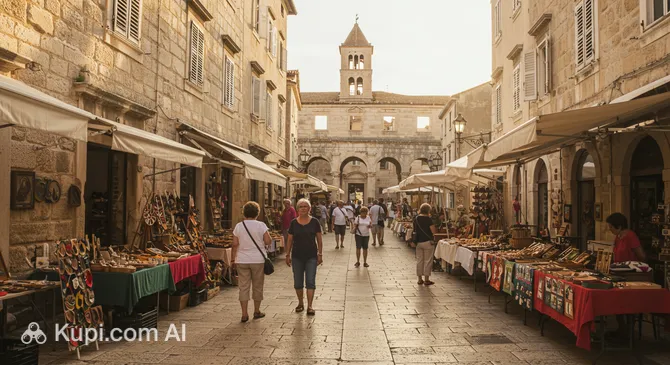
The heart of the shopping action is located in the pedestrian-friendly city center. Flanatička Street serves as the main commercial artery, lined with popular fashion chains, shoe stores, and perfumeries. It is a lively spot where locals and tourists alike gather to shop and stroll. Branching off from the main square, Sergijevaca Street winds its way through the old town towards the Roman monuments. This narrow, cobblestone street is packed with smaller boutiques, souvenir shops, and jewelry stores, making it the perfect place to hunt for unique gifts while soaking up the historic atmosphere.
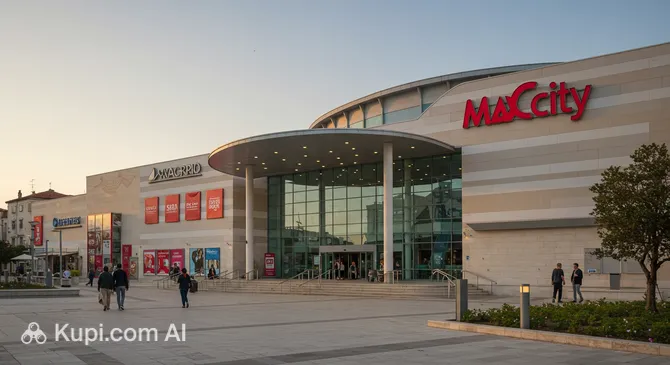
For a comprehensive modern shopping experience, visitors should head to Max City. Located near the Stoja peninsula, this is the largest shopping center in Istria. It houses a vast array of international clothing brands, a cinema, and numerous dining options, making it a great destination for a full day of entertainment. Another convenient option is the Pula City Mall, a retail park situated slightly outside the center that features large supermarkets, sports stores, and drugstores.
Max City. Illustration.
Source: Kupi.com AI
Traveler photos:
An essential part of the local culture is the Pula City Market (Tržnica). Housed in a beautiful historic building from the early 20th century, the market is a sensory delight. Here, you can wander through stalls overflowing with fresh seasonal fruits, vegetables, and locally caught fish. It is also an excellent place to purchase homemade cheeses, honey, and lavender products directly from the producers.
When it comes to souvenirs, the best items to bring back from Pula are undoubtedly its gastronomic treasures. Istria is world-famous for its truffles, and you can find jarred truffle sauces (tartufata) or truffle-infused oils in many specialty shops. High-quality extra virgin olive oil is another must-buy; you can purchase premium bottles at the shop within the Istrian Olive Oil Museum or at specialized enotecas. Local wines, such as Malvazija and Teran, also make for excellent gifts.
Most shops in the city center are open from around 09:00 to 21:00, although smaller boutiques may close for a siesta in the afternoon or close earlier on Sundays. The large shopping malls typically operate daily from 09:00 to 21:00 or 22:00. The official currency is the Euro (€). Credit and debit cards are widely accepted in malls, supermarkets, and most restaurants, but it is advisable to carry cash for the green market and smaller souvenir stands.
Visitors from outside the European Union may be eligible for a VAT refund on purchases that exceed a certain amount in a single store. Look for the "Tax Free" signage in shop windows and remember to ask the staff for a tax refund form and the receipt at the time of purchase to present to customs upon leaving the EU.