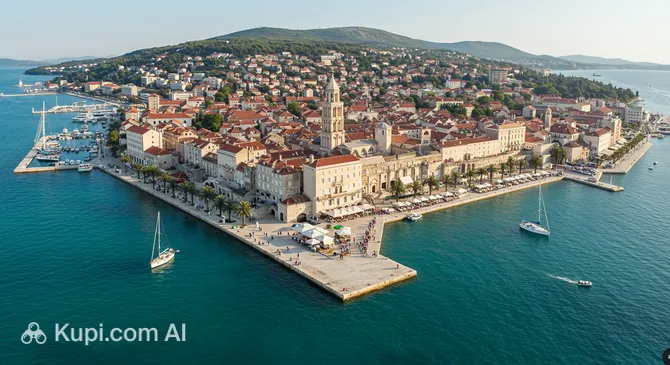
Welcome to Split, a vibrant coastal city that perfectly blends ancient history with the buzzing energy of modern Mediterranean life. As the second-largest city in Croatia and the largest on the Adriatic coast, it serves as a vital cultural and transport hub. Visitors are often captivated by its unique atmosphere, where locals live and work amidst Roman ruins, creating a living museum experience that is unlike anywhere else.
Split. Illustration.
Source: Kupi.com AI
Located in the Split-Dalmatia County, the city enjoys a sunny Mediterranean climate, making it an attractive destination year-round. With a population of approximately 178,000 residents, it offers the amenities of a major urban center while retaining a relaxed coastal charm. The city is dramatically situated on a peninsula sheltered by the majestic Mosor and Kozjak mountains, providing a stunning backdrop to the azure waters of the Adriatic.
The heart of the city is undoubtedly the UNESCO-listed Diocletian's Palace, one of the best-preserved monuments of Roman architecture in the world. Exploring the history of Split reveals a fascinating timeline that dates back over 1,700 years, beginning when the Roman Emperor Diocletian decided to build his retirement residence here. Today, the palace walls teem with shops, bars, and restaurants, seamlessly integrating the past into the present.
Beyond the historical core, travelers can stroll along the Riva, a stunning waterfront promenade lined with palm trees and cafes, or hike up Marjan Hill for breathtaking panoramic views of the city and the surrounding islands. Whether you are looking to explore ancient heritage, enjoy the crystal-clear sea, or use the city as a gateway to the nearby Dalmatian islands, Split promises an unforgettable travel experience.
Weather Overview
Split enjoys a classic Mediterranean climate, making it a delightful destination for most of the year. To help plan your activities, it is helpful to review the typical weather in Split and pack accordingly. Generally, the city is characterized by hot, dry summers and mild, wetter winters.
The summer months, particularly July and August, are perfect for beach lovers, with average temperatures hovering around 24°C and daily highs climbing to nearly 29°C. Rainfall is minimal during this peak season, with July seeing as few as 4 wet days. Conversely, winter brings cooler air, with January temperatures dipping to an average of 5.2°C and lows around 1.8°C.
Travelers visiting during the shoulder seasons or winter should be prepared for more frequent precipitation. Months like May and December can experience up to 15 wet days, although the temperatures in late spring remain pleasant with highs reaching 20°C. Overall, expect warm, sunny summers with very little rain and mild winters with regular showers.
Average monthly temperature
Average monthly precipitation
Interesting Facts
Beyond the main attractions, Split holds many fascinating secrets and local legends that surprise even seasoned travelers. Digging a little deeper reveals unique details about its Roman heritage and vibrant local culture.
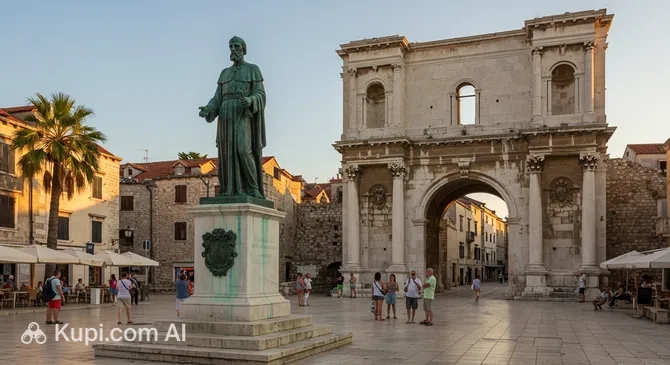
Gregory of Nin Statue. Illustration.
Source: Kupi.com AI
Traveler photos:
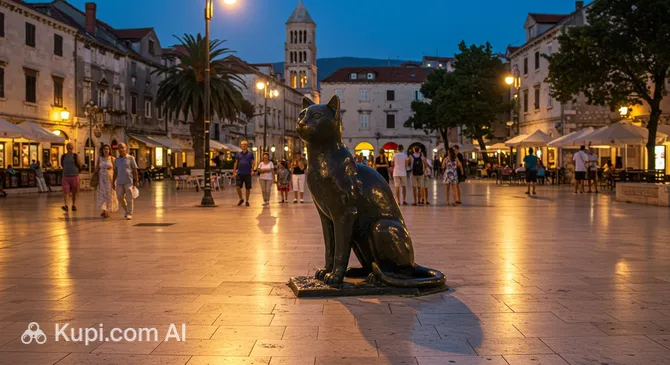
Local tradition suggests that rubbing the big toe of the massive Gregory of Nin Statue brings good luck and ensures a return visit to the city. Over the years, the toe has been polished to a brilliant golden shine by the hands of countless hopeful passersby.
There is a fascinating historical irony surrounding the Cathedral of Saint Domnius. The structure was originally built as a mausoleum for the Roman Emperor Diocletian, a fierce persecutor of Christians, but was later consecrated as a cathedral dedicated to one of his victims.
The city's fish market, known locally as Peškarija, has a unique natural advantage: it is virtually free of flies. This is due to the strong sulfur fumes rising from the nearby thermal springs, which naturally repel insects from the fresh catch.
While walking through Diocletian's Palace, you might spot an authentic Egyptian sphinx. The emperor was fascinated by Egyptian culture and brought back over a dozen ancient granite sphinxes to decorate his home, one of which still guards the Peristyle today.
How to Get There
Reaching this Dalmatian gem is relatively easy, with various transport options connecting it to the rest of Europe and beyond. Whether you prefer flying directly to the coast or combining your journey with a scenic drive, you can find all ways to reach the city to suit your travel plans.
The most convenient way to arrive is via Split Airport (IATA: SPU), which serves as the main international gateway to the region. Located approximately 12 km from the city center, it is a bustling hub welcoming over 3 million passengers annually. A taxi or shuttle bus from the airport typically takes about 40 minutes, depending on traffic. For those exploring the wider region, Zadar Airport (IATA: ZAD) in the city of Zadar is another viable option. It is situated about 110 km away, and the transfer to Split usually takes around 2 to 3 hours by bus or car.
For clarity, here is a summary of the main airports:
Regarding rail travel, while Split is connected to the Croatian railway network, international connections often involve transfers. A significant hub for travelers coming from Italy is Bari Centrale Station (IATA: BAU) in the city of Bari. Although it is located about 268 km away across the Adriatic Sea, it is a key transit point for those planning to take a ferry to Split. The ferry crossing provides a scenic approach to the Croatian coast.
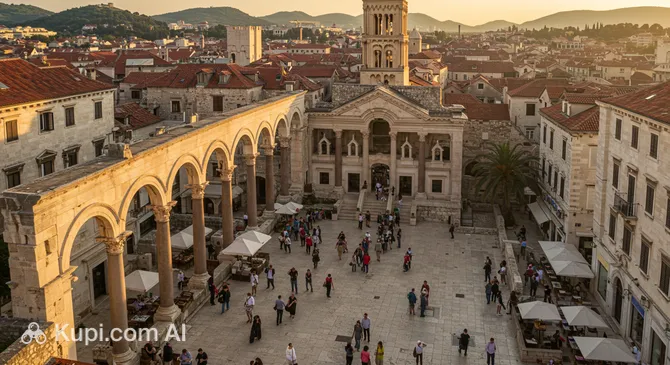
The crown jewel of the city is undoubtedly Diocletian's Palace, a UNESCO World Heritage site that forms the living heart of Split. Far from being a fenced-off ruin, this ancient Roman complex is a bustling labyrinth of streets filled with shops, cafes, and residences. Visitors can wander through the Peristyle, the central square where the emperor once made public appearances, and soak in the unique atmosphere where antiquity meets modern Mediterranean life.
Diocletian's Palace. Illustration.
Source: Kupi.com AI
Traveler photos:
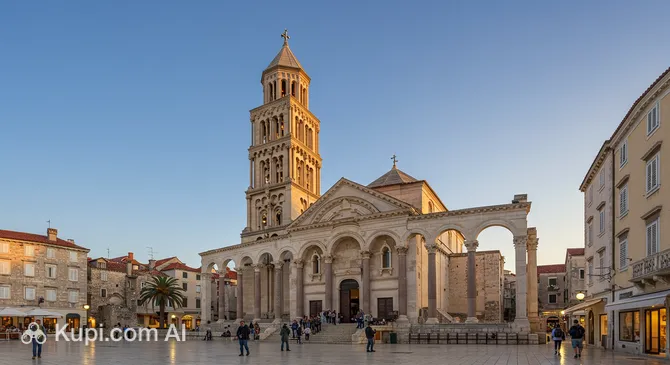
Dominating the skyline within the palace walls is the Cathedral of Saint Domnius. Originally constructed as the mausoleum for Emperor Diocletian, it is regarded as one of the oldest Catholic cathedrals in the world that remains in use in its original structure. Tourists are encouraged to climb the bell tower for a spectacular panoramic view of the red-tiled roofs, the harbor, and the nearby islands.
Just a short walk from the central square, you will find the Temple of Jupiter. This small but remarkably preserved Roman temple dates back to the late 3rd century. It features an intricate coffered ceiling and a headless granite sphinx guarding the entrance, one of several brought from Egypt by the emperor. It offers a quiet and intimate glimpse into the city's pagan past amidst the bustling streets.
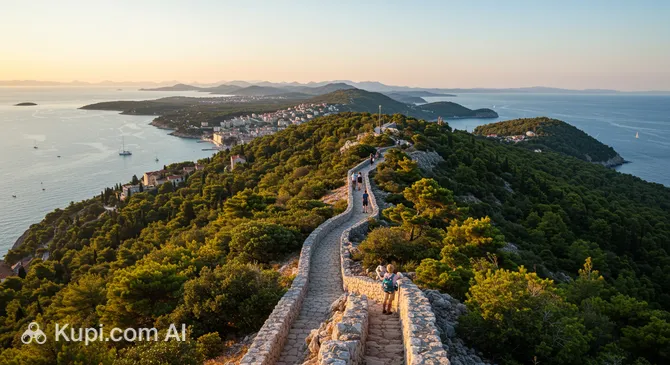
For those seeking a retreat into nature, Marjan Forest Park offers a perfect escape on the peninsula's western tip. Known as the "lungs of the city," this vast park is covered in dense pine forests and crisscrossed with jogging trails and walking paths. It is a favorite spot for both locals and visitors to enjoy fresh air, visit medieval chapels, and admire breathtaking views of the Adriatic Sea.
Marjan Forest Park. Illustration.
Source: Kupi.com AI
Traveler photos:
Art lovers should not miss the Meštrović Gallery, dedicated to the work of Ivan Meštrović, Croatia's most renowned sculptor. Housed in a magnificent villa that was once the artist's home and studio, the gallery displays a comprehensive collection of his sculptures, drawings, and architectural plans. The serene sculpture garden and the elegant architecture of the building itself make it a culturally enriching stop.
Local Cuisine
The culinary scene in Split is a delicious reflection of the Dalmatian lifestyle, characterized by fresh ingredients, simplicity, and the slow enjoyment of food. Rooted in the Mediterranean diet, the local cuisine relies heavily on locally sourced olive oil, aromatic herbs like rosemary and sage, and an abundance of fresh seafood caught daily from the Adriatic Sea.
One dish you absolutely must try is Pašticada, often considered the queen of Dalmatian cuisine. This rich, sweet-and-sour beef stew is marinated in vinegar and spices for days before being slow-cooked with vegetables and dried fruits, typically served with homemade gnocchi. Another icon of the local table is Crni rižot (Black Risotto), made with cuttlefish. Its intense black color comes from the cuttlefish ink, offering a unique and savory taste of the sea.
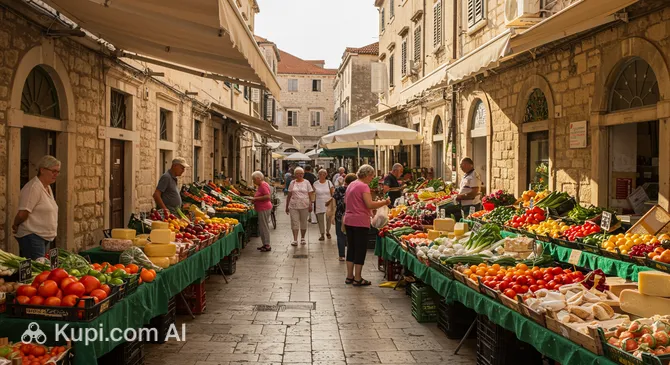
For a truly authentic experience, visitors should head to the Green Market (Pazar), located right next to the eastern wall of the palace. This bustling open-air market is where locals come to buy fresh fruits, vegetables, cheeses, and cured meats. It is the perfect place to grab a snack, such as Soparnik, a traditional savory pie filled with Swiss chard and garlic that dates back to the days of the Poljička Republic.
Green Market. Illustration.
Source: Kupi.com AI
Traveler photos:
When it comes to dining out, the city offers a mix of upscale restaurants and traditional taverns known as konobas. These intimate eateries focus on honest, homestyle cooking. A spot like Konoba Gurman is a great example of where you can enjoy hearty meat platters or grilled fish in a relaxed atmosphere. For those seeking a more modern twist on local ingredients, Ćiri Biri Bela offers a charming courtyard setting perfect for a leisurely brunch or dinner.
No culinary journey here is complete without embracing the local drinking culture. Coffee is a ritual in Split, with locals spending hours sipping espresso on the waterfront promenade. In the evenings, the focus shifts to Dalmatian wines, such as the robust red Plavac Mali or the crisp white Pošip. If you prefer cocktails or craft beverages, places like The Daltonist Craft Bar provide a vibrant setting to sample unique drinks inspired by local flavors.
Travel Tips
Planning a trip to this stunning Dalmatian city is exciting, but a few insider tips can make your experience even smoother and more enjoyable. Here is some practical advice to help you navigate the ancient streets and modern lifestyle of Split like a pro.
Clothing and Gear: Summers are hot and sunny, so pack breathable fabrics, sunglasses, and high-SPF sunscreen. However, the most critical item is comfortable walking shoes; the historic center is paved with ancient, polished cobblestones that can be slippery and unforgiving to high heels. If you plan to visit religious sites like the Cathedral, remember to dress modestly by covering your shoulders and knees.
Transportation: The best way to explore the city center is on foot, as Diocletian's Palace and the surrounding Old Town are pedestrian-only zones. For trips further afield, the local bus network is reliable, and ride-hailing apps like Uber are widely available. Avoid renting a car if you are staying in the city center, as parking is scarce, expensive, and often unnecessary.
Finances: Croatia uses the Euro (EUR). While credit cards are widely accepted in restaurants and shops, it is essential to carry cash for small purchases at bakeries, coffee bars, and the open-air markets. Tipping is appreciated but not mandatory; rounding up the bill or leaving about 10% is standard for good service.
Health and Safety: Split is generally a very safe destination for travelers, but always keep an eye on your belongings in crowded areas. Pharmacies are marked with a green cross, and you can usually find a designated "dežurna ljekarna" open 24/7 for emergencies. Tap water is safe to drink and of high quality, so carry a reusable bottle to stay hydrated.
Communication: The official language is Croatian, but English is spoken almost everywhere, especially by younger people and those in the tourism industry. Free Wi-Fi is common in cafes and public squares. If you need mobile data, prepaid SIM cards are inexpensive and easy to purchase at any "Tisak" newsstand.
Local Etiquette: Locals value a relaxed pace of life known as "pomalo" (take it easy). Coffee culture is a serious ritual here; do not rush your drink, as sitting and sipping for an hour is the norm. A polite greeting of "Dobar dan" (Good day) when entering a shop is customary and well-received.
What to Avoid: Strictly avoid walking through the historic Old Town in swimwear or without a shirt. The city enforces fines for inappropriate dress in the center to respect its cultural heritage. Additionally, avoid climbing on the ancient walls or ruins, as this can damage the historic structures.
Additional Tip: Be aware that the polished stone streets in the palace become incredibly slippery when wet. If it rains, tread carefully to avoid slipping. Also, if you plan to take a ferry to the islands during peak season, buy your tickets online in advance to skip the long queues at the port.
Armed with these practical tips, you are ready to immerse yourself in the beauty and culture of this coastal gem without any hassles. Relax, embrace the local rhythm, and enjoy every moment of your stay in the heart of Dalmatia.
Entertainment & Nightlife
As the sun sets over the Adriatic, Split transforms from a historic sightseeing hub into a vibrant center of nightlife and entertainment. The city's energy shifts from the sun-drenched Riva promenade to the labyrinthine streets of the Old Town and the pulsing beach clubs. Whether you prefer sipping cocktails in ancient courtyards, listening to live jazz, or dancing until dawn by the sea, the city offers a diverse nocturnal landscape that caters to every taste.
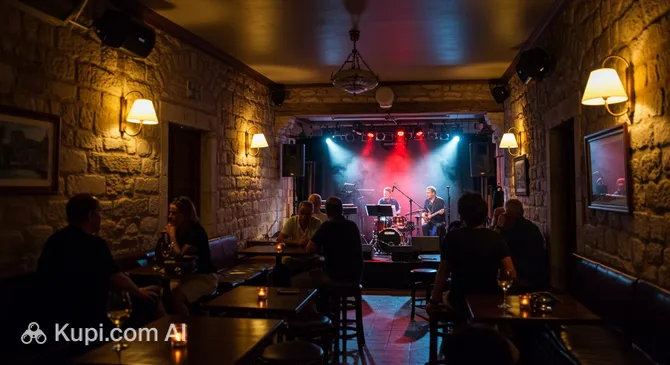
The heart of the action lies within the walls of Diocletian's Palace and its immediate surroundings. Here, the nightlife is unique; bars are often tucked away in centuries-old alcoves or spill out onto the ancient cobblestones. The atmosphere is generally relaxed and bohemian in the early evening, becoming livelier as the night progresses. For a truly distinct experience, visit Marvlvs Library Jazz Bar. Located in the birthplace of the father of Croatian literature, Marko Marulić, this venue offers an intimate setting where you can enjoy fine wines and smooth jazz surrounded by books and Roman architecture.
Marvlvs Library Jazz Bar. Illustration.
Source: Kupi.com AI
Traveler photos:
For those seeking a more energetic vibe, the area around the Bačvice neighborhood and the ferry port is known for its late-night clubs and bustling crowds. This district attracts a mix of locals and tourists looking to party well into the early morning hours. A popular spot in the city's nightlife scene is Mačak, a club that often draws a younger crowd with its modern beats and lively atmosphere. The dress code in most places is smart casual; while the coastal vibe is laid-back, beachwear is generally not appropriate for evening venues in the city center.
Mačak. Illustration.
Source: Kupi.com AI
Traveler photos:
Practicalities are simple to navigate. The best time to head out is around 10:00 PM for bars, while clubs typically fill up after midnight. Prices in the Old Town can be slightly higher than in the suburbs, with cocktails averaging between 8 to 12 EUR. Getting around at night is safe and easy; the center is pedestrian-only, so walking is the primary mode of transport. If your accommodation is further afield, Uber and local taxis are readily available and reliable. While Split is very safe, it is always wise to stick to well-lit streets and avoid walking alone in unlit park areas late at night.
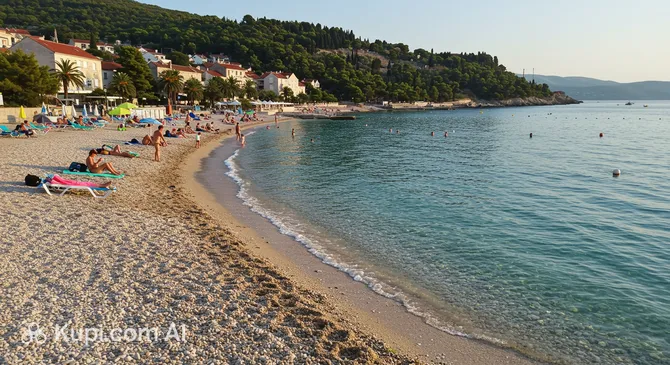
Beyond the nightlife, the city offers plenty of daytime entertainment to balance your trip. Culture enthusiasts can explore the fascinating collection at the Archaeological Museum Split, which houses artifacts from the prehistoric to the early medieval period. For a more relaxed day, you can soak up the sun at Ježinac Beach, a scenic spot perfect for swimming and unwinding by the turquoise sea. Whether day or night, the city ensures there is never a dull moment.
Parks & Museums
While the ancient stone streets of the city center are its most famous feature, Split also offers refreshing green spaces and a wealth of cultural institutions that preserve its millennia-old stories. Beyond the bustling waterfront, visitors can find serene parks for relaxation and diverse museums that provide a deeper understanding of the region's complex history and artistic heritage.
For those looking to escape the summer heat or enjoy nature, Sustipan is a hidden gem located on a cliff just southwest of the ferry port. Once a 19th-century cemetery, it is now a tranquil park offering spectacular views of the sea and the islands. Another favorite recreational spot is Bene Beach, situated on the northern side of the Marjan peninsula. Surrounded by a dense pine forest that provides natural shade, this area is perfect for families and sports enthusiasts, featuring tennis courts, a playground, and calm waters for swimming.
Bene Beach. Illustration.
Source: Kupi.com AI
Traveler photos:
To truly grasp the historical significance of the region, a visit to the Archaeological Museum Split is essential. Founded in 1820, it is the oldest museum in Croatia and houses an impressive collection of artifacts from the Greek and Roman periods, including intricate jewelry, pottery, and stone monuments. For a more modern and immersive approach to history, Diocletian's Dream offers a unique virtual reality experience. This VR museum allows visitors to step back in time and see the palace exactly as it looked 1,700 years ago, providing a vivid context to the ruins seen today.
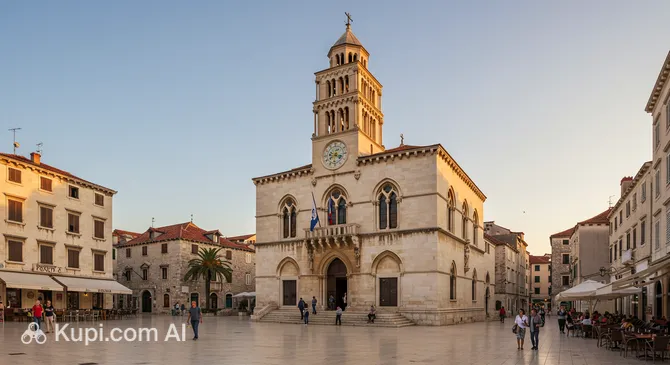
The city's architectural heritage extends well beyond the main palace walls. The Golden Gate, which once served as the main entrance for the emperor, remains a majestic example of Roman defensive architecture. In the heart of the People's Square (Pjaca), you will find the Old Town Hall. This beautiful Gothic building, dating back to the 15th century, now serves as an exhibition center and stands as a testament to the city's medieval prosperity.
Old Town Hall. Illustration.
Source: Kupi.com AI
Traveler photos:
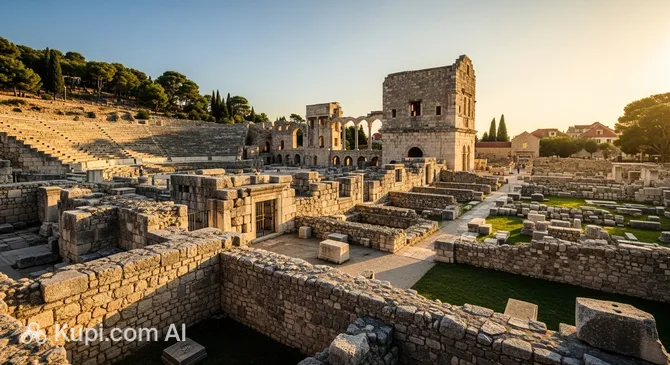
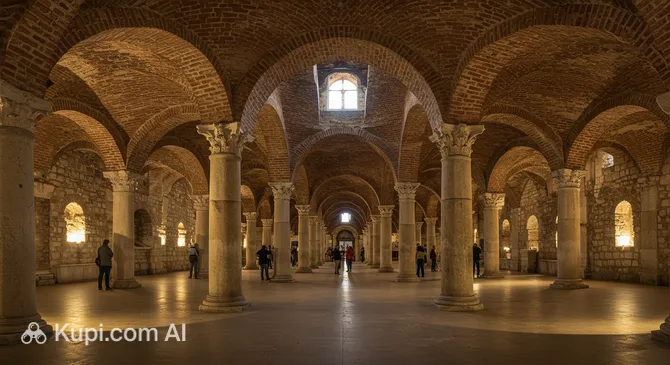
A short trip just outside the city limits leads to the Ruins of Salona, the capital of the Roman province of Dalmatia. This vast open-air archaeological park features the remains of an amphitheater, basilicas, and ancient city walls, offering a quiet and evocative walk through history. Back in the city center, do not miss Diocletian's Cellars. These well-preserved substructures not only support the imperial apartments above but also serve as a cool, atmospheric passage filled with souvenir stalls and art displays.
Ruins of Salona. Illustration.
Source: Kupi.com AI
Traveler photos:
For a unique auditory experience, seek out the Vestibule of Diocletian's Palace. This circular antechamber, originally the entrance to the emperor's residential quarters, is famous for its perfect acoustics. If you are lucky, you might catch a local klapa group singing traditional a cappella songs here, creating a hauntingly beautiful moment that resonates with the soul of Dalmatia.
Getting Around
Navigating the city is relatively straightforward, as the public transport system is designed to be efficient and user-friendly. The primary mode of transportation is the extensive bus network operated by the local company, Promet Split. Travelers should note that there is no metro, tram, or trolleybus system here; the bright yellow buses serve as the backbone of urban mobility, connecting the city center with suburban neighborhoods and nearby beaches.
The bus network is divided into zones, with Zone 1 covering the entire city area, which is usually sufficient for most tourists. Tickets can be purchased in several ways, offering flexibility for visitors. The most economical option is to buy single-ride tickets at "Tisak" newsstands or specialized ticket kiosks before boarding. Alternatively, you can download the official "Promet Split" mobile app, which allows you to purchase tickets digitally using a credit card. You can also buy a ticket directly from the bus driver, but be aware that this is cash-only and typically costs slightly more than buying in advance.
For a smooth journey, it is important to follow a few practical rules. Always enter the bus through the front door and validate your paper ticket immediately in the machine located near the driver; digital tickets are activated within the app. Buses generally run from early morning, around 5:00 AM, until just before midnight. While the schedule is reliable, frequencies can vary on weekends and holidays, so checking the timetable on the app or at the bus stop is recommended.
If you prefer more direct transportation, taxis and ride-hailing services are widely available. Apps like Uber and Bolt operate throughout the city and are often cheaper and more convenient than hailing a traditional taxi on the street. For those who enjoy staying active, the city offers a public bike-sharing system called Nextbike. You can easily rent a classic or electric bicycle from various stations across the city for a quick and scenic ride along the coast.
A crucial feature to remember is that the historic core, including Diocletian's Palace and the Riva promenade, is a strictly pedestrian-only zone. No vehicles, including buses and taxis, can enter this area. The main transport hubs, such as the Pazar market bus terminal and the ferry port, are located just outside the pedestrian zone, making it easy to hop off and explore the ancient streets on foot.
Accommodation
Finding the perfect place to stay in Split is an integral part of the travel experience, with options ranging from luxury heritage hotels to budget-friendly hostels. A unique feature of the Croatian coast is the prevalence of private accommodation, known locally as "apartmani." These private rentals are widely available and often offer excellent value, giving visitors a chance to live like a local in renovated stone houses or modern apartments.
For those who want to be in the center of the action, staying within the walls of the Old Town is the most atmospheric choice. Accommodation here often involves boutique hotels or rooms tucked away in centuries-old buildings. This location places you steps away from major landmarks like the Cathedral of Saint Domnius and the bustling Peristyle square. However, keep in mind that this area is pedestrian-only, so you will need to carry your luggage to your doorstep, and it can be quite lively and noisy late into the night.
Cathedral of Saint Domnius. Illustration.
Source: Kupi.com AI
Traveler photos:
Travelers seeking a quieter but still central atmosphere often prefer the Varoš neighborhood. Situated just west of the city center at the foot of Marjan Hill, this historic peasant quarter is characterized by winding streets and traditional stone architecture, offering a charming and more relaxed vibe. Alternatively, if easy access to the sea and nightlife is a priority, the Bačvice district is a convenient option. Located near the ferry port and the famous sandy beach, it is ideal for those who want to combine sightseeing with swimming and evening entertainment.
Regarding costs, prices fluctuate significantly depending on the season. During the peak summer months of July and August, rates for all types of accommodation are at their highest, and the city is often fully booked. To secure the best spots and prices, it is highly recommended to book several months in advance. Visiting in the shoulder seasons of May, June, September, or October can offer a more affordable stay with a wider selection of available rooms. Most bookings can be easily made via major online platforms, though many smaller private owners also accept direct inquiries.
Nearby Cities
For those looking to explore the surroundings, Split serves as an excellent base for day trips to several interesting nearby locations:
Located just a short drive up the coast, Šibenik is a historic gem that offers a more relaxed pace than its larger neighbor. It is famous for the magnificent Cathedral of St. James, a UNESCO World Heritage site constructed entirely of stone. Visitors can also explore the city's four fortresses, including St. Michael's Fortress, which provides spectacular panoramic views of the medieval streets and the archipelago beyond.
Further north lies the ancient city of Zadar, known for its unique blend of Roman ruins and modern art installations. The city's waterfront is home to the world-renowned Sea Organ, which creates music from the movement of the waves, and the Greeting to the Sun, a solar-powered light display. Walking through the Old Town, travelers can admire the Roman Forum and the pre-Romanesque Church of St. Donatus.
For a quick excursion close to the city, Kaštel Stari offers a charming glimpse into local life. It is one of the seven settlements that make up the town of Kaštela, historically built to protect the coast from invaders. Today, it is a picturesque spot with a seaside promenade, traditional stone houses, and a rich winemaking heritage, making it perfect for a leisurely afternoon visit.
City
Population
Distance
Solin
23 926
5 km
Kaštel Stari
43 349
9 km
Trogir
13 260
16 km
Omis
14 936
22 km
Trilj
9 109
25 km
These nearby destinations offer a glimpse into the diverse culture and landscapes of the region, allowing travelers to experience everything from ancient fortresses to modern coastal wonders within a single day.
Shopping & Souvenirs
Shopping
Shopping in Split offers a delightful mix of contemporary fashion, traditional craftsmanship, and vibrant market culture. As the commercial hub of Dalmatia, the city caters to all tastes, ranging from high-end international brands to unique local boutiques hidden within ancient Roman walls. Whether you are looking for the latest trends or authentic Croatian souvenirs, the shopping scene here is diverse and accessible.
For a quintessential shopping experience, head to Marmontova Street. This wide, marble-paved pedestrian avenue is the city's main retail artery, lined with popular international clothing chains, shoe stores, and drugstores. From there, wander into the labyrinthine alleys of the historic center and Diocletian's Palace. Here, tucked away in centuries-old stone buildings, you will find smaller concept stores, art galleries, and jewelry shops selling intricate designs, including traditional Croatian filigree jewelry.
If you prefer a modern, all-in-one shopping experience, the city boasts several large shopping centers. The largest and most popular is the Mall of Split, located a short bus ride from the city center. It features a vast array of international brands, a food court, and a cinema. Another excellent option is City Center One Split, which offers a similar range of retail outlets and family-friendly facilities, making it a convenient stop for serious shoppers.
Mall of Split. Illustration.
Source: Kupi.com AI
Traveler photos:
Markets are an essential part of the local lifestyle. The Green Market (Pazar), located just outside the Silver Gate of the palace, is a sensory explosion of fresh produce, flowers, and local delicacies. It is also a great place to find inexpensive beach gear and bric-a-brac. For a more historical shopping setting, descend into Diocletian's Cellars. The central hall of these ancient substructures is lined with stalls selling handmade crafts, jewelry, and art, providing a unique atmosphere where you can buy souvenirs in a location that is over 1,700 years old.
Diocletian's Cellars. Illustration.
Source: Kupi.com AI
Traveler photos:
When hunting for souvenirs, look for authentic items that reflect the region's heritage. Lavender products, such as essential oils and sachets, are very popular, as the plant grows abundantly on the nearby islands. High-quality olive oil and Dalmatian wines are also excellent choices. For something truly unique, consider items made from Brač stone, the same white limestone used to build Diocletian's Palace. You can find everything from small clocks and bowls to jewelry made from this famous material.
Most shops in the city center are open from 9:00 AM to 9:00 PM on weekdays and Saturdays. However, travelers should be aware of recent regulations regarding Sundays; most shops and supermarkets are closed on Sundays and public holidays, although shopping malls may select specific Sundays to remain open throughout the year. Payment is made in Euros (EUR). While credit and debit cards are widely accepted in malls and most shops, it is advisable to carry cash for open-air markets and smaller souvenir stalls.
Visitors from outside the European Union may be eligible for a VAT refund on purchases exceeding a certain amount. Look for the "Tax Free" signage in store windows and be sure to ask for the necessary refund forms at the checkout. You will need to present these forms along with your passport and the purchased goods at customs when leaving the EU to claim your refund.