Support

Mostar Airport

About the Airport

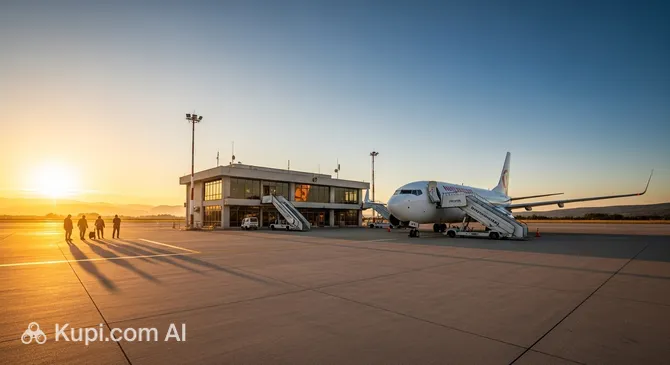
Mostar Airport. Source: Kupi.com Binoculars

Mostar International Airport (OMO) serves as the air gateway to the historic Herzegovina region, located near one of the most picturesque cities in Bosnia and Herzegovina. Opened for civil traffic in 1965, it played a significant role during the 1984 Winter Olympics in Sarajevo, serving as an alternative airfield. Today, the airport handles both scheduled and seasonal flights, acting as a key transport hub for tourists and pilgrims heading to the famous Medjugorje. Its compact size and convenient location make it an ideal starting point for exploring the region.

IATA Code OMO
ICAO Code LQMO
City Mostar
Distance to centre 7.4 km
Status International
Annual Passengers approx. 47,500 (2024)
Popular Airlines Croatia Airlines, Air Serbia, Eurowings
Schedule Mostar Airport online board

Despite its modest size, Mostar Airport offers all necessary services for a comfortable start or end to your journey. Passengers have access to cafés, shops, currency exchange points, and free Wi-Fi. The airport's main advantage is its proximity to Mostar — the city centre can be reached by bus or taxi in just 10-15 minutes. The airport focuses mainly on seasonal and charter flights, especially during the summer months, connecting Herzegovina with cities in Italy, Germany, and neighboring Balkan countries. This makes it a convenient choice for those wishing to avoid the bustle of major transport hubs and immediately immerse themselves in the atmosphere of this amazing region.

Contact Information

  • Official Website: mostar-airport.ba
  • Information Desk Phone: +387 36 352 770
  • Address: Ortiješ bb, 88000 Mostar, Bosnia and Herzegovina
  • Email: info@mostar-airport.ba
  • Social Media: The airport has an official page on Facebook.
  • Lost & Found Information: You can contact the service via email at lost-found@mostar-airport.ba or by phone at +387 36 350 954.
  • Passenger Support Contacts: For general information and support, it is recommended to use the main telephone number or email address of the airport.

How to Get to the Airport

Mostar Airport (OMO) is located just 8 kilometers southeast of the city centre of Mostar, making the journey there quick and convenient. Despite its proximity to the city, transport options have specific nuances worth considering when planning your trip to Bosnia and Herzegovina. The main ways to reach the terminal are by taxi, transfer, or rental car.

Taxi and Transfers are the most popular and reliable way to get to the airport. A trip from the centre of Mostar will take about 15-20 minutes depending on traffic. The cost of a taxi ride is usually 20-30 BAM (approximately 10-15 Euros). It is strongly recommended to agree on the price with the driver in advance or use the services of reputable taxi companies. You can also book a private transfer, which is particularly convenient for groups or families with a lot of luggage.

Public Transport to Mostar Airport is practically non-existent. There are no direct regular bus routes from the city to the airport, so do not rely on this option. In rare cases, airlines operating charter flights may organize special shuttles for their passengers, but this information must be verified directly with the carrier.

Car Rental is an excellent choice for those who value independence and plan to explore the surroundings of Mostar. Several rental agencies operate in the city and at the airport itself. Upon arriving in a rented car, you can leave it in the parking lot located right next to the terminal. This is a convenient, albeit paid, option for short-term or long-term parking.

Since Mostar Airport primarily handles seasonal and charter flights, its infrastructure and transport connections may be limited. Therefore, the best advice is to plan your route in advance. A taxi or pre-booked transfer remains the most predictable and hassle-free way to reach the terminal on time.

Given the limited number of flights to Mostar, many travelers use larger airports in the region as alternatives. These include Sarajevo International Airport (SJJ) and Croatian airports such as Dubrovnik Airport (DBV) and Split Airport (SPU). You can also consider Tivat (TIV) in Montenegro or Brac (BWK) in Croatia. From there, Mostar can be reached by intercity bus or rental car.

Terminals and Map

The airport of Mostar (OMO) is a small and very compact aviation hub serving the city and surrounding regions of Bosnia and Herzegovina. Its structure is extremely simple and convenient for passengers: the airport consists of just one passenger terminal, which handles both international and domestic flights. Thanks to its modest size, navigation is intuitive, and finding your way around is extremely easy.

The terminal layout is simplified to the maximum. The entire building is essentially a single space on one floor. The departure and arrival zones are located next to each other but are functionally separated. Upon entering the building, you will immediately see the check-in counters. After checking in and dropping off luggage, passengers proceed to security screening, behind which lies a small waiting hall with the boarding gate. The arrival area with the baggage claim belt and customs control is also located here but has a separate exit.

One of the main advantages of Mostar Airport is the speed of completing all formalities. Flight check-in and security screening usually take very little time — on average no more than 20-30 minutes, even on peak days. Nevertheless, the standard recommendation is to arrive at the airport 1.5-2 hours before departure to avoid any rush.

Since there is only one terminal at the airport, there is no need for transfers between buildings or floors. All services — from check-in to baggage claim — are within walking distance of each other. The main navigation tip: simply follow the few signs available. Getting lost in this airport is practically impossible, making it especially convenient for tourists traveling light or with family.

Airport History

The history of Mostar International Airport (OMO) is a tale of development, destruction, and rebirth. The airport was opened in 1965 and initially served civil needs, providing domestic flights to cities such as Belgrade and Zagreb. Additionally, it was actively used by the local aviation factory SOKO for test flights, making it an important industrial site for the region.

A significant stage in the airport's development was 1984. It was then, in connection with the XIV Winter Olympic Games in Sarajevo, that Mostar Airport received international status and was designated as an alternative airfield for the capital. This event contributed to the modernization of its infrastructure and attracted global attention.

Unfortunately, during the tragic events of the 1990s, the airport was almost completely destroyed, and its operations were fully halted. However, by 1998, thanks to international efforts and immense restoration work, the airport reopened its doors to civil aviation. This became a symbol of revival and the region's aspiration for a peaceful life and development.

In the 21st century, Mostar Airport has undergone several stages of modernization, including the construction of a new, more modern passenger terminal. Today, it plays a key role in the development of tourism in Bosnia and Herzegovina. Its unique feature is serving a large flow of pilgrims heading to Medjugorje, one of the most famous sites of Catholic pilgrimage in Europe. Most flights are seasonal and charter-based, connecting Mostar with cities in Italy, Ireland, Poland, and other countries.

Thus, the history of Mostar Airport is not just a chronicle of take-offs and landings. It is a reflection of the history of the region itself: from an important Yugoslav aviation hub and Olympic reserve to total decline and subsequent impressive recovery as a gateway for tourists and pilgrims from around the world. Its ability to adapt and revive is its greatest achievement.

Services and Amenities

Despite its compact dimensions, Mostar International Airport (OMO) provides passengers with all necessary amenities for a comfortable wait before their flight. A café-bar operates within the terminal building, where you can have coffee, grab a sandwich, or order refreshing drinks. For those planning to shop, a Duty-Free store is open, offering a standard assortment of perfumes, cosmetics, beverages, and tobacco products, as well as local souvenirs that will serve as a great reminder of your trip to Bosnia and Herzegovina.

For passengers preferring to wait for their flight in a quieter atmosphere, a VIP Lounge is available at the airport. Free Wi-Fi is accessible throughout the terminal, allowing you to stay connected or work. There are also designated areas where you can charge mobile devices before your flight.

For financial matters, a currency exchange office operates at the airport, and an ATM is available where you can withdraw cash in the local currency — Convertible Marks (BAM). An information desk is also at the passengers' disposal, where staff are ready to answer questions related to flights and airport services.

Mostar Airport is equipped for the needs of passengers with special requirements. Assistance is provided for people with disabilities, and ramps and specially equipped restrooms are available. Travelers with small children can use the mother and child room for baby care. In case of necessity, first aid can be obtained at the airport.

There is no hotel within the airport building itself; however, due to its close location to the city (about 8 km), travelers can easily reach numerous accommodation options in Mostar. Specialized conference rooms or business centres are absent in the terminal, but basic conditions for work can be found in the VIP Lounge. For business meetings and events, it is better to utilize the infrastructure of hotels and business centres in the city.

Dining

The airport of Mostar (OMO) is a small and compact aviation hub, so the choice of dining establishments here is limited but quite sufficient for a snack before departure. Do not expect a large food court with many restaurants; however, basic passenger needs are fully met.

The main place to eat is the restaurant-café located in the main airport building, in the public area (before security control). It serves both departing and arriving passengers. Here you can order coffee, soft drinks, sandwiches, pastries, and light snacks. Sometimes the menu features simple local dishes, such as the famous Bosnian pie Burek with meat or cheese — an excellent option for getting acquainted with the country's gastronomy.

After passing passport control and security, a small bar or cafeteria usually operates in the departure zone (airside). The assortment here is typically more modest and includes beverages, packaged snacks, chips, and chocolate. This is a convenient place to pass the time while waiting for boarding.

Practical Tips:

  • Full Meal: If you are counting on a hearty lunch or dinner, it is better to do so in advance at one of the numerous restaurants in the city of Mostar itself, as the selection of hot dishes at the airport is minimal.
  • Dietary Restrictions: Specialized vegetarian, vegan, or gluten-free dishes are unlikely to be found on the menu. Passengers with specific dietary needs are recommended to carry snacks with them. Note that local meat dishes in Bosnia are generally Halal, though specific certification at the airport should be verified.
  • Prices and Opening Hours: Prices at the airport are moderate by European standards but higher than in the city. Establishments operate according to the flight schedule, opening a few hours before departure and closing after the last plane departs.

Travel Tips

To ensure your journey through Mostar Airport goes as smoothly as possible, make use of these tips. Mostar Airport (OMO) is small and seasonal, making it quite easy to navigate, but knowing a few nuances will help save time and reduce stress.

Arrival Time and Check-in. For international flights, it is recommended to arrive at the airport at least 2 hours before departure. Although the airport is small, queues are possible during peak season. Check in for your flight online if your airline provides this option — this will allow you to proceed immediately to baggage drop or security screening if you are traveling with hand luggage only.

Hand Luggage and Security. Rules for carrying liquids are standard: all containers must be no more than 100 ml in volume and packed in a single transparent bag with a capacity of up to 1 liter. Sharp objects, weapons, and flammable substances are prohibited in hand luggage. Screening usually proceeds quickly, but be prepared to remove electronics and your liquid bag from your luggage.

Seat Selection and Transfers. If it is possible to select a seat during check-in, choose a window seat for beautiful views of the picturesque landscapes of Bosnia and Herzegovina during takeoff and landing. Mostar Airport is rarely used as a transit hub, so transfers here are infrequent. If you do have a connecting flight, check with the airline whether you need to collect your luggage and check in again.

Customs Control. Upon arrival, you will pass through customs control. If you have no goods to declare, proceed through the "Green Channel". If you are carrying items that require declaration (for example, goods exceeding the established value limit), you must go through the "Red Channel".

Savings and Flight Delays. To save money, book your transfer from the airport to the city in advance online — this is often cheaper than taking a taxi on the spot. Bring an empty water bottle to fill at a drinking fountain after passing security. In case of a flight delay or cancellation, first contact your airline representative. They should provide information on the flight status and, depending on the length of the delay, offer vouchers for food, drinks, or even hotel accommodation.

Reached the end of the page?

That means the route is fully explored