Support

Dubrovnik Airport

About the Airport

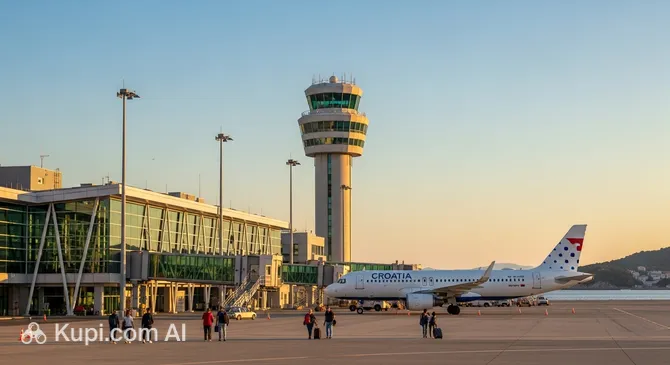
Dubrovnik Airport. Source: Kupi.com Binoculars

Dubrovnik Airport, also known as Čilipi, is not merely a transit point but a true aerial gateway opening the doors to the "Pearl of the Adriatic." Landing here is often accompanied by breathtaking views of the azure sea, the rugged coastline, and picturesque islands, making the start of your journey truly cinematic. Despite its relatively small size, this airport surprises with its modern design and efficiency, ensuring travelers a comfortable start to exploring southern Dalmatia.

IATA Code DBV
ICAO Code LDDU
City Dubrovnik
Distance to Centre About 20 km
Status International
Annual Passengers Over 2.4 million (2023)

Features and Advantages of the Airport

One of the airport's main points of pride is its new, modern terminal, which has significantly enhanced passenger comfort. Spacious waiting halls filled with natural light and clear navigation make it easy to find your way, even during the peak tourist season. There is also an excellent business lounge where you can relax in a tranquil atmosphere before your flight.

For those wishing to take a piece of Croatia home with them, the airport features a Duty Free zone with a wonderful selection of local products. You can purchase famous Croatian olive oil, truffles, sweets, and local specialties right before boarding. Additionally, the airport is conveniently connected to the city: regular shuttles run to the Ploče Gate and the main bus station, making transfers quick and accessible.

Contact Information

How to Get to the Airport

Dubrovnik Airport (DBV) is located approximately 20 kilometres southeast of the historic city centre, and it can be reached by several methods suitable for any budget and travel style. The choice of transport depends on your priorities: economy, speed, or comfort.

Public Transport is represented mainly by specialised shuttle buses. This is the most economical and popular option. The official carrier organises trips with schedules tied to flight arrivals and departures. Buses depart from the terminal and travel to key points in Dubrovnik: the Pile Gate (entrance to the Old Town) and the main bus station in the port of Gruž. The journey time is approximately 30–40 minutes.

For those who prefer speed and convenience, a taxi or private transfer is the ideal choice. The taxi rank is located directly outside the arrivals area. A trip to the city centre will take about 25–30 minutes, though the cost will be significantly higher than the bus. To avoid queues and secure a fixed price, it is recommended to book a transfer online in advance. This is particularly convenient if you are travelling with family or a large amount of luggage.

If your plans include exploring the picturesque Dalmatian coast, it is worth considering car rental. Representatives of many well-known rental companies operate at Dubrovnik Airport. By renting a car immediately upon arrival, you gain complete freedom of movement throughout Croatia. The road to the city follows the Adriatic Highway (D8) and is a scenic route in itself. For those arriving in their own vehicle, the airport offers paid parking with zones for short-term and long-term stays.

Terminals and Map

Dubrovnik Airport (DBV) is a modern and well-organised complex which, despite the designations A, B, and C, is essentially a single passenger terminal. These letters denote different parts of one large building that were constructed or renovated at different times. Travellers need not worry about transferring between different structures—all infrastructure is under one roof, making navigation simple and convenient.

The terminal structure is organised logically. The check-in and baggage drop-off area is located on one level and is common for all departing flights. After completing check-in, passengers proceed to security control. Subsequently, there is a separation into two flows: for flights to Schengen Area countries and for all other international destinations (Non-Schengen zone). Each zone has its own boarding gates, shops, and cafes. The arrivals area is located on the lower level and is also unified for all arriving passengers.

The newest and largest section is Terminal C, which handles the majority of international traffic. It is distinguished by spacious waiting lounges, a large number of check-in counters, and a modern design. The older sections A and B are fully integrated into the general system and are used depending on airport load and flight schedules. Thanks to clear signage in Croatian and English, getting lost here is practically impossible.

On average, check-in and security screening take about 45-60 minutes. However, during the peak tourist season from June to August, the airport can be heavily congested. During this time, it is recommended to arrive early, at least 2.5-3 hours before departure, to complete all formalities without haste. For ease of navigation, always pay attention to the electronic boards with information about your flight—they will indicate the check-in counter number and boarding gate.

Airport History

The history of Dubrovnik Airport (DBV), also known as Čilipi Airport, began in 1962. Its construction was driven by the rapid growth in popularity of the Adriatic coast of Croatia as a tourist destination. Initially modest, it quickly became a key transport hub for millions of travellers eager to see the beauties of southern Dalmatia.

In the 1970s, riding the wave of a tourism boom, the airport underwent its first significant modernisation, which allowed it to accommodate a larger number of flights. However, the most difficult period in its history occurred in the early 1990s. During this time, the airport faced serious trials; its operations were completely halted, and its infrastructure suffered significantly. Nevertheless, by 1992, its gradual restoration began, becoming a symbol of the region's revival.

A truly new era for the airport began in the 2000s with the launch of a large-scale reconstruction and expansion project. This project included the construction of several new terminals (Terminal B opened in 2010, and the modern and spacious Terminal C in 2017), as well as the modernisation of the runway and other infrastructure. Thanks to this, capacity has grown significantly, and the level of passenger comfort has reached modern international standards.

Today, Dubrovnik Airport is one of the busiest in Croatia, especially during the summer season. It regularly receives awards for service quality and stands as an example of successful transformation. One interesting fact is its location: landing at Dubrovnik Airport is considered one of the most scenic in Europe, as planes approach the runway from the sea, offering passengers breathtaking views of the coast and islands.

Services and Amenities

Dubrovnik Airport (DBV) offers passengers all necessary services for a comfortable wait for their flight. Despite its relatively compact size, the terminal is well-organised and equipped with modern amenities to ensure your journey through Croatia begins or ends as pleasantly as possible.

While waiting for departure, you can have a snack in one of the cafes or bistros, enjoy a coffee, or have a full meal. For shopping enthusiasts, there is a Duty Free store featuring a wide assortment of perfumes, cosmetics, beverages, and souvenirs, where you can find gifts to remember the sunny Adriatic coast.

Free Wi-Fi is available throughout the airport, allowing you to stay connected or work. Special stations are provided for charging gadgets. If you prefer to wait for your flight in a calmer environment, the Business Lounge is at your service. It is excellent for relaxing in comfortable armchairs with snacks and drinks, or for conducting business meetings away from the noise of the main hall.

To handle financial matters, the terminal has bank branches, currency exchange points, and ATMs. This is especially convenient for tourists who need to exchange money immediately upon arrival or before departure. First aid is also available at Dubrovnik Airport, with a dedicated medical point provided for this purpose.

The airport cares for passengers with special needs. For travellers with children, mother and child rooms equipped with changing tables are available. Passengers with reduced mobility are provided with all necessary assistance—from escort services to special transport. It is recommended to book this service in advance through your airline.

Although there are no hotels within the terminal building itself, many accommodation options to suit every taste and budget, from cosy apartments to large hotel complexes, are located in the immediate vicinity, just a few minutes' drive away.

Where to Eat

At Dubrovnik Airport (DBV), travellers will find several options for a snack or a full meal both before and after passing passport control. While the selection is not as vast as in major metropolises, you certainly won't go hungry. Most establishments are concentrated in the main terminal building.

In the public area (landside), prior to pre-flight security, there is usually a cafe where you can have coffee and pastries while saying goodbye to those seeing you off. This is a great place for a leisurely wait before flight registration. The main dining points are located in the departure area (airside), after passing security control. Here you will find a self-service restaurant offering hot dishes as well as cold snacks, salads, and desserts. Several cafes and bars are also available to passengers.

If you wish to try something local, check the offers in the cafes—you can order refreshing local beverages. The restaurant menus sometimes feature Mediterranean dishes. For a quick snack, sandwiches, croissants, or fresh pastries from the cafes are ideal. If you have time for a full lunch, it is better to head to the main restaurant where the choice of dishes is wider.

Regarding special dietary needs, vegetarians can most often find salads, vegetable sandwiches, or side dishes on the menu. Options for vegans or gluten-free dishes may be limited, so it is recommended to carefully study the ingredients or ask staff for assistance. Halal options may also be limited, so please verify with the serving staff. Prices at the airport are traditionally higher than in the city. Opening hours of establishments are usually tied to flight schedules, starting early in the morning and closing after the departure of the last aircraft.

Travel Tips

To ensure your journey through Dubrovnik Airport goes smoothly, make use of these tips. The airport serves one of the most popular destinations in Croatia, so a little preparation will help avoid stress, especially at the height of the tourist season.

Arrival Time. We recommend arriving at the airport at least 2-3 hours before an international flight and 1.5-2 hours before a domestic one. In summer, the flow of tourists increases significantly, which can lead to queues at all stages, from check-in to passport control.

Check-in and Security. The easiest way to save time is to complete online check-in for your flight and save the boarding pass on your phone. If you are travelling only with hand luggage, this allows you to proceed directly to security screening. Control procedures are standard, but be prepared for potential crowds.

Seat Selection. A small life hack: when approaching Dubrovnik or departing from it, try to occupy a window seat. Depending on the aircraft's course, you may be treated to breathtaking views of the Adriatic coast, islands, and the city itself. Often, the best panoramas upon landing open up from the right side of the aircraft, and upon take-off—from the left.

Hand Luggage. Remember the general restrictions: liquids in containers of no more than 100 ml each, packed in a single transparent bag. Sharp objects are prohibited. If you wish to take local delicacies home, such as olive oil or other Croatian specialties, check the carriage rules with your airline in advance—most often they must be checked into hold luggage.

Transfer Passengers. Dubrovnik Airport is relatively compact, making transfers convenient. Ensure your luggage is checked through to your final destination. If you are flying in transit between Schengen and non-Schengen zone countries, you will likely need to pass passport control.

Customs Control. For passengers arriving from countries outside the EU, a system of "red" and "green" channels operates. If you have no goods to declare, you may pass freely through the "green" channel. For those travelling within the European Union, customs formalities are kept to a minimum.

Saving Time and Money. To get to the city, compare prices for taxis, pre-booked transfers, and the shuttle bus—the latter is usually the most budget-friendly option. Bring an empty reusable water bottle with you: after passing security control, you can fill it at drinking fountains, saving on buying drinks.

In Case of Flight Delay. If your flight is delayed, check with the airline representative regarding your rights (for example, to drinks, meals, or hotel accommodation according to EU rules). There are several cafes and shops within the terminal where you can spend time while waiting for departure.

Reached the end of the page?

That means the route is fully explored