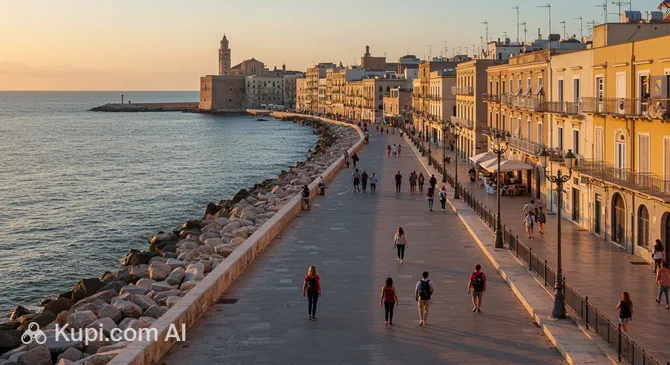
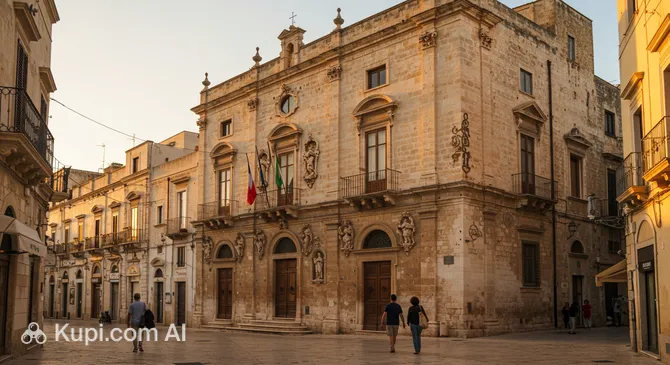
Bari is a captivating blend of old-world charm and modern energy, serving as a vibrant gateway to the Adriatic Sea. As the capital of the Apulia region in southern Italy, it is a city where ancient traditions coexist with a bustling urban atmosphere. Known for its significant port and university, Bari offers an authentic Italian experience, distinct from the more crowded tourist hubs of the north.
Geographically, the city is situated on the coast, enjoying a sunny Mediterranean climate that makes it a pleasant destination almost year-round. With a population of approximately 323,000 inhabitants, it is a lively metropolis that feels both expansive and intimate. The city is essentially divided into two parts: the Murat quarter, with its elegant 19th-century grid of streets and shopping avenues, and the historic center, which sits on a peninsula overlooking the sea.
Bari. Illustration.
Source: Kupi.com AI
The history of Bari is deeply intertwined with trade, conquest, and pilgrimage. One of its most famous landmarks is the Basilica of San Nicola, an important pilgrimage site that houses the relics of Saint Nicholas. Walking through the narrow, winding alleyways of Bari Vecchia (the Old Town), visitors can witness local life in full swing, often seeing women making fresh orecchiette pasta by hand right on the street.
Another striking feature is the Castello Svevo, a formidable Norman-Swabian fortress that has stood guard over the city for centuries. For those who enjoy a scenic walk, the Lungomare Nazario Sauro offers one of the longest and most beautiful waterfront promenades in the country, perfect for a relaxing evening stroll.
Whether you are drawn by its rich architectural heritage, the delicious local cuisine, or the warmth of its people, Bari is a destination that deserves to be explored. It is the perfect starting point for discovering the wonders of Apulia and a delightful city to get lost in.
Weather Overview
Bari benefits from a classic Mediterranean climate, making it an inviting destination throughout most of the year. The city experiences hot, dry summers and mild winters with moderate rainfall. During the peak summer months of July and August, the average temperature hovers around 26°C, with daily highs frequently reaching 30°C. This period is ideal for sun-seekers, as July is the driest month, recording only about 2 wet days.
As the seasons change, the weather remains relatively temperate, though rainfall becomes more frequent in late autumn and winter. January is typically the coolest month, with average temperatures of 9.7°C and lows dipping to around 7.4°C. For a comprehensive forecast and monthly breakdowns, you can consult the detailed weather in Bari guide. Overall, visitors can expect warm, sunny days in the summer and mild winters with occasional rain, particularly in November and December, which see about 11 wet days each.
Average monthly temperature
Average monthly precipitation
Interesting Facts
Beyond the main attractions, Bari holds many fascinating secrets and curious stories that often escape the casual visitor. From architectural oddities born of legal loopholes to unique culinary traditions found nowhere else, the city has a distinctive character waiting to be uncovered.
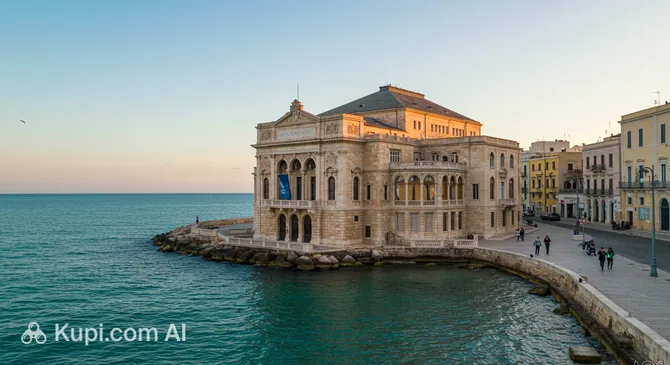
The Teatro Margherita is an architectural marvel with a peculiar history: it rests entirely on pillars driven into the seabed. It was constructed over the water to bypass a legal agreement made with the owners of the Petruzzelli Theatre, which prohibited the city from building any other opera house on municipal land.
Bari is the home of a cult culinary dish known as Spaghetti all’Assassina (Assassin's Spaghetti). Unlike traditional pasta methods, the raw spaghetti is cooked directly in a cast-iron pan with spicy tomato sauce until the liquid reduces completely, creating a crispy, slightly burnt, and intensely spicy noodle dish that is a matter of serious local pride.
While the Basilica of Saint Nicholas is the primary shrine for the saint's relics, the city also hosts the Russian Orthodox Church of Saint Nicholas. This makes Bari a unique spiritual bridge between East and West, as it is one of the few places in Europe that welcomes a massive influx of Orthodox pilgrims annually to honor the same saint revered by Catholics.
Hidden within the winding streets of the old town is Largo Albicocca (Lovers' Square). Once a neglected urban space, it was transformed into a romantic piazza filled with citrus trees and warm lights, becoming a dedicated spot for couples to exchange kisses and enjoy the intimate atmosphere of the historic center.
Teatro Margherita. Illustration.
Source: Kupi.com AI
Traveler photos:
How to Get There
Reaching this Adriatic gem is straightforward, with several convenient options available for travelers. Whether you prefer flying or taking the train, the city is well-connected to the rest of Italy and Europe. For a comprehensive guide on all transport modes, you can read more about how to get to Bari.
The most direct way to arrive is via Palese Airport (IATA: BRI), situated just 9.5 km from the city center. As the main international gateway for the region, it handles a large volume of passengers annually. The transfer to the downtown area is quick, taking approximately 35 minutes by taxi or bus. Travelers can also consider flying into Brindisi - Salento Airport (IATA: BDS), located in the city of Brindisi, about 104 km away. While further out, it serves as a viable alternative, with a travel time of around 3 hours by road to reach Bari.
For clarity, here is a summary of the main airports:
If you prefer traveling by rail, the city is served by the major Bari Centrale Station. Located merely 0.2 km from the heart of the city, it is extremely convenient for visitors. As a significant transport hub with high passenger traffic, it offers frequent connections to other major Italian destinations.
Bari is a city where history is etched into every stone, offering visitors a journey through centuries of art, faith, and architecture. From sacred pilgrimage sites to imposing fortifications, the city's landmarks provide a fascinating glimpse into its rich cultural heritage.
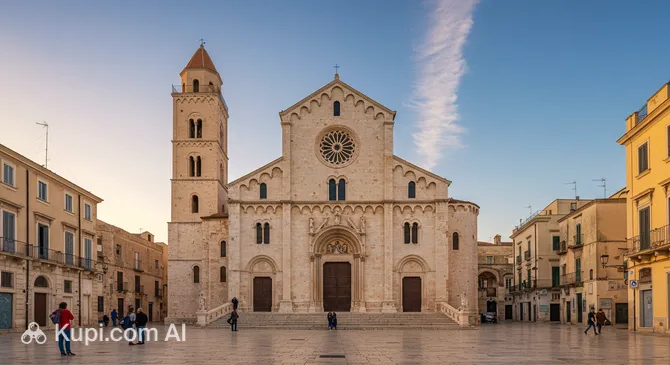
One of the most significant spiritual sites in Europe is the Basilica of Saint Nicholas. This majestic example of Apulian Romanesque architecture was constructed to house the relics of Saint Nicholas, which were brought to the city in 1087. Tourists are drawn here not only for its religious importance as a pilgrimage destination for both Catholics and Orthodox Christians but also to admire its stunning limestone facade and the intricately carved episcopal throne within.
Basilica of Saint Nicholas. Illustration.
Source: Kupi.com AI
Traveler photos:
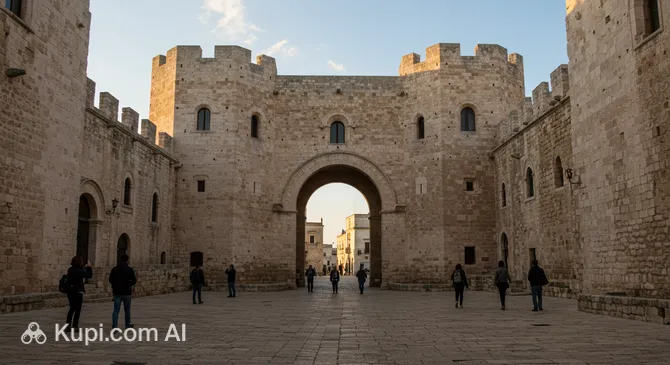
Standing guard near the old town is the Swabian Castle of Bari, a massive fortress that dates back to the Norman era. Renovated by Emperor Frederick II, the castle features impressive towers, a moat, and fortified walls that have withstood the test of time. It is a captivating spot for history enthusiasts, offering exhibitions and a walk through the architectural evolution of the city's defenses.
Another architectural gem is the Bari Cathedral, dedicated to Saint Sabino. While sometimes overshadowed by the more famous Basilica, this cathedral is a masterpiece in its own right, featuring an elegant rose window and a soaring bell tower. Visitors should not miss the chance to explore the archaeological area beneath the church, which reveals layers of history including ancient Roman ruins and early Christian mosaics.
Swabian Castle of Bari. Illustration.
Source: Kupi.com AI
Traveler photos:
For a change of pace, Pane e Pomodoro Beach offers a delightful slice of local life right on the coast. This popular city beach is the perfect place to relax after a day of sightseeing, enjoy a swim in the Adriatic Sea, or simply watch the locals enjoy their leisure time. Its proximity to the city center makes it an accessible and refreshing stop for travelers looking to soak up the Mediterranean sun.
Local Cuisine
The culinary landscape of Bari is a vibrant reflection of its history and geography, offering a gastronomic experience that is considered one of the best in Italy. The city is the capital of Apulian street food, where the "cucina povera" (peasant kitchen) tradition transforms simple, fresh ingredients into incredibly flavorful masterpieces. Walking through the city streets, the aroma of freshly baked dough and the salty scent of the sea are constant companions.
One cannot visit Bari without trying the legendary Focaccia Barese. Unlike other Italian flatbreads, this local version is thick, crispy on the edges, and soft in the middle, generously topped with fresh tomatoes, olives, and oregano. It is the quintessential snack for locals at any time of day. Another pillar of the local diet is Tiella Barese, a rich casserole made of rice, potatoes, and mussels, layered and baked to perfection. It is often described as the Apulian answer to paella, showcasing the perfect marriage between the land and the sea.
Seafood lovers will find themselves in heaven here, particularly with the local tradition of il crudo barese. This involves eating raw seafood, including octopus, cuttlefish, and the prized sea urchins (ricci di mare), often enjoyed right by the harbor with a squeeze of lemon. For those preferring cooked dishes, the classic Orecchiette con cime di rapa (ear-shaped pasta with turnip tops) remains a must-try staple that defines the region's pasta culture.
Antò – Traditional Apulian Cuisine. Illustration.
Source: Kupi.com AI
Traveler photos:
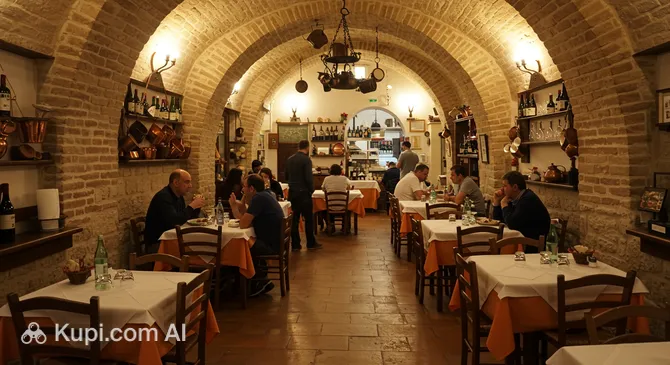
Dining in Bari ranges from lively street corners to cozy, rustic trattorias. To experience authentic flavors in a welcoming setting, travelers can visit Antò – Traditional Apulian Cuisine, which is known for serving hearty local recipes. For a more informal and bustling atmosphere, La Cantina dello Zio offers a glimpse into the genuine hospitality of the city, serving dishes that taste like a home-cooked Sunday lunch.
When it comes to drinks, Bari has a distinct culture. While Apulia is famous for its robust red wines like Primitivo and Negroamaro, the true drink of the people in Bari is beer. The city has a cult-like devotion to Peroni beer, which is typically consumed ice-cold with focaccia or raw seafood. For a sweet finish to a meal, or a relaxing break, you might stop by Colibrio Gluten Free Bar & Patisserie, which ensures that everyone can enjoy local sweets regardless of dietary restrictions.
Travel Tips
Bari invites you with open arms and the scent of the sea, but navigating its unique rhythm requires a bit of local know-how. These practical tips will help you blend in with the locals and make your journey through the Apulian capital smooth and enjoyable.
Clothing and Gear: Summers in Bari are hot and sunny, so light, breathable clothing, sunglasses, and a hat are essential. If you are visiting in winter, bring layers and a waterproof jacket, as the coastal wind can make it feel cooler. Comfortable flat shoes are a must for navigating the slippery limestone pavers of the Old Town. Remember that entry to religious sites like the Basilica requires modest dress, covering shoulders and knees.
Transportation: The historic center and the shopping district are best explored on foot. For longer distances, the local AMTAB buses are available, though schedules can sometimes be flexible. If you plan to visit nearby towns, the regional trains are efficient and affordable. Avoid renting a car for city driving, as parking is scarce and the ZTL (Limited Traffic Zones) are strictly enforced with cameras.
Finances: The local currency is the Euro (€). While major credit cards are widely accepted in restaurants and hotels, cash is king for street food, small cafés, and local markets. Tipping is not mandatory, as a cover charge (coperto) is usually included, but rounding up the bill or leaving a few euros for good service is a kind gesture.
Health and Safety: Pharmacies are easily identified by a green cross and are well-distributed throughout the city. Bari is generally a safe destination, but it is wise to stay alert and keep an eye on your belongings in crowded areas like the promenade or near the central station. Avoid leaving valuables visible in parked cars.
Communication: Italian is the primary language, often peppered with the colorful local dialect. In tourist areas, English is generally understood, but learning a few basic phrases like "Buongiorno" (Good morning) and "Grazie" (Thank you) is greatly appreciated. Free Wi-Fi is often available in public squares, but getting a local SIM card is recommended for reliable maps and translation apps.
Local Etiquette: Greetings are taken seriously here; always acknowledge shopkeepers or waiters when entering and leaving an establishment. Be prepared for the afternoon pause (riposo), where many shops and businesses close roughly between 1:30 PM and 4:30 PM. Embrace the slower pace of life and do not rush your meals—dining is a social ritual meant to be savored.
What to Avoid: Never touch the produce at open-air markets with your bare hands; always ask the vendor to serve you, or look for plastic gloves if it is a supermarket. Also, avoid planning dinner too early. Most kitchens do not open before 7:30 PM or 8:00 PM, and the locals typically dine even later.
The Pasta Tradition: A unique local tip is to visit the Arco Basso area in the Old Town, often called the "Street of the Orecchiette." Here, local women hand-make fresh pasta on tables outside their homes. Buying a bag of fresh orecchiette directly from them is not only a great souvenir but also supports a cherished local tradition.
By keeping these simple suggestions in mind, you will be well-prepared to experience the authentic soul of Bari. Relax, follow the scent of fresh focaccia, and let the city's warm hospitality guide you through an unforgettable stay.
Entertainment & Nightlife
As the sun sets over the Adriatic, Bari transforms from a historic cultural hub into a lively center of entertainment. Thanks to its large university population and the local penchant for socializing, the city boasts a vibrant nightlife, or "movida," that caters to diverse tastes. The atmosphere is generally relaxed and welcoming, characterized by people spilling out onto the streets with drinks in hand rather than exclusive, high-pressure clubbing.
The heartbeat of Bari's nightlife is undoubtedly the area around Piazza del Ferrarese and Piazza Mercantile. These squares, located at the entrance to the Old Town, are lined with trendy bars and pubs where locals gather for an aperitivo that often stretches late into the night. For a scenic experience, a walk along the Muraglia (the old city walls) offers stunning sea views accompanied by the buzz of nearby venues. The historic center acts as an open-air living room, where the dress code is typically smart casual—stylish but comfortable enough for navigating the cobblestones.
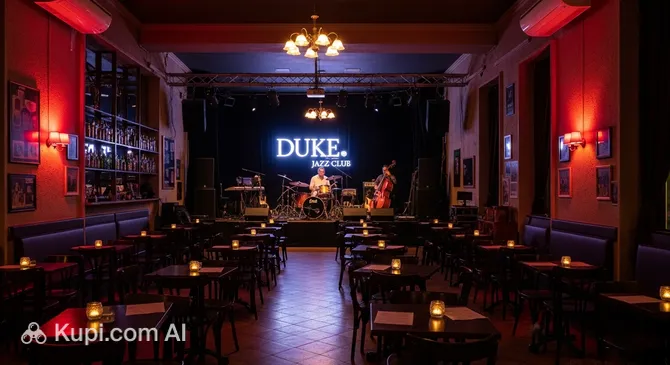
For music lovers, the city offers sophisticated options beyond the standard DJ sets. The Duke Jazz Club is a standout venue, renowned for hosting high-quality live performances in an intimate setting. It attracts a refined crowd and is perfect for those who appreciate blues, jazz, and soulful rhythms accompanied by excellent cocktails. If you are looking for something more unconventional to start your evening with friends, Escape Room Bari provides an exciting challenge before heading out for drinks.
Duke Jazz Club. Illustration.
Source: Kupi.com AI
Traveler photos:
Those seeking a more casual and youthful vibe might enjoy Gulp, a popular spot known for its friendly atmosphere and good selection of beverages. It represents the typical Barese bar experience—unpretentious, lively, and often crowded with locals enjoying conversation. Nightlife in Bari starts late; restaurants are busy until 11:00 PM, and bars only truly fill up around midnight. Prices are generally moderate compared to northern Italy, with a cocktail or glass of wine costing significantly less than in Milan or Rome.
Regarding safety, the main nightlife districts in the center are well-populated and generally safe for walking at night. However, it is advisable to stick to the well-lit main streets and avoiding unlit alleys in the outskirts. Public transport runs on a reduced schedule at night, so if you are staying further out, relying on a taxi is the best option. Note that you cannot typically hail taxis on the street; you must call a local radio taxi service or find a designated taxi stand.
While the nights are for socializing, daytime entertainment in Bari offers its own variety. Culture enthusiasts can visit the prestigious theaters or explore the city's museums. For families or those seeking leisure activities under the sun, the AQ Design Water Park offers a refreshing escape with pools and slides, providing a fun contrast to the city's historical sightseeing.
Parks & Museums
Parks and Museums:
While Bari is famous for its bustling port and historic architecture, the city also offers serene green spaces and impressive cultural institutions that provide a deeper understanding of its heritage. Whether you are looking to escape the urban energy for a quiet stroll or dive into centuries of art and history, the city's parks and museums are well worth exploring.
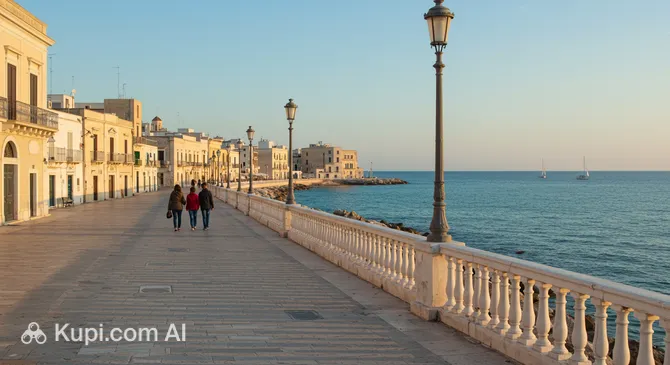
For those seeking fresh air and relaxation, Parco 2 Giugno serves as the city's largest green lung. Located in the modern part of Bari, this expansive park is a favorite among locals for jogging, picnicking, or simply unwinding by its small lakes. It offers a peaceful contrast to the narrow, stone streets of the Old Town. Another essential open space is the Araldo di Crollalanza Seafront. While technically a promenade, this monumental waterfront stretch functions as a linear park where visitors can enjoy the sea breeze, admire grand architecture, and witness the daily ritual of the evening passeggiata.
Araldo di Crollalanza Seafront. Illustration.
Source: Kupi.com AI
Traveler photos:
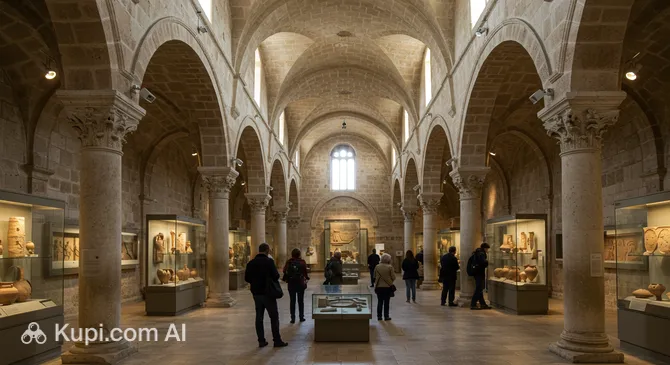
Bari's cultural landscape is anchored by the Archaeological Museum of Santa Scolastica. Housed within a historic defensive bastion near the port, this museum showcases a vast collection of artifacts ranging from the Bronze Age to the Byzantine era. It is particularly interesting for its blend of ancient ruins and modern exhibition design, allowing visitors to walk through the layers of the city's past.
Art enthusiasts should not miss the Metropolitan Art Gallery of Bari (Pinacoteca Metropolitana), located on the seafront in the majestic Provincial Palace. The gallery holds an important collection of Apulian art, medieval sculptures, and works by Venetian masters such as Tintoretto and Bellini, reflecting the historic trade connections between Bari and Venice. For a more localized focus, the Bari City Museum offers engaging exhibits that narrate the specific social and urban evolution of the city itself.
Archaeological Museum of Santa Scolastica. Illustration.
Source: Kupi.com AI
Traveler photos:
Beyond the museums, the city's streets themselves act as an open-air gallery. A prime example is Palazzo Mincuzzi, a stunning Art Nouveau building in the heart of the Murat district. Its intricate facade and majestic dome make it an architectural landmark that captivates photographers and architecture lovers alike. Walking along the ancient Bari City Walls also provides a historical perspective, offering elevated views of both the sea and the old city.
For a unique way to experience these cultural and natural highlights, consider booking a tour with Velo Service. Exploring the city by bicycle or rickshaw allows you to cover more ground while enjoying the stories and insights of local guides who know every hidden corner of Bari.
Getting Around
Navigating Bari is relatively straightforward, as the city center is compact and best explored on foot, particularly the winding streets of the Old Town where vehicles are restricted. However, for reaching the airport, the port, or the more modern districts, the city offers a functional public transport network consisting primarily of urban buses and a metropolitan railway service.
The backbone of the urban transport system is managed by AMTAB (Azienda Mobilità e Trasporti Bari). These buses cover the entire metropolitan area and are the most common way to travel between neighborhoods. While they are an affordable option, visitors should be aware that traffic congestion can sometimes lead to delays, so it is best to allow a little extra time for your journey. The network connects the central train station with key points such as the beaches and the outer suburbs.
In addition to buses, the city utilizes a metropolitan railway service known as the Metropolitana di Bari. Operated mainly by Ferrotramviaria, this network functions more like a light rail or commuter train system than a traditional underground metro. It is particularly useful for tourists as it provides a fast and reliable link between Bari Centrale station and the airport, as well as the San Paolo district. The trains are modern, comfortable, and generally more punctual than road transport.
For payment, travelers have several convenient options. Physical tickets for buses can be purchased at authorized retailers, such as tobacconists (look for the "T" sign) and newsstands throughout the city. A standard single-journey ticket is valid for a set period, typically 90 minutes, allowing for transfers within that window. For a more digital-friendly experience, the MUVT app allows users to purchase and validate tickets directly from their smartphones, eliminating the need to find an open shop.
A crucial piece of advice for all tourists is to remember to validate your ticket immediately upon boarding the bus or before entering the train platform. Failure to do so can result in significant fines from ticket inspectors. On buses, look for the yellow or orange machines near the doors. If you are using a digital ticket via the app, ensure you activate it as you board.
Public transport typically operates from the early morning, around 5:00 AM, until late evening, roughly 11:00 PM or midnight. Night services are limited, so if you plan to stay out late, it is wise to consider alternatives. Taxis are available but cannot usually be hailed on the street; you must locate a designated taxi rank, often found near the train station and main squares, or call a local radio taxi service.
Given the city's flat terrain and scenic waterfront, cycling is an increasingly popular alternative. Several bike rental services and sharing schemes are available, making it easy to ride along the lengthy promenade. This is often the most enjoyable way to see the coast while avoiding city traffic.
Accommodation
Where to Stay:
Finding the perfect place to stay in Bari is relatively easy, as the city offers a wide spectrum of accommodation options to suit every budget and travel style. From charming bed and breakfasts tucked away in centuries-old buildings to modern, full-service hotels, the choices reflect the city's dual nature of historic tradition and urban efficiency. Visitors can choose between the atmospheric immersion of the old quarters or the convenience and space of the modern districts.
For travelers who want to experience the authentic soul of the city, Bari Vecchia (the Old Town) is the most enchanting area. Here, accommodation primarily consists of family-run B&Bs, guest houses, and rental apartments renovated within historic stone structures. Staying here means waking up to the sound of church bells and being just steps away from major landmarks like the Bari Cathedral. However, keep in mind that this area is largely pedestrianized, so it may not be the best choice if you are traveling with heavy luggage or a car.
If you prefer more space, accessibility, and classic hotel amenities, the Murat District is the ideal location. This 19th-century grid of elegant streets is the commercial heart of the city, lined with high-end shops and impressive architecture like the Palazzo Mincuzzi. Hotels in this area range from solid mid-range options to upscale establishments, offering convenient access to the main shopping avenues and the waterfront. This district is also strategically located between the old town and the central station, making it perfect for those planning day trips to other parts of Apulia.
Palazzo Mincuzzi. Illustration.
Source: Kupi.com AI
Traveler photos:
For those prioritizing logistics, the area surrounding Bari Centrale Station offers numerous practical and budget-friendly hotels. While less picturesque than the seafront, it is incredibly convenient for travelers arriving late or catching early trains. Conversely, visitors looking for a resort-style experience might look towards the coastline on the outskirts of the city, where larger properties with pools and sea views are more common.
Booking Tips and Prices:
Bari is a year-round destination, but accommodation can fill up quickly during the peak summer months (July and August) and during the Feast of San Nicola in May. It is highly recommended to book your stay at least a few months in advance if you plan to visit during these times. Prices are generally reasonable compared to northern Italian cities; budget travelers can find hostels or simple rooms starting from around €40-€60 per night, while mid-range hotels typically range between €80 and €150. Most bookings can be easily made via major online platforms, though contacting smaller B&Bs directly can sometimes yield a more personalized experience.
Nearby Cities
For those looking to explore the surroundings, Bari serves as an excellent base for day trips to several interesting nearby locations:
One popular destination is Molfetta, a historic maritime city located along the coast to the north. It is famous for its unique old town layout and the stunning Duomo di San Corrado, a Romanesque cathedral with two towers that sits directly on the harbor's edge. Another fascinating spot is Bitonto, known as the "City of Olives" for its extensive groves and high-quality olive oil production. Beyond its agricultural fame, Bitonto boasts a magnificent cathedral and a rich artistic heritage, making it a perfect spot for history enthusiasts.
City
Population
Distance
Triggiano
27 180
8 km
Valenzano
17 952
8 km
Modugno
38 453
8 km
Bitritto
11 277
9 km
Capurso
15 682
9 km
These nearby destinations offer a glimpse into the diverse culture and landscapes of the region.
Shopping & Souvenirs
Shopping in Bari offers a delightful mix of sophisticated style and authentic local tradition, reflecting the city's dual nature as a modern metropolis and a historic port. Visitors can find everything from high-end Italian fashion boutiques and international chains to charming artisan workshops hidden in the winding alleys of the Old Town. Whether you are looking for the latest trends or traditional Apulian handicrafts, the city provides a diverse retail experience that caters to all tastes and budgets.
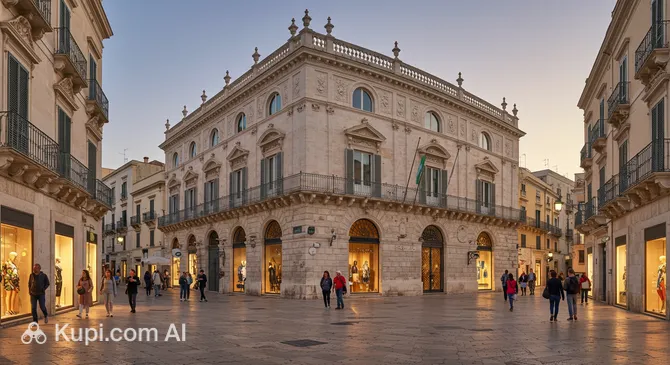
The beating heart of the city's shopping scene is the Murat district, specifically the elegant pedestrian avenue known as Via Sparano da Bari. Often referred to as the "living room" of the city, this street is lined with prestigious luxury brands, historic palaces, and popular clothing retailers. Walking here allows you to admire the Historic Building on Via Sparano, which adds an architectural charm to your window-shopping experience. Parallel to it, Corso Cavour and Via Manzoni offer further options, ranging from independent boutiques to well-known commercial stores, making this grid of streets the primary destination for fashion lovers.
Historic Building on Via Sparano. Illustration.
Source: Kupi.com AI
Traveler photos:
For those who prefer a comprehensive shopping experience with everything under one roof, the city's outskirts host several large commercial centers. The Santa Caterina Shopping Park is a favorite among locals, offering a wide variety of electronics, home goods, and clothing stores in an open-air layout. Nearby, you can also visit Maximall Bari Santa Caterina, which features numerous shops, a cinema, and various dining options, making it a convenient stop for families or those looking to escape the midday heat.
Santa Caterina Shopping Park. Illustration.
Source: Kupi.com AI
Traveler photos:
To truly understand the local culture, a visit to the city's vibrant markets is essential. The daily markets in Bari are a sensory explosion of colors and scents, where vendors sell fresh produce, cheeses, and local specialties. While the famous fish market at N' dèrr'a la lanze is more of a cultural spectacle than a typical shopping spot for tourists, the smaller street markets often feature stalls selling clothing, shoes, and household items at bargain prices. These bustling hubs are perfect for observing the animated bargaining style of the residents.
When it comes to souvenirs, Bari offers unique items that go beyond the standard trinkets. The most iconic keepsake is a bag of handmade orecchiette pasta, often purchased directly from the women who make it in the streets of Bari Vecchia. Another popular choice is the Pumo, a traditional Apulian ceramic bud that symbolizes good luck and prosperity, available in various colors and sizes. Foodies should also consider bringing home a bottle of high-quality local extra virgin olive oil or a package of savory taralli crackers.
Store opening hours in Bari generally follow the traditional Italian schedule. Most shops in the city center open around 9:00 AM or 10:00 AM, close for a lunch break (the riposo) between 1:30 PM and 4:30 PM, and then reopen until 8:00 PM or 9:00 PM. However, large international chains and shopping malls typically stay open throughout the day without a break. Credit and debit cards are widely accepted in most stores and restaurants, but it is always useful to carry some cash for small purchases at markets or street stalls.
Tourists residing outside the European Union may be eligible for a VAT (Value Added Tax) refund on purchases exceeding a certain threshold made in a single store. Look for the "Tax Free" logo in shop windows and remember to ask for the necessary forms at the checkout. You will need to present these forms along with your goods and passport at the customs office at the airport before leaving the EU to claim your refund.