Support

Sorrento

About

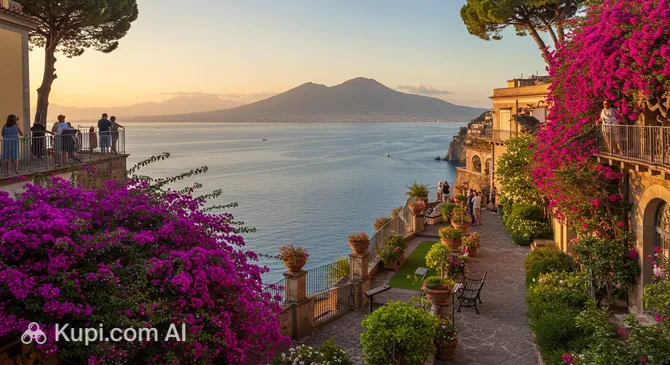
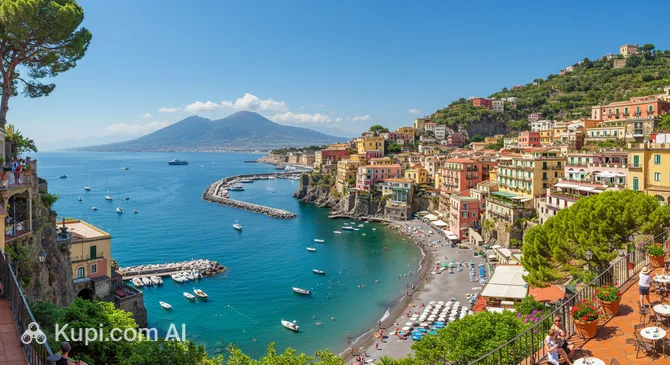
Perched atop the rugged cliffs of the Sorrentine Peninsula, Sorrento is a captivating destination overlooking the sparkling Bay of Naples. This picturesque town in southern Italy is celebrated for its sweeping sea views, vibrant atmosphere, and the scent of lemons that fills the air. It serves as a perfect gateway to the Amalfi Coast while offering a distinct and romantic charm of its own.

Sorrento. Source: Kupi.Binoculars

With a population of approximately 16,000 residents, Sorrento balances the liveliness of a popular resort with the intimacy of a traditional coastal village. The history of Sorrento is rich and varied, evident in the narrow alleys of the historic center and the ancient walls that once guarded the city. The mild Mediterranean climate makes it an inviting place to visit throughout the year, allowing tourists to comfortably explore the bustling Piazza Tasso or relax by the water.

One of the town's most beloved features is the Marina Grande, a traditional fishing hamlet nestled below the cliffs, known for its colorful wooden boats and fresh seafood restaurants. Visitors can also admire the local craftsmanship, particularly the intricate wood marquetry and ceramics found in many shops. Of course, no trip is complete without tasting the region's famous limoncello, produced from the abundant lemon groves nearby. Sorrento truly offers a delightful blend of culture, nature, and hospitality.

Weather Overview

Sorrento benefits from a classic Mediterranean climate, characterized by distinct seasons that make it a year-round destination. For a more detailed breakdown for your specific travel dates, you can consult the guide on weather in Sorrento, but generally, the town enjoys plenty of sunshine and comfortable temperatures.

The summer months are the warmest and driest, with August seeing average temperatures of 25.7°C and highs reaching up to 28.2°C. Rainfall is exceptionally rare during this peak season; July is the driest month with almost no precipitation and only about 2 wet days. This makes it the perfect time for swimming and exploring the coast, though it is also the busiest period.

Winters are mild rather than freezing, with average temperatures in January hovering around 10.1°C and lows rarely dipping below 8°C. However, this season is significantly wetter, with November and December experiencing up to 16 rainy days each. Expect warm, dry summers ideal for outdoor activities and mild, wetter winters that bring a quieter atmosphere to the town.

Interesting Facts

Beyond the main attractions, Sorrento holds many fascinating secrets that peel back the layers of its ancient history and local lore. Here are a few surprising details about this coastal gem that many visitors might miss.

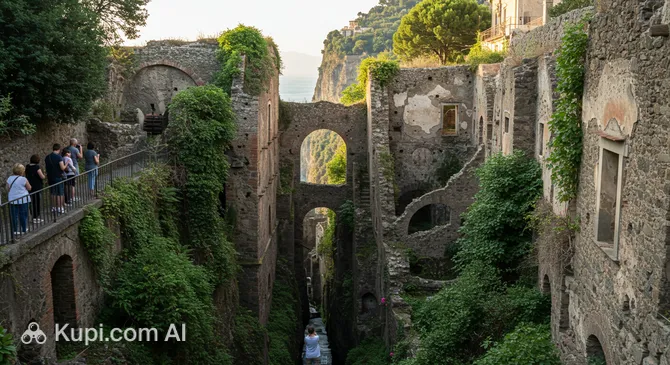
  • Just a few steps from the bustling main square lies a prehistoric gorge known as the Valley of the Mills. Looking down from the street level, you can see the haunting ruins of a 10th-century flour mill and sawmill at the bottom of the crevasse, now completely reclaimed by lush ferns and vegetation.

  • The city's name is deeply rooted in Greek mythology, deriving from the word "Siren." Ancient legends suggest that the waters off the Sorrentine coast were inhabited by the mythical Sirens, who tried to lure Ulysses with their enchanting songs as he sailed past on his odyssey.

  • A peculiar artifact can be found at the entrance of the Basilica of Saint Antoninus: two large whale ribs. Local tradition holds that the city's patron saint, Saint Antoninus, performed a miracle by saving a child who had been swallowed by a giant sea monster, and the bones remain as a testament to the tale.

  • The famous Neapolitan song "Torna a Surriento" (Come Back to Sorrento) has a surprisingly bureaucratic origin story. It is widely believed that the song was composed in 1902 to impress a visiting Prime Minister, with the ultimate goal of convincing him to build a new post office for the town.

Valley of the Mills. Source: Kupi.Binoculars

How to Get There

Reaching this stunning coastal destination is relatively straightforward, as it is well-connected to major transport hubs in southern Italy. While the town itself is tucked away on the cliffs, nearby cities serve as convenient entry points. You can find all ways to reach the city and plan your specific itinerary online.

The city of Sorrento does not have its own airport, but you can fly into Naples International Airport (IATA: NAP) in the city of Naples, which is about 30 km from Sorrento. It is the primary gateway for international and domestic travelers heading to the coast. The journey by taxi or bus takes approximately 65 minutes. Alternatively, for those landing further north, Ciampino–G. B. Pastine International Airport (IATA: CIA) in Rome is a significant option, though it is located roughly 198 km away. The travel time by road from there is around 3 hours.

For clarity, here is a summary of the main airports:

Airport Name City Passenger Traffic Km from City
Naples International Airport Naples Large 29.7
Ciampino–G. B. Pastine International Airport Rome Medium 198.2
Abruzzo Airport Pescara Small 201.3
Pontecagnano Salerno Small 45.3
Gino Lisa Foggia Small 132.3

Traveling by train is another popular method, often involving a transfer in a neighboring major city. The city of Sorrento does not have a mainline national railway station, but you can arrive at the Naples Centrale Station in the city of Naples, which is about 27 km from Sorrento. From there, you can get a taxi or bus, which takes about 60 minutes. Another key hub is the Napoli Afragola High-Speed Railway Station, located approximately 34 km away, offering modern high-speed connections.

Below is a list of the nearest major railway stations:

Station City Passenger Traffic Km to Center
Tiburtina Railway Station Rome Large 210.4
Naples Centrale Station Naples Large 26.6
Napoli Afragola High-Speed Railway Station Naples Large 34.1
Mergellina Railway Station Naples Medium 29.3
Salerno Railway Station Salerno 33.9

Main Attractions

While the charm of Sorrento lies largely in its atmosphere and views, the town is also home to several remarkable landmarks that capture its rich heritage and natural beauty. From historic religious sites to panoramic parks, exploring these attractions offers a deeper understanding of the local culture and history.

A walk through the historic center brings you to the impressive Sorrento Cathedral (Cathedral of Saints Philip and James). This Romanesque structure, originally built in the 11th century and remodeled over time, is famous for its stunning interior. Visitors are particularly drawn to the intricate inlaid wood work (intarsia), a craft for which the town is renowned, as well as the beautiful marble altar and vibrant frescoes that adorn the ceiling.

Sorrento Cathedral (Cathedral of Saints Philip and James). Source: Kupi.Binoculars

For the best views in town, head to the Villa Comunale of Sorrento. This small but delightful public park sits perched on the cliff edge, offering a terrace with breathtaking panoramas of the Bay of Naples and Mount Vesuvius in the distance. It is a favorite spot for a leisurely stroll at sunset or to simply sit on a bench and watch the ferries glide across the water below.

Villa Comunale of Sorrento. Source: Kupi.Binoculars

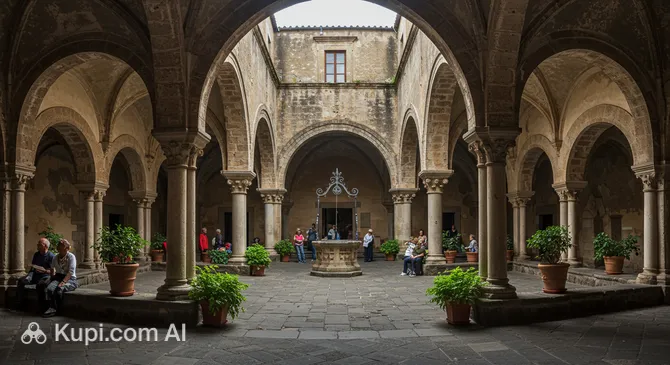
Adjacent to the park lies the serene Cloister of San Francesco. Part of a monastery complex, this 14th-century architectural gem blends different styles, featuring crossed arches and octagonal columns. It is an oasis of silence filled with bougainvillea and ornamental trees, often serving as a romantic venue for weddings and classical music concerts during the summer months.

Cloister of San Francesco. Source: Kupi.Binoculars

Nature lovers and history enthusiasts should not miss the Regina Giovanna Baths, located on the cape of Sorrento. This secluded natural pool is separated from the open sea by a rock archway and is surrounded by the ruins of an ancient Roman villa. It is an enchanting spot for a swim in crystal-clear waters, combining raw natural beauty with the echoes of antiquity.

Local Cuisine

The culinary landscape of Sorrento is a vibrant reflection of its coastal location and fertile volcanic soil. The local gastronomy is celebrated for its simplicity and the exceptional quality of its ingredients, particularly tomatoes, basil, olive oil, and the world-famous Sorrento lemons. Dining here is not just a meal; it is an immersion into the Mediterranean way of life, where fresh flavors and sea breezes come together.

The undisputed king of local pasta dishes is Gnocchi alla Sorrentina. This comforting masterpiece consists of potato gnocchi baked in a clay pot with a rich tomato sauce, fresh basil, and melted mozzarella cheese. It is a staple found in almost every trattoria. Another favorite is pasta with clams (spaghetti alle vongole), a simple yet delicious dish that highlights the freshness of the local catch.

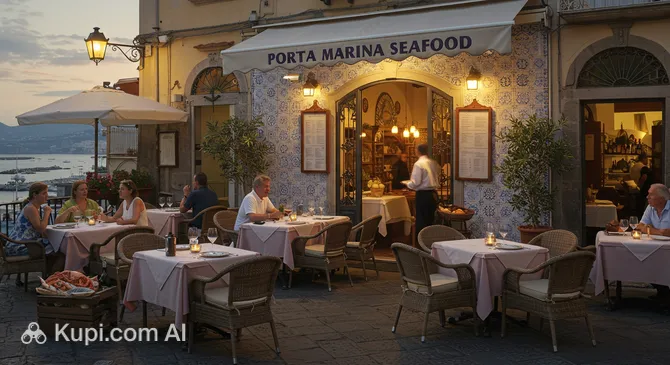
Given the town's seaside setting, seafood plays a pivotal role in the diet. For an authentic experience, visitors often head down to the waterfront to enjoy the catch of the day. Restaurants like Porta Marina Seafood offer a quintessential dining atmosphere where you can savor fresh fish and seafood risotto just steps from the water. Whether it is fried calamari or grilled octopus, the flavors are always enhanced by a squeeze of local lemon juice.

Porta Marina Seafood. Source: Kupi.Binoculars

For a quick and casual bite, the street food scene is dominated by pizza and panuozzo (a pizza dough sandwich). Places such as Storico8 Pizza al Taglio, Focacceria & Kitchen serve delicious slices that are perfect for a lunch on the go while exploring the narrow alleys. Additionally, the region produces excellent cheeses, including the renowned Provolone del Monaco, a semi-hard cheese that is often enjoyed on its own or grated over pasta.

No meal in Sorrento is complete without a glass of Limoncello. This bright yellow, sweet liqueur is made from the zest of the oversized Femminello St. Teresa lemons that grow abundantly in the area. It is traditionally served ice-cold as a digestif. For those looking to enjoy a variety of local drinks or a lively evening atmosphere, the Shot Bar Sorrento is a popular stop. To finish on a sweet note, try the Delizia al Limone, a sponge cake filled and coated with a smooth lemon cream that perfectly captures the essence of the city.

Travel Tips

Welcome to Sorrento! To ensure your adventure on the magnificent Sorrentine Peninsula is as relaxing as a sip of chilled limoncello, we have compiled a list of essential practical advice. These tips will help you navigate the local customs, transport, and lifestyle with the ease of a seasoned traveler.

  1. Clothing and Gear: The terrain in Sorrento involves cobblestones, steep alleys, and stairs, so comfortable walking shoes are absolutely essential; leave the high heels for dinner at the hotel. In summer, wear light, breathable fabrics, but always carry a scarf or shawl. Religious sites like the Sorrento Cathedral enforce a strict dress code, requiring shoulders and knees to be covered.

  2. Transportation: The historic center is compact and best explored on foot. For day trips to the Amalfi Coast, use the SITA buses, and for Pompeii or Naples, the Circumvesuviana train is the most affordable option, though it can be crowded. Avoid renting a car if you plan to stay mostly in town, as traffic is heavy, parking is expensive, and ZTL (limited traffic zones) fines are common. To reach the port without the steep walk, use the convenient Sorrento Lift near Villa Comunale.

  3. Finances: The currency is the Euro (€). Credit cards are widely accepted in restaurants and shops, but it is wise to carry some cash for small purchases, bus tickets, or gelato. In restaurants, you will often see a "coperto" (cover charge) added to the bill; while tipping is not mandatory in Italy, rounding up the bill or leaving a few euros for good service is appreciated.

  4. Health and Safety: Sorrento is generally a very safe destination for tourists. However, exercise standard caution with your belongings in crowded areas, especially at the train station or on packed buses. Pharmacies are marked with a green cross and are well-stocked. For any general emergency, dial 112.

  5. Communication: The official language is Italian, but due to its long history of tourism, English is widely spoken and understood in hotels, restaurants, and shops. Learning a few polite phrases like "Buongiorno" (Good morning) and "Grazie" (Thank you) will go a long way with the locals. Free Wi-Fi is available in many public squares, but purchasing a local SIM card or eSIM is recommended for reliable navigation.

  6. Local Etiquette: Politeness is highly valued; always greet shopkeepers or waiters when entering an establishment. Coffee culture is serious here: locals typically drink cappuccino only at breakfast. If you order one after 11:00 AM, you might get a puzzled look, though they will still serve you. Espresso (caffè) is enjoyed throughout the day.

  7. What to Avoid: Do not walk around the city center in swimwear or shirtless. This is considered disrespectful and violates local ordinances, which can result in a fine. Save the beachwear strictly for the beach or the pool deck.

  8. Smart Shopping Tip: If you plan to buy the famous local limoncello or lemon-themed ceramics, venture a bit off the main shopping street, Corso Italia. The smaller artisan shops in the side alleys of the historic center often offer higher quality craftsmanship and more authentic products at better prices.

Armed with these practical insights, you are ready to embrace the dolce vita lifestyle of Sorrento. Enjoy the breathtaking sunsets, the warm hospitality, and the unforgettable charm of this coastal jewel without a worry in the world!

Entertainment & Nightlife

Entertainment in Sorrento is a delightful mix of sophisticated leisure and lively social gatherings, reflecting the town's elegant yet welcoming character. Unlike the high-energy party hubs found elsewhere in Europe, the nightlife here is centered around the Italian tradition of la dolce vita. The evening typically begins with a leisurely passeggiata (stroll) along Corso Italia and settles into a long, relaxed aperitivo hour in the bustling squares.

The heart of the action is undoubtedly Piazza Tasso, the main square that transforms into a vibrant social hub as the sun sets. Here, locals and tourists alike gather at the numerous terrace bars to sip cocktails and people-watch. The atmosphere is chic but accessible, with a dress code that leans towards "smart casual"—think linen shirts and summer dresses rather than beachwear. For those seeking a more energetic vibe, the narrow alleys of the historic center hide smaller pubs and wine bars where the crowd is often younger and the music a bit louder.

For a fun and spirited experience in the center, you can visit the Shot Bar Sorrento. As the name suggests, this venue is famous for its extensive menu of creative shots and cocktails, making it a popular meeting point to kick off the night. It creates a friendly environment where it is easy to strike up a conversation with fellow travelers. If you are in the mood for music and a more club-like atmosphere, DanS VibeS offers a lively setting to enjoy drinks and rhythm late into the night.

Shot Bar Sorrento. Source: Kupi.Binoculars

Practicality is key to enjoying a night out in Sorrento. Most bars stay open until around 2:00 AM, though the crowds usually peak between 10:00 PM and midnight. Prices are generally moderate for a resort town, with cocktails ranging from €8 to €15 depending on the venue's location. The town is very safe for walking at night, especially in the well-lit center and along the main roads. However, if your accommodation is on the outskirts or up the hills, it is advisable to book a taxi in advance, as they can be expensive and harder to flag down on the street late at night.

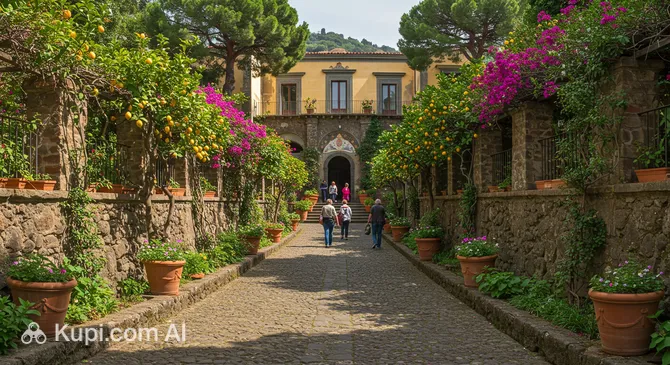
During the daylight hours, the entertainment shifts towards culture and history. Art lovers should not miss the Correale Museum of Terranova, often described as the most beautiful provincial museum in Italy. Housed in an 18th-century villa, it displays an impressive collection of Neapolitan paintings, decorative arts, and porcelain, all surrounded by a magnificent citrus grove. For a peaceful afternoon, the Villa Fiorentino Park frequently hosts exhibitions, concerts, and cultural events, offering a green sanctuary in the middle of the town.

Correale Museum of Terranova. Source: Kupi.Binoculars

Parks & Museums

While the sweeping sea views are the main draw, Sorrento offers several cultural and natural treasures that provide a quiet escape from the busy streets. Exploring the town’s green spaces and museums allows visitors to discover its artistic heritage and enjoy moments of tranquility amidst the Mediterranean vegetation.

A highlight of the local culture is the Museo della Tarsia Lignea (Wood Inlay Museum). Located in a restored historic palace within the city center, this museum celebrates the town's long-standing tradition of marquetry. Visitors can admire a vast collection of inlaid furniture, boxes, and pictures, gaining insight into the intricate craftsmanship that has defined Sorrento’s artisanship for centuries.

For a refreshing break surrounded by nature, the Villa Fiorentino Park is a welcoming oasis. Often referred to as the headquarters of the Sorrento Foundation, the estate features a charming garden filled with citrus groves, camellias, and roses. It is a peaceful spot to relax on a bench, and it frequently hosts temporary art exhibitions, concerts, and cultural events throughout the year.

Villa Fiorentino Park. Source: Kupi.Binoculars

Just a short distance from the center, in the neighboring area of Piano di Sorrento, lies the Villa Fondi De Sangro. This impressive neoclassical villa sits on a cliff edge, surrounded by a public park with scenic terraces that offer spectacular views of the Gulf of Naples. The building houses the Georges Vallet Archaeological Museum, where you can explore ancient artifacts discovered across the peninsula, blending a fascinating history lesson with beautiful coastal scenery.

Villa Fondi De Sangro. Source: Kupi.Binoculars

Getting Around

Public transport in Sorrento is efficient and vital for navigating the steep terrain and connecting to the wider region, though the historic center itself is best explored on foot. The system relies primarily on a network of buses, a commuter railway, and maritime connections. There is no underground metro or tram system within the town; instead, the Circumvesuviana railway serves as the main overland lifeline, functioning much like a suburban train that connects the town to Pompeii and Naples. For travel within the city limits and to the port, smaller local buses operated by companies like EAV and Cooperativa Tasso are frequently used.

For exploring the spectacular coastline, the SITA Sud buses are the most popular choice among tourists. These blue buses connect the town to the famous Amalfi Coast destinations like Positano and Amalfi. While they are an affordable way to travel, they can get extremely crowded during peak season. A more scenic and relaxed alternative for reaching nearby islands or coastal cities is the ferry and hydrofoil service departing from Marina Piccola. These boats offer a fast and beautiful commute across the water, avoiding the often heavy road traffic.

A unique and highly practical feature of the local transport is the Sorrento Lift. Since the town center sits high on a cliff overlooking the harbor, walking between the two can be tiring. The public elevators, located near the Villa Comunale park, provide a quick and effortless connection between the town center and the beach clubs and ferry terminals at Marina Piccola. A round-trip ticket costs a few euros and saves you from a steep hike up or down the stairs.

The payment system generally operates under the regional UnicoCampania consortium. Tickets are integrated based on zones and time limits. You cannot usually buy tickets on board the bus; they must be purchased in advance at authorized retailers. Look for the "T" sign indicating a Tabacchi (tobacco shop) or buy them at newsstands and ticket counters at the train station. Prices are reasonable, with a single local bus ride costing around €1.20 to €1.50, and a train ticket to Naples costing approximately €4 to €5 depending on the specific ticket type.

Tourists should be aware of a few practical rules to avoid fines. Always validate your ticket immediately upon boarding a bus or before entering the train platform using the yellow or electronic machines. If the machine is broken, write the date and time on the back of the ticket manually. Transport services generally run from early morning until late evening, but frequencies drop significantly after 9:00 PM, so it is wise to check the return schedules if you are planning a late dinner in a neighboring village.

As alternatives to public transport, taxis are available at designated stands, such as in Piazza Tasso, but they are known for being quite expensive compared to other Italian cities. Ride-sharing apps are not widely used or reliable here. Many visitors choose to rent scooters to navigate the winding coastal roads with more freedom, though this is recommended only for experienced drivers due to the narrow lanes and traffic. For short distances within the walls of the old town, walking remains the most efficient and enjoyable option.

Accommodation

Accommodation in Sorrento caters to a wide spectrum of preferences and budgets, ranging from opulent cliffside resorts to charming family-run bed and breakfasts. As a premier tourist destination, the town offers a high standard of hospitality, with many properties designed to maximize the stunning views of the Bay of Naples. Visitors can choose from historic 5-star hotels, mid-range establishments, or an increasing number of holiday apartments and guesthouses tucked away in the city's ancient alleys.

The most coveted area to stay is undoubtedly the Historic Center and the streets surrounding Piazza Tasso. Staying here places you within walking distance of the main shops, restaurants, and the port, making it ideal for those without a car. For a more tranquil experience, the hillsides just outside the main town offer seclusion and sweeping panoramas, though they often require a shuttle or taxi to reach the center. The cliff-edge properties are particularly famous for their terraces and direct elevator access to the sea.

For travelers looking for a blend of comfort and spectacular scenery, the Grand Hotel Capodimonte is a prominent example of the local hospitality style. Situated on the rocky slopes, such resorts often feature cascading pools and lush gardens that provide a peaceful retreat after a day of sightseeing.

Grand Hotel Capodimonte. Source: Kupi.Binoculars

Booking Tip: Sorrento is an extremely popular base for exploring the Amalfi Coast, and accommodations fill up rapidly. It is highly recommended to book your stay at least several months in advance, especially if you plan to visit during the peak season from June to September or during the Easter holidays.

Regarding costs, prices in Sorrento tend to be higher than in nearby Naples due to its resort status. A room with a sea view will almost always command a significant premium. While luxury hotels are abundant, budget travelers can find more affordable rates by looking for guesthouses (often labeled as "Affittacamere") or booking slightly further inland. Reservations are easily made through major online platforms, though contacting smaller B&Bs directly can sometimes yield a better rate or a more personalized offer.

Nearby Cities

For those looking to explore the surroundings, Sorrento serves as an excellent base for day trips to several interesting nearby locations. The region is densely packed with historical and cultural gems that are easily accessible by train or car.

One of the most fascinating stops is Ercolano, home to the ancient ruins of Herculaneum. Smaller and often less crowded than Pompeii, this Roman town offers an intimate glimpse into the past, with incredibly well-preserved buildings and mosaics that survived the eruption of Mount Vesuvius. Nearby, Castellammare di Stabia invites visitors to discover its thermal bath traditions and the majestic Roman villas of Stabiae, while offering a lively waterfront promenade. For those interested in local craftsmanship, Torre del Greco is world-famous for its exquisite coral jewelry and cameo production, set against the backdrop of the volcano.

City Population Distance (km)
Torre del Greco 85332 18
Castellammare di Stabia 65922 12
Portici 54577 21
Ercolano 52763 20
Scafati 50686 19

These nearby destinations offer a glimpse into the diverse culture and landscapes of the region.

Shopping & Souvenirs

Shopping in Sorrento is a delightful experience that reflects the town's laid-back yet sophisticated character. Unlike the frenetic commercial hubs of larger cities, the retail scene here is intimate and walkable, focusing heavily on local craftsmanship, high-quality materials, and regional specialties. Visitors will find that browsing the shops is as much about discovering the local culture as it is about purchasing goods, with the scent of citrus often wafting through the doors of the many boutiques.

The main artery for shopping is the bustling Corso Italia. This pedestrian-friendly avenue runs through the center of the modern town and is lined with fashionable boutiques, Italian clothing brands, and elegant shoe stores. Parallel to it lies the historic heart of shopping, Via San Cesareo. This narrow, ancient lane is packed with colorful shops selling everything from souvenirs to leather goods. Walking down this street is an atmospheric journey where artisan workshops sit side-by-side with lively stalls, making it the perfect place to hunt for gifts.

Travelers looking for large, American-style shopping malls will not find them in Sorrento. The town prides itself on its lack of massive commercial complexes, preserving its traditional architectural charm. Instead of sprawling department stores, the retail landscape is defined by small, family-owned businesses and independent galleries. This absence of generic malls ensures that the shopping experience remains uniquely Italian and personal.

For a more authentic glimpse into daily life, the weekly open-air market is a must-visit. Held every Tuesday morning on Via San Renato, slightly away from the tourist center, this market is where the locals go to shop. Here, you can find stalls piling high with fresh produce, household items, and clothing at bargain prices. It is a vibrant, noisy, and colorful affair that offers a stark contrast to the polished boutiques of the main drag.

When it comes to souvenirs, Sorrento is famous worldwide for a few specific products. The most iconic purchase is undoubtedly Limoncello, the sweet lemon liqueur produced from the region's giant lemons; many shops on Via San Cesareo offer free tastings. Another local specialty is intarsia (inlaid wood), a craft with a long history in the town. You can find exquisite music boxes, picture frames, and furniture featuring intricate wooden mosaics. Additionally, handmade leather sandals, often measured and crafted to fit your feet within minutes, are a popular and practical keepsake.

Store opening hours in Sorrento generally follow the traditional Italian schedule. Shops typically open around 9:00 AM or 10:00 AM and stay open until 1:00 PM or 1:30 PM. Many businesses then close for a riposo (afternoon break) and reopen around 4:00 PM or 5:00 PM, staying open late into the evening, often until 10:00 PM in the summer. Major credit cards are widely accepted in most boutiques and restaurants, though it is advisable to carry cash for small purchases at the market or in smaller souvenir kiosks.

Tourists residing outside the European Union may be eligible for a VAT (Value Added Tax) refund on significant purchases. If you spend over a certain threshold in a single store, look for the "Tax Free" sign in the window. You can ask the shopkeeper for a tax-refund form, which must be stamped at the customs office at your final point of departure from the EU, allowing you to claim back a percentage of the cost.
Reached the end of the page?

That means the route is fully explored