Support

Ciampino–G. B. Pastine International Airport

About the Airport

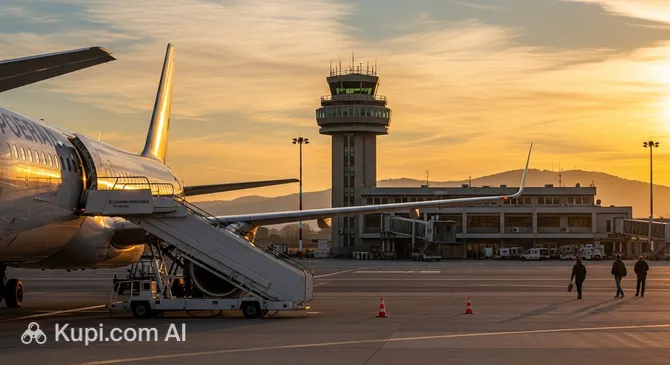
Ciampino–G. B. Pastine International Airport. Source: Kupi.com Binoculars

Rome Ciampino International Airport (Ciampino) is the "younger brother" of Rome's main hub, Fiumicino, but it plays a key role for all budget travel enthusiasts. Located significantly closer to the historic centre of the Eternal City, this compact air terminal predominantly serves low-cost carriers, allowing tourists to start their Roman holiday by saving both time and money. Despite its modest size and respectable age, the air harbour named after Giovan Battista Pastine welcomes millions of guests annually, offering simple and clear navigation. It is the ideal entry point for those flying light and wishing to be at the Colosseum as soon as possible.

IATA Code CIA
ICAO Code LIRA
City Rome
Distance to centre 15 km
Status International (predominantly low-cost carriers)
Passengers per year ~3.9 million (based on 2023 data)
Schedule Online flight board available on the official website

Features and Advantages of Ciampino Airport:

The main advantage of Ciampino is its location. It is situated just 15 kilometres southeast of Rome's city centre, making the trip to the city quick and inexpensive. Unlike Fiumicino, taxis from here are cheaper, and numerous shuttle buses deliver passengers directly to Termini Station in approximately 40 minutes.

The airport terminal consists of just one floor, making it impossible to get lost. All zones — from check-in to boarding gates — are within walking distance. This is particularly convenient for travellers with limited luggage who value speed in completing formalities. However, it is worth noting that due to its focus on budget airlines, it can often be crowded, and seating in the waiting halls is limited.

An important detail for planning your trip: the airport closes at night (usually from midnight to 04:30 AM). Unlike many major hubs, staying inside the terminal overnight is not permitted here, so for early flights, it is recommended to arrange a transfer or a nearby hotel in advance.

In terms of infrastructure, Ciampino offers a basic set of services: several cafes, a pizzeria, ATMs, and a Duty Free zone. There are no luxury business lounges here, but there is everything necessary to grab a bite before your flight. Transport accessibility is ensured not only by buses but also by a "bus + regional train" combination from the nearby railway station in the town of Ciampino.

Contact Information

  • Official Website: www.adr.it/ciampino
  • Help Desk Phone: +39 06 65951 (unified information centre for airports in Rome)
  • Address: Via Appia Nuova, 1651, 00040 Ciampino RM, Italy
  • Email: The airport recommends using the contact form on the official website for all inquiries, as a public e-mail for general questions is not provided.
  • Social Media: Official pages of Aeroporti di Roma (the management company) are available on major social networks such as Facebook, X (formerly Twitter), and Instagram, where updates for both Rome airports are published.
  • Lost Luggage Information: In case of lost luggage, you should first contact your airline's Lost & Found office. If an item was lost within the airport premises, information can be found in the "Oggetti Smarriti" (Lost Property) section on the official website.
  • Passenger Support Contacts: For immediate assistance, you can approach the information desks in the terminal or call the general help desk number.

How to Get to the Airport

You can get to Ciampino International Airport from the centre of Rome in several ways, each with its own advantages regarding cost, time, and convenience. This airport, serving primarily budget airlines, is located relatively close to the city, making the journey there quick and simple.

Public Transport: Buses

The most popular method, balanced in terms of price and comfort, is the specialised shuttle buses. Companies such as Terravision and SitBusShuttle offer direct trips from the central Termini Station (Stazione Termini) to the airport terminal. The journey takes about 40-50 minutes depending on traffic conditions, and the ticket cost is approximately 6-7 Euros. A more budget-friendly option is to use the ATAC city buses. Route No. 520 will take you to Metro Line A stations (Cinecittà and Subaugusta), and route No. 720 to the Line B station (Laurentina). The fare is just 1.50 Euros (BIT ticket valid for 100 minutes), but you will need to transfer to the metro to reach the city centre.

"Train + Bus" Combination (Ciampino Airlink)

To avoid potential traffic jams, you can choose the combined Ciampino Airlink service. It involves a trip on a regional train from Termini Station to Ciampino Città station (travel time about 15 minutes) followed by a transfer to an ATRAL bus, which will take you directly to the airport building in 5-10 minutes. A single ticket for both train and bus costs 2.70 Euros, making this one of the fastest and cheapest options.

Taxi and Transfer

For maximum comfort, you can take a taxi. From the centre of Rome (within the Aurelian Walls) to Ciampino Airport, a fixed fare applies — the trip will cost approximately 31 Euros. Important: use only official white taxis with the city emblem on the door to avoid inflated prices. You can also book a private transfer in advance, which is convenient for large groups or travellers with bulky luggage.

Car Rental and Parking

If you are travelling by car, getting to the airport is easy — it is located next to the Rome Ring Road (Grande Raccordo Anulare). There are several official car parks (P4, P5, P6) on the airport grounds, designed for both short-term and long-term parking. To get a more favourable rate, it is recommended to book a parking space online in advance.

Although Ciampino is convenient for flights to the capital of Italy, other airports may be useful for travelling through the central part of the country. The largest of them is Leonardo da Vinci — Fiumicino Airport, but it is also worth considering airports in Perugia, Pescara, or Naples for planning complex itineraries.

Terminals and Map

Ciampino Airport is distinguished by its compactness and simple structure, making navigation through it intuitively clear. In fact, there is only one two-story passenger terminal here, which serves both departing and arriving flights. Thanks to this, you won't have to worry about long transfers between different buildings or using shuttles — everything is located in one building.

The terminal layout is logical and simple. On the ground floor, you will find the arrivals area with baggage claim and flight check-in counters. After check-in, passengers proceed to the upper floor, where the security control zone is located, after which access to the departure lounge opens. All navigation is accompanied by clear signs in Italian and English.

The departure zone is a single space where boarding gates, Duty Free shops, several cafes, and snack bars are located. Given that the airport mainly serves budget airlines, it can be quite crowded during peak hours. The arrivals zone is located separately on the ground floor and leads passengers directly to the baggage claim belts and the exit to the city, where bus stops and the taxi rank are situated.

Despite the small size of the airport, you should allow enough time to go through all procedures. It is recommended to arrive at the airport at least 2–2.5 hours before departure. In the morning and evening hours, as well as at the height of the tourist season, queues for check-in and security screening can be significant. If you are travelling only with hand luggage and have checked in online, you can proceed directly to the upper floor to the security checkpoint.

Airport History

The history of Ciampino Airport is a fascinating journey through the eras of aviation. Opened back in 1916, it is one of the oldest operating airports in the world. Initially, it was created as a base for airships and military aircraft, playing an important role in the birth of Italian aviation. After World War II, Ciampino was converted for civil needs and for many years became the main air gateway to Rome, welcoming the first post-war tourists, Hollywood stars of the "Dolce Vita" era, and world leaders arriving in the capital of Italy.

A key turning point in its history occurred in 1961 with the opening of the new, larger Leonardo da Vinci Airport (Fiumicino). Major international traffic moved there, and Ciampino seemed to fade into the background. For several decades, it served primarily charter and domestic flights, while also remaining an important facility for government and humanitarian transport.

The airport received a new lease of life in the early 2000s with the arrival of budget airlines. Carriers such as Ryanair and Wizz Air turned Ciampino into one of the busiest low-cost hubs in Europe. This required significant modernization of the terminals to serve the growing passenger flow. Today, the airport officially bears the name of Giovan Battista Pastine, an Italian airship ace pilot from the First World War, which is a tribute to its rich historical heritage. Thus, having gone from an airship base to a key hub for budget travel, Ciampino has preserved its significance and unique character.

Services and Amenities

Rome Ciampino International Airport (CIA), despite its compact size, offers passengers all the necessary services for a comfortable wait for their flight. Before departure, you can have a snack in one of the cafes or coffee bars, serving both traditional Italian snacks and international dishes. Shops operate in the departure zone, including Duty Free, where you can purchase perfumes, gifts, souvenirs, and local delicacies.

For those who value enhanced comfort, the airport has a VIP lounge offering a cosy atmosphere, snacks, and beverages. Free Wi-Fi is available throughout the terminal, and special stations and sockets located in the waiting halls are provided for charging gadgets. This allows you to stay connected and handle work matters right before departure.

The airport has bank branches, ATMs, and currency exchange points, which is convenient for handling financial matters upon arrival or before departure. For emergencies, a first aid station is available, ready to assist passengers in case of illness.

Ciampino Airport cares for all categories of travellers. For passengers with small children, mother and child rooms with changing tables are equipped. Passengers with reduced mobility are provided with comprehensive support, including accompaniment through the terminal. It is recommended to book this service in advance through your airline.

Although there are no hotels directly inside the airport building, there are many accommodation options for any budget in the immediate vicinity. For business travellers, basic business services, such as internet access and workspaces, are usually provided in the VIP lounge, allowing for efficient use of time while waiting for a flight.

Where to Eat

Ciampino Airport, being more compact compared to Fiumicino, offers several convenient options for a snack or a full meal before departure. The choice of establishments here is not huge, but quite sufficient to satisfy hunger and enjoy a final Italian espresso.

In the public area (landside), before passing security control, you will find several cafes. This is an excellent option if you have arrived early or are seeing someone off. Here you can drink coffee with a croissant (in Italy, it is called a cornetto) or eat a fresh panini sandwich. Prices here are generally slightly lower than in the departure zone.

The main part of the catering establishments is located in the departure zone (airside), after passport and customs control. Here the choice is wider: from coffee bars offering beverages and light snacks to self-service establishments where you can order more substantial dishes. The main food court offers several points with different food, including famous Roman pizza by the slice (pizza al taglio) and simple pasta dishes.

Even in an airport setting, Italian cuisine deserves credit. We recommend ordering a classic espresso or cappuccino — they are usually of excellent quality here. If time permits, try a panini with mozzarella or cured meat — a simple but tasty option for lunch. For a quick snack, a slice of fresh pizza is perfect.

For passengers with special dietary needs, the choice may be limited. Vegetarian options, such as panini with vegetables or cheese and salads, are easy to find and are suitable for those seeking Halal-friendly alternatives. Gluten-free or vegan dishes may be more difficult to find — usually, these are pre-packaged salads or fruit slices. Most establishments open early in the morning for the first flights and operate until the departure of the last aircraft. The average bill for coffee and a pastry will be around 5-8 Euros, and for a sandwich or a portion of pasta, you will have to pay from 9 to 15 Euros.

Travel Tips

To ensure your journey through Ciampino Airport in Rome goes as smoothly as possible, use these proven tips. This airport, serving mainly budget airlines, has its own specifics, and knowing some nuances will help save time and reduce stress.

Arrival Time and Check-in: Ciampino Airport is not as large as Fiumicino, but it can be crowded during peak hours. It is recommended to arrive 2.5-3 hours before international flights (especially non-Schengen) and 2 hours before domestic or Schengen flights. Almost all airlines offer online check-in — be sure to use this opportunity to avoid queues at counters. With a boarding pass on your phone and no checked luggage, you can proceed directly to security control.

Seat Selection and Hand Luggage: When flying with low-cost carriers, seat selection is almost always paid. If a window view or extra legroom is important to you, it is better to book a seat online in advance — it may be more expensive at the airport. Pay close attention to your airline's hand luggage allowances. Budget carriers strictly monitor the size and weight of bags. The standard rule for liquids remains unchanged: all containers must be no more than 100 ml and packed in a single transparent bag.

Transfers and Customs: Ciampino is predominantly a "point-to-point" airport and is not a major transfer hub. If you have a self-transfer, allow plenty of time. Most likely, you will have to exit the transit zone, collect your luggage, check in again for the next flight, and go through security control. When arriving from non-EU countries, follow the "Red" or "Green" channels depending on whether you have goods to declare. For travellers within the EU, customs control is usually a formality.

Saving Time and Money: The most budget-friendly way to get to the centre of Rome is via special shuttle buses that go to Termini Station. This is significantly cheaper than a taxi. To avoid spending extra on food, bring light snacks with you. After passing security control, you can fill an empty bottle with water at drinking fountains.

In Case of Flight Delay: If your flight is delayed, remember your rights under EU Regulation 261/2004. Depending on the length of the delay and flight distance, the airline is obliged to provide you with drinks, meals, and if necessary, a hotel. Keep your phone charged and watch for updates on the board or in the airline's app. There are several cafes and shops in the airport where you can pass the waiting time.

Reached the end of the page?

That means the route is fully explored