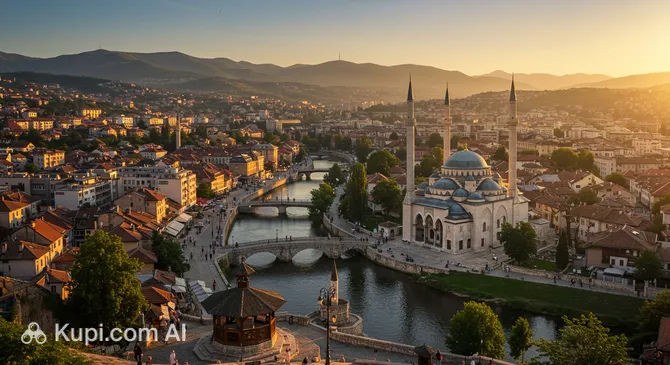
Sarajevo is a city where East meets West, creating a captivating atmosphere that is rarely found elsewhere in Europe. Often referred to as the "Jerusalem of Europe," it is a place where mosques, synagogues, and churches stand side by side, reflecting centuries of cultural diversity. As the capital and largest city of Bosnia and Herzegovina, it serves as the political, financial, and social heart of the nation.
Geographically, the city is nestled within the greater Sarajevo valley of Bosnia, surrounded by the Dinaric Alps and situated along the Miljacka River. With a population of approximately 420,000 inhabitants, it offers the vibrancy of a metropolis while maintaining a welcoming, community-focused spirit. The climate here is continental, characterized by warm summers and snowy winters, which famously hosted the 1984 Winter Olympics.
Sarajevo. Illustration.
Source: Kupi.com AI
The city's architecture is a visual timeline of its past. Walking through the streets, visitors can witness the seamless transition from the Ottoman-era Old Town to the Austro-Hungarian center and modern districts. To fully appreciate this unique blend, travelers are encouraged to explore the rich history of Sarajevo, which has shaped its resilient and hospitable character.
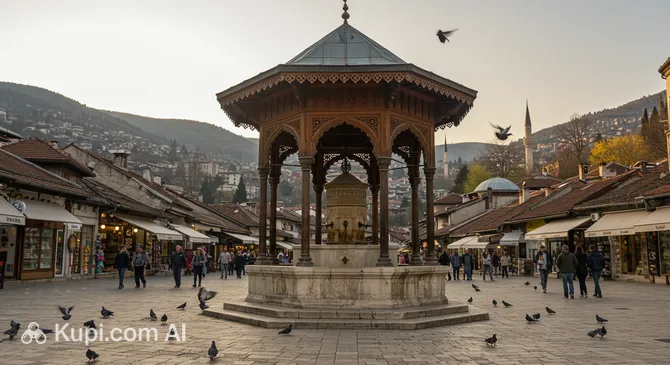
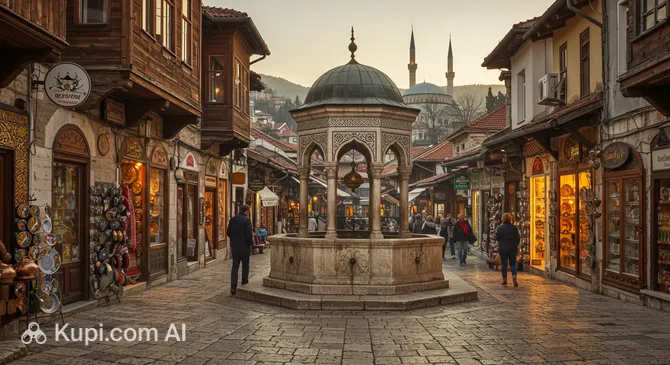
Key attractions include the bustling Baščaršija, the city's old bazaar where the smell of traditional coffee fills the air, and the iconic Sebilj fountain. Visitors should not miss the stunning Vijećnica (City Hall) or the Latin Bridge, a site of significant historical importance. Whether you are drawn by its history, the surrounding nature, or the warm local hospitality, Sarajevo promises an unforgettable travel experience.
Weather Overview
The city experiences a continental climate with four distinct seasons, offering a variety of atmospheres depending on when you visit. Summers are generally warm and pleasant, with August being the warmest month, featuring average highs of around 25.3°C. Winters, on the other hand, are cold and often bring snow, particularly in January when average temperatures hover around -0.5°C.
Precipitation is spread relatively evenly throughout the year, though visitors should be prepared for frequent showers in the late spring. May is typically the month with the most frequent rainfall, recording up to 19 wet days. Whether you prefer the snowy charm of winter or the mild warmth of summer, checking the detailed weather in Sarajevo can help you pack the right gear for your trip.
Average monthly temperature
Average monthly precipitation
Interesting Facts
Beyond the main attractions, Sarajevo holds many fascinating secrets and historical firsts that often surprise visitors. From unique timekeeping traditions to pioneering public transport, the city is full of stories waiting to be discovered.
Sebilj. Illustration.
Source: Kupi.com AI
Traveler photos:
Sarajevo served as a testing ground for the Austro-Hungarian Empire's public transport innovations. The city's tram system began operations in 1885 with horse-drawn carriages, paving the way for the introduction of electric trams in 1895—making it one of the very first cities in Europe to run a full-time electric network.
The historic Clock Tower (Sahat Kula), standing next to the Gazi Husrev-beg Mosque, is one of the few public clocks in the world that still keeps lunar time, meaning the hands strike 12 o'clock exactly at the moment of sunset each day.
There is a specific marker on the pavement near Baščaršija known as the "Sarajevo Meeting of Cultures," where visitors can stand with one foot in the Ottoman-era Old Town and the other in the Austro-Hungarian district, visually capturing the city's east-meets-west character.
A popular local legend claims that anyone who drinks from the Sebilj fountain in the main square will eventually return to Sarajevo, a belief that reflects the city's enduring hospitality.
The skyline is dominated by the Avaz Twist Tower, which is not only one of the tallest buildings in the Balkans but also features a unique twisted architectural design that rotates 90 degrees from top to bottom.
How to Get There
Reaching the capital of Bosnia and Herzegovina is relatively straightforward, with several options available depending on your starting point and budget. For a detailed breakdown of all routes and transport modes, you can read more about how to get to Sarajevo, but the most common choice for international visitors is arriving by air.
The most convenient entry point is Sarajevo International Airport (IATA: SJJ), which is located just 7.4 km from the city center. As the country's main aviation hub, it handles a significant volume of traffic and connects the city to major European capitals. Getting to the downtown area is quick; a taxi ride typically takes approximately 30 minutes.
Travelers looking for low-cost flight options often choose Tuzla International Airport (IATA: TZL). Although this airport is not in Sarajevo but in the city of Tuzla, about 71 km away, it is a popular alternative due to its budget carrier connections. The transfer from Tuzla to Sarajevo usually takes around 2 hours and 10 minutes by road.
Another possibility for those exploring the wider region is Dubrovnik Airport (IATA: DBV). Located in the city of Dubrovnik in neighboring Croatia, it is approximately 144 km from Sarajevo. While it is a major regional hub with high passenger traffic, the journey to Sarajevo takes about 4 hours by car or bus, crossing the international border.
For clarity, here is a summary of the main airports:
Besides flying, the city is well-connected by an extensive network of buses and trains. The railway route from the south, particularly from Mostar, is famous for its breathtaking scenery as it winds along the emerald Neretva River and through the rugged mountains. Buses are also a reliable option, offering frequent services from neighboring countries and major cities within the region.
Main Attractions
Sarajevo is a city that rewards exploration, with its most captivating sights located within walking distance of each other. The city's unique blend of Eastern and Western influences is best experienced through its diverse monuments, from ancient bazaars to grand Austro-Hungarian edifices.
The beating heart of the city is Baščaršija, the historic Ottoman marketplace that dates back to the 15th century. Wandering through its labyrinth of cobbled streets, visitors are surrounded by the rhythmic sounds of coppersmiths crafting souvenirs and the inviting aroma of traditional grilled meat and coffee. It is the perfect starting point for any tour, offering a lively atmosphere that captures the essence of the city's multicultural spirit.
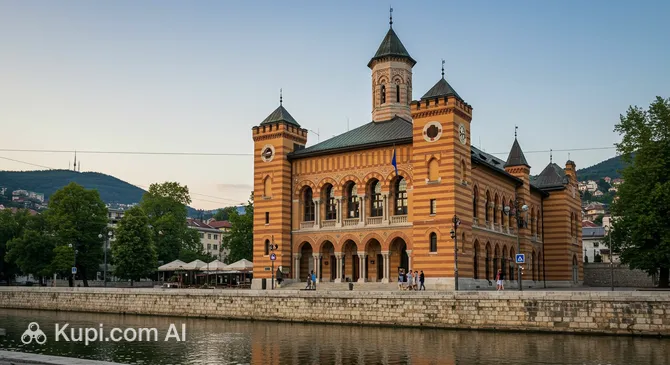
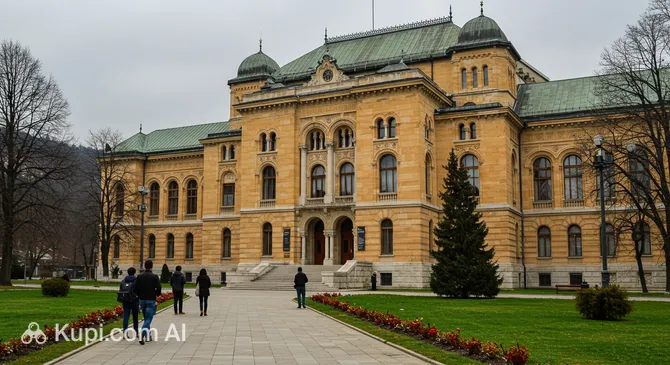
A short walk away stands the magnificent Sarajevo City Hall, known locally as Vijećnica. This architectural gem, designed in a striking pseudo-Moorish style, serves as a stunning symbol of the city's rich heritage. Originally built during the Austro-Hungarian period to house the local government and later serving as the National and University Library, it has been meticulously restored to its original grandeur. Visitors can now admire its intricate stained-glass ceiling, colorful facade, and hexagonal chambers, which frequently host exhibitions and cultural events.
Sarajevo City Hall. Illustration.
Source: Kupi.com AI
Traveler photos:
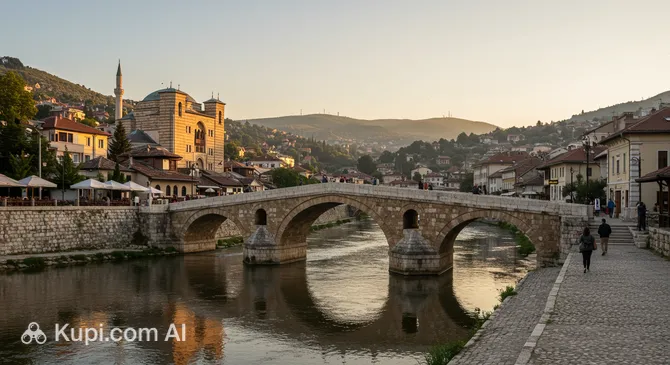
For history enthusiasts, the Latin Bridge is an essential stop. While it is a beautiful Ottoman-era stone bridge in its own right, it is most famous as the site where Archduke Franz Ferdinand was assassinated in 1914, an event that triggered World War I. Standing on the corner near the bridge allows travelers to connect directly with a pivotal moment that changed the course of global history.
Latin Bridge. Illustration.
Source: Kupi.com AI
Traveler photos:
Another significant landmark is the Gazi Husrev-beg Mosque, the most important Islamic structure in the country. Built in the 16th century, it is a masterpiece of Ottoman architecture, featuring a large dome and a serene courtyard with a fountain. It remains a central place of worship and a peaceful sanctuary where visitors can learn about the religious heritage that has shaped the region for centuries.
To conclude your tour with a breathtaking view, make your way up to the Yellow Fortress. Located on a cliff overlooking the city, this fortification offers one of the best panoramic vistas of the valley, especially at sunset. It is a favorite spot for locals to gather, relax, and watch the city lights twinkle on as evening falls over the red-tiled roofs below.
Local Cuisine
The culinary scene in Sarajevo is a delicious reflection of its history, blending hearty Ottoman flavors with Central European influences. Food here is not just sustenance; it is a ritual of hospitality and enjoyment. The city is famous for its grilled meats, savory pastries, and organic ingredients, making it a paradise for food lovers who appreciate authentic, home-cooked tastes.
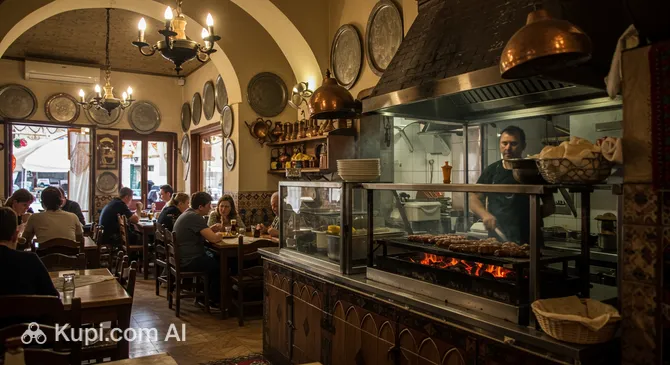
No visit to the city is complete without trying ćevapi, the undisputed king of local fast food. These small, grilled sausages made of minced beef (or a mix of meats) are traditionally served in a warm, fluffy flatbread called somun, accompanied by chopped onions and a dollop of creamy kajmak. For an authentic experience, you can head to Ćevabdžinica Nune, where this signature dish is prepared with expertise passed down through generations.
Another staple of the local diet is pita (pie). While tourists often call all filled pastries "burek," locals strictly reserve the name burek for the meat-filled version. Other varieties include sirnica (cheese), zeljanica (spinach and cheese), and krompiruša (potato). These flaky, spiral-shaped pastries are perfect for a quick breakfast or lunch and are widely available in specialized shops known as buregdžinicas.
Ćevabdžinica Nune. Illustration.
Source: Kupi.com AI
Traveler photos:
For a more leisurely dining experience that showcases the richness of traditional Bosnian cuisine, restaurants like Dveri offer a cozy, rustic atmosphere. Here, you can sample dishes like klepe (minced meat dumplings similar to ravioli) or hearty stews served in clay pots. The emphasis is always on fresh, locally sourced ingredients, which can also be seen in abundance at the bustling Markale Market, a great spot to see the variety of local produce, cheeses, and smoked meats.
When it comes to drinks, Bosnian coffee (bosanska kafa) is a cultural institution. Visually similar to Turkish coffee, it is prepared and served with a distinct ritual in a copper pot called a džezva. It is meant to be sipped slowly, often accompanied by a cube of sugar and a piece of rahat lokum (Turkish delight). For something stronger, the local fruit brandy known as rakija is a popular choice, with plum (šljivovica) being the most traditional variety.
The city's nightlife also offers unique venues to enjoy these beverages. Places like Zlatna Ribica Bar provide an eclectic, antique-filled setting that is perfect for an evening drink. Whether you are grabbing a quick bite in the Old Town or enjoying a long dinner with friends, the gastronomic culture of Sarajevo is warm, inviting, and unforgettable.
Travel Tips
Planning a trip to Sarajevo means preparing for a journey where history, culture, and hospitality meet at every corner. To help you navigate the cobblestone streets and cultural nuances with ease, here are some essential practical tips for your stay in this captivating city.
Clothing and Gear: Comfort is key when exploring Sarajevo. The historic center is paved with uneven cobblestones, so bring sturdy, flat walking shoes and leave the high heels for dinner at a modern venue. Since the weather can change quickly in the valley, dressing in layers is smart. If you plan to visit mosques like the Gazi Husrev-beg Mosque, remember to dress modestly: shoulders and knees should be covered, and women are typically required to cover their hair (scarves are often provided at the entrance).
Transportation: The city center is compact and best explored on foot, allowing you to soak in the atmosphere. For longer distances, the tram network is an iconic and affordable way to get around; tickets can be bought at kiosks or from the driver. Taxis are also very reasonably priced compared to Western Europe, but always ensure the meter is running. Unless you plan to explore the surrounding mountains, a rental car is usually not necessary for the city itself.
Finances: The local currency is the Convertible Mark (BAM or KM), which is pegged to the Euro. While credit cards are accepted in shopping malls, hotels, and upscale restaurants, cash is king in the Old Town’s artisan shops and smaller cafes. ATMs are widespread, but it is wise to carry some small denominations for tips and souvenirs. Tipping is appreciated; rounding up the bill or leaving about 10% is standard practice.
Health and Safety: Sarajevo is generally a very safe city for tourists. Tap water is safe to drink and is often sourced from high-quality mountain springs. Pharmacies, marked by a green cross and known as Apoteka, are easy to find and well-stocked. One seasonal note: if you visit in winter, be aware that the city is prone to smog due to its location in a valley, so sensitive travelers might want to check air quality levels.
Communication: The official languages are Bosnian, Croatian, and Serbian, which are mutually intelligible. English is widely spoken, especially by the younger generation and in tourist areas. Learning a few local phrases goes a long way in showing respect; try saying "Dobar dan" (Good day) and "Hvala" (Thank you). Local SIM cards are cheap and easy to purchase at any newsstand for data connectivity.
Local Etiquette: Coffee drinking here is a serious social ritual, not a quick caffeine fix. Do not rush your waiter or your drink; the custom is to sit, sip slowly, and socialize for hours. When entering someone's home, it is customary to take off your shoes, a tradition that reflects the city's Eastern influences.
What to Avoid: Avoid referring to the local coffee as "Turkish coffee." Locals take great pride in their specific brewing method and call it Bosnian coffee (bosanska kafa). Additionally, while people are open and friendly, it is polite to avoid initiating heavy political discussions regarding the war unless your host brings it up first; focus instead on the city's rich culture and future.
Additional Tip: Many of the best views, such as from the Yellow Fortress, require walking up steep hills. If you are not up for a hike, budget for a quick taxi ride to the top—the sunset view over the valley is worth every penny.
By keeping these practicalities in mind, you will be well-equipped to relax and enjoy the unique rhythm of Sarajevo. The city's warmth lies not just in its summer sun, but in the genuine kindness of its people, ensuring that your visit will be as comfortable as it is memorable.
Entertainment & Nightlife
Sarajevo is a city that knows how to enjoy life, offering a vibrant mix of cultural events, lively nightlife, and modern leisure activities. Whether you are looking for a sophisticated evening at the theater, a fun day out with the family, or a night of music and dancing, the Bosnian capital has something to suit every mood.
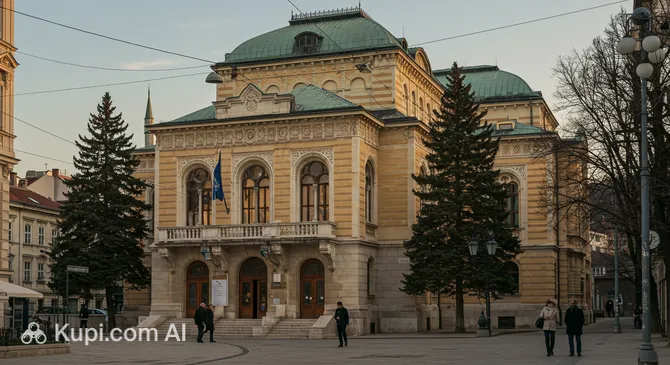
For culture enthusiasts, the Sarajevo National Theatre is the crown jewel of the city's artistic scene. Founded in 1921, this elegant historic building hosts high-quality opera, ballet, and drama performances. It is also the central venue for the world-famous Sarajevo Film Festival, which transforms the city into a bustling hub of cinema and celebrity every summer.
Sarajevo National Theatre. Illustration.
Source: Kupi.com AI
Traveler photos:
When the sun goes down, the city's nightlife comes alive with a variety of options ranging from laid-back pubs to energetic clubs. Music lovers should head to Jazzbina, a popular club known for its excellent live jazz and blues performances in a cozy, underground atmosphere. For a more eclectic experience, The Four Rooms of Mrs. Safija offers a unique blend of a restaurant, wine bar, and lounge, all housed in a beautifully restored historic building with a charming garden. If you prefer a relaxed evening drink, the Aperitivo Bar is a great spot to enjoy expertly crafted cocktails.
Shopping in Sarajevo is a journey through time. In the heart of the Old Town, you can visit Gazi Husrev-beg's Bezistan, a covered bazaar dating back to the Ottoman era that still buzzes with trade today. In stark contrast, the modern Sarajevo City Center offers a contemporary mall experience with international brands, a food court, and entertainment facilities, all wrapped in a sleek architectural design.
Families and thrill-seekers will find plenty of excitement just a short drive from the city center. Sunnyland is a favorite destination located on the slopes of Mount Trebević, featuring an adrenaline-pumping alpine coaster that offers spectacular views over the city. For a more leisurely day, Pionirska Dolina (Pioneer Valley) serves as the city's zoo and recreational park, providing green spaces and attractions for children.
Sunnyland. Illustration.
Source: Kupi.com AI
Traveler photos:
Those looking for a mind-bending experience can visit the Museum of Optical Illusions Sarajevo. This interactive attraction is perfect for all ages, offering a collection of holograms and visual tricks that make for fantastic photo opportunities and a fun break from traditional sightseeing.
Parks & Museums
Sarajevo is a city where history is not just recorded in books but is tangible in its institutions and landscapes. The local museums offer a journey through time, preserving treasures from the prehistoric era to the modern day, while the surrounding hills provide open-air history lessons accompanied by stunning natural scenery.
The most significant cultural institution is the National Museum of Bosnia and Herzegovina. Founded in 1888, this grand complex comprises four pavilions devoted to archaeology, ethnology, and natural sciences, all centered around a beautiful botanical garden. It is home to the famous Sarajevo Haggadah, a 14th-century illuminated manuscript that is considered one of the most valuable Jewish books in the world.
National Museum of Bosnia and Herzegovina. Illustration.
Source: Kupi.com AI
Traveler photos:
For a poignant look at the city's more recent past, the War Childhood Museum offers a unique and deeply moving experience. Winner of the Council of Europe Museum Prize, it tells the stories of children who grew up during the conflict of the 1990s through a collection of personal belongings, from ballet shoes to diaries. It is a tribute to resilience and the human spirit that resonates with visitors of all ages.
Those interested in historical documentation should visit Gallery 11/07/95. This memorial gallery uses powerful photography and multimedia exhibits to preserve the memory of the Srebrenica tragedy. Similarly, the Museum of Crimes Against Humanity and Genocide provides extensive historical context through archival materials and personal testimonies, serving as an important educational center.
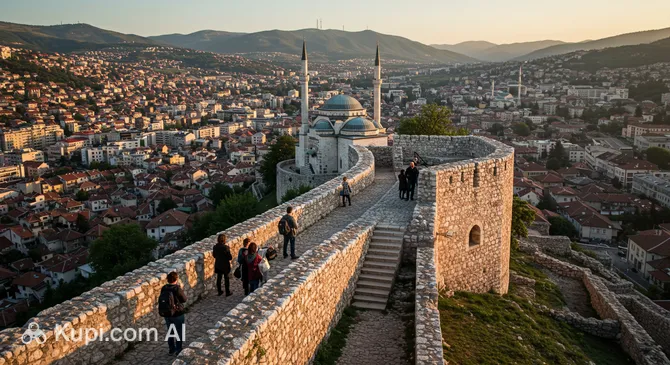
To combine history with outdoor exploration, a trip to the White Fortress (Bijela Tabija) is highly recommended. Dating back to the medieval and Ottoman periods, this fortification stands atop a hill overlooking the city. It is an excellent spot for a peaceful walk, offering one of the most breathtaking panoramic views of the Sarajevo valley and the Miljacka River canyon below.
White Fortress. Illustration.
Source: Kupi.com AI
Traveler photos:
Nature lovers can also find tranquility at the city's various green spaces. While the museums capture the soul of the city, the surrounding parks and hills offer a breath of fresh air, making Sarajevo a balanced destination for both cultural immersion and natural relaxation.
Getting Around
Public transport in Sarajevo is a practical and authentic way to experience the city, offering a mix of historical charm and functional connectivity. The network is primarily composed of trams, trolleybuses, buses, and minibuses. Trams are the backbone of the system for most tourists, running east to west along the main boulevard and connecting the historic Baščaršija district with the modern Ilidža area. Trolleybuses generally serve the residential neighborhoods across the river, while buses and smaller minibuses are essential for reaching the steeper, hilly suburbs that ring the valley.
For visitors, the most scenic and popular route is the Trebević Cable Car. Reopened in 2018, this modern gondola system transports passengers from the Old Town directly to the slopes of Mount Trebević in under ten minutes. It is not only a mode of transport but a major attraction, offering spectacular panoramic views of the city skyline and the surrounding mountains. It operates daily, though hours may vary slightly depending on the season.
Paying for transport is straightforward, though the system remains somewhat traditional. Tickets can be purchased in two ways: at newsstand kiosks (look for signs saying Tisak) or directly from the driver. Buying a ticket at a kiosk is slightly cheaper, typically costing around 1.40 KM, whereas purchasing from the driver costs about 1.80 KM. Once onboard, you must validate your ticket immediately by inserting it into the punch machines located near the doors. Inspectors frequent the lines, and failure to validate can result in a fine.
The operating hours for most public transport lines generally run from the early morning, around 6:00 AM, until approximately 11:30 PM. While the tram network is frequent and reliable during the day, services can be limited late at night. For tourists planning to use public transport extensively, day passes are sometimes available, but single-ride tickets remain the most common and convenient option for short stays.
If you prefer more flexibility, taxis are a widely available and affordable alternative. Official taxis are clearly marked and operate on a meter; it is best to use reputable companies like Sarajevo Taxi, Crveni Taxi (Red Taxi), or Žuti Taxi (Yellow Taxi). Ride-hailing apps are not as dominant here as in other European capitals, so hailing a cab from a stand or calling one is standard practice. Car-sharing services are not widely established, and while bike rentals exist, the city's hilly terrain and busy roads make walking the preferred option for exploring the central flat areas.
Accommodation
Where to Stay:
Sarajevo offers a diverse array of accommodation options that cater to every type of traveler and budget. The city's hospitality sector has grown significantly, providing everything from lively backpacker hostels and cozy family-run guesthouses to sophisticated boutique hotels and modern luxury resorts. Whether you prefer the charm of historic architecture or the comfort of contemporary amenities, you will find a suitable place to call home during your visit.
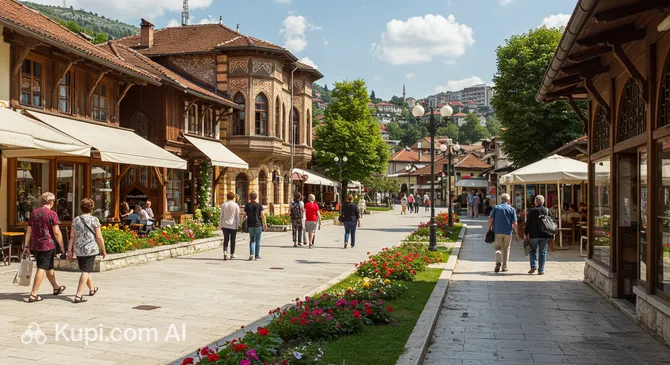
The most popular area for tourists is undoubtedly the historic Old Town, centered around Baščaršija. Staying here immerses you in the city's unique atmosphere, placing you within walking distance of major sights, traditional restaurants, and artisan shops. Waking up to the sound of the call to prayer and the smell of fresh coffee is a quintessential Sarajevo experience. Accommodation in this area often occupies renovated Ottoman-era houses, offering a blend of authenticity and comfort.
Baščaršija. Illustration.
Source: Kupi.com AI
Traveler photos:
For those who prefer a more modern setting, the Marijin Dvor neighborhood and the area surrounding the Sarajevo City Center are excellent choices. This district serves as the city's business and commercial hub, featuring international hotel chains, spacious apartments, and easy access to shopping malls and transport links. It is an ideal location for business travelers or those who appreciate being close to modern conveniences while still being just a short tram ride or walk from the historic core.
When planning your trip, it is advisable to book your accommodation in advance, particularly if you are visiting during the peak summer months or during major events like the Sarajevo Film Festival in August. During these times, the city buzzes with activity, and the best rooms fill up quickly. However, compared to many Western European capitals, prices in Sarajevo remain very reasonable, allowing travelers to often enjoy a higher standard of lodging for a lower cost.
The price range varies widely, with budget-friendly hostels offering beds for very low rates, while mid-range hotels provide excellent value with breakfast often included. Luxury options are available at competitive prices, offering top-tier services and amenities. Booking can easily be done through major online platforms, though many smaller, family-owned establishments also welcome direct inquiries and are known for their warm, personal service.
Nearby Cities
For those looking to explore the surroundings, Sarajevo serves as an excellent base for day trips to several interesting nearby locations. The region offers a mix of historical towns, natural retreats, and cultural landmarks that are easily accessible by road or rail.
One of the most popular destinations is Mostar, famous worldwide for its iconic Stari Most (Old Bridge), a UNESCO World Heritage site that arches gracefully over the emerald Neretva River. Visitors are drawn to its charming cobblestone streets, traditional bazaars, and the unique blend of Mediterranean and Ottoman architecture. Closer to the capital lies Ilidža, a green oasis known for its thermal springs and the beautiful Vrelo Bosne nature park, which offers a peaceful escape with its tree-lined avenues and horse-drawn carriages.
City
Population
Distance
Ilidza
66 730
9 km
Hadzici
23 891
17 km
Breza
14 564
22 km
Kiseljak
20 722
29 km
Olovo
10 175
33 km
These nearby destinations offer a glimpse into the diverse culture and landscapes of the region, allowing travelers to experience more of Bosnia and Herzegovina's rich heritage within a short distance of the capital.
Shopping & Souvenirs
Shopping in Sarajevo is a delightful experience that perfectly mirrors the city's east-meets-west character. Visitors can travel through time, moving from the ancient, narrow streets of the Ottoman bazaar filled with artisan crafts to modern, glass-fronted shopping centers hosting international fashion brands. Whether you are looking for unique handmade souvenirs or the latest trends, the city offers a diverse retail landscape that caters to all tastes and budgets.
The heart of traditional shopping is undoubtedly Baščaršija in the Old Town. Here, the streets are lined with small workshops where craftsmen have been practicing their trades for centuries. One of the most famous spots is Kazandžiluk (Coppersmith Street), where you can buy intricately designed copper coffee sets, plates, and jewelry directly from the artisans who make them. Just a short walk away, Ferhadija Street serves as the main pedestrian artery, seamlessly connecting the historic district with the Austro-Hungarian center, featuring a mix of high-street clothing stores and local boutiques.
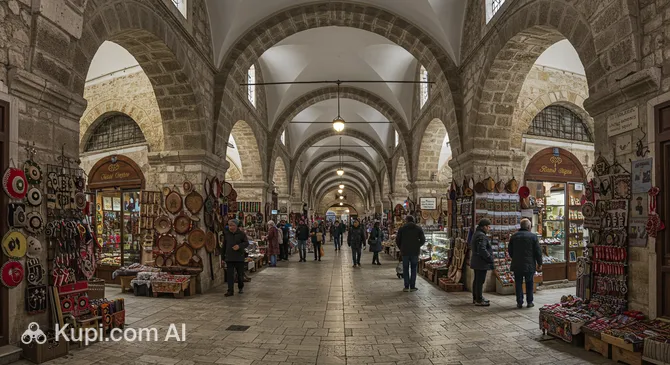
For a unique historical shopping experience, make sure to visit Gazi Husrev-beg's Bezistan. Built in the mid-16th century, this covered bazaar resembles the Grand Bazaar in Istanbul, though on a smaller, more intimate scale. Under its vaulted stone roof, you will find a variety of stalls selling textiles, handbags, sunglasses, and souvenirs, all within a cool, atmospheric setting that provides a welcome escape from the summer heat or winter chill.
Gazi Husrev-beg's Bezistan. Illustration.
Source: Kupi.com AI
Traveler photos:
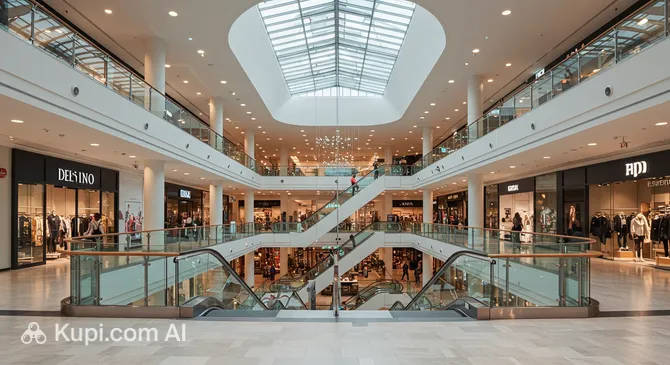
If you prefer a contemporary shopping environment, the city boasts several modern malls. The most prominent is the Sarajevo City Center (SCC), located in the Marijin Dvor district. This architectural landmark houses a vast array of international brands, a large supermarket, and a food court with panoramic views. It is a popular destination for locals and tourists alike, offering everything from fashion and electronics to entertainment facilities.
Sarajevo City Center. Illustration.
Source: Kupi.com AI
Traveler photos:
To get a taste of local daily life, a visit to the city's markets is essential. The Markale Market is the most well-known green market in the city center. Here, farmers from the surrounding villages sell fresh seasonal fruits, vegetables, homemade cheeses, and smoked meats. It is a vibrant place full of colors and smells, perfect for picking up authentic local ingredients or simply soaking in the bustling atmosphere.
When it comes to souvenirs, Sarajevo offers items that are deeply rooted in its culture. The most classic gift is a complete Bosnian coffee set, including a copper pot (džezva) and cups (fildžani). Other popular items include handmade leather slippers, intricate silver jewelry, and traditional woven carpets or kilims. These goods are not just mementos but functional pieces of art that reflect the country's rich heritage.
Most shops in the city center are open from 9:00 AM to 9:00 PM on weekdays, with shorter hours on Sundays. Large shopping malls typically remain open every day until 10:00 PM. Regarding payment, major credit cards are widely accepted in malls, supermarkets, and larger stores. However, in the Old Town's small artisan shops and at open markets like Markale, cash is essential, so it is wise to carry some Convertible Marks (KM) with you.
Foreign tourists may be eligible for a tax refund (VAT or PDV) on purchases exceeding a certain amount, typically around 100 BAM, made in a single store. Look for the "Tax Free" signage in shop windows and ask the staff for the necessary forms at the checkout. You will need to present these forms along with the goods and receipts to customs officials upon leaving the country to claim your refund.