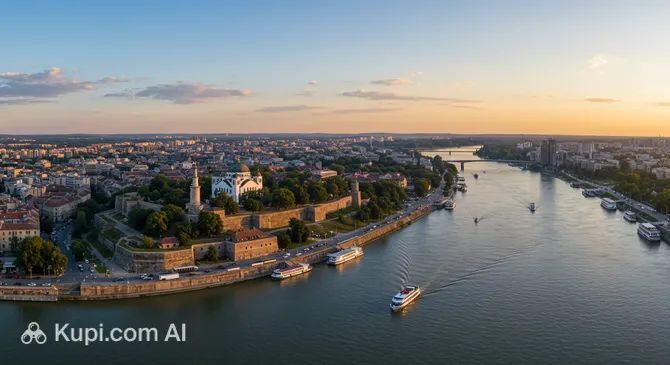
Belgrade, the dynamic capital of Serbia, is a city renowned for its vibrant energy and resilience. Situated at the strategic confluence of the Sava and Danube rivers, it serves as a fascinating crossroads between East and West. With a population of over 1.3 million, it is the cultural and economic heart of the nation, offering a unique atmosphere where ancient heritage meets modern urban life.
Belgrade. Illustration.
Source: Kupi.com AI
Known locally as the "White City," this metropolis is one of the oldest continuously inhabited places in Europe. Visitors can delve into the deep history of Belgrade by exploring its diverse architecture, which ranges from Ottoman influences to Austro-Hungarian masterpieces and bold modernist structures. The city is built on several hills, providing stunning panoramic views and a picturesque setting that captivates travelers year-round.
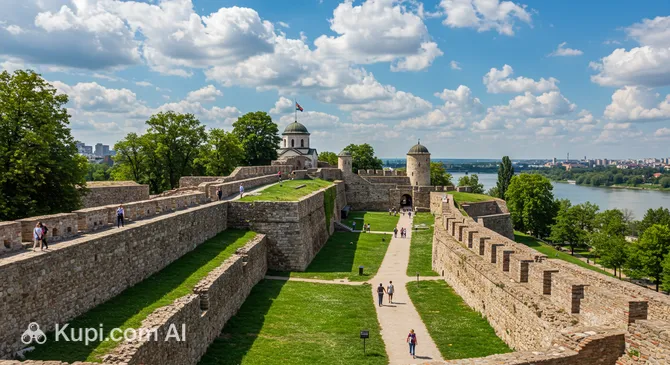
Among its most significant landmarks is the majestic Kalemegdan Fortress, a sprawling complex that offers both historical intrigue and a lush park for leisure. The skyline is also dominated by the Temple of Saint Sava, one of the largest Orthodox churches in the world, famous for its breathtaking dome and mosaics. For those seeking local flavor, the bohemian quarter of Skadarlija invites guests to wander its cobblestone streets and enjoy traditional music in authentic kafanas.
Whether you are drawn by its legendary nightlife, its rich cultural tapestry, or the hospitality of its people, Belgrade promises an unforgettable experience. It is a city that truly has something for every traveler, making it a must-visit destination in the Balkans.
Weather Overview
Belgrade experiences a continental climate characterized by four distinct seasons, offering a varied atmosphere depending on when you visit. Summers are typically warm to hot, with August often reaching average maximum temperatures of 31.0°C. In contrast, winters are generally cold, with January seeing temperatures dip to an average minimum of -0.9°C, requiring warm layers for exploration.
For those planning a trip, checking the weather in Belgrade is recommended to ensure you pack correctly for the conditions. Spring and autumn are transitional periods that offer milder temperatures, though travelers should be prepared for showers; May is historically one of the wetter months with approximately 13 days of rain. Conversely, early autumn can be quite pleasant, with September maintaining a comfortable average of 20.0°C.
Expect warm summers with occasional rain and cold winters. While precipitation occurs throughout the year, the late summer and early autumn months like August and October tend to have fewer wet days, making them excellent times for outdoor sightseeing.
Average monthly temperature
Average monthly precipitation
Interesting Facts
Beyond the main attractions, Belgrade holds many fascinating secrets and historical curiosities that often escape the casual observer. From hidden subterranean worlds to unique museum exhibits, the city's past is as layered as its architecture.
Beneath the bustling streets lies a mysterious network of tunnels, dungeons, and bunkers known as "Underground Belgrade." Many of these passageways date back to Roman times or the Austrian period and are intricately connected to the Belgrade Fortress, serving as silent witnesses to the city's strategic importance throughout history.
The Nikola Tesla Museum is unique not only for its scientific exhibits but also as a final resting place. It is one of the rare institutions in the world to house the cremated remains of its honoree, with Tesla's ashes preserved in a spherical, gold-plated urn within the museum.
Belgrade's most iconic statue, "The Victor" (Pobednik) located within the Kalemegdan Fortress, has a humorous backstory. It was originally commissioned for a central city square, but public outcry over the nude male figure led to its relocation to the fortress walls, facing away from the city towards the river.
The city boasts a coffee house culture that predates many Western European capitals. Historical records suggest that the very first kafana (tavern) in Europe was opened in the Dorćol neighborhood of Belgrade in 1522, establishing a social tradition that remains vibrant to this day.
Belgrade Fortress. Illustration.
Source: Kupi.com AI
Traveler photos:
How to Get There
Reaching the Serbian capital is relatively straightforward, with several options available depending on your starting point. For those planning their journey, you can find more about how to get to Belgrade in our dedicated guide. The most convenient method for international visitors is generally arriving by air directly into the city's main hub.
Belgrade Nikola Tesla Airport (BEG) is the primary gateway, situated just 12 km from the city center. As a large international airport, it handles the vast majority of air traffic into the country and offers excellent connectivity. The trip from the terminal to downtown Belgrade is quick, typically taking around 40 minutes by taxi or shuttle bus. Travelers can easily find car rental services and public transport connections upon arrival.
If you are traveling around the region or looking for alternative flight options, you might consider Timisoara Traian Vuia International Airport (TSR) in the city of Timisoara. Although it is located about 130 km from Belgrade, it serves as a significant regional hub. A transfer from there to the Serbian capital would take approximately 3 hours and 35 minutes by road.
For clarity, here is a summary of the main airports:
Apart from air travel, Belgrade is a major hub for rail and bus networks in the Balkans. Regular bus services connect the city with neighboring capitals and towns, while trains offer a scenic, though sometimes slower, alternative for arriving from nearby countries.
Main Attractions
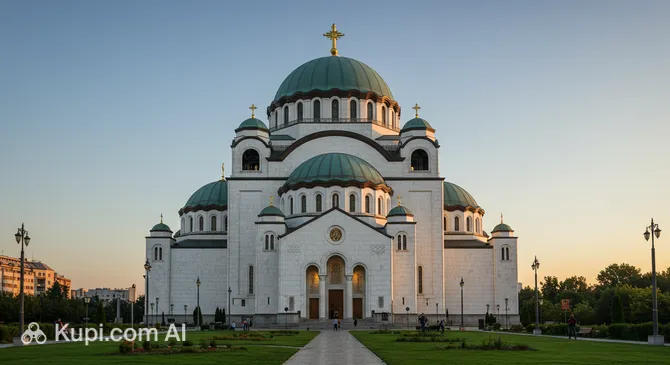
Belgrade is a city where history breathes through its architecture and landmarks. One of the most prominent sights is the Church of Saint Sava, a monumental structure that dominates the city's skyline. As one of the largest Orthodox churches in the world, it is a masterpiece of Serbo-Byzantine style, featuring a magnificent central dome and an interior covered in breathtaking gold mosaics.
Church of Saint Sava. Illustration.
Source: Kupi.com AI
Traveler photos:
For those interested in the artistic and historical heritage of the region, the National Museum of Serbia is an essential stop. Located centrally on Republic Square, this institution houses an extensive collection that spans from prehistoric archaeological treasures to modern Serbian art. It offers visitors a deep dive into the cultural evolution of the Balkans through its carefully curated exhibits.
A short walk from the museum leads to the Prince Mihailo Monument, arguably the most famous meeting point in the city. This bronze equestrian statue commemorates the prince who liberated Serbian cities from Ottoman rule. It stands at the entrance to the main pedestrian street, surrounded by elegant 19th-century buildings and a lively atmosphere.
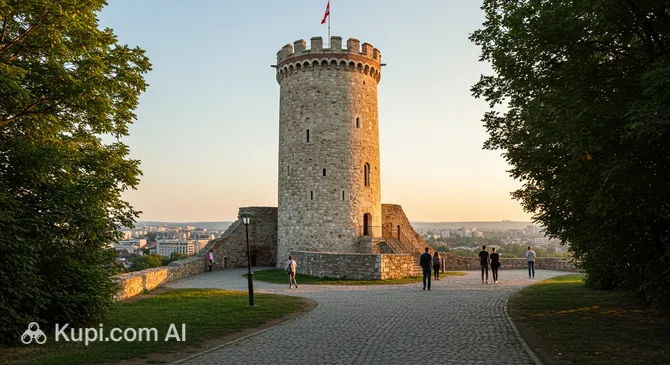
Gardoš Tower. Illustration.
Source: Kupi.com AI
Traveler photos:
To experience a completely different vibe, travelers should head to the Zemun district to visit the Gardoš Tower, also known as the Millennium Tower. Built in 1896, this distinctive red-brick tower sits atop a hill, offering sweeping panoramic views of the Danube River and the red-tiled roofs of the old town. It is a picturesque spot that captures the romantic spirit of Old Zemun.
Finally, modern history enthusiasts will find the Museum of Yugoslavia to be a fascinating destination. The complex includes the House of Flowers, which serves as the mausoleum for Josip Broz Tito. The museum provides a compelling insight into the socialist era, displaying gifts received by the former president and artifacts that tell the story of the former country.
Local Cuisine
Belgrade's culinary scene is a mouthwatering reflection of its history, blending Ottoman spices with Austro-Hungarian pastry traditions and hearty Balkan flavors. The local cuisine is unapologetically meat-centric, generous in portion, and best enjoyed at a leisurely pace. Food here is not just sustenance; it is a vital part of the social fabric, celebrated in bustling markets and smoky taverns.
A visit to the city is incomplete without tasting Ćevapi, small grilled rolls of minced meat often served in warm flatbread called lepinja with chopped onions and kajmak (a rich, creamy dairy product). Another heavy hitter is the Pljeskavica, a savory Serbian burger made from a mix of meats. For a truly indulgent meal, try the Karađorđeva šnicla, a rolled veal or pork steak stuffed with kajmak, breaded, and fried, often playfully referred to as "Karađorđe's Star."
Durmitor. Illustration.
Source: Kupi.com AI
Traveler photos:
For breakfast, locals typically flock to the ubiquitous bakeries known as pekaras. The staple choice here is Burek, a flaky phyllo pastry filled with cheese, minced meat, or spinach. It is traditionally paired with a cup of drinkable yogurt, providing a satisfying start to the day that fuels the city's energetic rhythm.
When it comes to drinks, Rakija is the undisputed national spirit. This potent fruit brandy, most commonly made from plums (Šljivovica), is sipped slowly and often serves as a welcome gesture. The city also boasts a deeply rooted coffee culture, where domestic coffee—strong, black, and similar to Turkish coffee—is enjoyed for hours in cafes across the city.
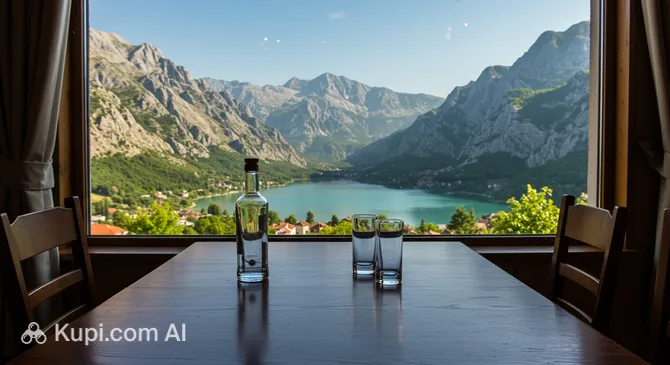
Dining in Belgrade often revolves around the kafana, a traditional tavern that acts as a community hub. For an authentic experience of classic Serbian hospitality and dishes like veal prepared under a "sač" (iron bell), travelers can visit Durmitor, a restaurant highly regarded by locals for its consistent quality. Meanwhile, the city's modern gastronomic side is flourishing with trendy spots like Dogma Brewery & Tap Room, which showcases the exciting rise of the local craft beer movement.
Travel Tips
Belgrade is a welcoming and energetic city, but like any bustling capital, it has its own unique rhythm and local customs. To help you navigate the streets with confidence and enjoy a smooth trip, here are some essential practical tips to keep in mind.
Clothing and Gear: The climate varies significantly by season, so pack light, breathable clothes for the hot summers and warm, layered attire for the cold winters. Most importantly, bring comfortable walking shoes; the city is built on hills, and you will likely do a lot of walking on cobblestones and uneven sidewalks. If you plan to visit religious sites like the Temple of Saint Sava, remember to dress modestly with shoulders and knees covered.
Transportation: Public transport consists of buses, trams, and trolleybuses. Payment is typically handled via SMS (if you have a local SIM) or a dedicated transport app, as buying tickets from drivers is often not possible. For private transport, ride-hailing apps like CarGo or Yandex Go are often more reliable and transparent than hailing a taxi on the street. If you do take a regular taxi, ensure the meter is running to avoid overcharging.
Finances: The local currency is the Serbian Dinar (RSD). While credit cards are widely accepted in malls, hotels, and most restaurants, you will definitely need cash for kiosks, open-air markets, and small bakeries. Money exchange offices, known as Menjačnica, are everywhere and generally offer better rates than banks. Tipping is not mandatory but appreciated; leaving around 10% for good service is the norm.
Health and Safety: Belgrade is a safe city for tourists, even at night. Pharmacies (Apoteka) are plentiful, and there is usually at least one open 24/7 in every neighborhood. Tap water in Belgrade is safe to drink, so you can refill your bottle, though bottled water is also inexpensive and widely available.
Communication: The official language is Serbian, which uses both Cyrillic and Latin alphabets. However, English is widely spoken, especially among younger people and in the service industry. To stay connected, you can easily buy a prepaid SIM card (Yettel, MTS, or A1) at most newsstands (kiosks) for a very reasonable price.
Local Etiquette: Serbians are known for their hospitality and friendliness. A firm handshake is the standard greeting. Be prepared that smoking is still permitted inside many cafes, restaurants, and clubs, which might be a surprise if you are used to strict smoke-free environments.
What to Avoid: Avoid bringing up sensitive political topics or recent history regarding regional conflicts; while locals are open, these subjects can be complex and emotional. Additionally, avoid exchanging money on the street; always use official exchange offices to ensure a fair deal.
Shopping Convenience: Unlike in many Western European countries, most shops, supermarkets, and shopping malls in Belgrade remain open on Sundays. Furthermore, the city has a vibrant "bakery culture," with many pekaras (bakeries) and fast-food spots in the center open 24/7, making it easy to grab a bite at any hour.
With these practical insights, you are well-prepared to dive into the local culture and explore the "White City" like a pro. Embrace the lively atmosphere, enjoy the delicious food, and let Belgrade's charm surprise you at every corner.
Entertainment & Nightlife
Belgrade has earned a legendary reputation as the nightlife capital of the Balkans, a city that truly never sleeps. The energy here is contagious, shifting from relaxed riverside sunsets to high-energy parties that last until sunrise. The defining feature of the local nightlife is the phenomenon of splavovi—floating river clubs anchored along the Sava and Danube rivers. In the summer, these rafts become the epicenter of the action, hosting everything from folk music nights to world-renowned electronic DJs.
For those seeking an urban and artistic vibe, the Savamala district is a must-visit. Once an industrial area, it has transformed into a creative hub filled with trendy bars and cultural centers. A standout venue here is KC Grad, a cultural center located in a former warehouse that hosts exhibitions, concerts, and lively club nights. It attracts a diverse, alternative crowd and is perfect for travelers looking for something beyond the mainstream.
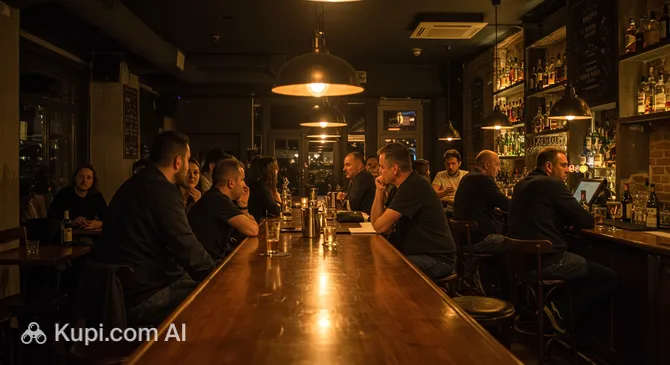
If you prefer a sophisticated atmosphere and expertly crafted drinks, Riddle Bar is a hidden gem for cocktail enthusiasts. Tucked away in the city center, it offers a cozy and intimate setting where bartenders create custom drinks based on your preferences. For a mix of arts, music, and evening entertainment, Academy 28 offers a varied program that often includes jazz nights and theater performances, making it a versatile spot for a night out.
Riddle Bar. Illustration.
Source: Kupi.com AI
Traveler photos:
Practical Advice for Night owls:
Belgrade's nightlife starts late. Bars typically get busy around 10:00 PM, while clubs often don't reach their peak until well after midnight. Dress codes vary significantly; while some high-end splavovi require chic attire, places like Savamala are generally casual and relaxed. Reservations are highly recommended for the most popular clubs, especially on weekends (Friday and Saturday). Prices for drinks and cover charges are generally lower than in Western European capitals, but "booths" in exclusive clubs may require a minimum spend.
Safety and Getting Around:
The city is generally very safe for night walks, even in the early hours. However, it is always wise to stay in well-lit, populated areas. Public transport runs on a limited night schedule, so taxis are the best way to get home. It is strongly advised to use ride-hailing apps or call a verified taxi company rather than hailing a cab on the street to ensure a fair price.
Daytime Entertainment:
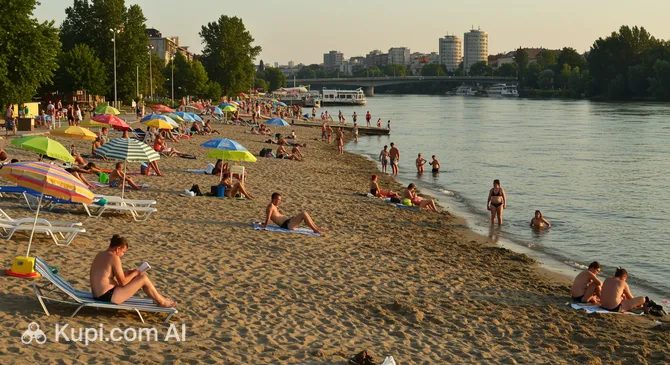
After a long night out, you might want to spend the day relaxing. In the summer, locals flock to Lido Beach on the Great War Island to sunbathe and swim in the Danube. For families or those who enjoy nature, a visit to the Belgrade Zoo, located within the Kalemegdan Park, offers a pleasant afternoon stroll. Additionally, the city offers various leisure options like the Belgrade Amusement Park for some lighthearted fun.
Lido Beach. Illustration.
Source: Kupi.com AI
Traveler photos:
Parks & Museums
Parks & Museums:
Belgrade offers a refreshing mix of sprawling green spaces and diverse museums that cater to every interest, from contemporary art to scientific innovation. Whether you want to escape the urban bustle or dive deeper into the region's cultural heritage, the city provides ample opportunities for exploration beyond its main historic landmarks.
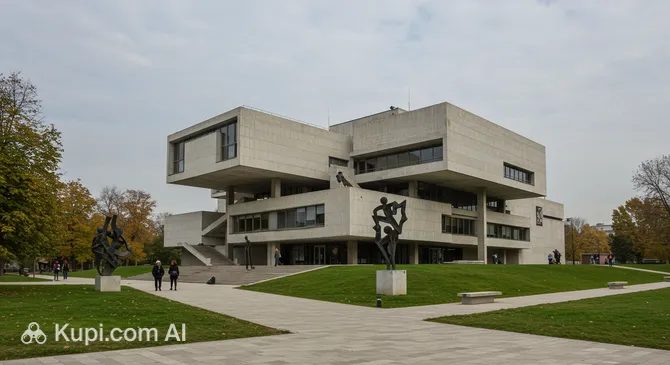
One of the city's architectural and cultural gems is the Museum of Contemporary Art, located in New Belgrade near the confluence of the Sava and Danube rivers. The building itself is a modernist masterpiece, renowned for its distinctive geometric shape. Inside, visitors can explore a vast collection of Yugoslav and Serbian art from the 20th century to the present. The surrounding park is also a popular spot for a relaxing walk, offering stunning views of the fortress across the river.
Museum of Contemporary Art. Illustration.
Source: Kupi.com AI
Traveler photos:
For those fascinated by industrial heritage, the Museum of Science and Technology is a must-visit destination. It houses an impressive collection of vintage cars, steam engines, and interactive exhibits that are particularly engaging for younger visitors. Another entertaining stop is the Museum of Illusions, where mind-bending exhibits and optical illusions offer a fun and interactive break from traditional sightseeing.
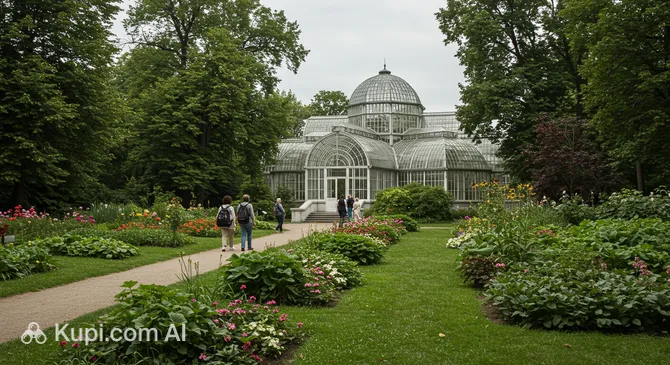
When you need a breath of fresh air, the city's parks serve as welcoming retreats. The Jevremovac Botanical Garden is a lush oasis situated right in the heart of the city. Established in the 19th century, it features a beautiful Victorian-style greenhouse, a rich arboretum, and a serene Japanese garden. It is the perfect place to unwind and enjoy nature without leaving the downtown area.
Jevremovac Botanical Garden. Illustration.
Source: Kupi.com AI
Traveler photos:
While the massive Kalemegdan Park is the most famous green space, Karađorđe's Park offers a quieter and more historical atmosphere. Located near the Temple of Saint Sava, it is one of the oldest parks in Belgrade and contains several monuments dedicated to the heroes of the Serbian uprisings, making it a peaceful spot for a reflective stroll.
Getting Around
Navigating Belgrade is an adventure in itself, with a comprehensive public transport network that connects every corner of the city. While the city does not yet have a full-scale underground metro system, it relies on a dense and efficient web of buses, trams, and trolleybuses. These vehicles are the lifeline of the capital, offering frequent service and a great way to see the local architecture as you travel between neighborhoods.
A unique component of the network is the BG Voz, an urban rail system that functions somewhat like a metro. It utilizes underground tunnels beneath the city center, providing a fast and traffic-free connection between the New Belgrade district and the old town. For tourists, this is often the quickest way to cross the river during rush hour, bypassing the busy bridges.
The payment system, known as Beograd Plus, has been modernized to make travel easier for visitors. The most convenient method for tourists is payment via SMS. You simply send a specific text code to a short number (currently 9011) to purchase a digital ticket, which is valid for 90 minutes, one day, or even a week. Alternatively, you can download the official city transport app to manage tickets or buy paper tickets at various newsstands and kiosks scattered throughout the city.
Ticket prices are very affordable. A standard 90-minute ticket costs approximately 50 RSD (less than 0.50 EUR), making it one of the cheapest transport systems in Europe. If you choose the SMS method, your phone serves as your ticket; simply show the confirmation message to the ticket inspector if asked. Remember to keep your phone charged, as a dead battery could mean traveling without a valid ticket.
Public transport generally operates from 4:00 AM until midnight. After midnight, a network of night buses takes over. It is important to note that night lines may have different intervals and might require a separate ticket or payment method compared to the daytime services, so it is often easier to rely on other forms of transport during the late hours.
For those who prefer a more direct route, taxis and ride-hailing apps are widely available and popular. While Uber does not operate here, local alternatives like CarGo and Yandex Go offer reliable service with transparent pricing, allowing you to book a ride without worrying about language barriers. If you hail a regular taxi on the street, always ensure the driver turns on the meter to avoid overcharging.
Cycling is also becoming an increasingly popular option, particularly in the flat terrain of New Belgrade and along the river promenades. During the warmer months, you can rent bikes at popular recreational spots like Ada Ciganlija, offering a leisurely and scenic alternative to motorized transport.
Accommodation
Where to Stay:
Finding the perfect place to stay in Belgrade is relatively easy, thanks to a diverse range of accommodation options that cater to every budget and travel style. The city offers everything from luxury international hotel chains and charming boutique hotels to budget-friendly hostels and a vast selection of private apartments. Short-term apartment rentals (often referred to locally as "stan na dan") are particularly popular and widely available, offering a "home away from home" experience in residential neighborhoods.
For first-time visitors, the most convenient area to stay is Stari Grad (Old Town). This central district places you within walking distance of major attractions like Republic Square, Knez Mihailova Street, and the fortress. If you prefer a more laid-back, bohemian atmosphere with plenty of cafes and restaurants, the Vračar neighborhood near the Temple of Saint Sava is an excellent choice. Alternatively, business travelers often prefer New Belgrade (Novi Beograd), which features wide boulevards, modern infrastructure, and proximity to major conference venues.
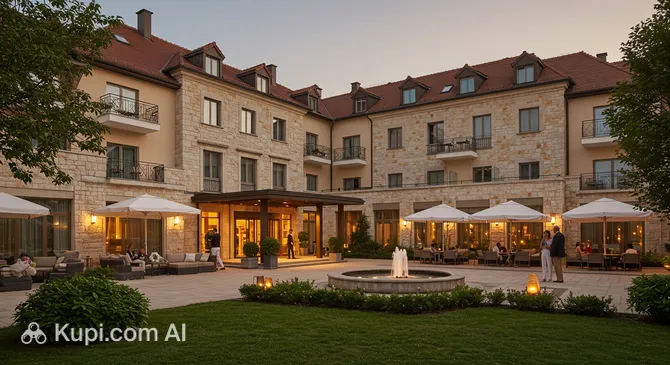
Among the notable accommodation establishments in the city, Hotel Serbia is a well-known option that has served visitors for years. Located in a part of the city that offers easy access to various districts, it represents the classic style of hospitality found in the region. Whether you choose a large hotel like this or a smaller, intimate guesthouse, you can generally expect warm service and reasonable rates compared to other European capitals.
Hotel Serbia. Illustration.
Source: Kupi.com AI
Traveler photos:
Booking Tips and Prices:
Accommodation prices in Belgrade are generally very competitive. Budget travelers can find hostels or small apartments for as little as 20–30 EUR per night, while mid-range hotels typically cost between 50 and 90 EUR. Luxury stays are also available at a fraction of the cost found in Western Europe. While it is usually possible to find a room last minute, it is highly recommended to book in advance if you plan to visit during the New Year celebrations or major summer festivals, as the best spots fill up quickly. Most bookings can be easily made via major online platforms, though contacting smaller apartments directly can sometimes yield a better deal.
Nearby Cities
For those looking to explore the surroundings, Belgrade serves as an excellent base for day trips to several interesting nearby locations:
City
Population
Distance
Borca
46 086
7 km
Zemun
161 596
9 km
Surcin
43 819
13 km
Padinska Skela
9 263
15 km
Pancevo
76 203
16 km
One of the most historically significant destinations for a day trip is Smederevo. Located on the banks of the Danube, it was the last capital of medieval Serbia before falling to the Ottoman Empire. The city is dominated by the colossal Smederevo Fortress, one of the largest plain fortresses in Europe. Visitors can walk along the massive crenulated walls and explore the remains of the court, imagining the grandeur of the 15th century.
Although often considered part of the greater Belgrade area today, Zemun maintains the distinct character of a separate town with a rich Austro-Hungarian heritage. Its narrow, cobblestone streets and baroque architecture offer a complete contrast to the downtown area. A stroll along the Danube Quay (Kej) here is particularly relaxing, lined with restaurants and swans drifting by the river.
Another interesting option is Pancevo, situated at the confluence of the Tamiš and Danube rivers. Known for its industrial history and cultural institutions, it offers a glimpse into the life of the Banat region. The city hosts the oldest brewery in the Balkans, founded in 1722, and its riverside promenades provide a peaceful escape from the busy capital.
These nearby destinations offer a glimpse into the diverse culture and landscapes of the region.
Shopping & Souvenirs
Shopping:
Belgrade has evolved into a vibrant shopping destination in the Balkans, offering a delightful mix of modern luxury, international high-street brands, and charming local boutiques. Whether you are looking for the latest fashion trends, unique vintage finds, or authentic Serbian products, the city provides a diverse retail landscape that caters to every taste and budget.
The epicenter of shopping in the city is the famous Knez Mihailova Street. This pedestrian boulevard is not only a historical landmark but also a bustling open-air mall lined with flagship stores of major international brands, bookstores, and souvenir shops. Walking down this street is an essential Belgrade experience, allowing you to shop while admiring the stunning 19th-century architecture. Branching off from the main strip, the smaller side streets of the Dorćol district harbor independent designers and concept stores perfect for finding one-of-a-kind items.
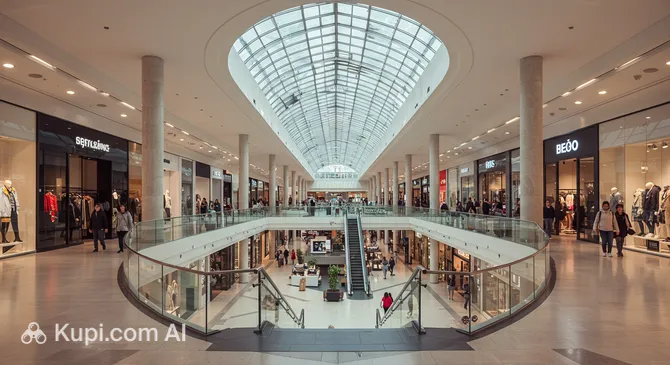
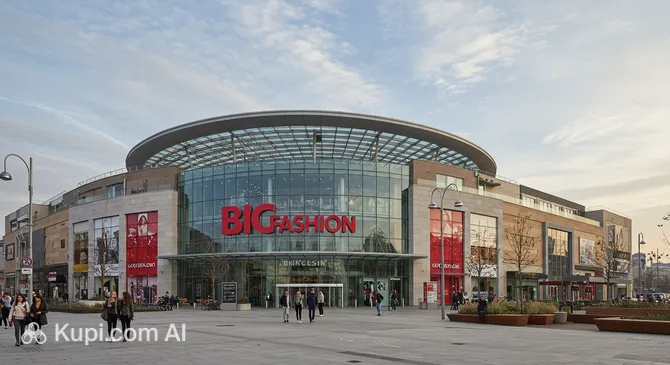
For a comprehensive shopping experience under one roof, the city boasts several large, modern shopping centers. One of the newest and most popular additions is the Beo Shopping Mall, located in the Zvezdara municipality. It features a spacious design, a wide array of fashion retailers, and a cinema complex. Another excellent destination is BIG FASHION Belgrade, situated in the old part of the city near the Danube, offering an open-air atmosphere on its upper levels and a vast selection of shops.
Beo Shopping Mall. Illustration.
Source: Kupi.com AI
Traveler photos:
To truly understand the local lifestyle, a visit to one of Belgrade's green markets (pijaca) is mandatory. Markets like Kalenić or Zeleni Venac are colorful, energetic hubs where locals buy fresh produce, artisanal cheeses, and cured meats. Beyond food, these markets often have sections dedicated to household goods and flea market finds, where patient browsers can uncover interesting trinkets and antiques from the Yugoslav era.
When it comes to souvenirs, travelers should look for items that reflect Serbian tradition. A bottle of high-quality Rakija (fruit brandy) or a jar of homemade Ajvar (red pepper spread) make for delicious gifts. For non-edible keepsakes, look for Licider hearts (intricately decorated gingerbread cakes), hand-woven Pirot kilims (rugs), or knitwear made from local wool. The souvenir stalls around Kalemegdan Fortress are a convenient place to browse for these traditional crafts.
BIG FASHION Belgrade. Illustration.
Source: Kupi.com AI
Traveler photos:
Opening hours in Belgrade are very tourist-friendly. Unlike in many other European cities, most shops and large shopping malls are open on Sundays. Malls typically operate from 10:00 AM to 10:00 PM every day of the week. Smaller boutiques in the city center usually close around 8:00 PM or 9:00 PM and may have shorter hours on Sundays.
Payment methods are modern and convenient. Credit and debit cards are widely accepted in malls, supermarkets, and most shops in the city center. However, if you plan to visit the open-air markets or buy small items from street kiosks, it is essential to carry some cash in Serbian Dinars (RSD).
Tourists residing outside of Serbia may be eligible for a VAT refund (tax-free shopping) on purchases exceeding a certain amount (typically around 6,000 RSD) in a single receipt. Look for the "Tax Free" signage in store windows and ask the staff for the necessary refund forms upon purchase to present at customs when leaving the country.