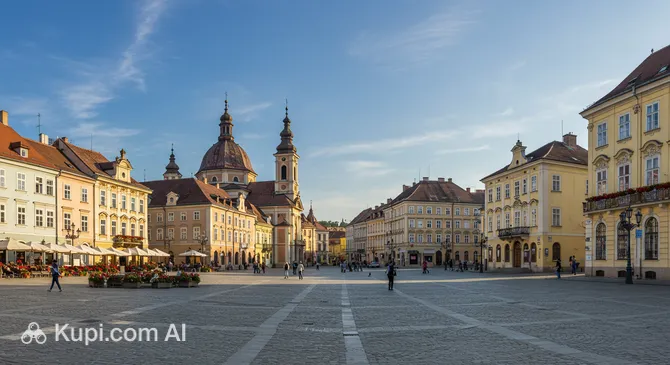
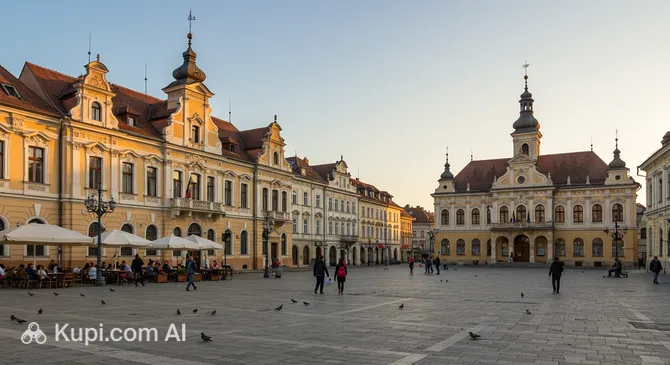
Timisoara is a vibrant and cosmopolitan city located in the western part of Romania. Often referred to as "Little Vienna" due to its stunning Secessionist architecture and rich cultural life, it serves as a major social and economic hub in the Banat region. With a population of approximately 320,000 residents, the city offers a lively atmosphere that perfectly blends historical charm with modern energy.
Timisoara. Illustration.
Source: Kupi.com AI
The city boasts a fascinating past, marked by diverse influences that have shaped its unique character. Visitors interested in the history of Timisoara will discover that it was the first city in mainland Europe to introduce electric street lighting in 1884. Today, its wide boulevards and expansive squares are lined with colorful heritage buildings that tell the story of its multicultural heritage.
Travelers are drawn to the picturesque Union Square, surrounded by Baroque buildings and religious monuments. Another must-see landmark is the majestic Timisoara Orthodox Cathedral, famous for its mosaic roof tiles and imposing height. For a relaxing afternoon, a walk along the banks of the Bega Canal or through the city's numerous parks reveals why it is also known as the "City of Flowers."
Whether you are captivated by architectural beauty, eager to explore local art galleries, or simply looking to enjoy a coffee in a bustling plaza, Timisoara welcomes you with open arms. It is a destination that promises a memorable experience for every traveler.
Weather Overview
Timisoara experiences a temperate continental climate with four distinct seasons, making it a year-round destination for travelers. The city generally enjoys warm summers and cold winters, with transitional seasons offering mild and pleasant conditions for exploration.
The warmest time of the year occurs in July and August, when average temperatures hover around 24°C, often reaching highs of 30°C. These months are ideal for outdoor activities, though it is wise to be prepared for the heat. Conversely, January is typically the coldest month, with average temperatures dropping to approximately 2°C and lows occasionally dipping below freezing. For a more detailed forecast before your trip, you can check the current weather in Timisoara.
Precipitation is spread throughout the year, but late spring tends to be the dampest period, with May seeing up to 14 wet days. In contrast, late summer and early autumn are generally drier. Overall, visitors can expect warm summers with occasional rain and cold, relatively dry winters.
Average monthly temperature
Average monthly precipitation
Interesting Facts
Beyond its well-known reputation as "Little Vienna," Timisoara hides a collection of surprising stories that range from Hollywood legends to industrial firsts. The city has long been a pioneer in technology and culture, offering visitors plenty of unique details to discover.
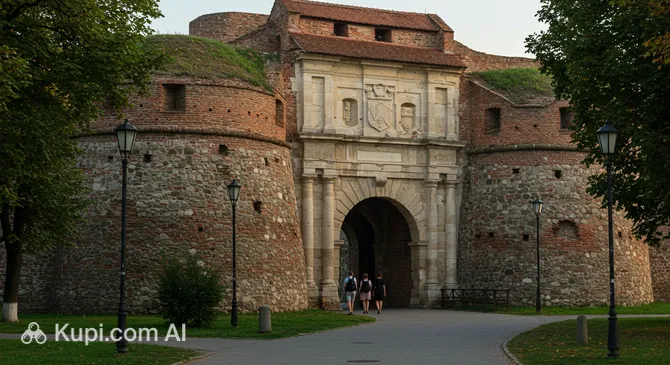
Maria Theresia Bastion. Illustration.
Source: Kupi.com AI
Traveler photos:
A Hollywood Legend's Birthplace: A piece of cinema history began here, as Johnny Weissmuller, the five-time Olympic gold medalist and actor who became the world's most famous Tarzan, was born in the city's Freidorf district.
The Oldest Brewery: Did you know that Timisoara is home to the oldest brewery in present-day Romania? Founded in 1718, the local factory has been producing beer for over three centuries, predating many modern states.
A Cultural Phenomenon: The city is unique in Europe for hosting three different state theaters—Romanian, German, and Hungarian—that all share the same building near Victory Square, symbolizing its deep-rooted multiculturalism.
Pioneering Transport: Continuing its tradition of innovation, Timisoara introduced the first horse-drawn tram in the territory of current Romania in 1869, long before many other major European cities adopted the technology.
Fortress Remnants: While modern avenues have replaced the old city walls, you can still walk through history at the Maria Theresia Bastion, the largest surviving section of the ancient star-shaped Vauban fortress that once defended the region.
How to Get There
Reaching Timisoara is relatively straightforward thanks to its strategic location in Western Romania and its well-developed transport connections. Whether you prefer flying directly into the city or arriving via a major neighboring hub, there are several options to suit your travel plans. For a complete overview of all travel methods, including driving directions and bus routes, you can read more about how to get to Timisoara on our detailed page.
The most convenient way to arrive is by flying into Timisoara Traian Vuia International Airport (IATA: TSR). This international airport serves as the main gateway to the region and is located just 10.2 km from the city center. A trip by taxi or bus from the terminal to the heart of the city typically takes around 35 minutes. Alternatively, travelers often choose Belgrade Nikola Tesla Airport (IATA: BEG) in Belgrade, Serbia. Although it is situated in another country, it is a significant regional hub approximately 127 km away. The transfer from Belgrade to Timisoara by road takes about 3 hours and 30 minutes, depending on border traffic.
For clarity, here is a summary of the main airports located near the city:
While Timisoara has its own rail connections, some travelers arriving from Central Europe may pass through major international hubs nearby. You can arrive at the Keleti Railway Station (IATA: XXQ) in the city of Budapest, which is about 254 km from Timisoara. From there, a transfer by taxi or bus typically takes approximately 3 to 4 hours, though most travelers prefer connecting trains for this distance. This station handles a large volume of passengers and connects to numerous European capitals.
Below is a list of the nearest major railway hubs referenced:
Timisoara is a treasure trove of architectural gems, historical landmarks, and unique cultural spaces. From grand squares lined with Baroque palaces to quirky museums that capture the spirit of bygone eras, the city offers a diverse range of sights for every type of traveler. Exploring these attractions provides a deeper understanding of the city's multicultural heritage and its vibrant present.
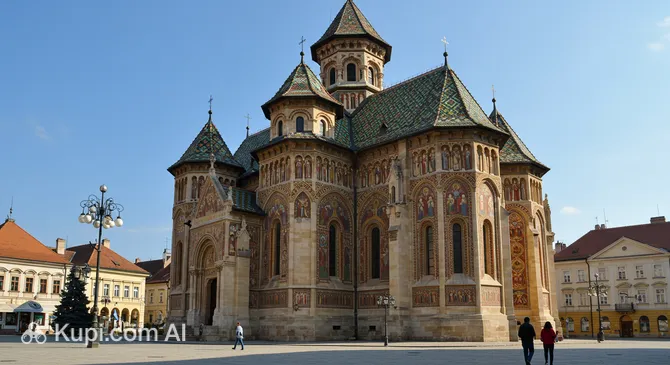
One of the most iconic symbols of the city is the Metropolitan Cathedral of the Three Holy Hierarchs. Located at the end of Victory Square, this imposing Orthodox cathedral is impossible to miss with its soaring towers and colorful mosaic roof tiles inspired by Moldavian monastery art. Standing over 80 meters tall, it is one of the highest cathedrals in Romania. Visitors are often awestruck by its grand interior, which houses a rich collection of religious art and historical artifacts in the basement museum.
Metropolitan Cathedral of the Three Holy Hierarchs. Illustration.
Source: Kupi.com AI
Traveler photos:
For those who appreciate open-air history, the Union Square (Piața Unirii) is the heart of the city's old town. This picturesque square is a stunning example of Baroque architecture and is often cited as the most beautiful square in Timisoara. It is surrounded by colorful historical buildings, including the Roman Catholic Dome, the Serbian Orthodox Cathedral, and the Baroque Palace which houses the Art Museum. It is the perfect spot to admire the architecture while enjoying a coffee at one of the many terraces.
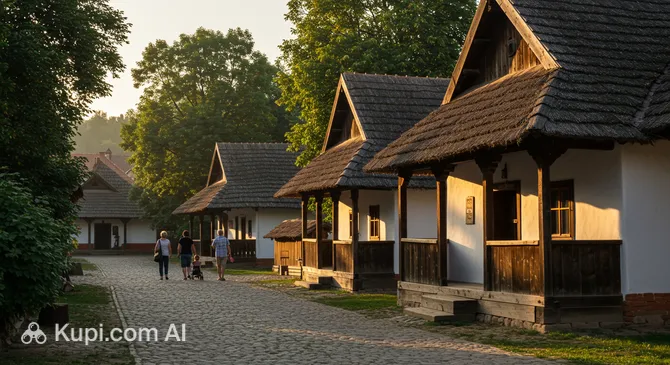
To experience the rural traditions of the region without leaving the city, a visit to the Banat Village Museum is essential. This open-air ethnographic museum showcases traditional peasant houses, wooden churches, and technical installations from various parts of the Banat region. Walking through the museum feels like stepping back in time, offering a peaceful retreat and a fascinating glimpse into the daily lives of the diverse ethnic groups that have inhabited this area for centuries.
Banat Village Museum. Illustration.
Source: Kupi.com AI
Traveler photos:
For a completely different experience, the Museum of the Communist Consumer offers a unique journey into the recent past. Unlike typical history museums, this attraction is set up like a regular apartment from the communist era, filled with everyday objects, toys, electronics, and furniture from that time. Guests are encouraged to touch, explore, and interact with the exhibits, making it a nostalgic trip for some and an educational curiosity for others.
Finally, nature lovers should not miss Roses Park, which largely contributes to Timisoara's nickname as the "City of Flowers." Ideally located near the Bega River, this park is famous for its thousands of rose bushes arranged in beautiful patterns. It serves as a tranquil escape from the urban bustle and also hosts various open-air festivals and cultural events during the warmer months, making it a lively center of community life.
Local Cuisine
The local cuisine of Timisoara is a delicious reflection of its multicultural heritage, blending Romanian traditions with strong Hungarian, German, and Serbian influences. This fusion creates a unique gastronomic identity in the Banat region, where hearty meals and rich flavors are the norm. Visitors can expect a dining experience that ranges from rustic, home-cooked comfort food to sophisticated dishes served in elegant settings.
When exploring the city's menus, you must try the local variations of goulash, a spicy meat stew that highlights the Hungarian impact on the area. Another staple is sarmale (cabbage rolls stuffed with minced meat and rice), often served with a side of creamy polenta and sour cream. Due to the "Little Vienna" legacy, you will also find excellent schnitzels and a variety of strudels and cakes in the local confectioneries. For a lighter option, the sour soups known as ciorbă are a lunchtime favorite, with tripe soup and meatball soup being particularly popular choices.
No meal in Timisoara is complete without sampling the local beverages. The city takes great pride in being the birthplace of Timisoreana, the first brewery in present-day Romania, and enjoying a fresh pint is a rite of passage for beer lovers. For wine enthusiasts, the nearby Recaș vineyards produce high-quality wines that are widely available in the city's establishments. You can sample a curated selection of these regional wines at places like Vinto, a gastro-wine bar that perfectly pairs local vintages with modern cuisine. Before your meal, locals might welcome you with a shot of pălincă or țuică, a potent plum brandy traditionally believed to stimulate the appetite.
Union Square. Illustration.
Source: Kupi.com AI
Traveler photos:
The food culture here is centered around leisurely dining and socializing. In the warmer months, the heart of the social scene moves outdoors to the picturesque terraces lining Union Square and the pedestrian streets of the Old Town of Timișoara. Here, tourists and locals alike gather to enjoy their meals against a backdrop of stunning Baroque architecture. Whether you are grabbing a quick pastry from a street bakery or settling in for a long dinner at a traditional restaurant, the atmosphere is always welcoming and vibrant.
Travel Tips
Visiting Timisoara is a delightful experience, often feeling more like a relaxed stroll through Western Europe than a chaotic urban adventure. To help you navigate the "City of Flowers" with ease and confidence, here are some essential practical tips for your journey.
Clothing and Gear: Timisoara has a temperate climate, so pack according to the season—light, breathable fabrics for the hot summers and warm, layered clothing for the chilly winters. Since the historic city center, particularly around Union Square, is paved with cobblestones, comfortable walking shoes are a must. If you plan to visit the Metropolitan Cathedral or other religious sites, remember to dress modestly, covering your shoulders and knees.
Transportation: The city center is compact and best explored on foot, but the public transport network (STPT) is excellent, featuring trams, trolleybuses, and buses. Timisoara is unique in Romania for having public transport boats (vaporettos) on the Bega Canal, which are a scenic way to get around. You can pay for tickets using contactless cards directly on board or via mobile apps like 24pay. For private transport, ride-hailing apps like Uber and Bolt are widely available, affordable, and generally safer than hailing random taxis on the street.
Finances: The local currency is the Romanian Leu (RON). While credit and debit cards are widely accepted in hotels, restaurants, and supermarkets, it is wise to carry some cash for small souvenir shops, local markets, or public toilets. ATMs are plentiful throughout the city. Tipping is customary in Romania; leaving about 10% of the bill at restaurants is standard if the service was good.
Health and Safety: Timisoara is generally a very safe city for tourists, even at night. However, standard precautions against pickpocketing should be taken in crowded areas. Pharmacies (marked "Farmacie") are easy to find, and many have a green cross sign; look for those marked "Non-Stop" if you need assistance overnight. The general emergency number for police, ambulance, or fire is 112.
Communication: The official language is Romanian, a Romance language. You will find that English is widely spoken, especially by the younger generation and in the hospitality industry. German and Hungarian are also spoken by significant minorities. Learning a simple "Mulțumesc" (Thank you) or "Bună ziua" (Good day) is a great way to show respect. Free Wi-Fi is often available in the central squares and most cafes.
Local Etiquette: Romanians are generally hospitable and friendly. A handshake is the standard greeting. When entering a shop or a waiting room, it is polite to greet others with a general "Bună ziua." If you are invited to a local's home, removing your shoes at the door is a common practice unless told otherwise.
What to Avoid: Be careful not to walk on the bike lanes. Timisoara has an extensive network of cycling paths, often marked with different colored pavement on sidewalks. Locals use them frequently and can get frustrated with pedestrians blocking the way. Also, avoid exchanging money at airport kiosks or on the street; use official bank ATMs or reputable exchange offices in the city center for better rates.
Additional Tip: Take advantage of the city's coffee culture. Timisoara was one of the first European cities to have street lighting, but today it shines through its vibrant specialty coffee scene. Many cafes in the historic center open early and offer a relaxed atmosphere perfect for planning your day. Also, remember that most shops in malls stay open late, even on Sundays, unlike in many Western European countries.
By keeping these practical details in mind, you will be well-prepared to enjoy everything Timisoara has to offer, from its Baroque architecture to its welcoming locals. Have a safe and wonderful trip to the heart of the Banat region!
Entertainment & Nightlife
Timisoara boasts a dynamic and diverse nightlife scene, fueled largely by its significant university population and its reputation as a cultural hub. As the sun sets, the city transforms from a relaxed historical center into a buzzing playground for night owls. The atmosphere is generally welcoming and unpretentious, ranging from sophisticated wine bars in the Old Town to energetic dance clubs in the student districts.
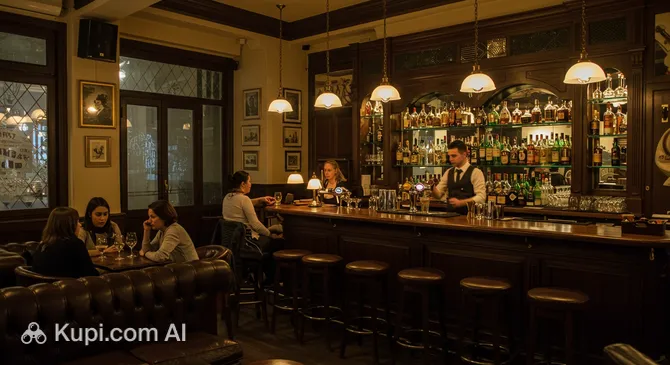
For those who enjoy a lively pub atmosphere within the historic walls of the city, the pedestrian streets around Union Square and Victory Square are the places to be. Here, you will find The Scotland Yard, a popular venue known for its distinct brick-walled interior, wide selection of drinks, and vibrant crowd. It is an excellent starting point for a night out, offering a mix of rock music and a friendly pub vibe that appeals to both locals and tourists.
The Scotland Yard. Illustration.
Source: Kupi.com AI
Traveler photos:
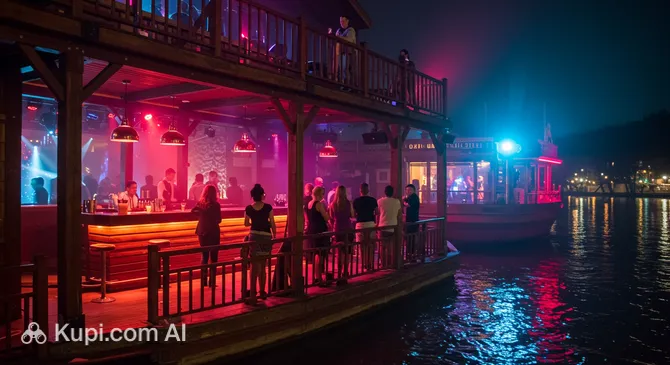
During the warmer months, the nightlife naturally migrates towards the banks of the Bega Canal. The riverfront comes alive with open-air terraces and clubs that offer a refreshing breeze and scenic views. A standout location in this area is D'arc pe mal, a beloved spot that functions as a relaxed café by day and transforms into a spirited party venue by night. It is the perfect place to enjoy a cocktail under the stars while listening to DJ sets that keep the energy high until the early hours.
D'arc pe mal. Illustration.
Source: Kupi.com AI
Traveler photos:
If you are looking for something truly unique and offbeat, you must visit Scârț, a Chill Place. Part bar, part bohemian hangout, and home to the quirky Communist Consumer Museum, this venue is famous for its relaxed garden filled with hammocks and its artistic, retro interior. It offers a stark contrast to the thumping bass of mainstream clubs, providing a cozy space for conversation and creative inspiration.
For those seeking intense clubbing, the "Complexul Studențesc" (Student Complex) is the district with the highest density of nightclubs and discos. The dress code in Timisoara is generally casual to smart-casual; very few places enforce strict formal wear. Bars usually stay open until 1:00 or 2:00 AM, while clubs often don't get busy until after midnight and stay open until dawn. Prices are quite affordable compared to Western European standards, with a beer often costing between 10 to 15 RON.
Regarding safety, Timisoara is considered safe for night walks, especially in the well-lit center and student areas. However, as with any city, it is wise to stay aware of your surroundings. For transportation late at night, it is recommended to use ride-sharing apps like Uber or Bolt, which are reliable and prevent any language barrier issues or overcharging that might occur with traditional street taxis.
Beyond the nightlife, Timisoara offers plenty of entertainment during the day. Culture enthusiasts can enjoy performances at the National Opera or the German and Hungarian State Theaters. For families and thrill-seekers, the Amazonia Aquapark provides a modern facility for water-based fun and relaxation, ensuring that there is never a dull moment in the city, day or night.
Parks & Museums
Timisoara is widely celebrated as the "City of Flowers" thanks to its extensive network of green spaces that hug the Bega Canal and dot the urban landscape. Beyond its natural beauty, the city is a cultural powerhouse, home to prestigious museums and galleries that preserve the artistic and historical heritage of the Banat region.
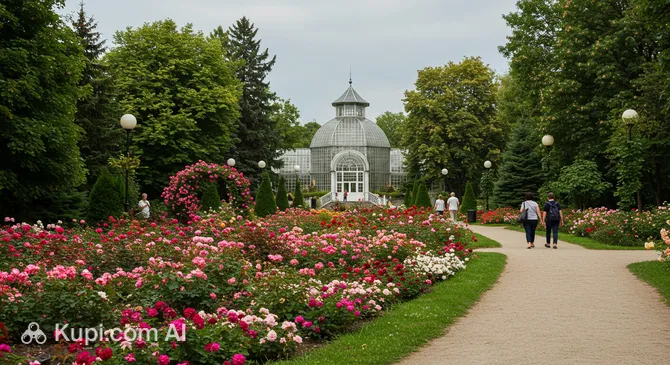
For a peaceful retreat right in the city center, the Botanic Park is a favorite among locals for its tranquil atmosphere. Unlike a scientific botanical garden, this park functions more like a sprawling recreational garden with distinct sectors for ornamental flora and rare tree species. It is an ideal spot for a quiet walk or meditation, located just a few minutes from the main squares. Another historical gem is Queen Marie Park, the oldest park in the city. Formerly known as the People's Park, it retains a romantic charm with its mature trees and classic layout, offering a shady respite during the hot summer months.
Botanic Park. Illustration.
Source: Kupi.com AI
Traveler photos:
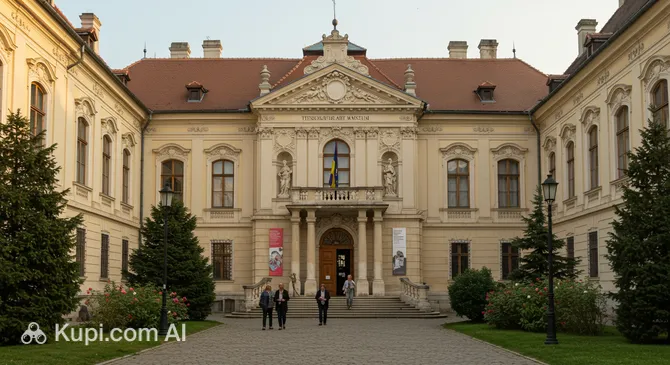
Culture enthusiasts should make time for the Timișoara Art Museum, housed in the magnificent Baroque Palace in Union Square. The building itself is a masterpiece of 18th-century architecture, and inside, visitors can admire a comprehensive collection of Banat art, European paintings, and modern works. To understand the pivotal role the city played in modern history, a visit to the Memorial to the Revolution is essential. This moving museum documents the events of December 1989, when the anti-communist revolution began on these very streets, showcasing photos, uniforms, and testimonies that honor the courage of the freedom fighters.
Timișoara Art Museum. Illustration.
Source: Kupi.com AI
Traveler photos:
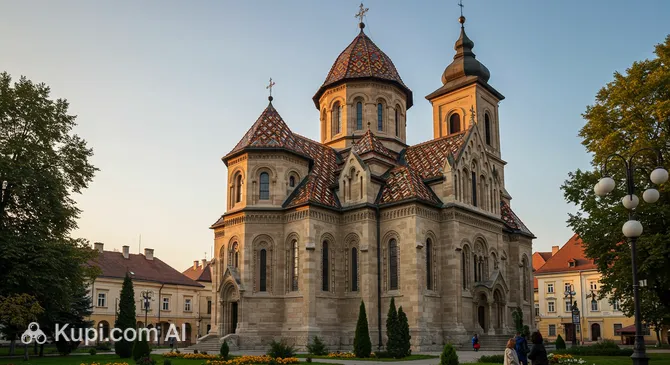
Beyond the museums, the city's history is written in its squares and monuments. Liberty Square offers a different vibe from the other major plazas, featuring a circular design and the impressive Statue of St. Mary and St. John of Nepomuk. Further afield in the Fabric district, the Millennium Church stands as a stunning example of Neo-Romanesque architecture. Built to mark 1,000 years of Hungarian settlement in the Pannonian Plain, its imposing twin towers and intricate brickwork make it one of the most photogenic religious sites in the city.
Millennium Church. Illustration.
Source: Kupi.com AI
Traveler photos:
For an authentic local experience, take a stroll through Alpinet Park along the banks of the Bega Canal. This beautifully landscaped strip is popular for its waterfront promenades and is often less crowded than the central parks. It serves as a perfect vantage point to watch the boats glide by or to enjoy a quiet moment on a bench surrounded by meticulously arranged floral displays.
Getting Around
Getting around Timisoara is both convenient and affordable, thanks to a well-integrated public transport network managed by STPT (Societatea de Transport Public Timișoara). The system is comprehensive, connecting the historic city center with residential neighborhoods, the airport, and suburban areas. Trams serve as the backbone of the network, with frequent lines crisscrossing the city, complemented by an extensive fleet of trolleybuses and buses that ensure coverage even in the narrower streets of the older districts.
One of the most unique features of Timisoara's transport system is the public water bus, or "vaporetto," which operates on the Bega Canal. While many cities use boats strictly for sightseeing, here they are part of the official public transit grid. These vessels offer a scenic and relaxing way to travel between key points along the riverbank, functioning effectively as a commuter service during the week and a leisure option on weekends. It is a delightful alternative to road traffic and offers a fresh perspective on the city's parks and bridges.
For tourists, the payment system is modern and user-friendly. You do not strictly need to hunt for ticket kiosks, although they are available at major stops. The most convenient method is to pay directly on board using a contactless bank card (Visa or Mastercard) at the yellow or orange validators. Alternatively, you can use the mobile app 24pay, which allows you to purchase tickets digitally. A standard trip typically costs around 4 RON and is valid for a set duration, usually 60 minutes, allowing for transfers between different lines.
If you prefer traditional paper tickets, they can be purchased at sales points near busy stations. It is crucial to validate these paper tickets immediately upon boarding by stamping them in the machines provided; failure to do so can result in a fine. The public transport generally operates from early morning, around 5:00 AM, until shortly after 11:00 PM. While frequencies are high during the day, they reduce significantly late in the evening and on weekends, so checking a schedule app is recommended for night travel.
Beyond the STPT network, Timisoara is a very bike-friendly city, boasting an extensive system of cycle paths. Visitors can take advantage of the local bike-sharing scheme, VeloTM, which has docking stations throughout the city. This is often the fastest way to navigate the flat terrain of the central districts. For those who prefer a car, ride-sharing apps like Uber and Bolt are widely used, reliable, and generally offer better rates and transparency than hailing a traditional taxi on the street.
Accommodation
Timisoara offers a diverse range of accommodation options that cater to all budgets and travel styles, reflecting its status as a welcoming international destination. Whether you are a backpacker looking for a social hostel, a family seeking the convenience of a serviced apartment, or a traveler desiring the full amenities of a modern hotel, the city has plenty to offer. The hospitality standards are generally high, often combining modern facilities with the warm, traditional service characteristic of the Banat region.
For most tourists, the best area to stay is within or near the historic city center, particularly around the Old Town (Cetate) and the pedestrian zones of Union Square and Victory Square. Staying here places you within walking distance of the main architectural landmarks, museums, and the vibrant café culture. Alternatively, the area near the Student Complex is excellent for budget travelers and those who want to be close to the nightlife, while the neighborhoods surrounding the Bega Canal offer a quieter, greener atmosphere just a short walk from the action.
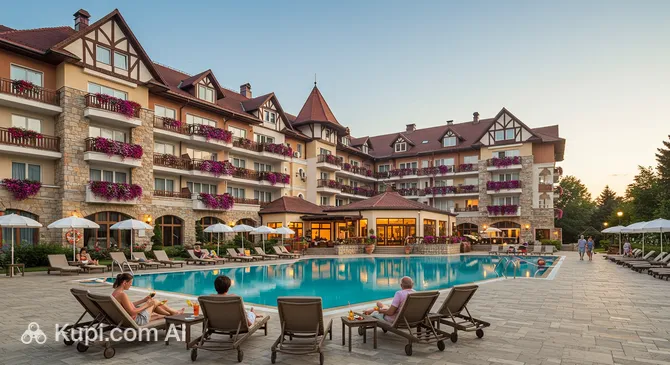
Travelers looking for a well-established lodging experience might consider Hotel Delpack. Situated in a convenient location, it offers a blend of comfort and style suitable for both business and leisure guests. Hotels in Timisoara often feature on-site dining and wellness facilities, providing a relaxing base after a day of exploration.
Hotel Delpack. Illustration.
Source: Kupi.com AI
Traveler photos:
For those who prefer a more independent stay or are traveling in groups, apartment rentals are increasingly popular. Georgiana Apartments is one such example, offering the flexibility of a home-like environment. These types of accommodations are widely available throughout the city and are often a cost-effective choice for longer stays, allowing visitors to experience the city more like a local.
In terms of pricing, Timisoara is generally very affordable compared to Western European cities. You can find excellent mid-range hotels and apartments for a fraction of the cost you might expect elsewhere. Booking is straightforward, with most properties listed on major international online platforms. However, if you plan to visit during major cultural festivals or the peak summer months, it is highly recommended to book your accommodation in advance to secure the best rates and locations.
Nearby Cities
For those looking to explore the surroundings, Timisoara serves as an excellent base for day trips to several interesting nearby locations. The region offers a mix of architectural splendor, industrial heritage, and medieval history that is easily accessible by car or train.
One of the most popular destinations is Arad, situated just a short drive north. Much like Timisoara, Arad is renowned for its stunning Secessionist architecture, with the impressive Administrative Palace and the Red Church being standout landmarks. It also houses a massive star-shaped citadel, which played a crucial role in the region's military past.
For a journey further back in time, travelers should head to Hunedoara to visit the magnificent Corvin Castle (Castelul Corvinilor). Considered one of the largest and most beautiful castles in Europe, this Gothic-Renaissance masterpiece features tall towers, a drawbridge, and a knight's hall that transports visitors straight into a fairytale. Nearby, the city of Deva offers another historical highlight with its hilltop fortress, accessible by a funicular, providing sweeping views of the Mureș Valley.
These nearby destinations offer a glimpse into the diverse culture and landscapes of the region, making them perfect for extending your stay in western Romania.
Shopping & Souvenirs
Shopping in Timisoara offers a delightful mix of modern convenience and traditional charm, catering to both fashion enthusiasts and souvenir hunters. The city has developed rapidly in recent years, becoming a regional commercial hub that blends large-scale retail complexes with quaint boutiques nestled in historic buildings. Whether you are looking for international brands, local handicrafts, or fresh produce, the diverse shopping scene ensures a rewarding experience.
For those who enjoy window shopping in a picturesque setting, the pedestrian area in the Old Town of Timișoara is the perfect starting point. The streets connecting Victory Square and Union Square are lined with a variety of shops, ranging from high-street fashion and shoe stores to independent bookshops and art galleries. Walking through this district allows you to combine sightseeing with retail therapy, as many unique boutiques are housed within beautiful Secessionist and Baroque buildings.
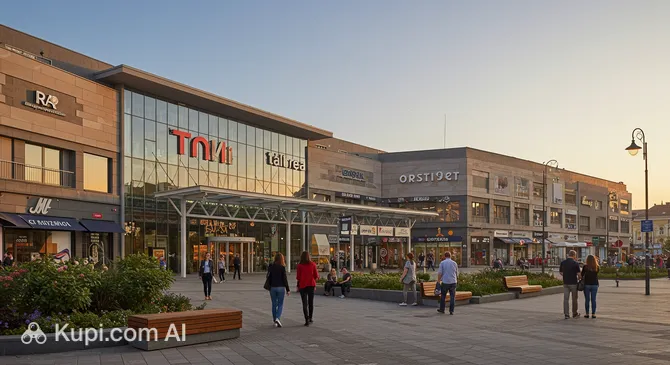
When it comes to modern retail therapy, the city boasts impressive facilities. The crown jewel is undoubtedly Iulius Town, a massive mixed-use complex that is much more than just a mall. It is a "city within a city" featuring hundreds of international brand stores, a cinema, a fitness center, and a sprawling food court. It also includes a beautiful park where visitors can relax after a shopping spree. For those on the other side of the city, the Timișoara North Shopping Center provides another extensive selection of shops, hypermarkets, and services, ensuring that all your needs are met under one roof.
Iulius Town. Illustration.
Source: Kupi.com AI
Traveler photos:
To experience the local flavor, a visit to the city's markets is essential. Piața 700 (Market 700), located near the historic center, is a bustling spot where locals buy fresh fruit, vegetables, cheese, and flowers. It is an excellent place to sample seasonal Romanian produce. On weekends, the Aurora-Flavia market, often referred to by locals as the "Ocska" market, transforms into a lively flea market. Here, antique lovers can hunt for vintage items, communist-era memorabilia, and second-hand treasures in a vibrant, chaotic atmosphere.
If you are looking for authentic souvenirs to take home, focus on traditional Romanian craftsmanship. Hand-painted eggs, embroidered blouses (ia), and ceramics are popular choices found in souvenir shops around the main squares. Timisoara is also located in a rich wine region, so a bottle of local wine from the Recaș vineyards makes for an excellent gift. Additionally, as the city is the birthplace of the Timisoreana brewery, branded beer glasses or memorabilia are cherished by collectors.
Store opening hours in Timisoara are generally tourist-friendly. Major shopping malls like Iulius Town are open daily, typically from 10:00 AM to 10:00 PM, including Sundays. Smaller boutiques and street shops usually operate from 9:00 AM or 10:00 AM until 6:00 PM or 8:00 PM, and may have reduced hours or be closed on Sundays. Payment is convenient, with credit and debit cards being widely accepted in malls, supermarkets, and most shops. However, it is advisable to carry some cash (RON) when visiting open-air markets or purchasing small items from street vendors.
Tourists residing outside the European Union may be eligible for a VAT refund on purchases exceeding a certain amount in a single store. Look for shops displaying the "Tax Free" signage and ask for the necessary refund forms at the checkout. This allows you to reclaim a portion of the tax paid upon leaving the EU, making your shopping experience in Timisoara even more economical.