Support

Graz

About

Welcome to Graz, a captivating city that effortlessly blends Renaissance elegance with cutting-edge design. As the capital of the province of Styria and the second-largest city in Austria, it offers a vibrant yet relaxed atmosphere often described by visitors as having a distinct Mediterranean flair. The city is a cultural powerhouse, known for its youthful energy driven by a large university population and its status as a City of Design.

Situated on the banks of the Mur River in the southeast of the country, Graz is home to nearly 290,000 people. Its geographical location places it in a lush basin protected by the Alps, often resulting in a milder climate compared to other parts of the region. This unique setting makes it a perfect gateway to the surrounding vineyards and rolling hills of Styria.
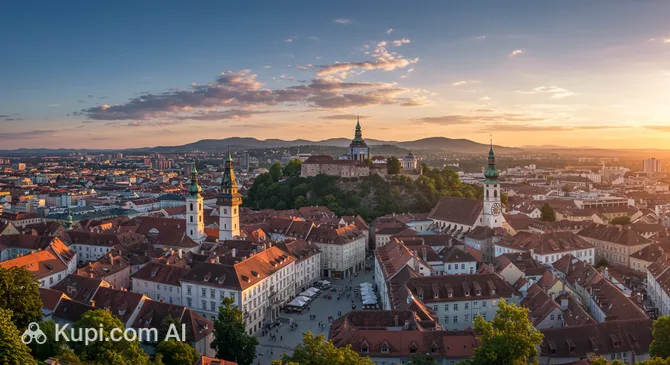
Graz. Source: Kupi.Binoculars

The city boasts a remarkably well-preserved Old Town, which is recognized as a UNESCO World Heritage site. Walking through its streets feels like a journey through time, where Gothic, Renaissance, and Baroque architecture stand side by side. You can delve deeper into the fascinating history of Graz to understand how centuries of tradition have shaped its architectural landscape and cultural identity.

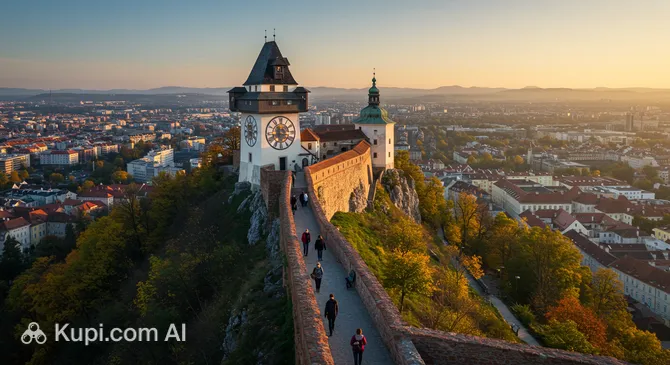
Travelers are consistently drawn to the iconic Schlossberg, a tree-clad hill in the center of the city featuring the famous Clock Tower (Uhrturm), which offers panoramic views of the historic red rooftops below. In stark contrast to the historic center, the futuristic Kunsthaus Graz—affectionately known as the "Friendly Alien"—and the floating Murinsel demonstrate the city's commitment to modern art and innovation.

Whether you are exploring its romantic courtyards, enjoying the renowned local cuisine, or admiring its innovative structures, Graz promises an unforgettable experience. It is a destination that invites you to slow down, explore at your own pace, and discover the many layers of its charm.
Weather Overview

Graz experiences a varied climate with distinct seasons, making it a year-round destination with different charms depending on when you visit. To help you pack appropriately for your trip, it is useful to check the detailed forecast and typical weather in Graz.

Winters in the city are generally cold, with January being the chilliest month. During this time, average temperatures hover around -0.4°C, with lows dropping to approximately -4.1°C. While the volume of precipitation is relatively low, you can still expect about 7 to 12 days with some form of moisture per month, creating a crisp and often snowy atmosphere.

In contrast, the summer months bring pleasant warmth. July and August are typically the warmest, with average temperatures reaching 18.9°C and daily highs often climbing to around 24°C. However, visitors should be aware that this is also a wetter period; May is particularly damp with up to 19 wet days, and the summer months generally see frequent rainfall alongside the sunshine.

Overall, you can expect warm summers with occasional rain and cold, relatively dry winters. Regardless of the season, carrying an umbrella or a waterproof jacket is often a wise choice, especially if you plan to explore the city's outdoor attractions during the late spring or summer.

Interesting Facts

Beyond the main attractions, Graz holds many fascinating secrets that often escape the casual observer. Uncovering these unique details reveals a city rich in history, innovation, and delightful quirks.
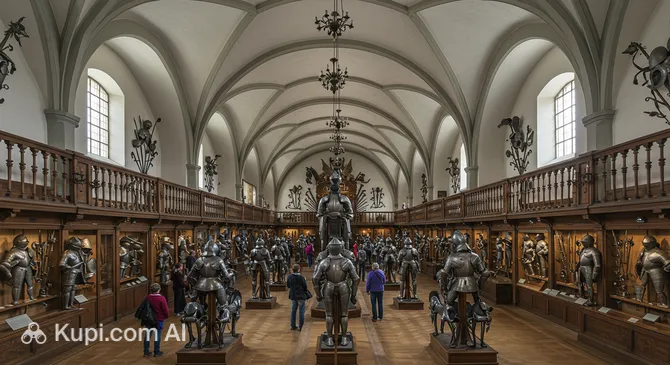
Styrian Armoury. Source: Kupi.Binoculars
  • The hands of the famous Clock Tower are confusingly reversed, with the large hand indicating the hour and the small hand showing the minutes. This oddity dates back to an era when telling the hour was sufficient for the public from a distance, and the minute hand was added later, having to be smaller to fit the existing mechanism.

  • Graz houses the Styrian Armoury, which is the largest historic armoury in the world. It contains an astonishing collection of approximately 32,000 pieces of weaponry and armor, preserved in their original state since the 17th century to defend against potential invaders.

  • Hidden inside Graz Castle is a masterpiece of late Gothic stonework known as the Double Spiral Staircase. Often called the "Stairs of Reconciliation," the two separate stone flights part and reunite on each floor, symbolizing people going their separate ways and eventually coming back together.

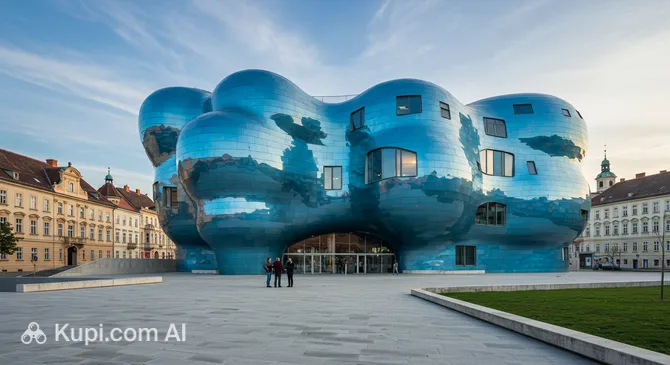
  • The futuristic Kunsthaus Graz is affectionately nicknamed the "Friendly Alien" by locals due to its strange, biomorphic shape. Its outer skin is equipped with over 900 fluorescent rings that can be programmed to display moving images and light signals, turning the building into a massive low-resolution screen.

How to Get There

Reaching Styria's capital is quite convenient thanks to its central location in Europe and excellent transport connections. Whether you are arriving by air or land, there are multiple options to suit your travel plans. For a comprehensive guide on all available routes and transport modes, you can read more about how to get to Graz.

The most direct way to arrive is via Graz Airport (GRZ), which is conveniently located just 8.5 km from the city center. As a regional hub, it offers a relaxed arrival experience compared to larger airports. The journey to the heart of the city is quick, taking approximately 30 to 35 minutes by taxi or bus. For those traveling from further afield or looking for more flight connections, Vienna International Airport (VIE) in Vienna is a major alternative. Although it is situated about 144 km away, it serves as a primary gateway to Austria. From Vienna, you can easily continue your journey to Graz by road or rail, which typically takes around 2.5 to 3 hours.

For clarity, here is a summary of the main airports:

Airport Name City Passenger Traffic Km from City
Vienna International AirportViennaLarge144.1
Zagreb International AirportZagrebMedium155.2
Ljubljana Jože Pučnik AirportLjubljanaMedium120.3
Graz AirportGrazSmall8.5
Klagenfurt AirportKlagenfurtSmall97.2

If you prefer traveling by train, you can access the region through several major railway hubs. While Graz has its own central station, international travelers often connect through Vienna Westbahnhof in the city of Vienna, located approximately 142 km away. Another significant regional hub is Klagenfurt Hauptbahnhof in Klagenfurt, which is about 100 km from Graz. From these stations, efficient rail or bus transfers can bring you directly to your final destination in Styria.

Station City Passenger Traffic Km to Center
Vienna WestbahnhofViennaLarge142.4
St. Pölten HauptbahnhofSt. PöltenMedium127.5
Ljubljana Railway StationLjubljanaMedium132.9
Villach Central StationVillachMedium131.3
Klagenfurt HauptbahnhofKlagenfurt99.7

Main Attractions

Graz offers a delightful mix of historical grandeur and contemporary creativity, making it a fascinating destination for explorers. From its UNESCO-listed historic center to its innovative modern landmarks, the city is packed with sights that cater to every taste. Walking through the streets, you will encounter romantic courtyards, bustling squares, and green escapes that define the local lifestyle.

One of the most prominent features of the city is the Schlossberg, a massive tree-covered hill rising right in the center of the Old Town. Once a fortress, it is now a beautiful public park offering the best panoramic views of Graz's red-tiled rooftops. While you can take a lift or the funicular to the top, many visitors enjoy the walk up the zigzagging paths. It is the perfect spot for a leisurely stroll, a coffee with a view, or simply to admire the famous Clock Tower up close.

Schlossberg. Source: Kupi.Binoculars

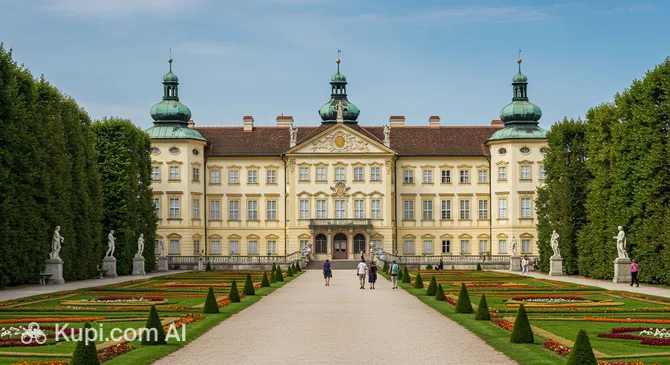
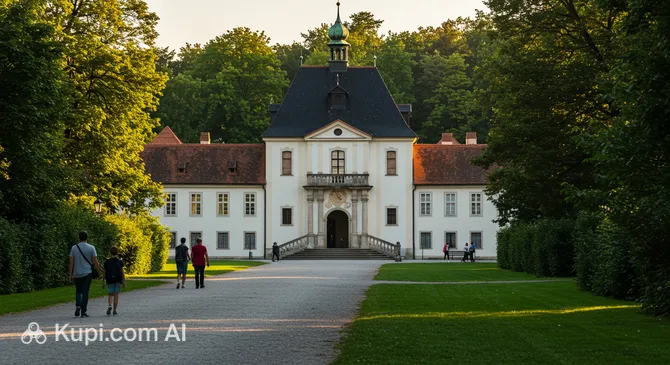
Just a short tram ride from the city center, you will find the magnificent Eggenberg Palace. This Baroque masterpiece is a UNESCO World Heritage site and serves as a testament to the power and wealth of the Eggenberg dynasty. Visitors are often enchanted by the sprawling palace gardens, where peacocks roam freely among the manicured lawns. Inside, the State Rooms and the Planetary Room dazzle with their elaborate decorations and historical significance.

Eggenberg Palace. Source: Kupi.Binoculars

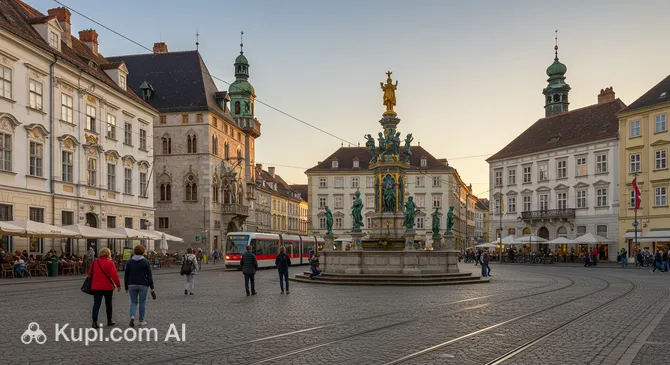
The beating heart of public life in Graz is the Main Square of Graz (Hauptplatz). Surrounded by stunning medieval and Renaissance buildings, including the imposing Town Hall, this triangular square is always buzzing with activity. It is a great place to soak up the local atmosphere, browse the market stalls for traditional Styrian treats like pumpkin seed oil, or simply watch the world go by from a sidewalk café.

Main Square of Graz. Source: Kupi.Binoculars

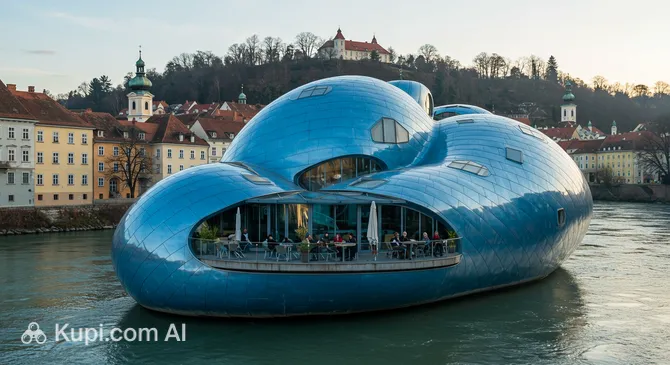
For a striking contrast to the historical architecture, the Murinsel is a must-see. This artificial floating island in the middle of the Mur River was commissioned when Graz was the Capital of Culture in 2003. Resembling a giant sea shell, this steel and glass structure connects the two banks of the river and houses a café and an amphitheater. It is particularly magical at night when it is illuminated in blue, glowing against the dark waters.

Murinsel. Source: Kupi.Binoculars

Local Cuisine

Graz is widely celebrated as Austria's "Capital of Culinary Delights," a title it earns through a deep connection to the fertile farmlands of Styria. The city's food scene is characterized by a unique blend of hearty Austrian tradition and a distinct Mediterranean lightness, largely due to the region's mild climate. Fresh, locally sourced ingredients are the stars here, with farmers' markets playing a central role in daily life, offering everything from crisp apples to cured meats.

One ingredient you will encounter everywhere is Styrian pumpkin seed oil, often referred to as "green gold." This dark, nutty oil is a staple of the local cuisine and is used to dress salads, soups, and even vanilla ice cream. A must-try dish is the traditional Styrian fried chicken, or Backhendl, which is breaded and fried to crispy perfection. Another local favorite is the beetle bean salad (Käferbohnensalat), typically served with onions, vinegar, and a generous splash of pumpkin seed oil.

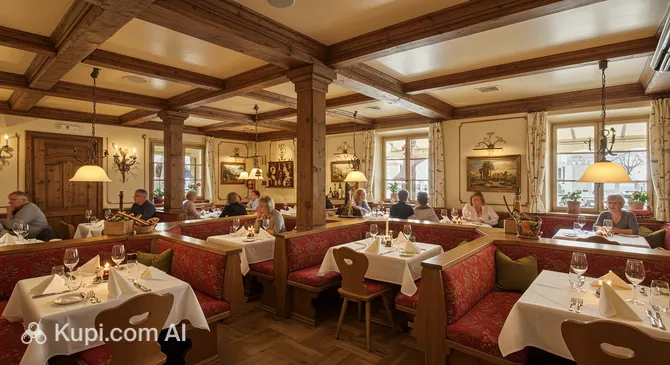
Der Steirer. Source: Kupi.Binoculars

For those looking to sample these regional specialties in a contemporary setting, Der Steirer is a popular dining spot that offers "Styrian tapas," allowing you to taste a variety of local flavors in one sitting. The city is also dotted with charming outdoor terraces, known as Schanigärten, where locals gather to enjoy meals in the open air during the warmer months.

No culinary journey in Graz is complete without exploring the local beverages. Styria is a renowned wine region, particularly famous for its crisp white wines like Sauvignon Blanc and Welschriesling. You should also try Schilcher, a unique rosé wine produced only in this part of Austria. For a more casual drink or a coffee break with a view, places like Freiblick Tagescafé offer a relaxed atmosphere above the city's rooftops.

Travel Tips

To help you make the most of your visit to this charming Styrian capital, we have compiled a list of essential practical advice. These tips are designed to ensure your stay in Graz is smooth, comfortable, and full of authentic local experiences.

  1. Clothing and Gear: Since the weather can be changeable, dressing in layers is the best strategy, regardless of the season. Winters require warm coats and boots, while summers are generally pleasant but can see sudden showers, so a compact umbrella is a must. Most importantly, bring comfortable, sturdy walking shoes; the historic Old Town is paved with cobblestones, and you will likely want to walk up the paths of the Schlossberg.
  2. Transportation: The city center is very compact and best explored on foot. For longer distances, the public transport network (Graz Linien) consisting of trams and buses is excellent. A unique perk for tourists is the Altstadtbim (Old Town Tram): travel on trams within the historic center (between Jakominiplatz and Hauptplatz plus one more stop in each direction) is completely free of charge. Taxis are available but rarely necessary, and ride-hailing apps operate here, though standard public transport is usually faster and cheaper.
  3. Finances: The official currency is the Euro (€). While credit and debit cards are widely accepted in hotels, restaurants, and major shops, Austria still has a strong cash culture. You will definitely need cash for small purchases, cafés, and especially at the farmers' markets like Kaiser-Josef-Platz. ATMs are plentiful. When paying at restaurants, it is customary to round up the bill or leave a tip of about 5–10% for good service.
  4. Health and Safety: Graz is a very safe city for travelers, with low crime rates. Pharmacies (marked with a red stylized "A" for Apotheke) are easy to find; for night service, check the rotation schedule posted on any pharmacy door. The tap water in Graz is of alpine quality and perfectly safe to drink, so bring a reusable bottle to fill up at public fountains.
  5. Communication: The official language is German, spoken with a distinct Styrian melody. However, English is widely understood and spoken, especially by younger people and in the tourism sector. A polite "Grüß Gott" (formal hello) or "Danke" (thank you) goes a long way in showing respect. Free Wi-Fi is available in many public spots, including the city center squares.
  6. Local Etiquette: Austrians value politeness and punctuality. When entering a small shop or elevator, it is polite to greet others. If you are invited to a local's home, remove your shoes at the door. When toasting with drinks, always make eye contact and say "Prost"—not doing so is considered bad luck or simply rude.
  7. What to Avoid: Be very careful not to walk in designated bicycle lanes. Graz is a very bike-friendly city, and cyclists ride quickly; obstructing their path is frowned upon and can be dangerous. Also, avoid loud behavior or noise in public places, particularly on Sundays, which are traditionally days of rest.
  8. Shopping Hours: Keep in mind that Sunday is a strict rest day in Austria. Almost all shops, supermarkets, and pharmacies are closed on Sundays and public holidays. Most shops also close earlier on Saturdays (usually by 6:00 PM). Plan your grocery shopping or souvenir hunting for weekdays to avoid disappointment.

Armed with these practical insights, you are now fully prepared to navigate the city like a local. Relax, soak up the relaxed Mediterranean atmosphere, and enjoy every moment of your adventure in Graz!

Entertainment & Nightlife

As a university city with a large student population, Graz boasts a nightlife scene that is energetic, diverse, and surprisingly vibrant for its size. When the sun sets, the city transforms from a historical gem into a bustling hub of entertainment, offering everything from sophisticated cultural performances to lively pubs and energetic dance clubs. Whether you are looking for a quiet glass of Styrian wine or a night of dancing until dawn, the city has a district to match your mood.

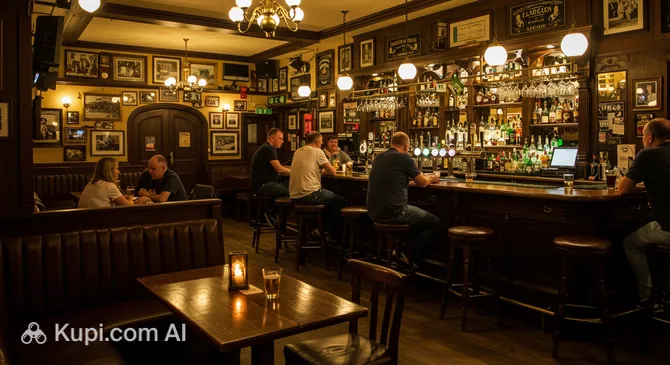
The epicenter of the local bar scene is affectionately known as the "Bermuda Triangle." Located in the Old Town around Mehlplatz, Färberplatz, and Prokopigasse, this area is packed with outdoor terraces, cocktail bars, and pubs where it is easy to "get lost" for hours. It attracts a mixed crowd of locals and tourists enjoying the relaxed, open-air atmosphere. For a classic pub experience in this area, you can visit Flann O'Brien Irish Pub, which offers a friendly vibe and a wide selection of beers.

Flann O'Brien Irish Pub. Source: Kupi.Binoculars

If you are seeking a younger crowd and later opening hours, the University Quarter (Univiertel) around Zinzendorfgasse and Elizabethstraße is the place to be. This district comes alive after midnight, hosting numerous clubs and student bars where the music plays loud and the dress code is casual. A popular spot that bridges the gap between a stylish dining venue and a nightlife hotspot is eleven Café-Bar-Restaurant, known for its modern ambiance and lively parties.

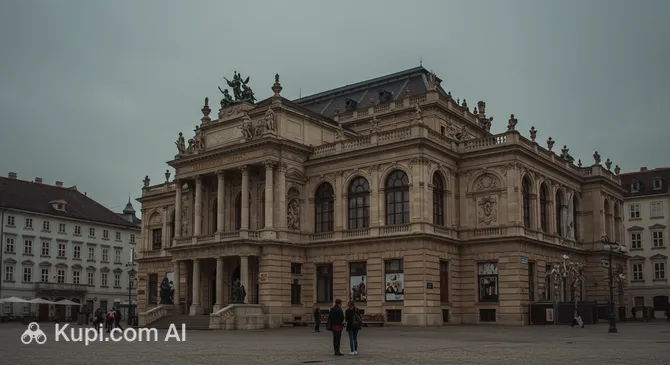
For a more refined evening, the city offers world-class cultural entertainment. The magnificent Graz Opera House is not only an architectural jewel of the 19th century but also a premier venue for opera, ballet, and theatre productions. Attending a performance here is a highlight for culture lovers, though it is advisable to book tickets well in advance.

Graz Opera House. Source: Kupi.Binoculars

Practical Advice: The nightlife in Graz generally kicks off around 9:00 PM in the bars, while clubs in the Univiertel start filling up after 11:00 PM. Prices are relatively affordable compared to Vienna, especially in student-focused areas. The city is very safe for walking at night, but if you need to travel further, the "Nightline" night buses operate on weekends and before public holidays. Taxis are also readily available at designated stands or via phone apps.

While the nights are for partying, daytime entertainment in Graz offers its own variety of fun. Beyond the historical museums, families and thrill-seekers can head to FLIP LAB, a modern trampoline and amusement park perfect for burning off energy. Additionally, shopping enthusiasts can explore large centers like MURPARK, which offers a mix of international brands and entertainment facilities.

Parks & Museums

Graz is a city where culture and nature exist in perfect harmony, offering visitors a rich selection of museums and green spaces to explore. The city's cultural landscape is largely defined by the Universalmuseum Joanneum, the oldest publicly accessible museum in Austria, which oversees many of the key institutions in the region.

Although the Kunsthaus Graz is already famous for its striking "friendly alien" architecture, the interior is equally compelling for art lovers. As a dedicated exhibition hall for contemporary art, it does not maintain a permanent collection but instead hosts rotating international exhibitions that tackle current social and artistic themes. It is a dynamic space where the art is as innovative as the building itself.

Kunsthaus Graz. Source: Kupi.Binoculars

Just a short walk away in the cultural hub known as the Joanneumsviertel, you will find the Neue Galerie Graz. This museum is an essential stop for fine art enthusiasts, showcasing an impressive collection that spans from the Biedermeier period and Jugendstil to Classical Modernism and contemporary Austrian works. Nearby, the Museum of History offers fascinating insights into the cultural heritage of Styria through its carefully curated changing exhibitions.

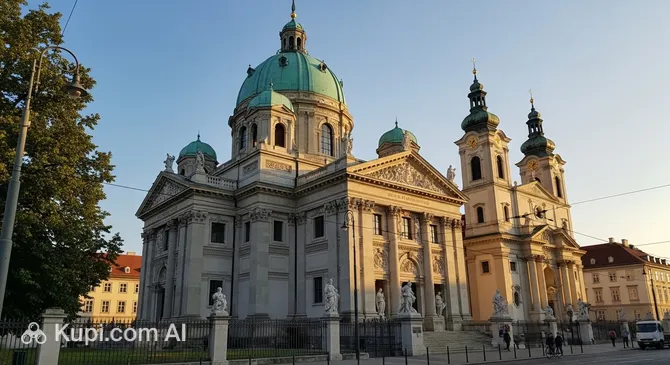
For a dive into the city's imperial past, the Mausoleum of Emperor Ferdinand II is an architectural masterpiece. Located right next to the Graz Cathedral, this Mannerist gem with its distinctive turquoise domes houses the tomb of the emperor. Visitors can admire the stunning interior frescoes and the intricate stucco work that make it one of the most important historical buildings in the city.

Mausoleum of Emperor Ferdinand II. Source: Kupi.Binoculars

When you are ready to trade history for fresh air, Graz provides plenty of inviting green escapes. While the Schlossberg offers the views, locals often head to the Augarten for relaxation. Situated directly on the banks of the Mur River, this spacious public park is perfect for a leisurely stroll, a picnic on the grass, or simply watching the river flow by. It is a vibrant meeting place that brings together students, families, and travelers.

Augarten. Source: Kupi.Binoculars

For those willing to venture a little further from the city center, Lustbühel Castle offers a delightful retreat into nature. Located on the outskirts of Graz, this estate serves as a recreational center complete with a petting zoo and numerous walking paths. It is an ideal spot for families and anyone looking to experience a taste of the Styrian countryside just minutes from the urban bustle.

Getting Around

The public transport system in Graz is efficient, reliable, and covers the entire city comprehensively, making it easy for visitors to get around without a car. Operated primarily by Graz Linien, the network relies on a dense web of trams and buses rather than a metro system. The central hub for almost all lines is Jakominiplatz, where you can easily transfer between different tram and bus routes to reach virtually any part of the city. Trams are generally the fastest way to navigate the city center and major districts, while buses serve the outer neighborhoods and hilly areas.

For tourists, the ticketing system is straightforward as the entire city falls within a single tariff zone (Zone 101). You can choose from various ticket options, but the 24-hour ticket is often the best value for visitors planning a day of sightseeing. There are also hourly tickets available for single journeys. Tickets can be purchased via the "Graz Mobil" smartphone app, at ticket machines located at major stops (including Jakominiplatz and the Main Train Station), in "Tabak" (tobacco) shops, and sometimes from drivers on buses (though usually with exact change). It is important to note that ticket machines inside the trams accept coins and cards.

Once you have a physical ticket, you must validate it immediately upon starting your journey. Look for the orange or blue validation boxes on board buses and trams; failure to stamp your ticket can result in a fine. The system operates on an honor basis with random checks. Regular services typically run from roughly 5:00 AM until midnight. On weekends and before public holidays, the Nightline service takes over, offering night bus routes that ensure you can get home safely after enjoying the city's nightlife.

A unique and highly tourist-friendly feature of the Graz transport system is the Altstadtbim (Old Town Tram). Rides on all tram lines within the historic city center—specifically between Jakominiplatz and Hauptplatz, plus one additional stop in each direction—are completely free of charge. Stops within this zone are marked with a sticker, allowing you to hop on and off without buying a ticket, which is perfect for moving quickly between the main sights.

Regarding special transport, the city offers two distinct ways to ascend the famous Schlossberg hill without walking. The Schlossbergbahn is a historic funicular railway that offers steep, scenic views as it climbs the hill; conveniently, it is part of the public transport network, so your valid Zone 101 ticket covers the ride. Alternatively, the Schlossberg Lift inside the mountain provides a quick vertical ascent, though it requires a separate ticket purchase.

If you prefer more active mobility, Graz is exceptionally bike-friendly and is often cited as one of Austria's cycling capitals. Extensive cycle paths crisscross the city, and bike rental stations are widely available for those who wish to explore on two wheels. Taxis are also plentiful and can be hailed at designated stands or via apps, but given the compact nature of the city and the quality of public transit, they are often a secondary choice for most travelers.

Accommodation

Where to Stay:

Finding the perfect place to stay in Graz is relatively easy, as the city offers a diverse range of accommodation options to suit every budget and travel style. Whether you are looking for a luxurious suite in a historic building, a modern design hotel, a cozy family-run guesthouse, or a budget-friendly hostel, the Styrian capital has plenty to offer. The hospitality here is warm and welcoming, reflecting the city's generally relaxed atmosphere.

For most visitors, the Old Town (Innere Stadt) is the most desirable location. Staying here places you within walking distance of the main sights, such as the Schlossberg and the Main Square, allowing you to immerse yourself fully in the city's charm. If you prefer a more trendy and youthful vibe, the Lend and Gries districts, located just across the Mur River near the Kunsthaus, are excellent choices. These up-and-coming neighborhoods are known for their creative flair, design shops, and lively café culture. Alternatively, the area around the Main Train Station (Hauptbahnhof) offers practical and often more affordable options, with excellent transport links to the center.

Accommodation prices in Graz are generally moderate compared to other major European tourist destinations, though they can vary depending on the season. While you can find great value throughout the year, it is highly recommended to book your room well in advance if you plan to visit during the peak summer months or the festive Advent season in December. Most properties can be easily booked via major online platforms, but checking directly with hotels can sometimes yield special offers or packages.

Nearby Cities

For those looking to explore the surroundings, Graz serves as an excellent base for day trips to several interesting nearby locations. The region of Styria and its neighbors offer a mix of historic towns, industrial heritage, and scenic landscapes that are easily accessible by train or car.

One of the most charming stops is Bruck an der Mur, located at the confluence of the Mur and Mürz rivers. This historic trade city is celebrated for its well-preserved medieval center, particularly the Kornmesserhaus, which is a stunning example of Venetian Gothic architecture in Austria. Visitors can also admire the intricate wrought-iron well on the main square and enjoy the relaxed atmosphere of this ancient town.

Just a short distance away lies Leoben, the second-largest city in Styria. Known as the gateway to the "Iron Road," it boasts a rich history intertwined with mining and brewing. A highlight for visitors is the iconic Schwammerlturm (Mushroom Tower), a former fortification that now offers views over the city. Leoben is also home to the famous Göss Abbey, the birthplace of one of Austria's best-known beers, making it a great spot for culture and culinary enthusiasts alike.

For those interested in medieval fortifications, Kapfenberg is an excellent choice. The city is dominated by the imposing Oberkapfenberg Castle, which sits high on a hill overlooking the valley. The castle is not only a visual landmark but also hosts a birds of prey center with regular falconry shows and an annual medieval festival that brings history to life.

City Population Distance (km)
Wolfsberg2503552
Leoben2464543
Kapfenberg2279844
Bruck an der Mur1583740
Ternitz1463284

These nearby destinations offer a glimpse into the diverse culture and landscapes of the region, providing perfect opportunities for short excursions outside the provincial capital.

Shopping & Souvenirs

Shopping in Graz is a delightful experience that combines the charm of a historic setting with a modern retail variety. As a UNESCO City of Design, the city offers not only standard high-street fashion but also a wealth of creative boutiques, traditional craftsmanship, and unique concept stores. The compact nature of the city center means you can easily navigate between luxury shops, department stores, and quaint back-alley gems on foot.

The main artery for shopping enthusiasts is Herrengasse, a bustling pedestrian zone that connects the Main Square to Jakominiplatz. Here, you will find major international brands and large flagship stores housed in beautiful historic buildings. For a more specialized experience, head to Sackstraße, often referred to as the "Art Mile." This street is famous for its high-quality antique shops, galleries, and jewelers, making it the perfect place to hunt for unique treasures and artistic pieces.

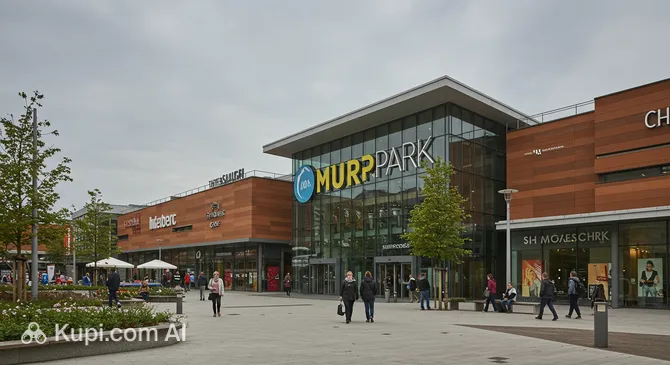
If you prefer the convenience of having everything under one roof, Graz boasts several modern shopping centers. MURPARK is a popular destination that combines shopping with sustainability, featuring a wide range of international fashion brands, restaurants, and services. Another excellent option is CITYPARK, located centrally, which offers a diverse mix of shops and is a long-standing favorite among locals for its variety and accessibility.

MURPARK. Source: Kupi.Binoculars

For a truly authentic Styrian experience, a visit to the city's farmers' markets is mandatory. The most famous of these is the market at Kaiser-Josef-Platz, located near the Opera House. Open every morning (except Sundays), it is the best place to mingle with locals and buy fresh regional produce. Here, you can find the genuine flavors of Styria, from farm-fresh apples and cured meats to homemade breads and seasonal flowers.

When it comes to souvenirs, the undisputed star is Styrian pumpkin seed oil, often called "green gold." This dark, nutty oil is a culinary staple and makes for a perfect gift. Other popular items include roasted pumpkin seeds in various flavors (chocolate, chili, wasabi), bottles of crisp Styrian white wine (like Sauvignon Blanc), and the renowned Zotter chocolates, which are produced in the region. Traditional handicrafts and design products from local creatives also make for memorable keepsakes.

Regarding practicalities, store opening hours in Graz follow the general Austrian pattern. Shops typically open from 9:00 AM to 6:00 PM or 7:00 PM on weekdays. On Saturdays, most stores close earlier, usually between 5:00 PM and 6:00 PM. It is crucial to remember that almost all shops, including supermarkets and malls, are closed on Sundays and public holidays. While credit and debit cards are widely accepted in malls and larger stores, carrying cash is highly recommended for smaller boutiques and essential for the farmers' markets.

Visitors from outside the European Union may be eligible for tax-free shopping. If you spend more than €75 in a single store on the same day, you can ask for a tax-free form to claim a VAT refund upon leaving the EU. Look for the "Tax Free" signage in shop windows to identify participating retailers.

Reached the end of the page?

That means the route is fully explored