Support

Austria

About the Country

Austria is a country in the very heart of Europe, charming visitors with its Alpine landscapes, rich imperial heritage, and a unique atmosphere of hospitality. Despite its relatively small size, it offers a surprising variety of experiences, from majestic mountain peaks to crystal-clear lakes and historic cities, each holding its own unique story.

The cultural and historical grandeur of Austria is particularly evident in its capital, the magnificent Vienna. This city of music, art, and exquisite architecture invites you to discover the legacy of the Habsburgs, stroll through lavish palace complexes, and enjoy its world-famous coffee houses. For travellers from the UAE, Vienna also offers a wide array of halal food options and numerous prayer facilities. No less captivating is Salzburg, the birthplace of Mozart, which enchants with its baroque streets and picturesque views.
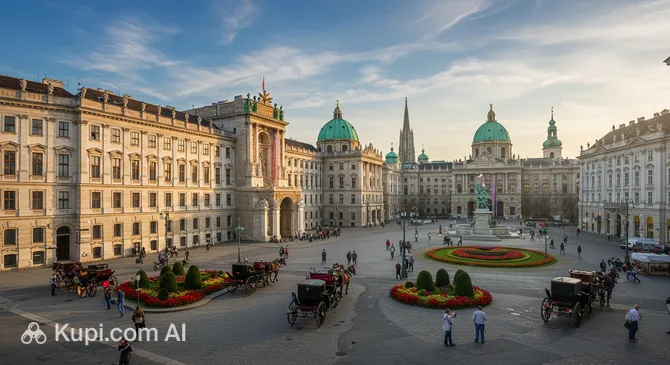
Vienna. Source: Kupi.com Binoculars

Austria's natural beauty is its hallmark. The mighty Alps provide endless opportunities for year-round outdoor activities, from world-class ski resorts in winter to breathtaking hiking and cycling trails in summer. Iconic sites such as the magnificent Schönbrunn Palace allow you to connect with the imperial past amidst scenic parks. The temperate climate makes travelling in Austria pleasant at any time of year, leaving every visitor with the desire to return.
Currency

The national currency of Austria is the Euro (international code: EUR). While it is best to exchange your UAE Dirhams for Euros before you travel, you can also exchange currency at banks and licensed exchange offices in Austria. It is advisable to compare rates and commissions, avoiding exchanges at airports or hotels where the terms may be less favourable.

Banknotes in circulation range from €5 to €500, which are uniform across all Eurozone countries and feature images of architectural styles from various eras. Euro coins have one common side and one national side. Austrian euro coins are notable for displaying symbols and personalities significant to the country, such as the edelweiss flower, Mozart, or the golden eagle.

Credit and debit cards, especially Visa and Mastercard, are widely accepted in most shops, restaurants, and hotels throughout Austria. However, it is always useful to carry some cash, particularly for small purchases, visiting local markets, or for use in smaller establishments in remote areas where card payments may not be possible.

Visa Requirements

When planning a trip to Austria, it is important to familiarise yourself with the current visa requirements in advance. Good news for UAE passport holders: you do not need a visa for short stays in Austria. As Austria is part of the Schengen Area, UAE citizens are permitted to enter and stay for up to 90 days within a 180-day period without a visa. However, for residents of the UAE holding other nationalities, a Schengen visa may be required, and it is essential to check the specific rules for your passport. If a visa is needed, it must be obtained in advance from the Austrian embassy, consulate, or a designated visa application centre in the UAE.

Regardless of visa status, you will need a valid passport to enter the country, which should be valid for at least three months beyond your intended departure date from Austria. It is also highly recommended to carry a standard set of documents, as they may be requested upon arrival. These include return flight tickets, proof of accommodation, and a medical insurance policy. Visa regulations can change, so we strongly recommend checking the most up-to-date information on the official websites of the Austrian embassy or visa centre before you travel.

We'll tell you if you need a visa

Specify where you are going, or
Your citizenship
Destination

Time Zones

When planning your trip to Austria, you will not need to worry about changing time zones within the country, as the entire nation is in a single time zone. It uses Central European Time (CET), which is UTC+1. For residents and travellers from the UAE, this means Austria is three hours behind Gulf Standard Time (UTC+4). Like most European countries, Austria observes Daylight Saving Time and switches to Central European Summer Time (CEST), or UTC+2. This is in effect from the last Sunday in March to the last Sunday in October, reducing the time difference with the UAE to two hours. Therefore, whether you are travelling from Vienna to Salzburg or Innsbruck, the time will be the same.

How to Get There

Austria, located in the heart of Europe, is excellently connected to the world by air. The country's main gateway is Vienna International Airport (VIE), situated near the capital, Vienna. This airport welcomes flights from most European capitals, as well as from North America, Asia, and the Middle East. Additionally, there are international airports in other major Austrian cities such as Salzburg, Innsbruck, Graz, and Linz, providing convenient access to various regions of the country.

For travellers from the UAE, there are convenient direct flights to Vienna available daily. Airlines such as Emirates and Austrian Airlines operate non-stop services from Dubai (DXB). From Abu Dhabi (AUH), Etihad Airways and Wizz Air also offer direct routes. The average flight time for a direct flight is approximately six to seven hours. For the convenience of Muslim travellers, Vienna International Airport has multi-faith prayer rooms that are open 24 hours a day. Some food outlets at the airport also offer halal options.

Thanks to its central location, Austria is also easily accessible by land. The country has a well-developed railway network integrated into the European system, making train travel from neighbouring countries (such as Germany, Switzerland, Italy, the Czech Republic, Slovakia, Hungary, and Slovenia) fast and comfortable. International bus routes also connect Austria with many European cities, offering a more budget-friendly travel option. As Austria is a landlocked country, sea transport is not a primary means of arrival. Regardless of the chosen method, it is advisable to book tickets in advance, especially if your trip falls during the peak tourist season or public holidays, to secure the best prices and availability.

For your reference, here is a summary of Austria's main international airports:

Airport Name City Passenger Traffic
Vienna International AirportViennaMajor
Salzburg Airport W. A. MozartSalzburgMedium
Innsbruck AirportInnsbruckMedium
Graz AirportGrazMedium
Linz AirportLinzSmall

Austria is a country that captivates with its diversity, from majestic imperial cities to picturesque Alpine resorts. There is something here for everyone, whether you are a connoisseur of art and architecture, an outdoor enthusiast, or simply wish to enjoy stunning landscapes. Of course, your introduction to the country should begin with its capital – the magnificent Vienna. This city impresses with its lavish architecture, rich history, countless museums, and cosy coffee houses where you can try the famous apple strudel. Vienna has a growing number of restaurants offering halal food, from Turkish to Persian and Indian cuisine, ensuring visitors can comfortably enjoy local and international dishes.

Vienna. Source: Kupi.com Binoculars

Beyond the capital, Austria boasts other gems. Salzburg, the birthplace of Mozart, enchants with its baroque buildings, the mediaeval Hohensalzburg Fortress, and a unique atmosphere that feels like it has been lifted from the pages of a fairytale. Major cities like Salzburg have mosques or Islamic centres available for visitors. Innsbruck, the capital of Tyrol, surrounded by the mighty Alps, attracts both history lovers with its famous "Golden Roof" and fans of winter sports. Meanwhile, Graz, the country's second-largest city, will surprise you with its harmonious blend of ancient architecture, a UNESCO World Heritage site, and modern design.

For those seeking an active holiday in nature, Austria offers many world-renowned resorts. In winter, skiers and snowboarders flock to places like Ischgl or St. Anton am Arlberg, known for their excellent slopes and lively social scene after a day on the snow. In the summer, resorts such as Zell am See, located on the shore of a scenic lake surrounded by mountains, or Sölden offer endless opportunities for hiking, cycling, and mountaineering. These destinations provide a perfect family-friendly escape to enjoy the fresh, cool mountain air, a pleasant contrast to the UAE's summer heat.

Top Attractions

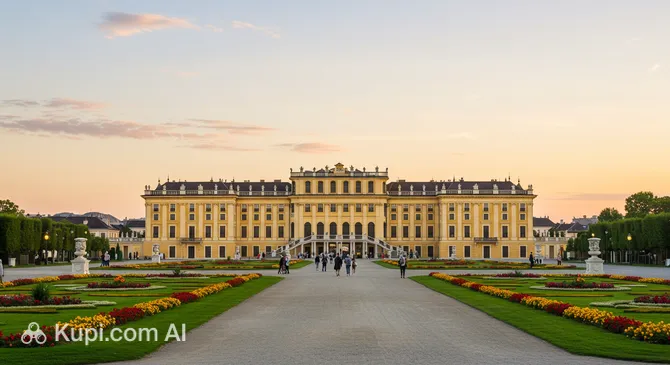
One of Austria's greatest treasures is the Schönbrunn Palace in Vienna. This former summer residence of the Habsburg emperors is breathtaking in its magnificence, with a vast park featuring fountains and sculptures, a Palm House, the Gloriette, and the oldest zoo in the world. A walk through its luxurious halls and picturesque gardens is a true immersion into the country's imperial past. For visitors, several halal-certified restaurants can be found in the districts surrounding the palace, and prayer facilities are available at the Islamic Centre Vienna and other mosques throughout the city.

Schönbrunn Palace. Source: Kupi.com Binoculars

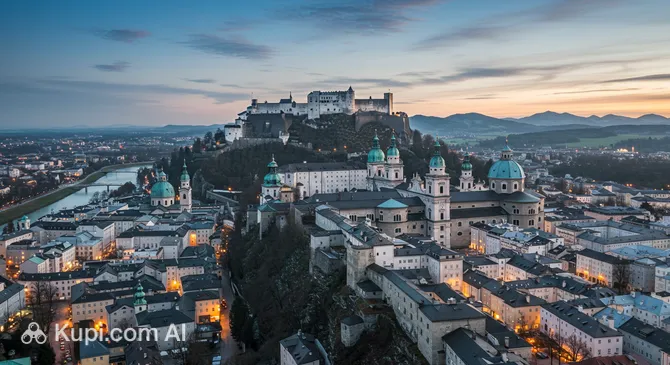
In Salzburg, the Hohensalzburg Fortress rises majestically above the city, one of the largest and best-preserved medieval fortresses in Europe. Its mighty walls offer spectacular panoramic views of Salzburg's historic centre and the surrounding Alpine peaks. Inside the fortress, you can explore the princely chambers and museums to learn about its centuries-old history. A number of restaurants in Salzburg offer halal food, with options ranging from Pakistani to Turkish cuisine. Prayer facilities can be found in the city's mosques.

Hohensalzburg Fortress. Source: Kupi.com Binoculars

Innsbruck's famous symbol, the Golden Roof, is not to be missed. This richly decorated bay window in the heart of the Old Town, covered with 2,657 gilded copper tiles, was built by order of Emperor Maximilian I. It served as a royal box for watching tournaments and performances in the square below and is now one of Austria's most photographed landmarks. While visiting, you can find several halal food options nearby, including Turkish and Indian restaurants. Mosques and Islamic centres in Innsbruck provide spaces for prayer.

Golden Roof. Source: Kupi.com Binoculars

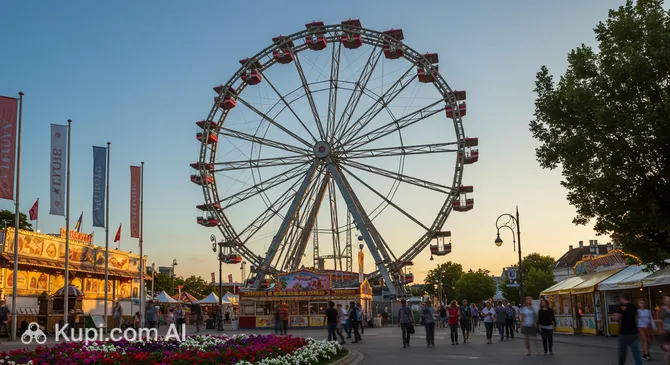
For those seeking entertainment and fun in Vienna, the famous Prater park is a must-see. Its landmark is the historic Riesenrad, a giant Ferris wheel offering magnificent views of the city. In addition to numerous attractions for all ages, the Prater features extensive green spaces perfect for relaxation and leisurely strolls, making it ideal for families. A wide variety of cafés and restaurants are available within the park, and halal options can be found in the surrounding districts.

Prater. Source: Kupi.com Binoculars

Best Time to Visit

Austria is a beautiful destination year-round, but the best time to visit depends on what you're looking for. The high season traditionally falls in the summer (June-August) and winter (December-February). In the summer, you can expect warm, sunny weather, which offers a pleasant escape from the UAE heat, with lush green landscapes and fresh mountain air. It is the perfect time for exploring cities like Vienna or Salzburg, relaxing by the lakes, or hiking in the mountains. Winter transforms the country into a snowy wonderland, with Alpine resorts like Ischgl or St. Anton am Arlberg attracting ski and snowboarding enthusiasts from all over the world. However, be prepared for larger crowds and higher prices for accommodation and services during these peak months.

The shoulder seasons – spring (April-May) and autumn (September-October) – offer their own unique advantages. There are noticeably fewer tourists during these times, and prices are more affordable. In spring, nature comes to life with vibrant colours, while autumn paints the mountains and valleys in stunning shades of gold and crimson, creating magnificent scenery for hiking, for instance, around Zell am See. The weather can be unpredictable during the shoulder seasons, so it’s wise to pack layers of clothing for various conditions. Autumn is also a time for numerous harvest festivals, especially in the eastern regions. Summer is bustling with cultural life, with the famous Salzburg Festival drawing in art lovers, while in winter, the Christmas markets create a magical atmosphere across the country. Given Austria's diverse landscapes, from Alpine peaks to flat plains, it's always a good idea to check the weather forecast for your specific region before you travel.

For Muslim travellers, major cities like Vienna and Salzburg are accommodating. You can find numerous halal restaurants offering Turkish, Middle Eastern, and South Asian cuisine. Prayer facilities are also available, with the Vienna Islamic Centre being one of the largest and most well-known mosques in the country.

Traditions

Austria is a country with rich cultural traditions, and showing respect for local customs will make your journey more pleasant. When meeting and interacting, Austrians appreciate politeness and a degree of formality. The standard greeting is a firm handshake accompanied by direct eye contact. You will often hear the phrases "Grüß Gott" (a traditional greeting, especially in rural areas) or "Guten Tag" (Good Day). If you are invited to someone's home, it is considered good manners to bring a small gift for the hosts, such as flowers (an odd number, and avoid red roses unless it is a romantic gesture) or high-quality chocolates. Punctuality is highly valued, so always try to be on time for any appointments.

In terms of dress, Austrians tend to be quite conservative. Smart casual is suitable for daily life, but a more formal outfit may be required for visiting theatres, opera houses, or certain restaurants. When visiting churches and other religious sites, modest clothing that covers the shoulders and knees is expected. For travellers from the UAE, it is helpful to know that halal food is widely available in Austria, particularly in major cities like Vienna, which has a large and diverse Muslim community and hundreds of halal restaurants serving everything from Middle Eastern to South Asian cuisine. Some restaurants even offer halal-certified versions of traditional Austrian dishes like Wiener Schnitzel. At the dining table, it is customary to keep your hands on the table (but not your elbows) and to start eating only after the host or the eldest person begins, or after they say "Mahlzeit" or "Guten Appetit". Key holidays that are deeply rooted in the culture include Christmas (Weihnachten), with its magical markets, and Easter (Ostern).

To avoid awkward situations, try not to be excessively loud in public places, especially on public transport, as Austrians value personal space. Remember to use the words "bitte" (please/you're welcome) and "danke" (thank you) – they are the foundation of polite conversation. It is also worth noting that discussing personal finances or overly personal topics with people you do not know well is considered impolite. For those who require prayer facilities, they can be found at Vienna International Airport and in various mosques and Islamic centres throughout major cities. Overall, Austrians are hospitable and responsive, and showing an interest in their culture and language will be received with appreciation.

Entertainment

Austria offers travellers an incredible variety of entertainment for every taste and season. Fans of active holidays will be delighted by the majestic Alps, which in summer attract with their scenic routes for hiking and mountain biking, and in winter turn into a paradise for skiers and snowboarders. The crystal-clear lakes provide excellent opportunities for swimming, sailing, and simply relaxing in nature.

The cultural life of Austria is rich and multifaceted. The country is famous for its magnificent opera houses, concert halls where you can enjoy world-class classical music, as well as numerous museums and art galleries that house priceless collections. Cities such as Vienna boast a particularly vibrant cultural programme. As evening falls, Austrian cities come alive: cosy cafés, traditional 'Heuriger' taverns, and restaurants open their doors, offering both local and international cuisine. Many establishments in major cities provide a range of halal food options, from Turkish and Middle Eastern to Indian and Pakistani dishes. For evening leisure, there are also stylish lounges and venues where you can have a pleasant time until the early hours.

For those who cannot imagine a trip without shopping, Austria offers many options – from luxury boutiques on the main streets to small shops with authentic souvenirs. Popular purchases include crystal products, traditional costumes, jewellery, and, of course, famous Austrian sweets like chocolate and Mozartkugel confections. Families with children will also find plenty of exciting activities in Austria: from visiting theme parks and modern interactive museums to meeting the inhabitants of Alpine zoos. Everyone will find entertainment to their liking here, making a family holiday unforgettable.

Currency rates

Planning a trip? That's wonderful! To ensure the financial aspects of your journey don't come as a surprise, it's important to remember that currency exchange rates are constantly changing. Therefore, we strongly advise keeping track of the latest rates just before you fly and throughout your trip. You can use the data provided below for this purpose; we monitor exchange rates 24/7 and strive to provide the most up-to-date information.

EUR currency exchange rate as of 02.01.2026

4.34 AED
~ 1 EUR
450.31 AMD
~ 1 EUR
1.77 AUD
~ 1 EUR
2.01 AZN
~ 1 EUR
3.47 BYN
~ 1 EUR
1.62 CAD
~ 1 EUR
1 GBP
~ 1.14 EUR
386.26 HUF
~ 1 EUR
106.24 INR
~ 1 EUR
103.23 KGS
~ 1 EUR
1704.93 KRW
~ 1 EUR
598.98 KZT
~ 1 EUR
4.24 PLN
~ 1 EUR
93.10 RUB
~ 1 EUR
4.43 SAR
~ 1 EUR
1.52 SGD
~ 1 EUR
50.70 TRY
~ 1 EUR
49.93 UAH
~ 1 EUR
1.18 USD
~ 1 EUR
14181.45 UZS
~ 1 EUR

Reached the end of the page?

That means the route is fully explored