Support

Innsbruck

About

Innsbruck. Source: Kupi.Binoculars

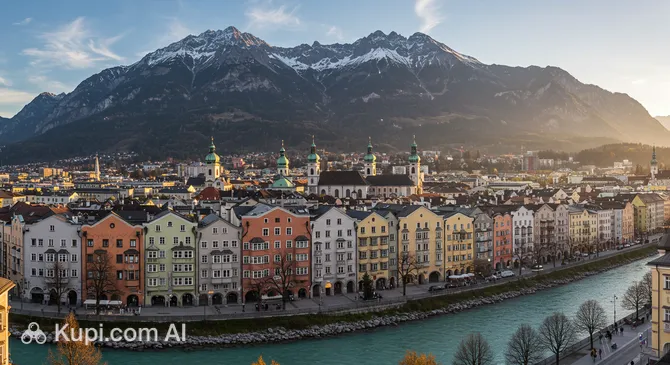
Welcome to Innsbruck, the vibrant capital of the Tyrol region and a destination that perfectly blends urban sophistication with alpine beauty. As the fifth-largest city in Austria, with a population of approximately 132,000 residents, it serves as a lively cultural hub nestled in the heart of the Alps. The city is renowned for its unique atmosphere where imperial architecture meets rugged mountain peaks, offering visitors an unforgettable experience regardless of the season.

Geographically, Innsbruck is situated in the picturesque Inn Valley, enclosed by towering mountains such as the Karwendel Alps to the north and the Patscherkofel to the south. This location not only provides stunning panoramic views but also defines the local climate, which is generally continental with cold, snowy winters perfect for sports enthusiasts and pleasant, warm summers ideal for hiking. Its strategic position has long made it a significant crossroads in Central Europe.

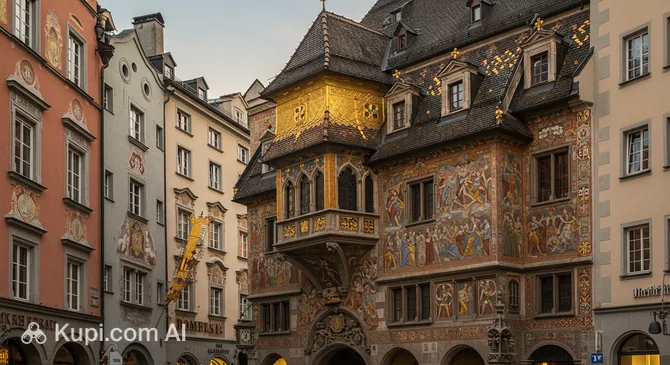
The rich history of Innsbruck is evident in its well-preserved Old Town (Altstadt), where medieval charm meets modern life. Here, visitors can admire the famous Golden Roof (Goldenes Dachl), a landmark adorned with over 2,600 fire-gilded copper tiles built for Emperor Maximilian I. For those seeking nature without leaving the city limits, the Nordkette cable car whisks travelers from the city center to high alpine terrain in just minutes, offering breathtaking vistas over the valley.

Whether you are a winter sports aficionado, a history buff, or simply looking to relax in a cafe with a mountain view, Innsbruck has something special to offer. We invite you to explore this charming alpine gem and discover why it remains one of the most beloved destinations for travelers seeking both adventure and culture.
Weather Overview

Innsbruck experiences a varied climate with distinct seasons, heavily influenced by its location in the heart of the Alps. To help you pack appropriately for your trip, it is useful to review the detailed weather in Innsbruck before you travel. The city generally offers cold, snowy winters and mild, pleasant summers, ensuring a unique atmosphere depending on when you visit.

Winter brings freezing temperatures, with January seeing averages around -4.5°C and lows dropping to -8.7°C, creating ideal conditions for snow sports. Conversely, the summer months of July and August are comfortable rather than sweltering, with average temperatures of 14.0°C and daily highs reaching approximately 18.9°C.

Precipitation is a frequent occurrence throughout the year, so carrying an umbrella or waterproof jacket is always a good idea. May tends to be the wettest month in terms of frequency, featuring up to 24 wet days. Overall, you can expect mild summers with regular showers and cold winters that are relatively dry in terms of liquid rainfall but rich in snow potential.

Interesting Facts

Beyond the postcard-perfect views of the Alps and the historic Old Town, Innsbruck holds many fascinating secrets and unique distinctions that often surprise visitors. Delve deeper into the local lore to discover what makes this Tyrolean capital truly one of a kind.

  • Innsbruck belongs to an exclusive club of cities that have hosted the Winter Olympic Games twice, first in 1964 and again in 1976. It further solidified its status as a winter sports capital by hosting the first-ever Winter Youth Olympic Games in 2012, making it the only city to have hosted the Olympic torch three times.

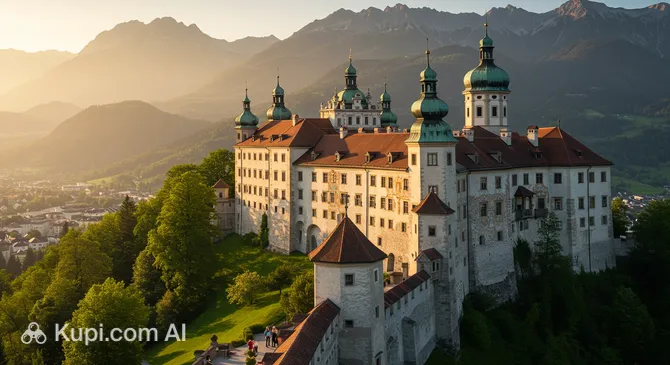
  • High above the city sits Ambras Castle, which is home to the Chamber of Art and Curiosities. Created by Archduke Ferdinand II in the 16th century, this collection is widely regarded as the oldest museum in the world that is still preserved in its original location.

  • The stunning Bergisel Ski Jump is not just a masterpiece of modern architecture designed by Zaha Hadid; it stands on a site of immense historical significance. Long before ski jumpers took to the skies here, the hill was the battleground for the Tyrolean fight for freedom in 1809.

  • While the city is famous for its imperial history, one of its grandest monuments is actually a decoy. The magnificent cenotaph of Emperor Maximilian I in the Court Church (Hofkirche), surrounded by 28 massive bronze statues known as the "Black Men," is empty; the Emperor's actual remains are buried in Wiener Neustadt.

Ambras Castle. Source: Kupi.Binoculars

How to Get There

Reaching the capital of the Tyrol is straightforward thanks to its excellent transport connections and central location in the Alps. Whether you prefer flying directly into the valley or taking a scenic train ride, you can find all ways to reach the city detailed for your convenience.

The most convenient entry point is Innsbruck Airport (IATA: INN), located just 3.7 km from the city center. Known for its spectacular approach through the mountains, this regional airport allows you to reach the heart of the city in just minutes. A taxi or bus ride from the terminal typically takes only about 15 to 20 minutes, making it one of the most accessible airports in Europe for travelers.

For a wider range of international flights, many visitors choose to fly into Franz Josef Strauss Airport (IATA: MUC) in the city of Munich, Germany. Situated approximately 124 km from Innsbruck, it serves as a major global hub. From here, the journey to Innsbruck takes approximately 2 to 2.5 hours by taxi or airport shuttle bus. Another viable option is W. A. Mozart Salzburg Airport (IATA: SZG) in Salzburg, located about 135 km away, offering a transfer time of roughly 2 hours.

For clarity, here is a summary of the main airports:

Airport Name City Passenger Traffic Km from City
Franz Josef Strauss AirportMunichVery Large124.3
Memmingen Allgäu AirportMemmingenMedium118.1
W. A. Mozart Salzburg AirportSalzburgMedium134.8
Innsbruck AirportInnsbruckMedium3.7
BolzanoBolzanoSmall89.9

Traveling by train is another excellent way to arrive, offering stunning views of the alpine landscape. The main hub is the Innsbruck Railway Station (IATA: IOB), located directly in the city, just 1.0 km from the historic center. As a major junction for international rail lines, it welcomes millions of passengers annually, providing easy access to local transport and hotels immediately upon arrival.

If you are coming from Germany, you might connect through Munich Hauptbahnhof in the city of Munich. This massive rail hub is about 98 km from Innsbruck and offers frequent, fast train connections that take you through the scenic Inn Valley in under two hours. Similarly, Salzburg Hauptbahnhof in Salzburg serves as a key connecting point for travelers arriving from the east, located roughly 139 km away.

Below is a list of the nearest and most significant railway stations:

Station City Passenger Traffic Km to Center
Munich HauptbahnhofMunichVery Large97.9
Augsburg HauptbahnhofMunichLarge127.8
Innsbruck Railway StationInnsbruckLarge1.0
Rosenheim Bus StationRosenheimMedium84.9
Salzburg HauptbahnhofSalzburgMedium138.5

Main Attractions

Innsbruck offers a fascinating mix of imperial history and alpine nature, making it a unique destination where city sightseeing and mountain adventures go hand in hand. The city center is compact and walkable, allowing visitors to easily explore its most significant landmarks before heading up into the peaks that surround the valley.

No visit to the Tyrolean capital is complete without seeing the Golden Roof. Located in the heart of the Old Town, this late Gothic oriel is the city's most famous symbol. It was adorned with 2,657 fire-gilded copper tiles for Emperor Maximilian I to mark his wedding around the year 1500. Tourists flock here to admire the shimmering tiles and the detailed frescoes that decorate the balcony, which once served as a royal box for watching tournaments and festivities in the square below.

Golden Roof. Source: Kupi.Binoculars

For those looking to experience the majestic scenery that defines the region, the Nordkette Cable Cars provide an unforgettable journey. Starting directly from the city center, this modern funicular and cable car system whisks visitors up to the Seegrube and further to the Hafelekar peak in just about 20 minutes. It is a favorite among tourists for offering a seamless transition from urban architecture to rugged high-alpine terrain, providing breathtaking panoramic views of the Inn Valley and the Karwendel Nature Park.

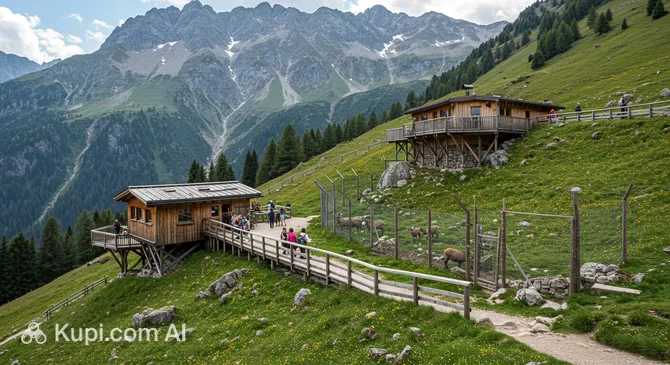
Families and wildlife enthusiasts will find the Alpenzoo Innsbruck to be a highlight of their trip. Situated on the slopes of the Nordkette, it holds the title of Europe's highest-altitude zoo. Unlike typical zoos, it specializes exclusively in alpine animals, housing over 2,000 individuals across 150 species. Visitors can observe brown bears, wolves, golden eagles, and the iconic ibex in enclosures that mimic their natural mountain habitats, offering a unique educational experience.

Alpenzoo Innsbruck. Source: Kupi.Binoculars

Standing tall over the historic center is the City Tower, a medieval structure that dates back to the mid-15th century. For hundreds of years, watchmen kept guard here to warn citizens of fire or approaching enemies. Today, visitors can climb the 133 steps to the viewing platform, which sits 31 meters above the streets. The climb is rewarded with a stunning 360-degree view of the medieval rooftops, the Bergisel Ski Jump in the distance, and the imposing mountain ranges that encircle the city.

Another architectural gem is the Innsbruck Cathedral (Cathedral of St. James). This magnificent Baroque church is visible from afar thanks to its two imposing towers and large dome. Inside, the cathedral impresses with its lavish ceiling frescoes and stucco work. It is also a site of significant cultural importance, housing the tomb of Archduke Maximilian III and the renowned painting "Maria Hilf" by Lucas Cranach the Elder, which is a focal point for pilgrims and art lovers alike.

Local Cuisine

The culinary scene in Innsbruck is a delightful reflection of its alpine surroundings, characterized by hearty, warming dishes designed to fuel hikers and skiers. Tyrolean cuisine is rustic and flavorful, relying heavily on locally sourced ingredients like bacon, cheese, and root vegetables. When visiting, you must try the classic Tiroler Gröstl, a savory pan-fried dish made with potatoes, onions, and bacon, typically topped with a fried egg. It is the ultimate comfort food often served in traditional inns and mountain huts.

Another staple of the local diet is the dumpling, or Knödel. These come in various forms, but the Kaspressknödel (cheese dumplings pressed flat and fried) and Speckknödel (bacon dumplings) are the most iconic. They are often served in a clear, rich beef broth or alongside sauerkraut. For those with a sweet tooth, no meal is complete without Kaiserschmarrn, a fluffy shredded pancake served with stewed plums or apple sauce, dusted generously with powdered sugar.

To wash down these hearty meals, locals often turn to regional beers or the refreshing Almdudler, a popular Austrian herbal soda. However, the Tyrol region is most famous for its Schnapps. After a heavy meal, it is customary to sip on a glass of fruit brandy, with Zirbenschnaps (made from stone pine cones) being a unique local specialty that captures the essence of the high-altitude forests.

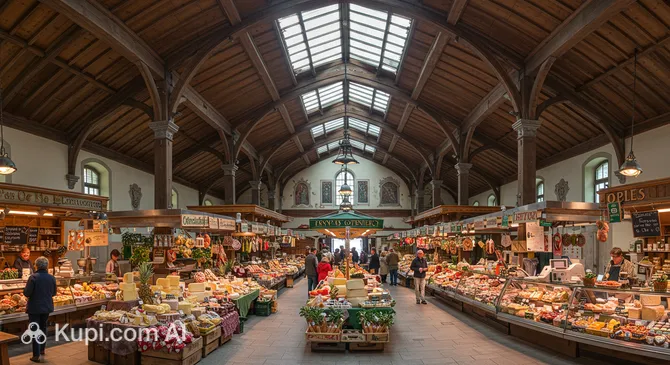
The food culture in Innsbruck ranges from cozy, wood-paneled taverns known as Gasthäuser to vibrant street markets. For a true taste of local life, visit the Innsbruck Market Hall. Here, farmers from the surrounding valleys sell fresh produce, cured meats, and artisan cheeses. It is an excellent spot to grab a quick, authentic snack or simply soak in the bustling atmosphere where tourists and locals mingle over fresh food.

Innsbruck Market Hall. Source: Kupi.Binoculars

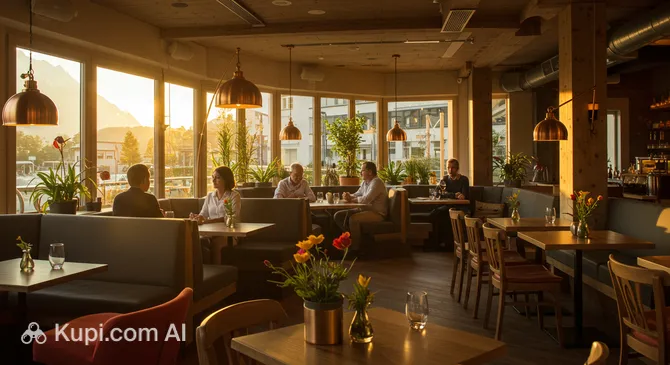
If you are looking for a place that emphasizes regional sourcing with a modern twist, you might check out die Wilderin. Located near the Old Town, this establishment is well-regarded for its commitment to "nose-to-tail" cooking and using ingredients almost exclusively from local producers, offering a contemporary take on traditional Tyrolean hospitality.

Travel Tips

Welcome to Innsbruck, where alpine adventures meet urban charm! To help you navigate the Tyrolean capital like a pro, we have compiled a list of essential practical tips that will ensure your stay is as smooth and enjoyable as possible.

  1. Clothing and Gear: The weather in the Alps can be unpredictable, so the key is layering. Even in summer, evenings can get chilly, especially if you head up the mountains, so bring a waterproof jacket and a warm sweater. In winter, thermal underwear, a heavy coat, and non-slip boots are non-negotiable. Since the Old Town features cobblestone streets, pack comfortable walking shoes with good grip; high heels are generally impractical here.
  2. Transportation: Innsbruck is a compact city best explored on foot, particularly the historic center. For longer distances, the public transport network (IVB), consisting of buses and trams, is reliable and efficient. If you plan to visit multiple museums and use the cable cars, consider purchasing the Innsbruck Card, which includes public transport and admission to many sights. Taxis are available but expensive; ride-hailing apps operate here but are less common than in larger capitals. You generally do not need a rental car within the city limits.
  3. Finances: The official currency is the Euro (€). While credit and debit cards are widely accepted in hotels, restaurants, and major shops, it is essential to carry some cash. Smaller cafes, souvenir stalls, and especially remote mountain huts (Alms) often accept cash only. ATMs are plentiful throughout the city. Tipping is customary; rounding up the bill or leaving about 5-10% is polite if the service was good.
  4. Health and Safety: Innsbruck is one of the safest cities in Europe, but standard precautions against pickpocketing in crowded tourist areas apply. Pharmacies are marked with a red "A" (for Apotheke); they generally operate during standard business hours, with a rotating schedule for night and weekend emergency services. For any serious medical emergencies, the general European emergency number is 112.
  5. Communication: The official language is German, and the local dialect can be quite distinct. However, English is widely spoken, especially in the tourism and service sectors, so you will have no trouble communicating. It is polite to know a few basic phrases: say "Grüß Gott" (a formal "Hello" commonly used in Austria) when entering a shop and "Danke" for "Thank you." Free Wi-Fi is available in many public squares and cafes.
  6. Local Etiquette: Austrians value politeness and order. When entering a shop or elevator, it is customary to greet others. On escalators, stand on the right and walk on the left. If you are toasting with locals, look them in the eye and say "Prost"; failing to make eye contact is considered bad luck! Also, keep your voice down in public transport and restaurants to respect the generally quiet atmosphere.
  7. What to Avoid: Do not walk on the designated bike lanes; cyclists in Innsbruck can be fast and expect pedestrians to stay on the sidewalk. Additionally, avoid comparing Austria too heavily to Germany; locals are proud of their distinct Tyrolean and Austrian identity, and respecting this cultural nuance goes a long way.
  8. Sunday Shopping: Be aware that Sunday is a rest day in Austria. Almost all shops, supermarkets, and pharmacies are closed on Sundays and public holidays. Only a few souvenir shops in the Old Town or small grocery stores at the train station remain open. Plan your shopping accordingly, or join the locals for a Sunday hike or a leisurely brunch.

Armed with these practical insights, you are ready to embrace the Tyrolean way of life. Enjoy the crisp mountain air, the warm hospitality, and the unforgettable scenery of Innsbruck without a worry in the world!

Entertainment & Nightlife

As the sun sets behind the Nordkette mountains, Innsbruck transforms from a hiking and skiing hub into a lively university city with a vibrant nightlife scene. Thanks to its large student population, the atmosphere is energetic yet relaxed, offering everything from cozy wine bars in historic vaults to pulsing clubs tucked under railway arches. Whether you want to dance until dawn or enjoy a quiet drink with a view, the Tyrolean capital has plenty to offer after dark.

The epicenter of Innsbruck's nightlife is undoubtedly the so-called "Viaduktbögen" or Viaduct Arches along Ing.-Etzel-Straße. Here, the spaces beneath the railway tracks have been converted into a mile-long strip of bars, clubs, and music venues. It is the place to be if you are looking for a party atmosphere. A standout venue in this area is pmk (Plattform mobile Kulturinitiativen), which is famous for its alternative vibe, hosting concerts, DJ sets, and cultural events that attract a diverse and creative crowd.

For those who prefer a more traditional pub atmosphere or live sports, the area around the Old Town and Maria-Theresien-Straße offers numerous options. The Galway Bay Irish Pub is a local favorite, known for its authentic decor, wide selection of beers, and welcoming environment where English is widely spoken. It is a perfect spot to mingle with both locals and fellow travelers. If you are seeking something culturally enriching, Treibhaus is a legendary institution in Innsbruck. Known for its jazz concerts, cabaret, and world music performances, it also features a lovely garden that is popular on warm summer evenings.

Treibhaus. Source: Kupi.Binoculars

Practicalities for a night out in Innsbruck are straightforward. The dress code is generally casual; you will see jeans and sneakers more often than high fashion, even in clubs. Most bars stay open until 1:00 or 2:00 AM, while clubs in the Viaduct area keep the music going until 4:00 AM or later on weekends. Prices are moderate compared to other major European cities, with many places offering student discounts. For getting around safely at night, the "Nightliner" bus network operates on weekends and holidays, covering the city and surrounding villages until the early morning hours. Taxis are also readily available at designated stands or can be hailed via phone, and the city is considered very safe for walking at night.

While nightlife is a major draw, Innsbruck also offers exciting daytime entertainment beyond the slopes. For adrenaline seekers looking for indoor fun, FLIP LAB Innsbruck is a modern trampoline and freestyle park suitable for all ages. Culture enthusiasts can explore the rich heritage of the region at the Tyrolean State Museum Ferdinandeum, which houses comprehensive collections ranging from prehistoric times to modern art. Whether day or night, the city ensures there is never a dull moment.

Parks & Museums

While the towering Alps often steal the show, Innsbruck balances its rugged surroundings with elegant green spaces and a museum landscape that rivals much larger cities. Whether you are looking to stroll beneath ancient trees or dive into the region's turbulent history and innovative science, the city offers a diverse array of cultural and natural retreats.

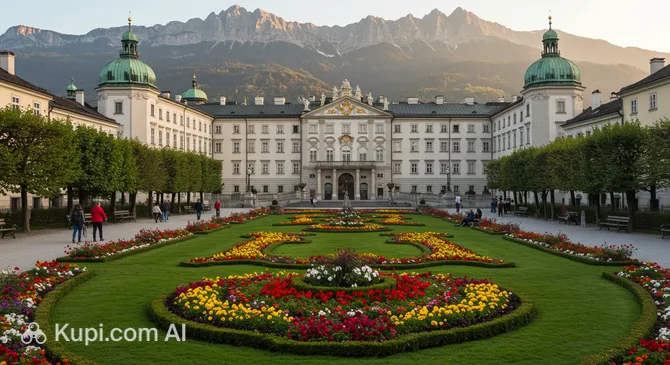
The most prominent green oasis in the city center is the Innsbruck Court Garden (Hofgarten). Located directly adjacent to the Imperial Palace, this protected monument dates back to the early 15th century. Originally a kitchen garden for the court, it has evolved into a lush English-style landscape park featuring exotic plants, sunbathing lawns, and a music pavilion. It is the perfect spot for a picnic or a quiet break from sightseeing, offering a stunning contrast between the manicured flower beds and the wild mountain peaks in the background.

Innsbruck Court Garden. Source: Kupi.Binoculars

For a different kind of natural beauty, the University's Botanical Garden in the Hötting district is a hidden gem. It houses over 7,000 plant species, including a fragrant medicinal garden and modern greenhouses that display tropical and subtropical flora. Another lovely outdoor space is the park surrounding Ambras Castle; while the castle is a major attraction, the expansive grounds with their artificial waterfalls and peacock habitats are free to explore and offer a romantic setting for a walk.

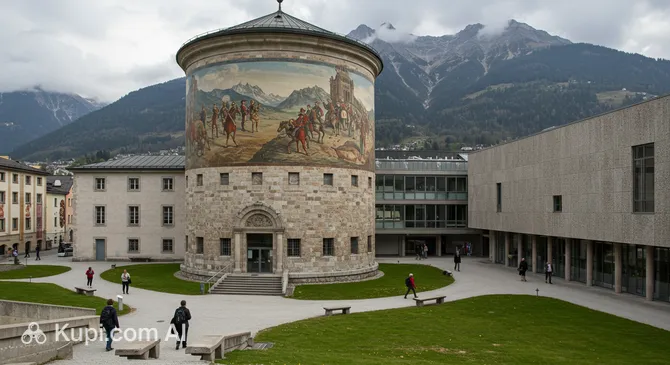
When it comes to museums, the Tirol Panorama and Museum of the Imperial Infantry is a must-see for history buffs. Located on the historic Bergisel hill, its centerpiece is a massive 360-degree cycloramic painting that depicts the Tyrolean fight for freedom in 1809. The sheer scale of the artwork, combined with the museum's underground connection to the Kaiserjägermuseum, provides an immersive look at the region's military and social past.

Tirol Panorama and Museum of the Imperial Infantry. Source: Kupi.Binoculars

Families and technology enthusiasts will find the AUDIOVERSUM Science Center particularly engaging. This interactive museum is dedicated entirely to the sense of hearing. Through multimedia installations and hands-on exhibits, visitors can navigate a 3D ear, experience sound in virtual reality, and understand how we perceive the world through auditory signals. It is a modern, educational contrast to the city's traditional historical sites.

For a fresh perspective on the region, consider visiting Experience Tirol. This relatively new attraction uses virtual reality, holograms, and 360-degree projections to showcase the landscapes, traditions, and art of Tyrol in a condensed, high-tech format. It is an excellent way to get an overview of the entire province without leaving the city center.

Insider Tip: If you are interested in traditional craftsmanship, seek out the Grassmayr Bell Foundry. Although not always on the main tourist trail, this family-run business has been casting bells for over 400 years. Their museum allows you to see the casting pit and feel the vibrations of bells that are shipped all over the world.

Getting Around

Navigating Innsbruck is remarkably easy thanks to its efficient and well-integrated public transport network, operated primarily by the Innsbrucker Verkehrsbetriebe (IVB). The system relies heavily on a dense grid of trams and buses that connect the city center with the suburbs and surrounding villages. The trams are particularly convenient for moving between major districts, while buses cover the areas in between. For tourists, the "Sightseer" hop-on hop-off bus is a popular option, linking major attractions like Ambras Castle and the Bergisel Ski Jump with the Old Town.

A unique feature of Innsbruck's transport system is the Hungerburgbahn. This modern funicular railway, designed by the renowned architect Zaha Hadid, is more than just a tourist attraction; it is a fully integrated part of the public transit network. It transports passengers from the Congress station in the city center across the Inn River and up the mountainside to the Hungerburg district in just a few minutes. From there, travelers can connect to the cable cars that ascend further to the Seegrube and Hafelekar peaks.

For payment, visitors have several convenient options. Single tickets are available, but for those planning to explore extensively, a 24-hour ticket is often the most economical choice. If you intend to visit museums and attractions, the Innsbruck Card is highly recommended; it offers unlimited use of public transport (including the Hungerburgbahn and the Sightseer bus) alongside free entry to most sights. Tickets can be purchased via the "IVB Tickets" mobile app, at ticket machines located at most stops, or in tobacco shops (Tabak Trafik).

Practicality is key when using the system. If you buy a paper ticket from a machine or a shop, you must validate it by stamping it in the blue boxes located onboard buses and trams or at the station platforms before boarding the funicular. Failure to validate can result in a hefty fine. Generally, the network operates from early morning, around 5:30 AM, until shortly after midnight. On Fridays, Saturdays, and before public holidays, the "Nightliner" bus service ensures you can get home safely even in the early hours of the morning.

Beyond buses and trams, Innsbruck is an incredibly bike-friendly city. The Stadtrad Innsbruck bike rental system allows you to pick up a bicycle at one station and drop it off at another, offering a healthy and scenic way to explore the paths along the Inn River. Taxis are also readily available at designated stands throughout the city center and at the train station, though they are significantly more expensive than public transit. Given the compact nature of the city and the pedestrian-friendly Old Town, car rentals are generally unnecessary for staying within Innsbruck itself.

Accommodation

Finding the perfect place to stay in Innsbruck is relatively easy, as the city offers a wide spectrum of accommodation options to suit every preference and budget. Whether you are looking for the opulence of a historic luxury hotel, the convenience of a modern mid-range establishment, or the social atmosphere of a budget-friendly hostel, the Tyrolean capital has it all. Additionally, there is a strong market for vacation rentals and apartments, which are particularly popular among families and groups here for extended skiing or hiking holidays.

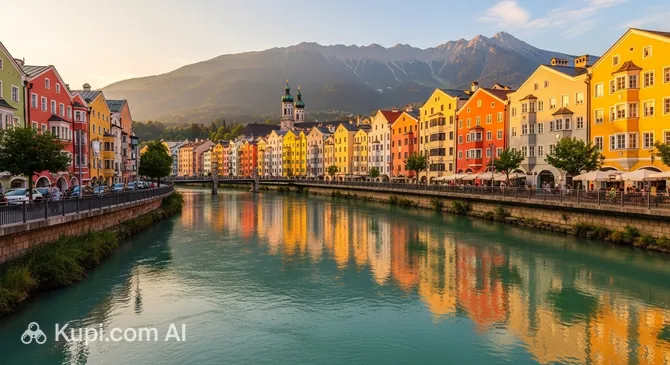
The most sought-after location for tourists is undoubtedly the Old Town (Altstadt) and its immediate surroundings. Staying here places you within walking distance of major landmarks like the Golden Roof and the Imperial Palace, making it ideal for first-time visitors who want to soak up the historic atmosphere. For those who prefer a room with a view of the river and the colorful row houses, the district of Mariahilf on the opposite bank of the Inn River offers a picturesque setting that is still just minutes from the center. Travelers on a budget or those arriving by train often find excellent value and convenience in the area around the main railway station.

Innsbruck Colourful Houses. Source: Kupi.Binoculars

If you prefer a quieter retreat away from the urban bustle, the villages surrounding Innsbruck—such as Igls, Mutters, or Hungerburg—provide a more traditional alpine experience. These areas are well-connected to the city center by public transport and offer the added benefit of being closer to nature trails and ski lifts. Staying in these outskirts often allows for more spacious accommodation, such as family-run guesthouses (Gasthöfe) that serve authentic local breakfast.

Booking Tips: Innsbruck is a dual-season destination, meaning it is incredibly popular in both winter (especially around Christmas and the ski season) and summer. Consequently, it is highly advisable to book your accommodation well in advance, particularly if you plan to visit in December, February, or July. During these peak times, availability in the city center can drop quickly, and prices tend to rise.

In terms of cost, prices are generally comparable to other popular Western European cities. You can expect to pay a premium for hotels located directly in the pedestrian zones of the Old Town. Budget travelers can save significantly by choosing hostels or staying slightly further out and utilizing the excellent tram and bus network. Most accommodations can be easily booked via major online platforms, though contacting smaller, family-run guesthouses directly can sometimes yield better rates or special offers.

Nearby Cities

For those looking to explore the surroundings, Innsbruck serves as an excellent base for day trips to several interesting nearby locations:

One of the most popular destinations is Kufstein, often called the "Pearl of Tyrol." Located just a short train ride away along the Inn River, this historic town is dominated by a massive medieval fortress that towers over the city center. Visitors are drawn here to hear the Heroes' Organ, the largest open-air organ in the world, and to wander through the picturesque Römerhofgasse with its traditional frescoes and wine taverns.

Further west lies Bregenz, a cultural gem situated on the shores of Lake Constance (Bodensee). Known internationally for its summer music festival featuring a spectacular floating stage, the city offers a unique blend of alpine and lakeside atmosphere. A trip up the Pfänder mountain provides breathtaking views across the lake to Germany and Switzerland, making it a rewarding day trip for scenery lovers.

For a quick excursion closer to the capital, Telfs offers a relaxed market town vibe at the foot of the Hohe Munde mountain. It is home to the impressive Peace Bell of the Alps and serves as a gateway to the scenic Seefeld plateau, making it an ideal spot for hiking enthusiasts or those seeking a quiet afternoon away from the city bustle.

City Population Distance (km)
Dornbirn 48067 126
Bregenz 29806 127
Kufstein 19223 68
Saalfelden 16700 111
Telfs 16046 25

These nearby destinations offer a glimpse into the diverse culture and landscapes of the region.

Shopping & Souvenirs

Shopping:

Shopping in Innsbruck offers a delightful blend of alpine tradition and modern urban flair. The city center is compact and walkable, allowing visitors to seamlessly transition from browsing high-end international brands to exploring centuries-old family businesses. Whether you are looking for outdoor equipment to tackle the mountains or exquisite local handicrafts, the Tyrolean capital provides a diverse retail experience set against a stunning mountain backdrop.

The primary shopping artery of the city is the Maria-Theresien-Straße. This broad, largely pedestrianized boulevard is lined with magnificent baroque architecture, including the famous St. Anne's Column, and features a mix of department stores, fashion chains, and cafes. As you move towards the Golden Roof, the streets narrow into the historic Old Town (Altstadt). Here, beneath medieval arcades, you will find specialized boutiques selling traditional Tyrolean clothing, jewelry, and art, making it the perfect area for leisurely window shopping.

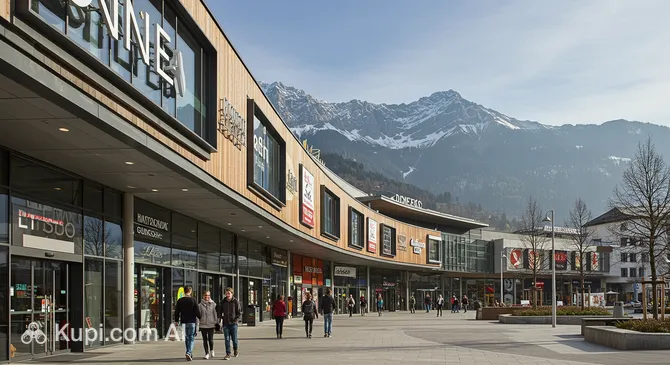
For those who prefer a comprehensive shopping experience under one roof, Innsbruck boasts several modern malls. The DEZ Shopping Center, located on the eastern outskirts of the city, is the largest in Tyrol and hosts a vast array of fashion, electronics, and lifestyle stores. Closer to the city center and main railway station is Sillpark, a convenient shopping destination with over 70 shops and restaurants. Both malls offer ample parking and are easily accessible by public transport.

DEZ Shopping Center. Source: Kupi.Binoculars

If you are a food lover, a visit to the Innsbruck Market Hall is essential. Located on the banks of the Inn River, this indoor market is a vibrant hub where local farmers sell fresh vegetables, fruits, and regional specialties. It is an excellent place to purchase authentic Tyrolean cheese, cured meats, and fresh bread directly from the producers. In December, the city also transforms into a winter wonderland with several Christmas markets offering handmade crafts and festive treats.

When it comes to souvenirs, Innsbruck has plenty of unique options. The region is world-famous for Swarovski crystals, and you can find sparkling jewelry and figurines in dedicated boutiques. Traditional items such as "Tiroler Hut" (felt hats), hand-carved wooden nativity figures, and cowbells are also popular keepsakes. Culinary gifts like Tyrolean bacon (Speck), pumpkin seed oil, or a bottle of locally distilled Schnapps are perfect for bringing a taste of the Alps back home.

Standard opening hours for shops in Innsbruck are generally from Monday to Friday, 9:00 AM to 6:00 PM or 7:00 PM, and Saturdays from 9:00 AM to 5:00 PM or 6:00 PM. It is important to note that, with very few exceptions for souvenir shops in the Old Town or grocery stores at the train station, almost all shops are closed on Sundays. Major credit cards (Visa, Mastercard) are widely accepted, but it is advisable to carry some cash for smaller purchases at market stalls or traditional bakeries.

Visitors from outside the European Union are eligible for tax-free shopping on purchases exceeding a certain amount, typically around €75. Look for the "Tax Free" logo in shop windows and ask for a refund form at the checkout. You can then claim your VAT refund at the customs office at the airport or border when leaving the EU.

Reached the end of the page?

That means the route is fully explored