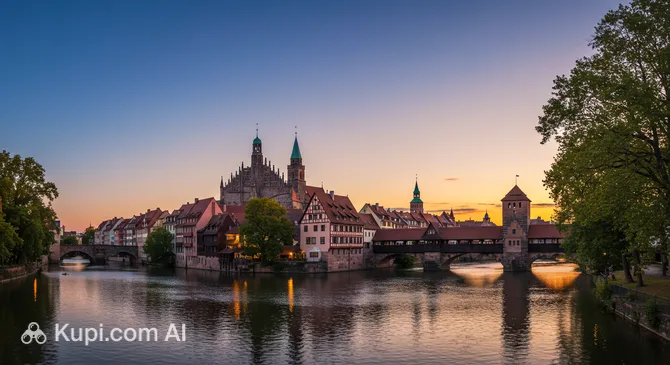
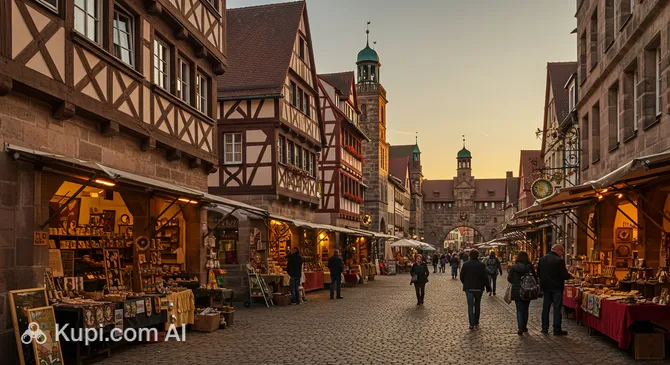
Welcome to Nuremberg, a captivating destination that effortlessly bridges the gap between the Middle Ages and the modern era. Located in the heart of the federal state of Bavaria in Germany, this city is renowned for its distinct character, vibrant cultural scene, and architectural beauty. As the second-largest city in Bavaria with a population of approximately 515,000 people, it offers a bustling urban environment that still retains a cozy, historical charm.
Nuremberg. Illustration.
Source: Kupi.com AI
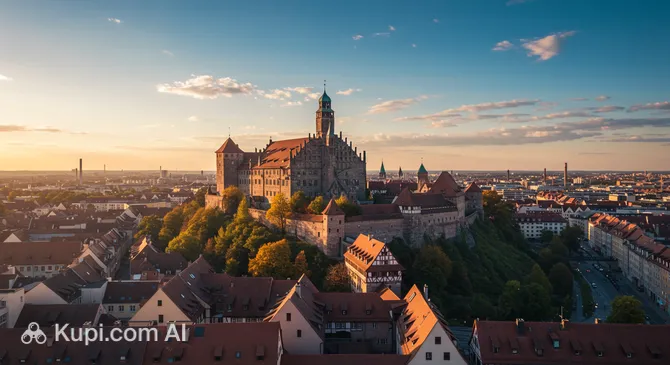
The city is steeped in tradition and legend, having served as a significant center of power in the Holy Roman Empire. Exploring the history of Nuremberg reveals a rich tapestry of events that have shaped its identity over the centuries. Today, visitors can witness this heritage firsthand by visiting the majestic Imperial Castle (Kaiserburg), which dominates the skyline and offers panoramic views of the red-tiled roofs below.
Nuremberg is perhaps best known globally for its magical atmosphere during the winter season. It hosts the world-famous Christkindlesmarkt, one of the oldest and most spectacular Christmas markets in Europe, drawing millions of visitors annually. Beyond the festivities, the city invites you to stroll through its picturesque Old Town, admire the historic bridges over the Pegnitz River, and indulge in local culinary delights like the famous Nuremberg bratwurst and gingerbread. Whether you are a history buff or a food lover, Nuremberg promises an unforgettable journey.
Weather Overview
The climate in Nuremberg is moderately continental, characterized by distinct seasonal changes that offer a different atmosphere throughout the year. Before packing your bags, it is helpful to review the current weather in Nuremberg to ensure you are prepared for the conditions. Generally, visitors can expect warm, pleasant summers and cold, often damp winters.
During the warmest months of June, July, and August, the city is ideal for outdoor exploration. Average temperatures during this period hover between 18.5°C and 19.7°C, with daytime highs frequently reaching a comfortable 24.5°C. While the weather is generally inviting, precipitation is spread relatively evenly throughout the year, so you might still encounter occasional rain showers.
Winter brings a distinct chill to Bavaria, setting the stage for the city's cozy seasonal traditions. From December to February, temperatures drop significantly, averaging between 1.8°C and 3.2°C, with lows dipping to around -0.5°C. December is typically the dampest month, featuring approximately 16 wet days. Spring and autumn serve as mild transitional periods, with average temperatures rising to 13.2°C by May and cooling down to 11.4°C in October, offering crisp conditions for sightseeing.
Average monthly temperature
Average monthly precipitation
Interesting Facts
Beyond the main attractions, Nuremberg holds many fascinating secrets and historical innovations that shaped the world. From inventing portable timepieces to being a global hub for traditional craftsmanship, this Bavarian city has a legacy of ingenuity that extends far beyond its medieval walls.
The city is widely known as the "Toy City" due to a toy-making tradition that dates back to the Middle Ages. This playful heritage is preserved at the Nuremberg Toy Museum, and the city still hosts the world's largest international trade fair for toys every year.
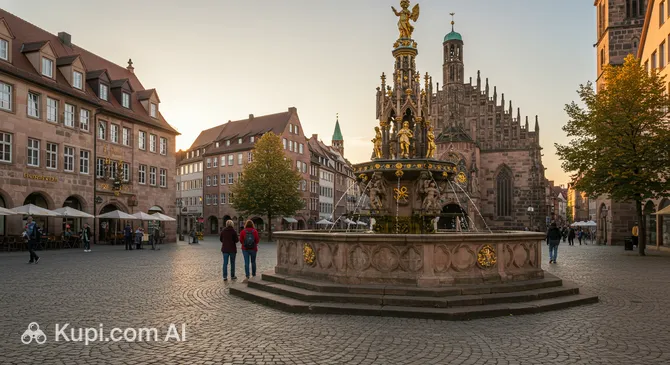
A charming local legend surrounds the Beautiful Fountain in the main market square. Embedded in its ornate iron grille is a seamless golden ring; tradition says that turning it three times will bring you good luck or grant a wish.
Nuremberg is the birthplace of the very first pocket watch, historically known as the "Nuremberg Egg." Invented by locksmith Peter Henlein in the early 16th century, these small, portable clocks were a technological marvel of their time.
The world's oldest surviving terrestrial globe, the "Erdapfel" (Earth Apple), was created here by Martin Behaim in 1492. Because it was completed just before news of Christopher Columbus's discoveries reached Europe, the globe famously depicts the world without the Americas.
The famous Renaissance artist Albrecht Dürer lived and worked in this city for many years. The Albrecht Dürer House is one of the few surviving burgher houses from that golden era, offering a rare glimpse into the life of the master painter.
Beautiful Fountain. Illustration.
Source: Kupi.com AI
Traveler photos:
How to Get There
Reaching this Bavarian gem is straightforward thanks to its excellent infrastructure and central location in Europe. Whether you prefer flying or taking the train, the city is well-connected to major domestic and international hubs. For a complete guide on travel options and detailed routes, you can read more about how to get to Nuremberg.
The most convenient entry point is Nuremberg Airport (IATA: NUE), located just 4.6 km from the city center. It serves as a key regional hub with connections to various European cities. Since the airport is situated within the city limits, the transfer to the downtown area is very quick; a taxi ride typically takes around 15 to 20 minutes. You can also utilize the efficient subway system, which connects the terminal directly to the central station in roughly the same amount of time.
For intercontinental flights, many travelers choose to fly into Franz Josef Strauss Airport (IATA: MUC) in Munich, which is approximately 133 km away. As one of Germany's largest international airports, it offers a wider range of global connections. From Munich, you can reach Nuremberg by road in about 1.5 to 2 hours via taxi or shuttle bus, though many visitors opt for the high-speed train connection for comfort and speed.
For clarity, here is a summary of the main airports:
Traveling by train is another popular and scenic way to arrive. The city's main railway hub is Nuremberg Hauptbahnhof, located directly in the heart of the city, just 1.1 km from the historic center. It is one of the busiest stations in Germany, offering frequent high-speed ICE connections to major cities like Munich, Frankfurt, and Berlin. Arriving here places you immediately within walking distance or a short taxi ride of many hotels and attractions.
Below is a list of relevant railway stations in the region:
No visit to this Bavarian city is complete without exploring the iconic Nuremberg Castle. Perched high on a sandstone ridge, this impressive fortress served as one of the most important imperial palaces of the Holy Roman Empire during the Middle Ages. Visitors can tour the well-preserved Palas with its imperial apartments, climb the Sinwell Tower for breathtaking panoramic views of the Old Town, and peer into the Deep Well, which descends nearly 50 meters into the rock. It is a perfect starting point to understand the city's historical significance.
Nuremberg Castle. Illustration.
Source: Kupi.com AI
Traveler photos:
For those interested in 20th-century history, the Documentation Center Nazi Party Rally Grounds offers a profound educational experience. Located in the unfinished Congress Hall, the museum examines the causes, context, and consequences of the National Socialist regime. The permanent exhibition, "Fascination and Terror," provides a critical look at the propaganda mass rallies that once took place on these grounds, helping visitors understand a dark chapter of history in a thoughtful and informative setting.
Architecture enthusiasts should head to St. Sebaldus Church, the oldest parish church in the city. Situated just opposite the Old Town Hall, this masterpiece transitions beautifully from late Romanesque to Gothic styles. Inside, you can admire the intricate Shrine of St. Sebaldus, created by the famous bronze caster Peter Vischer, as well as numerous other works of art that survived the destruction of World War II and subsequent reconstruction.
St. Sebaldus Church. Illustration.
Source: Kupi.com AI
Traveler photos:
If you are traveling with family or simply enjoy nature, the Nuremberg Zoo is a wonderful escape from the urban bustle. It is one of the largest and most scenic landscape zoos in Europe, nestled within a lush forest with ancient sandstone formations. The zoo is renowned for its spacious enclosures and successful breeding programs, featuring a popular dolphin lagoon and a tropical manatee house that delights visitors of all ages.
Art and culture lovers will find a treasure trove at the Germanic National Museum. As the largest museum of cultural history in the German-speaking world, it houses a vast collection ranging from prehistoric times to the present day. Highlights include the original "Erdapfel" globe mentioned in local lore, works by Albrecht Dürer, and a fascinating array of historical musical instruments, offering a deep dive into the region's artistic heritage.
Local Cuisine
Nuremberg's culinary scene is a delightful reflection of its Franconian heritage, characterized by hearty, rustic dishes and a deep-rooted brewing tradition. The food here is unpretentious but incredibly flavorful, focusing on high-quality local ingredients and centuries-old recipes. Whether you are dining in a historic tavern or grabbing a quick bite from a street stall, the local flavors are sure to be a highlight of your trip.
The undisputed star of the local menu is the famous Nuremberg Rostbratwurst. These small, finger-sized sausages are protected by a geographical indication, meaning they must be produced within the city limits according to a strict recipe that dates back to the 14th century. Typically seasoned with marjoram, they are grilled over a beech wood fire for a smoky flavor. You can enjoy them in a restaurant served on a pewter plate with sauerkraut and bread, or try the popular street food version known as Drei im Weggla—three sausages in a crusty roll.
For a more substantial meal, look for the Franconian Schäufele, a slow-roasted pork shoulder known for its tender meat and incredibly crispy, crackling rind. It is traditionally served with a large potato dumpling and rich dark gravy, making it the ultimate comfort food. On the sweeter side, the city is world-renowned for its Nürnberger Lebkuchen (gingerbread). These spicy, nutty treats are available year-round but are especially popular during the Christmas season. Be sure to try the Elisenlebkuchen, the highest quality variety made with very little to no flour and plenty of almonds and hazelnuts.
No culinary tour is complete without tasting the local beer. Nuremberg has a brewing history that spans over 700 years, with the city's signature Rotbier (red beer) being a must-try. This bottom-fermented specialty was historically stored in the vast underground tunnel system to keep it cool. You can learn more about this tradition and taste the beer in its original setting by visiting the Nuremberg Historic Rock-Cut Cellars. The city's beer culture is vibrant, with numerous breweries offering a relaxed atmosphere to enjoy a cold pint.
To experience the authentic ambiance of old Nuremberg while dining, the Handwerkerhof Nuremberg is an excellent choice. Located behind the city walls near the main station, this "Craftsmen's Courtyard" features traditional bratwurst kitchens and wine bars nestled among half-timbered houses.
Handwerkerhof Nuremberg. Illustration.
Source: Kupi.com AI
Traveler photos:
For those seeking a mix of history and gastronomy, the Brewery at the Opera House offers classic Franconian dishes in a lively setting. Whether you prefer a sit-down dinner or a casual snack at a market stall, the city's food culture is welcoming and deeply satisfying.
Travel Tips
To ensure your visit to Nuremberg is as smooth and enjoyable as possible, we have compiled a list of essential practical advice. From navigating the local transport system to understanding cultural nuances, these tips will help you travel with confidence and ease in this historic Bavarian city.
Clothing and Gear: The weather in Franconia can be changeable, so packing layers is the best strategy regardless of the season. Comfortable, sturdy walking shoes are a must, as the Old Town is paved with cobblestones that can be uneven. If you are visiting during the Christkindlesmarkt in winter, bring thermal underwear, a warm hat, and gloves. Don't forget a standard European power adapter (Type F) for your electronics.
Transportation: The city center is very compact and best explored on foot, but for longer distances, the public transport network (VGN) is excellent. It integrates the subway (U-Bahn), trams, and buses seamlessly. Note that the U2 and U3 subway lines are fully automated and driverless—a unique experience. Renting a car is generally unnecessary within the city due to limited parking and pedestrian zones; stick to public transit or ride-hailing apps like Uber or Free Now.
Finances: The local currency is the Euro (€). While credit cards (Visa and Mastercard) are increasingly accepted, Germany is still very much a cash-oriented society. Smaller bakeries, traditional Imbiss stalls, and some cafés may only accept cash or the local EC card. It is wise to carry some cash with you at all times. ATMs are widely available. For tipping, it is customary to round up the bill or leave about 5-10% for good service.
Health and Safety: Nuremberg is generally a very safe city for travelers. Pharmacies, identified by a red "A" (Apotheke), are easy to find; look for a sign on the door indicating the nearest "Notdienst" (emergency service) if you need help after hours. In an emergency, dial 112 for medical or fire services and 110 for the police. As in any popular tourist destination, keep an eye on your belongings in crowded areas like the central market square.
Communication: The official language is German, but English is widely spoken, especially in the hospitality and tourism sectors. However, learning a few basic phrases like "Hallo" (Hello), "Danke" (Thank you), and "Bitte" (Please) is always appreciated by locals. Free Wi-Fi is often available in the city center and at major transport hubs. For constant connectivity, you can easily purchase a prepaid SIM card at supermarkets or electronics stores.
Local Etiquette: Bavarians value politeness and order. When entering a small shop or elevator, it is polite to greet others with a "Hallo" or the regional "Grüß Gott." If you are enjoying a beer with locals, always make eye contact when clinking glasses and say "Prost"—it is considered rude not to look the other person in the eye. Punctuality is also highly valued, so try to be on time for any tours or reservations.
What to Avoid: Be very careful not to walk in the designated bicycle lanes, which are often marked in red or separated by a line on the sidewalk. Cyclists in Nuremberg move quickly and expect pedestrians to stay clear. Additionally, avoid jaywalking; locals strictly adhere to pedestrian traffic lights, and crossing on red is frowned upon, especially if children are present.
Sunday Closures: Keep in mind that Sunday is a rest day in Germany. Almost all shops, supermarkets, and pharmacies are closed, except for those at the main train station and the airport. Plan your shopping accordingly, and use Sundays for sightseeing, visiting museums, or enjoying a relaxed meal at a restaurant, as these remain open.
Armed with these practical insights, you are ready to immerse yourself in the charm and history of Nuremberg without the stress of the unexpected. Enjoy the local hospitality, savor the delicious food, and have a wonderful time exploring this unique corner of Bavaria!
Entertainment & Nightlife
When the sun sets over the medieval rooftops, Nuremberg transforms into a vibrant hub of evening activity. The city offers a diverse nightlife scene that ranges from cozy, centuries-old pubs to stylish modern clubs. The atmosphere is generally relaxed and welcoming, with the Old Town (Altstadt) serving as the epicenter for night owls. One of the most picturesque streets for a night out is the Weißgerbergasse. Here, amidst one of the largest ensembles of historic half-timbered houses, you will find a dense concentration of bars, pubs, and cafes that spill out onto the cobblestones during warmer months.
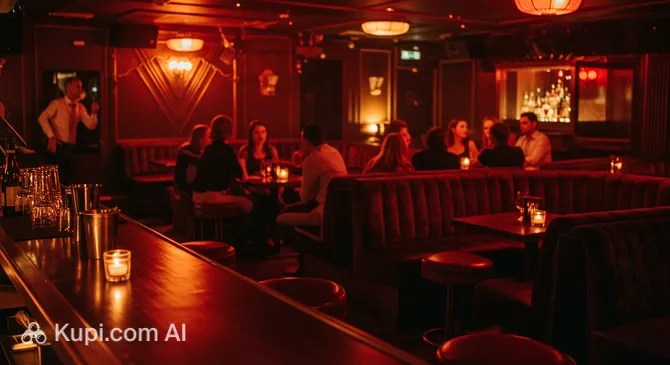
For a truly unique experience in this area, you can visit the Mata Hari Bar. Often referred to as Nuremberg's "smallest live bar," it offers an intimate "living room" vibe with a wide selection of drinks and regular live music performances. It is the perfect place to start your evening or enjoy a nightcap in a setting that feels distinctly local and personal.
Mata Hari Bar. Illustration.
Source: Kupi.com AI
Traveler photos:
If you prefer a more exotic atmosphere, The Flower of Hawaii brings a splash of tiki culture to Bavaria. Located near the main market square, this cocktail bar is renowned for its creative drinks, retro decor, and laid-back energy. For those looking to dance, Travolta Nuremberg is a top choice. This chic nightclub features a stylish interior and hosts various DJs spinning everything from house to disco, attracting a trendy crowd ready to party until the early morning hours.
Beyond bars and clubs, the city hosts major entertainment events. The Nuremberg Arena is the premier venue for large-scale concerts, sports events, and shows, drawing international stars and enthusiastic crowds. If you are looking for a more low-key evening, the district of Gostenhof (often called "GoHo") offers a grittier, alternative scene with hip artist hangouts and culturally diverse venues.
Practical Nightlife Tips:
Timing: Bars typically stay open until 1:00 or 2:00 AM on weekends, while clubs get going around midnight and stay open until dawn.
Prices: Nightlife here is reasonably priced compared to Munich. Expect to pay around €4-€5 for a beer and €9-€12 for a cocktail.
Dress Code: Most bars are casual. Clubs like Travolta may prefer a "smart casual" look, so leave the sportswear at the hotel.
Getting Around: The public transport network is excellent. On Friday and Saturday nights, the "NightLiner" bus network operates hourly, ensuring you can get home safely. Taxis are also readily available and can be hailed on the street or via apps.
Safety: Nuremberg is very safe at night. The city center and main nightlife districts are well-lit and populated, making night walks pleasant and secure.
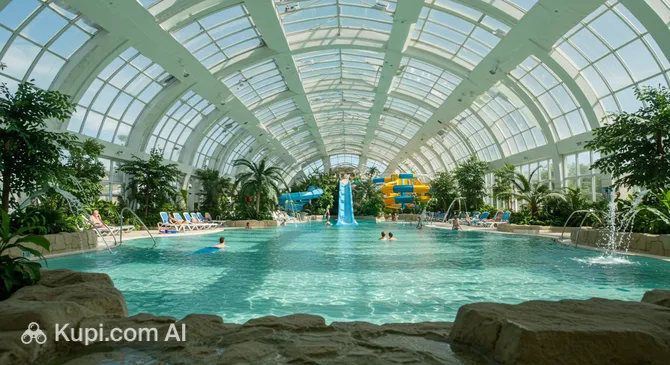
While the nights are lively, the city also offers fantastic entertainment options for the daytime. Families and thrill-seekers should not miss Kristall Palm Beach in nearby Stein. This massive water park features exciting slides, thermal baths, and a wave pool, making it a perfect day trip. For indoor fun, the Airtime Trampoline Park Nuremberg offers a great way to burn off energy with various jump zones and obstacle courses.
Kristall Palm Beach. Illustration.
Source: Kupi.com AI
Traveler photos:
Whether you are sipping a cocktail in a medieval alleyway or sliding down water chutes, Nuremberg provides a well-rounded entertainment experience that caters to every taste and pace.
Parks & Museums
Parks and Museums:
Beyond its medieval fortifications and bustling market squares, Nuremberg offers a surprising abundance of green spaces and a museum landscape that ranks among the best in Germany. Whether you are looking to relax in nature after a day of sightseeing or dive deep into the city's multifaceted history and culture, there is plenty to explore.
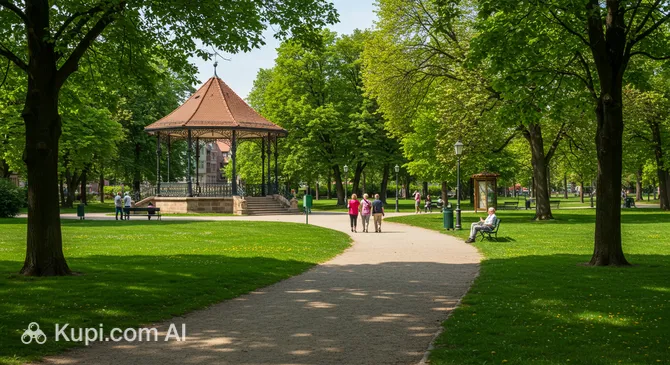
For a refreshing escape within the city limits, the Stadtpark is a favorite among locals and visitors alike. Located just north of the city center, this expansive park is known for its beautiful rose garden, ancient trees, and the striking Neptune Fountain. It serves as a peaceful oasis where you can enjoy a leisurely stroll, sit by the pond, or let children play in the designated areas. It is particularly colorful in the spring and summer when the flowers are in full bloom.
Stadtpark. Illustration.
Source: Kupi.com AI
Traveler photos:
Another excellent spot for nature lovers is the Nuremberg Outdoor Aquarium and Terrarium. Run by a dedicated natural history society, this facility offers a fascinating glimpse into local and exotic fauna. It is situated in a scenic location and allows visitors to observe reptiles, amphibians, and fish in well-maintained habitats. For those who prefer open green belts, the Wöhrder Wiese along the Pegnitz River is the city's most popular recreational area, perfect for picnics, jogging, or simply watching the world go by near the water.
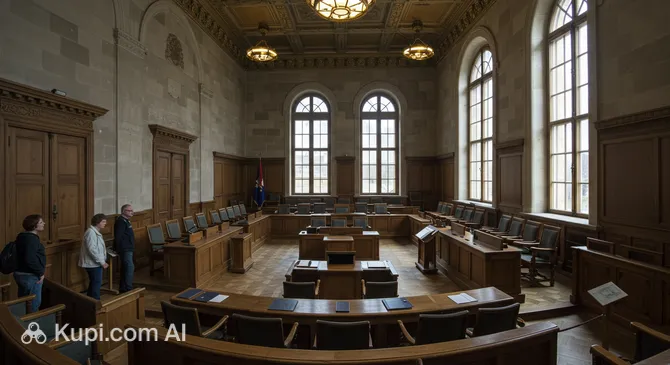
Nuremberg's museums are world-renowned, with the Memorium Nuremberg Trials standing out as a site of global historical importance. Located in the Palace of Justice, this museum documents the background and proceedings of the Nuremberg Trials held after World War II. Visitors can see the famous Courtroom 600, where leaders of the Nazi regime were prosecuted, marking the birth of international criminal law. The exhibition is immersive and educational, providing deep insights into this pivotal moment in 20th-century history.
Memorium Nuremberg Trials. Illustration.
Source: Kupi.com AI
Traveler photos:
On the artistic side, the New Museum Nuremberg (Neues Museum) offers a striking contrast to the city's medieval architecture. Housed in a stunning building with a curved glass facade designed by Volker Staab, it focuses on art and design from the 1950s to the present. The collection features contemporary paintings, sculptures, and photography, making it a must-visit for modern art enthusiasts. Just a short walk away, the Nuremberg Toy Museum celebrates the city's centuries-old tradition of toy manufacturing. Spanning four floors, it showcases everything from wooden dolls to modern Lego sets, delighting both children and nostalgic adults.
For a true insider experience, seek out the Hesperidengärten (Gardens of the Hesperides) in the St. Johannis district. These small, restored Baroque gardens were originally created for wealthy patrician families in the 17th century and offer a quiet, aristocratic atmosphere filled with citrus trees and statues, hidden away behind high walls.
Getting Around
Public transport in Nuremberg is efficient, clean, and well-integrated, making it the preferred way for visitors to navigate the city. The network is managed by the Greater Nuremberg Transport Association (VGN) and consists of a seamless combination of underground trains (U-Bahn), trams (Straßenbahn), buses, and suburban trains (S-Bahn). This interconnected system allows travelers to use a single ticket across all modes of transport within designated zones, simplifying the travel experience significantly.
The backbone of the system is the U-Bahn, which connects the city center with the airport, the trade fair grounds, and residential districts. A unique feature of the local metro is its automated lines. The U2 and U3 lines are completely driverless, a technological marvel that allows passengers to sit at the very front of the train and enjoy a "driver’s eye" view of the tunnels and tracks. Complementing the subway is an extensive tram network that weaves through the streets, offering a scenic way to see the city above ground, while buses cover areas not reached by rail.
For tickets and payment, visitors have several convenient options. The city area generally falls under "Zone A." You can purchase single tickets, but for tourists, the Tagesticket Plus (Day Ticket Plus) is often the best value. It is valid for one or two adults and up to four children, allowing unlimited travel on the selected day and the entire following weekend day if bought on a Saturday. Another popular option is the Nürnberg Card, which provides free public transport for 48 hours along with free admission to many museums and attractions. Tickets can be purchased at the red or orange vending machines at stations (which offer menu options in English), via the VGN app, or directly from bus drivers (cash only).
A crucial piece of advice for newcomers is to validate your ticket. If you buy a paper ticket from a machine or a kiosk, it is often not valid until it has been stamped. Look for the small orange or blue stamping machines located at the entrances to U-Bahn stations or inside buses and trams. Failure to stamp your ticket can result in a hefty fine during ticket inspections. Regarding operating hours, the main lines run from approximately 5:00 AM until shortly after midnight. On Friday and Saturday nights, the "NightLiner" bus network takes over, providing safe and reliable transport continuously throughout the night.
While public transit is comprehensive, alternatives are readily available. Taxis are cream-colored and can be found at designated stands or hailed via apps, though they are relatively expensive compared to transit. For a more active approach, the city offers a public bike-sharing scheme called VAG_Rad. You can easily rent these bikes via a mobile app and return them to numerous stations across the city. Additionally, e-scooters are widely available for short, spontaneous trips, making it easy to zip between the Old Town and nearby neighborhoods.
Accommodation
Finding the perfect place to stay in Nuremberg is relatively easy, as the city offers a wide spectrum of accommodation options to suit every preference and budget. Whether you are looking for a luxury hotel within medieval walls, a modern business suite near the exhibition center, or a cozy, family-run guesthouse (Gasthof), the Bavarian hospitality ensures a comfortable visit. The city mixes historical charm with modern efficiency, meaning you can often find lodgings that are both atmospheric and well-connected.
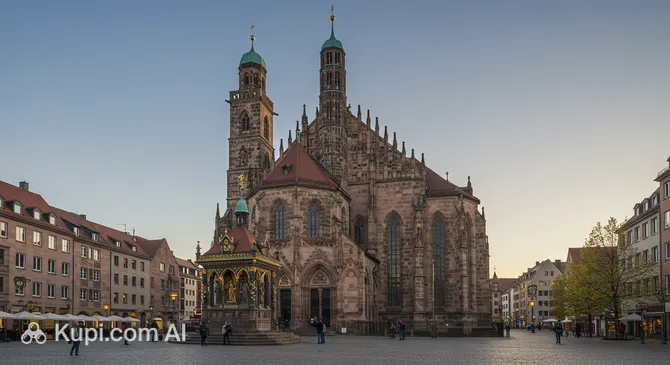
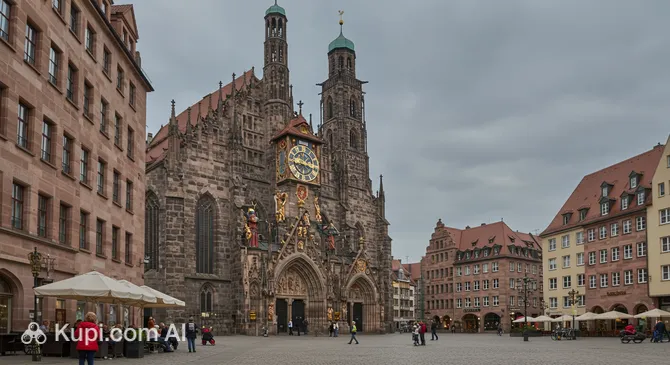
For most tourists, especially first-time visitors, the Old Town (Altstadt) is the most desirable location. Staying within the historic city walls places you within walking distance of the main sights, museums, and the vibrant pedestrian zone. Hotels here range from upscale establishments housed in restored patrician buildings to charming boutique hotels. If you choose this area, you will likely be just steps away from the bustling Hauptmarkt (Main Market Square), home to the iconic Church of Our Lady. Waking up in the heart of the city allows you to enjoy the quiet, magical atmosphere of the cobblestone streets before the day-trippers arrive.
Church of Our Lady. Illustration.
Source: Kupi.com AI
Traveler photos:
Another popular and practical area is the district surrounding the Central Station (Hauptbahnhof), located just south of the Old Town. This area is ideal for travelers who prioritize convenience, particularly those arriving by train or planning day trips to nearby Bavarian towns. Here, you will find a high concentration of reliable international hotel chains and budget-friendly hostels. The connectivity is unbeatable, with immediate access to the subway, trams, and high-speed rail network.
Booking Tips and Prices:
While accommodation in Nuremberg is generally more affordable than in nearby Munich, prices can fluctuate significantly depending on the season and events. A typical mid-range double room usually costs between €90 and €150 per night, while budget options and hostels can be found for around €50 to €80. Luxury stays typically start from €180.
Important Advice: Nuremberg hosts several major international trade fairs, such as the Toy Fair, and the world-famous Christmas Market. During these peak times, hotel prices can double or triple, and rooms sell out months in advance. If you plan to visit in December or during a major expo, it is essential to book your accommodation as early as possible to secure a reasonable rate.
Nearby Cities
For those looking to explore the surroundings, Nuremberg serves as an excellent base for day trips to several interesting nearby locations. The region of Middle Franconia offers a mix of charming historic towns, vibrant university cities, and family-friendly attractions, many of which are just a short train or subway ride away.
One of the closest and most historically significant neighbors is Fürth. Often referred to as the "Cloverleaf City," it boasts a higher density of historic monuments than almost any other German city, having largely escaped the destruction of World War II. Visitors can stroll through its beautiful streets lined with sandstone buildings, visit the Jewish Museum of Franconia, or enjoy the relaxed atmosphere of the City Park. It is so close that you can reach it via the Nuremberg subway system in just about 15 minutes.
A bit further north lies Erlangen, a lively university town known for its distinct Baroque architecture and rich Huguenot heritage. The city center is dominated by the Margravial Palace and the expansive Schlossgarten (Palace Garden), which hosts colorful events and festivals throughout the year. Erlangen is also famous for its "Bergkirchweih," one of the oldest and most popular beer festivals in Germany, held annually around Pentecost.
For families traveling with children, the town of Zirndorf is a must-visit destination. It is the home of the world-famous Playmobil FunPark, a massive theme park that focuses on active play rather than electronic rides. Beyond the park, Zirndorf offers a quaint town center with traditional half-timbered houses and a history of toy manufacturing that complements Nuremberg's own traditions.
City
Population
Distance
Stein
14 329
7 km
Furth
129 122
7 km
Zirndorf
26 534
8 km
Oberasbach
17 749
8 km
Schwaig
8 926
9 km
These nearby destinations offer a glimpse into the diverse culture and landscapes of the region, making them perfect for spontaneous excursions.
Shopping & Souvenirs
Shopping in Nuremberg offers a wonderful blend of historical ambiance and modern retail therapy. The city is the commercial heart of Northern Bavaria, featuring one of the largest pedestrian zones in Europe. Whether you are looking for high-end fashion, traditional craftsmanship, or quirky local souvenirs, the city center provides a diverse range of options set against a backdrop of medieval architecture.
The primary shopping district is located within the Old Town, specifically along the pedestrianized streets of Karolinenstraße and Breite Gasse. Here, you will find major international department stores, popular fashion chains, and electronics retailers. For those seeking luxury items and exclusive boutiques, Kaiserstraße is the place to go. If you are interested in traditional artisan goods, the Handwerkerhof Nuremberg is a must-visit. Located near the main station, this "Craftsmen's Courtyard" feels like a small medieval village where you can buy handmade leather goods, glass art, and tin toys directly from the workshops.
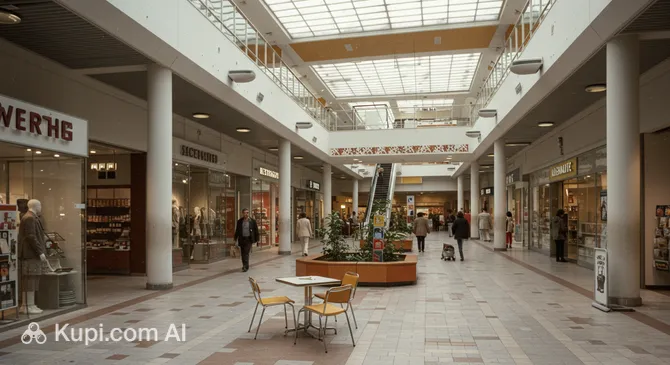
For a comprehensive shopping experience under one roof, the city offers several large centers. The Langwasser Center is a popular mall in the suburban district of Langwasser, providing a wide variety of shops, services, and supermarkets for everyday needs. Alternatively, just a short subway ride away, visitors can explore FLAIR Fürth. This modern shopping complex features numerous fashion brands, lifestyle stores, and a diverse food court, making it a convenient destination for a full day of browsing.
Langwasser Center. Illustration.
Source: Kupi.com AI
Traveler photos:
Markets play a central role in the local lifestyle. The Hauptmarkt (Main Market Square) is the vibrant soul of the city, hosting a daily "Green Market" (Wochenmarkt). Here, stalls sell fresh regional produce, flowers, and local delicacies. It is also the famous site of the annual Christmas Market, but year-round it remains a great spot to soak up the local atmosphere and buy fresh snacks.
When it comes to souvenirs, Nuremberg has distinct specialties. The most famous edible gift is undoubtedly Nürnberger Lebkuchen (gingerbread), which is sold in beautiful decorative tins and available throughout the year. Another unique local keepsake is the Zwetschgenmännle, a small figurine made from dried prunes and walnuts, often dressed in traditional costumes. Given the city's history as a toy-making hub, high-quality wooden toys are also excellent gifts to bring home.
Most shops in Nuremberg open around 10:00 AM and close by 8:00 PM from Monday to Saturday. It is important to remember that, like the rest of Germany, nearly all retail stores are closed on Sundays, with the exception of shops inside the main train station and the airport. While major stores and malls accept credit cards, smaller boutiques and market stalls often prefer cash, so it is wise to carry some Euros.
Visitors from outside the European Union may be eligible for a VAT refund on their purchases. Look for the "Tax Free" signage in store windows. If you spend above a certain threshold (usually €50), you can request a tax refund form at the checkout, which can then be processed at the airport or other customs points before leaving the EU.