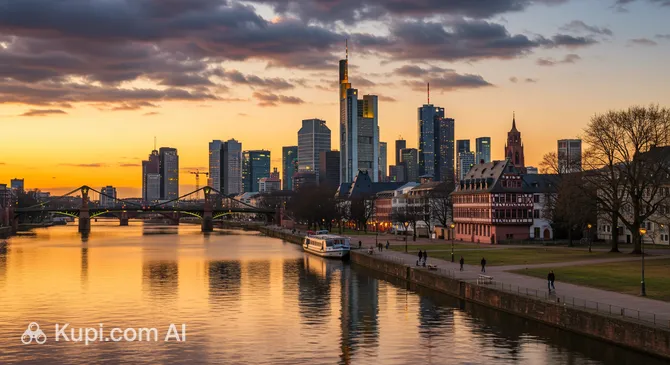
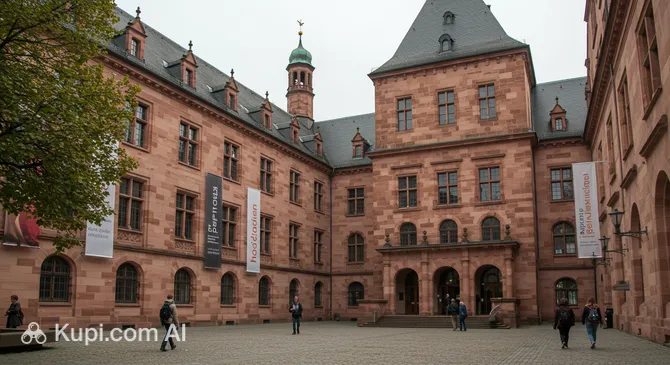
Frankfurt am Main is a vibrant metropolis that seamlessly blends futuristic architecture with traditional charm. As the financial heart of Germany and a major European transport hub, it offers a unique atmosphere where bustling business districts meet cozy apple wine taverns. Often referred to as "Mainhattan" due to its impressive skyline, the city is a dynamic center of commerce, culture, and tourism.
Located in the federal state of Hesse on the banks of the Main River, the city is home to approximately 764,000 residents. Despite its modern appearance, the history of Frankfurt am Main runs deep, having served as an Imperial Free City and the coronation site for Holy Roman Emperors for centuries. This rich heritage creates a fascinating contrast with the glistening skyscrapers that dominate the financial district.
Frankfurt am Main. Illustration.
Source: Kupi.com AI
Visitors are captivated by the Römerberg, the reconstructed old town square featuring iconic timber-framed houses and the historic Römer city hall. Art enthusiasts will find paradise at the Museumsufer (Museum Embankment), a collection of world-class museums lining the riverbank, while the lush Palmengarten offers a botanical escape in the middle of the urban landscape.
Whether you are stopping by for a quick layover or planning a dedicated city break, Frankfurt promises a diverse and rewarding experience. Its cosmopolitan flair, combined with excellent shopping and dining options, makes it a destination well worth exploring.
Weather Overview
The city experiences a temperate climate with distinct seasonal changes, making it a destination that can be visited year-round depending on your preferences. To help you pack appropriately, it is helpful to review the current weather in Frankfurt am Main before your departure.
Summers are generally pleasant and warm, particularly from June to August, when average temperatures range from 19°C to 20°C. August is typically the warmest month, with daily highs reaching around 25°C, creating perfect conditions for exploring the city's parks and riverbanks. In contrast, winters are chilly, with average temperatures in January and December dropping to roughly 3°C and lows hovering near freezing.
Expect warm summers with occasional rain and cold, damp winters. Rainfall is fairly consistent throughout the year, with wet days ranging from 10 to 16 days per month, so keeping an umbrella or a raincoat handy is recommended regardless of when you visit.
Average monthly temperature
Average monthly precipitation
Interesting Facts
Beyond the gleaming skyscrapers and the busy international airport, Frankfurt am Main holds many fascinating secrets that often escape the casual visitor. Dig a little deeper, and you will discover a city of innovation, surprising greenery, and rich traditions that go far beyond its reputation as a financial hub.
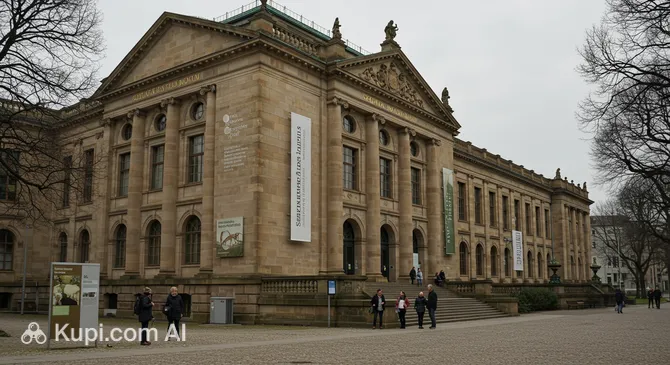
Senckenberg Natural History Museum. Illustration.
Source: Kupi.com AI
Traveler photos:
Frankfurt is often called "Mainhattan," but it is arguably the "greenest" city in Germany. The city boasts the country's largest inner-city forest, the Stadtwald, covering nearly 5,000 hectares. Within this vast green lung, you can visit the Stadtwaldhaus & Fasanerie Information Center to learn about the diverse wildlife that thrives just minutes from the banking district.
You might not expect to find prehistoric giants in the center of a modern metropolis, but the Senckenberg Natural History Museum houses one of the most extensive collections of large dinosaur skeletons in Europe. The museum is a landmark for science enthusiasts and features life-sized dinosaur models guarding its entrance.
The way we cook today was revolutionized right here in the 1920s with the invention of the "Frankfurt Kitchen." Designed by architect Margarete Schütte-Lihotzky, this ergonomic concept was the direct prototype for the modern fitted kitchens found in homes around the world, prioritizing efficiency and workflow.
While most of Germany is celebrated for its beer culture, Frankfurt's heart beats for Apfelwein (apple wine). Locals affectionately call it "Ebbelwoi," and it is traditionally served in a diamond-patterned glass known as a Geripptes, often poured from a distinctive grey earthenware jug called a Bembel.
The city's skyline is unique in the country, but only one high-rise offers a public viewing platform to enjoy it fully. The Main Tower allows visitors to ascend 200 meters above the streets for a panoramic view of the urban canyon and the winding Main River.
How to Get There
As a major European transport hub, reaching this metropolis is exceptionally convenient, whether you are arriving from within Germany or from abroad. The city is well-connected by air and rail, serving as a central gateway for travelers. For detailed information on all available routes and transport options, you can read more about how to get to Frankfurt am Main.
The primary entry point for air travelers is the massive Frankfurt Airport (IATA: FRA). As one of the busiest international airports in the world, it handles a vast amount of passenger traffic and offers connections to virtually every corner of the globe. It is located just 11.9 km from the city center, making the transfer quick and easy. A taxi or commuter train (S-Bahn) ride typically takes between 15 to 20 minutes.
Another option, often used by budget airlines, is Frankfurt-Hahn Airport (IATA: HHN). Despite its name, it is situated quite far from the city, approximately 103.2 km away. Travelers choosing this airport should plan for a longer transfer time; a bus shuttle or drive usually takes about 1.5 to 2 hours depending on traffic. Alternatively, visitors might land at Cologne Bonn Airport (IATA: CGN) in the city of Cologne, which is about 139.8 km away. Thanks to high-speed rail connections, the journey can take as little as one hour by train, or around 1.5 to 2 hours by car.
For clarity, here is a summary of the main airports:
If you prefer traveling by train, the city is home to one of the most critical railway junctions in Europe, Frankfurt (Main) Hauptbahnhof (IATA: ZRB). Located directly in the city center, just 1.4 km from the heart of the downtown area, this station welcomes millions of passengers annually. It serves as a central node for high-speed ICE trains as well as regional connections, allowing for effortless arrival from neighboring cities and countries. A short taxi or transit ride from the station to most central hotels takes approximately 5 to 10 minutes.
While Frankfurt (Main) Hauptbahnhof is the primary destination, travelers exploring the wider region might also pass through other major hubs. For instance, Mannheim Hauptbahnhof is a significant station located in Mannheim, approximately 71.8 km away. However, for a direct visit to the city, aiming for the central station is the most practical choice.
Below is a list of nearby and significant railway stations:
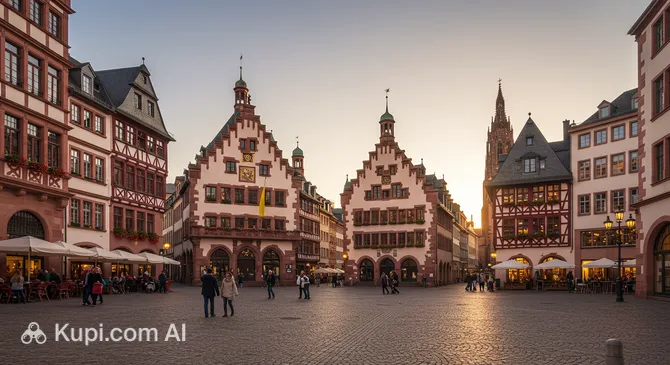
Frankfurt is packed with diverse sights, ranging from historical treasures to modern cultural institutions. Start your journey at the Römerberg, the picturesque old town square that serves as the city's historic heart. Surrounded by traditional half-timbered houses and the famous Römer city hall, this square offers a glimpse into what the city looked like before World War II. It is a lively gathering spot for tourists and locals alike, often hosting fairs and vibrant markets.
Römerberg. Illustration.
Source: Kupi.com AI
Traveler photos:
Just a short walk away stands the imposing Frankfurt Cathedral (Kaiserdom). This Gothic red-sandstone church is historically significant as the former coronation site of Holy Roman Emperors. Visitors can admire its soaring tower and intricate interior, or climb the 328 steps to the viewing platform for a breathtaking perspective of the old town contrasting with the modern skyline.
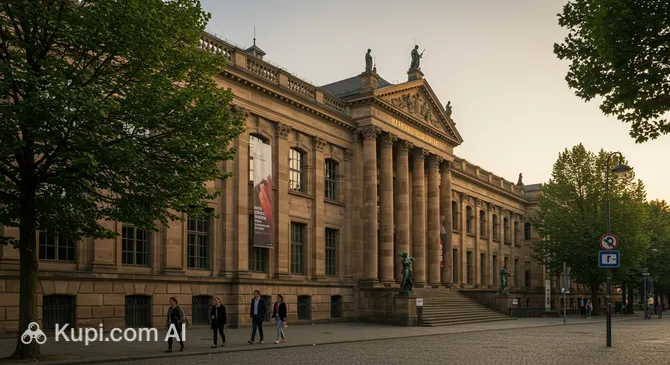
Art lovers should not miss the Städel Museum, one of Germany's most prominent art foundations. Located on the Museumsufer, it houses an extensive collection spanning 700 years of European art history, from the Middle Ages to contemporary works. The museum's impressive holdings include masterpieces by Dürer, Rembrandt, Monet, and Picasso, making it a world-class cultural destination.
Städel Museum. Illustration.
Source: Kupi.com AI
Traveler photos:
For a dive into literary history, visit the Goethe House, the birthplace of Germany's most famous writer, Johann Wolfgang von Goethe. The house has been faithfully restored with period furniture and artifacts, offering an authentic look at 18th-century bourgeois life. It provides a fascinating context to the early years of the genius who penned "Faust" and allows visitors to step back in time.
Local Cuisine
The culinary landscape of Frankfurt am Main is as diverse as its population, offering a delightful mix of hearty Hessian traditions and international influences. While the city is a global financial hub, its food scene remains grounded in rustic, flavorful dishes that have been enjoyed for generations. Visitors should not miss the chance to explore the local gastronomy, which is often centered around conviviality and fresh, regional ingredients.
One of the most iconic specialties is Frankfurter Grüne Soße (Green Sauce), a cold, creamy herb sauce made from seven specific herbs, including borage, sorrel, and cress. It is typically served with boiled eggs and potatoes or brisket. Another must-try for the adventurous eater is Handkäs mit Musik, a sour milk cheese marinated in vinegar, oil, and onions. The "music" in the name playfully refers to the onions served with the cheese. Of course, no visit is complete without tasting the authentic Frankfurter Würstchen, a thin, smoked pork sausage known worldwide.
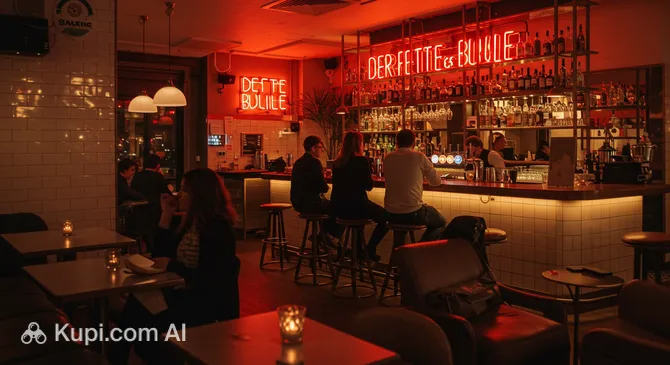
Der Fette Bulle. Illustration.
Source: Kupi.com AI
Traveler photos:
When it comes to drinks, the local identity is defined by Apfelwein, or "Ebbelwoi" as the locals call it. This tart apple wine is the city's signature beverage, traditionally poured from a grey earthenware jug called a Bembel into a ribbed glass. It is best enjoyed in the cozy apple wine taverns found in the Sachsenhausen district, where long wooden tables encourage strangers to become friends over a glass.
For those looking for a modern dining experience, the city offers plenty of contemporary options. You can find excellent spots like Der Fette Bulle, which showcases the city's love for quality meat and hearty portions in a relaxed atmosphere. Whether you prefer a rustic tavern setting or a chic international restaurant, Frankfurt's food culture invites you to slow down and savor the flavors of the region.
Travel Tips
Welcome to Frankfurt am Main, a city where global business meets rich tradition. To help you navigate this dynamic metropolis with ease and confidence, we have compiled a list of essential practical tips that will ensure your stay is as smooth and enjoyable as possible.
Clothing and Gear: The weather in Frankfurt can be changeable, so packing layers is the best strategy regardless of the season. Bring a waterproof jacket or a sturdy umbrella, as showers can occur year-round. Since the city center and the museum embankment are best explored on foot, comfortable walking shoes are a must. If you plan to visit upscale restaurants or the opera, pack a smart-casual outfit, as locals tend to dress neatly.
Transportation: The public transport system, run by the RMV, is efficient and extensive, consisting of the U-Bahn (subway), S-Bahn (suburban trains), trams, and buses. A rental car is generally unnecessary and can be a burden due to heavy traffic and expensive parking. Walking is often the fastest way to get around the compact city center. For late nights, taxis and ride-hailing apps are readily available and safe.
Finances: The local currency is the Euro (€). While credit cards are widely accepted in hotels, major department stores, and larger restaurants, Germany is still very much a cash-based society. Many smaller cafes, traditional apple wine taverns, and bakeries may only accept cash or the local "Girocard." It is advisable to always carry some cash with you. Tipping is customary; leaving about 5-10% or rounding up the bill is polite.
Health and Safety: Germany has excellent medical care. Pharmacies are marked with a red "A" (Apotheke); while they close in the evenings, there is always one in every neighborhood on 24-hour emergency duty (noted on the door of any closed pharmacy). Frankfurt is generally safe, but the area directly around the main train station (Bahnhofsviertel) can be gritty and rough, especially at night. Exercise standard caution with your belongings in crowded areas.
Communication: The official language is German. However, as an international financial hub, English is very widely spoken in Frankfurt, often more so than in other German cities. Learning a few basics like "Guten Tag" (Good day) and "Danke" (Thank you) is appreciated. Free Wi-Fi is available in many public spots and cafes, and prepaid SIM cards can be easily bought at supermarkets or electronics stores with a passport.
Local Etiquette: Punctuality is highly valued in German culture, so try to be on time for tours or reservations. When entering a shop or elevator, a brief greeting is polite. On escalators, stand on the right and walk on the left. Sundays are considered rest days ("Ruhetag"), meaning almost all shops, including supermarkets, are closed, so plan your shopping for Saturday.
What to Avoid: Do not walk in the designated bicycle lanes; cyclists can be fast and will expect the path to be clear. Additionally, avoid jaywalking (crossing the street on a red light). It is frowned upon, especially if children are nearby, and you may be reprimanded by locals or fined by police.
Additional Tip: If you are visiting museums, consider purchasing the "MuseumsuferTicket" if you plan to see several exhibitions over two days. Also, remember that tap water in Frankfurt is of excellent quality and perfectly safe to drink, so you can refill your bottle to stay hydrated while sightseeing.
Armed with these practical insights, you are ready to dive into the bustling life of "Mainhattan." Whether you are here for the museums, the skyline, or the apple wine, Frankfurt am Main is a welcoming city that is easy to navigate once you know the local rhythm.
Entertainment & Nightlife
Frankfurt am Main transforms after sunset, shedding its business-like persona to reveal a pulsating nightlife scene that ranks among the best in Germany. Known as the birthplace of techno in the country, the city offers a diverse mix of entertainment ranging from high-end rooftop lounges and underground electronic clubs to traditional pubs that stay open late. Whether you are looking for a sophisticated cocktail evening or a night of dancing, the city caters to every taste.
The nightlife is concentrated in a few key districts, each with a distinct character. Alt-Sachsenhausen on the south bank of the Main River is famous for its cobblestone streets lined with rustic apple wine taverns and lively pubs. It attracts a mixed crowd, from tourists seeking local flavor to students looking for a fun night out. Across the river, the Bahnhofsviertel (around the main train station) has evolved from a gritty red-light district into one of the trendiest areas for nightlife. Here, hip bars and clubs sit side-by-side with late-night eateries, creating an edgy and vibrant atmosphere.
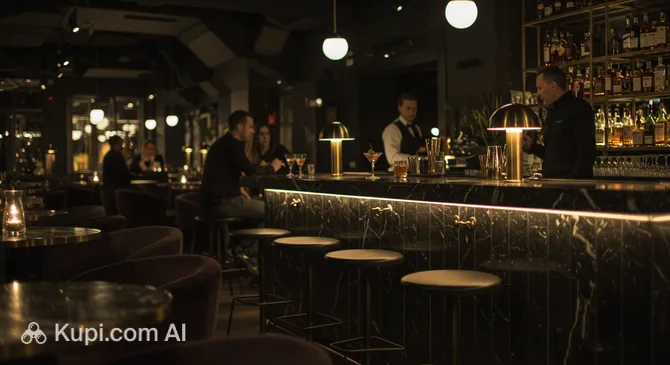
For those seeking a touch of glamour and award-winning mixology, Roomers is a standout destination. This bar is renowned for its burlesque-inspired interior and sophisticated ambiance, making it a perfect spot for a dressy night out. The crowd here tends to be stylish, and the dress code is generally smart-casual to chic. If you prefer a more relaxed lounge vibe with music and hookahs, Shishantash offers a modern setting to unwind with friends late into the night.
Roomers. Illustration.
Source: Kupi.com AI
Traveler photos:
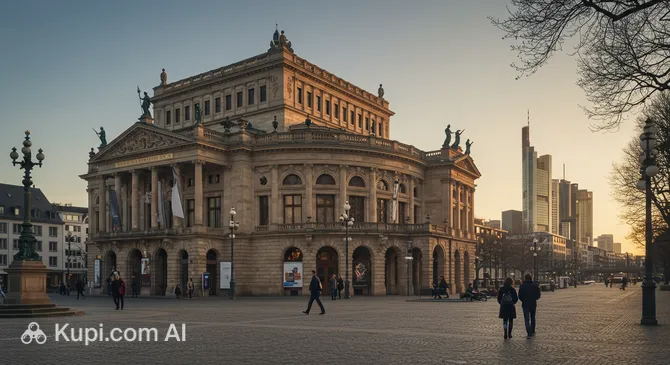
Beyond the club scene, the city offers rich cultural evening entertainment. The majestic Old Opera House (Alte Oper) is not just an architectural gem but a premier venue for classical concerts, musicals, and show productions. For a more active and playful start to your evening, you might try Schwarzlichthelden Minigolf, an indoor 3D blacklight minigolf course that provides a fun, neon-lit experience suitable for groups before hitting the bars.
Old Opera House. Illustration.
Source: Kupi.com AI
Traveler photos:
Practical Advice: Most bars are open until 1:00 AM or 2:00 AM on weekdays and much later on weekends, while clubs typically don't get busy until after midnight and stay open until dawn. Prices in Frankfurt can be higher than in other German cities, especially for cocktails in the financial district. To get around, the public transport network runs night buses and S-Bahn trains on weekends, but taxis and ride-hailing apps like Uber are the most convenient and safe way to return to your hotel.
Safety: While Frankfurt is generally safe, the Bahnhofsviertel requires extra caution. Although it is a nightlife hotspot, it still has rough edges; it is advisable to stay on main, well-lit streets and avoid side alleys, especially if you are alone. In crowded clubs and busy pub areas like Alt-Sachsenhausen, always keep an eye on your drinks and belongings.
During the day, entertainment options are equally plentiful. You can explore the famous Museum Embankment for art and history or catch a matinee at the English Theatre Frankfurt, the largest English-language theater on the European continent. Whether you crave high culture or high energy, Frankfurt's entertainment landscape ensures there is never a dull moment.
Parks & Museums
Beyond its bustling financial district, the city surprises visitors with an abundance of lush green spaces and a remarkably dense cultural landscape. From botanical wonders to interactive exhibitions, the parks and museums here offer a perfect balance of relaxation and education, allowing you to explore the diverse facets of local life.
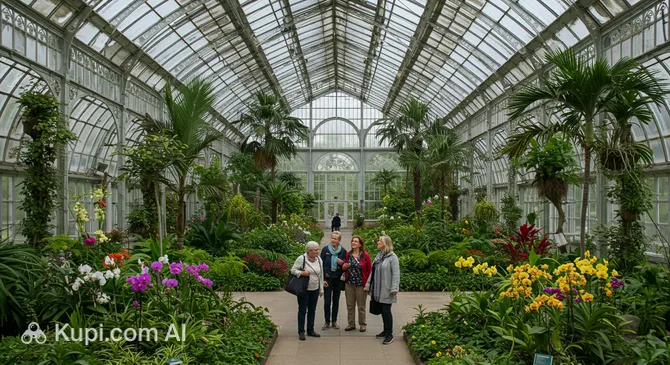
One of the most beautiful retreats in the city is the Palmengarten. This sprawling botanical garden, established in the 19th century, invites you to travel through the world's vegetation zones, from the humid tropics to the arid desert. Its historic glasshouses and immaculately manicured flower beds make it a favorite spot for a peaceful stroll or a paddle boat ride on the pond. It is a year-round destination where nature thrives regardless of the weather outside.
Palmengarten. Illustration.
Source: Kupi.com AI
Traveler photos:
For a more intimate natural experience, visit Bethmann Park, a quiet oasis enclosed by old walls in the Nordend district. The park is renowned for its serene Chinese Garden of Heavenly Peace, designed according to Feng Shui principles. With its delicate pavilions, ponds, and dragon sculptures, it offers a meditative atmosphere that feels worlds away from the city noise.
Frankfurt's cultural scene is anchored by the famous Museum Embankment, but several institutions stand out for their specific focus. Cinema enthusiasts should not miss the German Film Museum (DFF). This engaging venue explores the past, present, and future of film, allowing visitors to interact with optical illusions, explore the history of movie-making, and even try their hand at editing. It is a fascinating stop for anyone interested in the magic behind the silver screen.
To truly understand the city's evolution, a visit to the Historical Museum Frankfurt is essential. Located right in the old town, this modern museum presents the city's history from the Middle Ages to the present day through innovative multimedia displays and artifacts. It provides deep insights into how a medieval merchant city transformed into a global financial hub.
Historical Museum Frankfurt. Illustration.
Source: Kupi.com AI
Traveler photos:
Among the most significant architectural and historical landmarks is St. Paul's Church (Paulskirche). While it no longer functions as a church, it holds a special place in history as the seat of the first publicly elected German parliament in 1848. Today, it serves as a venue for important political and cultural events, symbolizing the development of German democracy.
For a unique insider experience, consider visiting the Money Museum of the Deutsche Bundesbank. Given the city's status as a banking capital, this free museum offers a fitting and surprisingly engaging look at the world of cash, monetary policy, and central banking. It is a hidden gem that provides context to the skyscrapers dominating the skyline.
Getting Around
Navigating Frankfurt am Main is remarkably efficient and straightforward, thanks to a high-density public transport network integrated by the Rhein-Main-Verkehrsverbund (RMV). The system is renowned for its punctuality and coverage, making a car largely unnecessary for visitors. The backbone of the network consists of the U-Bahn (subway) and the S-Bahn (suburban trains). The S-Bahn is particularly useful for longer distances, such as traveling to the airport or neighboring towns, while the U-Bahn provides rapid transit throughout the city center and immediate suburbs.
Complementing the rail network is an extensive system of trams (Straßenbahn) and buses. Trams are a scenic way to travel above ground, especially in districts like Sachsenhausen and Bornheim, where the tracks weave through lively neighborhoods. Buses typically serve routes not covered by rails and operate as night liners between 1:00 AM and 4:00 AM, ensuring you can get home safely after a night out. On weekends, major S-Bahn and U-Bahn lines often run 24 hours a day.
The payment system is unified, meaning a single ticket is valid across all modes of transport within the purchased zones. For most tourists staying in the city, a ticket for "Zone 50" (Frankfurt City) is sufficient. Ticket options include single journeys, all-day tickets (Tageskarte), and the highly economical Group Day Ticket (Gruppentageskarte), which allows up to five people to travel together for a price often cheaper than two individual day passes. Visitors planning extensive sightseeing might consider the Frankfurt Card, which offers unlimited travel and discounts on museum admissions.
Tickets can be purchased at the teal or yellow vending machines located at every station, which feature a multilingual interface. A convenient alternative is the RMVgo app, allowing you to buy cashless tickets directly on your smartphone. A crucial tip for tourists: most single and day tickets bought at physical machines are valid immediately upon purchase and do not need to be stamped. However, if you buy a strip ticket or a ticket in advance that is not date-stamped, look for the validation machines (usually orange or blue boxes) on the platform or inside buses and trams to validate your ticket before the journey begins.
For those who prefer active mobility, the city is very bike-friendly with dedicated lanes and flat terrain. Bike-sharing schemes like Deutsche Bahn's "Call a Bike" or "nextbike" are widely available; you simply locate a bike via an app, unlock it, and ride. Taxis are cream-colored and can be hailed on the street or found at designated stands, though they are relatively expensive. Ride-hailing apps like Uber and Free Now also operate in the city and offer a convenient alternative to traditional cabs.
A unique feature of the local transport scene is the colorful Ebbelwei-Expreß. This historical tram line is less about commuting and more about culture. It runs a loop past the city's major sights while serving passengers traditional apple wine (Ebbelwei) and pretzels with music playing in the background. It operates on weekends and holidays, offering a cheerful and nostalgic way to see the city from a different perspective.
Accommodation
Accommodation:
Finding the perfect place to stay in Frankfurt am Main is relatively easy, as the city boasts a vast array of options tailored to its status as a global business and tourism hub. The selection ranges from economical youth hostels and budget chains to functional business hotels and opulent five-star luxury resorts. Because the city welcomes a mix of international bankers, trade fair visitors, and city-break tourists, the standard of accommodation is generally high, with modern amenities being the norm.
For most tourists, the most convenient area to stay is the Innenstadt (City Center) or the Altstadt (Old Town). Staying here puts you within walking distance of major attractions like the Römerberg and the shopping mile Zeil. Another popular, albeit grittier, option is the Bahnhofsviertel, located directly around the main train station. While it is known for its rough edges and nightlife, it offers unbeatable connectivity for those planning day trips to the surrounding region. For a quieter and more upscale experience, the Westend district provides elegant lodgings in a leafy, residential setting close to the botanical gardens.
A crucial factor to consider when booking accommodation in Frankfurt is the city's trade fair calendar. As home to one of the world's largest trade fair grounds (Messe Frankfurt), hotel prices can skyrocket, and availability can vanish during major events like the Book Fair or the Motor Show. Conversely, on weekends and during school holidays when business travel slows down, you can often find excellent deals on high-end hotels that cater to corporate clients during the week.
The general price range varies significantly depending on the season. Budget travelers can find hostels and simple rooms starting from around €40 to €70 per night, while mid-range hotels typically charge between €90 and €150. Luxury stays can easily exceed €250 per night. It is highly recommended to book your accommodation well in advance, especially if your visit coincides with a major fair. Most bookings can be easily managed through major online platforms, though booking directly with the hotel can sometimes yield better cancellation terms.
Nearby Cities
For those looking to explore the surroundings, Frankfurt am Main serves as an excellent base for day trips to several interesting nearby locations:
One of the most popular excursions is to Bad Homburg, a sophisticated spa town located just north of the city. Famous for its healing mineral springs, the historic Kurpark, and the impressive Landgrave's Castle, it offers a refined atmosphere perfect for relaxation and history enthusiasts. Alternatively, Oberursel serves as the gateway to the Taunus mountains. This charming town boasts a picturesque medieval center filled with half-timbered houses and provides easy access to hiking trails, making it an ideal spot for nature lovers.
City
Population
Distance
Neu-Isenburg
38 532
6 km
Bad Vilbel
34 905
8 km
Eschborn
21 734
9 km
Dreieich
42 091
9 km
Bieber
10 098
9 km
These nearby destinations offer a glimpse into the diverse culture and landscapes of the region.
Shopping & Souvenirs
Shopping in Frankfurt am Main is a delightful experience that caters to every taste and budget, ranging from high-end luxury boutiques to quirky local shops. As a major international trade hub, the city offers a retail landscape that rivals other European capitals. Whether you are looking for the latest designer fashion, traditional German crafts, or unique culinary treats, the city's diverse districts provide ample opportunities to find the perfect item.
The undisputed heart of the city's shopping scene is the Zeil, one of the turnover-strongest shopping streets in Germany. This pedestrianized promenade is lined with major department stores, international high-street chains, and flagship electronics stores. For those with a taste for exclusivity, the nearby Goethestraße is the place to be. Here, top-tier luxury brands and designer labels display their latest collections in elegant boutiques, making it the city's equivalent to Fifth Avenue.
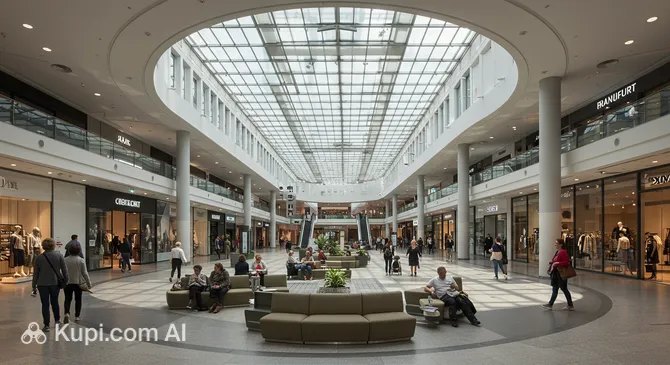
If you prefer shopping centers that offer everything under one roof, the city boasts several impressive malls. The architectural highlight is the MyZeil on the main shopping street, known for its spectacular glass vortex facade. For an even more extensive selection, many locals and visitors head to the Main-Taunus Center. Located just a short drive from the city center, it is one of the oldest and largest shopping malls in Germany, featuring over 170 shops, a cinema, and numerous dining options.
Main-Taunus Center. Illustration.
Source: Kupi.com AI
Traveler photos:
For a more authentic and sensory experience, a visit to the city's markets is essential. The Kleinmarkthalle is a legendary indoor market hall where over 60 vendors sell fresh produce, exotic spices, flowers, and regional specialties like the famous "Green Sauce." It is a paradise for foodies and a great place to grab a quick, high-quality lunch. On Saturdays, the Flohmarkt am Schaumainkai (Flea Market) along the riverbank offers a treasure trove of antiques, second-hand books, and vintage curiosities, all set against the backdrop of the skyline.
When looking for souvenirs to bring home, skip the generic trinkets and opt for something typically Hessian. A grey earthenware jug (Bembel) or the ribbed apple wine glass (Geripptes) makes for a classic gift. For those with a sweet tooth, Bethmännchen are a must-buy; these traditional marzipan cookies decorated with almonds are a local specialty, originally created for the banking family Bethmann. Mustard in a decorative stone pot or merchandise from the local football club, Eintracht Frankfurt, are also popular choices.
Standard opening hours for most shops in the city center are Monday to Saturday from 10:00 AM to 8:00 PM. Supermarkets may open as early as 7:00 AM and close around 9:00 PM or 10:00 PM. It is crucial to remember that, in accordance with German law, almost all shops—including grocery stores and malls—are closed on Sundays. Exceptions are bakeries in the morning and shops within the main train station and airport.
Regarding payment, while major credit cards (Visa, Mastercard) are widely accepted in department stores, malls, and upscale boutiques, Germany remains fond of cash. Smaller independent shops, market stalls, and some cafes may only accept cash or the local "Girocard." It is always wise to carry some Euro bills with you. Visitors from outside the European Union should also look for the "Tax Free" sign in shop windows, as they are eligible to reclaim the VAT on purchases exceeding a certain amount before leaving the country.