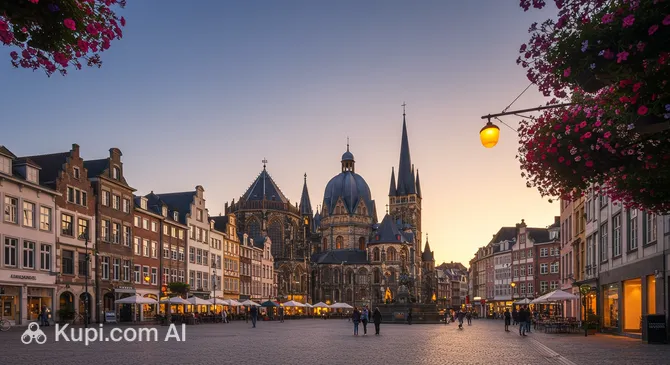
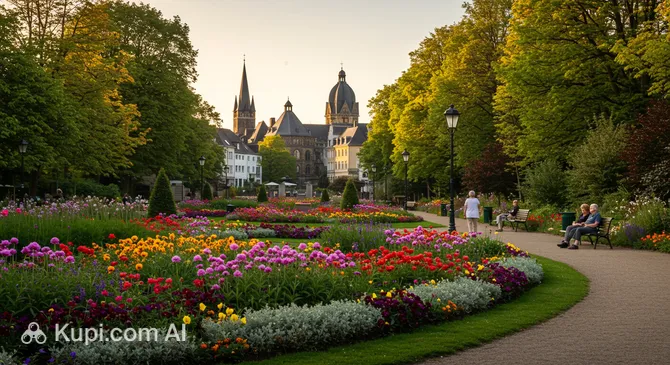
Aachen is a city that effortlessly blends ancient grandeur with a lively, modern atmosphere. Situated in the far west of Germany, right on the border with Belgium and the Netherlands, it serves as a unique European crossroads. Known as the favorite residence of Charlemagne, the city radiates a sense of historical significance while maintaining a youthful energy, largely thanks to its renowned university and vibrant student population.
Aachen. Illustration.
Source: Kupi.com AI
Geographically, Aachen is located in the state of North Rhine-Westphalia, nestled in a valley basin surrounded by hills and forests. As the westernmost major city in the country, it enjoys a temperate climate and acts as a gateway to the Eifel region. With a population of approximately 249,000 people, it offers the amenities of a bustling urban center without losing its welcoming, walkable charm.
The history of Aachen is legendary, spanning thousands of years from Roman settlements to its status as the coronation site of German kings. The city's crown jewel is undoubtedly the Aachen Cathedral, a UNESCO World Heritage site that captivates visitors with its stunning architecture and intricate mosaics. Beyond its imperial heritage, Aachen is famous as a spa city; the sulfurous hot springs at the Elisenbrunnen have attracted travelers seeking relaxation and healing for centuries.
Whether you are exploring the magnificent Town Hall, tasting the local Aachener Printen gingerbread, or simply soaking up the international flair, this city has something for everyone. We invite you to discover the rich culture and thermal waters of Aachen, a destination that truly lies at the heart of Europe.
Weather Overview
The climate in Aachen is generally temperate, offering distinct seasons without extreme temperature fluctuations. Summer is widely considered the most pleasant time to visit, with July and August seeing average temperatures around 19°C and daytime highs reaching up to 23.3°C. However, even during these warmer months, the city retains a lush green appearance due to regular rainfall.
Winters are cool and often damp, with average temperatures in January sitting at approximately 3.6°C and dipping to minimums of around 1.5°C. December is notably the dampest month, recording up to 19 wet days, so warm layers and rain gear are essential. For a more comprehensive breakdown of what to expect during your stay, you can view the guide to weather in Aachen.
Overall, the city's weather is characterized by its consistency in precipitation and moderate temperatures. Expect pleasant, warm summers with frequent showers and cool, wet winters. Packing a mix of light layers and waterproof clothing will ensure you are comfortable exploring the cathedral and old town, regardless of the forecast.
Average monthly temperature
Average monthly precipitation
Interesting Facts
Beyond the main attractions, Aachen holds many fascinating secrets and local legends that often go unnoticed by the casual observer. Digging a little deeper reveals stories of cunning deals with the devil, medieval defense tactics, and unique architectural quirks that define the city's character.
Aachen Cathedral. Illustration.
Source: Kupi.com AI
Traveler photos:
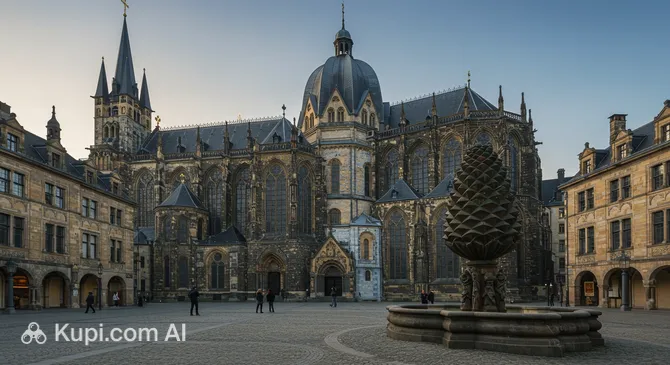
According to a popular local legend, the citizens made a pact with the devil to finance the construction of the Aachen Cathedral. When it came time to pay the price—the first soul to enter the church—the clever locals sent in a wolf instead of a human; today, you can still see a bronze statue of the wolf and a pine cone (representing its soul) in the cathedral's entrance hall, and the "Devil's Thumb" is said to be stuck in the lion-head door handle.
The thermal water flowing through the city is the hottest in Central Europe, reaching temperatures of up to 74°C. At the Elisenbrunnen, visitors can touch these mineral-rich waters, though they are immediately greeted by a distinctive sulfurous smell—often likened to rotten eggs—that has been a hallmark of the city's spa culture for centuries.
Aachen preserves its medieval fortification history through the Ponttor, one of the few remaining city gates. This structure features a "barbican" design, which created a trapped courtyard between two sets of gates, allowing guards to inspect and attack potential invaders from above before they could breach the inner city.
The Katschhof square, located between the cathedral and the town hall, is not just a scenic plaza but traces the exact footprint of the inner courtyard of Charlemagne’s imperial palace. Its dimensions have remained virtually unchanged for over 1,200 years, offering a direct physical link to the layout of the Carolingian era.
How to Get There
Located at the crossroads of Germany, Belgium, and the Netherlands, Aachen is easily accessible from various parts of Europe. Whether you prefer flying into a nearby international hub or taking a scenic train ride, there are plenty of options to suit your travel plans. For a complete guide on planning your journey, you can read more about how to get to Aachen.
The city does not have its own major international airport, but it is well-served by several hubs in neighboring cities. The closest option is Maastricht Aachen Airport (MST) in the Netherlands, located approximately 27 km away; the transfer from there takes just about 30 minutes by road. For a wider range of international flights, many travelers choose Dusseldorf International Airport (DUS). Situated about 74 km from Aachen, it is a large hub with extensive connections, and reaching the city center from here takes roughly 1 hour by taxi or shuttle.
Another convenient alternative is Cologne Bonn Airport (CGN), which sits roughly 74 km away. Similar to Dusseldorf, the travel time by road is approximately 1 hour. Travelers can also consider Liege Airport in Belgium for specific charter or cargo-focused routes, or Eindhoven Airport in the Netherlands, though the major German hubs generally offer the most frequent passenger services.
For clarity, here is a summary of the main airports:
Traveling by train is often the most comfortable way to arrive, as the city is integrated into the high-speed rail network. The main entry point is Aachen Hauptbahnhof, located directly in Aachen, just 0.9 km from the city center. It serves as a key stop for high-speed trains like the ICE and Thalys, connecting Germany with Belgium and France. If you are arriving from further afield, you might change trains at Cologne Central Station (about 64 km away) or Liège-Guillemins Station (about 40 km away), both of which offer frequent connections to Aachen.
Below is a list of relevant railway stations in the region:
No visit to the city is complete without exploring the Aachen Cathedral. As the first site in Germany to be designated a UNESCO World Heritage site, it is an architectural masterpiece that serves as the final resting place of Charlemagne. Tourists are captivated by its stunning octagonal dome, intricate golden mosaics, and the historic imperial throne, all of which vividly illustrate the city's immense significance during the Middle Ages.
Aachen Cathedral. Illustration.
Source: Kupi.com AI
Traveler photos:
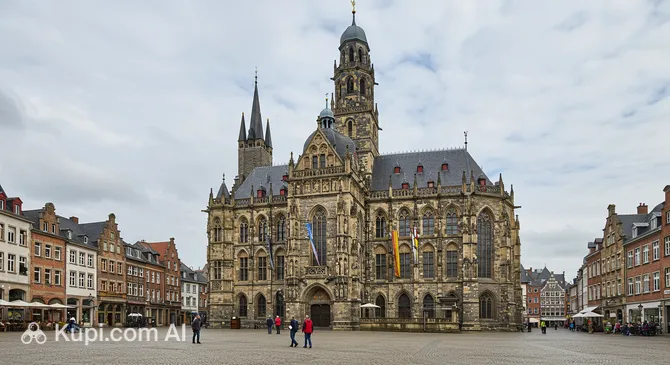
Directly facing the cathedral across the Katschhof square stands the majestic Aachen Town Hall. Built in the Gothic style on the foundations of Charlemagne's palace complex, this building is a powerful symbol of civic history. Visitors can explore the impressive Coronation Hall, where replicas of the Imperial Regalia are displayed, and admire the richly decorated facade that commands attention from the market square.
Aachen Town Hall. Illustration.
Source: Kupi.com AI
Traveler photos:
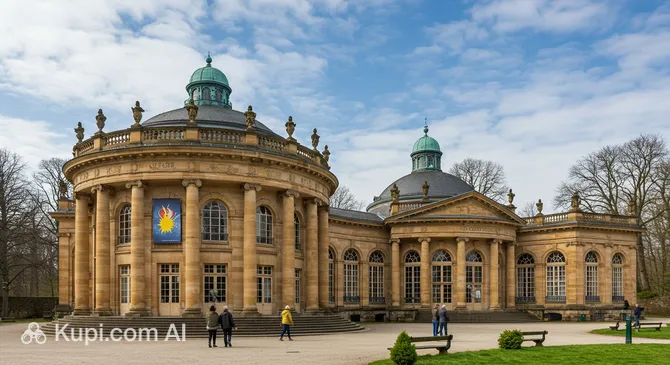
To truly understand the city's identity as a historic spa destination, a stop at the Elisenbrunnen is essential. This elegant neoclassical pavilion represents the heart of the local bathing culture, featuring fountains where hot, sulfurous water bubbles up from deep underground. It is a fascinating spot for travelers to see and smell the natural thermal springs that first attracted the Romans to this area thousands of years ago.
Elisenbrunnen. Illustration.
Source: Kupi.com AI
Traveler photos:
For those looking to experience the healing waters firsthand rather than just viewing them, Carolus Thermen offers a luxurious wellness escape. Unlike the historical monuments, this modern facility provides a relaxing environment filled with various thermal pools, saunas, and steam baths. It is the perfect place to unwind after a day of sightseeing, allowing you to soak in the same mineral-rich waters that have made the region famous.
Carolus Thermen. Illustration.
Source: Kupi.com AI
Traveler photos:
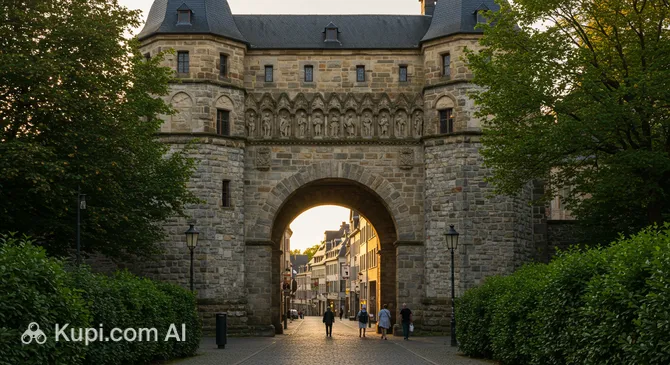
History enthusiasts will also appreciate the Ponttor, one of the two remaining gates from the city's medieval fortifications. With its imposing towers and defensive barbican structure, it offers a glimpse into how the city was protected in the 14th century. It stands as one of the few majestic city gates in the Rhineland that has survived almost completely intact, making it a great photo opportunity for those walking the city's perimeter.
Ponttor. Illustration.
Source: Kupi.com AI
Traveler photos:
Local Cuisine
The culinary landscape of Aachen is a delightful reflection of its location at the border triangle of Germany, Belgium, and the Netherlands. While the cuisine is rooted in hearty Rhineland traditions, you will often find subtle French and Belgian influences that add a unique flair to local menus. The city is proud of its gastronomic heritage, offering everything from centuries-old sweet treats to robust, savory dishes that comfort the soul.
Undoubtedly, the most famous local specialty is the Aachener Printen. These are not just ordinary gingerbread cookies; they are a protected culinary treasure with a recipe that dates back hundreds of years. Unlike standard gingerbread, Printen are sweetened with sugar beet syrup and heavily spiced with cinnamon, clove, aniseed, and coriander. You can find them in various forms—hard or soft, covered in chocolate, or topped with nuts—at bakeries throughout the city. They are so integral to the local culture that they are even used as a key ingredient in savory sauces.
For a substantial meal, you must try the local version of Sauerbraten (marinated pot roast). In this region, the gravy is often thickened and sweetened with crumbled Printen and raisins, creating a perfect balance of sweet and sour flavors. Another traditional favorite is Öcher Puttes, a type of blood sausage often pan-fried and served with mashed potatoes and apple compote, a dish locally known as "Himmel un Ääd" (Heaven and Earth).
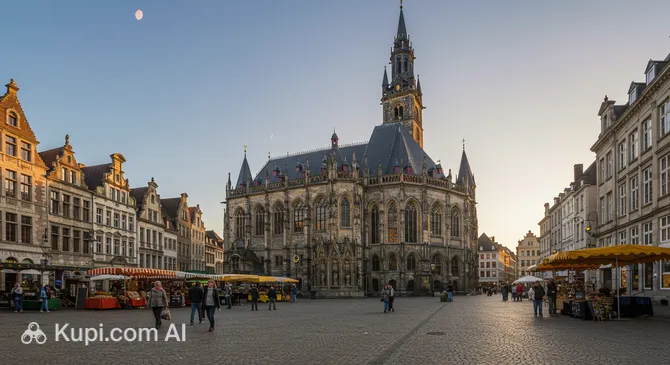
Market Square at the Town Hall. Illustration.
Source: Kupi.com AI
Traveler photos:
The heart of the city's dining scene can be found around the Market Square at the Town Hall. This historic area is lined with charming cafes and restaurants where you can enjoy a meal with a view of the majestic architecture. It is an ideal spot to sit outside during warmer months, sipping a coffee or a local beer while watching the bustle of the city.
If you are looking for a lively atmosphere, head to the Pontstraße district. Known as the "dining mile," this street connects the market to the old city gate and is packed with diverse eateries, from quick bites to sit-down dinners. Given Aachen's large student population, this area offers a vibrant energy and plenty of affordable options, making it a favorite for both locals and visitors.
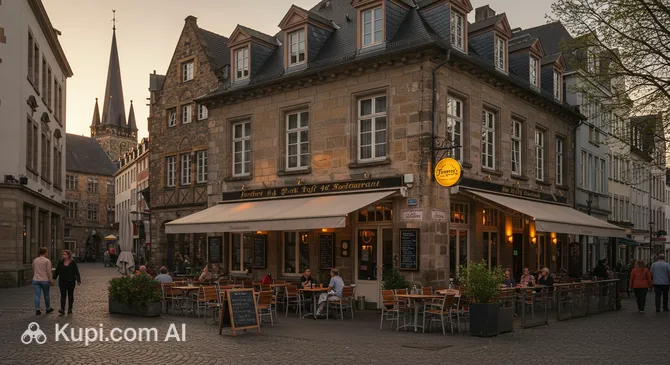
Ferbers Park Café Restaurant. Illustration.
Source: Kupi.com AI
Traveler photos:
For those seeking a relaxed environment surrounded by greenery, Ferbers Park Café Restaurant is a wonderful choice. It offers a cozy setting to enjoy regional dishes and international classics away from the immediate rush of the city center. When it comes to drinks, the local beer culture is strong, but the city also embraces modern trends. You can wind down your evening at Café & Bar zuhause, a popular spot to enjoy a refreshing drink and experience the friendly local nightlife.
Travel Tips
Planning a trip to Charlemagne’s favorite city is exciting, but a few local insights can make your visit even smoother. Here are some practical tips to help you navigate Aachen like a pro and avoid common tourist pitfalls.
Clothing and Gear: The weather in this region can be quite changeable, so it is wise to pack layers and a sturdy umbrella or raincoat regardless of the season. Since the historic center is paved with cobblestones, comfortable walking shoes are a must. If you plan to enter the Aachen Cathedral, remember to dress modestly; shoulders and knees should be covered out of respect.
Transportation: The city center is compact and best explored on foot. For destinations further afield, the local bus network (operated by ASEAG) is reliable and extensive; note that there are no trams or subways in Aachen. Renting a car is generally unnecessary for exploring the city itself and can be a hassle due to limited parking, so stick to public transport or walking.
Finances: The local currency is the Euro (€). While major stores and restaurants accept cards, Germany is still fond of cash, especially in smaller cafés, traditional bakeries, and kiosks. It is advisable to always carry some cash for small purchases. Tipping is not mandatory but appreciated; it is common to round up the bill or leave a tip of around 5-10% for good service.
Health and Safety: Aachen is generally a very safe city for travelers. Pharmacies are identified by a large red "A" symbol; if you need medicine outside of regular hours, check the door of any pharmacy for a list of nearby locations on "Notdienst" (emergency duty). For serious medical or fire emergencies, the standard European number is 112.
Communication: The official language is German, but thanks to the university and the city's location near the Dutch and Belgian borders, English is widely spoken. Most locals are happy to switch to English if needed. However, learning a simple "Guten Tag" (Good day) or "Danke" (Thank you) is a polite gesture that is always well-received.
Local Etiquette: Punctuality is highly valued in German culture, so try to arrive on time for any tours or restaurant reservations. When entering a shop or establishment, it is polite to greet the staff. Sundays are considered rest days, so expect a quieter atmosphere and avoid making excessive noise in residential areas.
What to Avoid: Be extremely careful not to walk in the designated bicycle lanes, which are often paved in red or marked on the sidewalks. Cyclists in Aachen move fast and expect the path to be clear. Additionally, avoid crossing the street when the pedestrian light is red, even if the road is empty, as this is considered rude and sets a bad example.
Sunday Closures: Keep in mind that nearly all shops, supermarkets, and retail stores are closed on Sundays. Only restaurants, cafés, bakeries, and some souvenir shops near major attractions remain open. Be sure to do any necessary grocery or shopping runs on Saturday.
With these practical tips in hand, you are fully prepared to enjoy everything Aachen has to offer, from its thermal springs to its imperial history. Have a wonderful and stress-free journey to this unique European crossroads!
Entertainment & Nightlife
Driven by its large student population, Aachen boasts a vibrant and unpretentious nightlife scene that often surprises visitors. While it may not have the sprawling club landscape of a metropolis, the city offers a concentrated and energetic mix of pubs, bars, and dance venues. The atmosphere is generally relaxed and welcoming, with a dress code that leans heavily towards casual, making it easy to hop from one venue to another without worry.
The epicenter of the action is undoubtedly **Pontstraße**. Often referred to as the "Latin Quarter" of Aachen, this street connects the Market Square to the Ponttor gate and transforms as the sun sets. By day, it is a dining hub, but by night, it teems with students and locals enjoying beers on crowded terraces or inside cozy pubs. It is the perfect place to start your evening, soaking up the youthful energy that defines the city's social life.
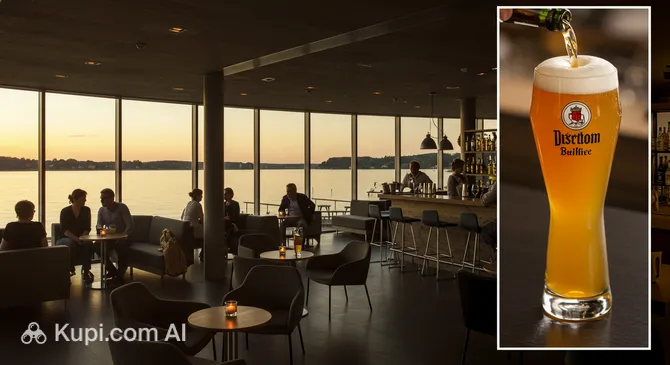
If you prefer a more laid-back atmosphere, perhaps with a view or a distinct vibe, Haus am See is a popular choice. Venues like this are characteristic of Aachen's nightlife—places where the focus is on good conversation, music, and a friendly environment rather than exclusivity. It is an excellent spot to unwind and mingle with a diverse crowd.
Haus am See. Illustration.
Source: Kupi.com AI
Traveler photos:
When planning a night out, keep in mind that the peak times are usually Thursday, Friday, and Saturday nights. Prices in Aachen are generally student-friendly and moderate compared to larger German cities. Getting around at night is straightforward; the **ASEAG** bus network operates night lines (marked with an "N") on weekends and before public holidays, ensuring you can get home safely. Taxis are also readily available at designated stands or by phone, and the city center is compact enough that walking is often a viable option.
Safety is rarely a major concern in Aachen. The city is well-lit and generally safe for night walks, especially in the busy areas around Pontstraße and the Market Square. However, as with any city, it is wise to stay aware of your surroundings and stick to populated routes late at night.
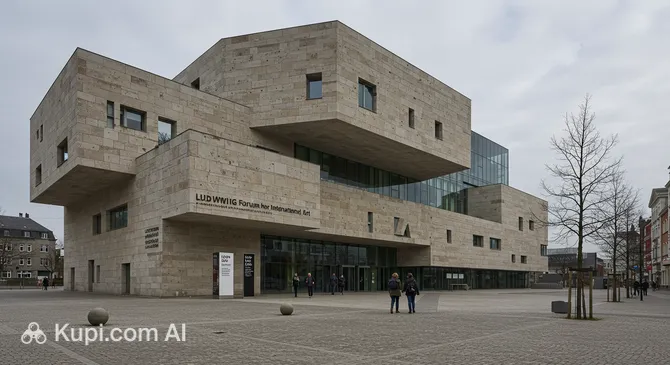
Beyond the nightlife, Aachen offers plenty of daytime entertainment to round out your trip. Culture enthusiasts should not miss the Ludwig Forum for International Art, a renowned museum housed in a former umbrella factory that showcases contemporary works from around the globe.
Ludwig Forum for International Art. Illustration.
Source: Kupi.com AI
Traveler photos:
For families or those seeking a break from the urban environment, the Aachen Zoo Euregiozoo provides a lovely green space to observe animals and enjoy nature. Meanwhile, shopping lovers can head to Aquis Plaza, a modern shopping mall located near the pedestrian zone, offering a wide range of international brands and dining options.
For those interested in traditional local commerce, Schneiderwind is a historic institution worth visiting. Unlike the bustling bars, this is a renowned specialty shop that has been a fixture in the city for generations. It is the perfect destination for connoisseurs seeking an exquisite selection of spirits, tobacco, and tea, offering a glimpse into the refined side of Aachen's leisure culture.
Schneiderwind. Illustration.
Source: Kupi.com AI
Traveler photos:
Parks & Museums
Beyond its imperial palaces and thermal springs, the city offers a wealth of green spaces and cultural institutions that allow visitors to dive deeper into its heritage and daily life. Whether you are looking to relax under ancient trees or marvel at one of the most significant church treasuries in Europe, Aachen provides a diverse array of experiences just steps away from the bustling city center.
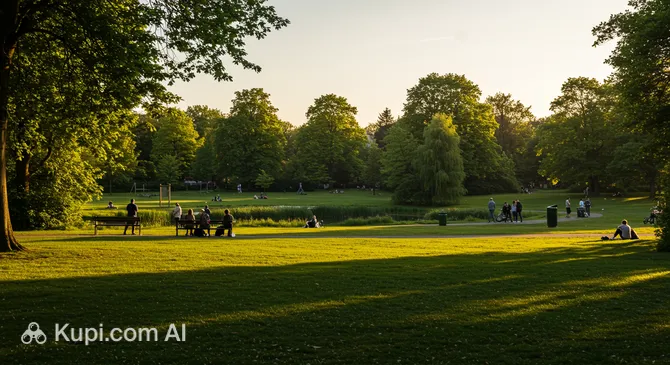
For a taste of local life, Westpark is a favorite destination among students and families alike. Located just a short walk from the city center, this expansive green area features a large pond, sports facilities, and plenty of open lawns perfect for picnicking. In the summer, the atmosphere here is vibrant and communal, with locals gathering to enjoy the sunshine and grill in designated areas, making it a great spot to observe the city's youthful energy.
Westpark. Illustration.
Source: Kupi.com AI
Traveler photos:
Another significant green space is Kennedy Park, situated in the eastern part of the city. This park has a fascinating history, having been transformed from former military barracks into a multicultural meeting point for the community. Today, it serves as a vital recreational hub with playgrounds and wide paths, often hosting neighborhood festivals that celebrate the diverse cultural fabric of the surrounding districts.
Kennedy Park. Illustration.
Source: Kupi.com AI
Traveler photos:
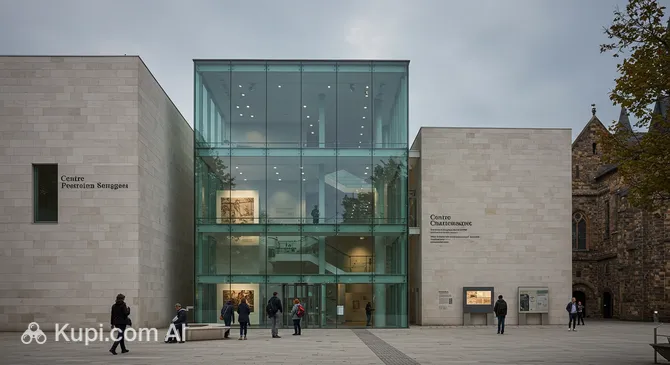
When it comes to museums, the city's rich past is best explored at the Centre Charlemagne. Located directly between the Cathedral and the Town Hall, this modern museum creates a bridge between the two historical heavyweights. It offers a multimedia journey through the history of Aachen, focusing on its development as a royal residence and a European spa city, while providing fascinating insights into the life and legacy of Charlemagne himself.
Centre Charlemagne. Illustration.
Source: Kupi.com AI
Traveler photos:
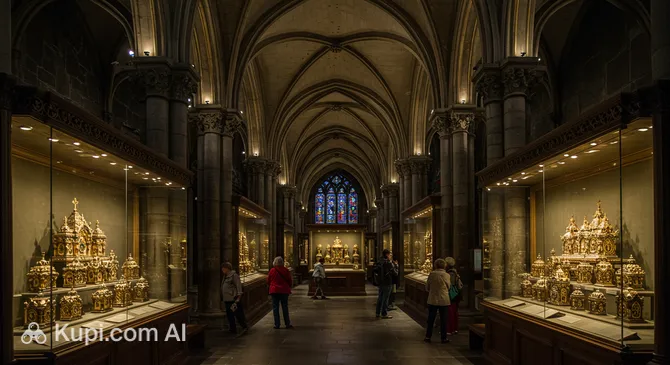
Art and history lovers should not miss the Aachen Cathedral Treasury, which houses one of the most important ecclesiastical collections north of the Alps. The treasury displays an awe-inspiring array of sacred art, including the golden bust of Charlemagne, the Cross of Lothair, and the marble sarcophagus that once held the emperor's remains. These priceless artifacts offer a tangible connection to the medieval grandeur that defined the Holy Roman Empire.
Aachen Cathedral Treasury. Illustration.
Source: Kupi.com AI
Traveler photos:
For a truly authentic experience, take a walk up the Lousberg, the oldest citizens' park in Europe. According to legend, the hill was dropped by the devil, but today it offers the best panoramic views over the city rooftops and the cathedral, especially stunning during sunset. It is a quiet retreat where you can hang a hammock between the trees or simply sit on a bench and enjoy the vista away from the tourist crowds.
Getting Around
The public transport system in Aachen is efficient, reliable, and primarily based on a dense network of buses. Unlike many other major cities, Aachen does not have a subway or tram system; instead, the red buses operated by ASEAG serve as the backbone of local mobility. They connect the historic city center with the university districts, outer suburbs, and even towns across the borders in Belgium and the Netherlands. For faster connections across the city, you can also utilize the regional trains (RB and RE) that stop at the four main stations: Hauptbahnhof, Rothe Erde, Schanz, and West.
The city is part of the AVV (Aachener Verkehrsverbund) tariff association, which means a single ticket is valid for both buses and local trains within the purchased zone. For most tourists exploring the main attractions, a Zone 1 ticket or a "City-XL" tariff is sufficient. Prices are reasonable, with a single adult trip costing around €3.00 and a 24-hour ticket available for approximately €8.00 to €9.00, offering unlimited travel for one person or small groups within the city limits.
For the most convenient experience, it is highly recommended to download the naveo app. This official app allows you to plan routes in real-time and purchase tickets digitally, often saving you the hassle of finding loose change. A popular digital option is the eezy tariff, where you simply check in via the app when boarding and check out when leaving; the system automatically calculates the distance-based fare, which is often cheaper than a standard paper ticket.
If you prefer physical tickets, you can buy them directly from the bus driver (usually cash only) or at ticket machines located at train stations and major bus stops. Remember that if you purchase a paper ticket from a machine or a shop, you must validate it by stamping it in the red machines on board the bus or on the train platform. Failure to do so can result in a fine. Buses generally run from early morning until around midnight, with special night buses (marked with an "N") operating on weekends and before public holidays to ensure safe travel after hours.
Beyond traditional public transport, the city is very bicycle-friendly. The Velocity Aachen e-bike sharing system is extremely popular, with stations scattered throughout the city. You can easily register via their app, unlock a blue electric bike, and zoom up the city's hills with ease. Taxis are also readily available at designated stands or can be hailed via phone, offering a comfortable alternative for late-night trips or travel with heavy luggage.
A unique feature of the local transport network is its international reach. Due to the city's border location, you can hop on a standard city bus (such as line 14 to Eupen or line 350 to Maastricht) and find yourself in a different country within minutes. These cross-border routes are seamlessly integrated into the schedule, making it incredibly easy to take a quick day trip to Vaals in the Netherlands or Kelmis in Belgium without needing a car.
Accommodation
Accommodation:
Finding the perfect place to stay in Aachen is relatively easy, as the city offers a wide spectrum of accommodation options to suit every budget and travel style. Whether you are looking for a luxurious hotel with spa facilities, a reliable mid-range chain, or a budget-friendly hostel, the city is well-equipped to host its many visitors. The hospitality sector here blends traditional German coziness with modern efficiency, ensuring a comfortable stay regardless of your choice.
For most tourists, the best area to stay is undoubtedly the historic city center (Altstadt). Staying within the inner ring allows you to walk to major attractions like the cathedral and the town hall, placing you right in the middle of the charming cobblestone streets and lively cafés. Alternatively, the area around the Main Train Station (Hauptbahnhof) is highly convenient for those arriving by rail or planning day trips to neighboring countries. It is just a short walk from the center and offers a variety of practical business hotels.
The price range for accommodation in Aachen is generally moderate compared to larger German metropolises like Cologne or Dusseldorf. Budget travelers can find hostels and guesthouses starting at reasonable rates, while mid-range hotels offer excellent value for money. Booking is typically done through major online platforms, but checking directly with smaller, family-run establishments can sometimes yield better deals or special packages.
A crucial tip for planning your stay is to be aware of the city's major events. During the world-famous Aachen Christmas Market in November and December, and the prestigious CHIO equestrian tournament in the summer, hotel rooms fill up incredibly fast and prices can spike. It is highly recommended to book your accommodation several months in advance if you plan to visit during these peak periods to secure the best location and rates.
Nearby Cities
For those looking to explore the surroundings, Aachen serves as an excellent base for day trips to several interesting nearby locations. The region is dotted with historic towns and scenic landscapes that are easily accessible by public transport or a short car ride.
One of the most charming destinations just a few kilometers away is Stolberg. Known historically as the "Copper City" due to its long tradition of metalworking, it boasts a beautifully preserved medieval old town. The highlight is the imposing Stolberg Castle, which sits high above the city on a limestone rock, offering panoramic views and a deep dive into local history. The winding streets below are lined with timber-framed houses, making it a perfect spot for a leisurely afternoon stroll.
Although slightly further into the Eifel region, the town of Monschau is a must-visit for anyone in the area. While not listed in the immediate suburban table below, this picturesque town is famous for its slate-clad houses and narrow cobblestone alleys that look almost exactly as they did in the 18th century. Nestled in a deep valley along the Rur river, it is a favorite for photographers and nature lovers, serving as a gateway to the Eifel National Park.
Closer to the city limits, Herzogenrath offers a unique geopolitical curiosity. Together with the Dutch town of Kerkrade, it forms the symbolic "Eurode," a cross-border city where the boundary between Germany and the Netherlands runs directly down the middle of the street (Neustraße/Nieuwstraat), allowing visitors to walk with one foot in each country.
These nearby destinations offer a glimpse into the diverse culture and landscapes of the region, ranging from industrial heritage to idyllic nature and unique border experiences.
Shopping & Souvenirs
Shopping in Aachen is a delightful experience that combines the convenience of modern retail with the charm of a historic setting. The city center is compact and walkable, allowing visitors to browse through international fashion chains, exclusive boutiques, and traditional specialty shops without traveling far. Whether you are looking for the latest trends or unique local craftsmanship, the pedestrian-friendly streets offer a relaxed atmosphere for a day of retail therapy.
The primary shopping artery of the city is Adalbertstraße. This pedestrian zone stretches from the Kaiserplatz to the area around the cathedral and is lined with well-known department stores, clothing chains, and shoe shops. It is the bustling heart of the city's retail scene, perfect for finding popular brands and everyday essentials. For a more picturesque and individual experience, head towards the historic lanes surrounding the Cathedral and the Town Hall, such as Krämerstraße and Annastraße. Here, you will find smaller, owner-managed boutiques, jewelry stores, and antique shops nestled among ancient buildings.
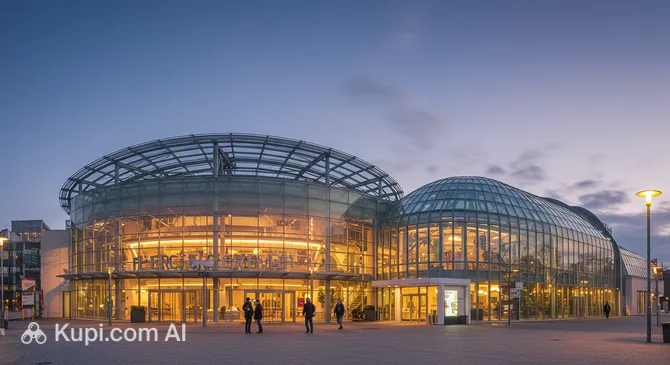
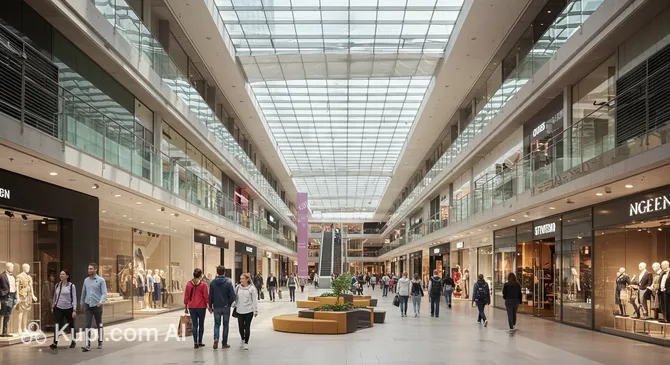
If you prefer having everything under one roof, the Hirsch Center Aachen is a notable destination located slightly outside the city center, offering a variety of shops and ample parking. However, the most prominent modern addition to the city center is Aquis Plaza. Situated at the end of the main shopping street, this architectural highlight houses around 130 shops, a food court, and services, making it a convenient stop for fashion and lifestyle products.
Aquis Plaza. Illustration.
Source: Kupi.com AI
Traveler photos:
Markets play a vital role in the local lifestyle. The weekly market takes place on Tuesdays and Thursdays around the Town Hall and the Cathedral, offering fresh regional produce, flowers, and local delicacies. It is a vibrant spot to mingle with locals and pick up some fresh fruit or snacks. Of course, during the winter season, the squares transform into the world-renowned Aachen Christmas Market, attracting visitors from all over Europe with its festive stalls and handcrafted goods.
No trip to Aachen is complete without buying Aachener Printen. These spicy gingerbread cookies are the city's signature souvenir and can be bought in beautiful tins that travel well. Other popular keepsakes include replicas of the Charlemagne bust or cathedral-themed items. For those with a taste for fine tobacco or spirits, the historic shop Schneiderwind near the cathedral offers exclusive gifts in a traditional setting.
Most shops in the city center are open from Monday to Saturday, typically starting around 10:00 AM and closing between 6:00 PM and 8:00 PM. Department stores and malls like Aquis Plaza often stay open until 8:00 PM. It is important to remember that, like in the rest of Germany, almost all shops are closed on Sundays. While major cards are widely accepted in malls and chain stores, smaller boutiques and market stalls may still prefer cash, so it is wise to carry some Euros.
Visitors from outside the European Union are generally eligible for tax-free shopping. Look for the "Global Blue" or "Tax Free" signage in store windows. If you spend above a certain minimum amount (usually €50), you can ask for a tax refund form at the checkout, which can then be processed at the airport or designated refund points before leaving the EU.