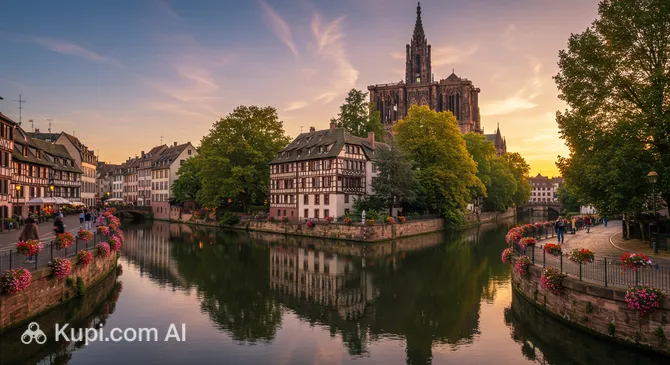
Strasbourg is a captivating city in eastern France, renowned for its unique blend of French and German cultures. As the formal seat of the European Parliament, it serves as a symbol of unity and cooperation, yet it retains the intimate charm of a traditional Alsatian town. Situated on the banks of the Rhine River in the Grand Est region, the city is home to approximately 290,000 residents and offers a vibrant atmosphere where medieval heritage meets modern dynamism.
The urban landscape is defined by its picturesque canals and half-timbered houses, particularly in the historic districts. Exploring the history of Strasbourg reveals a past shaped by its strategic location on the border, resulting in a rich architectural and cultural tapestry that delights visitors from around the world.
Strasbourg. Illustration.
Source: Kupi.com AI
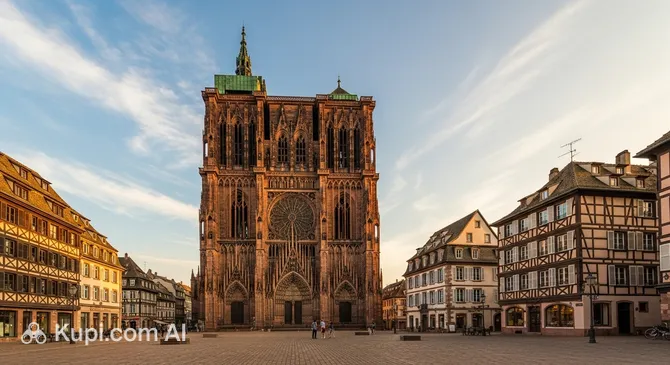
Travelers are often drawn to the stunning Strasbourg Cathedral (Cathédrale Notre-Dame), a masterpiece of Gothic art featuring a famous astronomical clock and a towering spire that dominates the skyline. Another must-see area is La Petite France, a historic quarter crisscrossed by canals and filled with charming restaurants and shops. Whether you are admiring the covered bridges or enjoying the local cuisine, the city promises an unforgettable experience.
With its welcoming ambiance and wealth of sights, Strasbourg is a destination that truly has something for everyone. A visit here offers the perfect opportunity to immerse yourself in a city that beautifully harmonizes its storied past with a forward-looking spirit.
Weather Overview
Strasbourg experiences distinct seasons, offering a varied atmosphere for travelers throughout the year. The city generally enjoys warm, pleasant summers and cold winters, with a fairly consistent chance of precipitation year-round. For the most accurate forecast during your intended dates of travel, it is advisable to consult the detailed guide to the weather in Strasbourg.
During the summer months of June, July, and August, the climate is inviting, with average temperatures hovering around 20°C to 21°C and daily highs often reaching approximately 26°C. This period is excellent for sightseeing, though visitors should be prepared for about 12 to 14 wet days per month. In contrast, winters are chilly; December and January see average temperatures drop to between 3°C and 4°C, with lows occasionally dipping close to 0°C. With frequent wet days recorded even in the colder months, packing a waterproof jacket or umbrella is a smart choice regardless of when you visit.
Average monthly temperature
Average monthly precipitation
Interesting Facts
Beyond the main attractions, Strasbourg holds many fascinating secrets that reveal the depth of its cultural and historical significance. These unique details offer a glimpse into the events and figures that have shaped this remarkable city over the centuries.
Cathedral Square (Place de la Cathédrale) Strasbourg. Illustration.
Source: Kupi.com AI
Traveler photos:
For over two centuries, from 1647 to 1874, the majestic cathedral located at Cathedral Square held the title of the tallest building in the world, dominating the skyline with its intricate Gothic spire.
The Historical Wine Cellar of the Hospices of Strasbourg is home to a legendary barrel of Alsatian white wine dating back to 1472, which is widely considered the oldest wine in a barrel on Earth and has been tasted only three times in history.
Before revolutionizing global communication, Johannes Gutenberg spent approximately ten years in the city, where he conducted his early experiments with movable type; today, his contribution is honored at Gutenberg Square.
Despite its name, the French national anthem, "La Marseillaise," was actually composed in Strasbourg in 1792 by Claude Joseph Rouget de Lisle as a war song for the Army of the Rhine.
How to Get There
Reaching this charming Alsatian capital is quite convenient thanks to its central location in Europe and excellent transport connections. Whether you prefer flying or taking the train, there are multiple options to suit your itinerary. For a comprehensive guide on all available routes, you can read more about how to get to Strasbourg.
The most direct way to arrive by air is via Strasbourg Airport (IATA: SXB), located in Entzheim, just under 10 km from the city center. It is a convenient regional hub, and the shuttle train connects the airport to the city station in approximately 10-15 minutes. For travelers looking for more flight options, Baden-Airpark (IATA: FKB) is another excellent choice. Situated in Karlsruhe, approximately 33 km away, it serves as a popular gateway for low-cost carriers. Additionally, the EuroAirport Basel–Mulhouse–Freiburg (IATA: EAP) in Basel offers extensive international connections. Although it is located about 110 km from Strasbourg, the journey is manageable, taking approximately 1.5 hours by road.
For clarity, here is a summary of the main airports:
Traveling by train is also a highly efficient and scenic way to reach the city. The main hub is Strasbourg Railway Station (Gare de Strasbourg), a stunning architectural landmark known for its modern glass canopy covering the historic facade. Located just 1.8 km from the city center, it is a major node in the European high-speed rail network, welcoming millions of passengers annually. From here, you can easily access local trams or walk to the main attractions in under 20 minutes. Another significant nearby hub is Karlsruhe Hauptbahnhof in Karlsruhe, about 67 km away, which provides additional connections for travelers coming from Germany.
Strasbourg is a city where history comes alive, offering a rich array of sights that blend medieval charm with cultural grandeur. From its UNESCO-listed historic center to its tranquil green spaces, the city invites visitors to explore its most iconic landmarks.
The beating heart of the city is the Grande Île, an island surrounded by the Ill River that encompasses the historic center. This area is a masterpiece of urban heritage, home to the magnificent cathedral and a maze of narrow streets. Walking here feels like stepping back in time, as the district perfectly preserves the architectural evolution of the city from the Middle Ages to the present day.
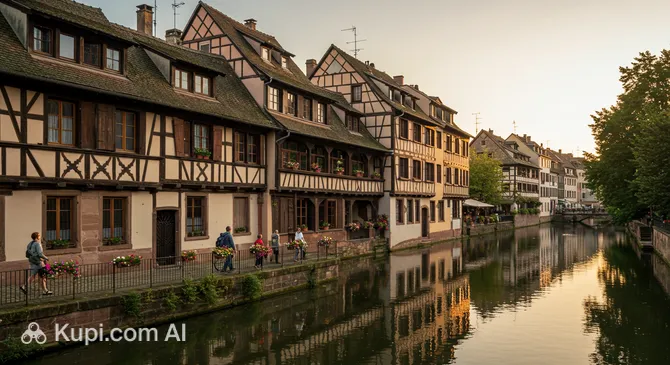
One of the most picturesque and beloved neighborhoods is La Petite France. Historically the district of tanners, millers, and fishermen, it is famous for its stunning half-timbered houses dating back to the 16th and 17th centuries. The area is crisscrossed by canals and features the famous covered bridges, making it an ideal spot for romantic walks and photography.
La Petite France. Illustration.
Source: Kupi.com AI
Traveler photos:
For those looking to experience the city's lively social atmosphere, Place Kléber is the largest square in the city center. It serves as a major gathering point for locals and tourists alike, hosting seasonal markets and events, including the famous giant Christmas tree during the holidays. Surrounded by elegant buildings, it is a perfect place to observe the daily rhythm of Strasbourg.
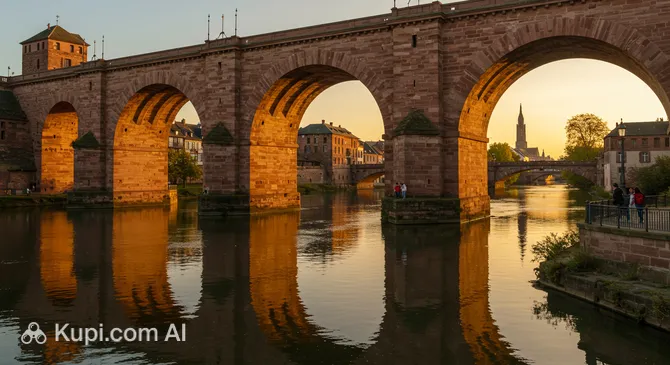
A short walk from the center leads to the Vauban Dam (Barrage Vauban), a defensive structure built in the 17th century. Visitors can walk across the panoramic terrace on its roof to enjoy breathtaking views of the canals, the covered bridges, and the cathedral spire in the distance. Inside, the dam houses a collection of ancient sculptures and offers a unique perspective on the city's military history.
Vauban Dam. Illustration.
Source: Kupi.com AI
Traveler photos:
If you wish to escape the urban bustle, the Parc de l'Orangerie provides a delightful retreat. As the city's oldest park, it features a boating lake, a small zoo, and beautiful English-style gardens. It is a favorite spot for families and nature lovers, offering a serene environment to relax and perhaps catch a glimpse of the storks, the symbolic birds of Alsace, which often nest in the area.
Local Cuisine
Strasbourg's culinary scene is a delightful marriage of French sophistication and generous German comfort food, making it a true paradise for food lovers. The local gastronomy is centered around hearty, warming dishes that reflect the region's agricultural abundance. One of the most iconic specialties is Choucroute Garnie, a substantial platter of fermented cabbage served with a variety of sausages, smoked pork, and potatoes. Another slow-cooked favorite is Baeckeoffe, a rich casserole of marinated meats and vegetables that was traditionally prepared by bakers in cooling ovens.
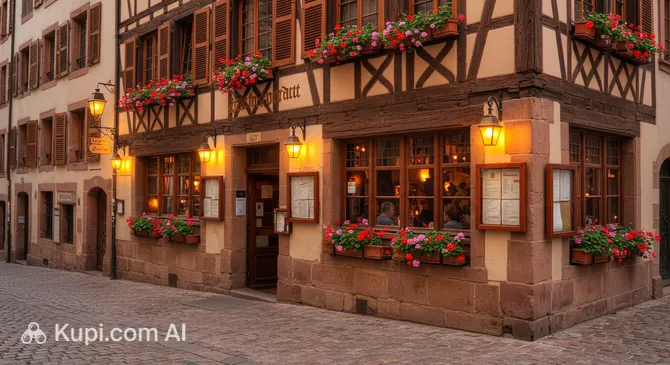
For a more casual and social dining experience, visitors should try the famous Tarte Flambée (or Flammekueche). This thin, crispy dough is typically topped with crème fraîche, onions, and bacon lardons, then baked in a wood-fired oven until the edges are perfectly charred. It is best enjoyed with friends, shared slice by slice at a traditional "Winstub" (wine lounge). If you are looking for a place to sample authentic Alsatian flavors, La Fignette is a popular choice known for its varied interpretations of this regional classic.
La Fignette. Illustration.
Source: Kupi.com AI
Traveler photos:
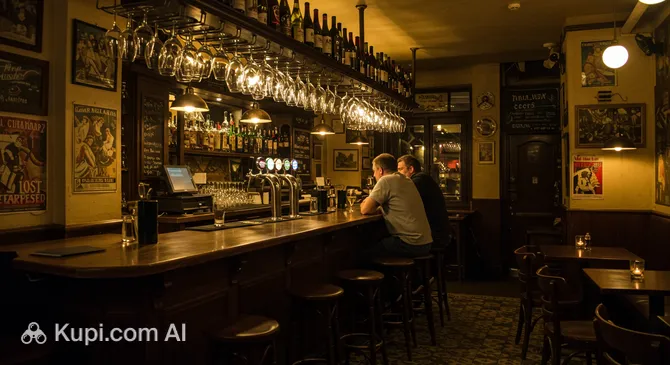
No meal in Strasbourg is complete without the appropriate local beverage. The region is world-renowned for its aromatic white wines, particularly Riesling and Gewürztraminer, which pair perfectly with the local fare. Beer enthusiasts will also feel right at home, as Alsace is the brewing capital of France. You can immerse yourself in this brewing tradition at Le Meteor, a vibrant brewery brasserie that offers a wide selection of local drafts in a lively atmosphere.
The city's food culture revolves around conviviality and tradition. Locals often gather in rustic Winstubs, characterized by their wood-paneled interiors and checkered tablecloths, to enjoy home-style cooking. For those with a sweet tooth, the Kougelhopf—a distinctive bundt cake with almonds and raisins—is a must-try treat, often enjoyed with breakfast or a glass of sparkling Crémant d'Alsace.
Travel Tips
To ensure your visit to the capital of Alsace is as smooth and enjoyable as possible, we have compiled a list of essential practicalities. These insights will help you navigate local customs, manage your budget, and explore the city with the confidence of a seasoned traveler.
Clothing and Gear: Since the weather can be unpredictable, packing layers is the best strategy, regardless of the season. Be sure to bring a sturdy umbrella or raincoat, as showers are frequent. Most importantly, wear comfortable flat shoes; the historic center is paved with cobblestones that can be difficult to navigate in heels. If you plan to visit the Cathedral, remember to dress modestly, covering your shoulders and knees.
Transportation: Strasbourg has an excellent public transport network managed by CTS, featuring sleek trams and buses that cover the entire city. A car is generally a hindrance in the city center due to pedestrian zones and expensive parking; it is better to park at a "Park and Ride" (P+R) station on the outskirts and take the tram in. Alternatively, you can rent a bicycle, as the city is arguably the most bike-friendly in France.
Finances: The local currency is the Euro (€). Credit and debit cards (Visa and Mastercard) are widely accepted in hotels, restaurants, and shops, but it is wise to carry some cash for small purchases at bakeries or Christmas markets. Tipping is not mandatory as a service charge is included in the bill, but leaving small change or rounding up is a polite gesture if you enjoyed the service.
Health and Safety: Strasbourg is generally a very safe destination for tourists. Pharmacies are easily identifiable by a flashing green cross neon sign and can provide advice for minor ailments. For emergencies, dial 112, the universal European emergency number. As in any popular tourist hub, keep an eye on your belongings in crowded areas like the Cathedral square or during the festive markets.
Communication: The official language is French. While many locals, especially in the service industry, speak good English, it is considered polite to start any interaction with a basic French phrase. A simple "Bonjour" (Good day) or "Parlez-vous anglais?" (Do you speak English?) goes a long way. Free Wi-Fi is available in many public squares and cafes, and EU citizens can use their mobile data without roaming fees.
Local Etiquette: Politeness is highly valued in Alsatian culture. Always greet shopkeepers and staff with a "Bonjour" when entering a store and "Au revoir" when leaving; failing to do so can be seen as rude. When dining out, keep your voice volume moderate, as loud conversations are often frowned upon in restaurants.
What to Avoid: Do not walk in the designated bike lanes. Cyclists in Strasbourg move quickly and use these lanes extensively for their daily commute; obstructing them is dangerous and will likely result in being rung at or scolded. Also, avoid assuming that everyone speaks German despite the region's history; address locals in French first.
Sunday Closures: Be aware that due to local laws specific to the Alsace-Moselle region, shopping regulations are stricter here than in the rest of France. Almost all supermarkets, department stores, and boutiques are closed on Sundays. Plan your shopping for Saturday and reserve Sunday for museums, parks, or dining.
By keeping these practical tips in mind, you will be well-prepared to embrace the unique rhythm of life in Strasbourg. Enjoy the blend of history, culture, and hospitality that makes this city such a remarkable destination to explore.
Entertainment & Nightlife
Strasbourg transforms as the sun sets, revealing a vibrant nightlife fueled by its large student population and cosmopolitan atmosphere. The city offers a diverse range of evening entertainment, from cozy winstubs and floating bars to energetic nightclubs. While the historic center remains enchanting for a quiet evening stroll, specific neighborhoods come alive with music and chatter, offering something for every taste, whether you prefer a sophisticated cocktail or a lively dance floor.
The epicenter of the city's nightlife is undoubtedly the Krutenau district. Located just south of the historic center, this area is packed with bars, pubs, and casual eateries that attract a young and energetic crowd. The atmosphere here is relaxed and bohemian, making it the perfect place to start the evening with "l'apéro" (pre-dinner drinks). Another bustling area is around the Cathedral and the Place du Marché Gayot, where terraces fill up quickly, offering a picturesque setting for enjoying local wines and beers.
For those seeking a lively venue with a strong local character, Le Meteor is a must-visit. As one of the largest brewery brasseries in the city, it offers a festive atmosphere where you can enjoy fresh tank beer and engage in lively conversation. The venue often buzzes with activity, reflecting the convivial spirit of Alsace.
Le Meteor. Illustration.
Source: Kupi.com AI
Traveler photos:
If you are looking for a more alternative vibe, Le Grand Tigre provides a unique experience. Housed in a former industrial building, this establishment combines a bar and a restaurant with a distinctive retro-modern aesthetic, often hosting events and gathering a trendy crowd.
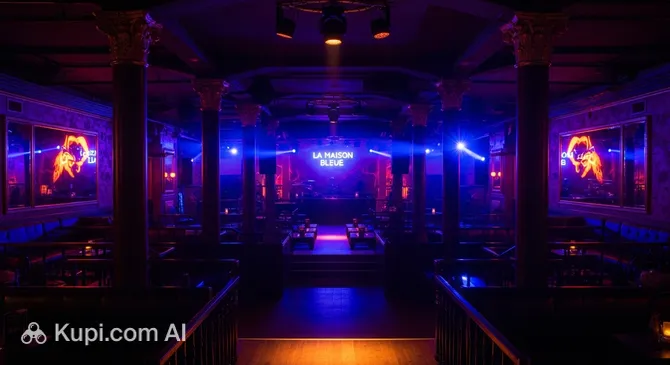
When the night deepens and you are ready to hit the dance floor, La Maison Bleue is a popular destination. Known for its eclectic programming, it functions as a concert venue and club, hosting everything from rock bands to electronic DJ sets. For a more interactive evening, you might enjoy Groove Box Karaoke, where you can sing your heart out in a fun, private setting.
La Maison Bleue. Illustration.
Source: Kupi.com AI
Traveler photos:
Practical advice for a night out in Strasbourg is straightforward. The dress code is generally casual and relaxed; you will rarely need formal attire unless attending a specific gala or high-end venue. Prices are reasonable for a major French city, with a pint of beer typically costing between 5 and 8 Euros. Public transport is convenient, with trams running until roughly 12:30 AM or 1:00 AM, and night buses available on weekends. However, for late-night returns, taxis and ride-sharing services are readily available and reliable.
In terms of safety, Strasbourg is a secure city for night walks, particularly in the center and the Krutenau district. Standard precautions apply, such as keeping an eye on your belongings in crowded bars. If you are staying outside the center, booking a taxi via an app or calling a local dispatch is the safest and easiest way to get home.
Before the sun goes down, the city offers plenty of daytime entertainment to fill your schedule. Culture enthusiasts should explore the Strasbourg Museum of Modern and Contemporary Art, which houses an impressive collection of European art. Families and science lovers will find Le Vaisseau to be an engaging interactive science center, perfect for an afternoon of discovery.
Parks & Museums
Strasbourg is a city that seamlessly blends its urban heritage with refreshing green spaces and a deep respect for culture. Beyond the famous canals and half-timbered houses, visitors will find a wealth of expansive gardens and world-class museums that offer a deeper understanding of the region's history and artistic legacy.
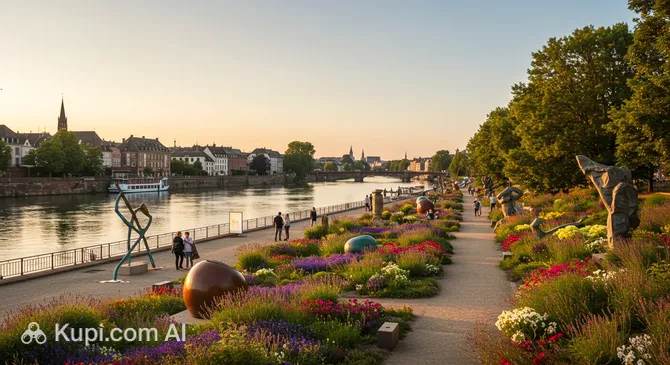
A symbol of cross-border friendship, the Two Shores Garden (Jardin des Deux Rives) is a unique public park that spans both banks of the Rhine River, connecting Strasbourg in France with Kehl in Germany. The centerpiece is a magnificent pedestrian and cyclist bridge that allows you to walk between the two countries in minutes. It is a favorite spot for leisurely strolls, picnics, and enjoying the open riverside atmosphere, representing the modern spirit of European unity.
Two Shores Garden. Illustration.
Source: Kupi.com AI
Traveler photos:
For botany enthusiasts and those seeking tranquility, the Strasbourg University Botanical Garden offers a lush escape near the Imperial Quarter. Created in 1619, it is home to over 6,000 plant species from around the globe. Visitors can explore the arboretum, admire the tropical plants in the greenhouses, and enjoy a peaceful walk through one of the oldest botanical gardens in France, which serves as both a scientific institution and a public haven.
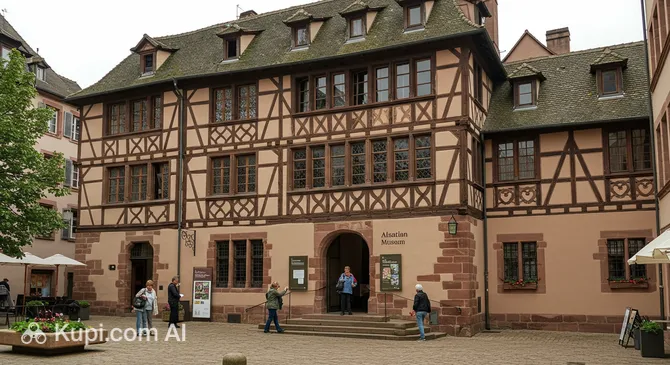
To truly understand the local identity, a visit to the Alsatian Museum is essential. Housed in three interconnected Renaissance-era buildings on the quays, this museum immerses you in the rural life of Alsace from the 18th and 19th centuries. The creaky wooden floors and winding staircases lead you through reconstructed interiors filled with traditional costumes, furniture, ceramics, and toys, offering a charming and intimate glimpse into the region's folk traditions.
Alsatian Museum. Illustration.
Source: Kupi.com AI
Traveler photos:
Art and history lovers should not miss the Museum of the Œuvre Notre-Dame, located at the foot of the cathedral. This museum is dedicated to the finest medieval and Renaissance art of the Upper Rhine region. Its collections include original sculptures from the cathedral, intricate stained glass, and architectural plans that tell the story of the city's artistic golden age. Nearby, inside the majestic Rohan Palace, the Strasbourg Museum of Fine Arts presents a grand overview of European painting history, featuring masters such as Botticelli, Rubens, and Delacroix.
For a lesser-known spot that combines history with nature, consider visiting Citadel Park. Located on the remains of a 17th-century fortress designed by Vauban, this park offers a fascinating mix of military ruins and green lawns, making it a quiet and intriguing place for a relaxing afternoon walk away from the tourist crowds.
Getting Around
Navigating Strasbourg is a seamless experience thanks to its highly efficient and modern public transport network, managed by the Compagnie des Transports Strasbourgeois (CTS). The backbone of the system is the futuristic tram network, comprising six lines (A through F) that crisscross the city and connect the suburbs with the historic center. These trams are known for their large glass windows, offering excellent views of the architecture as you travel. Complementing the trams is a comprehensive bus network that reaches areas not covered by rail, ensuring that virtually every corner of the city is accessible.
For tourists, the ticketing system is straightforward and integrated, meaning the same ticket works for both trams and buses. You can purchase single-ride tickets, but for a day of sightseeing, the 24-hour pass (ALSA+ 24H) is often the most economical choice. There is also a "Trio" version of this pass, which offers unlimited travel for a small group of up to three people, making it perfect for families or friends. Tickets can be bought at the multilingual vending machines located at every tram stop, via the CTS mobile app, or directly from bus drivers (though this usually incurs a slightly higher surcharge).
A crucial detail for visitors is the validation process. If you are taking the tram, you must validate your ticket before boarding at the small machines located on the platform; there are no validators inside the trams. On buses, however, you validate immediately upon entering. The network generally operates from around 4:30 AM until 12:30 AM or 1:00 AM, with frequent services throughout the day, so you rarely have to wait long for a connection.
One of the most unique features of the local transport system is its international reach. Tram Line D extends across the Rhine River, allowing you to travel from the city center directly into Kehl, Germany, in just about 15 minutes. This cross-border journey requires no special passport checks or extra tickets if you have a valid zone pass, offering a rare opportunity to visit two countries on a single tram ride.
Beyond public transit, Strasbourg is widely regarded as the cycling capital of the region. The city features an extensive network of bike lanes, and the Vélhop bike-sharing service makes it easy to rent a bicycle for a few hours or several days. Given the flat terrain and the pedestrian-friendly nature of the historic center, cycling or walking are often the most enjoyable ways to explore. While taxis and ride-sharing apps are available, they are best reserved for late-night trips or travel with heavy luggage, as traffic in the center can be restricted.
Accommodation
Finding the perfect place to stay in Strasbourg is relatively easy, as the city offers a wide spectrum of accommodation options to suit every preference and budget. Visitors can choose from charming boutique hotels housed in centuries-old half-timbered buildings, reliable international hotel chains, and modern apartments available for short-term rental. For budget-conscious travelers and backpackers, there are also several well-maintained youth hostels and budget hotels, particularly near the transport hubs.
The most coveted location for tourists is undoubtedly the Grande Île, the UNESCO-listed historic center. Staying here places you within walking distance of the major sights, including the cathedral and the museums. For a particularly romantic atmosphere, the La Petite France district offers stunning views of the canals, though accommodation here tends to be in higher demand and pricier. If convenience and lower rates are a priority, the area surrounding the Gare Centrale (train station) is an excellent choice; it is just a short walk or tram ride from the center and offers quick access to the airport shuttle and regional trains.
Travelers should be aware that accommodation prices in Strasbourg can fluctuate significantly depending on the season and local events. While the city is generally affordable compared to Paris, rates spike noticeably during the famous Christmas Market in December and during the monthly plenary sessions of the European Parliament, when hotels fill up with diplomats and officials. Outside of these peak periods, it is usually possible to find mid-range options that offer great value for money.
Booking Tip: If you plan to visit during the festive season in December, it is crucial to book your accommodation several months in advance, as the best locations often sell out half a year ahead. For the rest of the year, booking a few weeks prior is usually sufficient to secure a good rate via major online booking platforms.
Nearby Cities
For those looking to explore the surroundings, Strasbourg serves as an excellent base for day trips to several interesting nearby locations:
City
Population
Distance
Schiltigheim
33 993
4 km
Ostwald
12 985
5 km
Hoenheim
11 304
5 km
Bischheim
17 353
5 km
Kehl
37 378
5 km
Among these destinations, Colmar is undoubtedly the most famous choice for a day trip. Located approximately an hour away by train or car, it is often described as a fairytale town due to its remarkably preserved old town. Visitors flock to the "Little Venice" district to admire the colorful half-timbered houses lining the canal. As the capital of Alsatian wine, it is also the perfect place to taste some of the region's finest vintages.
For a different experience, Haguenau offers a journey into the northern part of Alsace. Situated at the edge of a vast forest, it is a city with a rich cultural heritage, featuring an elegant 18th-century city center and fascinating museums. It provides a quieter, more relaxed atmosphere compared to the bustling tourist hubs, making it ideal for history enthusiasts and nature lovers alike.
These nearby destinations offer a glimpse into the diverse culture and landscapes of the region.
Shopping & Souvenirs
Strasbourg offers a delightful shopping experience that perfectly mirrors its cultural duality, blending high-end French fashion with traditional Alsatian craftsmanship. The city center is a compact, pedestrian-friendly haven where visitors can browse through everything from luxury boutiques and department stores to quaint shops selling regional specialties. Whether you are looking for the latest trends or unique handmade gifts, the city provides a diverse range of options set against a backdrop of stunning medieval architecture.
The main shopping activity is concentrated on the Grande Île. The bustling Rue des Grandes Arcades and Rue de la Mésange are the go-to destinations for luxury brands and popular international fashion chains. For a more independent vibe, the Grand'Rue winds through the heart of the city, lined with smaller boutiques, design shops, and creative concept stores. The central hub for all retail therapy is Place Kléber, which is surrounded by major clothing retailers and serves as a convenient meeting point for shoppers.
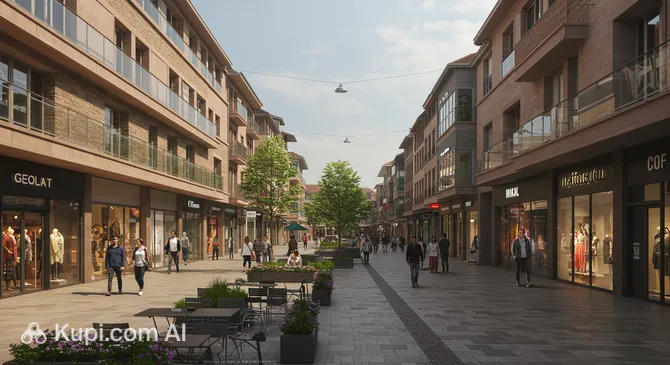
For those who prefer a comprehensive shopping experience under one roof, the city and its surroundings boast several modern complexes. Located just a short drive north of the center, the Shopping Promenade Coeur Alsace is a unique open-air mall that combines retail, dining, and leisure in a beautifully designed green space. It features a wide array of brands and is a popular destination for families. Additionally, due to the city's proximity to the German border, many locals frequent the Rheintal Center. Although technically located just across the Rhine, it is an integral part of the local shopping landscape, offering a different variety of goods and often lower prices on certain items.
Shopping Promenade Coeur Alsace. Illustration.
Source: Kupi.com AI
Traveler photos:
Markets are the soul of commerce in Alsace. While the world-famous Christmas Market (Christkindelsmärik) transforms the city into a festive wonderland in December, other markets operate year-round. The flea markets at Place de la Grande Boucherie or Place de l'Hôpital are treasure troves for antique lovers, offering books, vintage decor, and trinkets. For fresh local produce, the outdoor food markets held in various squares on Saturday mornings allow you to taste the region's agricultural bounty, from farm cheeses to seasonal fruits.
When it comes to souvenirs, authenticity is key. Visitors often bring home bottles of Alsatian wine, particularly Riesling or Gewürztraminer, which can be purchased directly from local cellars or specialized wine shops. Traditional Alsatian pottery, known for its salt-glazed finish and floral patterns (typically from Soufflenheim or Betschdorf), makes for a durable and beautiful gift. Other popular items include plush storks—the symbol of the region—and culinary delights like gingerbread (pain d'épices) or kougelhopf molds.
Store hours in Strasbourg generally run from 10:00 AM to 7:00 PM, Monday through Saturday. A crucial detail for tourists to remember is that, unlike in some other parts of France, shops in Alsace are strictly closed on Sundays due to local laws. Exceptions are rare and mostly limited to bakeries or souvenir shops near the cathedral in the morning. Major credit cards are widely accepted, but having some cash is advisable for smaller market stalls. Non-EU residents may also be eligible for a VAT refund (tax-free shopping) on purchases exceeding a certain amount in participating stores, so be sure to ask for a "détaxe" form at the checkout.