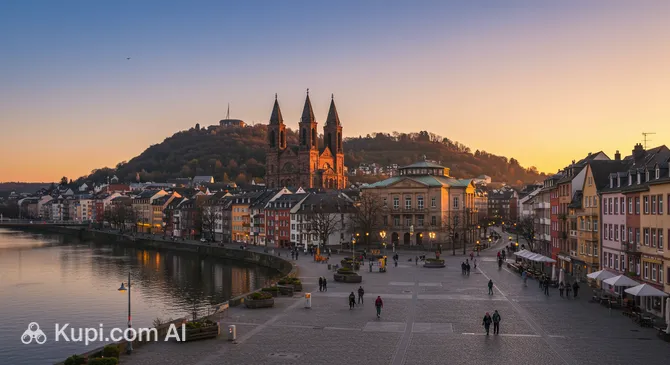
Saarbrücken is a vibrant and culturally rich city serving as the capital of the state of Saarland. Located in the southwestern part of Germany, it sits directly on the border with France, a proximity that has deeply influenced its unique "savoir-vivre" atmosphere. The city is traversed by the scenic Saar River, creating a picturesque setting that blends urban energy with lush green landscapes.
Saarbrucken. Illustration.
Source: Kupi.com AI
With a population of approximately 180,000 people, Saarbrücken acts as the region's administrative, commercial, and cultural hub. The city is renowned for its university, congress centers, and trade fairs, making it a lively destination year-round. Visitors interested in the past can explore the fascinating history of Saarbrücken, which is reflected in its diverse architecture and historical monuments scattered throughout the town.
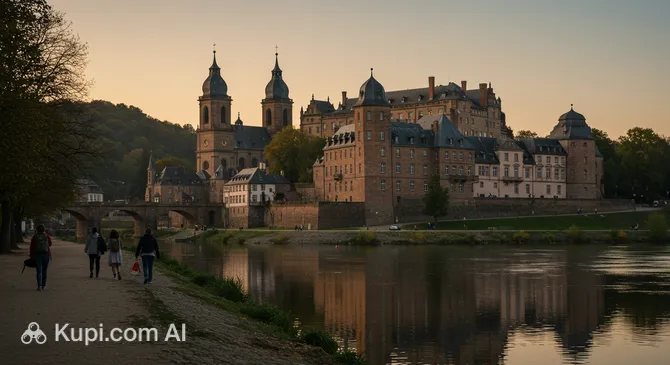
Among the city's top attractions is the stunning Ludwigskirche, considered one of the most important Baroque Protestant churches in Germany. Another highlight is the Saarbrücken Castle, which offers a mix of historical architecture and modern glass elements, along with beautiful views of the city. For those seeking a lively atmosphere, the St. Johanner Markt is the heart of the city's social life, filled with boutiques, bars, and bistros where you can enjoy the local cuisine.
Whether you are strolling along the banks of the Saar, admiring Baroque masterpieces, or enjoying the friendly hospitality of the locals, Saarbrücken offers a delightful experience. It is a perfect destination for travelers looking to discover a city where German efficiency meets French flair.
Weather Overview
The climate in Saarbrucken is generally temperate, characterized by distinct seasons that offer different experiences for travelers. Summers are pleasantly warm, with July and August being the hottest months; during this time, average temperatures hover around 20°C, while daytime highs often reach 25°C. In contrast, winters are cold, with January typically seeing the lowest temperatures, averaging about 3°C and occasionally dropping close to freezing.
Rainfall is a consistent factor to consider when packing for your trip. While the total precipitation volume is recorded as low, the frequency of rain is significant, with 10 to 18 wet days expected each month. This suggests that while heavy downpours may be rare, light showers and overcast skies are quite common throughout the year.
For a more comprehensive forecast to help you plan your activities, you can view the detailed weather in Saarbrucken. In general, expect warm summers perfect for outdoor strolls and cold winters that require warm layers, along with a high likelihood of encountering some rain regardless of the season.
Average monthly temperature
Average monthly precipitation
Interesting Facts
Beyond the main attractions, Saarbrücken holds many fascinating secrets that reveal its complex identity and history. From hidden artistic statements to geological oddities, the city offers plenty of surprises for the curious traveler looking beneath the surface.
The cobblestone square at Saarbrücken Castle hides a poignant secret known as the "Invisible Memorial." In a stealthy art project during the early 1990s, students engraved the names of Jewish cemeteries on the undersides of over 2,000 paving stones before placing them back into the ground, creating a monument that exists silently beneath visitors' feet.
Just outside the city center in the Dudweiler district lies the "Burning Mountain" (Brennender Berg), where a coal seam fire has been smoldering underground since the 17th century. This natural phenomenon produces steam and heat that can still be felt today, and it was famous enough to attract the poet Johann Wolfgang von Goethe during his time as a student in the city.
The Old Bridge (Alte Brücke) spanning the Saar River has a rather unusual architectural quirk. Built by Emperor Charles V in 1546, it originally featured 14 arches, but the construction of a city highway in the 1960s controversially buried several of them, leaving only eight arches visible to modern pedestrians.
Due to its strategic border location, the city effectively changed nationality eight times within a span of 200 years. This historical oscillation has fostered a unique local identity where German traditions are deeply infused with a French lifestyle, often referred to locally as "Saarvoir-vivre."
Saarbrücken Castle. Illustration.
Source: Kupi.com AI
Traveler photos:
How to Get There
Reaching this border city is convenient thanks to its central location in Europe, with various transport options available for visitors. For a comprehensive guide on all possible routes and modes of transport, you can read more about how to get to Saarbrucken.
Travelers planning to arrive by air can choose from several significant airports situated in the surrounding region. One of the most prominent options is Luxembourg Airport (IATA: LUX). It is important to note that this facility is located in Luxembourg City, approximately 71.5 km from Saarbrucken. The transfer time by car or shuttle from this airport is typically around one hour via the motorway. It is a large international hub handling over 5 million passengers annually.
Another popular entry point is Frankfurt-Hahn Airport (IATA: HHN). Although it serves the region, it is located near Frankfurt am Main, about 81.3 km away from Saarbrucken. The journey by road from here usually takes just over an hour. This airport is well-known for hosting budget airlines and manages a medium volume of passenger traffic.
For clarity, here is a summary of the main airports in the vicinity:
If you prefer traveling by train, the region is accessible via several major railway hubs in neighboring cities. You can arrive at Strasbourg Railway Station (IATA: XWG), which is located in Strasbourg, about 90.5 km from Saarbrucken. From there, a car journey takes approximately one hour and 15 minutes. It is a very busy station serving millions of passengers each year.
Alternatively, Karlsruhe Hauptbahnhof (IATA: KJR) is another major option. This station is situated in Karlsruhe, approximately 106.0 km from Saarbrucken. The travel time by road from this station is roughly one hour and 20 minutes. Both stations offer extensive connections to the wider European rail network.
Below is a table of the nearest major railway stations:
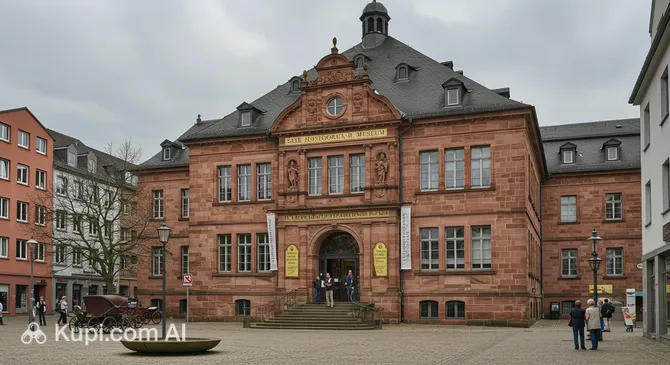
Located near the city's iconic castle, the Saar Historical Museum offers a fascinating deep dive into the region's turbulent past. It is particularly famous for its accessible underground fortifications and casemates, which date back to the Renaissance period. Tourists are drawn here to explore the immersive exhibits that vividly cover the industrial history of the Saarland and its unique geopolitical journey between Germany and France.
Saar Historical Museum. Illustration.
Source: Kupi.com AI
Traveler photos:
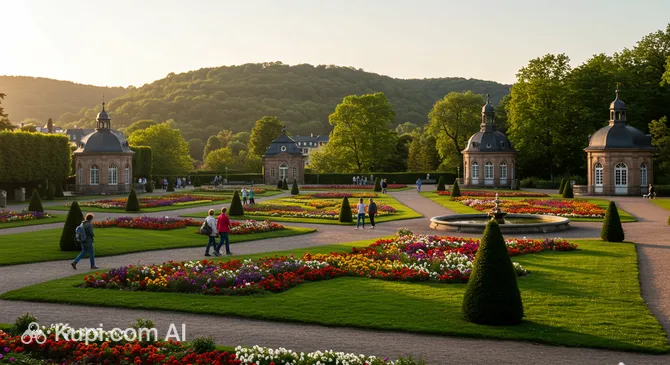
The Franco-German Garden is one of the largest and most beloved green spaces in the city, symbolizing the reconciliation and friendship between the two neighboring nations. Created for a horticultural show in 1960, this expansive park features themed gardens, a serene lake with paddle boats, and a miniature railway. It is a perfect spot for a relaxing afternoon walk or a family picnic amidst beautiful, manicured landscapes.
Franco-German Garden. Illustration.
Source: Kupi.com AI
Traveler photos:
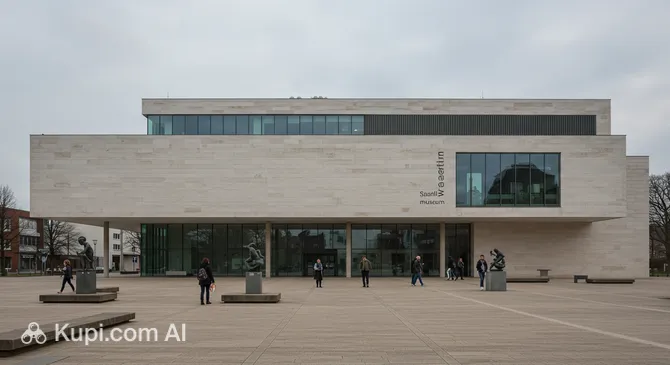
Art enthusiasts should not miss the Saarland Museum – Modern Gallery, recognized as one of the leading art institutions in southwestern Germany. The gallery showcases an impressive collection ranging from Impressionism to contemporary works, with a special focus on German Impressionists and the "Berlin Secession." The striking modern architecture of the building itself stands in fascinating contrast to the surrounding historical structures, making it a visual highlight of the cultural mile.
Saarland Museum – Modern Gallery. Illustration.
Source: Kupi.com AI
Traveler photos:
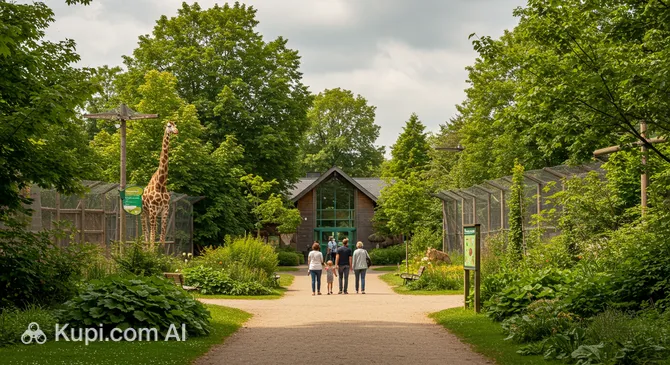
For those traveling with children or nature lovers, the Saarbrücken Zoo is a delightful destination situated on the scenic slopes of the Eschberg. Home to over 1,000 animals from around the world, the zoo places a strong emphasis on conservation and education. Visitors can observe exotic species like gorillas, giraffes, and penguins in enclosures designed to mimic their natural habitats, offering an engaging and educational experience for all ages.
Saarbrücken Zoo. Illustration.
Source: Kupi.com AI
Traveler photos:
Local Cuisine
The culinary landscape of Saarbrücken is a delightful fusion of hearty German tradition and refined French influence, often summarized by the local motto "Hauptsach gudd gess" (the main thing is that we ate well). This unique border location has fostered a "savoir-vivre" attitude where enjoying a good meal is a central part of daily life. Visitors can expect generous portions, rich flavors, and a vibrant bistro culture that feels distinctively different from other parts of Germany.
When it comes to signature dishes, the undisputed icon is the Schwenker. This term famously refers to three things at once: the swinging grill suspended over an open fire, the person operating it, and the marinated pork neck steak being cooked. It is a culinary institution in the region. Another must-try classic is Dibbelabbes, a savory potato casserole made with grated potatoes, leeks, and bacon. It is traditionally cooked in a heavy iron pot until it forms a delicious crispy crust and is typically served with a side of apple sauce to balance the savory richness.
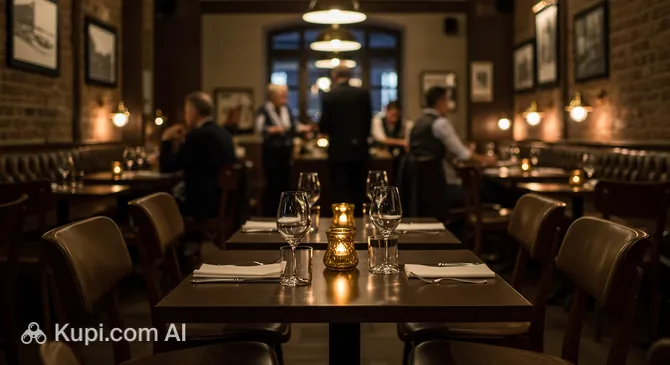
For those seeking hearty comfort food, look for Gefillde, which are large potato dumplings filled with liver sausage or minced meat, usually swimming in a creamy bacon sauce. These traditional meals are best enjoyed in the city's many guest houses and taverns. If you are looking for a different kind of dining experience, venues like masons Restaurant Saarbrücken offer a chance to enjoy a meal in a relaxed and stylish setting, reflecting the city's modern gastronomic diversity.
masons Restaurant Saarbrücken. Illustration.
Source: Kupi.com AI
Traveler photos:
No meal in Saarbrücken is complete without the appropriate local beverage. The region is famous for Viez, a tart apple wine that is a staple of Saarland culture, often served in a traditional white porcelain cup known as a Viezporz. Beer enthusiasts will also find plenty to enjoy, as the local pilsner culture is strong. For a casual evening out, the city offers a variety of spots ranging from cozy wine bars to unique establishments like Nilles Saarbrooklyn, Pub of Hopelessness, where you can soak up the authentic local pub atmosphere.
The beating heart of the food scene is undoubtedly the St. Johanner Markt. This picturesque market square is lined with numerous cafes, bistros, and restaurants with outdoor seating. It is the perfect place to engage in the local pastime of people-watching while enjoying a coffee or a glass of wine. Whether you are looking for a quick street food snack or a leisurely dinner, this area pulses with culinary energy and hospitality from morning until late at night.
Travel Tips
To ensure your visit to the capital of Saarland is as enjoyable as it is memorable, here are some practical travel tips designed to help you settle in quickly. This advice covers everything from packing essentials to local customs, allowing you to navigate Saarbrucken with the confidence of a local.
Clothing and Gear: Given the region's temperate climate and frequent rainfall, packing layers is essential. A waterproof jacket and a sturdy umbrella are must-haves regardless of the season. Since the city center, particularly around the St. Johanner Markt, features cobblestone streets, bring comfortable walking shoes. If you plan to visit religious sites like the Ludwigskirche, modest attire is appreciated, though strict dress codes are generally not enforced.
Transportation: The city boasts an excellent public transport system anchored by the Saarbahn, a tram-train network that connects the city center with the surrounding suburbs and even crosses into France. Buses complement this network well. You can purchase tickets at vending machines at stops; remember to validate them if necessary. For exploring the city itself, a car is not required and can be a hassle due to parking; however, rental cars are useful if you plan to explore the wider Saarland countryside.
Finances: The local currency is the Euro (€). While credit and debit cards are widely accepted in hotels, major restaurants, and shops, Germany is still somewhat cash-reliant compared to other European neighbors. It is wise to carry some cash for small bakeries, cafes, or kiosks. ATMs are plentiful. Tipping is customary but not mandatory; it is polite to round up the bill or leave about 5-10% for good service, telling the server the total amount you want to pay before they charge your card.
Health and Safety: Saarbrucken is generally a very safe city for tourists. Standard precautions, such as watching your belongings in crowded areas, are sufficient. Pharmacies are identified by a red "A" symbol (standing for Apotheke); they are plentiful, and there is always one on emergency duty 24/7 (details are usually posted on the door of any pharmacy). For serious medical emergencies, dial 112.
Communication: The official language is German. However, due to the city's location on the border, French is widely understood and spoken, often more so than in other German cities. English is commonly spoken by younger people and those in the tourism industry. A simple "Guten Tag" (Good day) or "Danke" (Thank you) goes a long way. Free Wi-Fi is available in many public spots and cafes, and prepaid SIM cards can be bought at supermarkets or electronics stores with a passport.
Local Etiquette: The local culture is a blend of German orderliness and French savoir-vivre (art of living). When entering a shop or restaurant, it is polite to greet the staff. If you are toasting with locals, maintain eye contact when saying "Prost" (Cheers). Punctuality is valued, so try to be on time for tours or reservations.
What to Avoid: Do not walk in the designated bicycle lanes; locals cycle quickly and expect the path to be clear. Additionally, avoid jaywalking. German pedestrians take traffic lights very seriously, and crossing on red is frowned upon, especially if children are present. Wait for the green Ampelmann signal before crossing.
Shopping Hours: Be aware that Sunday is a rest day (Ruhetag) in Germany. Almost all shops, supermarkets, and pharmacies (except emergency ones) will be closed. Restaurants, cafes, and museums usually remain open, but you should plan your shopping for Saturday or weekdays.
By keeping these tips in mind, you will be well-prepared to embrace the relaxed yet vibrant atmosphere of this unique border city. Enjoy the blend of cultures, the hearty cuisine, and the welcoming spirit of Saarbrucken!
Entertainment & Nightlife
As a university city with a strong French influence, Saarbrücken boasts a nightlife scene that is both vibrant and pleasantly relaxed. The evening entertainment is largely concentrated in two main districts, each offering a distinct atmosphere. The St. Johanner Markt acts as the city's open-air living room; here, crowds gather in the numerous bistros, pubs, and bars that line the cobblestone square. It is the perfect place to start the night with a local beer or a glass of wine, surrounded by a mix of locals and tourists enjoying the "savoir-vivre" lifestyle.
For a more alternative and bohemian vibe, travelers should head to the Nauwieser Viertel. Just a short walk from the market, this quarter is the heart of the city's subculture and student scene. The streets are packed with trendy cocktail bars, cozy pubs, and late-night cafes where the dress code is casual, and the mood is artistic. It is a fantastic area to bar-hop and mingle with the friendly local crowd until the early morning hours.
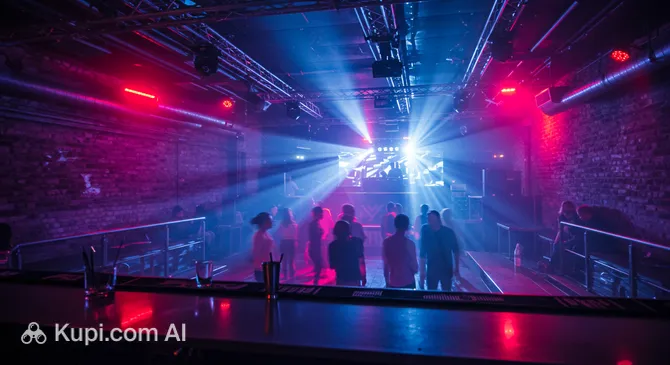
Music lovers and club-goers will find Garage Saarbrücken to be a cornerstone of the local nightlife. Located near the city center, this venue is legendary for hosting a wide variety of events, from rock and pop concerts to themed disco nights. It attracts a diverse audience depending on the program, making it a reliable spot for dancing and live entertainment.
Garage Saarbrücken. Illustration.
Source: Kupi.com AI
Traveler photos:
If you prefer a more unconventional setting, the bar scene in Saarbrücken offers some unique gems. While the St. Johanner Markt offers traditional hospitality, places like Nilles Saarbrooklyn provide a quirky, "pub of hopelessness" aesthetic that has become a cult favorite among locals. The prices in Saarbrücken are generally moderate compared to larger German metropolises, with beer and cocktails being reasonably priced, especially during "happy hour" times often found in the student quarter.
Safety is rarely a concern in Saarbrücken, and the nightlife districts are generally safe for walking at night. However, as with any city, it is wise to stay in well-lit areas and keep an eye on your belongings. Getting around is easy; the Saarbahn runs late, and taxis are readily available at designated stands, particularly around the St. Johanner Markt, or can be called via mobile apps. For a seamless return to your accommodation, having a taxi number saved or a ride-hailing app downloaded is recommended.
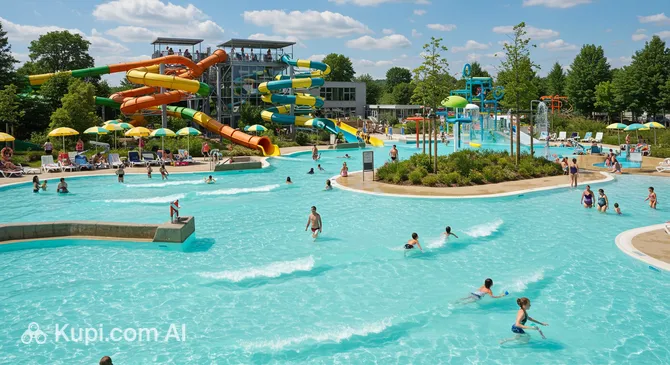
Beyond the nightlife, the city offers plenty of daytime entertainment options. Culture enthusiasts can visit the renowned Saarländisches Staatstheater for opera, drama, and ballet performances. For those seeking thrill and relaxation, the Calypso Water Park is a major attraction. It features a Caribbean-themed landscape with adrenaline-pumping slides, thermal pools, and a sauna world, making it an ideal destination for families and groups looking to unwind before the evening festivities begin.
Calypso Water Park. Illustration.
Source: Kupi.com AI
Traveler photos:
Parks & Museums
Saarbrücken is a city that surprisingly balances its industrial heritage with lush landscapes and a sophisticated cultural scene. Beyond the well-trodden paths, the city offers a variety of green refuges and specialized museums that allow visitors to explore everything from local wildlife to avant-garde art. Whether you are looking to escape into nature or dive deeper into the region's artistic identity, there is plenty to discover.
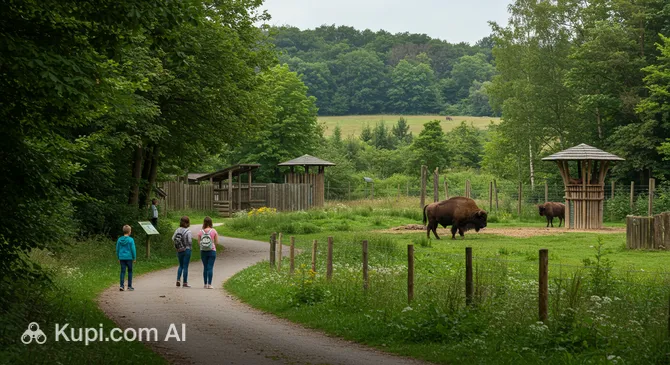
For a refreshing break close to nature, the Wildlife Park Saarbrücken is a fantastic destination located in the St. Johann City Forest. This sprawling area is dedicated to native species, allowing visitors to see animals such as wild boars, deer, and ibexes in a natural environment. It is particularly popular with families due to its petting zoo and adventure playground, making it an educational and fun outing. The park is accessible year-round and offers a peaceful retreat from the urban bustle.
Wildlife Park Saarbrücken. Illustration.
Source: Kupi.com AI
Traveler photos:
Another favorite green space among locals is Am Staden, a picturesque park stretching along the banks of the Saar River. It serves as the city's "green lung" and is the go-to spot for joggers, cyclists, and sunbathers. During the warmer months, the atmosphere here is lively, with people gathering for picnics or enjoying a drink at the Ulanen Pavillon, a popular beer garden located right within the park. It captures the relaxed lifestyle of the city perfectly.
In terms of culture, the Stadtgalerie Saarbrücken stands out as a premier venue for contemporary art. Housed in a beautifully restored Baroque palace in the city center, the museum focuses on site-specific installations and experimental art forms. It has gained an international reputation for its commitment to avant-garde works, offering a striking contrast between its historical exterior and the modern creativity housed within.
History buffs should head to the Museum of Pre- and Early History (Museum für Vor- und Frühgeschichte), located on the Schlossplatz. This museum takes visitors on a journey through time, from the Stone Age to the early Middle Ages. Highlights include the grave of a Celtic princess from Reinheim and exquisite Roman jewelry found in the region. It provides crucial context to the area's long standing as a crossroads of European civilizations.
Architecturally, the Basilica of St. John (Basilika St. Johann) is a significant landmark worth visiting. Built in the mid-18th century by the architect Friedrich Joachim Stengel, this baroque Catholic church features a stunning interior with ornate stucco work and a magnificent pulpit. It stands as a testament to the city's rich religious and architectural history, distinct from the nearby Ludwigskirche.
For a truly unique experience, venture just outside the city limits to the Urwald vor den Toren der Stadt (Primeval Forest at the City Gates). This nature reserve is left completely to its own devices, with fallen trees and overgrown paths creating a "jungle-like" atmosphere. It is an authentic adventure for hikers looking to experience a forest that is slowly returning to its wildest state.
Getting Around
Navigating Saarbrücken is straightforward and efficient, thanks to a well-integrated public transport network that covers the city center and extends into the surrounding region. The backbone of the system is the Saarbahn, a modern light rail (tram-train) line that traverses the city from north to south. This yellow and blue tram connects major districts, the central station, and the university, functioning as a tram within the city streets and a faster train in the outskirts. Complementing the rail service is an extensive network of buses that reach neighborhoods and suburbs not directly served by the tram.
The entire transport network operates under the SaarVV (Saarland Transport Association) tariff system, meaning a single ticket is valid for both trams and buses within the purchased zones. The city area generally falls into a single zone (Großwabe Saarbrücken), making fare calculation relatively simple for tourists staying centrally. Ticket options include single rides, short-trip tickets for a few stops, and the highly recommended Day Ticket (Tageskarte), which allows unlimited travel until 4:00 AM the following day. For small groups or families, a Group Day Ticket is often more economical than buying individual passes.
Travelers can purchase tickets at the multilingual touchscreen vending machines located at all Saarbahn stops and major bus hubs. While bus drivers also sell tickets, it is often easier to buy them beforehand or use the mobile app associated with the local transport provider, such as the "Saarfahrplan" app, which helps with route planning and cashless payments. If you purchase a paper ticket from a machine, be sure to check if it needs validation; if the ticket does not have a timestamp, you must stamp it in the orange or blue boxes located on platforms or inside the vehicles to avoid fines.
The operating hours are tourist-friendly, with the Saarbahn running every 5 to 7 minutes during peak times and continuing service until around 1:00 AM on weekdays. On weekends, the service runs throughout the night, supplemented by special "Night Bus" lines that ensure safe travel after hours. This makes it easy to enjoy the local nightlife without worrying about getting back to your accommodation.
For those who prefer flexibility, taxis are readily available at designated stands, particularly around the main railway station and the St. Johanner Markt. While reliable, they are more expensive than public transit. Alternatively, the city is very bike-friendly, especially along the flat riverbanks. Rental bikes and e-scooters are widely available through various mobile apps, offering a scenic way to explore the green corridors along the river.
A unique feature of the local transport system is its cross-border capability. The Saarbahn line S1 actually crosses the national border, taking passengers directly into the neighboring town of Sarreguemines. This allows visitors to hop on a tram in the city center and arrive in another country in roughly 30 minutes without changing vehicles, a perfect example of the region's open borders and connected infrastructure.
Accommodation
Accommodation in Saarbrücken caters to a wide variety of preferences and budgets, reflecting its status as a university city, a business hub, and a tourist destination. Visitors can choose from a broad spectrum of options, ranging from modern chain hotels and well-equipped business suites to charming, family-run guesthouses (Gasthöfe) that offer a more traditional German experience. For those planning longer stays or seeking more independence, there is also a good selection of serviced apartments and vacation rentals available throughout the city.
When choosing where to stay, the location depends largely on your itinerary. The district of St. Johann is often the most popular choice for leisure travelers; staying here puts you right in the heart of the action, within walking distance of the bustling market square, numerous restaurants, and the pedestrian shopping zone. For those arriving by train or visiting for business, the area around the Central Station (Hauptbahnhof) offers convenience and excellent transport links, though it is slightly quieter at night.
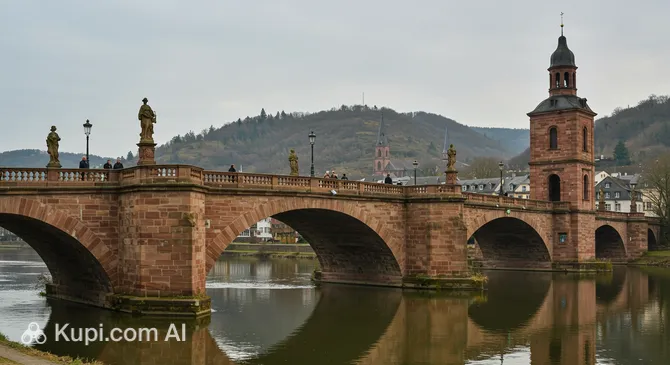
Another scenic option is to look for accommodation along the banks of the Saar River. Staying near the water not only provides beautiful views but also offers easy access to the walking paths and green spaces that line the river. This central location often places you near historical landmarks such as the Old Bridge, which connects the historic district of Alt-Saarbrücken with the lively St. Johann side, making it an ideal base for exploring both halves of the city.
Old Bridge. Illustration.
Source: Kupi.com AI
Traveler photos:
Booking Tip: While Saarbrücken generally has sufficient capacity, it is a center for trade fairs and congresses, and also a university town. During major events, graduation ceremonies, or the peak summer travel season, hotels can fill up quickly. It is highly recommended to book your accommodation at least a few weeks in advance to secure the best rates and locations.
In terms of pricing, Saarbrücken is generally more affordable than larger German cities like Munich or Frankfurt. You can typically find comfortable mid-range hotels at very reasonable rates, while budget travelers have access to hostels and affordable guesthouses. Booking is easily done through major online platforms, though contacting smaller, family-run establishments directly can sometimes yield better offers or a more personalized service.
Nearby Cities
For those looking to explore the surroundings, Saarbrucken serves as an excellent base for day trips to several interesting nearby locations:
City
Population
Distance
Stiring-Wendel
11 385
7 km
Sulzbach
16 468
8 km
Forbach
21 652
9 km
Riegelsberg
14 501
9 km
Sankt Ingbert
35 714
9 km
One of the most significant nearby attractions is Völklingen, located just a few kilometers west of the city. It is world-famous for the Völklingen Ironworks (Völklinger Hütte), a UNESCO World Heritage Site. This massive industrial complex is the only fully preserved ironworks in the world from the golden age of the iron and steel industry. Visitors can explore the labyrinth of pipes and furnaces, climb to the observation platforms for panoramic views, and view high-caliber art exhibitions often hosted within the rusty, atmospheric halls.
For a complete contrast to industrial heritage, the town of Blieskastel offers a charming escape into the 18th century. Known as a Baroque residential town, it features a beautifully preserved historic center with elegant architecture, including the majestic Castle Church and the Orangery. Blieskastel also serves as the gateway to the Bliesgau Biosphere Reserve, a region renowned for its scenic orchards, meadows, and rare wildlife, making it a perfect destination for both history buffs and hikers.
Another worthwhile stop is Sankt Ingbert, a town with a rich industrial past that has transformed into a hub for nature and technology. It is nestled in a green valley and offers direct access to extensive hiking and mountain biking trails. The town is also known for the "Beckerturm," a historic brewery tower that dominates the skyline, and its lively cultural scene, including the annual cabaret festival.
These nearby destinations offer a glimpse into the diverse culture and landscapes of the region.
Shopping & Souvenirs
Shopping:
General Overview: Shopping in Saarbrücken is a delightful mix of high-street fashion, independent boutiques, and French-influenced flair. Due to its proximity to the border, the city attracts many visitors from neighboring France, creating a cosmopolitan atmosphere in the retail districts. Whether you are looking for international brands, regional specialties, or unique handicrafts, the city offers a compact and walkable shopping experience that caters to diverse tastes and budgets.
Main Shopping Areas/Streets: The commercial heartbeat of the city is undoubtedly Bahnhofstraße. Stretching from the main train station towards the city center, this pedestrian zone is consistently ranked as one of the busiest shopping streets in Germany. Here, you will find major department stores, popular clothing chains, and electronics retailers. For a more charming and individual experience, head to the winding alleys around the St. Johanner Markt. This historic quarter is lined with owner-operated boutiques, quirky gift shops, and delicatessens selling fine foods, making it the perfect place to browse at a slower pace.
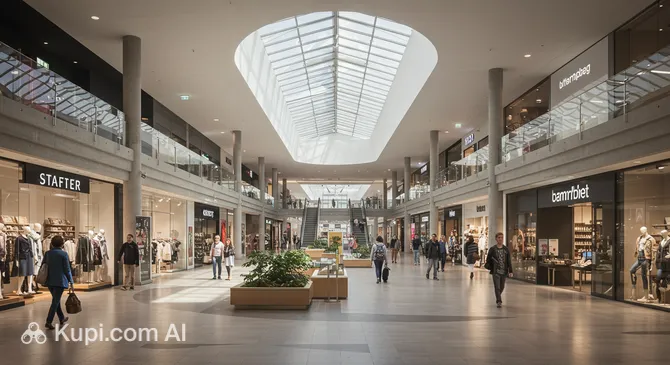
Shopping Malls: In addition to the city center's open-air offerings, Saarbrücken boasts several modern shopping centers. The Europa-Galerie, located directly on Bahnhofstraße, is particularly noteworthy for its architecture, as it is integrated into the historic former Mining Directorate building. For those willing to venture slightly further afield, the Saarbasar Saarbrücken provides a classic mall experience with a wide range of shops under one roof, ample parking, and a large food court.
Saarbasar Saarbrücken. Illustration.
Source: Kupi.com AI
Traveler photos:
Another significant retail destination is the Saarbrücken-Güdingen Shopping Center. Located in the southeastern part of the city near the French border, this commercial park is ideal for travelers looking for large-scale hypermarkets, furniture stores, and specialty outlets that require more space than the city center can provide.
Markets: Markets play a vital role in the local culture. The traditional Farmers' Market at St. Johanner Markt is a highlight, taking place on Mondays, Wednesdays, Fridays, and Saturdays. It is the best place to find fresh regional produce, flowers, and local snacks. Flea market enthusiasts should look out for the regular Flohmarkt events held along the Franz-Röder-Allee or near the university, where vintage treasures and antiques often change hands.
Souvenirs: When looking for gifts to take home, focus on the region's culinary heritage. A bottle of Viez (traditional apple wine) or a jar of locally produced honey are excellent choices. The Saarland is also famous for its ceramics, so look for items from the renowned brand Villeroy & Boch, which has deep roots in the area. For a humorous nod to the local culture, anything depicting the "Saarland" loop or the beloved Lyoner sausage is a popular keepsake.
Opening Hours and Payment: Standard shop opening hours are generally from 10:00 AM to 8:00 PM, Monday through Saturday. Smaller boutiques may close earlier, around 6:00 PM or 7:00 PM. It is crucial to remember that, like most of Germany, shops are closed on Sundays, with the exception of bakeries and stores within the train station. While major cards (Visa, Mastercard) are widely accepted in malls and chain stores, smaller shops and market stalls often prefer or strictly require cash (Euros).
Tax-Free: Travelers residing outside the European Union are eligible for a VAT refund on purchases exceeding a certain amount (typically €50) in a single store. Look for the "Tax Free" signage in shop windows and ask for a tax-refund form at the checkout. You will need to present this form along with the goods and your passport at customs before leaving the EU to claim your money back.