Support

Germany

About the Country

Germany, located in the heart of Europe, is a country with a rich history, a dynamic culture, and an amazing variety of landscapes. From bustling metropolises to charming medieval towns, Germany offers something for every traveller. Its capital, Berlin, is a prime example of this blend of history and modernity, a city that never sleeps and is constantly changing.
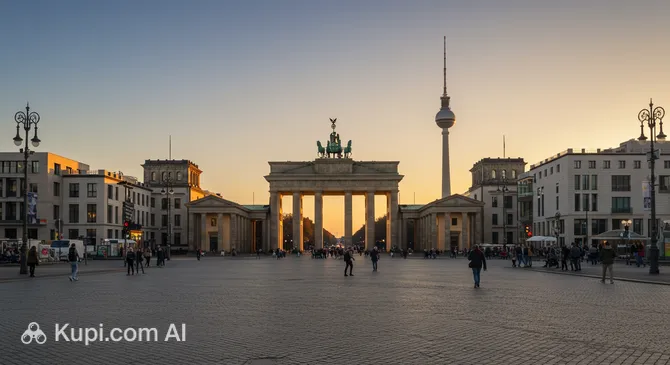
Berlin. Source: Kupi.com Binoculars

Germany's cultural heritage is immense, from world-renowned composers and philosophers to magnificent castles like the fairytale Neuschwanstein, and iconic historical monuments, including the Brandenburg Gate in Berlin, which has become a symbol of the country's reunification. Germany's natural beauty is no less impressive, from the Alpine peaks in the south and the picturesque river valleys of the Rhine and Moselle, to the coasts of the North and Baltic Seas in the north. The climate here is temperate, with warm summers and mild, though sometimes snowy, winters.

Germany creates a unique atmosphere where traditions blend harmoniously with innovation. Cities like vibrant Hamburg with its famous port, or the welcoming city of Munich, renowned for its lively festivals, offer a wealth of experiences. Travellers can expect excellent infrastructure, delicious local cuisine, with halal options widely available in major cities, and a warm hospitality that makes a trip to Germany unforgettable.
Currency

The official currency of Germany is the euro (EUR), which is the single currency for many countries within the European Union. Euro banknotes, identical throughout the eurozone, are adorned with images of windows, gateways, and bridges, symbolising European architecture from various eras and a spirit of cooperation. Euro coins feature a common side and a national side; on German coins, you can often see an image of the eagle, oak leaves, or the renowned Brandenburg Gate.

You can exchange foreign currency for euros at banks, exchange offices (Wechselstuben), or simply withdraw cash from numerous ATMs (Geldautomat). ATMs often provide a more favourable exchange rate than currency exchange points at airports or in some tourist-heavy locations. Credit and debit cards, particularly Visa and Mastercard, are widely accepted in most hotels, restaurants, and shops, especially in cities. Nevertheless, it is always useful to carry some cash for payments in smaller shops, at markets, or in some traditional outdoor eateries (Biergarten).

Visa Requirements

When planning a trip to Germany, it is essential to understand the visa requirements in advance. Good news for UAE passport holders: you do not need a visa for short-term tourist visits. As Germany is part of the Schengen Area, UAE citizens can enter and stay for up to 90 days within any 180-day period without a visa. However, for UAE residents holding passports from other nationalities, a Schengen visa may be required. This should generally be applied for in advance at the German embassy, consulate, or an authorised visa application centre in the UAE.

Regardless of whether you need a visa, you will require a valid passport to cross the border, which should be valid for at least three months after your intended departure from the Schengen area. It is also highly recommended to carry return flight tickets, proof of accommodation (such as a hotel booking), and travel medical insurance that covers the entire duration of your stay. Visa regulations and required documents can change, so we strongly advise you to check the most current information on the official website of the German Embassy in the UAE before your trip.

We'll tell you if you need a visa

Specify where you are going, or
Your citizenship
Destination

Time Zones

When planning a trip to Germany, you will not have to worry about changing time zones within the country. The whole of Germany is in a single time zone – Central European Time (CET), which is UTC+1. For comparison, the UAE operates on Gulf Standard Time (GST), which is UTC+4.

Like many European countries, Germany observes Daylight Saving Time (DST). Clocks are set forward to Central European Summer Time (CEST), which is UTC+2, on the last Sunday in March and set back to standard time on the last Sunday in October. This means the time difference with the UAE changes depending on the season. The UAE is 3 hours ahead of Germany during the winter months (CET) and 2 hours ahead during the summer (CEST). The time within Germany itself always remains the same, whether you are in Berlin, Munich, or Hamburg.

How to Get There

Travelling to Germany, a country rich in history and culture, is convenient from the UAE, with air travel being the most popular and fastest option. The country has a well-developed network of international airports, with major hubs including Frankfurt Airport, one of the largest in Europe, and the capital's Berlin Brandenburg Airport. Direct flights and convenient connections are readily available from the UAE's major airports, operated by carriers such as Emirates, Etihad Airways, and Lufthansa.

Thanks to its central location in Europe, Germany is excellently connected to neighbouring countries by land. A comprehensive network of high-speed trains (like the ICE) and comfortable international buses makes it easy to reach German cities from France, Poland, Austria, Switzerland, the Netherlands, and many other nations. This is not only an economical way to travel but also a very scenic one, allowing you to enjoy the European landscapes.

For those who prefer sea voyages or are travelling from Scandinavia and the Baltic region as part of a wider European tour, it is possible to reach Germany by ferry. The main ferry terminals are located on the coasts of the Baltic and North Seas, connecting Germany with countries such as Sweden, Denmark, Norway, Finland, and the Baltic states. Regardless of your chosen method of travel, it is recommended to book tickets in advance, especially if your trip falls during the peak tourist season or major holidays, to secure the best prices and availability.

For travellers from the UAE, it is useful to know that major German cities are multicultural and cater well to Muslim visitors. Halal food options are widely available in restaurants, and prayer facilities can be found in major airports and designated quiet rooms in some public spaces.

For your reference, here is a summary of the main airports:

Airport Name City Relative Size
Frankfurt AirportFrankfurt am MainVery Large
Munich AirportMunichLarge
Düsseldorf International AirportDüsseldorfLarge
Berlin Brandenburg AirportBerlinLarge
Hamburg AirportHamburgMedium

Germany offers travellers an incredible variety of cities, each with its own unique character and atmosphere. From the bustling life of metropolises to the charm of historic towns, there is a destination for every taste. Undoubtedly, one of the main centres of attraction is the capital, Berlin. This city is a true kaleidoscope of history, art, and modern culture, offering countless museums, galleries, and iconic landmarks. For visitors from the UAE, Berlin's diverse culinary scene includes a wide array of high-quality halal restaurants, and numerous mosques and prayer facilities are available throughout the city.

Berlin. Source: Kupi.com Binoculars

No less interesting is Hamburg, the country's second-largest city, known for its huge port, picturesque canals, and rich maritime history. Its well-established Muslim community means that prayer facilities are easy to locate. Those who appreciate tradition and southern German charm should turn their attention to Munich, the capital of Bavaria, famous not only for its Oktoberfest cultural festival but also for its magnificent architecture and charming traditional eateries. Munich also caters well to Muslim visitors, with a growing number of halal food options and several established Islamic centres. Each of these cities offers a unique experience and an immersion into different facets of German life.

For those seeking romance and medieval charm, Heidelberg is an excellent choice, with its famous castle and ancient university. And if you are drawn to financial centres and modern architecture, then Frankfurt am Main, Germany's business heart, will not disappoint. Frankfurt is also very accommodating for Muslim travellers, offering numerous halal restaurants and dedicated prayer rooms, including at the airport. These and many other cities in Germany await explorers, ready to surprise and inspire.

Top Attractions

Germany is a country rich in history and culture, offering travellers a huge variety of attractions. From majestic castles to modern architectural masterpieces, there is something here for everyone. Here are just a few iconic places to include in your itinerary.

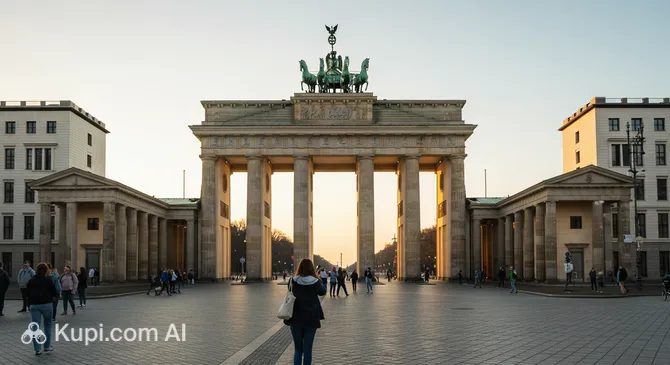
One of the most recognisable symbols not only of Berlin but of all of Germany is the Brandenburg Gate. This 18th-century triumphal arch has witnessed many key historical events. Today, it is a popular spot for photos and a starting point for walks through the centre of Berlin. For visitors seeking a moment of quiet reflection or prayer, the Raum der Stille (Room of Silence) is located in the northern gatehouse, offering a peaceful, non-denominational space open to all. Due to Berlin's large Turkish and Arab population, numerous halal restaurants can be found nearby, serving everything from quick doner kebabs to fine dining.

Brandenburg Gate. Source: Kupi.com Binoculars

Fans of romance and medieval architecture should certainly visit Heidelberg Castle. The majestic ruins of this castle rise above the old town of Heidelberg and the River Neckar, offering breathtaking views. The castle is famous for its rich history and the world's largest wine barrel. Several halal food options, including Lebanese and Turkish cuisine, are available in Heidelberg's main town area. For prayer, Masjid Heidelberg is accessible and provides separate, well-maintained facilities for men and women.

Heidelberg Castle. Source: Kupi.com Binoculars

In Hamburg, there is a unique place that will delight both children and adults – Miniatur Wunderland. This is the world's largest model railway, where cities, landscapes, and even an airport with moving planes are recreated with incredible detail. You can spend a whole day here, examining the tiny scenes of life. It is a fantastic, family-friendly destination.

Miniatur Wunderland. Source: Kupi.com Binoculars

Another of Hamburg's gems is the Elbphilharmonie, a stunning concert hall on the banks of the River Elbe. Its futuristic architecture, with a wave-like glass facade, has become a new symbol of the city. Even if you do not plan to attend a concert, it is worth visiting the Plaza viewing platform for a panoramic view of the port and the city. Hamburg has a diverse community, and visitors can find several mosques, such as the Al-Nour Mosque or Alazhar Mosque, for prayer times. These are centrally located and welcome visitors.

Elbphilharmonie Hamburg. Source: Kupi.com Binoculars

Best Time to Visit

Germany offers tourists a variety of experiences at any time of year, but the best time to visit depends on your preferences. The high season traditionally runs from May to September. During this period, the weather is warm and often sunny, ideal for exploring cities like Berlin or Munich, enjoying outdoor attractions, and pursuing active recreation. An advantage is the maximum availability of tourist sites and a lively atmosphere. However, you should be prepared for large crowds of tourists and higher prices for accommodation and flights.

The shoulder seasons, covering spring (March–April) and autumn (October–November), attract travellers with fewer crowds and more affordable prices. Spring weather can be changeable but delights with nature coming to life. In autumn, Germany is captivating with its golden foliage and hosts numerous wine festivals. Winter (December–February) is also considered the low season for most types of tourism, meaning shorter queues and a quieter atmosphere in cities and museums, although the weather will be cool. The main winter attraction is undoubtedly the magical Christmas markets held across the country. However, during the low season, some smaller tourist attractions may have reduced opening hours. It is also important to consider that the climate in Germany can vary: in the north, for example in Hamburg, it is more maritime, while in the south, in Bavaria, winters can be snowy and summers can be hot. Do not forget the world-famous Oktoberfest festival in Munich, which takes place at the turn of September and October and requires planning well in advance.

Traditions

When planning a trip to Germany, it is useful to know a few key aspects of the local culture to ensure your journey is comfortable and respectful. Germans value punctuality above all else, so try not to be late for appointments. When meeting and saying goodbye, it is customary to shake hands while maintaining eye contact, which is considered a sign of sincerity. When interacting with strangers or older people, use the respectful “Sie” (the formal 'you'); the switch to the more casual “du” (the informal 'you') is usually offered by the older or more senior person. Germans are known for their directness in communication; this is not a sign of rudeness but rather a desire for clarity. In public places, try to be reserved and not too loud.

If you are invited to someone's home, it is good manners to bring a small gift for the hosts – for example, flowers (unwrapped, an odd number, and not red roses unless it is a romantic gesture), high-quality chocolates, or a small souvenir from your home country. At the dinner table, it is customary to keep your hands on the table (with wrists on the edge), not on your lap. Do not start eating until the host says “Guten Appetit” (Enjoy your meal) or begins eating themselves. Regarding clothing, Germans prefer a comfortable and neat style for everyday life. When visiting churches and other places of worship, it is respectful to dress more modestly, covering your shoulders and knees, although strict rules may not always be in place.

One of the most important national holidays in Germany is the Day of German Unity (Tag der Deutschen Einheit), celebrated on 3 October, which symbolises the country's reunification. Christmas (Weihnachten) also plays a huge cultural role with its famous Christmas markets and deep-rooted traditions. To show respect for local customs, avoid crossing the road on a red light, even if there are no cars nearby – Germans are very law-abiding. In restaurants and cafés, it is customary to leave a tip, usually around 5-10% of the bill; you can do this by rounding up the total or telling the server the final amount including the tip. For Muslim travellers, finding halal food is becoming increasingly easy in major cities like Berlin, Frankfurt, and Munich, which offer a wide range of Turkish, Middle Eastern, and South Asian restaurants. Prayer facilities are also available at major airports, such as Frankfurt and Munich, and in numerous mosques and prayer rooms in large urban centres.

Entertainment

Germany offers visitors an incredible variety of entertainment to suit every taste. Fans of outdoor activities will appreciate the numerous opportunities for hiking and cycling amidst picturesque landscapes, for example, in the foothills of the Alps or along rivers like the Rhine and Danube. In winter, ski resorts are popular, while summer offers water sports on the lakes and the coasts of the North and Baltic Seas. For connoisseurs of cultural events, the country is a real treasure trove: world-famous museums and galleries, opera houses, and concert halls, including the famous Elbphilharmonie in Hamburg, offer a rich programme all year round. In almost every major city, whether it's Berlin, Munich, or Frankfurt am Main, you will find something of interest. Major cities like Berlin, Hamburg, Frankfurt, and Munich have numerous mosques and prayer rooms available for Muslim visitors.

In the evening, Germany comes alive with its diverse and vibrant social scene. This is especially true in Berlin, but in other cities such as Hamburg or Munich, you can easily find welcoming cafés and stylish restaurants. Many establishments in major cities offer a wide range of halal food options, from authentic German dishes to international cuisine. Shopping in Germany is a pleasure in itself. From the exclusive boutiques on Königsallee in Düsseldorf to the bustling shopping streets in every city and large shopping centres like Waterfront Bremen. Popular souvenirs include traditional sweets (like Lebkuchen gingerbread), artisanal products from local craftspeople, and famous Christmas decorations. For a family holiday, the country offers a multitude of options: from large theme parks and interactive museums to zoos, such as Rostock Zoo or the unique Miniatur Wunderland in Hamburg. Many of these family-friendly locations provide facilities such as prayer rooms and have halal food options nearby.

Currency rates

Planning a trip? That's wonderful! To ensure the financial aspects of your journey don't come as a surprise, it's important to remember that currency exchange rates are constantly changing. Therefore, we strongly advise you to monitor the latest rates both before you fly and throughout your trip. To do this, you can use the data provided below—we monitor exchange rates 24/7 and strive to provide the most up-to-date information.

EUR currency exchange rate as of 02.01.2026

4.34 AED
~ 1 EUR
450.31 AMD
~ 1 EUR
1.77 AUD
~ 1 EUR
2.01 AZN
~ 1 EUR
3.47 BYN
~ 1 EUR
1.62 CAD
~ 1 EUR
1 GBP
~ 1.14 EUR
386.26 HUF
~ 1 EUR
106.24 INR
~ 1 EUR
103.23 KGS
~ 1 EUR
1704.93 KRW
~ 1 EUR
598.98 KZT
~ 1 EUR
4.24 PLN
~ 1 EUR
93.10 RUB
~ 1 EUR
4.43 SAR
~ 1 EUR
1.52 SGD
~ 1 EUR
50.70 TRY
~ 1 EUR
49.93 UAH
~ 1 EUR
1.18 USD
~ 1 EUR
14181.45 UZS
~ 1 EUR

Reached the end of the page?

That means the route is fully explored