Support

Dinslaken

About

Welcome to Dinslaken, a charming city that perfectly bridges the gap between the industrial heritage of the Ruhr area and the idyllic landscapes of the Lower Rhine. Located in the state of North Rhine-Westphalia in the northwestern part of Germany, Dinslaken offers a unique blend of culture, nature, and urban convenience. With a population of approximately 67,500 residents, the city maintains a welcoming and manageable size, making it an inviting destination for travelers seeking a relaxed atmosphere.

The city is often referred to as the "Gateway to the Lower Rhine," a title that reflects its lush green surroundings and proximity to scenic nature reserves. Visitors interested in the past will find that the history of Dinslaken is deeply woven into its streets and architecture. The city was granted town rights in 1273, and remnants of its medieval origins can still be appreciated today, particularly around the historic city center.

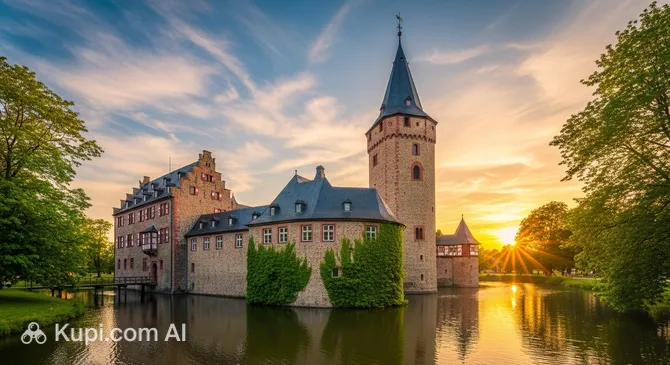
Dinslaken. Source: Kupi.Binoculars

One of the city's most prominent landmarks is the Burg Dinslaken (Dinslaken Castle), which today houses the town hall and serves as a cultural hub. Within the castle complex, visitors can explore the Museum Voswinckelshof, which showcases local history and changing exhibitions. Another cultural highlight is the Burgtheater, an open-air stage that hosts various concerts and events, contributing to the city's vibrant arts scene. For those who enjoy the outdoors, the nearby Rotbach Valley offers excellent paths for walking and cycling.

Whether you are looking to explore historical sites, enjoy a shopping trip at the modern Neutorgalerie, or simply take a peaceful stroll through its green parks, Dinslaken has something to offer every visitor. It is a delightful stop for anyone traveling through North Rhine-Westphalia.

Weather Overview

Dinslaken experiences a temperate climate characterized by distinct seasons and consistent precipitation throughout the year. The weather is generally moderate, avoiding extreme highs or lows, making the city a year-round destination for prepared travelers. For those planning a trip, checking the current weather in Dinslaken is recommended to pack appropriately.

Summers are typically warm and pleasant, with August being the warmest month, featuring an average temperature of 19.4°C and daily highs reaching nearly 24°C. In contrast, winters are chilly, with January seeing average temperatures dip to around 4.1°C and overnight lows falling to 2.0°C. Rainfall is a frequent occurrence regardless of the season, with the number of wet days ranging from 11 in June to 17 in December, so keeping an umbrella handy is always a good idea.

Interesting Facts

Beyond the main attractions, Dinslaken holds many fascinating secrets that range from unique sporting history to creative industrial reinventions. This city is not just a transition point between regions but a place where nobility once retired and artists now thrive.

  • The Only Half-Mile Track: For nearly 70 years, Dinslaken was famous in the equestrian world for hosting the only half-mile harness racing track (Trabrennbahn) in Germany. Unlike standard tracks, its compact 800-meter circuit created a unique, electric atmosphere where spectators stood incredibly close to the horses. Although the final race was held in 2022, the site remains a legendary part of the city's identity.

  • A Creative Coal Mine: The former coal mine, Zeche Lohberg, has not been left to decay but was transformed into a vibrant "Creative Quarter" (Kreativ.Quartier). Today, the historic brick buildings and the towering winding tower serve as studios for artists, designers, and theater groups, turning a symbol of heavy industry into a hub of modern culture and sustainability.

  • The Widow’s Seat: The city's castle, Burg Dinslaken, holds a specific and somewhat melancholy historical role. For centuries, it served as the official "widow’s seat" (Witwensitz) for the Countesses and Duchesses of Cleves. High-ranking noblewomen would retire here after the passing of their husbands, making Dinslaken a significant, albeit quiet, center of female nobility in the region.

  • The Green Gate: Dinslaken is often called the "Green Gate to the Ruhr Area" for a geographical reason that is visible to the naked eye. It marks the precise transition point where the dense industrial landscape of the Ruhrgebiet abruptly ends and the rural, idyllic pastures of the Lower Rhine begin, offering two completely different landscapes within one city limits.

How to Get There

Reaching Dinslaken is straightforward thanks to its location in the well-connected North Rhine-Westphalia region. While the city offers a peaceful retreat, it benefits significantly from the infrastructure of its larger neighbors. To plan your journey in detail, you can read more about how to get to Dinslaken using various modes of transport.

The city of Dinslaken does not have its own airport, but it is conveniently close to several major aviation hubs. The most significant option for international travelers is Dusseldorf International Airport (DUS) in the city of Dusseldorf, which is located approximately 32 km away. A trip from there by taxi or shuttle generally takes around 30 to 40 minutes depending on traffic. Another viable option is Weeze Airport (NRN), situated roughly 42 km from Dinslaken. This regional airport is often used by low-cost carriers and offers a transfer time of approximately 45 minutes by road.

For clarity, here is a summary of the main airports:

Airport Name City Passenger Traffic Km from City
Dusseldorf International AirportDusseldorfLarge31.9
Cologne Bonn AirportCologneLarge81.0
Dortmund AirportDortmundMedium60.2
Weeze AirportDusseldorfMedium42.1
Munster Osnabruck International AirportMunsterMedium90.3

Traveling by train is another popular way to approach the region. While local lines serve the area, long-distance travelers often arrive at major railway hubs in nearby cities before connecting to Dinslaken. You can arrive at Essen Hauptbahnhof in the city of Essen, which is about 23 km away; the transfer by road from there typically takes roughly 30 minutes. Alternatively, Düsseldorf Hauptbahnhof in Dusseldorf is a massive transit point located about 39 km from the city, with a subsequent travel time of around 40 minutes by car.

Below is a list of major railway stations in the vicinity:

Station City Passenger Traffic Km to Center
Düsseldorf HauptbahnhofDusseldorfVery High38.8
Essen HauptbahnhofEssenHigh22.6
Venlo StationVenloMedium46.0
Krefeld StationKrefeld29.6
Emmerich Railway Stations-Heerenberg45.1

Main Attractions

The heart of the city's historical charm is undoubtedly Burg Dinslaken. This medieval castle complex, which dates back to the 12th century, has served many purposes over the years, from a defensive fortress to a residence for nobility. Today, it functions as the town hall and a central meeting point for citizens and visitors alike. Directly adjacent to the castle is the renowned Burgtheater Dinslaken, a magnificent open-air stage nestled in the castle park. With a capacity of around 1,800 spectators, it is a beloved venue for summer concerts, theater performances, and the popular "Fantastival," offering a unique cultural experience under the open sky.

For those interested in diving deeper into local heritage, the Museum Voswinckelshof is an essential stop. Housed in a historic noble residence near the Old Town, this museum offers a comprehensive look at Dinslaken's past. The permanent exhibition covers everything from the city's medieval origins to its industrial development and life during the 20th century. Visitors can explore diverse collections that include archaeological finds, historical toys, and artifacts documenting the region's mining history, along with regularly changing special exhibitions that keep the experience fresh.

A striking example of the region's structural transformation is the Kreativ.Quartier Lohberg. Located on the site of the former Zeche Lohberg coal mine, this area has been reimagined as a vibrant district where industrial culture meets modern art and leisure. The impressive winding tower and historic brick buildings remain as landmarks, while the surrounding grounds have been converted into the "Bergpark Lohberg." This sprawling park invites tourists to walk or cycle through green spaces that seamlessly blend with the industrial remnants, offering a fascinating contrast between nature and technology.

Nature lovers will find tranquility at the Rotbachsee, a picturesque lake situated in the Hiesfeld district. Created as a flood retention basin, the lake has evolved into a popular recreational area. A scenic circular path winds around the water, making it perfect for a relaxing stroll or a jog away from the city noise. The surrounding Rotbach Valley provides a lush, green corridor that connects the urban area with the open countryside, ideal for those seeking a peaceful escape into nature.

Local Cuisine

The culinary scene in Dinslaken is a delightful reflection of its geographical location, blending the hearty traditions of the Lower Rhine (Niederrhein) with the unpretentious, robust flavors of the Ruhr area. Visitors can expect generous portions, fresh regional ingredients, and a dining culture that values coziness and conviviality. Whether you are looking for a quick snack or a traditional Sunday roast, the local kitchens offer a warm welcome.

One of the most iconic dishes to try in this region is the Rheinischer Sauerbraten. Unlike other variations in Germany, the Rhenish version is famous for its unique balance of sweet and sour flavors, often achieved by marinating the beef for several days and enriching the gravy with raisins and printen (a type of gingerbread). Another classic is Himmel und Äd ("Heaven and Earth"), a rustic combination of mashed potatoes (earth) and apple compote (heaven), typically served with fried black pudding and onions. For a quick and savory bite, the ubiquitous Currywurst remains a favorite street food staple, honoring the city's connection to the industrial Ruhr region.

When it comes to beverages, the local preferences lean heavily towards beer. Due to its proximity to the Rhineland, Altbier—a dark, top-fermented beer—is widely enjoyed here, alongside the standard German Pilsner. In the warmer months, locals flock to beer gardens to enjoy a cool glass of this traditional brew in a relaxed outdoor setting. For non-alcoholic options, the region's fruit orchards provide excellent apple juice and spritzers (Apfelschorle), which are refreshing accompaniments to any meal.

The heart of Dinslaken’s gastronomy beats around the Altmarkt (Old Market) and the historic city center. Here, tourists will find a variety of establishments ranging from traditional German guest houses (Gasthöfe) with rustic wooden interiors to modern cafes and international restaurants. For a more unique dining atmosphere, the transformed industrial site of the Kreativ.Quartier Lohberg offers trendy bistros and restaurants set against the backdrop of historic brick architecture, allowing visitors to enjoy their meal in a setting that celebrates the city's transformation.

Travel Tips

Planning a trip to Dinslaken is exciting, and a few practical insights can ensure your visit to this gateway of the Lower Rhine is as smooth as it is memorable. From navigating local transit to understanding cultural nuances, these tips will help you travel like a local.

  1. Weather-Ready Clothing: The weather in this region can be quite changeable. It is wise to pack layers and a sturdy umbrella or rain jacket, as showers can occur regardless of the season. Since you will likely be exploring the Burg Dinslaken area or walking along the Rotbach on foot, bring comfortable, water-resistant walking shoes.

  2. Transportation Options: Dinslaken is well-connected within the VRR (Rhine-Ruhr Transport Association) network. The famous Tram 903 connects the city directly to Duisburg, while regional trains offer quick links to airports and larger cities. However, the best way to explore the local scenery is by bicycle; the flat terrain makes it a cyclist's paradise, so consider renting a bike for a day.

  3. Cash is King: While the modern Neutorgalerie shopping center and larger hotels accept credit cards, many smaller cafés, traditional bakeries, and kiosks in Germany still prefer cash. Always carry some Euros with you. When paying at restaurants, it is customary to tip by rounding up the bill or adding about 5-10%.

  4. Health and Safety: Pharmacies are identified by a large red "A" (Apotheke). They operate during standard business hours, with a rotating schedule for emergency night services displayed on their doors. Dinslaken is a safe city, but as with any travel destination, keep an eye on your belongings in crowded areas like train stations.

  5. Communication: The official language is German. While English is widely spoken by the younger generation and in the tourism sector, learning a few basic phrases like "Guten Tag" (Good day) and "Danke" (Thank you) is greatly appreciated by locals. For internet access, free Wi-Fi is often available in the city center, but purchasing a prepaid SIM card at a supermarket is reliable for navigation.

  6. Respect the "Ruhetag": Sundays are taken seriously as a day of rest. Almost all shops, supermarkets, and pharmacies are closed, except for those at major train stations or bakeries open for limited morning hours. Plan your shopping for Saturday to avoid being caught without supplies.

  7. Watch the Bike Lanes: One specific thing to avoid is walking on the designated bicycle paths, which are often paved in red or marked on the sidewalk. Locals cycle fast and frequently here, and blocking the bike lane is considered rude and can be dangerous for both you and the cyclist.

  8. Market Days: To experience authentic local life, visit the weekly market at the Altmarkt on Tuesday or Friday mornings. It is a vibrant spot to buy fresh regional produce, taste local snacks, and observe the daily rhythm of the city residents.

With these practical tips in hand, you are well-prepared to enjoy the unique blend of industrial heritage and green landscapes that Dinslaken has to offer. We hope you have a wonderful and stress-free journey exploring this lovely part of North Rhine-Westphalia!

Entertainment & Nightlife

Dinslaken offers a nightlife scene that prioritizes conviviality and relaxation over high-energy clubbing. The city's evening entertainment is centered around cozy pubs, traditional "Kneipen," and culturally rich events rather than sprawling dance floors. The atmosphere is generally laid-back and friendly, making it easy for visitors to strike up conversations with locals over a freshly tapped beer. For those seeking a vibrant night out, the historic city center and the redeveloped industrial areas provide the perfect backdrop for a memorable evening.

The heart of the action can be found around the Altmarkt (Old Market). This central square serves as the city's "living room," where people gather on outdoor terraces during the warmer months. Here, the vibe is casual, and the dress code is almost exclusively informal. You can expect to find a mix of generations enjoying everything from regional cuisine to cocktails. Another emerging hotspot is the Kreativ.Quartier Lohberg. This former coal mine site has been transformed into a trendy district where industrial heritage meets modern gastronomy, offering a unique setting for evening drinks amidst historic brick architecture.

For a taste of the local pub culture, Ulcus is a legendary institution in Dinslaken. Known for its rustic interior and rock music playlist, it is a favorite meeting point for those who enjoy a hearty atmosphere and a wide selection of beers. If you prefer a cultural evening under the stars, the Burgtheater Dinslaken is the premier venue. Located in the castle park, this open-air stage hosts concerts, comedy shows, and theater performances, particularly during the summer season, drawing crowds from across the region.

Practicalities for a night out are straightforward. Most bars and pubs stay open until around 1:00 AM or 2:00 AM on weekends, though quieter venues may close earlier during the week. Prices are generally moderate compared to larger neighboring cities like Dusseldorf. Getting around is convenient; the city is safe for walking at night, especially in the illuminated center. For longer distances or late-night returns, the local "NachtExpress" (NE) bus lines provide reliable connections, and taxis can be easily hailed at the train station or ordered by phone.

While the nights are for socializing, Dinslaken also offers plenty of daytime entertainment to fill your schedule before the sun goes down. Visitors can explore the fascinating local history at the Museum Voswinckelshof or enjoy a leisurely day at the Rotbachsee. For families or those seeking lighthearted fun, the city's parks and nearby leisure facilities provide ample opportunities for recreation before the evening festivities begin.

Parks & Museums

Dinslaken surprises visitors with its harmonious blend of abundant green spaces and rich cultural heritage, offering a variety of parks and museums that reflect the city's identity. From revitalized industrial landscapes to historic collections, the city provides ample opportunities for relaxation and education.

For those seeking nature within the urban environment, the Bergpark Lohberg is a standout destination. This park is a prime example of landscape architecture transforming a former industrial site into a recreational haven. Located in the creative quarter, it features a large lake, promenades, and open meadows set against the backdrop of historic brick colliery buildings. It is a fascinating place to witness how nature has reclaimed the space, offering a unique setting for walks and picnics.

Another central green lung is the Stadtpark Dinslaken, situated directly adjacent to the historic castle. This classic park invites visitors to stroll among mature trees and well-kept lawns, providing a peaceful retreat just steps away from the bustling city center. It serves as a popular venue for local events and leisurely afternoons. Further out, nature lovers should explore the Rotbach Valley (Rotbachtal), a sprawling nature reserve that follows the course of the Rotbach stream. Its network of trails is perfect for cycling and hiking, leading through picturesque woodlands and meadows that showcase the idyllic scenery of the Lower Rhine.

In terms of culture, the Museum Voswinckelshof is the city's primary institution for local history. Housed in a historic noble residence within the castle complex, the museum presents a diverse collection ranging from archaeological finds to exhibits on the region's mining past and carnival traditions. It is an essential stop for anyone wishing to understand the development of Dinslaken from a medieval town to a modern city.

A hidden gem for history enthusiasts is the Mühlenmuseum Hiesfeld (Mill Museum). Located in the Hiesfeld district, this museum is centered around a historic windmill and a watermill, both of which have been beautifully preserved. Visitors can learn about the traditional craft of milling and the technology of the past. The surrounding area, with its timber-framed buildings and the nearby Rotbachsee, adds to the charm, making it a delightful cultural excursion.

Architecturally, the Burg Dinslaken remains the most significant landmark. Although much of it was reconstructed after World War II, the medieval layout and the remaining historic structures, such as the stone keep, offer a glimpse into the city's feudal origins. The castle courtyard often serves as a stage for cultural events, blending history with contemporary life.

For an authentic local experience, take a walk through the Hiesfelder Wald. This extensive forest area is not only a nature reserve but also a favorite escape for locals seeking tranquility. It is home to a population of wild deer and offers a dense network of paths that feel worlds away from the urban center.

Getting Around

Public transport in Dinslaken is efficient, reliable, and well-integrated into the larger Rhine-Ruhr Transport Association (VRR) network. While the city does not have its own underground metro system, it relies on a comprehensive network of buses and a key tram line that connects the city center with surrounding neighborhoods and neighboring cities. The central hub for all local transit is the bus station (ZOB) located directly in front of the main railway station, making transfers between trains and local transport seamless.

The backbone of local mobility is the bus network, operated primarily by NIAG (Niederrheinische Verkehrsbetriebe). These buses cover the entire city area, including the districts of Hiesfeld and Lohberg, as well as rural outskirts. In addition to buses, a standout feature of the city's transport is Tram line 903. This tram functions as a vital artery, running from Dinslaken train station through the city and continuing all the way to Duisburg. It is a convenient option for hopping between major stops within the city limits or heading south towards the Ruhr area.

The payment system is unified under the VRR tariff, meaning the same ticket is valid for buses, trams, and regional trains within the selected zone. For travel strictly within Dinslaken, a "Preisstufe A" (Price Level A) ticket is typically sufficient. Tourists can choose from various ticket options, such as a single ticket (EinzelTicket), a 4-trip ticket (4erTicket) which is cheaper per ride, or a 24-hour/48-hour pass for unlimited travel. If you plan to travel extensively across the region, the "Deutschland-Ticket" is also valid on all local public transport.

Tickets can be purchased at vending machines located at the train station and major tram stops. These machines usually offer multiple language options. You can also buy tickets directly from bus drivers, though it is highly advisable to carry small change as they may not accept large bills or credit cards. For the most convenient experience, consider downloading the VRR App or the DB Navigator app, which allow you to buy digital tickets instantly on your smartphone, often avoiding the hassle of finding a machine.

A crucial piece of advice for visitors using paper tickets is to validate them before the journey begins. If you buy a ticket from a machine or a kiosk, it is often not yet valid for travel. You must insert it into the orange or yellow stamping machines located on trams and buses or at station entrances. Failure to stamp your ticket can result in a hefty fine during ticket inspections, even if you purchased it legally.

Public transport generally operates from the early morning hours, around 5:00 AM, until midnight. On weekends and public holidays, the city offers a "NachtExpress" (NE) service. These night buses run on specific routes late into the night, ensuring that partygoers and late travelers can get home safely. Schedules are posted at every stop, and digital displays at major stations provide real-time departure information.

For those who prefer alternatives to public transit, taxis are readily available. You can find a taxi rank immediately outside the main train station, or you can order one via phone or taxi apps. However, given the flat landscape and scenic routes, renting a bicycle is arguably the most popular alternative. The region is part of the "NiederrheinRad" network, and cycling is often faster and more enjoyable for short distances than waiting for a bus. Car-sharing services are present but are less ubiquitous than in major metropolitan hubs, so checking availability in advance is recommended.
Accommodation

Where to Stay:

Accommodation in Dinslaken is characterized by a practical and welcoming mix of options that reflect the city's down-to-earth nature. Unlike major tourist hubs dominated by international luxury chains, the lodging landscape here is defined primarily by mid-range hotels, family-run guesthouses (Gasthöfe), and modern business hotels. Visitors can also find a growing number of holiday apartments, which are ideal for longer stays or for those seeking a "home away from home" experience while exploring the Lower Rhine region.

When choosing where to stay, the City Center (Innenstadt) is the most convenient area for the majority of travelers. Staying here places you within walking distance of the main railway station, the modern Neutorgalerie shopping center, and the cultural events at the Burgtheater. This location is particularly advantageous for those relying on public transport, as it offers quick access to the tram line connecting to Duisburg and trains to the wider Ruhr area.

For a quieter, more scenic atmosphere, the district of Hiesfeld is an excellent alternative. Often described as a "village within the city," Hiesfeld offers proximity to the Rotbachsee and the surrounding nature reserves. Accommodation in this area tends to be more traditional, often attached to restaurants serving local cuisine, making it perfect for nature lovers and cyclists who want immediate access to the region's bike paths.

A crucial tip for booking accommodation in Dinslaken is to check the trade fair calendar of nearby cities. Since Dinslaken is located just a short train ride from Dusseldorf and Essen, local hotels often fill up quickly during major international trade fairs (Messe). During these periods, prices can rise significantly, and availability becomes scarce. If your trip coincides with a major fair or the local "Fantastival" in summer, it is highly recommended to book well in advance.

Generally, the price range for a stay in Dinslaken is moderate compared to the neighboring metropolitan cities. Most travelers can expect fair value for money, with standard double rooms falling into the budget to mid-range category. Booking is straightforward, with most establishments listed on major online booking platforms, though contacting smaller family-run guesthouses directly can sometimes yield better rates or a more personal touch.

Nearby Cities

For those looking to explore the surroundings, Dinslaken serves as an excellent base for day trips to several interesting nearby locations:

City Population Distance (km)
Essen582,41523
Duisburg495,88515
Gelsenkirchen260,12624
Oberhausen209,56612
Mülheim170,92119

Just a short drive or train ride away lies Oberhausen, a city that has reinvented itself as a leisure capital. It is most famous for the CentrO, one of Europe's largest shopping and entertainment centers, which draws visitors from all over the region. Additionally, the city is home to the Gasometer, a colossal former gas holder that now hosts spectacular large-scale exhibitions and offers panoramic views from its roof.

Located immediately to the south is Duisburg, a city with a rich industrial heart and a surprising amount of green space. The absolute highlight for visitors is the Landschaftspark Duisburg-Nord, a decommissioned ironworks turned into a stunning public park. Here, you can climb atop old blast furnaces, walk through former bunkers, and witness a unique blend of nature reclaiming heavy industry. The vibrant Inner Harbor (Innenhafen) also offers a great mix of museums and dining by the water.

A little further east, Essen awaits as a major cultural hub of the Ruhr area. It is globally renowned for the Zollverein Coal Mine Industrial Complex, a UNESCO World Heritage site often called the "most beautiful coal mine in the world" due to its Bauhaus architecture. Beyond its industrial past, Essen boasts the expansive Grugapark and the impressive Museum Folkwang, making it a diverse destination for culture and relaxation.

These nearby destinations offer a glimpse into the diverse culture and landscapes of the region, providing ample opportunities for memorable day trips.

Shopping & Souvenirs

Shopping in Dinslaken offers a relaxed and pleasant experience that contrasts with the frantic pace of larger neighboring cities. The city blends a modern retail environment with the charm of a historic town, allowing visitors to combine a shopping spree with a leisurely stroll. While it may not have the luxury avenues of Düsseldorf, Dinslaken provides a solid mix of international chains, owner-managed boutiques, and specialist stores that cover everything from daily necessities to fashion and gifts.

The primary shopping destination for pedestrians is the Neustraße. This bustling pedestrian zone serves as the commercial backbone of the city center, stretching from the Neutorplatz towards the Old Town. Here, tourists can wander past a variety of clothing stores, shoe shops, and drugstores without the disturbance of car traffic. The street is lined with cafés and ice cream parlors, offering plenty of opportunities to take a break and watch the local life go by.

Dominating the modern retail landscape is the Neutorgalerie. Opened in 2014, this inner-city shopping mall has revitalized the downtown area and serves as a central hub for fashion, electronics, and lifestyle products. With roughly 80 stores under one roof, it offers a convenient "all-weather" shopping option. The mall is bright and spacious, featuring a large food court and direct access to the pedestrian zone, making it a natural starting point for a day of browsing.

For those who prefer a more traditional and atmospheric shopping experience, the local markets are a highlight. The Weekly Market at the Altmarkt (Old Market) is a vibrant event held every Tuesday and Friday morning. It is the perfect place to find fresh regional produce from the Lower Rhine, including fruit, vegetables, flowers, and local meats. The district of Hiesfeld also hosts its own popular market on the Jahnplatz on Thursdays and Saturdays, known for its village-like character and high-quality goods.

When looking for souvenirs to take home, consider items that reflect the city's unique heritage. Due to the proximity to the "Kreativ.Quartier Lohberg," products related to the region's mining history—such as "Grubenheld" fashion or coal-themed memorabilia—are popular choices. Additionally, local specialty shops often sell regional spirits, such as herbal liqueurs from the Lower Rhine, or merchandise connected to the famous "Fantastival" cultural festival.

Standard opening hours in Dinslaken are generally from 10:00 AM to 6:00 PM or 8:00 PM on weekdays and Saturdays. The Neutorgalerie and larger supermarkets typically stay open until 8:00 PM. Visitors should be aware that, in accordance with German trading laws, almost all shops are closed on Sundays, with the exception of bakeries for limited morning hours. Payment methods are modernizing, with major cards accepted in the mall and larger stores, though smaller boutiques and market stalls often still prefer cash.

Travelers residing outside the European Union may be eligible for a VAT refund on purchases made in participating stores. Look for the "Tax Free" signage in shop windows, particularly in the Neutorgalerie. If you spend above a certain threshold, ask the staff for a tax-free form, which can be stamped by customs upon your departure from the EU to claim a refund.

Reached the end of the page?

That means the route is fully explored