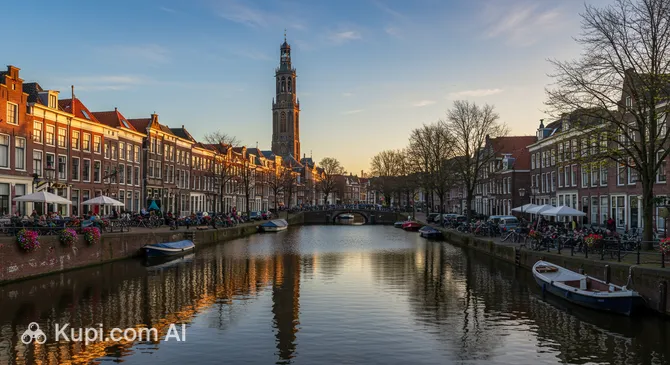
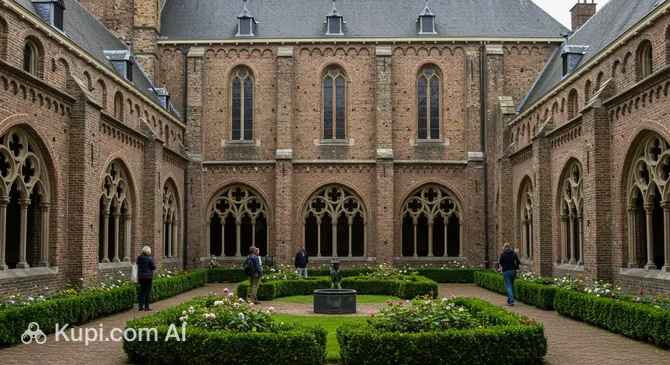
Utrecht is a vibrant and historic destination often described as the beating heart of the Netherlands. Known for its medieval center, tree-lined canals, and energetic student population, it offers a perfect blend of old-world charm and modern vitality. As the capital of the province with the same name, it serves as a central hub for rail transport and culture, making it an incredibly lively place to visit.
With a population of approximately 359,370 residents, the city is large enough to offer metropolitan amenities yet remains compact enough to explore comfortably on foot or by bike. Its central geographical location makes it one of the most accessible cities in the country, situated just a short distance south of Amsterdam.
Utrecht. Illustration.
Source: Kupi.com AI
The history of Utrecht is rich and fascinating, dating back to Roman times when it served as a fortress on the northern border of the empire. Today, this heritage is best experienced by visiting the iconic Dom Tower, the tallest church tower in the country, which dominates the skyline and offers panoramic views. Another unique feature of the city is its canal system, particularly the Oudegracht, where historical wharf cellars have been converted into cozy cafes and restaurants right at the water's level.
Whether you are looking to explore ancient architecture, enjoy a lively cultural scene, or simply relax by the water, Utrecht provides a memorable experience for every traveler. It is a must-visit destination that captures the authentic Dutch spirit without the overwhelming crowds found in larger tourist hubs.
Weather Overview
The climate in Utrecht is generally temperate and mild, making it a visitable destination year-round, provided you dress appropriately. The summer months of June, July, and August are the warmest, with average temperatures ranging from 17.2°C to 18.6°C and daytime highs peaking around 22°C. Conversely, the winter season from December to February is cool, with average temperatures dipping to between 4.7°C and 5.5°C and nightly lows hovering just above freezing.
Rainfall is a consistent feature of the local weather, with a significant number of wet days distributed evenly throughout the year. You can generally expect rain on about 12 to 16 days each month, regardless of the season. For a more detailed breakdown of what to expect during your specific travel dates, check the guide to the weather in Utrecht to help plan your packing list.
Spring and autumn serve as transitional periods where temperatures gradually rise from roughly 7°C in March to a comfortable 13°C by May, and cool down again in October and November. Overall, visitors should expect mild, comfortable summers with frequent showers and cool, damp winters.
Average monthly temperature
Average monthly precipitation
Interesting Facts
Beyond the main attractions, Utrecht holds many fascinating secrets that often surprise even seasoned travelers.
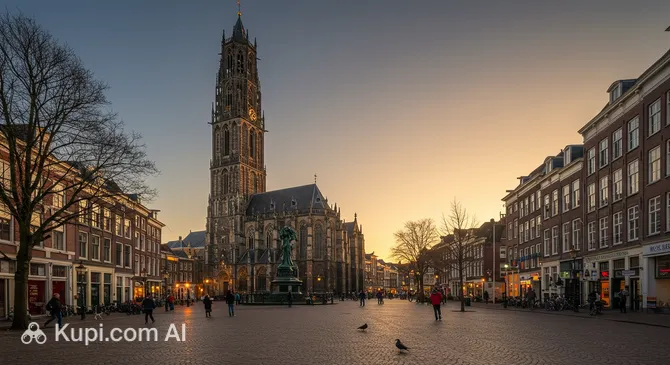
The iconic Dom Tower stands completely detached from the church it once belonged to. In 1674, a violent summer storm collapsed the nave of St Martin's Cathedral, leaving the tower isolated and creating the open space that is now the Dom Square.
Utrecht is the hometown of Dick Bruna, the creator of the world-famous bunny Miffy (Nijntje). The city celebrates this heritage not only with the Miffy Museum but also with a unique set of traffic lights featuring the character, located on the Lange Vliestraat.
The city is a global leader in cycling infrastructure and boasts the world's largest bicycle parking facility. Situated beneath the central station square, this massive three-story garage can accommodate over 12,500 bikes, highlighting how integral cycling is to local life.
Architecture lovers can visit the Rietveld Schröder House, a UNESCO World Heritage site that was decades ahead of its time. Built in 1924, this masterpiece of the De Stijl movement features ingenious sliding walls that allow the living spaces to be completely reconfigured.
Dom Tower. Illustration.
Source: Kupi.com AI
Traveler photos:
How to Get There
Reaching this central Dutch city is straightforward thanks to its prime location and excellent connectivity. Whether you are arriving by air or rail, you will find multiple convenient options to start your journey. For a comprehensive guide on all transport modes and routes, you can read more about how to get to Utrecht.
The city of Utrecht does not have its own airport, but it is exceptionally well-served by Amsterdam Airport Schiphol (IATA: AMS), located in the city of Amsterdam. Situated just 34.7 km away, it is the primary gateway for international visitors. A taxi or car ride from Schiphol to Utrecht typically takes about 30 to 40 minutes, though the direct train connection is often equally fast and very frequent. Another viable option is Rotterdam The Hague Airport (IATA: RTM) in Rotterdam, which is approximately 49.5 km from the city. Traveling by car from here takes roughly 45 to 50 minutes. For those flying within Europe on budget airlines, Eindhoven Airport (IATA: EIN) in Eindhoven is also a popular choice, located 73.5 km away with a travel time of about an hour by road.
For clarity, here is a summary of the main airports:
The Netherlands has a dense and efficient railway network, making train travel a preferred method for many. While Utrecht boasts its own major central station, international travelers often connect through nearby hubs. You can arrive at Amsterdam Centraal Station in Amsterdam, which is about 35.4 km away. From there, frequent direct trains connect to Utrecht in less than half an hour. Alternatively, Rotterdam Centraal Station in Rotterdam serves as another key entry point, located 48.6 km away. Both stations handle a significant volume of passengers and offer excellent facilities for transfer.
Below is a list of significant railway stations in the vicinity:
Utrecht offers a delightful mix of cultural heritage, interactive history, and natural beauty. Beyond its famous canals and the towering church spire, the city is home to a variety of museums and estates that capture the imagination of travelers. Here are some of the top places to explore during your visit.
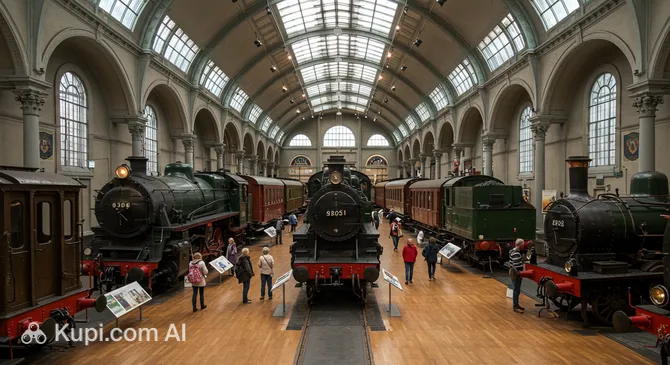
Located in the historic Maliebaan station, The Railway Museum is a fascinating experience for visitors of all ages. Far from being a static display of old trains, this attraction offers an interactive journey through the history of rail travel in the Netherlands. You can explore royal carriages, admire massive steam locomotives, and immerse yourself in the stories behind the tracks, making it a lively and educational stop.
The Railway Museum. Illustration.
Source: Kupi.com AI
Traveler photos:
For a truly unique auditory experience, Museum Speelklok is a must-visit. This "musical" museum is dedicated to self-playing instruments, ranging from tiny music boxes to massive street organs and carillon clocks. The cheerful atmosphere and the intricate mechanics of these historical devices make it one of the most entertaining and distinctive museums in the country.
Art and history lovers should head to the Centraal Museum, the oldest municipal museum in the Netherlands. It houses an extensive collection that spans from the works of the Utrecht Caravaggisti to the modern designs of Gerrit Rietveld and the illustrations of Dick Bruna. A major highlight is the ancient "Utrecht Ship," a 1,000-year-old vessel discovered in the city, which offers a glimpse into the region's rich trading past.
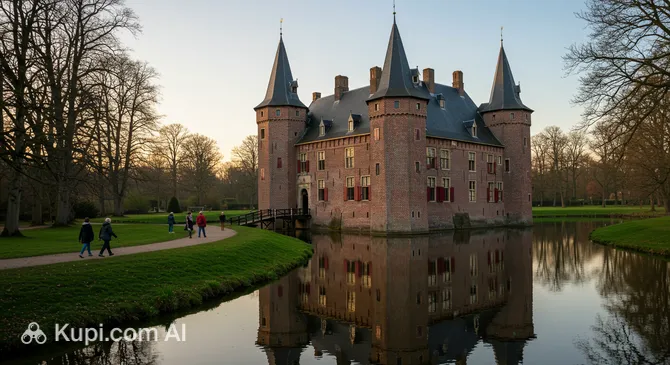
Just a short distance from the city center lies Castle Zuylen, a majestic estate situated along the river Vecht. Originally a medieval fortress, it was transformed into a noble country house in the 18th century. Visitors can tour the richly decorated rooms, learn about the famous writer Belle van Zuylen who once lived there, and stroll through the beautiful landscaped gardens that surround the property.
Castle Zuylen. Illustration.
Source: Kupi.com AI
Traveler photos:
Nature enthusiasts will find a peaceful retreat at the Utrecht Botanic Gardens. Located at the Utrecht Science Park around the historic Fort Hoofddijk, these gardens date back to 1639 and feature a diverse collection of plants from around the world. The rock garden is particularly renowned, and the butterfly greenhouse offers a colorful escape, making it a perfect spot for a relaxing afternoon walk.
Local Cuisine
The culinary scene in Utrecht is as inviting and atmospheric as its historic streets. Dining here often means sitting at water level in one of the city's unique wharf cellars along the Oudegracht, a feature found nowhere else in the world. These converted medieval storage spaces now house a variety of restaurants and cafes, offering an unforgettable backdrop for a meal that blends traditional Dutch heartiness with modern international flavors.
When it comes to local specialties, you cannot leave without trying the Vockingworst. This savory liver sausage, a true Utrecht tradition since 1870, is typically eaten on a sandwich or as a snack. For those with a sweet tooth, the city offers the famous Domtorentjes. These large, decadent chocolate pralines are filled with a creamy ganache and embossed with the image of the iconic Dom Tower, making them the perfect edible souvenir.
Olivier Belgian Beer Café Utrecht. Illustration.
Source: Kupi.com AI
Traveler photos:
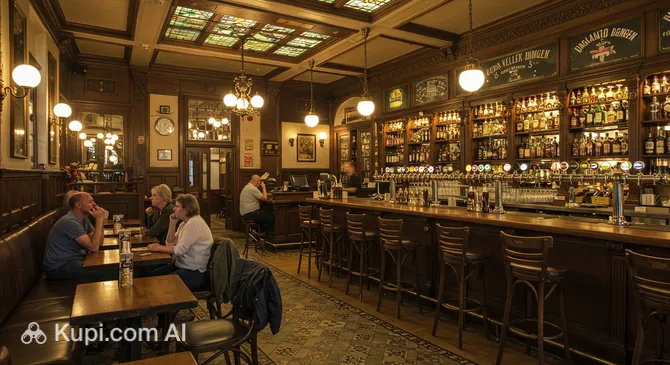
Utrecht is also a fantastic destination for beer lovers, boasting a rich brewing history and a vibrant craft beer culture. Locals often gather for a "borrel" (drinks and snacks) in the late afternoon, usually accompanied by bitterballen—crispy fried meatballs served with mustard. A spectacular place to experience this culture is the Olivier Belgian Beer Café Utrecht. Housed in a former hidden church, this venue retains its stunning high ceilings and organ pipes, providing a majestic setting to enjoy a vast selection of beers.
The food culture here is heavily influenced by the city's large student population, ensuring a lively atmosphere and plenty of affordable, diverse options ranging from Indonesian to Italian cuisine. For a mix of culture and dining, the TivoliVredenburg music complex is a central hub where you can find excellent food spots amidst the buzz of concerts and events. Additionally, the Vredenburg market, held on Wednesdays, Fridays, and Saturdays, is the ideal place to sample fresh stroopwafels (syrup waffles) warm from the iron.
Travel Tips
Welcome to Utrecht! To ensure your visit to this charming medieval city is as smooth and enjoyable as possible, we have compiled a set of essential guidelines to help you navigate local life with ease.
Clothing and Gear: The Dutch weather is notoriously unpredictable, often experiencing four seasons in a single day. It is highly recommended to dress in layers and always carry a waterproof jacket or a sturdy umbrella, regardless of the forecast. As Utrecht’s historic center features many cobblestone streets, pack comfortable walking shoes. There are no strict dress codes for general sightseeing, but modest attire is appreciated if you plan to visit religious sites like the Dom Church.
Transportation: The city center is compact and best explored on foot. For longer distances, the public transport network (U-OV) consisting of buses and trams is excellent. You can easily check in and out using your contactless debit or credit card (OVpay), eliminating the need for paper tickets. While renting a car is unnecessary and expensive due to parking fees, renting a bicycle is the most authentic way to get around—just ensure you are comfortable riding in heavy traffic.
Finances: The official currency is the Euro (€). The Netherlands is rapidly becoming a cashless society; many shops, cafes, and even market stalls operate on a "Pin Only" (cards only) basis. While international credit cards (Visa and Mastercard) are increasingly accepted, it is wise to carry a debit card if possible. ATMs are widely available. Tipping is not mandatory but is appreciated for good service; rounding up the bill or leaving roughly 5-10% is standard practice.
Health and Safety: Utrecht is generally a very safe city for travelers. In case of a medical emergency, dial 112. For minor ailments, visit a generic drugstore (Drogist) for toiletries or a pharmacy (Apotheek) for medication; note that pharmacies typically close around 5:30 PM, though there are after-hours services for emergencies. The biggest safety risk for pedestrians is often the silent and swift bicycle traffic, so always look both ways before stepping off the curb.
Communication: The official language is Dutch, but the level of English proficiency in Utrecht is among the highest in the world. You will have no trouble communicating in English in hotels, restaurants, and shops. Learning a few local words like "Hallo" (Hello) and "Dank je wel" (Thank you) is a nice gesture. Free Wi-Fi is available in most trains, cafes, and public buildings, and EU roaming rules apply for European travelers.
Local Etiquette: The Dutch value punctuality and directness, which should not be mistaken for rudeness. When entering a small shop or waiting room, it is polite to greet everyone with a general "Hello." Handshakes are the standard form of greeting. In public, keep noise levels moderate, as locals appreciate a calm atmosphere, especially on public transport.
What to Avoid: The most critical rule in Utrecht is: never walk in the bike lanes. These are usually marked with red asphalt or bike symbols. Walking here is dangerous and will irritate local cyclists. Also, avoid confusing "coffeeshops" (which sell cannabis) with "cafés" (which serve coffee and alcohol) to prevent awkward misunderstandings.
Additional Tip: Unlike many other cities, shops in Utrecht typically close around 6:00 PM on weekdays. However, Thursday is Koopavond (late-night shopping), where stores in the city center stay open until 9:00 PM. This is a perfect evening to combine shopping with a dinner along the atmospheric Oudegracht.
By keeping these practical tips in mind, you will be well-prepared to embrace the local lifestyle and enjoy everything this beautiful city has to offer. Utrecht is a welcoming place where a little local knowledge goes a long way in creating a memorable travel experience.
Entertainment & Nightlife
As a vibrant university city, Utrecht boasts an energetic and diverse nightlife scene that rivals that of larger European capitals. The atmosphere is generally relaxed and inclusive, characterized by a mix of cozy "brown bars" (traditional Dutch pubs), trendy cocktail lounges, and lively dance clubs. Because of the large student population, Thursday nights are often just as bustling as Fridays and Saturdays, making it a great destination for mid-week entertainment.
The nightlife is concentrated in a few key districts that are easily walkable. Neude Square is a popular starting point, lined with terraces and bars that stay open late. Just a short walk away, Janskerkhof transforms from a historic square into a party hub at night, with several clubs located in cellars and monumental buildings. For a truly unique experience, explore the Oudegracht, where many venues are housed in medieval wharf cellars right at the water's edge, offering an intimate setting you won't find anywhere else.
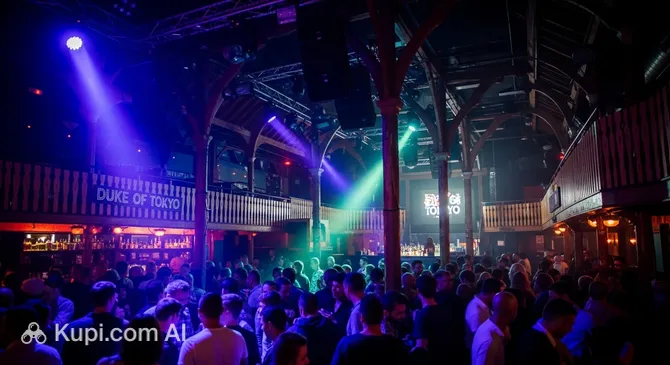
If you are looking for an immersive night out, Duke of Tokyo is a standout venue. Inspired by the backstreets of Tokyo, this Japanese karaoke bar and club offers private singing booths and a vibrant main bar area serving creative cocktails. It is a favorite among locals for its quirky decor and electric atmosphere.
Duke of Tokyo. Illustration.
Source: Kupi.com AI
Traveler photos:
For those interested in the alternative and underground scene, ACU is a historic political-cultural center that functions as a venue for music, cinema, and art. It operates as a volunteer-run collective and is known for its affordable prices, vegan food, and diverse lineup of punk, disco, and experimental music nights. It is a welcoming space that reflects the city's progressive spirit.
ACU. Illustration.
Source: Kupi.com AI
Traveler photos:
Music lovers should check the schedule at TivoliVredenburg, the city's premier music complex, which hosts everything from pop concerts to techno nights. Dress codes in Utrecht are generally casual; most bars and clubs welcome jeans and sneakers, though some upscale venues at Janskerkhof might expect a slightly smarter look. Most bars stay open until 2:00 AM on weekends, while clubs often keep the doors open until 4:00 AM or later.
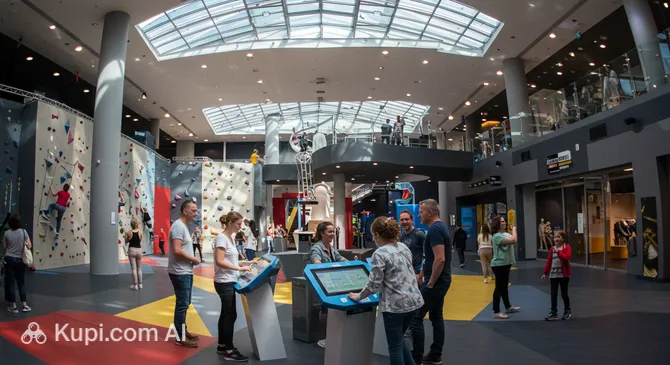
Beyond the nightlife, the city offers plenty of daytime entertainment. Families can visit KidZcity, a large indoor amusement park featuring slides, climbing structures, and rides suitable for younger children. Culture enthusiasts can enjoy a wide array of theaters and cinemas, including the arthouse options scattered around the city center.
KidZcity. Illustration.
Source: Kupi.com AI
Traveler photos:
Practical Tips and Safety: Utrecht is a very safe city for night walks, even in the early hours. The city center is well-lit and populated. Public transport runs frequently, but night buses operate on weekends to help you get home after the trains stop. Taxis are available at designated stands, particularly at Janskerkhof and Vredenburg, or can be ordered via apps. Uber is also active in the city. As always, be mindful of your surroundings and keep an eye on your belongings in crowded places.
Parks & Museums
Utrecht is a city where urban life seamlessly intertwines with lush greenery and deep-rooted heritage. Visitors will find that the city offers an impressive array of parks for relaxation and diverse museums that delve into everything from religious art to astronomy, providing a well-rounded cultural experience.
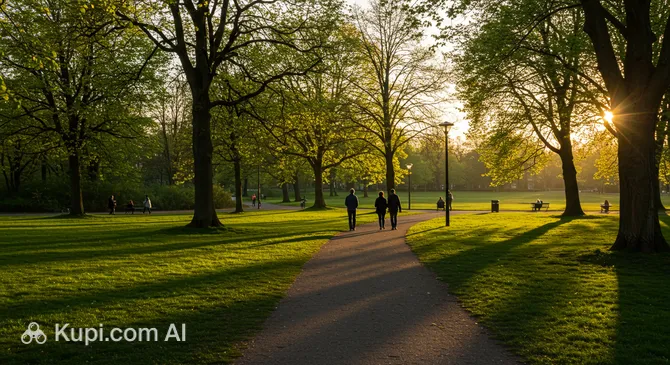
For a refreshing escape within the city center, Lepelenburg Park is a favorite among locals. Situated along the historic city moat, this English landscape-style park is perfect for a sunny afternoon picnic or a leisurely stroll by the water. Just a short distance away lies Griftpark, a modern green space that combines nature with recreational facilities. Once an industrial site, it has been transformed into a vibrant park featuring a petting zoo, flower gardens, and a skate park, making it an excellent spot for families.
Griftpark. Illustration.
Source: Kupi.com AI
Traveler photos:
If you are willing to venture slightly further afield, the Amelisweerd estate offers a majestic natural retreat. Located on the eastern edge of the city, this riverside area features historic country houses surrounded by ancient forests. It is an ideal destination for hiking, renting a canoe to paddle down the Kromme Rijn, or simply enjoying the tranquility of the Dutch countryside just minutes from the urban bustle.
Utrecht's museum scene is equally compelling. Housed in a medieval monastery, the Museum Catharijneconvent is the premier museum for religious art in the Netherlands. Its extensive collection includes stunning gold and silver artifacts, paintings by masters like Rembrandt, and medieval manuscripts. The museum tells the fascinating story of Christianity in the Netherlands, offering visitors a profound insight into the country's spiritual and cultural history.
Museum Catharijneconvent. Illustration.
Source: Kupi.com AI
Traveler photos:
For those fascinated by the stars, the Sonnenborgh Observatory provides a unique combination of astronomy and history. Built on a 16th-century bastion, it is one of the few places where you can explore a historic fortification and visit a working observatory. Tourists can climb the stairs to peer through telescopes, learn about meteorology, and walk along the old city walls for a different perspective of Utrecht.
History enthusiasts should also consider visiting Castellum Hoge Woerd. This modern reconstruction of a Roman fortress stands on the original UNESCO World Heritage site of the Limes (the Roman empire's northern border). Inside, you can admire a beautifully preserved Roman ship and explore interactive exhibits that bring the ancient past to life.
For an authentic and quiet experience, seek out the Pandhof garden nestled between the Dom Church and the university hall. This hidden monastery garden, filled with medicinal herbs and ornamental plants, offers a serene atmosphere and one of the most photogenic views of the Dom Tower, often missed by the rushing crowds.
Getting Around
Public transport in Utrecht is efficient, clean, and well-integrated, making it easy for visitors to navigate the city and its surrounding areas. The network is primarily operated by U-OV and consists of a comprehensive system of buses and trams that connect the historic center with residential neighborhoods, the Science Park, and nearby suburbs. While the city center is compact and best explored on foot, the public transport system is invaluable for reaching attractions further afield or for traveling with luggage.
The tram network is fast and reliable, functioning as a light rail system. The main lines run from Utrecht Central Station to the university campus at Utrecht Science Park (De Uithof) and southwards to the neighboring towns of Nieuwegein and IJsselstein. Trams are particularly useful during rush hours as they operate on dedicated tracks, bypassing city traffic. The bus network is much more extensive, covering virtually every corner of the city. Buses are modern, often electric, and equipped with digital displays announcing the next stop.
For tourists, the payment system has become incredibly straightforward thanks to the introduction of OVpay. You can simply check in and check out using your contactless debit card, credit card, or mobile phone. There is no need to purchase a separate travel card or navigate complex ticket machines. The fare is calculated automatically based on the distance traveled. Alternatively, you can buy a disposable ticket from machines at the station or from the driver on some buses, though paying with a card on board is the standard as cash is generally not accepted.
A critical rule for using public transport here is the check-in and check-out procedure. You must tap your card against the card reader when boarding and—most importantly—tap it again when exiting the vehicle. If you forget to check out, you may be charged a higher default boarding fare. This rule applies to every single journey, including transfers between buses or trams.
The operating hours for most bus and tram lines run from approximately 6:00 AM to 12:30 AM. On weekends, there are night buses that service popular routes until later in the night, catering to the city's vibrant nightlife. To plan your trip effectively, it is highly recommended to download the 9292 app or the Google Maps app, both of which provide real-time schedules, platform numbers, and accurate travel times.
While public transport is excellent, Utrecht is world-famous as a cycling city. Renting a bicycle is often the fastest and most authentic way to get around, giving you the freedom to explore at your own pace. There are numerous rental shops located near the Central Station and throughout the city center. If you prefer not to cycle, taxis are available at designated stands, particularly at the station, and ride-hailing apps like Uber operate reliably within the city limits. Additionally, "Sprinter" trains can be used for quick hops between the main station and suburban stations like Utrecht Zuilen or Utrecht Vaartsche Rijn.
Accommodation
Accommodation:
Finding the perfect place to stay in Utrecht is relatively easy, as the city offers a diverse range of accommodation options to suit every budget and travel style. From charming boutique hotels housed in medieval buildings to modern high-rise chains and budget-friendly hostels, there is something for everyone. Whether you prefer the bustling atmosphere of the historic center or the quiet convenience of the outskirts, the city's compact nature ensures you are never too far from the action.
For those seeking the most authentic experience, the City Center (Binnenstad) is the ideal location. Staying here puts you within walking distance of the main sights and allows you to enjoy the unique charm of the canals day and night. A particularly special option in this area is staying in a converted wharf cellar along the Oudegracht, where some apartments and small hotels offer rooms right at the water's level. This is a lodging experience unique to Utrecht and highly recommended for a romantic or memorable stay.
If accessibility and modern amenities are your top priorities, the area around Utrecht Central Station and the adjacent Hoog Catharijne district is an excellent choice. This revitalized zone features several contemporary hotels that cater to business travelers and tourists alike, offering spectacular views of the city and immediate access to trains and buses. For travelers arriving by car, the newer district of Leidsche Rijn Centrum offers modern hotels with better parking facilities, while still being just a short train or bike ride away from the old town.
Price Range and Booking Tips:
Accommodation prices in Utrecht are generally comparable to other major Dutch cities, though slightly lower than in Amsterdam.
Budget: Hostels and budget hotels typically range from €30 to €80 per night.
Mid-range: Standard double rooms in 3- or 4-star hotels usually cost between €100 and €180.
Luxury: High-end hotels and exclusive apartments can exceed €200 per night.
Because Utrecht is a popular destination for both domestic and international visitors, hotels can fill up quickly, especially during weekends and the summer months. It is highly advisable to book your accommodation well in advance to secure the best rates and availability. Most properties can be easily booked via major online platforms or directly through their websites.
Nearby Cities
For those looking to explore the surroundings, Utrecht serves as an excellent base for day trips to several interesting nearby locations:
City
Population
Distance
De Bilt
43 384
4 km
Bunnik
15 341
6 km
De Meern
21 815
6 km
Zeist
65 043
8 km
Vleuten
27 815
8 km
Situated just a short train ride to the north, Hilversum is famously known as the "Media City" of the Netherlands, hosting the country's main radio and television studios. Beyond its broadcasting fame, it is a haven for architecture enthusiasts, boasting the iconic Town Hall designed by Willem Marinus Dudok. The city is also surrounded by vast heathlands and forests, making it a wonderful spot for both cultural exploration and nature walks.
To the east lies Zeist, a town renowned for its regal atmosphere and the magnificent Slot Zeist. This 17th-century castle, often referred to as the "Versailles of the Netherlands," features stunning period rooms and extensive English landscape gardens. Zeist serves as a gateway to the Utrechtse Heuvelrug National Park, offering visitors the perfect opportunity to combine a visit to a historic estate with a refreshing hike in the woods.
Another fascinating destination is Soest, which offers a unique natural landscape known as the Soesterduinen (Soest Dunes). This extensive area of active sand drifts and heath is a rare geological feature in the region and provides a desert-like experience for hikers. Historically, the town is significant for its proximity to Paleis Soestdijk, a former royal residence that allows visitors to delve into the history of the Dutch monarchy.
These nearby destinations offer a glimpse into the diverse culture and landscapes of the region.
Shopping & Souvenirs
Shopping in Utrecht offers a perfect balance between large-scale retail therapy and the charm of browsing through independent local boutiques. The city center is compact and pedestrian-friendly, allowing visitors to easily drift from major fashion chains to hidden vintage stores along the canals without the need for public transport.
The gateway to the city's shopping scene is Hoog Catharijne. Situated directly adjacent to the central railway station, this is one of the largest indoor shopping malls in the Netherlands. It features a vast array of international brands, electronics stores, and dining options under a modern, airy roof. It serves as the main connector between the transport hub and the historic old town, making it an unavoidable and convenient stop for any shopper.
Once you step out of the mall, you are immediately immersed in the bustling streets of the historic center. The area around the Oudegracht and the Lijnmarkt is filled with popular high-street names, but the real treasures are found in the smaller side streets. The Zadelstraat, which claims to be the oldest paved shopping street in the country, offers a picturesque view of the Dom Tower and is lined with specialty shops, design boutiques, and cozy cafes. For those who love vintage clothing and artisanal goods, the Twijnstraat and the Museum Quarter provide a more bohemian atmosphere.
Market culture is deeply rooted in local life. On Wednesdays, Fridays, and Saturdays, the Vredenburg square hosts a large general market where you can buy fresh produce, Dutch cheese, and warm stroopwafels. On Saturdays, the Janskerkhof turns into a colorful flower market, and the Breedstraat hosts the "Lapjesmarkt," the oldest and largest fabric market in the country, attracting hobbyists from all over.
For a completely different experience, you can visit Leidsche Rijn Centrum. Located in the newer western part of the city, this modern shopping district offers a spacious, open-air environment with a wide selection of shops and restaurants. It is easily accessible by train or bus and provides a contemporary contrast to the medieval charm of the city center.
Most shops in Utrecht open around 10:00 AM and close at 6:00 PM, though many open later on Mondays (around 12:00 PM or 1:00 PM). A key tradition to remember is "Koopavond" (shopping evening) on Thursdays, when stores in the center stay open until 9:00 PM. Additionally, Utrecht is a lively city on weekends, and Sunday shopping is standard, with the vast majority of shops open from 12:00 PM to 5:00 PM.