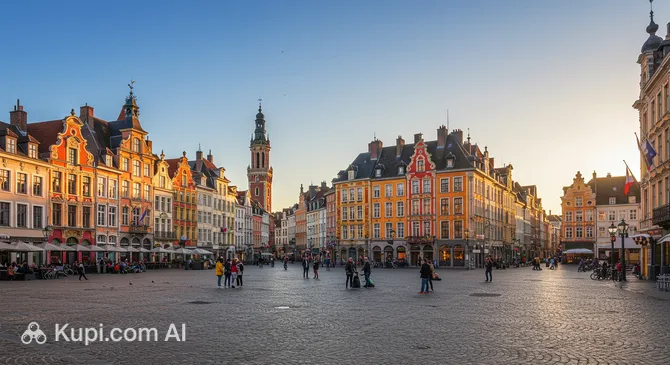
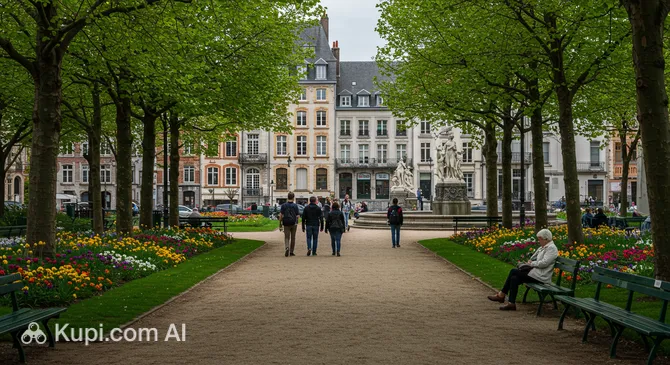
Lille is a captivating city that effortlessly blends its industrial past with a vibrant, youthful energy. As the capital of the Hauts-de-France region in northern France, it stands as a cultural crossroads near the Belgian border. Known for its distinctive Flemish architecture and warm hospitality, Lille offers a unique atmosphere that sets it apart from other French metropolises.
With a population of approximately 235,000 residents, the city is large enough to offer diverse experiences yet compact enough to explore on foot. Its strategic location makes it a major European hub, easily accessible by train from major capitals. The climate is temperate, often characterized by mild summers and cool winters, adding to the cozy charm of its bustling cafés and markets.
Lille. Illustration.
Source: Kupi.com AI
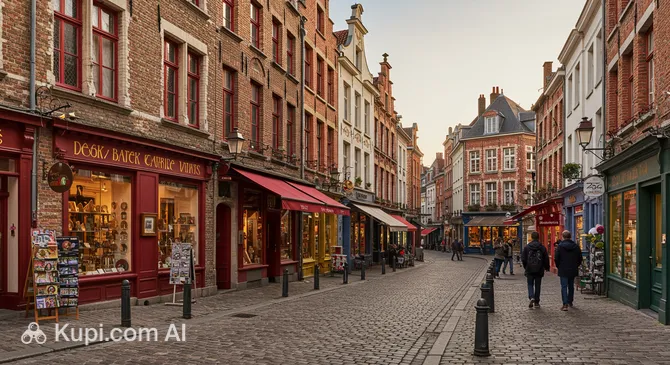
Visitors are often drawn to the rich history of Lille, which is reflected in its stunning preserved buildings and squares. The heart of the city is the Grand Place (General de Gaulle Square), a magnificent gathering spot surrounded by ornate facades. Just a short walk away lies Vieux Lille, the old town, where travelers can wander through cobblestone streets lined with designer boutiques, art galleries, and traditional restaurants serving local specialties like moules-frites.
Whether you are an art enthusiast eager to visit the renowned Palais des Beaux-Arts or a traveler looking for a lively urban escape, Lille promises an unforgettable experience. Its dynamic blend of heritage, culture, and modernity makes it a must-visit destination for anyone exploring the region.
Weather Overview
Lille experiences a temperate oceanic climate, characterized by mild summers and cool winters, typical of the Hauts-de-France region. Because the city is subject to frequent changes in conditions, it is helpful to check the weather in Lille before your trip to pack appropriately.
Summers are generally pleasant and warm, with average temperatures peaking around 19.0°C in August and maximum highs reaching approximately 23.3°C. Winters are colder but rarely freezing, with January seeing average temperatures of 4.8°C and lows around 2.4°C. Rainfall is fairly consistent throughout the year, with about 10 to 15 wet days per month, so keeping an umbrella or raincoat handy is recommended regardless of when you visit.
Average monthly temperature
Average monthly precipitation
Interesting Facts
Beyond the main attractions, Lille holds many fascinating secrets that reveal its rich heritage and quirky character. From its marshy origins to pioneering technology, the city is full of surprises for the observant traveler.
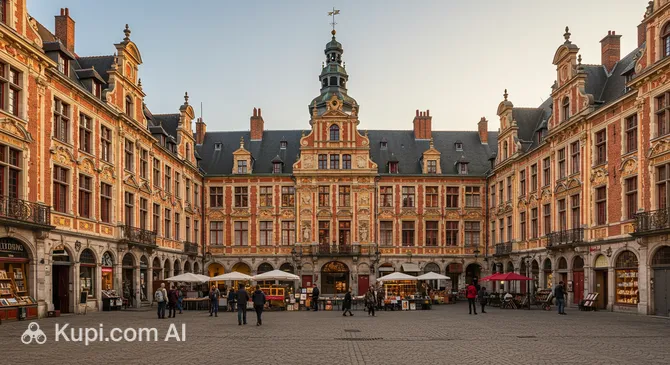
Old Stock Exchange. Illustration.
Source: Kupi.com AI
Traveler photos:
The city's name is derived from the French word L'Isle, meaning "The Island," because the area was originally marshland surrounding the Deûle river. You can still see traces of this aquatic history while exploring the charming streets of Old Lille.
Lille is home to the largest flea market in Europe, the famous Braderie de Lille. During this massive annual event, local restaurants engage in a friendly competition to build the highest pile of empty mussel shells outside their doors, celebrating the traditional dish of moules-frites.
The city was a global pioneer in public transport, inaugurating the world's first fully automated driverless metro system, known as the VAL, in 1983.
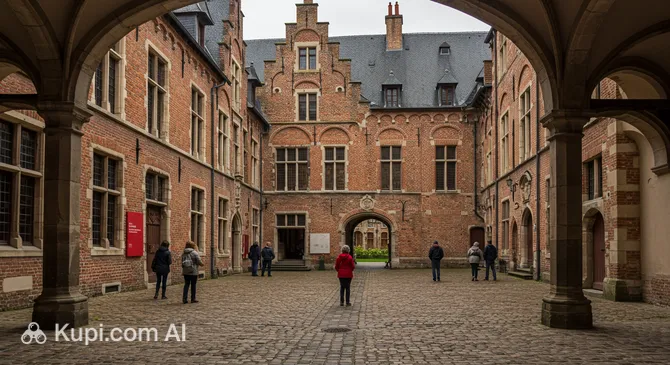
The magnificent courtyard of the Old Stock Exchange is no longer a place for finance; instead, it transforms into a vibrant second-hand book market and a gathering spot for chess players every afternoon.
Standing at 104 meters tall, the Lille Belfry is the highest municipal belfry in the region and is listed as a UNESCO World Heritage site, offering views that can stretch all the way to Belgium on a clear day.
How to Get There
Reaching this northern French metropolis is quite convenient due to its strategic location at the crossroads of Europe. Whether you prefer flying or taking the train, there are multiple options to suit your itinerary. For a comprehensive guide on all available transport methods, you can read more about how to get to Lille on our detailed page.
The most direct air route is via Lille Airport (LIL), which is conveniently located in Lille itself, just 6.6 km from the city center. It is a regional hub, handling a moderate volume of passengers, and the journey to the downtown area by taxi or shuttle generally takes around 20 minutes.
For a wider range of international flights, many travelers choose Brussels Airport (BRU). Although it is situated approximately 105 km away, it is a large international hub with extensive connections. A taxi or car ride from there to Lille typically takes between 1 hour and 15 minutes to 1 hour and 45 minutes, depending on traffic. Another viable option is Charleroi Brussels South Airport (CRL), also serving Brussels and located roughly 100 km from Lille. The travel time by road is similar, generally ranging from 1 hour and 15 minutes to 1 hour and 45 minutes.
For clarity, here is a summary of the main airports:
Traveling by train is exceptionally popular, as the city serves as a major railway junction. The busiest hub is Lille Flandres Station, located in the heart of Lille, just 1.3 km from the center. It welcomes a very large number of passengers annually and connects the city to regional and national destinations. Another key terminal is Lille Europe Station, situated 1.7 km from the center, which is primarily dedicated to high-speed international trains like the Eurostar.
Lille is a city brimming with architectural marvels and cultural treasures, making it a delight for visitors to explore. From grand historic squares to world-class museums, the city's landmarks tell the story of its rich heritage and vibrant present. Here are some of the top sights you shouldn't miss.
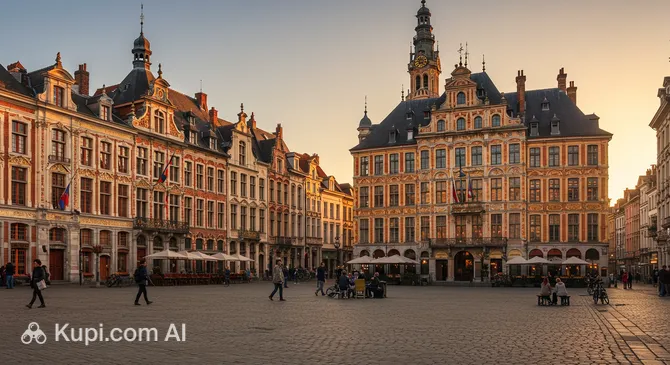
The beating heart of the city is undoubtedly the Grand Place, also known as Place du Général de Gaulle. This magnificent square is the perfect starting point for any tour, surrounded by opulent buildings ranging from Flemish Renaissance to neo-classical styles. It is a lively meeting spot where locals and tourists alike gather to admire the "Goddess" statue in the center and soak up the festive atmosphere, especially during the Christmas market or annual events.
Grand Place. Illustration.
Source: Kupi.com AI
Traveler photos:
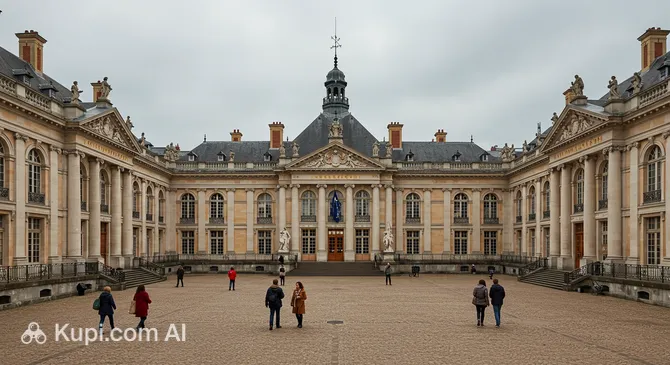
Art lovers will find a paradise at the Palace of Fine Arts (Palais des Beaux-Arts). Renowned as one of the largest museums in France outside of Paris, it houses an impressive collection that spans centuries. Visitors can marvel at masterpieces by European painters such as Rubens, Van Dyck, and Goya, as well as an extensive array of sculptures and antiquities. The building itself is a stunning example of 19th-century architecture, adding to the grandeur of the experience.
Palace of Fine Arts. Illustration.
Source: Kupi.com AI
Traveler photos:
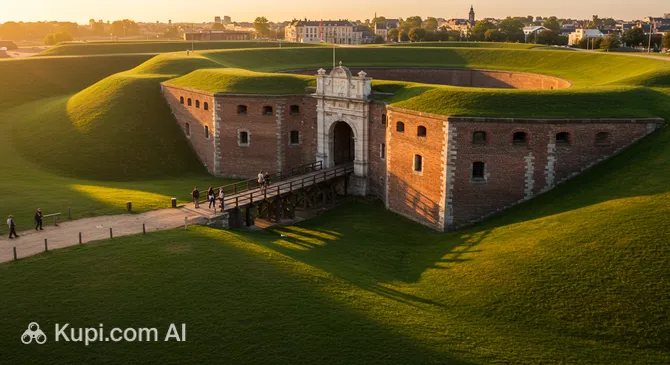
For a mix of history and nature, the Citadel of Lille is a must-visit. Designed by the famous military engineer Vauban in the 17th century, this star-shaped fortress was dubbed the "Queen of Citadels." While it is still an active military base, the surrounding parkland is the city's largest green space, offering a peaceful escape for walking, jogging, and family picnics along the canal banks.
Citadel of Lille. Illustration.
Source: Kupi.com AI
Traveler photos:
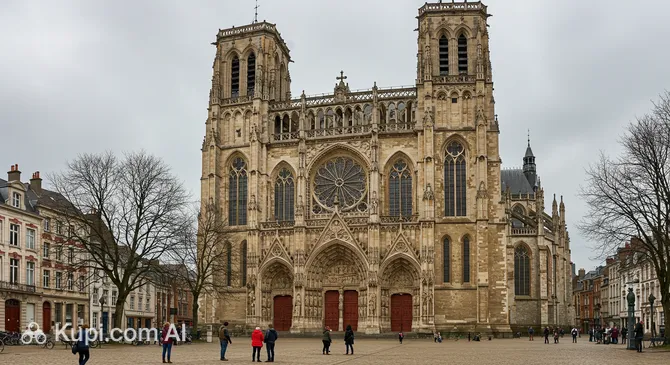
A truly unique architectural gem is the Notre-Dame de la Treille Cathedral. This religious monument stands out because of its fascinating history and design; although construction began in the neo-Gothic style in the 19th century, it wasn't completed until 1999 with a strikingly modern translucent facade. Inside, the play of light through the marble front wall creates a serene and spiritual ambiance that surprises many visitors.
Notre-Dame de la Treille Cathedral. Illustration.
Source: Kupi.com AI
Traveler photos:
Local Cuisine
Lille’s gastronomy is a heartwarming reflection of its Flemish heritage, offering a distinct culinary experience that differs from the delicate cuisine often associated with the rest of France. Known for its generous portions and rich flavors, the local food scene is centered around conviviality and comfort. Visitors will find that many traditional recipes rely heavily on local produce and, quite often, the region's famous beer.
One of the most iconic dishes to try is the Carbonnade Flamande, a tender beef stew slow-cooked with beer, gingerbread, and brown sugar, resulting in a sweet and savory masterpiece. Another local favorite that has achieved legendary status is Le Welsh (Welsh Rarebit). This decadent dish consists of bread and ham drenched in melted cheddar cheese and mustard, typically cooked with beer and topped with a fried egg. For those with a sweet tooth, the Merveilleux—a delicate cake made of meringue and whipped cream coated in chocolate shavings—is an absolute must.
When it comes to drinks, beer is undoubtedly the king of the table in Lille. The region is dotted with breweries producing a wide variety of craft beers, from refreshing blondes to complex ambers. It is common to pair meals with a local brew rather than wine. For a traditional digestif, locals often sip on Genièvre, a juniper-flavored spirit that warms you up during the cooler months.
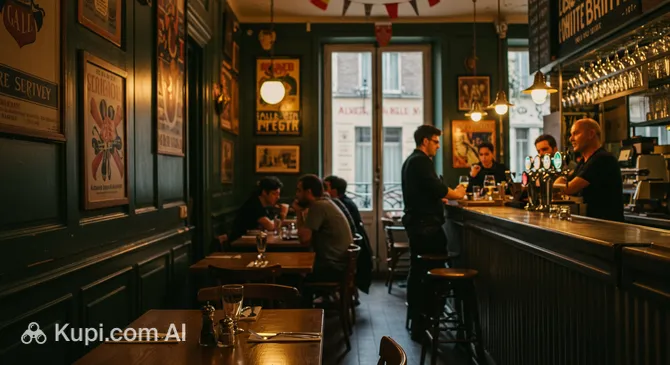
To truly experience the city's culinary soul, you should dine in an estaminet. These traditional Flemish taverns are characterized by their rustic wooden interiors, dried hops hanging from the ceilings, and a cozy, lively atmosphere. They are the best places to enjoy authentic regional specialties alongside the locals. For a more bustling vibe, the Wazemmes Market is a fantastic spot to grab street food and witness the vibrant daily life of the city.
La Ch'tite Brigitte. Illustration.
Source: Kupi.com AI
Traveler photos:
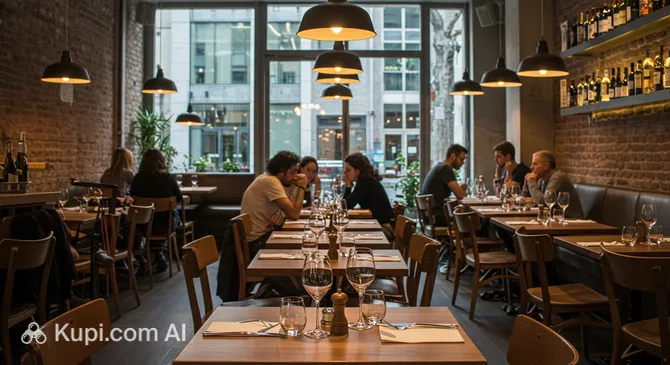
If you are looking for a charming place to enjoy these traditional flavors, La Ch'tite Brigitte is a restaurant that captures the authentic essence of Northern French cooking. The city also boasts a dynamic nightlife and modern dining scene; for instance, La Canopée is a popular bar where you can unwind with a drink after a day of gastronomic exploration.
Travel Tips
Preparing for a trip to Lille is straightforward, but having a few local insights can turn a good trip into a great one. These practical tips are designed to help you navigate the capital of the Hauts-de-France region with confidence, ensuring you experience the city like a savvy traveler.
Clothing and Gear: The weather in this part of France can be quite changeable, so dressing in layers is the best strategy. Even in summer, it is wise to carry a light rain jacket or umbrella, as showers can occur unexpectedly. Since the charm of Old Lille lies in its historic cobblestone streets, bring comfortable, sturdy walking shoes and leave the high heels for dinner. Don't forget a Type E power adapter (standard two-pin European plug) to keep your devices charged.
Transportation: Lille is a very walkable city, especially the historic center, which is best explored on foot. For longer distances, the Ilévia public transport network is excellent, featuring the world's first automated metro, trams, and buses. A "Pass Pass" card is a convenient option for multiple trips. Renting a car is generally unnecessary and can be a hassle due to traffic and limited parking; if you plan to visit the wider region, it is better to rent one only for those specific days.
Finances: The local currency is the Euro (€). Credit and debit cards (Visa and Mastercard) are widely accepted in shops, restaurants, and museums. However, it is advisable to carry some cash for small purchases at bakeries or the Wazemmes market, where card machines might have minimum limits. Tipping is not mandatory as a service charge is included in the bill, but rounding up or leaving a few euros for good service is a polite gesture appreciated by locals.
Health and Safety: Lille is generally a safe city for tourists, but standard precautions against pickpocketing should be taken in crowded areas like train stations. Pharmacies are easily recognizable by a flashing green neon cross and are well-stocked for minor ailments; for emergencies, dial 112. The water from the tap is safe to drink, so you can refill a reusable bottle to stay hydrated.
Communication: While French is the official language, English is widely spoken, particularly by younger people and in the tourism sector. However, starting any interaction with a polite "Bonjour" (Hello) or "Excusez-moi" (Excuse me) before switching to English makes a significant difference in how you are received. Free Wi-Fi is available in many public squares and cafes, but for constant connectivity, you can easily purchase a prepaid SIM card at relay shops or mobile provider stores in the city center.
Local Etiquette: Politeness is paramount in French culture. When entering a boutique, café, or restaurant, always acknowledge the staff with a greeting. It is considered rude to browse or sit down without acknowledging the person serving you. In social settings, a handshake is common, while friends may greet each other with la bise (a kiss on the cheek), though sticking to a handshake is safer for visitors.
What to Avoid: Do not rush your meals; dining in France is a leisurely experience meant to be enjoyed, and asking for the check the moment you finish eating can be seen as impatient. Additionally, avoid being overly loud in public spaces or on public transport, as locals value a certain level of discretion and calmness in shared environments.
Additional Tip: Keep in mind that many shops and supermarkets are closed on Sundays. However, Sunday morning is the prime time to visit the vibrant Wazemmes Market, one of the largest in France, to soak up the local atmosphere and grab fresh food. If you need essentials on a Sunday afternoon, look for small convenience stores, but be prepared for limited options.
By keeping these simple tips in mind, you will be well-equipped to enjoy the warm hospitality and unique character of Lille. Embrace the local rhythm, enjoy the delicious food, and have a wonderful time exploring this dynamic northern city.
Entertainment & Nightlife
Lille boasts a nightlife scene that is legendary across France, fueled by its large student population and a culture that values conviviality. The city comes alive after dark, offering a diverse array of experiences ranging from traditional Flemish pubs to pulsating nightclubs. Whether you are looking for a quiet glass of wine or a night of dancing, the city's distinct neighborhoods provide the perfect backdrop for an unforgettable evening.
For a sophisticated night out, the historic streets of Vieux Lille are dotted with chic cocktail lounges and wine bars. The atmosphere here is stylish yet relaxed, attracting a crowd that enjoys conversation over high-quality drinks. In sharp contrast, the district centered around Rue de Solférino and Rue Masséna is the energetic heart of the party scene. Often referred to as "Rue de la Soif" (Thirst Street), this area is packed with bars and is the go-to destination for students and party-goers looking for a lively, boisterous vibe.
Quai Des Bananas. Illustration.
Source: Kupi.com AI
Traveler photos:
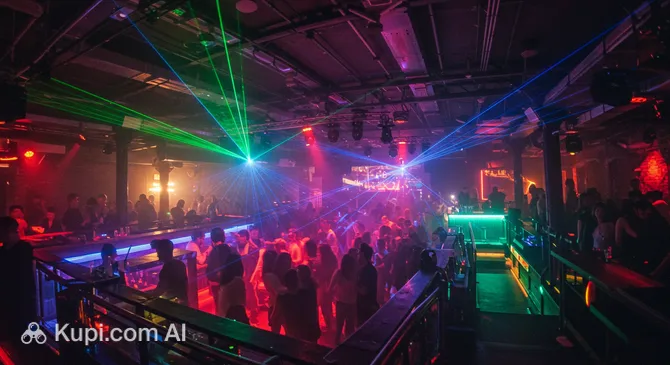
Among the specific venues worth visiting is Quai Des Bananas. This bar is a local favorite known for its tropical theme and an extensive menu of exotic cocktails, making it a fun spot to kick off the festivities. If you prefer a more interactive evening, Karaoke Lille offers private rooms where you can sing with friends in a comfortable and private setting. For those ready to dance until dawn, the Aquarium is a well-known nightclub that features eclectic music and a vibrant crowd.
Before the sun sets, the city offers plenty of entertainment options to fill your afternoon. Thrill-seekers and puzzle lovers might enjoy Just Escape Lille, a popular escape room venue that challenges teams to solve mysteries against the clock. Additionally, the city's cultural calendar is often packed with theater performances and concerts, providing a more low-key alternative to the clubbing scene.
When planning your night out, keep in mind that Thursday evenings are particularly popular with the student community, while Fridays and Saturdays draw a mix of locals and visitors. Most bars stay open until 1:00 AM or 2:00 AM, with clubs continuing until the early morning hours. Prices are generally reasonable, with a pint of beer costing between €6 and €8 depending on the venue.
Regarding safety and transport, Lille is generally a safe city for night walks, though the Solférino area can get quite crowded and rowdy late at night; it is wise to keep an eye on your belongings in these busy spots. Public transport, including the metro, typically runs until around midnight. After that, ride-sharing apps and taxis are the most convenient and secure way to return to your accommodation.
Parks & Museums
Parks and Museums:
Beyond its bustling squares and historic streets, Lille offers a refreshing array of green spaces and a deep dive into cultural heritage through its diverse museums. The city balances its urban energy with serene gardens and institutions that preserve its rich Flemish identity, making it a well-rounded destination for travelers seeking both relaxation and enlightenment.
The city's "green lung" is undoubtedly the Citadel Park. Spanning nearly 110 hectares around the historic military fortress, this vast area is a favorite among locals for jogging, cycling, and leisure. Nestled within this greenery is the Lille Zoo, a compact but delightful attraction that is particularly popular with families. It houses over 100 different species, including red pandas and rhinos, and focuses heavily on conservation and education, making it a meaningful stop during a walk through the park.
For a more urban park experience, Jean-Baptiste Lebas Park stands out with its distinctive high red railings. Located on a former railway yard, this rectangular green space is lined with chestnut and lime trees, offering expansive lawns for picnics and relaxation in the heart of the city.
Jean-Baptiste Lebas Park. Illustration.
Source: Kupi.com AI
Traveler photos:
When it comes to museums, the Hospice Comtesse Museum provides a fascinating glimpse into the city's past. Housed in a former hospital founded in the 13th century, the building itself is a masterpiece of Flemish architecture. Inside, visitors can explore the old wards, chapel, and medicinal garden, along with a collection of paintings and furniture that recreate the atmosphere of a traditional Flemish home from the 17th century.
Another cultural highlight is the Natural History Museum of Lille. Established in the 19th century, this museum is a treasure trove of zoological, geological, and ethnographic collections. It is famous for its impressive skeletons of whales and dinosaurs, as well as its "insectarium," making it an engaging destination for curious minds of all ages.
Hospice Comtesse Museum. Illustration.
Source: Kupi.com AI
Traveler photos:
Lille's streets are also an open-air museum of architecture. One of the most striking monuments is the Porte de Paris, a magnificent triumphal arch built in the late 17th century to celebrate Louis XIV's conquest of the city. Nearby, the Lille Belfry dominates the skyline, offering a stark contrast with its Art Deco brickwork. Religious heritage is equally impressive, with the Saint Maurice Church of Lille showcasing a beautiful example of Hallenkerk (hall church) style, where the aisles are the same height as the nave.
For a truly unique cultural experience, head to the Saint Sauveur Station. This former freight station has been transformed into a dynamic cultural venue hosting contemporary art exhibitions, concerts, and festivals. Nearby, an insider tip for nature lovers is the Jardin des Géants (Garden of Giants). This imaginative garden blends nature with artistic landscaping, featuring bamboo groves, water basins, and wicker giant heads, creating a magical and secluded atmosphere away from the crowds.
Getting Around
Navigating Lille is remarkably easy thanks to its efficient and integrated public transport network, which is managed by the company Ilévia. The system is designed to be user-friendly for visitors, connecting the historic center with the suburbs and neighboring towns seamlessly. The backbone of this network is the Metro, which holds a special place in transport history. Lille was the first city in the world to introduce the VAL (Véhicule Automatique Léger), a fully automated, driverless subway system. There are two main lines: Line 1 (Yellow) and Line 2 (Red), which operate frequently and cover most major tourist areas, including the train stations and the Grand Place.
In addition to the metro, the city is served by two historic tram lines, often referred to by locals as the "Mongy" after the engineer who designed them. These trams offer a scenic route connecting Lille to the nearby towns of Roubaix and Tourcoing, making them perfect for day trips to attractions outside the city center. For destinations not reached by rail, an extensive bus network is available. This includes the high-frequency "Liane" lines and a convenient shuttle bus that circles the Old Town, providing easy access to the narrow, cobblestone streets where larger vehicles cannot pass.
The payment system is unified across all modes of transport using the Pass Pass card. For short-term visitors, the most convenient option is the rechargeable paper ticket (Pass Pass disposable ticket), which costs a small fee effectively acting as a deposit. You can load this ticket with various fares, such as a Single Trip (approximately €1.80) or a Day Pass (around €5.30), which offers unlimited travel for 24 hours. There are also "Zapping" cards that allow you to pay as you go, which can be shared among several people traveling together.
Tourists can purchase tickets easily at automatic vending machines located at every metro and tram station, as well as at major bus stops. These machines are multilingual, making the process straightforward. It is crucial to remember to validate your ticket every time you board a bus or tram, and before entering the metro platforms. Validators are small terminals where you tap your card; failure to validate can result in a fine, even if you have credit on your card. The transport network typically operates from roughly 5:30 AM until just past midnight, with extended hours on Saturday nights for the metro.
For those who prefer active travel, Lille is a very bike-friendly city. The V'Lille service offers thousands of self-service bicycles (recognizable by their bright red color) stationed at docking points throughout the city. It is a fantastic way to explore the flat terrain at your own pace. Alternatively, while taxis and ride-sharing apps are available, they are generally not necessary for getting around the compact city center, where walking is often the most enjoyable option. However, they can be useful for late-night returns when public transport services have ended.
Accommodation
Accommodation:
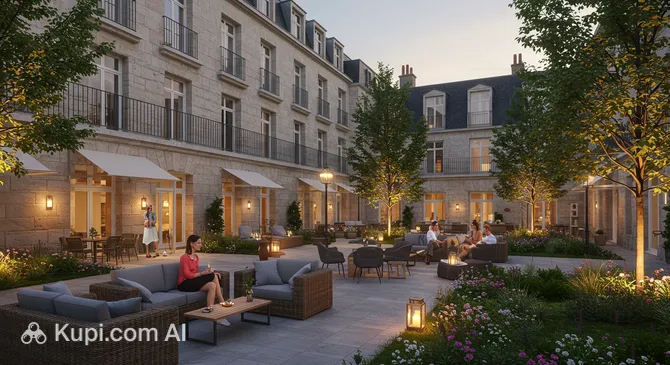
Lille offers a diverse array of accommodation options suited to every type of traveler, ranging from charming boutique hotels in historic buildings to modern establishments near the business districts. Whether you are looking for a luxury suite, a comfortable mid-range hotel, or a budget-friendly hostel, the city provides plenty of choices. Apartment rentals have also become increasingly popular, offering a "home away from home" experience that is perfect for families or longer stays.
The most sought-after area to stay is undoubtedly Vieux Lille (Old Lille). Here, you can wake up amidst cobblestone streets and 17th-century brick facades, with many of the city's best restaurants and shops just a few steps away. For those prioritizing convenience and connectivity, the Euralille district and the area around the two main train stations (Lille Flandres and Lille Europe) are ideal. These locations are perfect for business travelers or those planning day trips to nearby regions, as they offer immediate access to high-speed trains and the metro system.
If you prefer the flexibility of an apartment combined with hotel services, there are several excellent options in the city. For instance, the Euralille Comfort Apartments are strategically located near the commercial center, making them a practical choice for those who want to be close to shopping and transport links. Similarly, the Grand Palais Comfort Aparthotel offers modern amenities and is situated conveniently near the Grand Palais exhibition center, catering well to both professional and leisure visitors.
Euralille Comfort Apartments. Illustration.
Source: Kupi.com AI
Traveler photos:
Prices in Lille are generally reasonable compared to Paris, but they can vary significantly based on the season and location. Budget travelers can find beds in hostels or simple hotels for around €60 to €80 per night, while mid-range options typically fall between €90 and €150. Luxury stays and high-end boutique hotels will naturally cost more. Booking is usually done through major online platforms, though contacting smaller, independent hotels directly can sometimes yield better rates or special offers.
Booking Tip: While finding a room is usually straightforward, it is crucial to book well in advance if you plan to visit during major events. The annual Braderie de Lille in September draws millions of visitors, and accommodation is often sold out months ahead. The same applies to the Christmas market season in December, so early planning is highly recommended to secure the best spots.
Nearby Cities
For those looking to explore the surroundings, Lille serves as an excellent base for day trips to several interesting nearby locations:
Just a short tram ride away lies Roubaix, a city famous for its rich industrial heritage and vibrant art scene. The crown jewel of Roubaix is undoubtedly La Piscine (The Museum of Art and Industry), a stunning museum housed in a converted Art Deco swimming pool. Visitors can admire sculptures and paintings arranged around the central water basin, creating a truly unique visual experience. The city is also known for its factory outlets, making it a popular destination for shoppers.
Another accessible neighbor is Tourcoing, which shares the tram line with Roubaix and Lille. It offers a quieter but equally culturally rich experience, featuring the MUba Eugène Leroy, a fine arts museum known for its intriguing dialogue between contemporary and classical art. Nature lovers will appreciate the Botanical Garden of Tourcoing, a peaceful green space perfect for a relaxing afternoon stroll away from the city bustle.
Closer to the center, Lambersart offers a delightful escape for architecture enthusiasts. Located just across the Deûle river, this town is renowned for its "Avenue de l'Hippodrome," which is lined with magnificent villas ranging from Art Nouveau to Norman Revival styles. It is an ideal spot for a leisurely walk to admire the eclectic facades before heading back to Lille.
City
Population
Distance
Hellemmes-Lille
18 437
3 km
Faches-Thumesnil
18 191
3 km
Ronchin
19 477
3 km
La Madeleine
21 968
3 km
Lambersart
27 415
4 km
These nearby destinations offer a glimpse into the diverse culture and landscapes of the region.
Shopping & Souvenirs
Lille is a premier shopping destination in Northern France, attracting visitors from across the region and nearby Belgium with its blend of elegance and variety. The city offers a delightful mix of retail experiences, from high-end fashion and independent boutiques to expansive shopping centers and vibrant markets. Whether you are looking for luxury brands, antiques, or local delicacies, the city's diverse landscape caters to every taste and budget.
For a charming and upscale shopping experience, head to Old Lille (Vieux Lille). This historic district is famous for its cobblestone streets and beautiful Flemish architecture, housing a variety of designer boutiques, art galleries, and antique shops. It is the perfect place to find unique fashion pieces and sophisticated home decor. In contrast, the pedestrianized streets in the city center, particularly Rue de Béthune and Rue Neuve, serve as the hub for popular international high-street brands, offering a lively atmosphere for casual shoppers.
Old Lille. Illustration.
Source: Kupi.com AI
Traveler photos:
If you prefer having everything under one roof, the city boasts impressive modern facilities. Euralille is a massive commercial center located strategically between the two main train stations. Its futuristic architecture houses over 100 shops, restaurants, and a hypermarket, making it a convenient stop for travelers looking for major brands. For those willing to venture slightly further, Heron Parc in the nearby suburb of Villeneuve-d'Ascq offers a different experience with a range of stores located near a large cinema complex and dining options.
Euralille. Illustration.
Source: Kupi.com AI
Traveler photos:
Markets are an integral part of local life and offer a unique shopping vibe. The Wazemmes Market is one of the largest in France, bustling with energy and offering a colorful array of food, textiles, and flowers, particularly on Sunday mornings. For culture lovers, the inner courtyard of the Old Stock Exchange (Vieille Bourse) transforms into a fascinating second-hand book market from Tuesday to Sunday afternoons. Here, you can browse for vintage posters, comics, and rare editions in a stunning historical setting.
When it comes to souvenirs, edible treats are often the best choice to bring a piece of Lille home. The city is renowned for gaufres fourrées (stuffed waffles), specifically the vanilla-filled ones from the historic Méert pastry shop. Other local specialties include Bêtises de Cambrai (mint candies), Chuques du Nord (coffee-flavored sweets), and, of course, a bottle of local craft beer or the traditional spirit, Genièvre.
Most shops in the city center are open from Monday to Saturday, typically between 10:00 AM and 7:00 PM. While large shopping centers like Euralille may stay open later, smaller independent boutiques often close for a lunch break around midday. Sunday openings are generally rare, except for markets and during the busy holiday season in December. Credit and debit cards are widely accepted everywhere, though carrying some cash is advisable for small purchases at markets.
Travelers from outside the European Union may be eligible for a VAT refund on their purchases. If you spend more than the required threshold (typically €100.01) in a single store on the same day, remember to ask for a tax-free form (détaxe) at the checkout. You will need to validate this form at customs upon your final departure from the EU to receive your refund.