Support

Ostend-Bruges International Airport

About the Airport

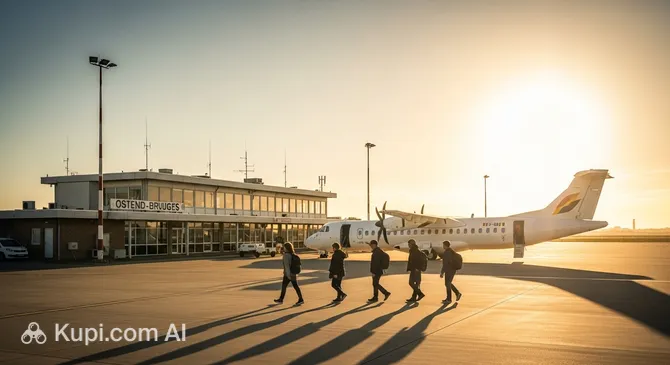
Ostend-Bruges International Airport. Source: Kupi.com Binoculars

Ostend-Bruges International Airport (OST) is an aerial gateway that elegantly connects two of Belgium's treasures: the historic charm of Bruges and the refreshing breezes of the North Sea in the resort city of Ostend. Located in immediate proximity to the coast, it serves as a convenient starting point for travellers wishing to explore medieval streets, picturesque canals, and Belgian beaches. Although the airport is not among the giants, its compact size and thoughtful infrastructure make the beginning and end of a journey as comfortable as possible.

IATA Code OST
ICAO Code EBOS
City Ostend
Distance to Centre approx. 25 km to Bruges
Status International
Annual Passengers 386,387 (2023)
Popular Airlines TUI fly Belgium, Blue Islands, Egyptair
Schedule Online Board "Ostend-Bruges International Airport"

Ostend-Bruges Airport has its own unique features. It is an important centre not only for passenger travel but also for cargo transport, highlighting its economic significance for the region. Passengers appreciate it for the absence of the hustle and bustle typical of major aviation hubs and for its swift check-in process. The majority of passenger flights consist of seasonal and charter flights to popular resorts, operated primarily by the airline TUI fly Belgium. Furthermore, the airport is actively used for private and business aviation, and plays a vital role as a hub for humanitarian missions.

Contact Information

For the most accurate and up-to-date information regarding flight schedules, baggage regulations, and other services, it is recommended to contact the airport directly. Below are the main contact details for Ostend-Bruges International Airport.

  • Official Website: www.ostendbruges-airport.com
  • Information Desk Telephone: +32 (0)59 551 211
  • Address: Nieuwpoortsesteenweg 887, 8400 Ostend, Belgium
  • Email for General Enquiries: info@ostendbruges-airport.com
  • Social Media: Follow the latest news and updates on the airport's official social media pages.
  • Lost & Found Information: If your luggage has been lost or damaged, you should contact the baggage tracing service operated by Aviapartner. Telephone: +32 59 551 581; Email: ost.lostandfound@aviapartner.aero.
  • Passenger Support Contacts: For general questions and assistance, you may contact the main airport information desk number.

How to Get to the Airport

Ostend-Bruges International Airport (OST), despite its name, is not located in Bruges itself, but in the city of Ostend, approximately 30-35 kilometres from the historic centre. You can reach the air gateway from the pearl of Belgium in several ways, each offering its own advantages depending on your budget, time, and preferences.

Public Transport is the most economical option. The route consists of two parts: first, you need to take a train from the central station in Bruges to Ostend station. The journey takes just 15-20 minutes. From Ostend station, bus No. 6 operated by De Lijn runs to the airport. The entire journey, including the transfer, will take about 45-60 minutes. This is an excellent choice for travellers with light luggage looking to save money.

Taxi or Pre-booked Transfer is the fastest and most comfortable method. A car journey directly from your hotel in Bruges to the airport terminal will take about 25-35 minutes depending on traffic conditions. The cost of a taxi will be significantly higher than public transport, estimated at around 50-70 Euros. This option is ideal for those travelling with a large amount of luggage, with family, or for those who simply value comfort and wish to avoid transfers.

Car Rental provides maximum freedom and flexibility. You can rent a car at one of the numerous locations in Bruges and drive comfortably to the airport via the E40 motorway. This method is particularly convenient if you plan to explore other cities in Flanders. Ostend-Bruges Airport offers both short-term and long-term parking facilities where you can leave your vehicle during your absence.

Terminals and Map

Ostend-Bruges International Airport (OST) is distinguished by a simple and clear structure, making it particularly convenient for travellers. The airport operates one passenger terminal, which services all flights—both departures and arrivals. Thanks to its compact dimensions and logical layout, navigating the building presents no difficulties.

The terminal layout is intuitive. The ground floor houses the check-in counters, the arrival area with baggage reclaim belts and customs control, as well as a general hall with airline and travel agency representatives. After checking in, passengers proceed to the first floor, where the security screening area is located. Immediately after this, access opens to the boarding gates and a small waiting lounge with shops and cafes.

Due to the small size of the airport, completing all pre-flight formalities usually takes significantly less time than in major aviation hubs. Nevertheless, it is recommended to arrive at the airport well in advance—at least 2 hours before your flight's departure. This will allow you to check in, drop off luggage, and pass through security control without haste, especially during peak hours or the height of the tourist season.

Since there is only one terminal, passengers do not need to worry about transferring between buildings or using shuttles. All functional zones—from check-in counters to gates—are within walking distance of each other. Clear signage in multiple languages will help you orient yourself easily and quickly find the sector you need, whether it be the departure zone, arrival hall, or information desk.

History of the Airport

The history of Ostend-Bruges International Airport (OST) dates back to the eve of the Second World War. Its construction was initiated by the Belgian authorities in 1938 near the city of Ostend, in the area of the village of Stene. However, with the outbreak of war, after 1940, the unfinished airfield was seized by German forces, who completed the construction and used it for Luftwaffe military purposes, valuing its strategic coastal location.

After the war ended, the airport began a new, peaceful chapter of its history. In 1946, it came under the management of the authorities of Belgium and was opened to civil aviation. In the post-war decades, it transformed into an important gateway for British tourists who flocked to the resorts of the Belgian coast. This tourism boom stimulated the first major expansion: the runway was extended, and the first passenger terminals were erected.

In the 1970s, the airport found a new avenue for growth by actively developing air cargo transport. Its proximity to the seaport and a developed transport network made it attractive for logistics companies. The next round of modernisation began in 1992 with the transfer of the airport from state ownership to private management. This allowed for the construction of a modern passenger terminal in the mid-90s, which is still in use today.

A turning point in its recent history was the official renaming to Ostend-Bruges International Airport in 2003. This was not merely a change of signage, but a strategic decision to firmly link the air harbour with the world-famous city of Bruges, located just 25 km away. Such a marketing move attracted budget airlines and new tourists from all over the world.

Today, Ostend-Bruges Airport has consolidated its status as one of Europe's leading cargo hubs. It is renowned for its specialisation in transporting non-standard and valuable cargo, from racing cars to thoroughbred horses. Although passenger traffic is lower than that of Brussels, the airport has successfully occupied its niche, servicing charter and seasonal flights. It remains a key element of the transport infrastructure and economy of its region.

Services and Amenities

Ostend-Bruges International Airport (OST) is a modern and compact airport offering passengers all necessary services for a comfortable start or end to their journey. Despite its small size, the terminal is well-equipped and thoughtfully designed, allowing travellers to avoid the long queues and commotion typical of large aviation hubs.

Before departure or after arrival, you can have a meal at the restaurant located on the first floor, which offers a view of the runway. Snacks, hot dishes, and beverages are served here. In the departure zone, there is also a shop where you can purchase souvenirs, press, perfumes, and other goods. It is an excellent place for last-minute gift shopping.

Free Wi-Fi is available throughout the terminal, allowing you to stay connected. Special stations are provided for charging electronic devices. If you value enhanced comfort, the airport offers VIP Lounge services, where you can wait for your flight in a tranquil atmosphere, work, or simply relax. For business travellers, modern conference rooms and a business centre are available.

For the convenience of passengers, ATMs are installed in the airport. Currency exchange points may not always be available, so it is recommended to arrange for cash exchange in advance. In case of necessity, first aid is available at the airport.

The airport is fully adapted to service passengers with reduced mobility. Special assistance is provided for boarding, disembarking, and moving through the terminal. To receive this service, it is recommended to notify the airline at least 48 hours before departure. Families with small children can make use of baby changing rooms located in various parts of the terminal.

Although there is no hotel directly on the airport grounds, in the immediate vicinity and in the city of Ostend itself—just a few minutes' drive away—you will find numerous accommodation options, from cosy guest houses to large chain hotels to suit any taste and budget.

Where to Eat

Ostend-Bruges International Airport (OST) is a compact regional airport, so the selection of dining establishments is proportionate. Nevertheless, passengers can comfortably have a snack or a full meal before departure without leaving the terminal building.

The main place to eat is the Belair Restaurant-Brasserie. It is located in the main hall of the airport, in the public area (landside), so it can be visited by both departing passengers and those seeing them off. It offers a pleasant view of the runway. The restaurant's opening hours are usually aligned with the flight schedule, but for late or early departures, it is recommended to check the current information on the airport website.

The establishment's menu offers a good selection for various preferences. For a quick snack, fresh sandwiches, pastries, salads, and hot beverages are perfect. If you have time for a full meal, consider classic Belgian dishes. This is a wonderful opportunity to try famous fries, hearty snacks, or Belgian waffles before departure. The price range is average, similar to most European airports.

Regarding special dietary needs, such as vegetarian, vegan, or gluten-free dishes, the selection may be limited. Usually, salads or other light snacks can be found on the menu, but passengers with strict dietary restrictions are advised to check the availability of suitable options in advance or carry a small snack with them. For those looking for food outside of operating hours, vending machines with snacks and beverages are also installed in the terminal.

Tips for Travellers

Travelling through Ostend-Bruges Airport is generally a calm and predictable experience, as it is significantly smaller than Belgium's major hubs. Nevertheless, to avoid any surprises, arrive at the airport in good time. For international flights, it is recommended to arrive 2-3 hours before departure, and for flights within the Schengen area—1.5-2 hours. This time is sufficient to complete all formalities without rushing, even if you are travelling with luggage.

To save time at check-in, use the online check-in on your airline's website. This will allow you to proceed directly to baggage drop or, if you are travelling light, to the security checkpoint. Prepare in advance when passing through security control: liquids up to 100 ml must be packed in a transparent bag, and laptops and other large electronics must be removed from your bag. Thanks to the airport's compact size, queues here are usually shorter than at large aviation hubs.

Choosing a seat on the plane depends on your preferences. If you enjoy admiring views during takeoff and landing, choose a window seat. If you value freedom of movement and the ability to stretch your legs, an aisle seat will suit you better. For the most comfortable options, you can study the aircraft layout on specialised websites in advance to avoid ending up near the lavatories or in a seat with limited space.

Pay close attention to hand luggage regulations. Besides the standard restriction on liquids (no more than 1 litre in total, in containers up to 100 ml each), ensure there are no prohibited items in your bag: sharp objects, flammable substances, and other dangerous goods. Definitely check the permissible dimensions and weight of hand luggage on the airline's website—requirements may vary.

Ostend-Bruges Airport is not a major transfer hub, so transit passengers are rare here. If you do have a transfer planned, clarify at check-in whether you will need to collect and re-check your luggage. Thanks to the small size of the terminal, moving between gates will not take much time.

Customs control for those arriving from non-Schengen countries follows standard procedures. Have your passport and boarding pass ready. If you are importing goods subject to declaration, proceed through the "Red Channel". For travellers within the Schengen area, passport control is usually absent, but random customs checks are possible.

To save money, consider reaching the airport by public transport or book parking online in advance if travelling by car. Bring an empty water bottle with you, which can be filled after passing security screening—this will help avoid spending on expensive beverages. Time savings are achieved through online check-in and travelling with hand luggage only.

In the event of a flight delay, first contact your airline representative for the latest information. Be aware of your rights: depending on the length of the delay and the flight distance, under EU laws you may be entitled to beverages, meals, and even compensation. The airport has cafes and free Wi-Fi to help pass the time while waiting for departure.
Reached the end of the page?

That means the route is fully explored