Support

Stansted Airport

About the Airport

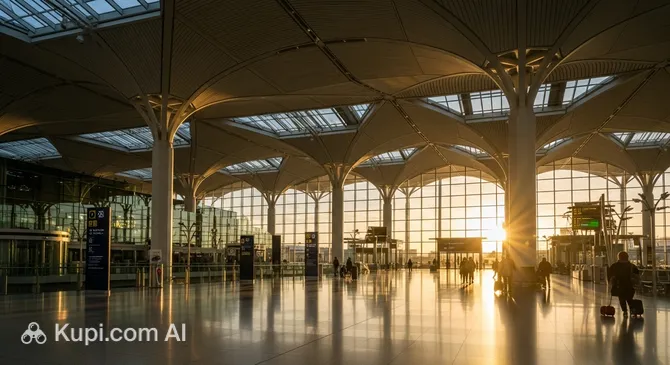
Stansted Airport. Source: Kupi.com Binoculars

Stansted Airport (STN) is not just a transport hub, but a true gateway to London for savvy travellers who value a combination of price and quality. Located in the picturesque county of Essex, it is renowned for its unique "floating" roof designed by the famous architect Norman Foster, which fills the terminal with natural light and a sense of spaciousness. It serves as a major base for Europe's largest low-cost carriers, with hundreds of flights departing daily at the most competitive rates.

IATA Code STN
ICAO Code EGSS
City London
Distance to Centre ~64 km
Status International
Passengers per Year ~28-29 million
Schedule Scheduled and charter flights

Features and Advantages of the Airport:

Stansted stands out favourably from other London airports due to its compactness and clear navigation: there is only one terminal here, which significantly reduces the risk of getting lost. The main advantage is the high concentration of budget airlines, making it an ideal starting point for affordable travel across Europe.

You can reach the city via the high-speed Stansted Express train, which will transport you to Liverpool Street Station in less than an hour, or by more budget-friendly buses. Inside the terminal, passengers will find an excellent duty-free shopping area and numerous cafes where one can comfortably pass the time before a flight.

Contact Information

Below you will find essential contact information for Stansted Airport (STN) to help you plan your trip and resolve any potential queries.

  • Official Website: The most complete and up-to-date information can always be found on the airport's official website: www.stanstedairport.com.
  • Information Service Phone: For general enquiries, you may call +44 808 169 7031.
  • Airport Address: Bassingbourn Road, Stansted, Essex, CM24 1QW, United Kingdom.
  • Email: The airport does not provide a direct email address for general enquiries. For communication, it is recommended to use the special contact forms available on the official website in the "Contact Us" section.
  • Social Media: Operational updates and answers to questions can be obtained on the official airport pages on X (formerly Twitter) and Facebook.
  • Lost Luggage Information: If you have lost items within the airport premises (excluding on board the aircraft), you should fill out a form on the lost property service website. If items were lost on the plane, you must contact your airline directly.
  • Passenger Support Contacts: For most questions related to airport services, please use the phone number listed above or the feedback forms on the website.

How to Get to the Airport

Stansted Airport (STN), located approximately 68 km northeast of central London, is one of the busiest in the United Kingdom and a key hub for many budget airlines. Thanks to a developed transport network, it can be reached in several ways, each having its own advantages depending on your budget, time, and convenience. Stansted is just one of the capital's air gateways, alongside airports such as Heathrow, Gatwick, Luton, and London City.

The fastest method is the Stansted Express train. It departs from Liverpool Street Station in central London every 15-30 minutes and delivers passengers directly to the airport terminal. The journey time is about 47 minutes. This is the most predictable and comfortable option, as it does not depend on road traffic. It is recommended to buy tickets online in advance — this way they will cost less than at the station ticket office on the day of departure.

The most budget-friendly option is express buses, such as National Express or Airport Bus Express. They operate around the clock from various points in London, including Victoria, Paddington, and Liverpool Street stations. The trip takes significantly longer, from 90 to 120 minutes, and depends heavily on traffic conditions. Despite this, the low cost makes buses a very popular choice among tourists, especially if you are travelling light and are not in a great hurry.

There is no direct London Underground line to Stansted, but you can use the Tube for a connection. A convenient route: take the Victoria line to Tottenham Hale station, where you can transfer to the Stansted Express train, which will slightly reduce travel time compared to travelling from Liverpool Street. Another option is to take the Tube to one of the bus stops in the city centre and continue the journey by express bus.

For maximum convenience, especially if you are travelling with family, a large amount of luggage, or at night, you can book a taxi or private transfer. This is the most expensive method, but it ensures "door-to-door" comfort. It is recommended to book a car in advance through online services, as this is usually cheaper than taking a famous black cab by the meter.

If you prefer to travel by car, the airport is easily accessible via the M11 motorway. Various parking options are available at Stansted: from short-stay, located next to the terminal, to more budget-friendly long-stay car parks, from which free shuttles run to the terminal. Booking a parking space online and in advance almost always guarantees a better price.

Terminals and Map

Stansted Airport is distinguished by a well-thought-out and relatively simple structure, consisting of one main passenger terminal. This single large building serves all flights — both departures and arrivals, which significantly simplifies navigation for travellers.

A key feature of the airport is its satellite system. Although there is only one main building, the boarding gates are located in three separate satellite buildings. After passing security control, passengers enter a spacious departure area with shops and restaurants. From here, a free and fast automated transit train (Stansted Airport Transit System) delivers them to the required gate. Therefore, it is important to carefully watch your gate number on the screens to understand which of the three satellites you need to travel to.

The terminal layout is logical and clear. Check-in counters and the arrivals area are located on the ground floor. After checking in, passengers proceed to the upper level for pre-flight security screening. The arrivals area includes passport control, baggage reclaim, and customs, after which passengers exit into the general hall.

It is recommended to allow sufficient time for all formalities. During peak hours, check-in and security control can take about 30-45 minutes. The train ride to the satellite takes only 3-4 minutes, but it is worth adding another 10-15 minutes for waiting for transport and walking to the gate itself. In general, we advise arriving at Stansted at least 2.5–3 hours before departure to go through all procedures without haste and enjoy time in the departure lounge.

Airport History

The history of Stansted Airport is a fascinating journey from a military airfield to one of Europe's busiest transport hubs. Its story began at the height of World War II, in 1943, when it was built as a base for the Royal Air Force and the US Air Force under the name RAF Stansted Mountfitchet. Bombers took off from this airfield to carry out missions over Europe. After the war, the facility was transferred to civil aviation and was used for a long time mainly for charter and cargo flights.

A turning point in the airport's fate came in the 1980s when the UK government decided on the need to develop Stansted as London's third main airport to relieve Heathrow and Gatwick. This marked the beginning of a massive reconstruction project, culminating in the opening of a new terminal in 1991. This building, designed by the world-renowned architect Norman Foster, became a true icon of architecture. Its innovative design with a "floating" roof supported by stylised "trees" created an incredibly bright and spacious interior, setting a new standard for airport design worldwide.

The real surge in Stansted's popularity occurred in the late 1990s and early 2000s with the arrival and rapid growth of budget airlines, primarily Ryanair. The airport became their key base, turning it into the main gateway for low-cost travel from the UK to Europe and back. This symbiosis defined the modern look and specialisation of Stansted, which today serves tens of millions of passengers a year, offering flights to hundreds of destinations.

In subsequent years, the airport continued to develop: in 2008, one of the satellite buildings was renovated and expanded to improve passenger service. In 2013, the airport came under the management of Manchester Airports Group (MAG), which launched a new transformation programme aimed at further modernising infrastructure and improving service quality. Thus, Stansted has transformed from a military facility into a symbol of the modern aviation industry and an architectural masterpiece.

Services and Amenities

Stansted Airport (STN) offers passengers a full range of services for a comfortable journey. The terminal features a wide selection of restaurants, cafes, and dining outlets, where you can have a quick snack or a full dinner. Numerous shops, including a large Duty Free, clothing boutiques, accessories, and bookshops, allow you to spend time usefully while waiting for your flight.

For those who value privacy and comfort, the airport has VIP lounges, access to which can be booked in advance. Guests in the lounges are offered complimentary beverages, snacks, fresh newspapers, and a calm atmosphere. Free Wi-Fi is available throughout the terminal, and numerous charging stations for gadgets are installed in the waiting areas near the boarding gates.

Financial matters can be easily resolved at the airport thanks to the presence of ATMs and currency exchange points. In case of feeling unwell, passengers can visit the medical centre, which is ready to provide first aid. For business travellers, conference rooms and business centres are provided where one can work or hold a meeting.

Stansted cares for all categories of passengers. Special baby care rooms are equipped for travellers with children. Passengers with reduced mobility can count on comprehensive assistance: from special parking to accompaniment throughout the airport territory; it is recommended to book this service in advance.

If you have a long layover or an early flight, you can stay at one of several hotels located in the immediate vicinity of the terminal. Some of them are within walking distance, while convenient shuttle buses run regularly to others.

Where to Eat

Stansted Airport offers a wide choice of establishments for every taste and budget, allowing you to comfortably have a snack or a full lunch while waiting for your flight. Dining points are located both in the public area before security control (landside) and in the departure lounge after it (airside).

Before Security Control (Landside)

The arrivals and check-in area mainly hosts cafes and fast-food establishments, ideal for those meeting passengers or arriving at the airport early. Here you will find popular chains such as Burger King, Costa Coffee, and Starbucks. This is an excellent option to grab a coffee or quickly have a sandwich.

After Security Control (Airside)

The main variety of restaurants and dining areas awaits passengers in the departure lounge. Here the choice is significantly wider:

  • For a quick snack: If time is limited, look out for Pret A Manger with its famous sandwiches and salads, Leon, offering healthy fast food, or Itsu for fans of Japanese cuisine.
  • For a full meal: To enjoy a British atmosphere, visit The Windmill, where you can order classic dishes such as fish and chips or a full English breakfast. Restaurants like Giraffe World Kitchen or Terracotta Italian Kitchen offer a diverse international menu in a more relaxed setting.

Prices and Dietary Options

The price range in Stansted Airport establishments is generally higher than the city average, which is typical for major transport hubs. Most restaurants and cafes offer options for passengers with special dietary needs: vegetarian, vegan, and gluten-free dishes are usually marked on the menu. Halal options may also be available at select outlets; it is recommended to check details with the staff. Most establishments operate from early morning until late evening, adjusting to the flight schedule.

Travel Tips

Stansted Airport is one of the busiest in London, especially due to the large number of flights by budget airlines. To avoid rushing, we recommend arriving at the airport at least 3 hours before international flights and 2–2.5 hours before domestic or European flights. Complete online check-in in advance and save your boarding pass on your phone — this will save you time at the counters.

Queues for security control at Stansted can be long, especially during peak times. Prepare in advance: pack all liquids (in containers up to 100 ml) in a transparent bag and be ready to take out laptops and other large electronics from your hand luggage. For those who value time, the airport offers a paid Fast Track service, which allows you to pass screening through a separate, faster lane.

Choosing a seat on the plane can improve your journey. Note that most airlines flying from Stansted charge an additional fee for selecting a specific seat. Seats in the front of the cabin allow for a quicker exit after landing, while seats near emergency exits usually offer more legroom. You can check the aircraft layout and choose the best seat on specialised websites.

Carefully check your airline's hand luggage rules, especially regarding size and weight. Budget carriers are very strict about compliance with standards, and excess weight can be expensive. Standard restrictions on carrying liquids (no more than 1 litre in total, in containers up to 100 ml) and the ban on sharp objects apply everywhere.

If you have a connection at Stansted, be sure to clarify whether your luggage is checked through to the final destination. If not, you will need to pass United Kingdom passport control, collect your suitcases, and then go through check-in and screening again. You should allow a significant amount of time for all these procedures.

Upon arrival from outside the country, customs control awaits you. If you have no goods to declare, use the "green" channel. If you are carrying goods exceeding established limits (for example, alcohol or tobacco products), you must pass through the "red" channel. We recommend familiarising yourself with current customs regulations in advance to avoid misunderstandings.

There are several ways to save money at the airport. Tickets for the Stansted Express train or buses to the city centre are almost always cheaper when bought online in advance. Bring an empty water bottle to fill it after the security zone and avoid spending on drinks. Food prices at the airport are high, so a small snack from home will be very handy.

In case of a flight delay or cancellation, do not panic. First, contact an airline representative for up-to-date information. Depending on the length of the delay, you may be provided with vouchers for food and drinks, and for long waits — hotel accommodation. Travel insurance covering such risks will be your reliable helper in an unforeseen situation.
Reached the end of the page?

That means the route is fully explored