Support

London City Airport

About the Airport

Located right in the heart of business London, London City Airport offers a unique experience for travellers. Unlike giant aviation hubs, this compact airport is situated within the famous Royal Docks, allowing passengers to enjoy impressive views of the city during take-off and landing. Designed for maximum efficiency, it is the ideal choice for business trips and short getaways to Europe. Its proximity to the financial centres of Canary Wharf and the City makes it the gateway to the UK capital for those who value their time.
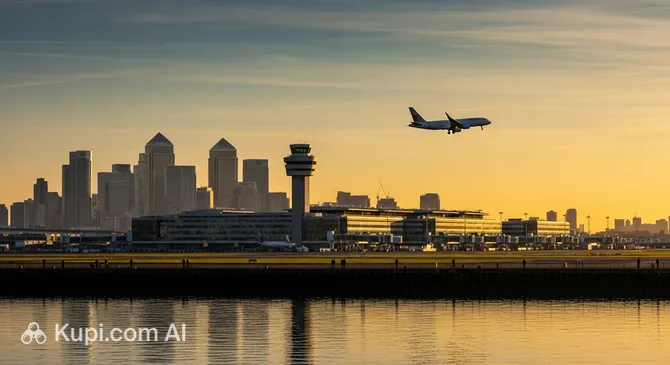
London City Airport. Source: Kupi.com Binoculars
IATA Code LCY
ICAO Code EGLC
City London
Distance to centre 9.5 km
Status International
Passengers per year approx. 3.4 million (2023)
Popular Airlines British Airways, KLM, Lufthansa
Schedule "London City" online flight board

The main advantage of London City is its unrivalled service speed. Due to its compact size and smart logistics, passing through all pre-flight formalities takes significantly less time here than at other capital airports. The airport is directly integrated with the Docklands Light Railway (DLR) station, allowing you to reach key points in the city without unnecessary transfers. A unique feature is its operation — due to dense urban buildings, aircraft approach for landing at a steeper angle, which requires special certification for both aircraft and pilots.

Contact Information

For your convenience, we have compiled the main contact information for London City Airport (LCY). We recommend checking the official website for the most up-to-date data before your trip.

  • Official Website: www.londoncityairport.com. Here you will find the latest information on flights, services, and airport regulations.
  • Information Service Phone: +44 (0)20 7646 0000. General information can be obtained at this number.
  • Airport Address: Hartmann Road, London, E16 2PX, United Kingdom.
  • Email: The airport does not provide a public email address for general inquiries. It is recommended to use the contact form on the official website for communication.
  • Social Media: Follow news and updates on the airport's official pages on X (formerly Twitter) – @LondonCityAir and Instagram – @londoncityair.
  • Lost Property Information: If you lost items on the plane, please contact your airline. If items were lost within the terminal, use the special search form on the airport website in the "Lost Property" section.
  • Passenger Support Service: For questions related to special needs or assistance at the airport, it is best to contact your airline directly in advance. For general questions, the main airport phone number can be used.

How to Get to the Airport

London City Airport (LCY) boasts a unique location right within the city limits, in close proximity to the financial centres of Canary Wharf and the City of London. Such a location makes it one of the most convenient options for those who want to quickly be in the heart of the capital. There are several ways to get to the airport, each with its own advantages.

Public Transport

The fastest, most reliable, and popular way to get to the terminal is the Docklands Light Railway (DLR). The DLR station is integrated directly into the airport building, so you won't have to walk far with luggage. Trains depart every 8-15 minutes. The journey from Bank station in central London will take about 22 minutes, and from the major interchange hub Canning Town (Jubilee tube line) — just 7 minutes. This ensures excellent connection with the entire transport system of the United Kingdom capital. Standard Oyster cards and contactless payments are accepted for fare payment.

Local buses also serve the airport. Routes №473 and №474 connect it with the Stratford, Silvertown, Canning Town, and North Woolwich areas. This is a more budget-friendly, but also slower option, suitable for short-distance trips.

Taxi and Transfer

A taxi ride offers maximum comfort, especially if you are travelling with a lot of luggage or in a group. Famous black cabs can always be found outside the terminal exit. Travel time to the city centre will be from 30 to 60 minutes, depending on traffic. The cost will be significantly higher than public transport. Alternatively, you can consider ride-hailing apps (e.g., Uber, Bolt) or book a private transfer in advance — this is often slightly cheaper.

By Car and Parking

If you plan to travel by your own or rented car, please note that traffic in London can be heavy, and a fee (Congestion Charge) applies for entering the central part. The airport has convenient access from major highways such as the A13 and A406. Both short-term parking (for quick drop-off and pick-up of passengers) and long-term parking are available on the airport territory. It is strongly recommended to book a parking space online in advance, as this allows for significant savings, especially for long stays.

Terminals and Map

London City Airport (LCY) is distinguished by its unique compactness and efficiency, which is its key advantage. Unlike giant aviation hubs, it consists of one passenger terminal that serves both domestic and international flights. The entire airport structure is subordinated to one goal — to speed up and simplify the journey for the passenger as much as possible.

The terminal layout is extremely logical and intuitive. All zones are under one roof and in close proximity to each other. Check-in counters are located at the entrance, followed by the security checkpoint. Immediately after control, you enter the general departure lounge with shops, cafes, and boarding gates. The arrival zone with passport control and baggage reclaim belts is also located in the same building. It is practically impossible to get lost here.

Since there is only one terminal at the airport, passengers do not need to worry about transfers or moving on shuttles. This is one of the main advantages of London City, which is especially appreciated by transit passengers and those who are short on time. All boarding gates are located in one waiting hall, and moving from one gate to another takes no more than a few minutes.

A key feature and pride of the airport is the record short time for passing all formalities. Thanks to smart logistics and a focus on efficiency, the path from the terminal entrance to the boarding gate often takes no more than 20-30 minutes. Flight check-in and security screening are organised to minimise queues and make the process as fast as possible.

For comfortable navigation, simply follow the standard signs "Departures" and "Arrivals". Do not allocate much time for moving inside the terminal — its compact dimensions allow you to reach any desired point in a matter of minutes. This is an ideal choice for those who value their time and prefer a calm, predictable environment.

Airport History

The history of London City Airport (LCY) is a story of bold engineering decisions and adaptation to the needs of one of the world's largest financial centres. The idea of creating an airport in the very heart of the decaying London docks arose in the early 1980s. Construction began in 1986 on the site of the former Royal Docks, and in November 1987, the airport was officially opened by Queen Elizabeth II, which became a symbol of the regeneration of this area.

Initially, London City was designed as an airport for Short Take-Off and Landing (STOL) aircraft, such as the de Havilland Canada Dash 7. This imposed restrictions on flight range. A key moment in development was the reconstruction of 1992, when the runway was extended. This allowed for larger jet aircraft, such as the BAe 146, to be accommodated and significantly expanded the flight geography, connecting London City with key European business centres.

One of the most iconic achievements in the airport's history was the launch in 2009 of a transatlantic flight by British Airways to New York (JFK) on a specially equipped Airbus A318 aircraft. This flight, named "Club World London City," became a unique offering for business travellers. Due to the short runway, on the way to the USA, the plane made a technical stop in Shannon (Ireland) for refuelling, during which passengers went through US customs and immigration control, allowing them to save time upon arrival in New York. This flight was a true symbol of the airport's status.

In recent years, London City has undergone a large-scale modernisation programme. One of the most innovative introductions was the implementation in 2021 of the first digital air traffic control tower in the United Kingdom. Air traffic control is now carried out remotely from a centre 130 km away from the airport using high-resolution cameras and the latest technologies. This project confirmed London City's reputation as one of the country's most advanced airports.

Interesting fact: the airport is famous for its non-standard and rather steep approach angle — 5.5 degrees (instead of the standard 3 degrees). This is due to its location amidst high-rise buildings. Such a manoeuvre requires special training for pilots and certification for aircraft. Today, London City remains a vital transport hub, valued for its speed, efficiency, and unrivalled location.

Services and Amenities

London City Airport (LCY), despite its compact size, offers passengers everything necessary for a comfortable wait for their flight. Here you will find several cosy cafes and restaurants where you can have a quick sandwich and coffee or a full lunch before departure. Shops are located in the departure zone, including Duty Free with an assortment of perfumes, confectionery, and souvenirs, as well as newsstands and travel accessory points.

For those who need to stay connected, free Wi-Fi is available throughout the terminal. Numerous charging stations for mobile devices will allow you not to worry about the battery level of your smartphone or laptop. Although there are no large business centres in the terminal itself, its proximity to the business districts of Canary Wharf and the City of London means that many nearby hotels offer modern conference rooms and business services.

Passengers wishing to relax in a quieter environment can use the premium lounges, offering beverages, snacks, and a secluded space. The airport is fully equipped to serve passengers with reduced mobility: special ramps, lifts, and staff assistance are provided, which is recommended to be booked in advance through the airline. For travellers with small children, mother and child rooms with changing tables are provided.

Currency exchange points and ATMs operate in the terminal, making it easy to solve financial matters upon arrival or before departure. In case of necessity, passengers can seek first aid at the medical point. Thanks to the airport's convenient location, several hotels of various price categories are located in the immediate vicinity, which can be reached on foot or by taxi in a few minutes, making it ideal for early departures or late arrivals.

Where to Eat

London City Airport (LCY), despite its compact dimensions, offers travellers high-quality and diverse dining options, primarily focused on quick and comfortable service. Most establishments are located in the departure zone after passing security control (airside), allowing you to have a calm snack or a full meal while waiting for your flight.

For those limited on time, cafes such as Pret A Manger are the ideal choice. Here you can find fresh sandwiches, salads, soups, pastries, and excellent coffee. This establishment is famous for its wide range for vegetarians and vegans, and also offers gluten-free options. It is a great option for a healthy and quick snack. Prices here, as generally in the airport, are higher than in the city: be prepared to pay about £10-£15 for coffee and a sandwich.

If you have time for a more substantial meal, pay attention to the restaurants and bars. For example, The City Bar & Grill offers a menu with classic British and European dishes. Here you can order a traditional English breakfast, fish and chips, or simply relax with a refreshing drink. This is a wonderful opportunity to try something local before departing from London. For a full lunch with a beverage, it is worth budgeting from £25-£30 per person.

All establishments operate in accordance with the flight schedule, opening early in the morning and closing after the departure of the last plane. Since the airport consists of one terminal, finding the desired cafe or restaurant will not be difficult — they are all within walking distance of each other in the main departure hall. If you only need a quick coffee before check-in, a small cafe is usually available in the public zone (landside) as well.

Travel Tips

To ensure your journey through London City Airport goes as smoothly as possible, take advantage of our tips. This airport is valued for its compactness and efficiency, but knowing some nuances will help save time and nerves.

Arrival Time and Check-in: Despite London City being known for its service speed, it is better not to risk it. Arrive at the airport at least 90 minutes before domestic flights and 2 hours before international ones. Check-in and security procedures here are very well organised, but an extra time buffer never hurts. Whenever possible, always check in for your flight online to head straight to the baggage drop counter or security.

Security Screening and Seat Selection: The security screening process here is generally faster than at major airports. However, hand luggage rules are standard: liquids in containers up to 100 ml must be packed in a transparent bag. One of the main life hacks for this airport is seat selection on the plane. During take-off and landing, some of the best views of London open up. Try to occupy a window seat for unforgettable photos of the Thames, Tower Bridge, and the Canary Wharf business district.

Transfers and Customs Control: London City is primarily an airport for direct flights, not a major transit hub. If you do have a transfer scheduled, its small size will be your main advantage — moving between gates will take minimum time. Customs control upon arrival in the United Kingdom also usually passes quickly. Simply keep your passport ready and follow the signs for citizens of your country.

Saving Time and Money: The fastest and often most profitable way to get to the airport is the DLR (Docklands Light Railway) light metro, the station of which is integrated into the terminal building. To save on food and drinks, which are quite expensive at the airport, you can have a snack beforehand or bring an empty water bottle with you and fill it after passing security at special fountains.

What to Do in Case of Flight Delay: In case of a flight delay or cancellation, first of all, contact your airline representative for information and instructions. The airport has several cafes and shops, as well as free Wi-Fi, to pass the waiting time. Be sure to find out about your rights as a passenger — for long delays, airlines are obliged to provide food and drinks.

Reached the end of the page?

That means the route is fully explored