Support

Exeter International Airport

About the Airport

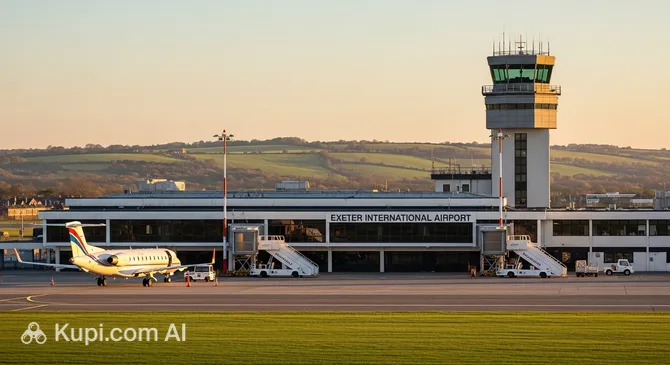
Exeter International Airport. Source: Kupi.com Binoculars

Exeter International Airport is a cosy gateway to the picturesque English counties of Devon and Cornwall. Unlike the vast and bustling London hubs, this airport offers travellers an atmosphere of tranquillity and provincial charm, where all processes are handled quickly and without fuss. Located on the site of a historic Royal Air Force base, today it connects the South West of England with sunny European resorts and key cities across the UK.

IATA Code EXT
ICAO Code EGTE
City Exeter
Distance to Centre ~10 km
Status International
Passengers per Year About 450,000
Schedule Available on the official website

Airport Features and Benefits:

  • Compactness and Speed: Thanks to the small size of the terminal, the journey from the entrance to the boarding gate takes minimal time. Queues for security checks are rare here, allowing you to arrive at the airport a little later than usual.
  • Business Lounge: For those who value comfort, the Executive Lounge is available, featuring panoramic views of the runway, complimentary Wi-Fi, and light snacks, where you can relax before your flight.
  • Convenient Logistics: The airport is located just a few minutes' drive from the M5 motorway, and car parks are within walking distance of the terminal building, eliminating the need for shuttle transfers.
  • Shops and Cafés: Despite its intimate size, everything you need is here: a World Duty Free shop for purchasing gifts and perfumes, as well as a café and lounge area where you can have a bite to eat before your flight.

Contact Information

For your convenience, we have compiled the main contact information for Exeter International Airport (EXT).

  • Official Website: You will always find the most complete and up-to-date information on the airport's official website — www.exeter-airport.co.uk.
  • Information Service Phone: For general inquiries and consultations, you can call +44 1392 367 433.
  • Airport Address: Exeter Airport, Exeter, Devon, EX5 2BD, United Kingdom.
  • Email: The airport prefers communication via contact forms on the official website. This allows your request to be directed straight to the relevant department for a faster response.
  • Social Media: Follow the latest news and updates on the airport's official pages on Facebook and X (formerly Twitter).
  • Lost Luggage Information: If your items were lost on board the aircraft, you should contact your airline directly. If the loss occurred within the terminal building, contact the airport's Lost Property service. Detailed instructions and contacts can be found in the relevant section on the website.
  • Passenger Support Contacts: Most inquiries can be addressed by calling the main phone number. If you require special assistance (for example, for passengers with reduced mobility), it is recommended to notify your airline at least 48 hours before departure.

How to Get to the Airport

You can reach Exeter International Airport (EXT) from the city centre and surrounding areas in several ways, each with its own advantages depending on your budget, time, and preferences. The airport is conveniently located approximately 10 km east of the centre of Exeter, making it easily accessible.

Public Transport: Bus
The most economical way to get to the airport is by bus. The Stagecoach 56 route runs regularly between Exeter Bus Station, Exeter St David's railway station, and the airport. The journey from the city centre usually takes about 25-30 minutes. A one-way ticket typically costs around £3-4, making this an excellent choice for solo travellers and those looking to save money. Although there is no direct train or metro connection to the airport, the bus provides a reliable link to the city's key transport hubs.

Taxi and Private Transfer
For maximum comfort and speed, it is worth choosing a taxi or a pre-booked transfer. A taxi ride from the city centre to the terminal will take just 15-20 minutes in the absence of traffic. The estimated cost of the trip is around £25-35, depending on the time of day and traffic conditions. This is the most convenient option if you have a lot of luggage or are travelling with family, as you get a "door-to-door" service. It is recommended to use official taxis or trusted transfer services, which can be booked online in advance, often at a fixed price.

Car Rental and Parking
If you plan to explore the scenic corners of Devon and Cornwall, renting a car could be the ideal solution. Offices of major international rental companies are represented at Exeter Airport. Having a car gives you complete freedom of movement throughout the United Kingdom. For those arriving at the airport in their own vehicle, both short-term and long-term parking options are provided. It is strongly recommended to book a parking space online in advance — this almost always turns out to be cheaper than paying on-site on the day of departure.

Terminals and Map

Exeter International Airport (EXT) is distinguished by its compactness and convenience for passengers. The airport operates with just one passenger terminal, which serves both domestic and international flights. Such a simple structure makes it ideal for those who dislike the hustle and bustle of major aviation hubs in the United Kingdom and appreciate a quick passage through all pre-flight formalities.

The terminal layout is intuitive. The building has two main levels. On the ground floor, you will find the check-in desks and the arrivals area with baggage reclaim belts. After check-in, passengers proceed to the first floor, where the security checkpoint and the main departure lounge are located. Thanks to clear signage and short distances, navigating the terminal poses no difficulties, even if you are here for the first time. Since there is only one terminal, the issue of transferring between them is irrelevant, which significantly simplifies the journey.

Passing through check-in and security procedures at Exeter Airport generally takes significantly less time than at major airports. On average, it is worth allocating about 30-40 minutes for all formalities. Nevertheless, it is recommended to arrive at the airport 1.5-2 hours before departure, especially during peak seasons (summer and holidays), to avoid rushing and to pass through all control stages calmly.

For a comfortable wait in the departure area after security, there is everything necessary: several shops, including Duty-Free, cafés, and beverage outlets where you can have a snack or drink coffee. The main advice for navigation is simple: follow the signs. The airport's compactness is its main advantage, so you are unlikely to get lost. All key zones — from check-in to the boarding gate — are within walking distance of each other.

Airport History

The history of Exeter International Airport is a fascinating journey from a humble airfield to an important transport hub in South West England. The airport was officially opened on May 31, 1937, and initially functioned as a municipal airfield, serving private and club flights. However, its peaceful life was short-lived, and it soon took on a completely different, far more significant role.

With the outbreak of the Second World War, the airfield was transferred to the Royal Air Force (RAF) and became known as RAF Exeter. It played a key role during the Battle of Britain, serving as an important base for fighter aviation. Squadrons equipped with the famous Spitfire and Hurricane aircraft were based here, defending the southern coast of Great Britain from raids. After the war, in 1947, the airport returned to civil use, retaining the legacy of one of the country's heroic airfields.

The post-war decades became a time of gradual growth and development. New runways were built, and in the 1980s a modern terminal opened, replacing temporary post-war structures. This allowed the airport to accept a larger number of passengers and expand its flight geography to include popular European destinations. In subsequent years, the infrastructure was modernised repeatedly to meet the growing requirements of the aviation industry and passenger comfort.

One of the interesting facts from the airport's history is related to its innovation: even before the war, it was one of the first in the country to install a permanent runway lighting system. Today, Exeter Airport continues to develop, offering both scheduled and charter flights, and remains an important aerial gateway to the picturesque counties of Devon and Cornwall, while preserving the memory of its rich historical past.

Services and Amenities

Exeter International Airport (EXT) offers passengers all the necessary amenities for a comfortable wait for their flight. Despite its compact size, the airport has a well-thought-out infrastructure focused on the needs of travellers.

Inside the terminal, you will find several cafés and beverage outlets where you can have a snack or coffee before your flight. After passing security control, the World Duty Free store is open, offering a wide range of perfumes, cosmetics, confectionery, and souvenirs. For passenger convenience, free Wi-Fi is available throughout the airport, as well as charging stations for electronic devices.

For those who appreciate enhanced comfort, the Executive Lounge is available. Here, guests can relax in a quiet atmosphere, enjoy complimentary snacks and beverages, and make use of business facilities. ATMs and a currency exchange point are installed in the airport, allowing financial matters to be settled right on the spot. First aid is provided to passengers if necessary.

The airport is fully equipped for passengers with reduced mobility: a Special Assistance service is provided (help with moving through the terminal and boarding), and accessible toilets and dedicated parking spaces are available. Families with small children can use the baby changing and care rooms.

Although there are no hotels on the airport territory itself, several hotels are located in the immediate vicinity, which can be quickly reached by taxi. For business travellers, basic business services, such as work zones and internet access, are offered in the Executive Lounge, making the wait for a flight more productive.

Dining

At Exeter International Airport (EXT), travellers will find several options for a snack or a full meal, helping to pass the time comfortably while waiting for a flight. The main dining establishments are conveniently located both before and after security control.

In the area before security (landside), accessible to all visitors, the Landside Cafe operates. This is an ideal place for those seeing off or meeting passengers, as well as for travellers wishing to quickly grab a coffee with a pastry or sandwich before checking in. The assortment here is focused on quick and light snacks.

The main establishment for passengers is located in the departure lounge, after passing security (airside). Here you will find the Airside Cafe Bar, offering a significantly wider selection of dishes. You can have a full lunch or dinner here. The menu usually includes classic British dishes, such as a full English breakfast, fish and chips, burgers, as well as various salads, sandwiches, and soups. For those wishing for a light snack, there are pastries, desserts, and snacks. The venue offers a wide range of hot and cold beverages.

Regarding special dietary needs, vegetarian dishes are usually present on the menu. Passengers requiring vegan, gluten-free, or Halal options are advised to check availability directly with the café staff. The price range at Exeter Airport can be described as average, which is typical for airports. Opening hours are generally synchronised with the flight schedule to serve passengers from the first to the last departure.

Travel Tips

To ensure your journey through Exeter International Airport (EXT) in the United Kingdom goes smoothly, follow these useful tips. This airport is relatively small, making it more convenient compared to major hubs, but proper preparation is always important. It is recommended to arrive at the airport 2-3 hours before international flights and 1.5-2 hours before domestic ones. This will give you enough time to go through all formalities without rushing.

To save time, use online check-in, which is offered by most airlines. This will allow you to head straight to baggage drop or, if you are travelling light, to the security zone. Security procedures here are standard: be prepared to present liquids (in containers no larger than 100 ml, packed in a transparent bag) and large electronic devices separately. By preparing these items in advance, you will significantly speed up the screening process.

When choosing a seat on the plane, be guided by your preferences: window seats offer beautiful views during take-off and landing, while aisle seats provide more legroom and the freedom to stand up easily. Regarding hand luggage, always check the current allowance on your airline's website, as weight and size restrictions may vary. It is prohibited to carry sharp objects, flammable substances, and liquids in containers larger than 100 ml in hand luggage.

Passengers arriving from outside the UK must pass through customs control. Follow the signs for "Goods to declare" (red channel) if you have items to declare, or "Nothing to declare" (green channel) otherwise. If you have a connecting flight in Exeter, check in advance whether you need to collect and re-check your luggage. Ensure you have enough time between flights, especially if you need to go through security again.

To save money, book a taxi or transfer from the airport online in advance — this is often cheaper than taking a car on the spot. You can also bring an empty water bottle and fill it at drinking fountains after passing security. in case of a flight delay, first contact your airline representative for information and instructions. Depending on the length of the delay, you may be provided with vouchers for food or even hotel accommodation. There are cafés and shops in the airport to help pass the waiting time.

Reached the end of the page?

That means the route is fully explored