Support

Manchester Airport

About the Airport

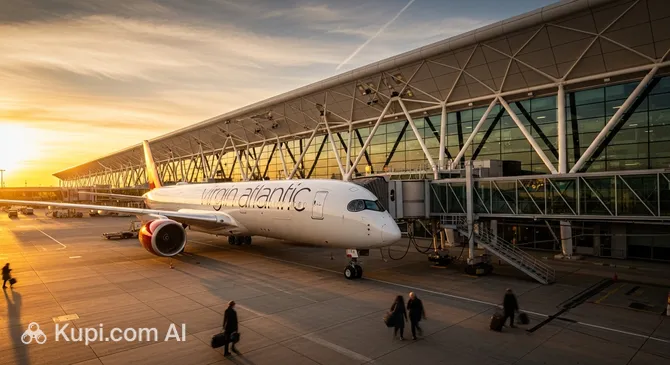
Manchester Airport. Source: Kupi.com Binoculars

Manchester Airport is not merely a transit hub, but the main aerial gateway to the entire North of England, opening the way for travellers to the region's picturesque national parks and dynamic metropolises. Unlike the congested London hubs, a calmer atmosphere prevails here, although the airport confidently holds third place in the UK in terms of scale and significance. It is the ideal starting point for those wishing to see the "real" Britain: from the football stadiums of Manchester to the lakes of the Lake District, which are within easy reach from here.

IATA Code MAN
ICAO Code EGCC
City Manchester
Distance to Centre ~15 km
Status International
Passengers per Year Over 28 million
Schedule Online board on the official website

Features and Advantages of the Airport:

Unique Park for Plane Spotting. Manchester is one of the few major airports in the world that officially welcomes spotters and aviation enthusiasts. At the dedicated Runway Visitor Park, you can not only watch take-offs and landings from an excellent vantage point but also see the legendary supersonic Concorde liner, which is permanently stationed here.

Outstanding Transport Accessibility. The airport is famous for its intermodal hub, "The Station". This is an integrated terminal combining railway platforms, Metrolink tram lines, and bus stops. From here, you can take a train not only to the centre of Manchester (in just 15–20 minutes) but also directly to Liverpool, Leeds, York, and even Scotland, without making unnecessary transfers in the city.

Large-scale Modernisation. Thanks to the recent reconstruction and expansion of Terminal 2, now dubbed the "super-terminal", passengers have gained access to the latest service technologies and spacious lounge zones. This has significantly sped up pre-flight formalities and made waiting for flights as comfortable as possible.

Contact Information

For your convenience, we have compiled the main contact information for Manchester Airport. We recommend checking current data on the official website before your trip.

  • Official Website: The most reliable source of information is www.manchesterairport.co.uk. Here you will find online flight boards, terminal maps, and information regarding parking and services.
  • Helpline Phone: For general enquiries, you can call +44 (0) 808 169 7030. Please note that the call may be chargeable depending on your operator.
  • Airport Address: Manchester Airport, Manchester, M90 1QX, United Kingdom.
  • Email: A direct email address for general enquiries is not provided. To contact specific departments, it is recommended to use the contact forms on the official website.
  • Social Media: The airport actively maintains pages on Facebook, Instagram, and X (formerly Twitter), where you can follow news and ask questions.
  • Lost Luggage Information: If your belongings were lost on the aircraft or during transport, you should contact your airline directly. For items left within the airport premises, there is a dedicated "Lost Property" section on the website.
  • Passenger Support Contacts: Assistance for passengers, including those with reduced mobility, can be requested through your airline in advance or by approaching information desks upon arrival at the airport.

How to Get to the Airport

Getting to Manchester Airport from the city centre or other areas of the United Kingdom is quite simple thanks to an excellently developed transport network. The choice of transport depends on your budget, amount of luggage, and the time available to you. The airport is conveniently linked to the city of Manchester and neighbouring regions, offering options for every preference — from high-speed trains to budget buses.

Train — one of the fastest and most convenient ways to get to the airport. Direct trains depart from Manchester Piccadilly central station every 10–15 minutes. The journey takes only about 20 minutes. The airport railway station, known as "The Station", is located in the very heart of the terminal complex and is connected by covered walkways with travelators to all three terminals. This is the ideal option if you wish to avoid traffic jams and calculate your time precisely.

Metrolink Tram — a wonderful alternative to the train, especially if you are travelling not from the centre but from other areas of Greater Manchester. Trams on the Navy Line run to the airport, making more stops along the way. The journey from the city centre will take about 50–60 minutes, but the ticket price is usually lower than the train. This is a good compromise between price and convenience.

Buses and Intercity Coaches — the most budget-friendly method. Numerous local bus routes, including the 24-hour route No. 43, connect the airport with various parts of the city. Additionally, coaches from national operators such as National Express and Megabus stop at the airport bus station, connecting Manchester with dozens of other cities across the country. This is an excellent choice for economical travellers and those flying on night flights.

Taxi and Private Transfer — the most comfortable, but also the most expensive option. A taxi ride from central Manchester will take 25–45 minutes depending on traffic conditions. You can use the famous black cabs or car booking services via apps. To guarantee a fixed price and avoid surprises, it is recommended to book a private transfer in advance.

By Car and Parking. If you prefer to travel in your own or a rented car, major motorways M56, M60, and M6 lead to the airport. Various types of parking are available at the airport: Short Stay, Long Stay, and Meet & Greet service. To save money, it is strongly recommended to book a parking space online in advance.

Although Manchester Airport is the main transport hub of the region, travellers from neighbouring cities may also consider options such as Liverpool John Lennon Airport or Leeds Bradford Airport, which are within an hour and a half's drive.

Terminals and Map

Manchester Airport (MAN) consists of three terminals — Terminal 1, Terminal 2, and Terminal 3. All of them are united by a common transport hub, "The Station", where the railway station, bus station, and Metrolink tram stops are located. Such a structure allows for easy movement between terminals and convenient access to the airport from the city and other regions.

Covered walkways are provided for navigation between terminals. Terminals 1 and 2 are connected by the moving Skylink travelator, a journey on which takes about 15-20 minutes. Terminals 1 and 3 are within walking distance of each other; the transition between them takes approximately 5-10 minutes. Clear signage is installed everywhere, so getting lost is quite difficult.

Each terminal has its own features:

  • Terminal 1 — historically the largest terminal of the airport. It serves many scheduled and charter flights to European and long-haul destinations. A large number of shops, cafes, and waiting lounges are located here.
  • Terminal 2 — the main international hub, which recently underwent large-scale reconstruction and expansion. It is distinguished by modern design, spacious departure and arrival zones, as well as the latest equipment. It is from here that the majority of flights to Asian countries, the Middle East, and North America depart.
  • Terminal 3 — the most compact of the three. It is mainly used for domestic flights within the UK, as well as for some short European routes. Due to its small size, passing through all pre-flight formalities here usually takes less time.

Regardless of the terminal, arrival zones are located on the lower levels, while departure and check-in zones are on the upper levels. To avoid rushing, it is recommended to arrive at the airport at least 2 hours before departure for European flights and 3 hours for international ones. During peak hours and holiday seasons, security control times may increase, so it is worth allowing extra time.

Main navigation tip: always check in advance which terminal your flight departs from. Airlines may change terminals, so verify the information on your ticket or the official airport website immediately before your trip.

History of the Airport

The history of Manchester Airport is a vivid example of evolution from a modest airfield to one of the key international aviation hubs of the United Kingdom. Officially opened on 25 June 1938, it originally bore the name "Ringway Airport" after the nearest village. The first flights connected the city with Amsterdam and other European destinations, but its peaceful development was interrupted just a year later.

With the outbreak of the Second World War, the airport was requisitioned and renamed RAF Ringway. It became an important base for the Royal Air Force, a centre for paratrooper training, and a site for the assembly and modification of military aircraft, including the famous Avro Lancaster bombers. This period laid the foundation for future large-scale infrastructure, including the construction of new runways.

After the war, the airport returned to civil aviation and began to develop rapidly. In the 1950s, the main runway was significantly lengthened to accommodate jet liners, and in 1962, Queen Elizabeth II opened the first modern terminal, which is still part of Terminal 1 today. This marked a new era for the airport, making it capable of receiving long-haul flights.

Subsequent decades were marked by continuous growth and modernisation. In 1989, a domestic terminal was opened (now Terminal 3), and in 1993 — Terminal 2, which allowed for a significant increase in passenger flow. In the same year, the railway station integrated into the airport complex was opened, making it one of the most convenient in the country in terms of transport accessibility.

A landmark achievement was the construction of a second runway, opened in 2001. Manchester Airport became the first in the United Kingdom outside London to possess two full-length runways, which cemented its status as a major international hub. In recent years, massive reconstruction and expansion of Terminal 2 have been carried out, transforming it into a modern "super-terminal" ready for future challenges.

Services and Facilities

Manchester Airport (MAN) is a large and modern transport hub offering passengers a full range of services for a comfortable wait for their flight. Regardless of the purpose of your trip across the United Kingdom or beyond, you will find everything necessary here.

For those who are hungry or wish to do some shopping, the terminals feature a multitude of restaurants, cafes, and traditional dining venues offering both local and international cuisine. Furthermore, extensive Duty Free zones are at your service with a wide assortment of perfumes, cosmetics, beverages, and souvenirs, as well as shops of famous brands.

Passengers wishing to rest in a calmer environment can utilise the services of business lounges and VIP lounges. They offer comfortable seating, complimentary snacks and drinks, press, and work zones. Free Wi-Fi is available throughout the airport territory, as well as numerous charging stations for electronic devices so that you always remain connected.

Financial matters are easily resolved thanks to the presence of bank branches, ATMs, and currency exchange points. For emergency cases, medical points and pharmacies are provided where qualified assistance can be obtained or necessary medicines purchased.

The airport is well-equipped for travellers with children: there are mother and child rooms with changing tables and play zones where young passengers can spend time happily. Special assistance is provided for passengers with disabilities, including accompaniment, ramps, and adapted restrooms. It is recommended to book this service in advance through the airline.

If you have a long layover or an early departure, several hotels are located right on the airport grounds or within walking distance of the terminals. For business travellers who need to work, the airport provides conference rooms and business centres equipped with everything necessary for holding meetings and negotiations.

Where to Eat

At Manchester Airport (MAN), travellers have access to a wide choice of establishments for every taste and budget. Whether you are looking for a quick coffee before departure or planning a full lunch, you will easily find a suitable option in each of the three terminals. Most restaurants and cafes are located in the departure zone (airside), after passing security control, so we recommend planning your meal there.

For a quick snack, numerous coffee shops and eateries such as Pret A Manger, Costa Coffee, or Starbucks are ideal. They exist in all terminals and offer sandwiches, salads, pastries, and drinks that are convenient to take on board. This is an excellent option if you are short on time.

If you wish to enjoy a full lunch and immerse yourself in the local atmosphere, visit one of the traditional British dining establishments. In Terminal 1, this is The Lion and Antelope, and in Terminal 3 — the popular The Bridgewater Exchange. Here you can order a classic English breakfast, a hearty burger, or the famous `fish and chips`. In the renovated Terminal 2, gourmets will be delighted by à la carte restaurants, for example, the Italian San Carlo or the Pan-Asian Wagamama.

Travellers with special dietary needs will also not be left without a choice. Most establishments offer vegetarian, vegan, and gluten-free dishes, which are usually marked on the menu. Large chains are particularly attentive to such requests. Some restaurants may offer Halal options, but it is better to verify this information directly at the venue.

The price range varies from budget offers in coffee shops to medium and high prices in restaurants. Most establishments operate from early morning until the departure of the last flight, providing passengers with food and drinks throughout the day.

Travel Tips

To ensure your journey from Manchester Airport goes as smoothly and comfortably as possible, make use of several useful tips. Proper preparation will help avoid stress and save both time and money.

Arrival Time and Check-in: It is recommended to arrive at the airport at least 2-3 hours before the departure of international flights and 1.5-2 hours before flights within the United Kingdom and Europe. To save time, complete online check-in and print your boarding pass or save it on a mobile device. This will allow you to head straight to the bag drop counter or, if you are travelling light, to the security control point.

Passing Control and Hand Luggage: Screening points can be busy, especially in the morning hours and during holiday periods. Be prepared: remove laptops and other large electronics from bags in advance. Remember the rule regarding liquids: all containers must be no more than 100 ml in volume and packed in a single transparent resealable bag. Ensure there are no prohibited items in your hand luggage, such as sharp objects. Airline rules regarding the weight and size of hand luggage may differ, so it is better to check them in advance.

For Passengers with Transfers: If you have a connecting flight in Manchester, follow the "Flight Connections" signs. Depending on your route and airline, you may need to pass passport control and re-screening. Clarify in advance whether you need to collect and re-check your luggage.

Savings and Flight Delays: To save money, book airport parking in advance online — this is often cheaper. Take an empty water bottle with you, which can be filled with drinking water after passing security control. In the event of a flight delay, remain calm. All current information is displayed on information boards. Contact a representative of your airline to learn about further actions and your rights to compensation, for example, vouchers for food or drinks during long waits.

Reached the end of the page?

That means the route is fully explored