Support

Isle of Man Airport

About the Airport

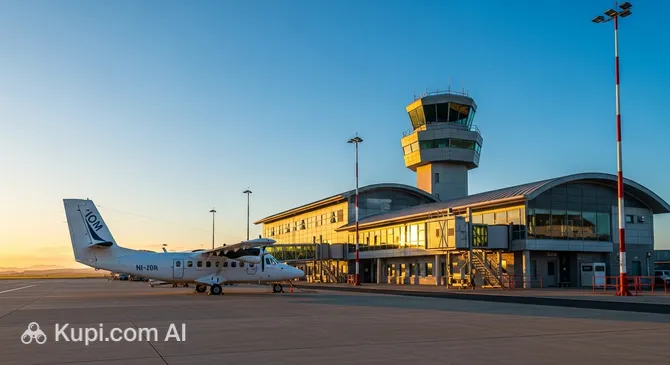
Isle of Man Airport. Source: Kupi.com Binoculars

Isle of Man Airport, also known as Ronaldsway, is not just a transport hub but a true gateway to a world of Celtic legends and high speeds. Located on the picturesque southern coast, it immerses guests in the unique atmosphere of the island from the very first minutes: here you will be greeted by the famous "Triskelion" symbol and, perhaps, even a mention of the legendary tailless cats. For thousands of motorsport fans, this airport becomes the starting point of their journey to the famous TT races, the spirit of which is felt everywhere here.

IATA Code IOM
ICAO Code EGNS
City Castletown (serves Douglas)
Distance to center ~15 km (to Douglas)
Status International
Annual Passengers ~649,000 (2023 data)
Schedule See online flight board on the airport website

Features and Advantages of the Airport:

Ronaldsway is famous for its coziness and lack of the hustle and bustle typical of giant hubs. The compact terminal allows you to go through all formalities as quickly as possible, and the friendly staff creates a feeling that you are genuinely welcome here. While waiting for your flight, you can enjoy the view of the runway and green hills or visit a café serving local delicacies. Very close to the terminal is the Manx Military and Aviation Museum — a great way to spend time usefully before departure.

Transport accessibility is another trump card of the airport. A bus stop is located right outside the terminal exit: comfortable buses run regularly to the island's capital, Douglas, and historic Castletown. During the Isle of Man TT festival, the airport operates in an intensified mode, accepting additional flights and ensuring seamless logistics for racers and fans from all over the world.

Contact Information

  • Official Website: www.airport.im
  • Help Desk Phone: +44 1624 821600
  • Address: Ronaldsway, Ballasalla, Isle of Man, IM9 2AS
  • Email: For most inquiries, it is recommended to use the contact forms available on the official airport website.
  • Social Media: Current information and news can be found on the airport's official social media pages, such as Facebook.
  • Lost Luggage Information: For issues related to lost or damaged luggage, please contact your airline representative or the handling agent working with your flight directly.
  • Passenger Support Service: For assistance and answers to general questions, you can contact the help desk at the phone number listed above.

How to Get to the Airport

Getting to Isle of Man Airport (IOM), located in Ronaldsway, from the island's capital, Douglas, is quite simple. The distance is about 13 kilometers, and travelers have several convenient transport options suitable for any budget and travel style.

Public Transport: Buses

The most economical way to get to the airport is to use the services of the local bus company Bus Vannin. Several routes connect Douglas with the southern part of the island and stop right at the airport terminal. Key routes: No. 1, 1A, 2A, 11, and 12. Buses run regularly throughout the day, and the trip from the center of Douglas usually takes about 30-40 minutes. The ticket price is quite affordable, costing around 3-4 GBP. This is an excellent choice for budget travelers and those who want to enjoy views of the island along the way.

Taxi and Private Transfer

For maximum convenience and speed, you can order a taxi. A taxi ride from the center of Douglas to the airport will take approximately 20-25 minutes. This is an ideal option if you have a lot of luggage or are traveling in a small group. The estimated cost of the trip will be around 20-25 GBP. It is recommended to book a car in advance with one of the local taxi companies, especially during peak season, to avoid waiting.

Car Rental and Parking

If you plan to actively explore the island, renting a car is the best choice. At Isle of Man Airport, counters of several rental companies operate, allowing you to conveniently pick up or return a car right upon arrival or before departure. For those driving to the airport in their own or rented vehicle, convenient parking is provided. There are both short-term and long-term parking zones located in the immediate vicinity of the terminal.

Terminals and Map

Isle of Man Airport (IOM) is a modern and compact aviation hub characterized by a simple and clear structure for passengers. It operates one passenger terminal serving all domestic and international flights. Thanks to this, navigation through the airport is intuitive, and the risk of getting lost is minimized.

The terminal layout is very logical. On the Ground Floor, you will find check-in counters, the arrival zone with baggage claim belts, car rental desks, and a café. For departing passengers, after check-in, it is necessary to go up to the First Floor, where the security checkpoint is located, after which you enter a spacious departure lounge with shops and a seating area.

Since there is only one terminal in the airport, there is no need for transfers between terminals. Departure and arrival zones are clearly separated by floors, making movement through the building fast and convenient. All signs are in English and easy to read, so you will easily find your boarding gate or the way to the airport exit upon arrival.

Check-in and security procedures at Ronaldsway Airport usually take significantly less time than in large international hubs. Nevertheless, it is recommended to arrive at the airport approximately 1.5–2 hours before departure to drop off luggage and pass security control without rushing. During peak hours, small queues are possible, but they are rarely long.

The main advice for navigation is simply to follow the signs. The terminal is designed so that the path from the entrance to the boarding gate is as direct as possible. For the convenience of passengers, the building has elevators and escalators. If you have any questions, you can always contact airport staff at the information desk located on the Ground Floor.

Airport History

The history of Isle of Man Airport, also known as Ronaldsway, begins in 1928 when the first airfield appeared on this site. Regular passenger services started in 1933, connecting the island with Great Britain. Initially, it was a modest airfield, but its strategic location soon determined its future fate.

With the outbreak of World War II, the airfield was requisitioned by the Royal Air Force and transformed into RAF Ronaldsway. Throughout the conflict, it served as an important training base, preparing pilots for the Fleet Air Arm. It was one of the busiest airfields in the UK during wartime. After the war, in 1947, the airport returned to civil use, and a new stage of its development as the island's main air gateway began.

In the post-war decades, the airport was constantly modernized to meet growing passenger traffic and aviation industry requirements. A key moment in modern history was the large-scale reconstruction in the late 1990s and early 2000s. As part of this project, the runway was significantly extended, allowing for larger aircraft such as the Airbus A320. The passenger terminal was also expanded and updated to ensure comfort for travelers arriving in the island's capital, Douglas.

One of the interesting facts from the airport's history is related to its name. "Ronaldsway" comes from the name of a Norwegian warrior who, according to legend, landed here many centuries ago. Today, the Isle of Man Airport is not just a transport hub but also a vital part of the infrastructure, playing a key role in the economy and tourist appeal of the island, especially during the famous Isle of Man TT motorcycle races.

Services and Amenities

Isle of Man Airport (IOM), despite its compact size, offers passengers all necessary services for a comfortable wait for their flight. Conditions for both rest and work have been created in the terminal so that your journey begins and ends as pleasantly as possible.

Dining and Shopping
You can have a snack before your flight or buy souvenirs as a keepsake in the airport's cafés and shops. Catering establishments offering both light snacks and hot meals are located in the public zone and in the departure lounge after security. In the shops, you will find travel essentials, press, and gifts with local symbols.

Lounges and Wi-Fi
For passengers preferring to wait for their flight in more comfortable conditions, the Rendezvous Executive Lounge is open, offering beverages, snacks, and fresh press in a quiet atmosphere. Free Wi-Fi is available throughout the terminal, and special stations are provided for charging gadgets.

Financial Services
Financial matters can be settled right at the airport. ATMs for cash withdrawal are installed in the terminal. Currency exchange points are also at the passengers' disposal; however, it is worth checking their opening hours in advance, especially if you are traveling early in the morning or late at night.

Medical Assistance
In case of feeling unwell or the need for first aid, passengers should contact any airport employee or the information desk. Staff are trained to act in emergency situations and will call qualified medical personnel if necessary.

Services for Passengers with Children
Families with small children can use mother and child rooms equipped with changing tables and everything necessary for comfortable care of the baby in a quiet environment.

Assistance for Passengers with Special Needs
The airport is fully adapted for passengers with reduced mobility. There are ramps, elevators, and specially equipped restrooms. Passengers needing assistance can book an escort service by contacting their airline no later than 48 hours before departure.

Business Services and Hotels
For business travelers, in addition to the VIP lounge, conference rooms are available for meetings. Although there are no hotels directly on the airport territory, many hotels and apartments for every taste and budget are located within a few minutes' taxi ride.

Where to Eat

Despite its modest size, the Isle of Man Airport offers passengers several convenient options for a snack or a full meal before departure. The main establishments are concentrated in the main terminal building, both before and after passing security control.

Before Security Control (Landside):

In the public area of the airport, the main restaurant Café Bar is located. This is a great place for those who have time before departure, as well as for those meeting and seeing off passengers. It offers a full menu including hot breakfasts, traditional British dishes such as fish and chips, burgers, soups, and sandwiches. This is the best choice for a hearty lunch. Here you can also try local beverages. Nearby is Costa Coffee — an ideal option for a quick snack. Here you will find signature coffee, pastries, sandwiches, and desserts.

After Security Control (Airside):

In the departure zone, after security, an outlet operates as part of the Café Bar. The assortment here is more limited and focused on quick service. Passengers can order beverages, as well as light snacks, chips, and sandwiches. This is a convenient place to relax while waiting for boarding.

Special Dietary Options and Prices:

The main café menu usually includes vegetarian options. Regarding Halal, gluten-free, or vegan dishes, it is recommended to check their availability directly with the staff. The price range can be characterized as average for airports — expect the cost to be slightly higher than in city establishments. Opening hours are generally tied to the flight schedule: they open early in the morning before the first departures and close after the departure of the last aircraft.

Travel Tips

When planning a trip through the main airport of the Isle of Man, located near the city of Douglas, use our tips to make your trip as comfortable as possible. Ronaldsway Airport (IOM) is compact and modern, but proper preparation never hurts.

Arrival Time and Check-in. Despite the small size of the airport, it is recommended to arrive 1.5-2 hours before departure, especially during peak periods. To save time, complete online check-in on your airline's website. This will allow you to go straight to baggage drop (if you have any) or to security control.

Security Control. The screening procedure is standard, but thanks to low passenger traffic, it usually goes quickly. Prepare liquids in advance (in containers up to 100 ml, packed in a transparent bag) and large electronic devices to speed up the process. The staff is generally very friendly and ready to help.

Seat Selection and Hand Luggage. If it is possible to choose a seat during check-in, consider your preferences. Window seats will give you stunning views of the island during takeoff and landing. Aisle seats are convenient if you need to get up during the flight. Regarding hand luggage, always check the baggage allowance with your airline, as rules may differ. Do not put prohibited items in hand luggage, such as sharp objects or liquids over 100 ml.

Transfers and Customs. The Isle of Man Airport is not a major transit hub, so transfers here are rare. If you do have a connecting flight, you will likely have to pass border and customs control, collect luggage, and check it in again. The Isle of Man is in a common customs area with the UK, so for flights from/to the UK, customs formalities are usually minimal. For flights from other countries, such as Ireland, standard rules apply.

Saving Time and Money. Book airport parking in advance online — this is often cheaper. Study the schedule of buses running between the airport and other parts of the island to save on taxis. Inside the terminal, there are cafés, but prices can be high, so you can bring permitted snacks with you.

Flight Delays. In case of a flight delay, first contact your airline representative for information. Clarify your rights: depending on the route and airline, you may be entitled to drinks, meals, or compensation. The airport has free Wi-Fi, cafés, and shops to help pass the waiting time.

Reached the end of the page?

That means the route is fully explored