Support

Newcastle International Airport

About the Airport

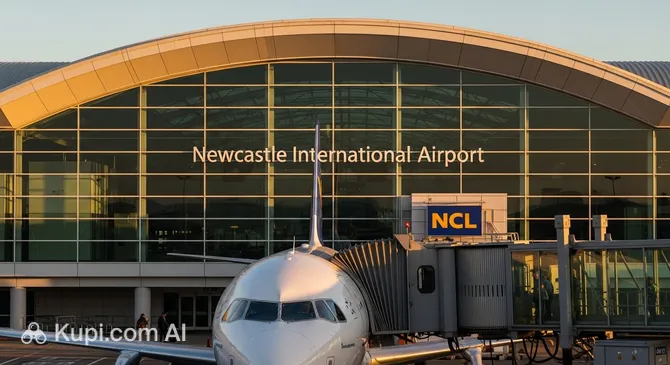
Newcastle International Airport. Source: Kupi.com Binoculars

Newcastle International Airport is not just a transport hub, but the main aerial gateway to the picturesque and hospitable region of North East England. It is renowned for its compact and intuitive layout, which saves travelers from long wanderings through endless corridors, allowing your holiday to begin almost immediately after landing. Here, amidst modern terminals, you will immediately feel the famous warmth of the local residents, the so-called "Geordie welcome," which marks the beginning of your acquaintance with the rich history and culture of the region.

IATA Code NCL
ICAO Code EGNT
City Newcastle upon Tyne
Distance to Centre ~10 km
Status International
Annual Passengers Over 4.9 million (2023 data)
Schedule Available on the official airport website

Features and Benefits of the Airport:

Newcastle Airport regularly receives high ratings for convenience and speed of service. One of the main advantages is the direct connection to the metro (Tyne and Wear Metro): the station is located right inside the terminal, and the trip to the city center takes only about 25 minutes, eliminating the need to sit in traffic.

The terminal is designed to minimize passenger stress: all check-in areas, security checkpoints, and boarding gates are located within walking distance. For a comfortable wait before your flight, business lounges are available, such as the popular Aspire Lounge, as well as various duty-free shops and restaurants where you can try both global brands and local pastries.

Contact Information

For your convenience, we have compiled the main contact information for Newcastle International Airport (NCL). We recommend checking the official website for the most up-to-date data before your trip.

  • Official Website: www.newcastleairport.com — here you will find flight schedules, information about parking, services, and the latest news.
  • Information Service Phone: +44 871 882 1121. Please note that calls to this number may be charged at special rates.
  • Address: Newcastle International Airport, Woolsington, Newcastle upon Tyne, NE13 8BZ, United Kingdom.
  • Email: A direct email address for general inquiries is not published. For feedback and inquiries, it is recommended to use the dedicated contact forms on the official website in the "Contact Us" section.
  • Social Media: The airport actively maintains pages on social networks where it shares important updates:
  • Lost Property Information: If your items were lost within the terminal building, you should contact the "Lost Property" service. If it concerns checked baggage that did not arrive with your flight, you need to contact your airline's representative.
  • Passenger Support Contacts: For general questions, you can approach the information desks in the terminal. For issues related to tickets, schedule changes, or the need for special assistance on board, always contact your air carrier directly.

Getting to the Airport

Newcastle International Airport is conveniently located just 10 kilometers northwest of the center of Newcastle upon Tyne, making it easily accessible for travelers. You can reach the terminal in several ways, from the fast metro to a comfortable taxi, so you can easily choose an option that suits your budget and schedule.

Tyne and Wear Metro is perhaps the most convenient and popular way to get to the airport. The metro station is located right at the terminal entrance. Trains on the Green Line run every 12-15 minutes and will take you from the central Monument station to the airport in approximately 25 minutes. This is the ideal balance of speed, cost, and convenience. Tickets can be purchased at machines at any station.

Several bus routes connect the airport with the center of Newcastle and other settlements in the region. This is the most budget-friendly option, although the journey may take longer, especially during peak hours. Buses stop near the terminal, making them a decent alternative for those traveling light and without haste.

For maximum comfort, especially if you are traveling with large luggage or family, you can use a taxi or pre-booked transfer. The trip from the city center will take about 20-30 minutes depending on traffic conditions. Official taxis await passengers right at the exit of the arrivals area. Popular ride-hailing app services also operate in the city.

If you prefer to travel by your own or rented car, the airport is easily accessible via the main A1 and A696 highways. Newcastle Airport offers several types of parking: Short Stay for quick drop-offs or meeting passengers, and Long Stay for those leaving their car for the duration of their vacation. It is recommended to book a parking space online in advance — this is often more cost-effective.

For travelers arriving in Newcastle upon Tyne from other cities in the United Kingdom by train, the optimal route would be to travel to the central railway station, Newcastle Central Station. Directly at the station, there is a transfer to the metro station, from where Green Line trains will take you directly to the airport without transfers.

Terminals and Map

Newcastle International Airport (NCL) is distinguished by a simple and passenger-friendly structure. The airport operates one main passenger terminal, which serves all domestic and international flights. This layout significantly simplifies navigation and eliminates the need to move between different buildings, which is especially convenient for travelers with a lot of luggage or families with children.

The terminal layout is intuitive. Check-in and arrival zones are located on the Ground Floor. Here you will find airline check-in counters, baggage drop-off points, and self-service kiosks. After completing check-in, passengers proceed to the First Floor, where the security checkpoint leading to the spacious departure lounge is located. Getting lost is practically impossible, as clear signs are installed everywhere.

The departure area is a unified space from which you can access all boarding gates. Duty-free shops, numerous cafés, restaurants, and waiting lounges are concentrated here. The arrival area, located on the Ground Floor, includes baggage reclaim belts, customs control, and an exit to the general hall where you can meet arriving passengers or use taxi and car rental services.

The time required to complete formalities may vary. On average, you should allow about 1.5-2 hours for check-in and security screening. During peak periods, such as morning hours or school holidays, it is recommended to arrive at the airport in advance — approximately 2-3 hours before departure for an international flight and 2 hours for a domestic one. Despite its compactness, the airport handles passenger traffic efficiently, but an extra time buffer is never redundant.

Airport History

The history of Newcastle International Airport is a journey from a modest aero club to one of the most important transport hubs in the north of the United Kingdom. The airport was officially opened on July 26, 1935, under the name Woolsington Aerodrome. Initially, it included a clubhouse, a hangar, workshops, a fuel station, and a grass runway. The construction cost at that time was 35,000 pounds sterling.

With the outbreak of World War II, the airfield was placed under the control of the Royal Air Force (RAF) and became known as RAF Woolsington. Squadrons performing defensive tasks were based here. After the war, the airport returned to civil use, and a period of active growth began. By the 1950s, there was a need for a new, longer runway to accommodate modern aircraft such as the Vickers Viscount.

A key moment in development was 1967, when a new 1,615-meter runway, a modern passenger terminal, and an apron were opened. This allowed Newcastle upon Tyne airport to accept jet liners and significantly expand its flight geography. In the 1970s, it received international status. Rapid growth in passenger traffic led to the handling of the millionth passenger as early as 1976.

Subsequent decades were marked by constant modernization. In 1991, the airport was connected to the Tyne and Wear Metro system, making it one of the first in the UK with a direct rail link. In 2000, a massive reconstruction costing 27 million pounds was completed, during which the terminal was doubled in size. Later, in 2004, a new apron was completed, increasing the number of boarding gates. Today, Newcastle Airport continues to develop, offering flights to dozens of destinations and regularly receiving high ratings for passenger service quality.

Services and Amenities

Newcastle International Airport (NCL) offers passengers a wide range of services to make waiting for a flight as comfortable and productive as possible. Regardless of the purpose of your trip, you will find everything necessary for a pleasant pastime here.

For those feeling hungry, the airport has many establishments to suit every taste: from coffee shops where you can quickly grab a coffee with fresh pastries, to restaurants offering full hot meals. Shopping enthusiasts will appreciate the variety of stores: there is a classic Duty Free with perfumery, luxury goods, and sweets, as well as clothing boutiques and souvenir shops where you can buy something to remember your trip by.

If you prefer to wait for your flight in a calmer atmosphere, several business lounges are at your service. Guests are offered complimentary beverages and snacks, fresh press, and comfortable seating away from the main terminal bustle. Free Wi-Fi is available throughout the airport, and numerous power outlets and USB ports are provided for charging electronic devices.

For financial matters, currency exchange points and ATMs are located in the terminal. In case of illness, a pharmacy is available, and first aid can also be obtained at the airport. Travelers with small children can use special mother and child rooms equipped with changing tables.

The airport is fully adapted for passengers with reduced mobility. Assistance services are provided (it is recommended to book in advance through the airline), and special restrooms, elevators, and ramps are available. For those with an early flight or a long layover, several hotels are located right by the airport, including DoubleTree by Hilton and Premier Inn. Business travelers can use conference rooms and other business services if necessary.

Where to Eat

At Newcastle International Airport (NCL), travelers will find diverse dining options capable of satisfying any taste and budget. Whether you are looking for a quick snack before departure or a full dinner, there is plenty to choose from both in the public area and after passing security control.

Most restaurants and cafés are concentrated in the departure zone (airside), accessible to passengers after screening. Here you can enjoy a meal without haste while watching the planes. In the general area (landside), there are also several establishments that are perfect for those seeing off or meeting passengers, such as cozy coffee shops. The opening hours of most establishments are adapted to the flight schedule — many open early in the morning and close after the last planes depart.

For those who want a quick bite, cafés offering fresh pastries, sandwiches, and coffee are perfect. Don't miss the opportunity to try products from Greggs — a famous British bakery chain that was founded right here in Newcastle. If you have time, we recommend visiting one of the restaurants. Here you can order classic British dishes, such as fish and chips, a hearty English breakfast, or a juicy burger with a refreshing beverage.

The price range at the airport varies from budget options in fast-food chains to higher prices in à la carte restaurants. Most establishments offer options for passengers with special dietary needs: typically, the menu includes vegetarian, vegan, and gluten-free dishes. It is recommended to check with staff for specific items or review menus in advance, and Halal options may also be available at select venues.

Travel Tips

To ensure your journey through Newcastle Airport goes smoothly and without unnecessary stress, use our tips. Simple planning will help you save time, money, and nerves, leaving more pleasant impressions from the trip.

Arrival Time and Check-in
We recommend arriving at the airport at least 2 hours before domestic flights and 3 hours before international flights. This time is enough to check in luggage without haste, pass security control, and reach the boarding gate. To save time, complete online check-in on your airline's website and save the boarding pass on your phone.

Passing Security and Hand Luggage
Be prepared in advance at the security checkpoint: all liquids (perfumes, creams, gels) must be in containers of no more than 100 ml and packed in a single transparent bag. Laptops, tablets, and other large electronics must be removed from the bag and placed in a separate tray. Sharp objects, weapons, and flammable substances are not allowed in hand luggage. Be sure to put documents, money, necessary medications, and chargers in your hand luggage.

Tips for a Comfortable Flight
When choosing a seat on the plane, be guided by your preferences. A window seat is ideal for those who love beautiful views. An aisle seat gives more legroom and the ability to stand up without disturbing neighbors. If you want to disembark from the plane among the first, choose seats in the front part of the cabin.

Passengers with Connections and Customs
If you have a connecting flight, check with the airline in advance whether your luggage will be automatically transferred to the next flight or if you need to collect it and check it in again. In the airport, follow the "Flight Connections" signs. Upon entering the United Kingdom, you will have to pass customs control. If you have no goods to declare, use the "green channel".

Savings and Actions in Case of Flight Delay
To save money, book airport parking online in advance — this is often cheaper. Bring an empty water bottle with you and fill it at drinking fountains after passing security. If your flight is delayed, follow the information on the departure boards and contact your airline representatives. In case of long delays, you have the right to drinks, meals, and, in some cases, hotel accommodation.

Reached the end of the page?

That means the route is fully explored