Support

Duxford Airport

About the Airport

Duxford Aerodrome is not merely a runway, but a true time machine for anyone passionate about aviation history. Located in the picturesque countryside of the United Kingdom, this former Royal Air Force military airfield is today Europe's largest open-air aviation museum. Instead of the hum of modern liners, here you can hear the roar of piston engines from legendary World War II aircraft. A trip to Duxford is an immersion into a heroic past and an opportunity to see the history of flight with your own eyes.
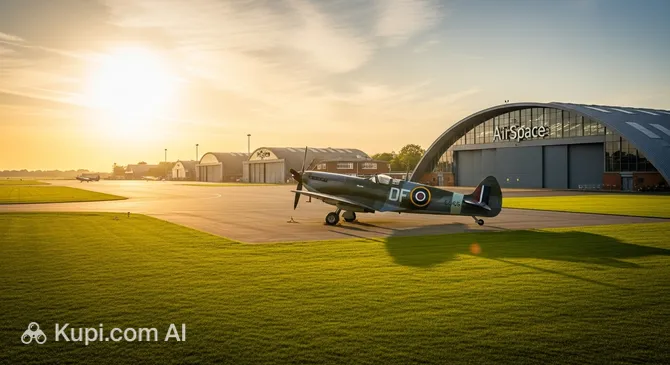
Duxford Airport. Source: Kupi.com Binoculars
IATA Code QFO
ICAO Code EGSU
City Cherry Hinton, Cambridgeshire
Distance to Cambridge Centre About 15 km
Status Historic airfield, museum, general aviation
Annual Passengers Does not serve scheduled passenger flights. Museum visitors — approximately 400,000 per year.
Popular Operators Classic Wings, The Fighter Collection, Aircraft Restoration Company

The main feature of the airfield is its status as a branch of the Imperial War Museum (Imperial War Museum Duxford). It is not just an airport, but a full-fledged tourist attraction. One of the most impressive collections of aircraft in the world is gathered here — from Spitfire and Hurricane fighters that defended the skies during the Battle of Britain, to the supersonic Concorde passenger jet. The airfield is still active: private planes and restoration workshops, which bring historical machines back to life, are based here.

Another asset of Duxford is the famous air shows, which are held several times a year. These events attract tens of thousands of spectators from all over the world eager to see legendary aircraft in flight, from First World War biplanes to modern jet fighters. Visitors can also book a sightseeing flight on one of the historic planes, receiving unforgettable impressions. Thus, Duxford Aerodrome is not a transit point, but an independent travel destination for history and aviation enthusiasts.

Contact Information

Below you will find contact information for Duxford Aerodrome (QFO), which is part of the famous Imperial War Museum Duxford. Please note that this is not a commercial passenger airport, so some services may differ.

  • Official Website: The main information resource is the Imperial War Museum Duxford (IWM Duxford) website — www.iwm.org.uk/visits/iwm-duxford.
  • Inquiry Service Phone: You can contact the general inquiry service of the Imperial War Museums at +44 20 7416 5000.
  • Airport Address: Duxford, Cambridge, CB22 4QR, United Kingdom.
  • Email: A direct email address is generally not provided. It is recommended to use the contact form on the museum's official website for communication.
  • Social Media: Official IWM Duxford pages are actively maintained on popular social networks such as Facebook, Instagram, and X (formerly Twitter), where news and event announcements are published.
  • Lost Luggage Information: Since this is not a commercial airport, there is no standard baggage tracing service. If you have lost personal items within the museum grounds, please contact the visitor centre or call the general phone number.
  • Visitor Support Contacts: Visitor support is provided through the museum's general communication channels. For any questions related to planning your visit, use the phone or the online form on the website.

How to Get to the Airport

Getting to Duxford Aerodrome, located near Cherry Hinton and Cambridge, is quite simple. This historic airfield, home to the famous Imperial War Museum, is an important landmark in the United Kingdom and is well connected to the transport network. The choice of transport depends on your budget, time, and point of departure.

Public Transport

This is the most budget-friendly way to reach the airfield. Train: The nearest major railway station is Cambridge, with regular trains running from London (King's Cross and Liverpool Street). From Cambridge station, you can reach Duxford by bus or taxi. Even closer is Whittlesford Parkway station, located just a few kilometres from the airfield, but trains stop here less frequently. Bus: A bus runs from the centre of Cambridge (for example, from the Drummer Street bus station) to Duxford. It is recommended to check the current schedule on the local operator's website, such as Stagecoach, in advance. The bus journey from the centre of Cambridge will take about 30-40 minutes.

Taxi and Transfer

Taking a taxi from the centre of Cambridge to Duxford Aerodrome is the fastest and most comfortable option. The journey time will be approximately 20-25 minutes depending on traffic conditions. This is also a convenient way to get there from railway stations. The cost will be significantly higher than public transport, but for a small group or family, it may be well justified. It is recommended to use official taxi services or book a transfer online in advance.

Car Rental and Parking

If you plan to explore the Cambridgeshire countryside, renting a car is an ideal solution. Duxford Aerodrome is conveniently located off the M11 motorway (Junction 10), making the drive very straightforward. The Imperial War Museum Duxford has spacious parking, which is usually free for visitors. This option provides maximum freedom of movement.

Nearest International Airports

If you are flying into the UK from afar, Duxford Aerodrome is relatively close to several major London airports. The closest is Stansted (STN), located just 24 km away. Other options include London Luton (LTN), London City (LCY), and the country's largest airport — Heathrow (LHR). You can also consider arriving at Norwich Airport (NWI). From any of these airports, Duxford can be reached by train, bus, or rental car.

Terminals and Layout

It is important to understand that Duxford Aerodrome (QFO) is not a commercial passenger airport in the traditional sense. It is an active historic airfield housing the famous Imperial War Museum Duxford. Therefore, there are no standard passenger terminals with check-in zones, security screening, and boarding gates for scheduled flights.

Instead of terminals, Duxford's infrastructure consists of several large exhibition pavilions and historic hangars, each dedicated to a specific theme. These buildings are the main points of interest for visitors. The main "terminals" for tourists can be considered facilities such as "AirSpace", which houses iconic British aircraft, and the impressive "American Air Museum", designed by Norman Foster.

Navigation around the site is done on foot. The complex is very large, and the hangars are located along the runway at a significant distance from each other. On some days, especially during air shows, a special shuttle bus may operate between the main pavilions for the convenience of visitors. Maps are available at the museum entrance to help plan your route and ensure you don't miss the highlights.

"Arrival" and "departure" procedures for tourists are limited to purchasing an entrance ticket to the museum and passing through entry control, where bag checks may occur, similar to any other major museum or public event. There is no flight check-in or passport control here, as the airfield does not serve commercial passenger airlines.

The main recommendation for visitors is to allocate a full day for the visit to Duxford. Wear comfortable shoes, as there will be plenty of walking. Study the museum map on the official website in advance to determine which hangars and exhibitions interest you most, and start your tour there. This will help you use your time effectively and get the most out of this unique historic site.

Airport History

Duxford Aerodrome, located near Cherry Hinton, has a rich history dating back to the First World War. It was built in 1917 and opened in 1918 as a Royal Air Force (RAF) station. Initially used for pilot training, by the 1920s Duxford had become a fully operational fighter base, one of the first in the country.

The airfield's finest hour came during the Second World War. During the Battle of Britain in 1940, Duxford was a key base for the 12th Group of Fighter Command. It was here that the famous ace Douglas Bader was based, promoting the "Big Wing" tactic — massive attacks on enemy bombers. Later, the airfield became home to the 78th Fighter Group of the US Army Air Forces, whose pilots flew P-47 Thunderbolts and P-51 Mustangs to escort Allied bombers in the skies over Europe.

After the war, Duxford continued to serve as an RAF fighter base, hosting the first jet aircraft such as the Gloster Meteor and Hawker Hunter. However, the era of military service came to an end, and the last operational flight took place in 1961. In 1969, the RAF finally left the airfield. There was a threat of the site being redeveloped, but thanks to the efforts of enthusiasts and the Imperial War Museum (IWM), this historic place was preserved.

Since 1976, Duxford Aerodrome has been part of the Imperial War Museum and has evolved into the largest aviation museum in Europe. It is not just a static display — Duxford remains an active airfield where historic aircraft are not only stored but restored to flight condition and regularly take to the skies during famous air shows. A landmark feature on its grounds is the American Air Museum, designed by the renowned architect Norman Foster.

The history of the airfield is full of interesting facts. For instance, the famous film "Battle of Britain" was filmed here in 1968. Many of the original hangars from the First and Second World Wars have survived to this day and are protected architectural monuments. Today, Duxford is not only a museum but a living centre of aviation history, attracting tourists, historians, and aviation enthusiasts from all over the world.

Services and Facilities

It is important to realize that Duxford Aerodrome (QFO) is not a standard commercial airport, but an active historic airfield forming part of the famous Imperial War Museum Duxford. Consequently, most services are oriented towards museum visitors and aviation event guests rather than transit passengers.

The complex features several cafés and restaurants where you can have a snack or a full meal while enjoying views of the runway. There are also excellent shops offering not only souvenirs but also specialised literature, aircraft models, and exclusive merchandise related to aviation and military history. Standard duty-free shops are not available.

For the convenience of visitors, free Wi-Fi is available across the museum grounds. Charging facilities for electronic devices may be limited, so it is recommended to carry a portable power bank. There are no specialised airline lounges or VIP lounges here, although numerous rest areas are located throughout the complex. Banking services and currency exchange points are not provided at the airfield — it is best to arrange this in advance.

For visitors with children, baby changing facilities are provided. The entire complex is largely adapted for guests with reduced mobility: there are ramps, accessible toilets, and dedicated parking spaces. Staff assistance can be requested if needed. First aid points are available on site.

There are no hotels on the airfield itself, but in the immediate vicinity, in surrounding towns and nearby Cambridge, you can find many accommodation options to suit any taste and budget. Furthermore, the unique venues and hangars of the Duxford museum are often used for conferences, exhibitions, and corporate events, offering business-level services in an unforgettable historical atmosphere.

Where to Eat

It is important to note that Duxford Aerodrome (QFO) is not a commercial passenger airport with the usual terminals, but an active historic airfield housing the famous Imperial War Museum (IWM Duxford). Therefore, all dining outlets here are designed for museum visitors and offer comfortable conditions for relaxation during your tour.

Several cafés and restaurants operate on the museum grounds, where you can have a full lunch or a quick snack.

Main establishments for a full meal:

  • The Armoury Café and Kitchen — the main café located near the visitor centre at the entrance. It offers the widest selection of dishes: from hot meals, including traditional British pies and fish and chips, to fresh salads, soups of the day, and various sandwiches. It is the ideal place for a hearty lunch at the start or end of your visit.
  • The Workshop Restaurant — another excellent spot for lunch, located in the AirSpace exhibition hall. The menu here is similar to The Armoury, offering quality hot and cold dishes surrounded by impressive exhibits.

For a quick snack and coffee:

  • The American Air Museum Café — a small café located inside the American Air Museum. It is perfect for a short pause while exploring this part of the exhibition. Here you can order coffee, tea, refreshing beverages, as well as fresh pastries, cakes, and sandwiches.

The menu in all establishments focuses on classic British and European cuisine. Be sure to try traditional scones with cream and jam. Vegetarian dishes are always available. If you have specific dietary requirements (such as a vegan, gluten-free, or Halal diet), it is recommended to check available options with the café staff — they are generally happy to assist.

The price range can be described as average, typical for major tourist attractions in the United Kingdom. All cafés and restaurants operate in accordance with museum opening hours, usually from 10:00 until closing (around 17:00-18:00 depending on the season). Access to all dining points is available after entering the museum grounds.

Traveller Tips

When planning a visit to Duxford Aerodrome, it is important to remember that this is not an ordinary commercial airport, but a famous historic airfield and Europe's largest aviation museum, part of the Imperial War Museum. Most tips for standard airports do not apply here. Here are a few recommendations to help you get the most enjoyment out of visiting this unique place in Cherry Hinton, United Kingdom.

Arrival Time and Entry Control. We recommend arriving in good time, especially on air show days, as there may be traffic on the approach roads. For a regular museum visit, arrive at opening time to explore the exhibitions at a leisurely pace. Instead of flight check-in, there is entry control here. Security at the entrance usually involves bag checks, but it is not as strict as in airports. Standard restrictions on liquids in hand luggage do not apply here.

What to Bring. The airfield territory is huge, so comfortable shoes are your best friend. Be sure to bring a camera. Depending on the weather, you may need sunscreen, a hat, or a raincoat. On air show days, many visitors bring folding chairs and blankets to watch the flights in comfort. Bringing your own food and drinks is usually permitted, but it is best to check the rules on the official website before your visit.

Saving Time and Money. To avoid queues and often save money, buy tickets for the museum or air shows online in advance. Study the airfield map on the website and plan your route through the hangars that interest you most. This will help you avoid wasting time on-site and ensure you see the most important things.

If the "Flight" is Delayed. In the context of Duxford, a "flight delay" is most likely a rescheduling or cancellation of a display flight due to poor weather. Do not be discouraged! This is an excellent opportunity to explore the numerous pavilions and hangars. Inside, you will find a vast collection of aircraft, military equipment, and fascinating interactive exhibits that will more than compensate for the wait.

Reached the end of the page?

That means the route is fully explored