Support

London Luton Airport

About the Airport

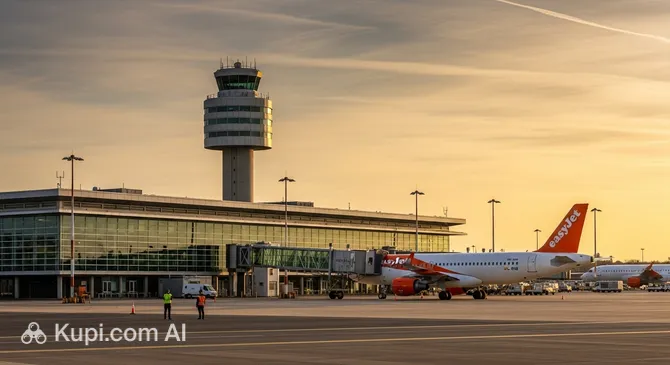
London Luton Airport. Source: Kupi.com Binoculars

London Luton is not merely a transport hub, but a true strategic gateway for those who value both time and budget. Often remaining in the shadow of its giant neighbours, this airport has become the undisputed king of low-cost carriers, offering travellers a dynamic and affordable start to their British holidays. Thanks to its compactness and recent modernisation, Luton has transformed from a modest air harbour into a modern and convenient hub, where the journey from the aircraft steps to the train heading to central London takes just a matter of minutes.

IATA Code LTN
ICAO Code EGGW
City Luton (serves London)
Distance to centre ~45 km
Status International
Annual Passengers over 16 million
Schedule Online Flight Board

Features and Advantages of the Airport

Luton Airport is renowned for its efficiency and specialisation in budget travel. It serves as a major base for many leading European low-cost airlines, such as easyJet and Wizz Air, making it an ideal choice for affordable flights across Europe and beyond. Despite the high passenger traffic, the airport maintains clear navigation thanks to a single terminal where it is difficult to get lost.

One of Luton's main points of pride is the recently launched Luton DART system. This automated shuttle train transports passengers from the terminal to Luton Airport Parkway railway station in just 4 minutes, from where high-speed trains rush directly to St Pancras station in central London. The airport operates around the clock, offering a wide selection of cafés and shops to brighten up the wait for a flight at any time of the day or night.

Contact Information

Official Website: www.london-luton.co.uk

Information Desk Phone: +44 (0)1582 405100

Address: Airport Way, Luton, Bedfordshire, LU2 9LY, United Kingdom

Email: For most enquiries, the airport suggests using the online forms in the "Contact us" section on the official website.

Social Media: You can follow news and ask questions on the airport's official pages on Facebook and X (formerly Twitter).

Lost Property Information: If you have lost personal items within the airport, you must fill out a form on the lost property service website, a link to which is available on the official Luton Airport website.

Passenger Support Contacts: For assistance with various issues (special assistance, parking, complaints, and suggestions), it is recommended to visit the relevant section ("Help & Support") on the official website.

How to Get to the Airport

Luton Airport (LTN), located approximately 56 kilometres north of central London, is one of the key transport hubs in the United Kingdom, particularly popular with low-cost airlines. There are several ways to reach it, and the choice depends on your budget, time, and comfort preferences.

Train — one of the fastest and most reliable ways to get to the airport. Trains operated by Thameslink and East Midlands Railway depart regularly from London's St Pancras International station to Luton Airport Parkway station. The train journey itself takes between 25 to 45 minutes. From the station to the airport terminal, the modern DART (Direct Air-Rail Transit) shuttle operates, with a travel time of just about 4 minutes. The total journey time from the city centre rarely exceeds one hour. It is recommended to purchase tickets online in advance for the best price.

Express Buses — the most budget-friendly option. Companies such as National Express and Green Line offer direct routes from various points in London, including Victoria Coach Station, Paddington, and others. A bus journey will take significantly longer than the train — on average from 1.5 to 2 hours depending on traffic conditions and the time of day. This method is ideal for travellers who are not in a hurry and wish to save money.

Taxi, Private Transfer, and Car Sharing (e.g., Uber) offer maximum comfort and "door-to-door" service. This is the most expensive way to reach Luton. The cost of a trip from central London will be high, and the travel time depends heavily on traffic on the M1 motorway, potentially taking from 1 to 1.5 hours or more during peak hours. It is recommended to book a car in advance, especially if you are travelling with a large amount of luggage or in a group.

If you prefer to travel by your own or rented car, Luton Airport provides various parking options: from short-stay, located a couple of minutes' walk from the terminal, to more affordable long-stay and mid-stay car parks, from which free shuttles run to the terminal. Booking a parking space online in advance almost always guarantees a more favourable rate. Note that when driving out of central London, a Congestion Charge may apply for entering the restricted traffic zone.

When choosing how to get to Luton Airport, focus on your priorities. The train offers the best balance of speed and cost, the bus is the cheapest but slowest option, while a taxi ensures comfort at a higher price. It is also worth remembering that the capital region is served by other airports, such as Heathrow Airport, London Gatwick, and Stansted, each with its own unique transport logistics.

Terminals and Layout

London Luton Airport (LTN) is distinguished by a simple and clear structure, as it consists of just one passenger terminal. This solution significantly simplifies navigation and eliminates the need for transfers or long walks between different buildings, which is particularly valuable for passengers with heavy luggage or those travelling with families.

The terminal is logically divided into two main levels. The Arrivals Zone is located on the ground floor. Immediately after disembarking, passengers proceed to passport control, then to the baggage reclaim hall and customs area. Car rental offices, taxi desks, and bus operator ticket counters are also located on this level. The Departures Zone is located on the first floor. Here you will find airline check-in desks and bag drop points. After obtaining a boarding pass, passengers proceed to pre-flight security screening.

After passing security control, you will enter the spacious departure lounge, where the main passenger infrastructure is concentrated: Duty Free shops, boutiques, diverse restaurants, cafés, and lounges. All boarding gates are located within this hall, and navigation to them is organised via clear signage and information screens. Despite its compactness, the selection of establishments allows for a comfortable time while waiting for your flight.

To complete all pre-flight procedures, it is recommended to arrive at the airport well in advance. The standard recommendation is at least 2-3 hours before departure. Luton is one of the busiest airports in the United Kingdom, and during peak hours (early mornings, weekends, and holidays), queues for check-in and security can be significant. Plan your time with a buffer to avoid unnecessary rushing.

For convenient navigation through the terminal, electronic boards with up-to-date flight information are installed everywhere. Always check your boarding gate number, as it may change shortly before departure. Overall, thanks to the thoughtful layout, orienting yourself at Luton Airport is quite easy, even if you are here for the first time.

Airport History

The history of London Luton Airport (LTN) began long before the era of mass travel. Officially opened on 16 July 1938 as Luton Municipal Airport, it initially served as a base for private and commercial flights. With the outbreak of the Second World War, its role changed dramatically: the airport was placed under the command of the Royal Air Force (RAF) and became an important base for fighter aviation protecting the skies over London and central England.

After the war, the airport returned to civilian use and became one of the pioneers in the development of charter flights. In the 1960s and 1970s, it transformed into a thriving hub for British tour operators offering affordable package holidays to sunny Europe. Airlines such as Britannia Airways and Monarch Airlines made Luton their main base, which contributed to its rapid growth and made it synonymous with the start of a holiday for millions of Britons.

The airport experienced a real breakthrough and a second birth in the 1990s with the arrival of budget airlines. It was here in 1995 that easyJet established its base, forever changing the landscape of air travel in Europe. This move led to exponential growth in passenger traffic and required significant modernisation. In 1999, a new terminal costing £40 million was opened, ceremoniously unveiled by Queen Elizabeth II and Prince Philip. It was during this period that the word "London" was added to the name to highlight its proximity to the capital and attract more international passengers.

In the 21st century, Luton continued to develop actively to meet growing demand. Between 2016 and 2019, a massive redevelopment programme costing over £160 million was implemented, increasing capacity to 18 million passengers per year, updating interiors, and improving infrastructure. One of the most significant recent innovations was the opening in 2023 of the automated DART (Direct Air-Rail Transit) system, which directly connected the terminal to Luton Airport Parkway railway station in just four minutes, significantly simplifying the journey for travellers.

Services and Amenities

London Luton Airport (LTN) offers passengers a full range of services to make waiting for a flight as comfortable and productive as possible. Before departure or during a transfer, you can find everything you need right in the terminal.

To satisfy your hunger, there are numerous cafés, lounges, and restaurants to suit every taste: from fast food outlets to à la carte restaurants. After passing security control, passengers have access to a large number of shops. In the Duty Free area, you can purchase perfumes, cosmetics, and beverages, while other retail outlets offer clothing, accessories, books, and souvenirs to remember your trip to the United Kingdom.

For those who prefer to wait for their flight in a quieter atmosphere, VIP lounges are available. Access can be booked online or on the spot for an additional fee. Free Wi-Fi is provided throughout the airport, and numerous stations with sockets and USB ports are equipped for charging electronic devices.

In the terminal, you will find ATMs and currency exchange points, which is convenient for handling urgent financial matters. There are also pharmacies where you can buy medicines and essential items. First aid points are ready to assist in case of feeling unwell.

The airport is well-equipped for travellers with children: there are baby care rooms with changing tables and play areas. Passengers with reduced mobility are provided with free assistance, including escort through the terminal and help with boarding. Important: this service must be requested in advance through your airline.

If you have an early flight or a long layover, several hotels are located right on the airport grounds and in the immediate vicinity (e.g., Holiday Inn, Ibis, Courtyard by Marriott), offering comfortable accommodation. For business travellers, some hotels offer conference rooms and business centres, allowing you to hold a meeting or work in a quiet environment.

Where to Eat

At London Luton Airport (LTN), travellers will find plenty of options for a snack or a full meal, capable of satisfying any taste and budget. Most establishments are located in the departure lounge after security control (airside), but several cafés are also available in the public area (landside).

After Security Control (Airside) you will discover the widest selection. For those wishing to enjoy a traditional British atmosphere, establishments such as The Smithfield or The Big Smoke are open. Here you can order a classic breakfast, fish and chips, burgers, and various beverages. This is an excellent option for a leisurely wait for your flight. If you are looking for something faster and healthier, pay attention to Pret A Manger or Leon, which offer fresh sandwiches, salads, soups, and organic coffee. World-famous chains are also present here, including Burger King, Starbucks, and the pizzeria Pizza e Pronta.

Before Security Control (Landside) the choice is more modest but sufficient for those seeing someone off or arriving at the airport early. Here you will find coffee shops such as Costa Coffee and Starbucks, where you can grab coffee and pastries. There are also usually shops like M&S Simply Food, offering ready-made sandwiches, salads, and snacks that you can take with you.

Regarding special dietary needs, most establishments offer vegetarian and vegan dishes — they are clearly marked on the menu. Chains like Pret A Manger always have a large selection of gluten-free and plant-based options. Prices at the airport are typically higher than in the city: expect to pay around £8-£15 for a quick snack with a drink and from £15-£25 for a main course with a drink in a restaurant. Most establishments in the departure zone operate from early morning until late evening, adjusting to the flight schedule.

Tips for Travellers

When planning a trip through London Luton Airport, use these tips to make your journey smoother and more predictable. Taking into account some features of this busy transport hub will help avoid stress and save time.

Arrival Time and Check-in: Luton Airport serves many budget airlines, which often creates large flows of passengers. It is recommended to arrive at the airport at least 3 hours before international flights and 2 hours before domestic ones. To avoid queues at the counters, always complete online check-in for your flight — for most low-cost carriers, this is a mandatory requirement, and checking in at the airport may incur an additional fee.

Security Control and Hand Luggage: Be prepared for security screening. Pack all liquids (up to 100 ml each) in one transparent bag in advance. Laptops and other large electronics will need to be removed from your bag. Make sure to check your airline's hand luggage allowance. Budget carriers are very strict about bag sizes and weight, and the fee for exceeding the limit at the airport can be very high.

Seat Selection and Transfers: Most airlines flying from Luton charge an extra fee for seat selection. If it does not matter to you where you sit, the system will assign you a seat automatically. It is worth noting that Luton is not the most convenient airport for transfers. If you have a self-transfer, allow maximum time, as you will likely have to pass border control, collect luggage, and check in again for the next flight.

Customs Control and Savings: When entering the United Kingdom, follow the "Green Channel" if you have nothing to declare, or the "Red Channel" if you are carrying goods exceeding the established limits. To save money, book parking and airport transfers online in advance — this is almost always cheaper. You can also take an empty water bottle with you and fill it at drinking fountains after the security zone.

In Case of Flight Delay: If your flight is delayed, monitor the information on the departure boards and contact your airline representatives. Depending on the length of the delay and the flight destination, you may be entitled to drinks, food, and, in some cases, even hotel accommodation in accordance with UK legislation (UK261 rules).

Reached the end of the page?

That means the route is fully explored