Support

Brussels Airport

About the Airport

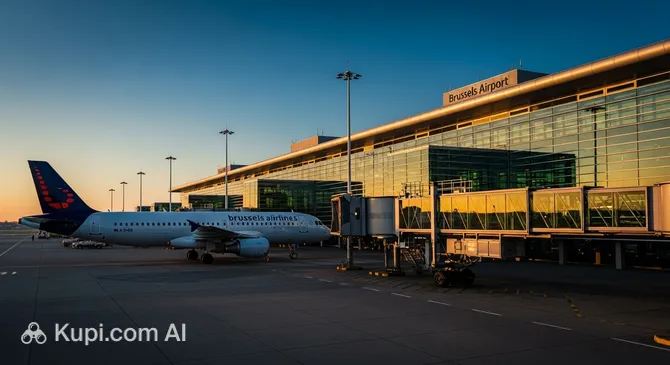
Brussels Airport. Source: Kupi.com Binoculars

Brussels Airport is not merely a transit node, but the true "chocolate heart" of Europe, where your journey begins with the delicate aroma of cocoa. This modern hub surprisingly combines the business efficiency of the European Union's political capital with a cosy atmosphere that encourages a relaxing wait for your flight. Here, under one roof, diplomats, business people, and tourists meet, enjoying thoughtful comfort and famous Belgian hospitality.

IATA Code BRU
ICAO Code EBBR
City Brussels
Distance to centre ~12 km
Status International
Passengers per year ~23.6 million (2024)
Schedule Available on the official website's online board

Airport Features and Highlights:

  • The "Chocolate Capital" of the World: Brussels Airport holds the unofficial title of the largest chocolate point of sale on the planet. About 1.5 kg of this delicacy is purchased here every minute, turning the search for the perfect souvenir before departure into a true gastronomic adventure.
  • Seamless Logistics: The airport is located just 12 kilometres from the city, and the railway station is situated directly under the terminal (at level -1). High-speed trains transport passengers to the centre of Brussels in just 15–20 minutes, making it one of the most convenient in Europe for short layovers.
  • Architecture and Views: The Connector building, linking the terminal to the piers, offers panoramic windows with breathtaking views of the runway. It is an excellent spot for plane spotting and watching aircraft while waiting to board.
  • Premium Comfort: The airport is renowned for its business lounges, particularly "The Loft" lounge, which has been repeatedly recognised as the best in Europe. The design, inspired by Japanese minimalism and Belgian cosiness, allows you to fully relax before your flight.

Contact Information

  • Official Website: All current information on flights, services, and regulations is available at www.brusselsairport.be. The site supports multiple languages for the convenience of travellers.
  • Information Service Phone: For immediate information, you can call +32 2 753 77 53.
  • Address: Leopoldlaan, 1930 Zaventem, Belgium. The airport is located in the municipality of Zaventem, 12 km northeast of Brussels.
  • Email: To contact airport representatives, it is recommended to use the special contact form on the official website, as a direct email for general inquiries is not published.
  • Social Media: Follow airport news and updates on official accounts on Facebook, X (formerly Twitter), and Instagram to stay informed about the latest events.
  • Lost Luggage Information: If you do not find your luggage upon arrival, you must immediately contact your airline's Lost & Found service. Counters are located in the arrival hall. Information can also be found in the relevant section on the airport website.
  • Passenger Support Contacts: For general questions, you can contact the information desk. Special assistance is provided for passengers with reduced mobility, which must be booked at least 48 hours before departure through your airline.

How to Get to the Airport

Getting to Brussels Airport (BRU) from the centre of Brussels or other cities in Belgium is effortless thanks to a well-developed transport network. The choice of method depends on your preferences for speed, budget, and comfort. The airport is located approximately 12 km northeast of the city centre.

Train — the fastest and most reliable way to get to the airport. Direct trains depart from Brussels' three main stations — Brussels-Midi (Zuid), Brussels-Central, and Brussels-Nord — every 15 minutes. The journey to the Brussels-Airport-Zaventem station, located directly under the terminal, takes just 17-25 minutes. Please note that the ticket price includes a special "Diabolo" fee, ensuring access to the airport, so the train ticket to the airport costs more than a standard one.

Buses represent a more budget-friendly alternative. The STIB/MIVB company offers the Airport Line (No. 12) route, which runs between the airport and the European Quarter of Brussels. The trip takes about 30-40 minutes depending on traffic conditions. Additionally, De Lijn buses depart from the airport, connecting it with various cities in Flanders, which is convenient for those travelling around the region.

Taxis and Private Transfers — the most comfortable, but also the most expensive option. A trip from the city centre will take from 25 to 50 minutes depending on traffic congestion and will cost approximately 45-55 Euros. Official metered taxis are always available at the exit of the arrival hall. Booking a transfer in advance can be convenient if you are travelling with a large amount of luggage or in a group.

For those preferring to move by private or rental car, the airport offers convenient access roads and several parking options. There are both short-term car parks (P1, P2) for quick passenger drop-off and long-term ones (P3, P4) for those leaving their car for the duration of the trip. Note that during peak hours, traffic jams are possible on the approach to the airport, so allow extra time for the journey.

Terminals and Map

Brussels Airport, known as Brussels Airport (BRU), is distinguished by a thoughtful and convenient structure. Despite its size and high passenger traffic, it consists of one large terminal. This significantly simplifies navigation and saves passengers from the need to move between different buildings, as is often the case in other major airports.

All passenger infrastructure is located in one multi-level building. Check-in is located on Level 3 (Departures), and the arrival zone (Arrivals) is on Level 2. After completing registration and security control, passengers proceed to the boarding gates, which are grouped into two main piers:

Pier A — services flights within the Schengen area. This is a modern and spacious part of the airport, connected to the main building by an underground passage with travelators. The walk to the furthest gates can take up to 15-20 minutes, so it is worth allowing time for this. Zone T, which services some flights to Africa, also adjoins this pier.

Pier B — intended for all flights outside the Schengen area. You enter this zone immediately after passing border control. Since long-haul flights are serviced here, passenger traffic can be high. Pier B is located directly in the main building, and transitions to its gates usually take less time than to the gates of Pier A.

To complete all formalities (check-in, baggage drop, security check, and passport control for non-Schengen flights), it is recommended to arrive at the airport 2-2.5 hours before Schengen flights and at least 3 hours before international flights. During peak hours, especially during holiday periods, waiting times at security control may increase. Navigation in the airport is intuitive thanks to numerous signs. The main advice is to check your pier number (A or B) on your boarding pass immediately after security screening and follow the corresponding signs.

Airport History

The history of Brussels Airport, the main air gateway of Belgium, is closely linked to key events of the 20th century. Although the first aviation facilities in this area appeared during the First World War, the modern airport in its current form originated later. The decisive impetus for development was the 1958 World Expo (Expo 58), held in Brussels. Specifically for this grand event, a new passenger terminal was built in the municipality of Zaventem, which became the foundation for the future international hub.

Over the years, the airport has constantly grown and modernised to meet increasing passenger traffic. A crucial stage was the major reconstruction in 1994, when a new, more spacious and modern terminal was opened, which is still in use today. In the 2000s, two new piers were built: Pier A for Schengen flights and Pier B for international ones. A significant improvement was the "Connector" launched in 2015 — a building connecting the main terminal with Pier A above ground and replacing the old underground passage, making movement around the airport much more convenient.

Throughout its history, the airport has experienced both ups and downs but has always proven its resilience. After the cessation of operations by the national airline Sabena in 2001, it managed to recover quickly and become the base for the new flagship company, Brussels Airlines. Today, Brussels Airport is not only a major passenger node serving millions of travellers a year but also one of Europe's most important cargo hubs, specialising particularly in the transport of pharmaceutical products. An interesting fact: directly under the terminal building lies a railway station, from where you can easily and quickly reach the city centre and other regions of the country.

Services and Amenities

Brussels Airport (BRU) offers passengers a full range of services and amenities to make waiting for a flight as comfortable as possible. It is a modern and well-organised hub where every detail is thought out for the convenience of travellers.

For those who want to grab a bite or do some shopping, the airport presents a huge selection. You will find numerous restaurants, cafes, and dining areas to suit any taste — from quick coffee with waffles to exquisite dishes of Belgian cuisine. The Duty Free zone offers a wide assortment of perfumes, cosmetics, and, of course, the famous Belgian chocolate. There are also fashion boutiques and souvenir shops.

For comfortable waiting, the airport provides premium lounges, where you can relax in silence, work, or enjoy snacks. Free Wi-Fi is available throughout the terminal, and numerous charging stations for electronic devices will ensure your gadgets remain powered before your flight.

Financial matters can be handled at bank branches and currency exchange points located in various zones of the airport. In case of necessity, passengers can contact the medical centre for first aid. Pharmacies are also available on the premises.

Travellers with children will appreciate the availability of play areas and specially equipped mother and child rooms. For passengers with reduced mobility, special assistance is provided: escort services, provision of wheelchairs, and adapted facilities. It is recommended to book this service in advance through your airline.

If you have a long layover or an early departure, the Sheraton Brussels Airport Hotel is located directly opposite the terminal. For business travellers, the airport features conference rooms and business centres equipped with everything necessary for meetings and negotiations.

Where to Eat

At Brussels Airport (BRU), you won't go hungry — there is a wide selection of establishments here to suit every taste and budget, from a quick snack to a leisurely dinner with authentic local flavours. Dining options are available both in the public area (landside) and in the departure area after passing security control (airside).

In the public area, situated before the security checkpoints, you will find several cafes ideal for meeting or seeing off guests. Here you can have coffee at Starbucks or grab fresh pastries and sandwiches at the popular Belgian chain Panos. These establishments are perfect if you have time before checking in for your flight.

The main variety of restaurants is concentrated in the departure area (airside). After passing security control, passengers gain access to food courts and individual establishments. For a quick bite, you can choose fast food classics like Burger King or get ready-made food to go. If you have time for a full meal, pay attention to restaurants with table service. For instance, at places like Belgorama, you can enjoy dishes of local cuisine in a calm atmosphere.

While in Belgium, be sure to try the local gastronomic hits. In the airport, you will find kiosks preparing authentic Belgian waffles and the famous fries with various sauces. For those interested in local beverages, specialised venues such as The Beer Bar feature an impressive selection of local varieties. This is an excellent opportunity to enjoy the taste of the country before departure.

For passengers with special dietary needs, there are also plenty of options. The EXKi cafe chain specialises in healthy food, offering a large selection of vegetarian, vegan, and gluten-free salads, soups, and sandwiches. Most restaurants are also willing to accommodate and adapt dishes to your requests.

Prices in the airport range from budget-friendly to average. A cup of coffee and a pastry will cost approximately 8-12 Euros, while a full lunch in a restaurant will start from 25 Euros and up. Most establishments operate from early morning until late evening, aligned with flight schedules, although 24-hour cafes may not always be available.

Tips for Travellers

Travelling through the main airport of Brussels will be easier and more pleasant if you prepare in advance. Here are a few tips to help you navigate the airport of the capital of Belgium and avoid unnecessary stress.

Arrival Time and Check-in: For flights within the Schengen zone, it is recommended to arrive at the airport 2 hours before departure, and for international flights — 3 hours before. This will give you enough time to drop off luggage, pass security control, and wait calmly for boarding. Many airlines offer online check-in, which saves time.

Passing Control: Brussels Airport is a major hub, so be prepared for queues at security control, especially during peak hours. To speed up the process, prepare documents in advance, and remove your laptop and liquids from your bag. Remember that the volume of liquids in hand luggage must not exceed 100 ml per container, and all must be packed in a single transparent bag.

Choosing a Seat on the Plane: If the airline allows you to select a seat, consider options by the window for beautiful views during takeoff and landing, or by the aisle for greater convenience and freedom of movement. Seats in the front part of the cabin usually allow you to leave the plane faster upon arrival.

Transfer Passengers: If you have a connecting flight, follow the "Transit" or "Connections" signs. If you are arriving from a country outside the Schengen zone and flying further within it, you will have to pass passport control. Ensure you have enough time between flights — a minimum of 1.5-2 hours for a comfortable transfer.

Customs Control: When departing from the EU or entering it, follow the "Green Channel" if you have nothing to declare, or the "Red Channel" if you are carrying goods subject to declaration. Be prepared for a possible luggage check.

Saving Time and Money: To save money, bring an empty water bottle and fill it after passing security control at special water fountains. Prices for food and drinks in the airport are traditionally higher, so bringing a light snack with you is also a good idea. Use the airport Wi-Fi for communication and tracking flight information.

Flight Delay: In case of a flight delay or cancellation, contact your airline's counter. Depending on the length of the wait and the carrier's rules, you may be provided with vouchers for food, drinks, or even hotel accommodation. Keep all receipts for unforeseen expenses to claim compensation later.

Reached the end of the page?

That means the route is fully explored