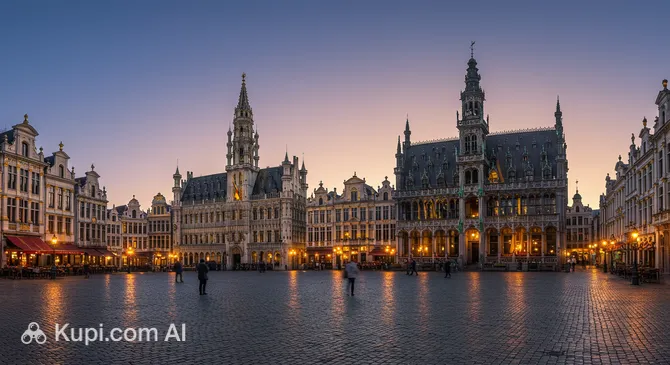
Welcome to Brussels, a vibrant metropolis that serves not only as the capital of Belgium but also as the administrative heart of the European Union. Known for its multicultural atmosphere, this dynamic city offers a unique blend of historic charm and modern cosmopolitan energy, making it a fascinating destination for travelers from around the globe.
Brussels. Illustration.
Source: Kupi.com AI
Geographically positioned in the center of the country, Brussels is home to approximately 1.7 million people. The city is celebrated for its stunning architecture, ranging from medieval guildhalls to Art Nouveau masterpieces. Those interested in the past can delve into the rich history of Brussels, which is reflected in its winding streets and grand monuments.
Visitors are often captivated by the Grand Place, a UNESCO World Heritage site famous for its opulent gold-trimmed buildings. Other must-see landmarks include the futuristic Atomium, offering panoramic views, and the whimsical Manneken Pis statue. Whether you are indulging in world-famous Belgian chocolate and waffles or exploring its diverse neighborhoods, Brussels promises an unforgettable experience.
Weather Overview
Brussels enjoys a temperate maritime climate, ensuring that the city is rarely exposed to extreme weather conditions. Visitors planning a trip can check the detailed forecast for weather in Brussels to pack appropriately for the season. Generally, the city experiences mild summers and cool winters with a fair amount of cloud cover year-round.
During the summer months of June through August, average temperatures range from 17.7°C to 19.1°C, with daytime highs reaching up to 23.4°C. While this is the warmest period, rain is still common, with about 10 to 14 wet days per month. Winters, spanning December to February, are chilly with average temperatures between 4.5°C and 5.9°C. December is typically the wettest month in terms of frequency, featuring around 16 rainy days.
Spring and autumn are characterized by moderate temperatures, with May seeing averages around 13.6°C and September cooling to about 16.1°C. Overall, expect comfortable summers with regular showers and cool, damp winters.
Average monthly temperature
Average monthly precipitation
Interesting Facts
Beyond the main attractions, Brussels holds many fascinating secrets and quirky details that often escape the casual visitor's eye. From world records to artistic heritage, the city offers plenty of surprises for the curious traveler.
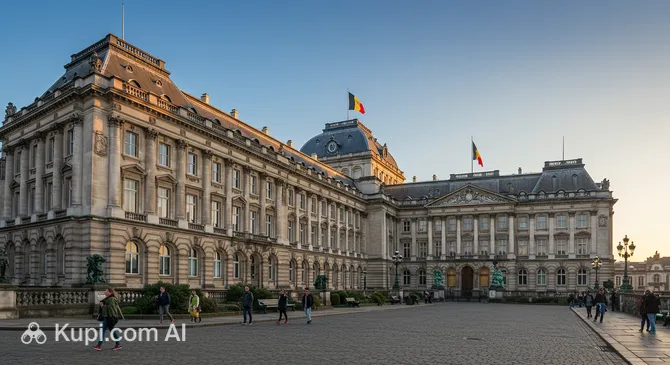
Royal Palace of Brussels. Illustration.
Source: Kupi.com AI
Traveler photos:
While London is famous for its royal residence, the Royal Palace of Brussels is actually grander in scale. Its majestic facade is 50% longer than that of Buckingham Palace, showcasing the immense scale of Belgian architectural ambition.
Travelers with a sweet tooth contribute to a staggering statistic at Brussels Airport. It is widely reported to be the largest chocolate selling point in the world, with over 800 tons of Belgian chocolate sold to passengers every year.
History buffs might be surprised to learn that the Royal Galleries of Saint Hubert is one of the oldest shopping arcades in Europe. Opened in 1847, this elegant glass-roofed passage predates the famous Galleria Vittorio Emanuele II in Milan by 20 years.
Brussels is often hailed as the comic strip capital of the world. The city pays homage to this title with a dedicated Comic Book Route, where huge murals of famous characters like Tintin, The Smurfs, and Asterix adorn the side walls of more than 50 buildings throughout the city.
How to Get There
Reaching the capital of Europe is straightforward thanks to its excellent connectivity with the rest of the continent and the world. Whether you are flying in from afar or taking a high-speed train from a neighboring country, there are multiple convenient options. You can find more details and all ways to reach the city on our dedicated page.
The primary gateway for air travelers is Brussels Airport (IATA: BRU), located approximately 10.8 km from the city center. As the main international hub, it handles a large volume of passengers and offers connections to destinations worldwide. A trip to the city center by taxi or bus generally takes about 35 to 40 minutes, depending on traffic. Travelers flying with budget airlines often arrive at Charleroi Brussels South Airport (IATA: CRL). Situated about 43.8 km from Brussels, this airport is a significant hub for low-cost carriers. The transfer time to the city is longer, typically taking around 1 hour and 25 minutes by road.
For clarity, here is a summary of the main airports:
Brussels is also a major focal point for European rail travel, boasting extensive high-speed connections. The most significant hub for international arrivals is Brussels Midi Station (IATA: ZYR), located just 2.0 km from the heart of the city. This station serves as the main terminal for Eurostar and Thalys trains. Another key transport node is the Brussels-North Bus Station (IATA: XNL), situated 1.4 km from the center, which facilitates both rail and bus connections. Both stations are well-connected to the local public transport network, making it easy to reach your final destination.
Below is a list of the nearest railway and transport stations:
Brussels is a city where history and modernity coexist seamlessly, offering visitors a diverse array of sights ranging from medieval marvels to futuristic landmarks. Whether you are an art enthusiast, an architecture lover, or simply looking for unique photo opportunities, the city's top attractions provide a captivating glimpse into its rich heritage and creative spirit.
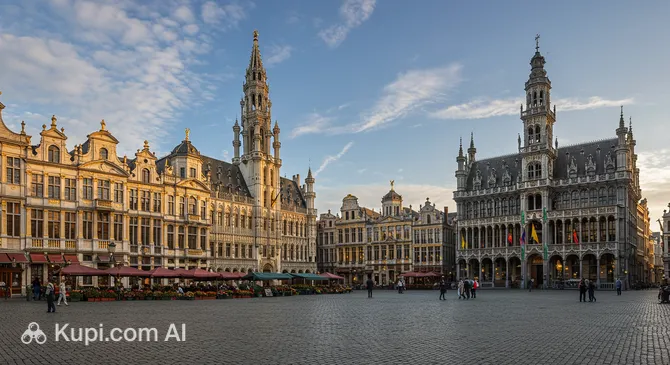
Grand Place. Illustration.
Source: Kupi.com AI
Traveler photos:
No visit to the capital is complete without spending time at the Grand Place. Often cited as one of the most beautiful squares in the world, this UNESCO World Heritage site is the beating heart of the city. It is surrounded by opulent guildhalls with intricate gold detailing and anchored by the magnificent Town Hall. The square is vibrant day and night, hosting everything from the colorful Flower Carpet event to daily flower markets, making it a perfect starting point for your exploration.
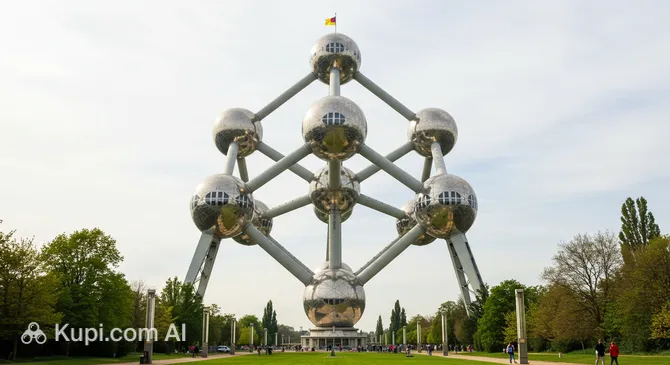
For a complete change of pace and era, head to the northern part of the city to see the Atomium. Originally constructed for the 1958 Brussels World's Fair, this iconic structure represents an iron crystal magnified 165 billion times. Visitors can explore its nine spheres, which house exhibitions and offer panoramic views of the city skyline. It stands as a symbol of peace and faith in progress, providing a retro-futuristic experience that is unique to Brussels.
Atomium. Illustration.
Source: Kupi.com AI
Traveler photos:
Located right at the foot of the Atomium is Mini-Europe, a delightful park that allows you to tour the continent in just a few hours. This attraction features over 350 models of famous European landmarks, reproduced with exquisite detail on a scale of 1:25. It is an entertaining and educational stop, especially for families, where you can see Big Ben, the Eiffel Tower, and the Acropolis all in one walk, accompanied by interactive visual and sound effects.
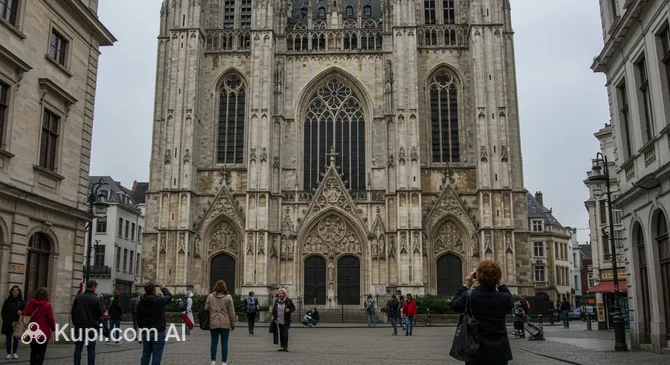
Travelers seeking spiritual and architectural grandeur should visit the Cathedral of St. Michael and St. Gudula. This stunning Gothic edifice, which took centuries to complete, sits atop the Treurenberg hill. Its twin towers and vast interior are reminiscent of the great cathedrals of France, yet it retains a distinct Brabantine Gothic character. Inside, visitors can admire the beautiful stained-glass windows and the impressive organ, often used for concerts.
Cathedral of St. Michael and St. Gudula. Illustration.
Source: Kupi.com AI
Traveler photos:
Art lovers will find a haven in the Royal Museums of Fine Arts of Belgium. This extensive complex comprises several museums, including the Old Masters Museum and the Magritte Museum. Together, they house a vast collection of over 20,000 works, tracing the history of visual arts from the 15th century to the present day. It is the premier destination to view masterpieces by Flemish primitives, as well as the surrealist works of René Magritte.
Local Cuisine
The culinary landscape of Brussels is a delightful reflection of the city itself: rich, diverse, and unpretentious yet incredibly high in quality. Often described as serving food with the finesse of French cuisine but in the generous portions of Germany, the city is a haven for gastronomes. A quintessential experience here involves sitting down for a steaming pot of moules-frites (mussels with fries). These are typically served in a variety of broths, from classic white wine and celery to garlic cream, and are best enjoyed with a side of crispy, double-fried Belgian fries.
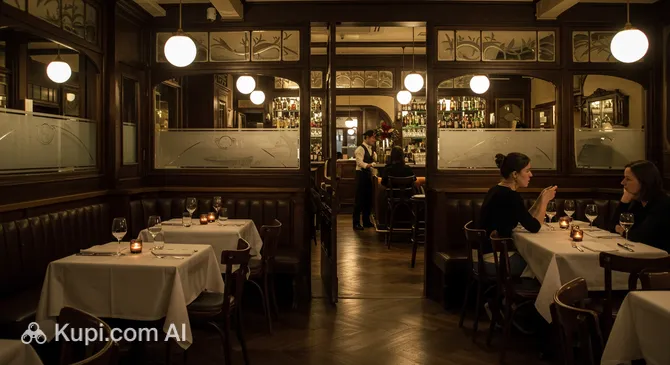
For a hearty taste of traditional comfort food, visitors should look for Carbonnade flamande, a rich sweet-sour beef and onion stew made with beer, often accompanied by stoemp (mashed potatoes mixed with vegetables). A popular spot to savor these authentic flavors is Fin de Siècle, a restaurant known for its rustic atmosphere and classic Belgian dishes. The dining culture in Brussels is relaxed, with many locals preferring lively brasseries where the focus is on good company and excellent ingredients.
Fin de Siècle. Illustration.
Source: Kupi.com AI
Traveler photos:
No discussion of Brussels is complete without mentioning its world-famous sweets. The city is the birthplace of the praline, and the streets are lined with chocolatiers ranging from historic houses to modern artisans. To understand the magic behind these treats, you can visit Choco-Story Brussels, where you can learn about the history of cocoa and watch demonstrations. Waffles are another staple, sold at street corners and tea rooms alike. Be sure to try the Brussels waffle—rectangular, light, and dusted with powdered sugar—distinct from the denser, sugary Liège variety.
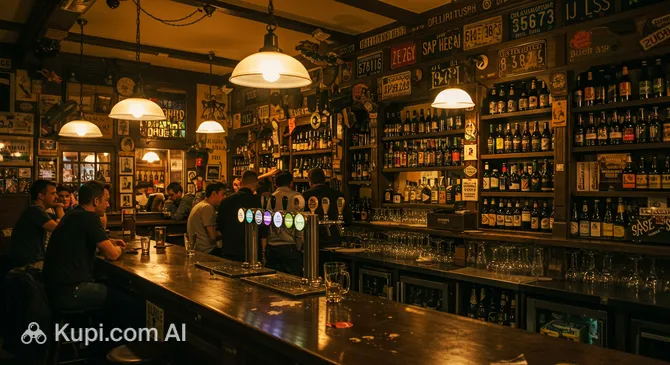
When it comes to drinks, Brussels is a pilgrimage site for beer lovers. Belgian beer culture is UNESCO-listed, and the local specialty is Lambic, a spontaneously fermented beer that serves as the base for Gueuze and Kriek (cherry beer). For an unparalleled selection, travelers often head to Delirium Café, which holds a Guinness World Record for the number of beers available. Whether you are sipping a complex trappist ale or a refreshing fruit beer, the variety is staggering.
Delirium Café. Illustration.
Source: Kupi.com AI
Traveler photos:
Street food is also a significant part of the local lifestyle, particularly around the Sainte-Catherine area, which was historically the fish market. Here, you can find Noordzee (Mer du Nord), a famous fish bar where locals stand at high tables to enjoy fresh oysters, kibbeling (battered fish chunks), and fish soup with a glass of white wine. It captures the vibrant, convivial spirit of Brussels' food scene perfectly.
Travel Tips
Getting ready for your trip to the heart of Europe requires a bit of practical know-how to ensure a smooth and enjoyable experience. Here is a curated list of essential tips to help you navigate Brussels like a local, covering everything from packing essentials to social etiquette.
Clothing and Gear: The weather in Brussels is known for being changeable, so the best strategy is to dress in layers. Regardless of the season, packing a sturdy umbrella or a waterproof jacket is essential, as rain showers can occur unexpectedly. Since the city center features many historic cobblestone streets, bring comfortable walking shoes and avoid high heels for sightseeing.
Transportation: The city has an excellent public transport network operated by STIB/MIVB, integrating the metro, trams, and buses. You can simply use your contactless bank card or smartphone to pay directly on the validators in the vehicle or at the station gates. Renting a car is not recommended for exploring the city itself due to heavy traffic and limited parking; walking and public transport are far more efficient.
Finances: The local currency is the Euro (€). While international credit and debit cards are widely accepted in hotels, restaurants, and larger shops, it is advisable to carry some cash for small purchases at street stalls, flea markets, or for public toilets. Tipping is not mandatory since a service charge is included in the bill, but rounding up or leaving a small amount for good service is appreciated.
Health and Safety: Brussels is generally safe, but tourists should be vigilant about pickpockets in crowded areas like the Grand Place and major transport hubs such as Brussels Midi station. Pharmacies are easily engaging by a green neon cross outside. For general emergencies, the pan-European number is 112. Stick to well-lit streets at night and keep your belongings secure.
Communication: Brussels is officially bilingual (French and Dutch), though French is more commonly heard in the streets. Fortunately, English is widely spoken, especially in the tourism and hospitality sectors. Learning a simple "Bonjour" (Hello) or "Merci" (Thank you) is a polite gesture that locals appreciate. Free Wi-Fi is often available in public squares and metro stations.
Local Etiquette: Politeness is highly valued here. It is customary to greet shop assistants when entering a store and to say goodbye when leaving. When interacting with locals, a handshake is a standard greeting. In public spaces and on public transport, people generally speak quietly, so try to keep your voice down to blend in.
What to Avoid: Be extremely careful not to walk on bike lanes, which are often marked in red or separated from the sidewalk. Cyclists in Brussels commute quickly and expect pedestrians to stay in their designated areas. Blocking a bike lane is considered rude and can be dangerous.
Additional Tip: Keep in mind that many shops and supermarkets are closed on Sundays. It is best to do any necessary shopping on Saturday. However, Sundays are perfect for visiting museums, enjoying a long brunch, or exploring the famous antique market at the Sablon, which remains lively all weekend.
With these practical tips in hand, you are well-prepared to explore the charming streets and grand plazas of the Belgian capital with confidence. Embrace the relaxed local rhythm, indulge in the culinary delights, and have a fantastic time discovering all that Brussels has to offer!
Entertainment & Nightlife
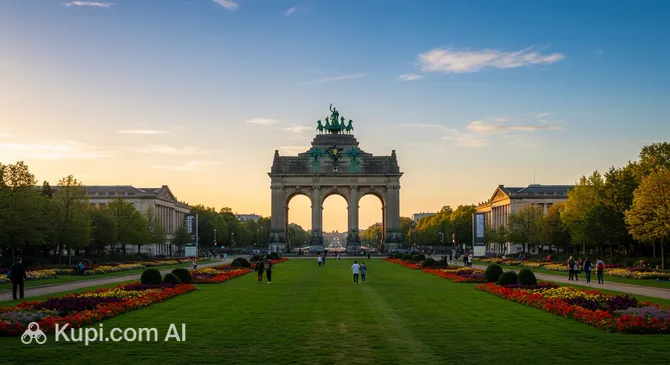
Beyond its historic landmarks and museums, Brussels offers a wide range of entertainment options, from lush green escapes to modern interactive experiences. Visitors looking to unwind can head to Cinquantenaire Park, a vast urban oasis commissioned by King Leopold II. Dominated by a majestic triumphal arch, the park features landscaped gardens and wide paths that are perfect for a leisurely stroll or a summer picnic.
Cinquantenaire Park. Illustration.
Source: Kupi.com AI
Traveler photos:
For a more immersive nature experience, the Bois de la Cambre is a beloved retreat located at the edge of the Sonian Forest. Designed in the English style, this sprawling park is ideal for jogging, cycling, or renting a boat to paddle on its serene lake. It serves as a peaceful counterpoint to the bustling city center.
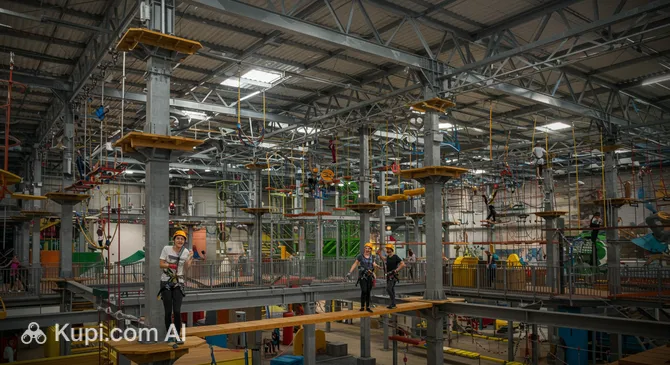
Travelers seeking active fun and team challenges will find plenty of excitement at Koezio Brussels. This indoor adventure park combines physical obstacles with intellectual puzzles, creating a unique mission-based experience for groups. Technology enthusiasts can also visit Zero Latency Brussels for cutting-edge free-roam virtual reality gaming, or test their problem-solving skills at Escape Hunt Brussels, which offers various themed escape rooms.
Koezio Brussels. Illustration.
Source: Kupi.com AI
Traveler photos:
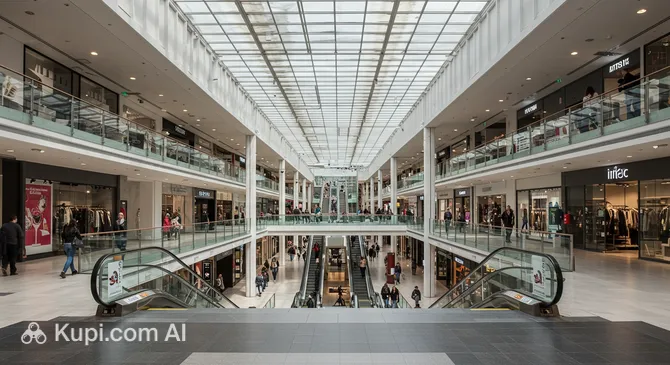
For those interested in retail therapy, the city provides excellent shopping facilities. The Woluwe Shopping Center is a premier destination, housing a diverse collection of international brands, fashion boutiques, and dining spots in a modern, comfortable setting.
Woluwe Shopping Center. Illustration.
Source: Kupi.com AI
Traveler photos:
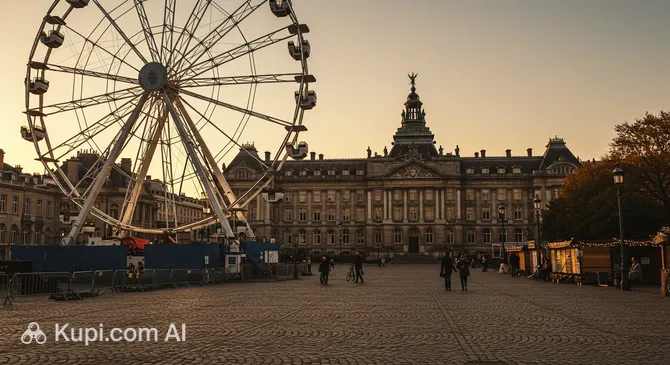
As evening sets in, seeing the city from above is a memorable experience. The Place Poelaert Ferris Wheel, located near the Palace of Justice, offers spectacular panoramic views of the skyline, especially enchanting at sunset. Afterward, those looking for lively entertainment can sing their hearts out at the BOA Karaoke Room, a vibrant venue featuring private rooms for a fun night out with friends.
Place Poelaert Ferris Wheel. Illustration.
Source: Kupi.com AI
Traveler photos:
Parks & Museums
Beyond its famous chocolate shops and administrative buildings, Brussels offers a surprising wealth of green sanctuaries and world-class cultural institutions. The city's urban planning seamlessly integrates historic gardens with modern recreational areas, while its diverse museums cover everything from natural history to automotive evolution, ensuring there is something to capture every traveler's imagination.
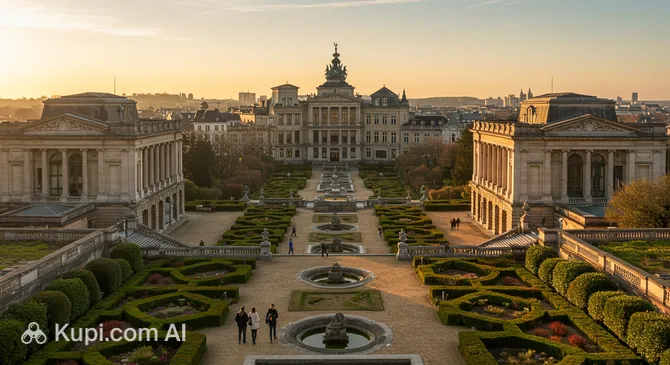
For a relaxing break in the city center, Brussels Park is the most iconic choice. Located between the Royal Palace and the Belgian Parliament, this French-style formal garden features elegant fountains, statues, and wide avenues lined with lime trees. Just a short walk away lies the Mont des Arts, a landscaped garden complex that connects the upper and lower parts of the city. It is a favorite spot for visitors to admire the geometric flower beds and enjoy one of the finest panoramic views of the Brussels skyline, especially the tower of the Town Hall.
Mont des Arts. Illustration.
Source: Kupi.com AI
Traveler photos:
Nature lovers willing to venture slightly outside the city limits should not miss the Hallerbos, often referred to as the "Blue Forest." In late April and early May, the forest floor is carpeted with millions of blooming bluebells, creating a magical, fairy-tale atmosphere that attracts photographers and nature enthusiasts from around the world. It is a perfect destination for hiking and reconnecting with nature.
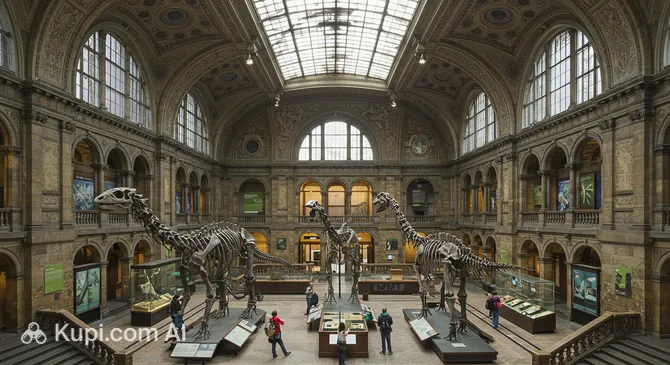
When it comes to museums, the Royal Belgian Institute of Natural Sciences is a highlight, particularly for families. It houses one of the largest dinosaur galleries in Europe, featuring the famous Iguanodons of Bernissart—30 complete skeletons discovered in a Belgian coal mine. The museum offers an interactive journey through the history of life on Earth, biodiversity, and evolution.
Royal Belgian Institute of Natural Sciences. Illustration.
Source: Kupi.com AI
Traveler photos:
Car enthusiasts will be thrilled by Autoworld, located in the prestigious Southern Hall of the Cinquantenaire complex. This museum displays a vast collection of over 250 vintage vehicles, tracing the history of the automobile from the late 19th century to the present day. For admirers of architecture and design, the Horta Museum is an essential stop. Set in the former home and studio of Victor Horta, a pioneer of Art Nouveau, the building itself is a UNESCO World Heritage site, showcasing the intricate craftsmanship and organic lines that define the style.
Among the city's architectural landmarks, the Basilica of the Sacred Heart stands out for its sheer scale. As the fifth-largest church in the world, this Art Deco masterpiece dominates the Koekelberg hill. Visitors can ascend to the gallery just below the dome for a breathtaking 180-degree view of Brussels and its surroundings.
For a quieter cultural experience, consider visiting the grounds of La Cambre Abbey. This former Cistercian abbey offers a peaceful atmosphere with beautiful terraced gardens that are often less crowded than the main parks, providing a serene escape within the bustling city.
Getting Around
Navigating Brussels is remarkably convenient thanks to its integrated and efficient public transport network, primarily operated by STIB-MIVB. The system is comprehensive, covering the entire capital region with a combination of four metro lines, an extensive web of tram routes, and numerous bus lines. The metro is the fastest way to cross the city, while the trams—some of which travel underground in tunnels known as the "Pre-metro"—offer a scenic and reliable way to reach neighborhoods that are slightly further from the city center.
For most tourists, the payment system is modern and user-friendly. The easiest way to pay is by using a contactless bank card, smartphone, or smartwatch directly on the grey validators found in stations and on vehicles. This "EMV" payment method is cheaper than buying paper tickets and caps your daily spending automatically if you make multiple trips. Alternatively, you can purchase a disposable paper ticket or a reloadable MOBIB card at "GO" vending machines located at every metro station and many major bus stops. For those planning to explore the wider metropolitan area, the "Brupass" ticket covers travel within the city limits across all operators, while the "Brupass XL" extends to the suburbs.
A key piece of advice for visitors is to always validate your ticket or tap your card at the start of your journey and every time you transfer between lines or modes of transport. The system operates roughly from 5:30 AM until midnight. On Friday and Saturday nights, a special night bus network called "Noctis" runs until approximately 3:00 AM, ensuring you can return safely after a night out. Be aware that doors on metros and trams do not open automatically; you must press the button or pull the lever when the vehicle stops.
If you prefer active mobility, the city offers a popular bike-sharing scheme called Villo!, with stations located every few hundred meters. Electric scooters and dockless bikes from various operators are also widely available via mobile apps. For direct transfers, taxis are plentiful, and ride-hailing apps like Uber operate legally alongside local services such as Taxis Verts. While the city center is walkable, these alternatives provide flexibility for shorter trips or when carrying luggage.
One unique feature of the transport system is the "art in the metro" initiative. Many underground stations double as public art galleries, featuring sculptures, paintings, and photographs by renowned Belgian and international artists. Exploring the network can feel like a cultural tour in itself, with stations like Comte de Flandre and Horta showcasing impressive designs that reflect the city's artistic heritage.
Accommodation
Finding the perfect place to stay in Brussels is relatively easy, as the city offers a diverse range of accommodation options to suit every budget and travel style. Whether you are a backpacker looking for a vibrant hostel, a family seeking a comfortable apartment, or a luxury traveler desiring a five-star suite with historic charm, the Belgian capital has something to offer. The hospitality sector here is well-developed, blending modern amenities with the city's unique architectural character.
For most tourists, the most convenient area to stay is the City Center (Pentagon), particularly near the Grand Place. This location puts you within walking distance of major attractions, restaurants, and chocolate shops. If you prefer a more upscale experience with high-end shopping and art galleries, the Sablon and Avenue Louise districts are excellent choices. Alternatively, the European Quarter offers modern hotels that are often quieter and more affordable during weekends when the business crowd has left.
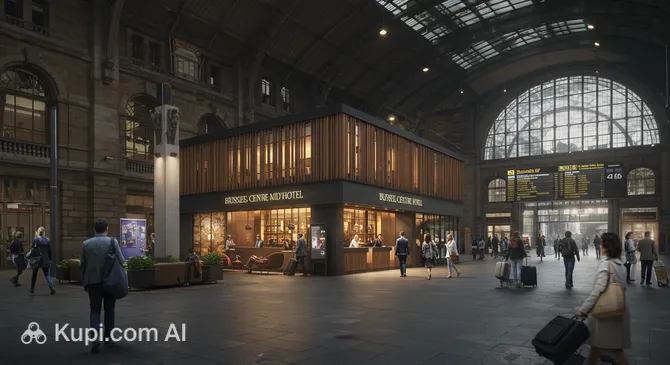
Travelers prioritizing connectivity, especially those arriving by international train, might consider staying near the main transport hubs. For instance, the Brussels Centre Midi Hotel is a practical option located near the Brussels-South (Midi) station. Staying in this area ensures quick access to Eurostar and Thalys trains, making it an ideal base for those planning day trips to other Belgian cities like Bruges or Ghent.
Brussels Centre Midi Hotel. Illustration.
Source: Kupi.com AI
Traveler photos:
Regarding costs, prices in Brussels are generally comparable to other Western European capitals. Budget travelers can find hostels and budget hotels ranging from €30 to €80 per night, while mid-range options typically cost between €100 and €180. Luxury accommodations can go upwards of €250 per night. It is highly recommended to book in advance, especially if you plan to visit during the peak summer season or in December for the famous Christmas markets, as the best-value rooms tend to fill up quickly. Most bookings can be easily made via major online platforms or directly through hotel websites.
Nearby Cities
For those looking to explore the surroundings, Brussels serves as an excellent base for day trips to several interesting nearby locations:
City
Population
Distance
Saint-Josse-ten-Noode
27 497
1 km
Koekelberg
21 959
3 km
Etterbeek
48 473
3 km
Laeken
60 295
3 km
Ganshoren
25 234
4 km
While often considered part of the greater metropolitan area, the commune of Laeken is a destination in its own right. Located just a few kilometers north of the city center, it is famous for housing the official residence of the Belgian King. Visitors can admire the expansive Royal Domain and, during specific weeks in spring, tour the magnificent Royal Greenhouses. Laeken is also home to the Japanese Tower and the Chinese Pavilion, offering a surprising architectural contrast.
Another fascinating area to visit is Anderlecht. Known historically for its beguinage, one of the oldest in Belgium, it offers a glimpse into medieval life. Art and history enthusiasts should not miss the Erasmus House, a museum dedicated to the famous humanist scholar who once stayed there. The area provides a quieter, village-like atmosphere compared to the bustling center of Brussels.
For admirers of surrealism, a short trip to Jette is highly recommended. This municipality is where the renowned artist René Magritte lived and worked for over two decades. His former home has been converted into a museum, preserving the environment where he created many of his masterpieces, making it an essential stop for art lovers.
These nearby destinations offer a glimpse into the diverse culture and landscapes of the region.
Shopping & Souvenirs
Shopping in Brussels:
Shopping in Brussels is a delightful experience that caters to every taste and budget, blending high-end luxury with quirky vintage finds. The city is renowned not only for its fashion and design but also for its high-quality artisanal products. Whether you are hunting for the latest trends, searching for rare antiques, or simply looking to indulge in delicious local treats, the Belgian capital offers a diverse array of retail opportunities spread across distinct neighborhoods.
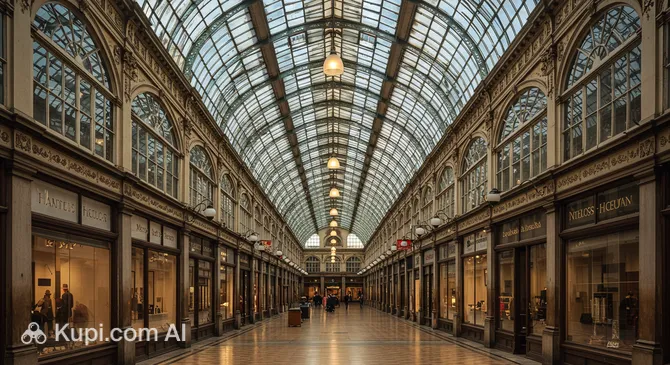
For a mix of popular international brands and department stores, the pedestrianized Rue Neuve is the busiest shopping street in the country. If you prefer luxury and haute couture, head to Avenue Louise and the Boulevard de Waterloo, where prestigious fashion houses display their latest collections. For a more historic and elegant atmosphere, a stroll through the Royal Galleries of Saint Hubert is essential. This stunning 19th-century arcade is lined with upscale boutiques, watchmakers, and some of the city's finest chocolatiers, making it a perfect spot for window shopping in style.
Royal Galleries of Saint Hubert. Illustration.
Source: Kupi.com AI
Traveler photos:
Those who enjoy the convenience of large retail complexes will find several options in and around the city. The Woluwe Shopping Center is a well-known destination offering a wide variety of stores under one roof. Another notable location is Shopping Pajot, situated in the Anderlecht area. It provides a relaxed shopping environment with numerous fashion retailers, supermarkets, and practical services, making it a convenient stop for visitors staying in the western part of the city.
Markets are an integral part of Brussels' local culture. The most famous is undoubtedly the flea market at Place du Jeu de Balle in the Marolles district. Open every morning, it is a treasure trove for antique lovers and bargain hunters seeking vintage decor, books, and curiosities. On Sundays, the vast market at Gare du Midi attracts huge crowds with its fresh produce, flowers, and exotic spices, offering a vibrant sensory experience.
When it comes to souvenirs, Belgian chocolate is the undisputed king. You can buy exquisite pralines from renowned makers like Neuhaus, Godiva, or Pierre Marcolini. Beyond sweets, Brussels is famous for its intricate lace, which has been a traditional craft for centuries. Comic book fans should look for albums and figurines of Tintin or The Smurfs, while beer enthusiasts will appreciate a gift pack of local artisanal brews or a specialized beer glass.
Most shops in Brussels are open from Monday to Saturday, typically between 10:00 AM and 6:00 PM or 7:00 PM. It is important to note that the majority of stores, including supermarkets, are closed on Sundays, although some shops in tourist areas and the Marolles flea market remain open. Credit and debit cards are widely accepted, but carrying some cash is advisable for smaller markets. Visitors from outside the European Union may be eligible for a tax refund on purchases exceeding a certain amount, so be sure to ask for a tax-free form at checkout.