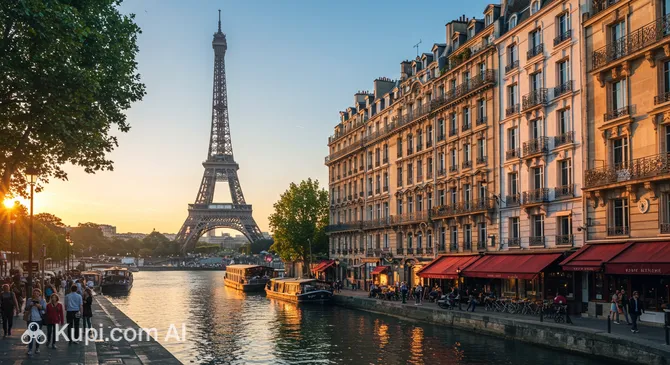
Paris, often referred to as the "City of Light," is one of the most iconic and romantic destinations in the world. As the vibrant capital of France, it serves as a global center for art, fashion, gastronomy, and culture. The city's unique atmosphere is defined by its grand boulevards, charming cafés, and the majestic river Seine winding through its heart.
Located in the north-central part of the country within the Île-de-France region, Paris is a bustling metropolis with a metropolitan population of over 11 million people. The city enjoys a temperate oceanic climate, characterized by mild summers and cool winters, making it a pleasant destination year-round. While the modern city is a hub of business and innovation, the rich history of Paris is evident in every cobblestone street and historic monument.
Paris. Illustration.
Source: Kupi.com AI
Visitors are drawn to the city's world-renowned landmarks, such as the iconic Eiffel Tower and the sprawling Louvre Museum, home to thousands of artistic masterpieces. Beyond the famous sights, the city offers a distinct lifestyle where leisurely strolls through the Tuileries Garden or enjoying a fresh croissant at a sidewalk bistro are essential experiences.
Whether you are captivated by its architectural splendor or its culinary delights, Paris promises an unforgettable journey. It is a city that truly deserves a top spot on every traveler's bucket list.
Weather Overview
Paris experiences a temperate oceanic climate with distinct seasons, each offering a different atmosphere for visitors. To help plan your packing list and itinerary, you can consult the detailed guide to the weather in Paris. Generally, the city enjoys mild weather, though conditions can be somewhat changeable with frequent cloud cover.
Summers are typically warm and pleasant, with July being the warmest month, featuring average highs of 25.0°C and the fewest rainy days. Winters are cool but rarely freezing, with average temperatures in January and December dropping to around 5.0°C to 6.0°C. Rainfall is fairly distributed throughout the year, though December and March tend to be the dampest months with up to 15 wet days each.
Spring and autumn serve as mild transition periods, with average temperatures rising from 8.1°C in March to 14.0°C by May, and cooling down again in October. Overall, you should expect warm summers with occasional rain and cool winters with frequent damp days, making an umbrella a useful travel companion regardless of when you visit.
Average monthly temperature
Average monthly precipitation
Interesting Facts
Beyond the postcards and famous landmarks, Paris conceals fascinating stories and quirks that surprise even seasoned travelers. Dig a little deeper, and you will discover a side of the capital that is as intriguing as it is beautiful.
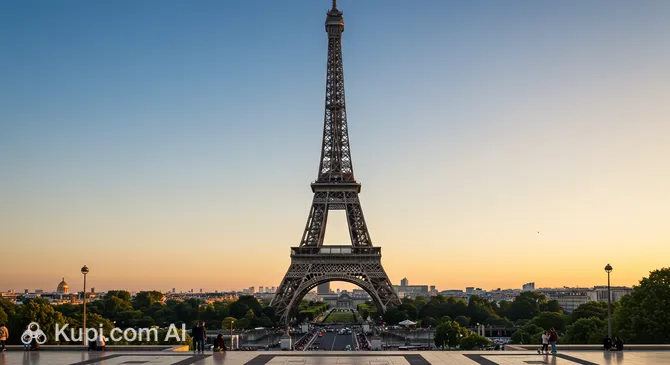
The iconic Eiffel Tower was never intended to be a permanent fixture of the skyline. Built for the 1889 World's Fair, it was originally scheduled to be dismantled after 20 years, but it was saved largely because it proved useful as a giant radio antenna.
While the Louvre Museum is world-famous for its masterpieces, its sheer size is difficult to comprehend. It is estimated that if you spent just 30 seconds looking at every object on display, it would take you nearly 100 days to see the entire collection.
Paris has its official center point located just outside Notre-Dame Cathedral. A small brass star known as "Point Zero" is embedded in the concrete here, serving as the marker from which all distances to other cities in France are measured.
Despite its name, the Pont Neuf (New Bridge) is actually the oldest standing bridge across the Seine in Paris. Completed in 1607, it was the first bridge in the city to be built with stone pavements, designed to separate pedestrians from the mud and traffic of the street.
Eiffel Tower. Illustration.
Source: Kupi.com AI
Traveler photos:
How to Get There
Reaching the French capital is straightforward thanks to its status as a major global transport hub. Whether you are arriving from across the globe or a neighboring country, there are numerous convenient connections available. For a detailed breakdown of all travel options, you can read more about how to get to Paris.
Most international travelers arrive via the city's primary aviation hubs. The largest and busiest is Charles de Gaulle Airport(CDG), located approximately 23 km from the city center. It handles a vast number of long-haul international flights. A taxi or bus ride from here typically takes around 55 minutes, depending on traffic. Another key entry point is Paris Orly Airport(ORY), situated closer to the city, about 15 km away. It is a popular choice for domestic and European flights, with a transfer time of roughly 45 minutes by road.
Budget travelers often utilize Beauvais-Tille Airport(BVA), which serves many low-cost carriers. Although it is listed as a Paris airport, it is located about 69 km away from the capital. Due to the distance, the journey by bus or taxi is longer, taking approximately 2 hours.
For clarity, here is a summary of the main airports serving the region:
Paris is also the center of the French railway network, making train travel a highly efficient option. Gare du Nord Station(XPG) is one of the busiest railway stations in the world, connecting the city with northern France and international destinations like London and Brussels. It is located centrally, just 2.5 km from the heart of the city. Another major hub is Gare de Lyon(LYY), which serves trains arriving from the south and east of France, as well as Switzerland and Italy. It is situated about 2.3 km from the center.
Below is a list of the key railway stations in and around the city:
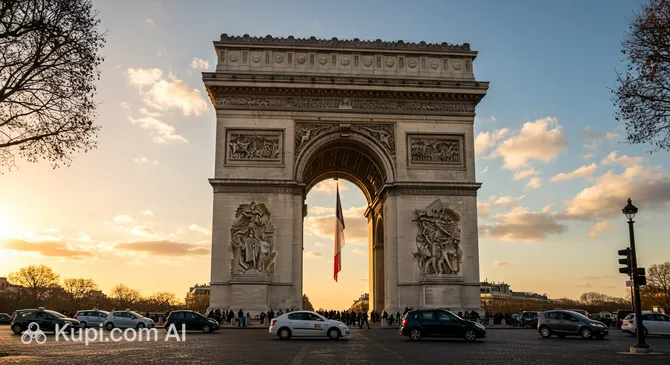
Paris is brimming with world-class landmarks, but few are as imposing as the Arc de Triomphe. Standing majestically at the western end of the Champs-Élysées, this monumental arch honors those who fought for France. Visitors are drawn to its intricate relief sculptures and the eternal flame that burns beneath it. For a truly memorable experience, you can climb the stairs to the panoramic terrace, which rewards you with one of the finest views of the city's twelve radiating avenues.
Arc de Triomphe. Illustration.
Source: Kupi.com AI
Traveler photos:
Art enthusiasts will find a paradise at the Musée d'Orsay, located on the Left Bank of the Seine. Housed in a stunning Beaux-Arts railway station built for the Universal Exhibition of 1900, the building itself is an architectural marvel. Inside, it holds the world's largest collection of Impressionist and Post-Impressionist masterpieces, allowing you to admire iconic works by Monet, Van Gogh, Renoir, and many others in a breathtaking, light-filled setting.
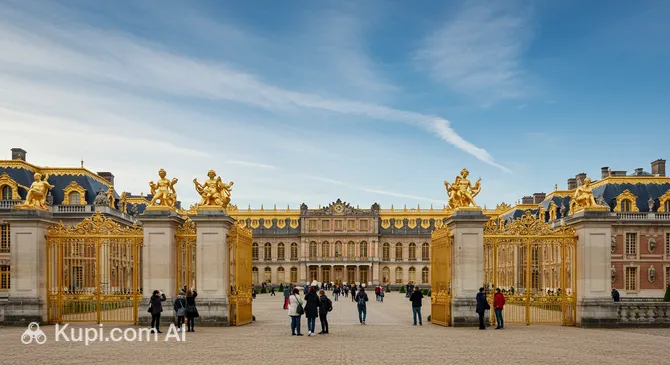
For a glimpse into the opulent history of the French monarchy, a trip to the Palace of Versailles is essential. Although situated just outside the city limits, it remains one of the most visited sites in the region. This UNESCO World Heritage site dazzles tourists with the glittering Hall of Mirrors, the lavish King's Grand Apartments, and the immense, manicured gardens that stretch as far as the eye can see, complete with fountains and statues.
Palace of Versailles. Illustration.
Source: Kupi.com AI
Traveler photos:
Perched atop the highest point in the city, the Basilica of the Sacred Heart of Montmartre, commonly known as Sacré-Cœur, offers both spiritual solace and spectacular vistas. The basilica's white travertine domes are a defining feature of the Parisian skyline. After exploring its stunning mosaic interior, many visitors gather on the steps outside to enjoy a sweeping, unobstructed view over the entire capital, often accompanied by the music of street performers.
Local Cuisine
Paris is undeniably a world capital of gastronomy, where food is treated as an art form and every meal is an occasion. The local culinary scene ranges from humble neighborhood bakeries to prestigious Michelin-starred establishments. For many visitors, the journey begins with the simplest of pleasures: a fresh, warm baguette or a buttery croissant from a local boulangerie. These staples are the heartbeat of the Parisian breakfast and are best enjoyed with a café au lait while watching the city wake up.
When it comes to savory classics, the city offers dishes that are rich in flavor and history. A steaming bowl of Soupe à l'oignon (onion soup), topped with melted Gruyère cheese and croutons, is the perfect comfort food, especially during cooler months. For a quintessential bistro meal, try Steak Frites, a simple yet delicious pairing of steak and crispy french fries. Adventurous eaters might also want to sample Escargots de Bourgogne, snails cooked in a delicious garlic and parsley butter sauce.
No culinary tour of Paris is complete without indulging in its world-famous pastries. The macaron, a delicate meringue-based cookie available in a rainbow of flavors, has become a symbol of the city's sweet side. You should also look for Paris-Brest, a ring of choux pastry filled with praline cream, or a classic lemon tart. These treats are often displayed like jewels in the windows of patisseries across the city.
The beverage culture is equally important. Wine is a staple at lunch and dinner, with menus typically featuring excellent selections from regions like Bordeaux, Burgundy, and the Loire Valley. For a non-alcoholic option, the "chocolat chaud" (hot chocolate) in Paris is legendary—often thick, rich, and served with a side of whipped cream. In the evenings, the city comes alive with cocktail bars and wine cellars where locals gather to unwind.
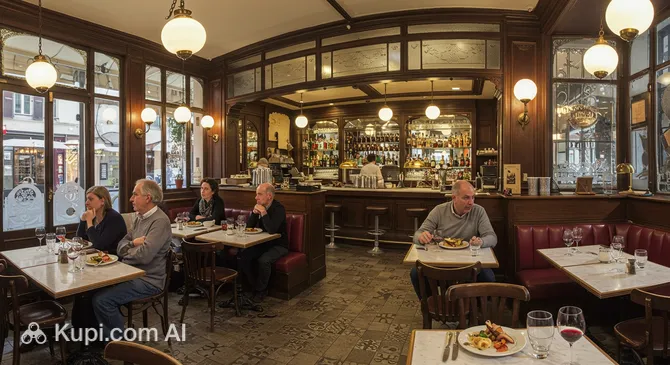
Dining out in Paris offers a variety of atmospheres. While traditional brasseries with their zinc counters are timeless, the city has seen a resurgence of "Bouillons"—historic restaurants serving traditional French cuisine at very affordable prices in stunning Art Nouveau settings. A prime example is Bouillon République, a bustling spot where you can enjoy classic dishes in a grand, lively hall.
Bouillon République. Illustration.
Source: Kupi.com AI
Traveler photos:
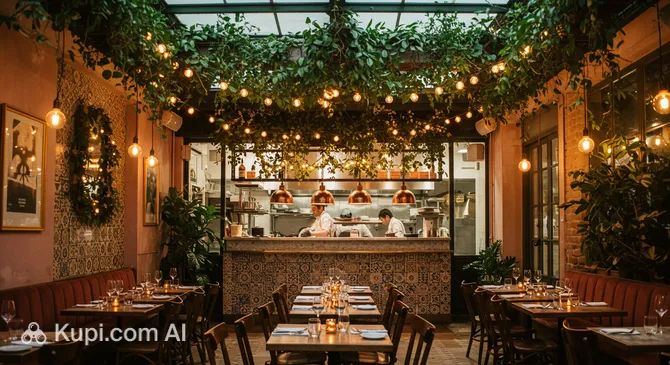
For those looking to experience the modern and trendy side of the Parisian food scene, the city is full of vibrant eateries that blend great food with spectacular design. Pink Mamma is one such destination, famous not only for its delicious Italian-influenced menu but also for its stunning four-story layout and hanging gardens, making it a favorite for both foodies and photographers.
Pink Mamma. Illustration.
Source: Kupi.com AI
Traveler photos:
Whether you are grabbing a quick crêpe from a street stand, exploring the fresh produce at a local market, or sitting down for a three-course meal, the flavors of Paris are sure to leave a lasting impression. The city invites you to slow down, savor each bite, and enjoy the conviviality that defines the French dining experience.
Travel Tips
Planning a trip to Paris is exciting, but a few practical insights can turn a good vacation into a seamless and unforgettable experience. Here is a curated list of essential tips to help you navigate the French capital with confidence and ease.
Clothing and Gear: Paris is a city best explored on foot, so packing extremely comfortable walking shoes is non-negotiable. The weather can be unpredictable, so bring layers and a compact umbrella; when visiting religious sites, ensure your attire is modest (shoulders and knees covered) to respect local norms.
Transportation: The Metro is the most efficient way to travel; consider buying a "Navigo Easy" pass or using contactless tickets to save time. While ride-hailing apps are available, traffic can be dense, so the subway or walking is often faster than a car.
Finances: The currency is the Euro (€), and while credit cards are accepted almost everywhere, it is useful to carry some cash for small purchases at bakeries or newsstands. Tipping is not mandatory since a service charge is included, but leaving small change or rounding up the bill is a common way to show appreciation.
Health and Safety: Pharmacies are marked by a flashing green cross and are found on nearly every corner; pharmacists are highly trained and can offer medical advice for minor ailments. Watch out for pickpockets in tourist hotspots and on crowded metro lines, keeping your belongings secure and zipped up.
Communication: While English is widely spoken in hospitality, starting any conversation with a polite "Bonjour" (Hello) is essential etiquette that opens doors. For internet access, free Wi-Fi is common in parks and cafes, or you can easily purchase a prepaid SIM card at local "Tabac" shops.
Local Etiquette: Politeness is key in French culture; always greet shop assistants when entering a store and say goodbye when leaving. In public spaces and restaurants, try to keep your voice volume low, as loud conversations are generally frowned upon.
What to Avoid: Never stand on the left side of an escalator in the metro or train stations; the left side is strictly for walking, while the right is for standing. Blocking the path is a sure way to annoy rushing locals.
Additional Tip: Save money and stay hydrated by using the city's historic Wallace Fountains. These green cast-iron fountains provide free, clean drinking water throughout Paris, so carry a reusable bottle with you.
Armed with these practical tips, you are ready to embrace the rhythm of Parisian life and explore the city like a pro. Enjoy every moment of your adventure, from the morning croissant to the glittering lights of the Eiffel Tower at night.
Entertainment & Nightlife
Paris comes alive when the sun sets, offering a nightlife scene that is as diverse as its population. From historic jazz cellars in the Latin Quarter to trendy rooftop bars in the 11th arrondissement, the city caters to every taste. The atmosphere ranges from sophisticated and chic to underground and energetic, ensuring that night owls always have a place to go.
For a spirited evening of bar-hopping, the Oberkampf and Bastille districts are legendary. These areas are packed with lively bars and are popular among students and young locals. If you prefer a trendy and inclusive vibe, Le Marais is the place to be, known for its vibrant LGBTQ+ scene and stylish cocktail lounges. Meanwhile, the Pigalle neighborhood, once famous only for its cabaret history, has transformed into "SoPi" (South Pigalle), a hotspot for hip mixology bars and intimate clubs.
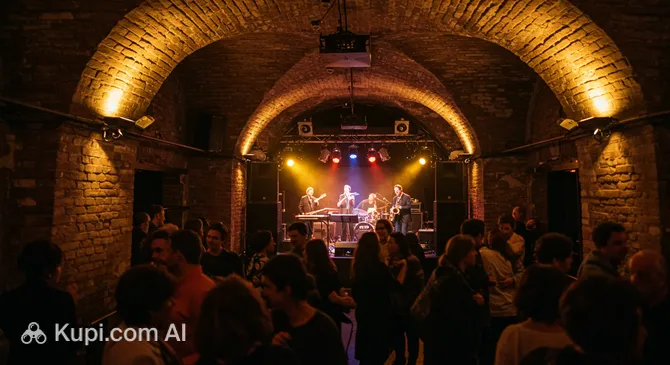
Music lovers should not miss the chance to visit Le Caveau de la Huchette. Located in a building dating back to the 16th century, this legendary jazz club offers a unique atmosphere where you can listen to swing music and watch dancers on the stone floor. It is a perfect example of the city's rich cultural heritage blending with its nightlife.
Le Caveau de la Huchette. Illustration.
Source: Kupi.com AI
Traveler photos:
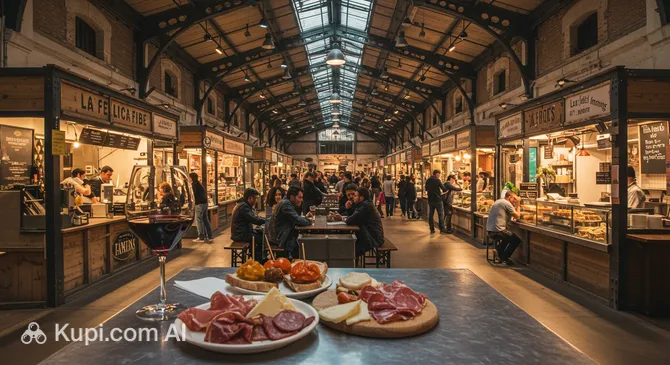
For a more modern and expansive experience, La Felicità is a massive food and party market that often hosts DJ sets and events. It is a great spot to enjoy drinks and Italian food in a vibrant, eclectic setting. If you are seeking pure luxury, the bar at Hôtel de Crillon offers an exclusive environment to sip signature cocktails in a historic palace hotel.
La Felicità. Illustration.
Source: Kupi.com AI
Traveler photos:
Before the night fully takes over, the city offers plenty of daytime and evening cultural entertainment. You can catch a world-class ballet or opera performance at the stunning Palais Garnier, or explore the magical world of Disneyland Park if you are traveling with family or simply young at heart. The city's theaters and cabarets provide a seamless transition from day to night.
Practicality is key to enjoying a night out in Paris. The Metro typically runs until around 1:15 AM on weekdays and 2:15 AM on Fridays and Saturdays. After these hours, you can rely on the "Noctilien" night bus network or ride-hailing apps like Uber and G7 taxis, which are safe and widely available. Prices for drinks vary significantly; a beer might cost 6 to 8 euros in a dive bar but upwards of 15 euros in a chic club.
Regarding safety, Paris is generally safe for night walks, especially in busy districts like the Marais or Saint-Germain-des-Prés. However, it is advisable to avoid unlit parks after dark and stay vigilant around major tourist hubs to avoid pickpockets. Most venues have a "casual chic" dress code, meaning smart jeans and a nice shirt are usually acceptable, though high-end clubs may require more formal attire.
Parks & Museums
Paris offers a perfect blend of urban energy and serene green spaces, complemented by an unrivaled concentration of cultural institutions. Beyond the most famous landmarks, the city invites you to explore its manicured gardens and diverse museums that chronicle centuries of artistic and historical evolution.
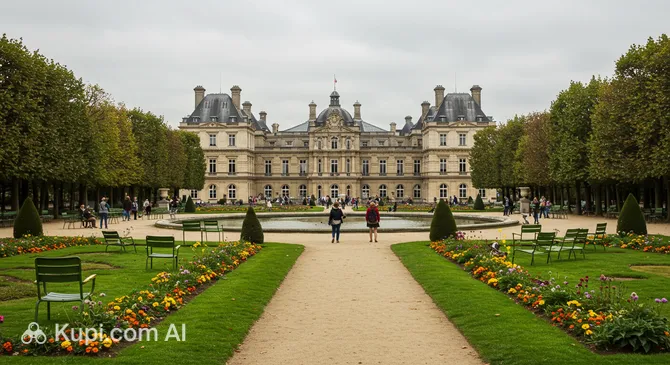
One of the most beloved green spaces in the city is the Luxembourg Gardens. Created in the 17th century for Marie de' Medici, this park is a favorite among locals who come to relax on the iconic green metal chairs surrounding the central pond. It captures the essence of Parisian leisure, offering beautiful statues, orchards, and a puppet theater that has entertained children for generations.
Luxembourg Gardens. Illustration.
Source: Kupi.com AI
Traveler photos:
Another essential stop is the Tuileries Garden, located perfectly between the Louvre Museum and the Place de la Concorde. As the oldest and largest public garden in Paris, it serves as an open-air museum filled with sculptures and perfectly trimmed hedges in the classic French formal style. For those seeking a spot to picnic with a view, the Champ de Mars offers sprawling lawns directly beneath the Eiffel Tower, making it a spectacular setting for a sunny afternoon.
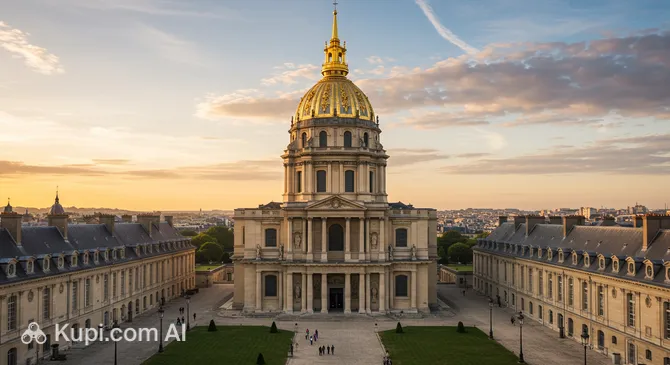
While the city's largest art museums are world-famous, its history is best explored at Les Invalides. This grand complex is easily recognized by its glittering golden dome, which dominates the skyline. It houses the Army Museum and, most notably, Napoleon's Tomb. Visitors are often awestruck by the scale of the sarcophagus and the military history preserved within these walls.
Les Invalides. Illustration.
Source: Kupi.com AI
Traveler photos:
For art lovers looking to escape the crowds, the Petit Palais is an architectural gem built for the 1900 Universal Exhibition. It houses the City of Paris Museum of Fine Arts and boasts a stunning interior courtyard garden that feels like a hidden oasis. The collection ranges from antiquity to the early 20th century and is often less crowded than its larger counterparts.
Paris is also defined by its architectural and spiritual heritage. Hidden within the Palais de la Justice, Sainte-Chapelle is a masterpiece of Rayonnant Gothic architecture. Its 1,113 stained-glass windows create a kaleidoscope of color that is simply breathtaking. Nearby in the Latin Quarter, the Panthéon serves as a mausoleum for distinguished French citizens, including Voltaire, Rousseau, and Marie Curie, housed in a magnificent neoclassical building.
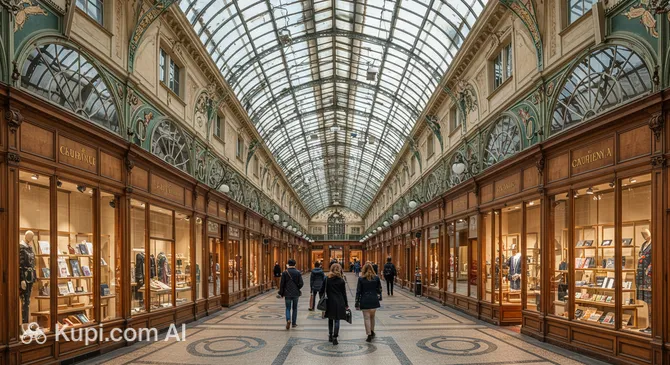
For a more intimate experience, step away from the main boulevards and discover the Galerie Vivienne. This 19th-century covered passage features intricate mosaic floors and a glass roof, offering a charming atmosphere for window shopping. It is a wonderful example of the "passages couverts" that provide a glimpse into the Paris of a bygone era.
Getting Around
Navigating Paris is remarkably easy thanks to one of the world's most dense and efficient public transport networks. The system is anchored by the Metro, which features 16 lines that place you within a few hundred meters of a station almost anywhere in the city. For faster travel across the city center or to reach outlying suburbs and destinations like Disneyland, the **RER** (Regional Express Network) trains serve as an express subway system. Complementing the rail network is an extensive fleet of buses, which offer a scenic alternative for those who prefer to see the sights while they travel, and trams that primarily circle the city's periphery.
The payment system has modernized significantly, shifting towards contactless options. The standard single-journey fare is the Ticket t+, costing approximately €2.15. While paper tickets still exist, the most convenient option for tourists is the Navigo Easy pass. This rechargeable plastic card can be bought for a small fee and loaded with single tickets or a "carnet" (a pack of 10) at a discounted rate directly from machines or via the official mobile app. For those planning extensive travel, the Paris Visite pass offers unlimited journeys for 1 to 5 days and includes discounts on select attractions.
You can purchase tickets and passes at multilingual automated vending machines found in every Metro and RER station, as well as at ticket counters. A critical rule to remember is to always validate your ticket or scan your pass at the turnstiles before entering the platform. Keep your ticket until you have completely exited the station, as ticket inspectors operate frequently and fines can be steep. The Metro generally runs from 5:30 AM to around 1:15 AM on weekdays, extending to approximately 2:15 AM on Fridays, Saturdays, and the eves of public holidays.
Beyond the subway, the city offers excellent alternatives for getting around. The Vélib' Métropole bike-sharing scheme is hugely popular, with thousands of mechanical and electric bikes available at docking stations every few blocks. Taxis and ride-hailing apps like Uber and G7 are also plentiful and safe. For a unique experience, look out for the iconic Art Nouveau metro entrances designed by Hector Guimard, which are celebrated as historical monuments. Additionally, your standard transport ticket is valid for the Montmartre Funicular, saving you the steep climb up to the Sacré-Cœur Basilica.
Accommodation
Where to Stay:
Paris offers a vast array of accommodation options suited to every preference and budget, ranging from charming boutique hotels and cozy rental apartments to world-class luxury palaces. Whether you are a backpacker looking for a social hostel or a traveler seeking the opulence of a five-star suite, the city's hospitality sector is well-equipped to meet your needs. In recent years, short-term apartment rentals have also become a popular choice for those wanting to live like a local.
Choosing the right neighborhood is key to your experience. First-time visitors often prefer the central districts, such as the 1st and 4th arrondissements, which include areas like Le Marais and the vicinity of the Louvre. These locations place many major sights within walking distance. For a more romantic and village-like atmosphere, Montmartre offers stunning views and cobbled streets, though it is situated further from the city center. Travelers seeking classic Parisian elegance often gravitate towards Saint-Germain-des-Prés or the prestigious avenues near the Champs-Élysées.
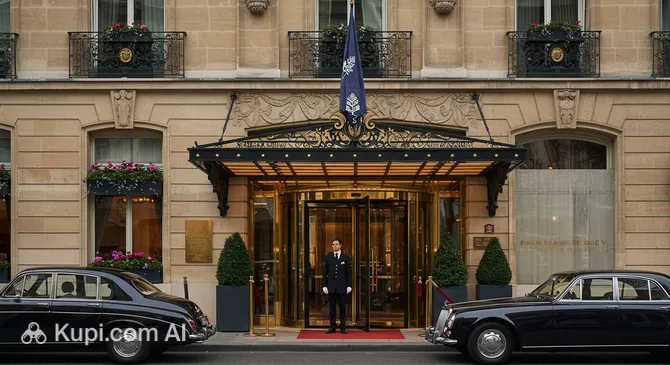
For those looking to indulge in the city's legendary luxury, there are several iconic establishments available. The George V Hotel is renowned worldwide for its art deco grandeur, exceptional service, and proximity to the high-end fashion boutiques of the Golden Triangle. Another historic option is the Hôtel du Louvre, which boasts an unbeatable location right next to the museum and the Palais Royal, offering a quintessential Parisian experience in the heart of the action.
George V Hotel. Illustration.
Source: Kupi.com AI
Traveler photos:
Booking Tip: Accommodation in Paris is in high demand year-round, but especially during Fashion Weeks, major sporting events, and the summer peak season. It is highly recommended to book your stay several months in advance to secure the best rates and availability, as last-minute options can be scarce and expensive.
Prices in the capital can be significantly higher than in other French cities. Budget travelers can expect to pay a premium for central locations, while mid-range hotels generally offer a good balance of comfort and accessibility. Booking is most commonly done through major online travel platforms, which allow for easy comparison, though booking directly with the hotel can sometimes yield special offers or better room selection.
Nearby Cities
For those looking to explore the surroundings, Paris serves as an excellent base for day trips to several interesting nearby locations. The region offers a mix of royal history, artistic heritage, and charming landscapes that provide a refreshing contrast to the bustling capital.
One of the most popular excursions is to the city of Versailles. Famous worldwide for its opulent Palace of Versailles, this destination allows visitors to walk in the footsteps of French royalty. Beyond the Hall of Mirrors and the Royal Apartments, the city offers vast, manicured gardens that are perfect for a leisurely afternoon stroll. It is a site of immense historical significance and architectural beauty.
For art lovers, the village of Giverny is a must-visit. Located to the northwest of the capital, it is best known as the former home of Impressionist master Claude Monet. Tourists flock here to see the iconic Japanese bridge and the water lily pond that inspired many of his paintings. The colorful flower gardens and the preserved house offer a peaceful and picturesque retreat into the world of art.
Another fascinating option is Fontainebleau, renowned for its sprawling forest and historic château. Unlike Versailles, the Palace of Fontainebleau served as a residence for French monarchs for over eight centuries, featuring a blend of architectural styles. The surrounding forest is also a favorite spot for hikers and rock climbers, making it an ideal destination for those seeking both culture and nature.
City
Population
Distance
Saint-Mandé
22 377
5 km
Gentilly
18 815
5 km
Montrouge
48 734
5 km
Le Kremlin-Bicêtre
24 971
5 km
Le Pre-Saint-Gervais
17 485
5 km
These nearby destinations offer a glimpse into the diverse culture and landscapes of the region.
Shopping & Souvenirs
Shopping:
Shopping in Paris is more than just a pastime; it is an essential part of the cultural experience. As one of the "Big Four" fashion capitals of the world, the city is synonymous with style, luxury, and elegance. From the high-end couture houses to vintage flea markets and charming independent boutiques, the French capital offers an unparalleled variety of retail therapy options. Whether you are looking for the latest runway trends or unique artisanal crafts, the city caters to every taste and budget.
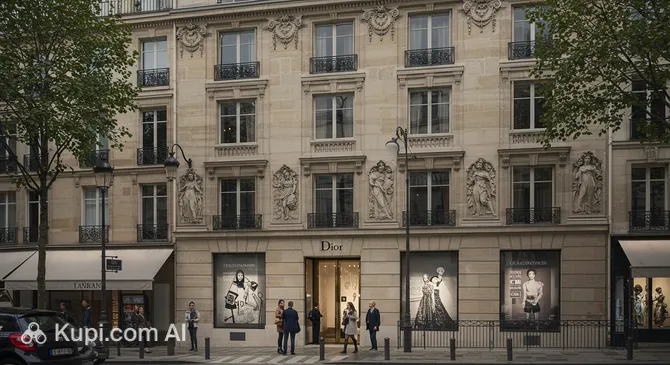
The most iconic shopping destination is undoubtedly the Avenue des Champs-Élysées. Stretching from the Arc de Triomphe to the Place de la Concorde, this broad boulevard is lined with global flagship stores and luxury brands. For those seeking the absolute pinnacle of high fashion, the nearby "Golden Triangle" (Triangle d'Or), formed by Avenue Montaigne, Avenue George V, and Avenue François 1er, is home to the most prestigious labels. Fashion enthusiasts should also visit the Dior Gallery, a unique museum-like space that celebrates the history of the legendary fashion house right where it all began.
Dior Gallery. Illustration.
Source: Kupi.com AI
Traveler photos:
For a quintessential Parisian experience, visitors often flock to the "Grands Magasins" (Grand Department Stores) on Boulevard Haussmann. Galeries Lafayette and Printemps are not only shopping centers but architectural landmarks with stunning Art Nouveau domes. If you prefer a more historic and intimate atmosphere, the city's covered passages are hidden gems. The Galerie Vivienne, built in 1823, is perhaps the most beautiful, featuring mosaic floors and elegant boutiques selling rare books, wine, and gifts under a magnificent glass roof.
Galerie Vivienne. Illustration.
Source: Kupi.com AI
Traveler photos:
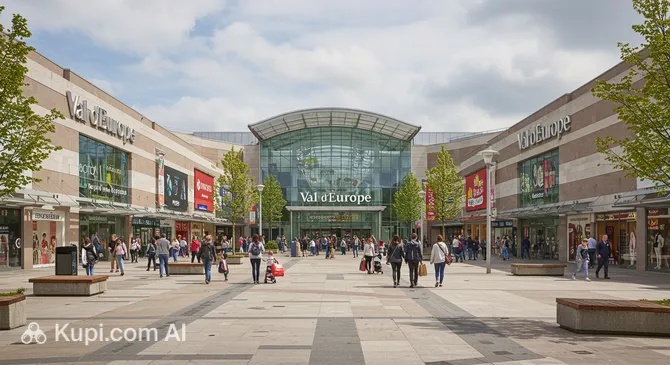
Travelers looking for a modern mall experience or outlet prices might venture slightly further afield. The Val d'Europe Shopping Center, located near Disneyland Paris, is a massive complex that includes a large aquarium and is adjacent to La Vallée Village, a luxury outlet mall offering significant discounts on designer brands. It is a popular day-trip destination for serious shoppers.
Val d'Europe Shopping Center. Illustration.
Source: Kupi.com AI
Traveler photos:
Markets play a vital role in local life. The Marché aux Puces de Saint-Ouen is the largest antique market in the world, a sprawling labyrinth where you can find everything from vintage furniture to retro clothing. For food lovers, open-air markets like the Marché d'Aligre offer fresh produce and local delicacies, providing a sensory feast of colors and smells.
When it comes to souvenirs, edible treats are always a hit. A box of colorful macarons, artisanal chocolates, or a tin of quality tea makes for a perfect gift. Fashion accessories like a silk scarf, a classic beret, or beauty products from a local pharmacy are also excellent choices. For a romantic memento, you can browse the green stalls of the "bouquinistes" along the Seine for vintage posters and old books.
Most shops in the city are open from Monday to Saturday, typically between 10:00 AM and 7:00 PM. While many smaller stores close on Sundays, major shopping areas like the Champs-Élysées and Le Marais remain bustling throughout the weekend. Payment is easy, with credit and debit cards (Visa and Mastercard) widely accepted, though carrying some cash is useful for small markets.
Non-EU residents can take advantage of the tax-free shopping (détaxe) scheme. If you spend more than a certain threshold (usually €100) in a single store, you are eligible for a VAT refund. Be sure to ask the retailer for a tax-free form and have your passport handy to process the paperwork before leaving the country.