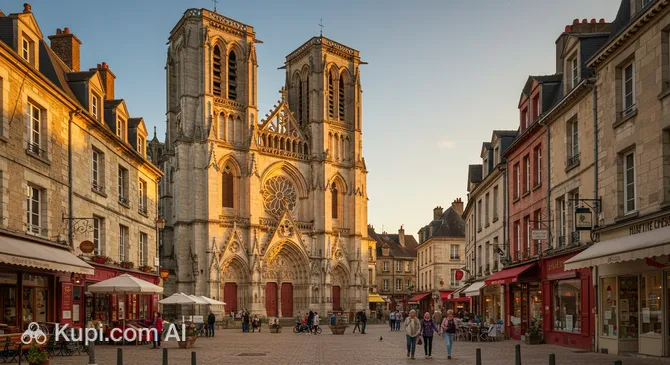
Alençon is frequently celebrated as a "nature city," seamlessly integrating its rich architectural heritage with abundant greenery. The city offers a refreshing balance for travelers, where one can easily transition from admiring medieval stone carvings to strolling through lush, well-maintained gardens. Whether you are looking for a botanical discovery or a deep dive into local history, the city's parks and cultural institutions provide a peaceful yet enriching experience.
The Parc des Promenades is the crown jewel of the city's green spaces and a favorite among locals. Created in 1783, this four-hectare park is designed in the classic French style, featuring symmetrical lawns, ancient trees, and a charming rose garden. It serves as a central gathering spot, hosting a 19th-century music kiosk and an aviary that delights younger visitors. Its location behind the Town Hall makes it an effortless stop for a relaxing break after sightseeing.
For those interested in botany and riverside tranquility, the Arboretum Koutiala offers a different kind of natural escape. Situated on the floodplains of the Sarthe River, this park is dedicated to water-loving species. It houses over 300 trees, including majestic sequoias, bald cypresses, and ash trees, all thriving in the wetland environment. It is an ideal place for an educational walk or a quiet moment by the water, away from the bustle of the town center.
A more recent addition to the city's landscape is the Parc Urbain de la Providence. Located near the Basilica, this park was developed on the site of a former religious institute for the deaf and hard of hearing. The design pays homage to this history with a series of bronze hands along the pathways, spelling out the alphabet in sign language. The park also features a modern footbridge crossing the Sarthe, linking the historic district with the riverbanks.
Culturally, the Musée des Beaux-Arts et de la Dentelle remains the premier institution in Alençon, housed within the prestigious Cour Carrée of a former Jesuit college. While famous for its UNESCO-listed lace, the museum's scope is much broader. Visitors can explore a significant Fine Arts collection featuring works from the 15th to the 20th century, including paintings by Courbet and Boudin. Additionally, the museum holds a surprising and extensive Cambodian collection donated by Adhémard Leclère, offering a rare glimpse into Khmer culture and history.
Another deeply significant site is the Maison de la Famille Martin, the birthplace of Saint Thérèse of Lisieux. Functioning as a house-museum, it preserves the domestic atmosphere of the late 19th century. Visitors can walk through the family's living rooms, seeing personal objects and furniture that belonged to Louis and Zélie Martin. It offers an intimate perspective on the daily life of a family that played a pivotal role in modern Catholic history.
For a lesser-known spot, look for the Jardin de la Maison d'Ozé. Tucked away near the tourist office, this small medieval-style garden includes a conservatory orchard with ancient varieties of pear and apple trees, reflecting the region's agricultural traditions.