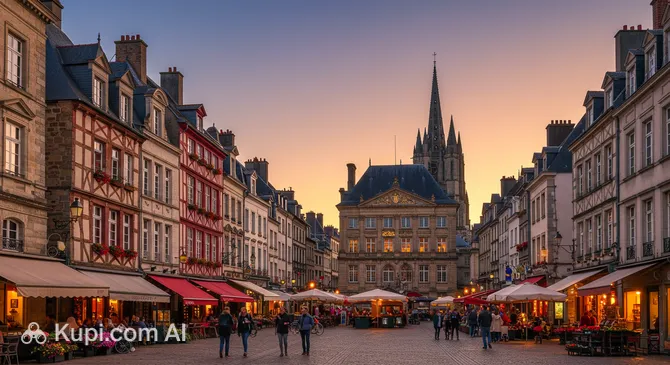
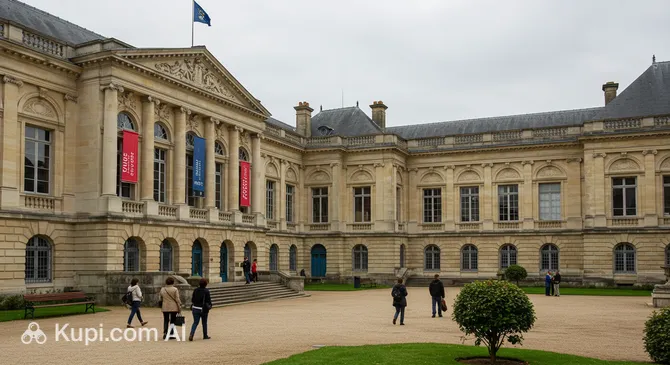
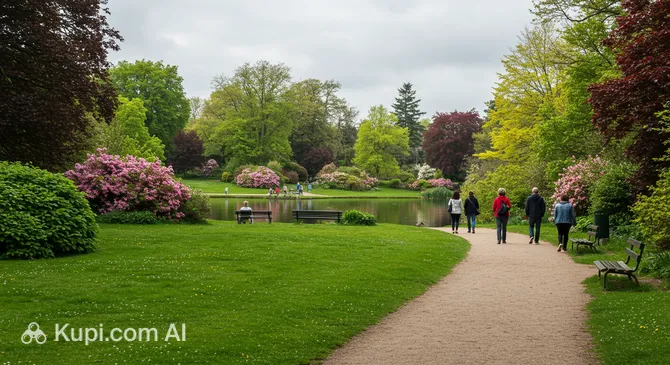
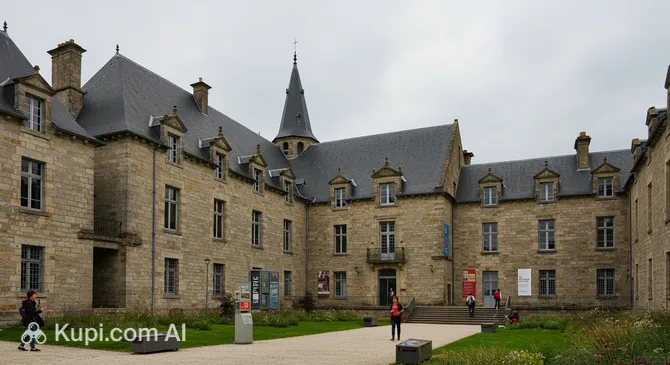
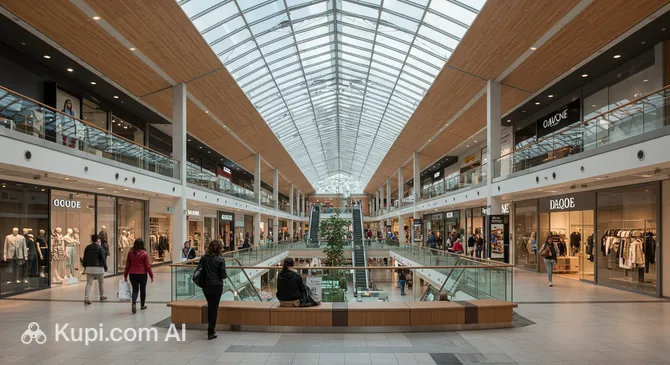
Welcome to Rennes, the charismatic capital of Brittany and a vibrant cultural hub in northwestern France. Known for its high quality of life and youthful energy, largely due to a significant student population, the city seamlessly blends its rich heritage with a modern, dynamic atmosphere. It serves as a perfect gateway to exploring the unique traditions and landscapes of the region.
Geographically, Rennes is situated at the confluence of the Ille and Vilaine rivers. With a population of approximately 220,000 inhabitants, it offers the amenities of a major metropolis while retaining a welcoming, human-scale feel. The climate is generally mild and temperate, making it a pleasant destination to visit year-round.
Rennes. Illustration.
Source: Kupi.com AI
The history of Rennes is a captivating tale of resilience and transformation. Although a devastating fire in 1720 destroyed much of the medieval timber-framed center, the city was rebuilt with elegant 18th-century classical architecture. Today, visitors can admire a striking contrast between the surviving colorful half-timbered houses and the majestic stone facades of the reconstruction era.
Travelers are often drawn to the iconic Parlement de Bretagne building, which stands as a proud symbol of Breton history. Another highlight is the magnificent Thabor Park, a sprawling green oasis that combines French, English, and botanical gardens, widely considered one of the most beautiful parks in the country. Whether you are strolling through the lively Place des Lices market or exploring the cobbled streets, Rennes invites you to experience its unique charm and warm hospitality.
Weather Overview
The climate in Rennes is generally mild and temperate, influenced by its location in the Brittany region. Visitors can expect a comfortable atmosphere where extreme temperatures are rare. Winters are cool, with average temperatures hovering around 6°C to 7°C in January and February, while summers are pleasantly warm, with July and August seeing averages near 19°C and highs reaching up to 23.7°C.
Precipitation is a regular feature throughout the year, contributing to the area's lush landscapes. When checking the weather in Rennes, it is helpful to know that rain occurs frequently, with the number of wet days ranging from 9 to 15 days per month. March and December typically see the highest frequency of rain, while the summer months offer slightly drier conditions, making them ideal for outdoor activities.
Average monthly temperature
Average monthly precipitation
Interesting Facts
Beyond the main attractions, Rennes holds many fascinating secrets that reveal the depth of its character and history. Digging a little deeper into the city's past uncovers unique stories ranging from royal traditions to architectural oddities.
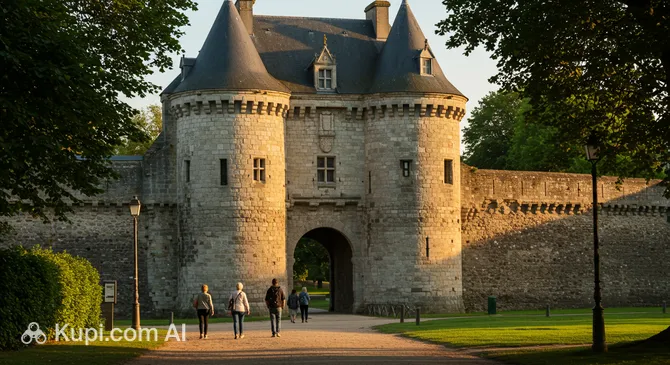
Mordelaises Gates. Illustration.
Source: Kupi.com AI
Traveler photos:
The Mordelaises Gates served a ceremonial purpose far greater than simple defense; historically, the Dukes of Brittany were required to pause here and swear an oath to defend the liberties of Brittany before they were granted permission to enter the city.
Rennes is often celebrated as a "mosaic city" thanks to the Odorico family, Italian craftsmen who settled here in the late 19th century and adorned numerous buildings, including the famous Saint-Georges swimming pool, with vibrant Art Deco mosaics.
The city is home to the legendary Rue Saint-Michel, affectionately nicknamed the "Street of Thirst" (Rue de la Soif) by locals, which is famous across France for its incredible density of bars and festive atmosphere.
The Great Fire of 1720, which destroyed the medieval wooden center and led to the city's reconstruction in stone, was reportedly started by a carpenter who accidentally dropped a candle into a pile of wood shavings during a quarrel.
How to Get There
Reaching the capital of Brittany is quite convenient, thanks to its excellent transport infrastructure connecting it to the rest of France and Europe. Whether you prefer flying or taking the train, there are several options to suit your itinerary. For a detailed breakdown of routes and tips, you can read more about how to get to Rennes to plan your journey effectively.
The most direct way to arrive by air is via Rennes Airport (IATA: RNS), which is located within the city itself. Situated just 6.8 km from the center, this regional airport offers a hassle-free entry point. A taxi or bus ride from here to the downtown area is very quick, typically taking about 20 to 30 minutes depending on traffic.
For a wider range of international flight options, many travelers opt for Nantes Atlantique Airport (IATA: NTE), located in the city of Nantes. Although it is approximately 107.3 km away, it serves as a major hub for the region. The transfer by road from Nantes to Rennes is efficient, generally taking between 1 hour 15 minutes and 1 hour 30 minutes.
For clarity, here is a summary of the main airports:
Traveling by train is another excellent option, as the city is a key node in the French railway network. The primary hub is Rennes Station, conveniently located just 1.6 km from the city center. As a major station with high passenger traffic, it connects the city efficiently to Paris and other regions. Once you arrive, getting to the city center is fast, taking about 5 to 10 minutes by public transport, or you can enjoy a pleasant 20-minute walk.
Below is a list of the nearest and most significant railway stations:
Rennes offers a delightful mix of historical heritage and modern culture, making it a joy to explore. From majestic religious buildings to sprawling green spaces and interactive museums, the city's main sights cater to a wide range of interests.
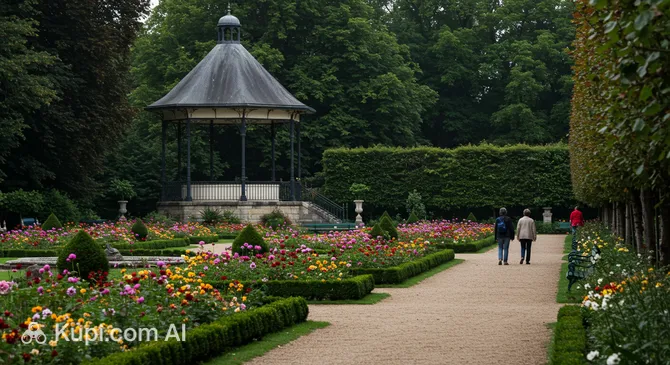
Often cited as one of the most beautiful gardens in France, Thabor Park is a must-see green oasis located near the city center. Spanning over ten hectares, this meticulously maintained space masterfully blends a symmetrical French garden, a romantic English landscape park, and a diverse botanical garden. Tourists are particularly drawn to its stunning rose garden, which features hundreds of varieties, as well as the aviary and bandstand, making it a perfect spot for a relaxing stroll or a peaceful break.
Thabor Park. Illustration.
Source: Kupi.com AI
Traveler photos:
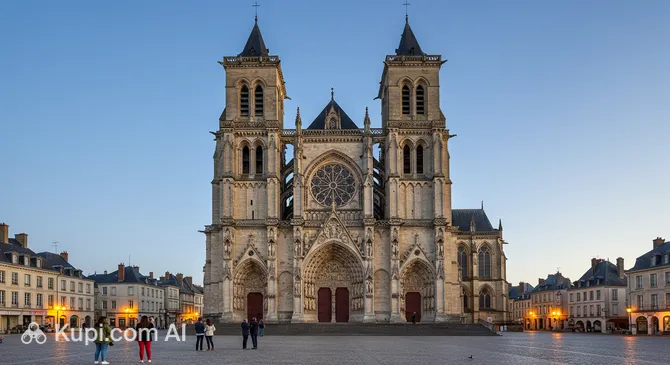
A striking example of religious architecture is the Rennes Cathedral (Saint-Pierre Cathedral). While its neoclassical facade is imposing, the interior is where the true splendor lies, boasting rich gilding, a magnificent coffered ceiling, and a grand 19th-century organ. It is a fascinating destination for visitors interested in history and art, offering a quiet atmosphere to admire the craftsmanship and the resilience of a building that has undergone significant reconstruction over the centuries.
Rennes Cathedral. Illustration.
Source: Kupi.com AI
Traveler photos:
Art enthusiasts will find a treasure trove at the Museum of Fine Arts of Rennes. Housed in a former university palace, the museum displays a vast collection that ranges from ancient Egyptian antiquities to contemporary works. It is renowned for its impressive assortment of drawings and paintings by masters such as Rubens, Veronese, and Picasso. The museum provides a comprehensive journey through art history, making it a cultural highlight of any trip to Brittany.
Museum of Fine Arts of Rennes. Illustration.
Source: Kupi.com AI
Traveler photos:
For a more modern and interactive experience, the Espace des Sciences is a top attraction, especially for families. Located within the Champs Libres cultural center, this facility features a planetarium and engaging exhibitions that make complex scientific concepts accessible and fun. It is a favorite among tourists for its hands-on approach to learning about astronomy, biodiversity, and the physical world, ensuring an educational yet entertaining visit.
Local Cuisine
Rennes is a gastronomic haven that proudly showcases the rich culinary heritage of Brittany. The local cuisine is characterized by its heavy reliance on high-quality salted butter, buckwheat, and fresh produce. For visitors, dining here is not just about sustenance but an immersion into a culture that values hearty, rustic, and deeply flavorful food.
The undisputed king of Rennes street food is the famous galette-saucisse. This simple yet beloved snack consists of a grilled pork sausage wrapped in a cold buckwheat pancake (galette). It is best enjoyed on the go, particularly while wandering through the bustling Marché des Lices, France's second-largest fresh produce market held every Saturday morning. No trip to the city is complete without joining the locals in this savory tradition.
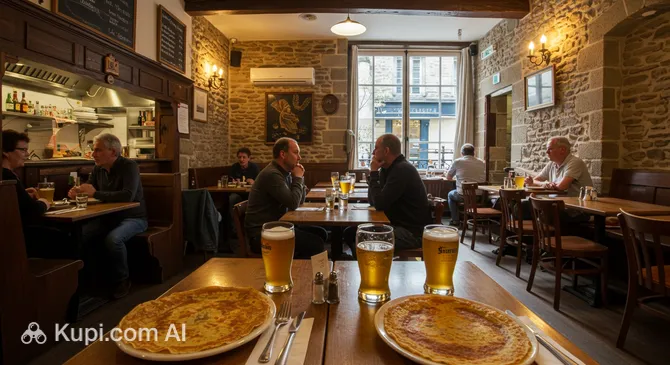
For a sit-down meal, travelers should head to a traditional crêperie. Here, you can enjoy savory galettes filled with cheese, ham, and eggs, followed by sweet wheat crêpes for dessert. A favorite topping is the decadent caramel au beurre salé (salted butter caramel), a regional specialty that perfectly balances sweetness with a hint of salt. If you are looking for a place to experience these local flavors, Bretone is a dining spot worth checking out.
Bretone. Illustration.
Source: Kupi.com AI
Traveler photos:
To wash it all down, cider is the beverage of choice. Brittany is famous for its apple orchards, and the local cider ranges from sweet (doux) to dry (brut). Traditionally, it is not served in glasses but in ceramic bowls known as bolées. For those seeking something stronger, Chouchen, a type of mead made from fermented honey, offers a potent taste of ancient Celtic tradition.
The dining scene in Rennes is vibrant and diverse, ranging from historic timber-framed establishments in the city center to modern eateries. The locals take their food seriously, and the atmosphere in restaurants is generally warm and convivial. Whether you are grabbing a quick bite at a market stall or enjoying a long dinner, the authentic taste of Brittany is always present.
Travel Tips
To ensure your trip to the capital of Brittany runs as smoothly as possible, we have compiled a list of essential practicalities. From navigating the local climate to understanding regional customs, these tips will help you explore Rennes with confidence and ease.
Clothing and Gear: Given Brittany's changeable weather, packing layers is the golden rule. A waterproof jacket or a sturdy umbrella is a must, as showers can occur frequently even during warmer months. Since the historic center features charming but uneven cobblestones, bring comfortable walking shoes and leave the high heels for seated dinners. Don't forget a standard European Type E power adapter for your electronics.
Transportation: The city is incredibly compact and best explored on foot, but the public transport network, managed by STAR, is excellent. It includes an automated metro system and extensive bus routes that are affordable and reliable. Unless you plan to tour the surrounding Breton countryside, a rental car is unnecessary and can be a hassle due to limited parking in the city center.
Finances: The currency is the Euro (€). Credit and debit cards (Visa and Mastercard) are accepted almost everywhere, even for small payments like a coffee. However, carrying a small amount of cash is useful for market stalls or small bakeries. Tipping is not mandatory as a service charge is included in the bill, but leaving small change or rounding up is a polite gesture for good service.
Health and Safety: Rennes is generally a very safe city for tourists. Pharmacies are easily recognized by a flashing green cross and are well-stocked for minor ailments; for general emergencies, dial 112. While the city is secure, exercise standard caution with your belongings in crowded areas like the Saturday market or late at night on the popular Rue Saint-Michel.
Communication: While French is the official language, the large student population means that English is widely understood, especially by younger people. However, starting any interaction with a polite "Bonjour" (Good day) or "Bonsoir" (Good evening) is essential to get off on the right foot. Free Wi-Fi is available in many public spaces, and prepaid SIM cards can be easily purchased at local tobacco shops (Tabac) or mobile provider stores.
Local Etiquette: Politeness is highly valued here. When entering a shop or restaurant, always greet the staff, and say "Au revoir" (Goodbye) when leaving. In public transport, it is polite to keep your voice down, as loud conversations are generally frowned upon. If you are invited to a local's home, bringing a small gift like chocolates is customary.
What to Avoid: Do not assume everyone identifies solely as French; the Breton identity is strong here, and locals are proud of their distinct heritage. Additionally, avoid trying to eat dinner too early; most restaurants do not open for evening service until 7:00 PM or 7:30 PM, and arriving at 6:00 PM will likely result in finding closed doors.
Market Insight: If your visit falls on a Saturday, make sure to visit the Marché des Lices early in the morning (before 11:00 AM) to beat the crowds and secure the freshest produce. It is not just a place to shop, but a major social event where you can observe the true rhythm of local life.
Armed with these practical insights, you are ready to immerse yourself in the vibrant life of Rennes. Whether you are navigating its medieval streets or enjoying a galette in a bustling square, you can now focus on making unforgettable memories in this welcoming Breton city.
Entertainment & Nightlife
Rennes is widely celebrated as one of the most dynamic cities in France after dark, largely thanks to its substantial student population. The nightlife here is legendary, characterized by a festive, unpretentious atmosphere where the energy is contagious. Thursdays are traditionally the biggest nights out for students, transforming the city center into a buzzing hive of activity, but the weekend vibe remains vibrant on Fridays and Saturdays as well.
The epicenter of the action is undoubtedly the historic center. The most famous spot is Rue Saint-Michel, affectionately known by locals and visitors alike as the "Rue de la Soif" (Street of Thirst). This narrow, cobbled street is lined with bar after bar, creating a unique ecosystem where patrons spill out onto the street with plastic cups in hand. It is loud, crowded, and incredibly lively—a must-visit for those who want to experience the raw energy of a Breton night out.
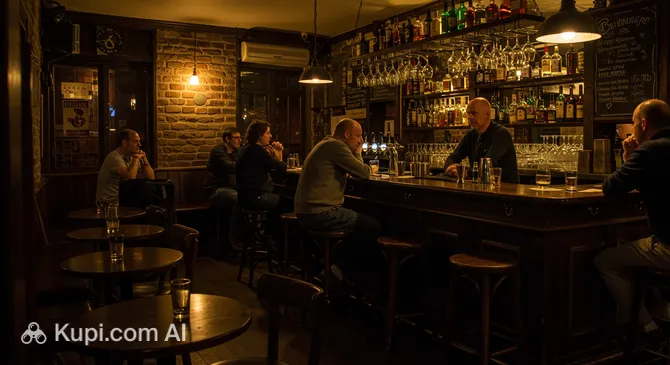
For those seeking a slightly more relaxed but still spirited atmosphere, the areas around Place des Lices and Rue de la Parcheminerie offer excellent alternatives. Here, you will find a mix of traditional pubs, wine bars, and cocktail lounges. A great example of the local bar scene is Bistrot Cocagne, which offers a friendly environment perfect for enjoying local drinks and mingling with residents. The dress code in most Rennes bars is casual; jeans and sneakers are the norm, reflecting the city's laid-back spirit.
Bistrot Cocagne. Illustration.
Source: Kupi.com AI
Traveler photos:
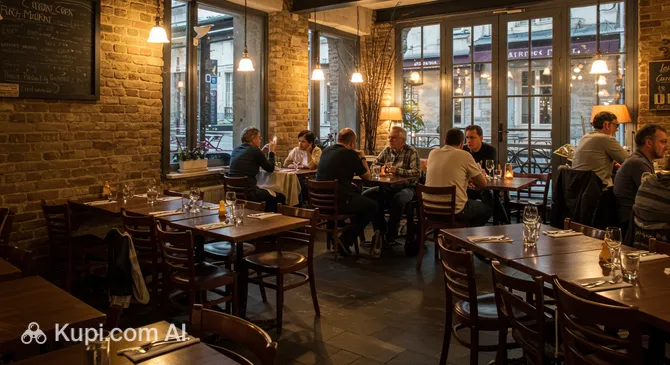
If you prefer an evening that combines dining with a lively ambiance, the city has plenty of options that transition seamlessly from dinner to drinks. AVEC is a popular establishment that often draws a crowd looking for a stylish yet comfortable place to spend the evening. Many such venues stay open late, allowing you to enjoy the night without rushing.
AVEC. Illustration.
Source: Kupi.com AI
Traveler photos:
For travelers looking for entertainment beyond the bar scene, Rennes offers engaging group activities that are perfect for starting the night. Interactive experiences like the BRAIN Escape Game provide a fun challenge for friends before heading out to dinner or clubs. As the night progresses, those who want to dance can head to the various nightclubs located near the city center or on the outskirts, which typically stay open until the early morning hours.
Regarding practicalities and safety, Rennes is generally a safe city for night walks, though the "Rue de la Soif" can get rowdy late at night due to the crowds. It is always wise to keep an eye on your belongings in dense throngs. Getting home is easy; the "STAR" bus network runs night services on main lines from Thursday to Saturday, and taxis or ride-sharing apps like Uber are readily available. Prices for drinks are reasonable compared to Paris, with a pint of beer often costing between 5 to 7 euros.
While the nightlife is a major draw, daytime entertainment in Rennes is equally enriching. Culture lovers should not miss Frac Bretagne, a regional fund for contemporary art that hosts intriguing exhibitions in a stunning modern building. Whether you are exploring art galleries during the day or toasting with cider at night, Rennes ensures your itinerary is packed with excitement.
Parks & Museums
Rennes stands out as a "green city" where nature and urban life coexist harmoniously, complemented by a cultural scene that deeply respects its Breton roots. Beyond the famous Thabor Park, the city offers numerous other sanctuaries for relaxation, while its museums provide a fascinating window into the region's distinctive history and artistic identity.
For those seeking vast open spaces and outdoor activities, Gayeulles Park is the undisputed giant of the city's green areas. Often referred to as the "Central Park of Rennes," this sprawling 100-hectare landscape includes forests, ponds, and grassy plains. It is a favorite among locals for jogging, family picnics, and sports, offering everything from a treetop adventure course to a mini-golf facility, making it a perfect escape from the urban bustle.
Gayeulles Park. Illustration.
Source: Kupi.com AI
Traveler photos:
A more tranquil and botanical experience can be found at Oberthür Park. Designed by Denis Bühler, the same landscape architect responsible for the celebrated Thabor Park, this garden surrounds a former mansion and is renowned for its rare tree species and serene atmosphere. Its winding paths and large pond create a peaceful retreat, ideal for visitors looking to read a book or enjoy a quiet moment surrounded by nature.
When it comes to understanding the soul of the region, the Museum of Brittany is an essential stop. Located within the modern Champs Libres cultural center, this museum traces the history of Brittany from prehistoric times to the present day. Through an extensive collection of artifacts, costumes, and interactive displays, it tells the complex story of the Breton people, including the Dreyfus Affair and the evolution of regional identity.
Museum of Brittany. Illustration.
Source: Kupi.com AI
Traveler photos:
To explore the area's agricultural heritage, a visit to the Ecomuseum of the Rennes Region is highly recommended. Situated just south of the city in the historic Bintinais farmhouse, this living museum showcases the evolution of farming life over five centuries. Visitors can wander through vegetable gardens, orchards, and stables filled with local livestock breeds, offering a tangible connection to the rural past of the Rennes basin.
For a unique insider experience, head to Beauregard Park to see the "Alignment of the 21st Century." This contemporary art installation by Aurélie Nemours consists of 72 granite columns aligned with the sun's position, creating a striking interplay of light and shadow that feels like a modern Stonehenge.
Getting Around
Navigating Rennes is remarkably easy and efficient, thanks to the comprehensive public transport network managed by STAR. The system is well-integrated, allowing travelers to switch seamlessly between different modes of transport using a single ticket. For most tourists, the city's compact size means that combining walking with the metro or bus is the most convenient way to get around.
The backbone of the local transport is the metro, which is fully automated and driverless. Rennes is proud to be one of the smallest cities in the world to operate such a sophisticated system. There are two lines: Line A, which crosses the city from northwest to southeast, and the newer Line B, which connects the southwest to the northeast. The metro is fast, frequent, and clean, making it the preferred option for reaching major attractions and the railway station quickly.
Complementing the metro is an extensive bus network that covers the entire metropolitan area, including suburbs that the metro does not reach. The buses are modern and reliable, with digital displays announcing the next stop. For late-night revelers, especially on weekends, the "STAR de Nuit" night bus service ensures a safe return home after the standard service hours end.
The payment system is designed with visitor convenience in mind. A standard single ticket is valid for one hour and allows for unlimited transfers between the bus and metro. For those planning a full day of sightseeing, a 24-hour pass is often the most economical choice. Long-term visitors might use the rechargeable KorriGo smart card, but for short stays, rechargeable paper tickets are sufficient. As of recent updates, a single journey costs approximately €1.70, though prices are subject to slight annual adjustments.
Purchasing tickets is straightforward. You can buy them at automatic vending machines located at every metro station and some major bus stops; these machines accept both cash and cards. Alternatively, you can buy tickets via the official STAR app or at authorized retailers like tobacco shops (Tabac). A highly convenient feature for tourists is the ability to pay directly on the bus or at metro gates using a contactless bank card—simply tap your credit or debit card on the validator to pay for a single ride.
Practicality is key when using the network. Operating hours for the metro generally run from around 5:15 AM to 12:30 AM, with extended service until approximately 1:30 AM on Friday and Saturday nights. It is strictly mandatory to validate your ticket every time you board a bus or enter the metro gates to avoid hefty fines. If you are using a paper ticket, keep it handy until you have completely exited the station.
For those who prefer active travel, the city offers a popular bike-sharing service called Le Vélo STAR. With stations scattered throughout the city, it is a fantastic way to explore the flat terrain and scenic riverbanks. While taxis and ride-sharing apps are available, they are less commonly used for short city-center hops due to the efficiency of the public transport and the pedestrian-friendly nature of the historic core.
Accommodation
Where to Stay:
Finding the perfect place to stay in Rennes is relatively easy, as the city offers a diverse array of accommodation options to suit every budget and preference. The selection ranges from charming boutique hotels housed in historic buildings to modern international chains and budget-friendly hostels. For those seeking a more home-like experience, there is also a growing market for furnished apartments and guesthouses, particularly appealing for longer stays or family trips.
The most popular area for tourists is undoubtedly the City Center (Centre-Ville). Staying here places you within walking distance of the medieval streets, the majestic Parliament of Brittany, and the lively dining scene. This area is ideal for travelers who want to immerse themselves in the local atmosphere and enjoy the convenience of stepping out of their hotel directly into the heart of the action. You can find unique establishments tucked away in renovated 18th-century buildings or even in traditional half-timbered houses.
Another strategic location is the district around the Rennes Railway Station (Gare de Rennes). Following extensive modernization, this area has become a hub for business and travel, offering numerous modern hotels that prioritize comfort and efficiency. It is an excellent choice for visitors arriving by train or those using Rennes as a base to explore the wider Brittany region, as it provides immediate access to the high-speed TGV network and the city's metro lines.
Booking Tip: While Rennes has a good supply of rooms, it is a bustling administrative and student city that hosts many events and congresses. It is highly grand advisable to book your accommodation well in advance, especially if you plan to visit during the summer months or during major cultural festivals like the Trans Musicales in December, when the city fills up quickly.
Regarding costs, prices in Rennes are generally more affordable than in Paris, though they can vary significantly by season. Budget travelers can find economical options in hostels or budget hotel chains on the outskirts, while mid-range and luxury travelers will find high-quality services at reasonable rates in the center. Booking is most commonly done through major online platforms, but checking directly with smaller, independent hotels can sometimes yield better deals or special offers.
Nearby Cities
For those looking to explore the surroundings, Rennes serves as an excellent base for day trips to several interesting nearby locations:
City
Population
Distance
Saint-Grégoire
9 890
4 km
Chantepie
10 458
5 km
Cesson-Sévigné
17 312
6 km
Saint-Jacques-de-la-Lande
13 948
7 km
Pace
11 860
8 km
One of the most popular destinations for a day trip is Saint-Malo, often referred to as the "Corsair City." Located on the Emerald Coast, it is famous for its impressive granite ramparts that encircle the historic center, known as Intra-Muros. Visitors can walk along the walls for breathtaking views of the sea and the surrounding forts, or relax on the sandy beaches that stretch out at the foot of the city. The town's maritime history and bustling atmosphere make it a must-see highlight of the region.
For history enthusiasts, Fougeres offers a journey back to the Middle Ages. The town is dominated by the Château de Fougères, which is one of the largest and best-preserved medieval fortresses in Europe. Exploring its towers and ramparts provides a fascinating insight into the military architecture of the Duchy of Brittany. The town itself features a charming medieval district with half-timbered houses and the scenic Nançon River flowing through it.
Another gem nearby is Vitré, a designated "Town of Art and History" that has retained much of its original character. Its majestic castle stands guard over a network of narrow, cobbled streets lined with colorful timber-framed buildings and stone mansions. It offers a picturesque setting for a leisurely stroll, allowing visitors to soak in the authentic atmosphere of a prosperous medieval merchant town without the crowds often found in larger tourist hubs.
These nearby destinations offer a glimpse into the diverse culture and landscapes of the region.
Shopping & Souvenirs
Shopping:
Shopping in Rennes is a delightful experience that mirrors the city's blend of tradition and modernity. As the commercial capital of Brittany, it offers a diverse range of options, from high-end fashion boutiques and popular international chains to quirky independent shops and artisan workshops. The compact nature of the city center means that most major shopping districts are easily accessible on foot, allowing visitors to browse comfortably while admiring the historic architecture.
The main artery for shopping enthusiasts is Rue Le Bastard and its extensions, Rue de la Motte-Fablet and Rue Nationale. This pedestrianized zone runs through the heart of the city and is lined with major retail brands, department stores like Galeries Lafayette, and beauty shops. For a more exclusive experience, the cobbled streets around the Parlement de Bretagne, such as Rue de la Monnaie and Rue de Toulouse, are home to chic boutiques, independent designers, and concept stores offering unique fashion and home decor items.
For those who prefer a comprehensive shopping experience with everything under one roof, the city boasts several large commercial centers. The most prominent is Rennes Alma, located in the southern part of the city. It is the largest shopping mall in Brittany, featuring over 100 shops, numerous restaurants, and a hypermarket. It is a favorite destination for locals and tourists alike who want to find big-name brands in a modern, spacious environment.
Rennes Alma. Illustration.
Source: Kupi.com AI
Traveler photos:
Another excellent option located to the north is Le Centre Saint-Grégoire. This mall offers a relaxed atmosphere with a wide selection of clothing, accessories, and lifestyle stores. Both malls are easily accessible by public transport or car and provide a convenient alternative to the city center, especially on rainy days.
Markets are an integral part of the local lifestyle and a fantastic place to shop for authentic goods. While the famous Marché des Lices on Saturday mornings is primarily known for food, it is also the perfect spot to buy regional specialties directly from producers. Here, you can find not only fresh produce but also local honey, jams, and flowers. It is a vibrant, sensory experience that offers a true taste of Breton culture.
When searching for souvenirs to bring back home, local culinary delights are the top choice. Salted butter caramels (caramels au beurre salé) and tins of Breton butter biscuits (palets bretons) are universally loved gifts. For something more lasting, look for traditional Breton striped shirts (marinière) or hand-painted faience pottery, particularly the iconic bowls with first names painted on them, which are a staple in many French households. Bottles of artisanal cider or Chouchen (mead) also make excellent presents.
Standard store opening hours in Rennes are typically from 10:00 AM to 7:00 PM, Monday through Saturday. Smaller independent boutiques may close for a lunch break between 12:30 PM and 2:00 PM, while larger department stores and malls usually stay open throughout the day. It is important to note that, like in most of France, the vast majority of shops are closed on Sundays, except for some food markets and small convenience stores.
Payment is straightforward, with credit and debit cards (Visa and Mastercard) widely accepted even for small amounts. Contactless payment is the norm. For visitors residing outside the European Union, a tax refund (détaxe) is available on purchases over €100.01 made in a single store. Look for the "Tax Free" sign in shop windows and ask the staff for a tax refund form at the checkout to claim your VAT reimbursement at the airport or border.