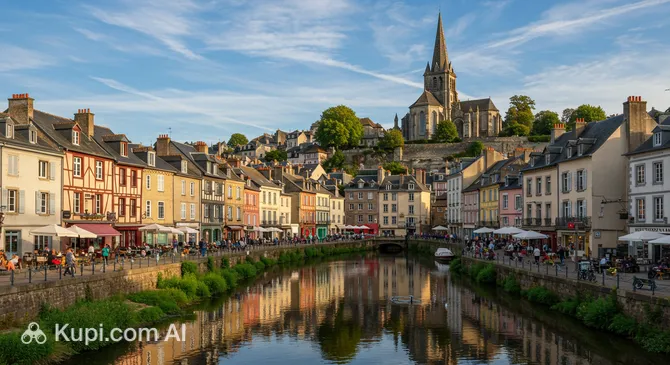
Nestled along the banks of the Léguer River in the picturesque region of Brittany, Lannion is a captivating destination that seamlessly blends medieval charm with modern innovation. As a gateway to the stunning Pink Granite Coast, this vibrant town in France offers travelers a delightful mix of architectural heritage, natural beauty, and a lively cultural atmosphere. With a population of approximately 20,000 residents, it serves as a dynamic hub for the Côtes-d'Armor department while retaining the cozy feel of a historic Breton town.
Lannion. Illustration.
Source: Kupi.com AI
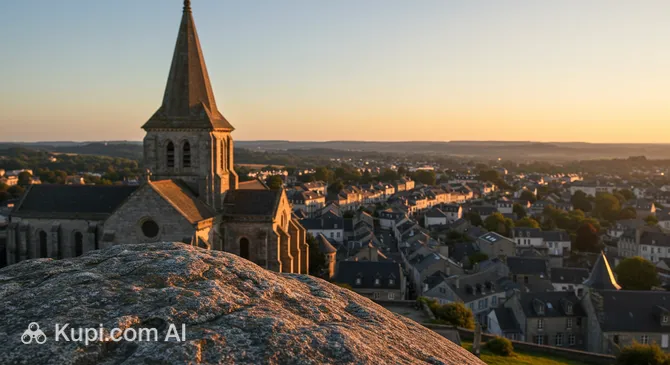
Walking through the city center is like stepping back in time. The Place du Général Leclerc is lined with beautifully preserved half-timbered houses dating back to the 15th and 16th centuries, showcasing the rich history of Lannion. One of the town's most iconic landmarks is the Church of Brélévenez, perched high on a hill. Visitors who climb the 140 granite steps to reach it are rewarded with a breathtaking panoramic view of the city and the river valley below.
Beyond its historical allure, Lannion is distinct for being a significant center for telecommunications and technology, often referred to as a "technopole." However, for tourists, its primary appeal lies in its proximity to the spectacular Côte de Granit Rose, famous for its unique blush-colored rock formations and turquoise waters. Whether you are exploring the ancient streets, enjoying local Breton cuisine in a traditional crêperie, or setting off for a coastal hike, Lannion promises an unforgettable travel experience full of discovery.
Weather Overview
Lannion experiences a mild oceanic climate, characterized by moderate temperatures throughout the year and a distinct freshness typical of Brittany. The weather in Lannion is generally temperate, avoiding the extremes of sweltering heat or freezing cold, making it a comfortable destination for visiting historical sites and the nearby coast.
Summer is the most pleasant time to visit, with July and August offering the warmest conditions. During this season, average temperatures hover around 17°C, with daily highs reaching approximately 19.5°C. It is also the driest period, though visitors should still anticipate about 10 wet days per month. In contrast, the winter months are cooler and significantly damper. December is typically the wettest month, featuring precipitation on around 20 days, while average temperatures in January and February stay between 6°C and 10°C.
Spring and autumn serve as transition periods with mild weather, though rain remains a common occurrence with 11 to 18 wet days per month depending on the specific time. Overall, you can expect mild, comfortable summers with occasional showers and cool, frequently wet winters.
Average monthly temperature
Average monthly precipitation
Interesting Facts
Beyond the main attractions, Lannion holds many fascinating secrets that peel back the layers of its history and modern identity. The city is not just a postcard-perfect medieval town; it is a place of contrasts and hidden stories waiting to be uncovered.
A Technological Paradox: Despite its ancient cobblestone streets and half-timbered facades, Lannion is known as the cradle of French telecommunications. It was here in the 1960s that the National Center for Telecommunications Studies (CNET) was established, playing a pivotal role in the development of fiber optics and the Minitel, earning the town a reputation as a surprising Silicon Valley of Brittany.
A "Wild" River: The Léguer River, which winds through the city, is one of the few waterways in France to be awarded the prestigious "Wild River" (Site Rivières Sauvages) label. This certification recognizes its exceptional water quality and preserved biodiversity, making it a rare ecological gem in an urban setting.
Templar Origins: The charming district of Brélévenez, famous for its granite staircase, was originally founded by the Knights Templar in the 12th century. It existed as a separate entity with its own distinct atmosphere and administration for centuries before eventually merging with Lannion.
How to Get There
Reaching this charming Breton town is part of the adventure, offering scenic routes through the French countryside. For a comprehensive guide on all transport options, you can read more about how to get to Lannion and plan your journey accordingly.
The city of Lannion does not have its own major international airport listed in the immediate vicinity, so most travelers arrive via neighboring hubs. The closest significant option is Brest Bretagne Airport (BES), located in the city of Brest, approximately 77.5 km away. It handles a medium volume of passengers and serves as a convenient gateway to the region. The travel time by car or taxi from Brest to Lannion is typically around 1 hour and 15 minutes. Another accessible choice is Pleurtuit Airport (DNR) in Dinard, situated about 103 km from the town center. Although smaller, it provides an alternative route for visitors.
For clarity, here is a summary of the main airports:
Travelers preferring rail transport can utilize major stations in the wider Brittany region. The city of Lannion does not have a major high-speed railway station of its own in this list, but you can arrive at Rennes Station in the city of Rennes. It is a significant transport hub located about 150 km from Lannion. From there, a transfer by road typically takes between 1.5 to 2 hours. Alternatively, Nantes Railway Station in Nantes serves as a large regional entry point, though it is further away at approximately 221 km.
Below is a list of the nearest railway stations available in the data:
While the city center is famous for its medieval architecture, Lannion offers a wealth of other fascinating sites that showcase the region's diverse history and geography. A hidden gem for culture enthusiasts is the Chapel of the Ursulines (Chapelle des Ursulines). Situated conveniently within the town, this architectural marvel hosts regular contemporary art exhibitions and cultural events. Its facade and interior structure provide a serene counterpoint to the bustling market streets, allowing visitors to appreciate the religious heritage of Brittany in a quiet, contemplative setting.
Nature lovers will find the Léguer Estuary to be a spectacular playground where the river meets the sea. This area is subject to the dramatic tides of Brittany, creating an ever-changing landscape of mudflats, salt marshes, and sandy banks. It is an ideal location for birdwatching and hiking along the renowned GR34 coastal path. As you follow the river towards the coast, the scenery transitions from wooded valleys to the rugged cliffs typical of the Pink Granite Coast, offering refreshing walks and stunning photography opportunities away from the urban core.
Just a short distance from the city, the surrounding countryside is dotted with impressive prehistoric monuments that predate the town itself. One of the most intriguing nearby sites is the Menhir of Saint-Uzec. Located in the neighboring commune of Pleumeur-Bodou, this massive granite standing stone is unique because it was "Christianized" in the 17th century. Carved with a cross and symbols of the Passion, and topped with a cross, it represents a fascinating blend of Neolithic megalithic culture and later religious adaptation, making it a compelling detour for history buffs exploring the area around Lannion.
Local Cuisine
The culinary landscape of Lannion is a delicious reflection of its location in the heart of Brittany, offering a blend of land and sea flavors. At the center of the local diet is the iconic galette, a savory buckwheat pancake that is a staple in the region. Traditionally filled with ham, egg, and cheese (known as a "complète"), these crispy delights are served in the many crêperies scattered throughout the town. For dessert, the wheat-flour version, the crêpe, takes over, often smothered in salted butter caramel, another regional specialty that visitors find irresistible.
Given its proximity to the Pink Granite Coast and the Léguer estuary, seafood plays a major role on local menus. Fresh oysters, mussels, and scallops (Coquilles Saint-Jacques) are widely available and celebrated for their quality. The local food culture emphasizes freshness, with chefs relying heavily on the daily catch and produce from nearby farms. Thursday is market day in Lannion, a perfect time for tourists to mingle with locals and discover artisanal cheeses, cured meats, and fresh vegetables that define the Trégor terroir.
Le Brélévenez. Illustration.
Source: Kupi.com AI
Traveler photos:
No meal in Lannion is complete without the traditional local beverage: cider. Breton cider comes in various styles, from sweet (doux) to dry (brut), and is typically served in a ceramic bowl called a bolée rather than a glass. For those seeking something stronger, Chouchen, a type of honey wine or mead, is a potent historic drink often enjoyed as an apéritif. On the sweeter side of food, do not miss the Kouign-Amann, a rich, buttery cake that is crispy on the outside and soft on the inside, or the custard-like Far Breton with prunes.
The dining scene in the city ranges from casual street eats to cozy, traditional establishments. For a memorable dining experience, you might visit Le Brélévenez, a restaurant that captures the charm of the historic district it is named after. Whether you are looking for a hearty Breton feast or a nice meal at spots like Gina, the town offers a warm and inviting atmosphere where food is shared with pride and passion.
Travel Tips
To help you make the most of your visit to this charming corner of Brittany, we have compiled a list of essential travel advice. These practical tips will ensure your stay in Lannion is as smooth and enjoyable as possible, allowing you to focus on the region's beauty and culture.
Clothing and Gear: The weather in Brittany can be quite changeable, often shifting from sunshine to rain within the same day. It is highly recommended to bring layers and a reliable windproof, waterproof jacket, regardless of the season. Since Lannion features historic cobblestone streets and steep areas like the stairs to Brélévenez, pack comfortable, sturdy walking shoes rather than high heels.
Transportation: The city center is compact and best explored on foot. For getting around the wider urban area, the local bus network, known as TILT (Transports Intercommunaux Lannion-Trégor), is efficient and often free or very low-cost. However, if you plan to explore the stunning Pink Granite Coast or remote villages nearby, renting a car is the most convenient option to have full freedom of movement.
Finances: The local currency is the Euro (€). Credit and debit cards (Visa and Mastercard) are widely accepted in most hotels, restaurants, and supermarkets. However, it is wise to carry some cash for small purchases at bakeries, cafés, or the weekly market where card machines might not be available. Service is included in restaurant bills, but leaving a small tip (round up or leave 1-2 euros) is a polite gesture if the service was good.
Health and Safety: Lannion is a very safe town for tourists. Pharmacies are easily recognizable by a flashing green cross sign and can provide advice for minor ailments. For serious medical emergencies, dial 112, which is the universal European emergency number. Tap water is safe to drink throughout the city.
Communication: The official language is French. While people in the tourism industry often speak English, it is not universally spoken by the older generation or in smaller shops. Learning a few basic phrases like "Bonjour" (Hello), "Merci" (Thank you), and "S'il vous plaît" (Please) will go a long way in earning goodwill. Free Wi-Fi is often available in the city center and at the tourist office.
Local Etiquette: Politeness is highly valued in French culture. When entering a shop, restaurant, or even a bakery, it is customary to greet the staff with a polite "Bonjour" or "Bonsoir" in the evening. Failing to do so can be perceived as rude. When dining, keep your hands on the table (but elbows off) rather than in your lap.
What to Avoid: Do not expect to eat dinner very early; most restaurants do not open for evening service until 7:00 PM or 7:30 PM. Also, avoid being loud in public spaces or churches, as the local atmosphere tends to be calm and respectful.
Market Day Tip: If your schedule allows, try to be in Lannion on a Thursday morning. This is when the weekly market takes over the city center along the quays of the Léguer River. It is the perfect opportunity to buy fresh local produce, taste regional specialties like galettes, and experience the authentic daily life of the residents.
By keeping these simple tips in mind, you will be well-prepared to navigate the local customs and logistics of Lannion. Embrace the relaxed Breton pace of life, and you are sure to have a wonderful and stress-free adventure in this historic town.
Entertainment & Nightlife
Entertainment and Nightlife:
While Lannion may not have the frenetic energy of a large metropolis, its nightlife is vibrant, welcoming, and steeped in a friendly Breton atmosphere. The town transforms after sunset, with the warm glow of streetlights illuminating the half-timbered facades around the Place du Général Leclerc and the quays along the Léguer River. The nightlife here is driven largely by a mix of locals, tourists, and the student population from the nearby technology campus, creating a scene that favors convivial pubs, lively bars, and relaxed evening dining over large nightclubs.
The heart of the action can generally be found in the historic city center. The pedestrian streets, particularly around the main square and the Rue des Chapeliers, are dotted with establishments where you can enjoy a locally brewed beer or a glass of cider. For music lovers, the town offers several spots known for hosting live bands and DJ sets. Le Pixie is a local institution, functioning as a concert café that regularly features rock, jazz, and blues performances, drawing a crowd that appreciates good music and a laid-back vibe.
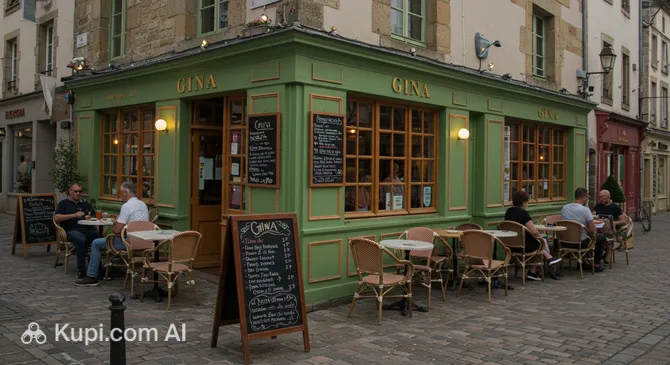
For those seeking a stylish setting to begin the evening, Gina is a popular choice. This venue combines a modern aesthetic with a warm atmosphere, making it an excellent spot for a sophisticated dinner or evening drinks with friends. It represents the more contemporary side of Lannion's hospitality scene, contrasting beautifully with the town's medieval backdrop.
Gina. Illustration.
Source: Kupi.com AI
Traveler photos:
If you prefer an evening with a view, heading up the granite stairs to the Brélévenez district is a must. Here you will find Le Brélévenez, a venue that offers not just food and drink but also a charming, rustic ambiance typical of this historic quarter. It is the perfect place to unwind after a day of exploring, offering a quieter alternative to the bustling bars down by the river.
During the summer months, the nightlife spills out onto the streets with the famous "Les Tardives" festival. On these occasions, the town center becomes a pedestrian zone filled with free concerts, street performers, and night markets, creating a festive environment that lasts well into the night. It is the best time to experience the community spirit of Lannion.
Practical Advice: Most bars in Lannion close around 1:00 AM, though some may stay open a bit longer on weekends. The dress code is almost universally casual; comfort is key in Brittany. In terms of safety, Lannion is very secure, and walking around the city center at night is generally worry-free. However, public transport and taxis are scarce late at night. It is highly advisable to pre-book a taxi if you are staying outside the walkable center, as hailing one on the street is rarely possible.
For daytime entertainment, the city offers plenty of options beyond sightseeing. You can catch the latest films at the Les Baladins cinema or enjoy family fun at the Ti Dour aquatic center, which features swimming pools and relaxation areas. For a bit of friendly competition, there are also bowling alleys and laser tag centers located in the commercial zones on the outskirts of the town.
Parks & Museums
Lannion offers a refreshing balance between urban energy and natural serenity, with green spaces that act as the city's lungs and cultural venues that celebrate both heritage and modern creativity. Whether you are looking for a quiet place to read under ancient trees or an inspiring gallery visit, the town provides plenty of options to unwind and explore.
One of the most beloved natural areas in the city is the Vallée du Stanco. Often described as Lannion's "green lung," this wooded valley stretches between the neighborhoods of Brélévenez and the city center. It is a haven of biodiversity where streams like the Pen ar Biez flow, and it offers a network of shaded paths perfect for walking or jogging. The valley is also the starting point for the Sentier Emile Orain, a trail that follows the route of an old railway line, inviting visitors to immerse themselves in nature without leaving the urban area.
For a more manicured experience, the Parc Sainte-Anne provides a peaceful retreat right in the heart of the town. This enclosed park is known for its tranquil atmosphere and beautiful trees, making it an ideal spot for a family picnic or a quiet break from sightseeing. It also holds a touch of history, as it houses the tombs of the Augustinian nuns who once served the local community, adding a layer of poignant heritage to the lush surroundings.
Culturally, Lannion is a significant hub for visual arts in Brittany. L'Imagerie is a renowned art center dedicated to photography and video art. It has established a national reputation for high-quality exhibitions, hosting works by famous photographers and organizing the annual "Estivales Photographiques" festival. It is a must-visit for art enthusiasts keen to see contemporary visual storytelling in a historic setting.
Another key cultural venue is the Chapelle des Ursulines. This 17th-century chapel has been converted into a magnificent exhibition space. The contrast between the building's religious architecture—with its high ceilings and stone walls—and the modern paintings or sculptures often displayed there creates a unique viewing experience. It regularly hosts temporary exhibitions ranging from local Breton artists to international names.
In terms of architectural heritage, while the Brélévenez church is the most famous, the Church of Saint-Jean-du-Baly in the town center is equally fascinating. Dating back to the 16th century, it features a stunning polychrome vault studded with ermines (the symbol of Brittany) and distinctive Art Deco stained glass windows added in the 20th century, representing a harmonious blend of eras.
For a truly authentic local experience, take a walk along the Chemin de Halage (towpath) of the Léguer River. This path leads you from the city center towards the estuary, offering changing views of the tides and the "Wild River." It is a favorite route for locals on Sunday afternoons and provides a seamless transition from the medieval streets to the wilder landscapes of the coast.
Getting Around
Public transport in Lannion is primarily managed by the TILT (Transports Intercommunaux Lannion-Trégor) network. Since the city is relatively small and compact, there is no metro or tram system; instead, a reliable fleet of buses serves the town center, the outlying neighborhoods, and the surrounding communes. This network is particularly useful for tourists as it provides vital connections between the historic city center, the train station, and the popular seaside resort towns along the Pink Granite Coast, such as Perros-Guirec and Trégastel.
The payment system is designed to be affordable and user-friendly for visitors. A single journey ticket typically costs around €1.20, making it an economical way to explore the area. Tickets can usually be purchased directly from the driver upon boarding—where exact change is appreciated—or at the sales office located at the multimodal exchange hub near the train station. For added convenience, digital tickets can often be purchased via the tixiPASS mobile app, allowing you to buy and validate your fare using your smartphone without needing physical cash.
When planning your journeys, it is important to be aware of the operating hours. Bus frequencies vary significantly depending on the time of year; summer schedules are robust with frequent shuttles to the beaches, while service in the off-season and on Sundays can be much more limited. Buses generally stop running in the early evening, so it is wise to check the latest timetables at bus stops or online if you plan to stay out late. Always remember to validate your paper ticket immediately upon boarding to avoid any fines.
For those seeking alternatives to the bus, renting a car is often the most popular choice for tourists who wish to explore the hidden coves and megalithic sites of the region with total freedom. Taxis are available but do not typically cruise the streets for passengers; you must book them in advance by phone or locate them at the designated rank outside the train station. Additionally, the city encourages eco-friendly travel through the Vélek'tro service, which offers electric bike rentals—a perfect solution for navigating the hilly terrain of Brittany without exhaustion.
Although Lannion does not feature a historic metro or cable car, it boasts a unique pedestrian "thoroughfare" that is a local icon: the monumental granite staircase leading to the Brélévenez district. While not a mechanized vehicle, these 140 steps are an essential and scenic route for moving between the lower town and the upper historic quarter. For broader travel, the Gare de Lannion serves as the main transit hub, connecting the local bus network with regional trains and high-speed TGV services from major cities.
Accommodation
Where to Stay:
Finding the perfect place to stay in Lannion is relatively easy, as the town offers a welcoming mix of accommodation options that cater to various budgets and preferences. Unlike the large, sprawling resort complexes found in some international destinations, the lodging landscape here is characterized by its charm and authenticity. Visitors can choose from reliable mid-range hotels, cozy bed and breakfasts (known locally as chambres d'hôtes), and practical vacation rentals that provide a "home away from home" experience in the heart of Brittany.
The most popular area for tourists is undoubtedly the historic city center. Staying here places you within walking distance of the medieval half-timbered houses, the lively Place du Général Leclerc, and the iconic stairs of Brélévenez. It is the ideal location for those who want to immerse themselves in the town's atmosphere and enjoy easy access to local restaurants and shops without needing a car. Alternatively, the areas along the banks of the Léguer River offer a more tranquil setting with scenic views, while the districts near the train station provide convenient, budget-friendly options for travelers relying on public transport.
For those planning a visit during the peak summer months, particularly July and August, a crucial booking tip is to secure your accommodation well in advance. Lannion serves as a key gateway to the Pink Granite Coast, and hotels can fill up quickly with visitors exploring the region. Booking several months ahead ensures better choices and more favorable rates.
In terms of pricing and booking, Lannion is generally more affordable than the direct seafront resorts located a few kilometers away. The price range is predominantly budget to mid-range, making it an excellent base for cost-conscious travelers. Reservations are most easily made through major online booking platforms, though many smaller, independent establishments and guesthouses also welcome direct inquiries via their websites or telephone.
Nearby Cities
For those looking to explore the surroundings, Lannion serves as an excellent base for day trips to several interesting nearby locations. The region offers a variety of experiences ranging from maritime adventures to cultural discoveries.
One of the most compelling destinations is Brest, a major maritime city located to the west. It is renowned for its rich naval history and Océanopolis, a massive ocean discovery park that is a favorite for families. Further south, visitors can discover Quimper, often considered the cultural heart of Brittany. This charming town is famous for its distinct faience pottery, the stunning Cathedral of Saint Corentin, and its picturesque medieval streets. Closer to Lannion, Saint-Brieuc offers a delightful mix of urban heritage and natural beauty, situated on a bay that serves as a protected nature reserve.
City
Population
Distance
Morlaix
14 845
32 km
Landivisiau
9 151
52 km
Plerin
14 309
55 km
Ploufragan
11 489
56 km
Saint-Brieuc
44 170
57 km
These nearby destinations offer a glimpse into the diverse culture and landscapes of the region, making them perfect for day excursions.
Shopping & Souvenirs
Lannion offers a shopping experience that mirrors its character: a blend of tradition and modernity. While it may lack the sprawling luxury avenues of a metropolis, the town compensates with a charming array of independent boutiques, artisan workshops, and specialty food stores. The shopping scene is concentrated in two distinct areas: the atmospheric historic center, perfect for leisurely browsing, and the commercial zones on the outskirts, which cater to more practical needs.
The heart of retail activity lies in the pedestrian streets radiating from the Place du Général Leclerc. Narrow, cobblestone lanes such as Rue des Chapeliers and Rue Saint-Malo are lined with half-timbered houses hosting clothing stores, bookshops, and jewelers. This area is ideal for window shopping, where visitors can find everything from trendy fashion to unique home decor items nestled within centuries-old architecture.
For larger retail chains and supermarkets, shoppers typically head to the periphery of the town. The Zone Commerciale du Lion de Saint-Marc is the primary commercial hub, located a short drive from the center. Here, you will find a large hypermarket surrounded by sports stores, electronics retailers, and major fashion outlets, offering a one-stop destination for general supplies and branded goods.
The weekly market is arguably the highlight of shopping in Lannion. Held every Thursday throughout the day, it is the largest market in the Trégor region. While it is famous for its fresh produce, it also features a wide selection of vendors selling clothes, leather goods, basketry, and local crafts. In the summer, the atmosphere is further livened by night markets, where artisans showcase handmade jewelry and regional art under the evening sky.
When looking for gifts to take home, the region's culinary specialties are a top choice. Salted butter caramels (caramels au beurre salé), tins of buttery biscuits known as palets bretons, and bottles of artisanal cider are universally appreciated. For non-edible souvenirs, look for the iconic Breton striped shirt (marinière) or the traditional personalized ceramic bowls (bols bretons) with hand-painted names, which are a quirky staple of many French households.
Shops in the city center generally open around 9:30 AM or 10:00 AM and close between 7:00 PM and 7:30 PM. It is important to note that many smaller independent boutiques still observe a traditional lunch break, closing from approximately 12:30 PM to 2:00 PM. Most shops are closed on Sundays, although some food artisans and florists may open on Sunday mornings. Credit and debit cards (Visa and Mastercard) are widely accepted, though carrying cash is advisable for small purchases at the market.
Visitors residing outside the European Union may be eligible for a VAT refund (détaxe) on purchases exceeding a certain threshold (typically €100.01) made in a single store. Look for the "Tax Free Shopping" sign in store windows and ask the merchant for a tax refund form at the time of purchase to claim this benefit at the airport or border.