Support

Cambrai

About

Nestled in the Hauts-de-France region of northern France, Cambrai is a captivating destination that blends architectural elegance with a welcoming provincial atmosphere. Home to approximately 32,500 residents, this historic city is perhaps best known internationally for lending its name to "cambric," a fine linen fabric, and for its delightful mint candies known as Bêtises de Cambrai. Its strategic location on the Scheldt river has made it a significant crossroads throughout the centuries, offering travelers a perfect mix of culture and relaxation.

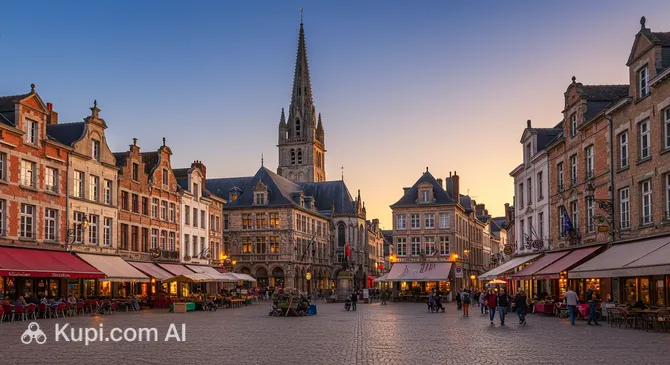
Cambrai. Source: Kupi.Binoculars

The history of Cambrai is deeply etched into its streets and monuments, reflecting a past filled with religious importance and military strategy. Once a powerful ecclesiastical principality, the city preserves a remarkable heritage that invites exploration. Visitors are often drawn to the imposing Belfry of Cambrai, a UNESCO World Heritage site that stands as a symbol of communal freedom, and the majestic Cathedral of Notre-Dame de Grâce, which houses a revered icon of the Virgin Mary and the tomb of the famous writer Fénelon.

Beyond its sacred sites, the city offers a rich cultural experience. The Matisse Museum in nearby Le Cateau-Cambrésis is easily accessible, while within Cambrai itself, the Museum of Fine Arts displays impressive collections in an 18th-century mansion. You can also admire the fortified gates, such as the Porte de Paris, which serve as reminders of the city's defensive walls. Whether you are strolling through its public gardens or tasting the local sweets, Cambrai promises a memorable and authentic French experience.

Weather Overview

The climate in this region is generally temperate, offering distinct seasons without extreme temperature fluctuations. For travelers planning their itinerary, checking the weather in Cambrai is helpful, as the city experiences regular precipitation throughout the year. This consistent moisture keeps the parks and surrounding landscapes lush, but it also means carrying an umbrella is often a good idea regardless of when you visit.

Summers are typically pleasant and comfortable rather than sweltering. During the warmest months of July and August, average temperatures hover around 19°C, with daytime highs reaching approximately 23.6°C. Winters, on the other hand, are chilly, with January seeing average temperatures drop to about 4.4°C and nighttime lows nearing 2.0°C. Rainfall is evenly distributed, with 10 to 15 wet days typically recorded each month. Expect pleasant, warm summers and cool, damp winters with regular rainfall throughout the year.

Interesting Facts

Beyond the main attractions, Cambrai holds many fascinating secrets that delve deep into European history and local lore. The city is not just a scenic stop but a place where pivotal treaties were signed and military tactics were revolutionized.

  • The First Mass Tank Attack: Cambrai occupies a unique place in military history as the site of the Battle of Cambrai in 1917. This World War I conflict marked the first time tanks were used en masse in warfare, fundamentally changing the course of military strategy forever.

  • The Peace of Ladies: In 1529, the city hosted the signing of a historic treaty known as the "Paix des Dames" (Peace of Ladies). Uniquely, this peace agreement between the Holy Roman Empire and France was negotiated and signed solely by two powerful women: Margaret of Austria and Louise of Savoy.

  • Martin and Martine: If you look up at the Town Hall, you will see two legendary figures known as Martin and Martine. These beloved automatons, dressed as "Moors," have been striking the hours on the municipal bell for centuries and are considered the affectionate guardians of the city.

  • A City Beneath the City: Cambrai sits atop a vast network of underground tunnels and quarries known as "Les Boves." Excavated over centuries to extract white limestone, these subterranean galleries have served as shelters, storage areas, and hideouts throughout the city's turbulent past.

How to Get There

Reaching this historic city in Northern France is quite convenient, as it is well-connected to several major transport hubs in the region. Whether you are flying in from abroad or traveling by rail from within Europe, there are multiple options to suit your itinerary. You can find all ways to reach the city detailed below to help you plan your journey efficiently.

The city of Cambrai does not have its own commercial airport, but you can fly into Lille Airport (LIL) in the city of Lille, which is about 45 km from Cambrai. This regional hub handles a moderate amount of traffic and is the closest option for air travelers. From the airport, a taxi or bus transfer typically takes approximately 1.5 hours. For those seeking more international connections, Brussels Airport (BRU) in Brussels is a major alternative. Located approximately 120 km away, it serves a large volume of passengers annually. The travel time by road from Brussels to Cambrai is roughly 3.5 hours.

For clarity, here is a summary of the main airports nearby:

Airport Name City Passenger Traffic Km from City
Brussels AirportBrusselsVery High119.9
Charleroi Brussels South AirportBrusselsHigh92.3
Beauvais-Tille AirportParisMedium113.8
Lille AirportLilleMedium45.1
Ostend-Bruges International AirportBrugesLow117.1

Regarding rail travel, while the region is well-served, the most significant high-speed connections are located in neighboring cities. You can arrive at Douai Station (QDA) in the city of Douai, which is about 24.5 km from Cambrai. From there, you can get a taxi or bus, which takes about an hour. Another important hub is Arras Station (XRZ) in Arras, situated approximately 35 km away. This station handles a medium volume of passengers, and the subsequent transfer to Cambrai takes around 1 hour and 15 minutes.

Below is a list of the closest major railway stations:

Station City Passenger Traffic Km to Center
Lille Flandres StationLilleVery High52.8
Lille Europe StationLilleHigh53.0
Arras StationArrasMedium34.8
Douai StationDouaiMedium24.5
TGV Haute Picardie StationAlbertLow45.4

Main Attractions

Cathedral of Notre-Dame de Grâce is a masterpiece of classical architecture that stands on the site of an earlier 11th-century structure. While it is widely known for housing the tomb of Fénelon, art enthusiasts are particularly drawn to its interior to view the nine large grisailles by Marten de Vos. The cathedral is also the sanctuary for the miraculous icon of Notre-Dame de Grâce, a Byzantine-style painting brought from Rome in the 15th century, which remains a focal point for pilgrims and visitors alike.

For those who appreciate Baroque art, the Church of Saint-Géry is an essential stop. As the oldest church in the city, it features a striking polychrome marble rood screen that separates the choir from the nave, a rare survival in French churches. The true highlight for many tourists, however, is the majestic painting "The Entombment" by the Flemish master Peter Paul Rubens, located in the transept, making this church a hidden gem for art history lovers.

The Cambrai Museum of Fine Arts offers a rich cultural experience set within the walls of the 18th-century Hôtel de Francqueville. Beyond its impressive collection of French, Flemish, and Dutch paintings, the museum is famous for its detailed relief map (Plan-Relief) of the city. This large-scale model, created in the late 17th century for Louis XIV, allows visitors to visualize the city's historic fortifications and strategic layout as they appeared hundreds of years ago.

Standing as a proud remnant of the city's medieval fortifications, the Porte de Paris is a robust 14th-century gate that once controlled access from the south. Unlike many other dismantled ramparts, this structure has been beautifully preserved. Tourists enjoy walking around its base to admire the massive towers and the ancient drawbridge slots, which offer a tangible connection to the era when Cambrai was a heavily fortified border town.

Local Cuisine

The culinary landscape of Cambrai is deeply rooted in the traditions of Northern France, offering hearty, comforting flavors that reflect the region's agricultural heritage. The city is most famous worldwide for its sweet signature treat, the Bêtises de Cambrai. These refreshing mint candies, recognizable by their caramelized stripe, are said to have been invented by mistake in the 19th century. Today, they are a symbol of the city, and visitors can find them in charming tin boxes at local confectionery shops, making for a perfect edible souvenir.

On the savory side, the Andouillette de Cambrai is a must-try for adventurous eaters. Unlike other French sausages, this local variety is traditionally made using veal casing rather than pork, giving it a distinct texture and flavor profile. It is often grilled and served with fries or a mustard sauce. Cheese lovers should look out for the Tomme de Cambrai, a semi-soft cow's milk cheese with a mild, nutty taste that pairs excellent with fresh baguette, or the Boulette de Cambrai, a fresh cheese seasoned with herbs like parsley, tarragon, and chives.

When it comes to beverages, Cambrai shares the Hauts-de-France region's deep appreciation for beer. While wine is available, the local culture favors artisanal beers and bière de garde (keeping beer), which are brewed in the surrounding areas. These beers are typically malty and rich, serving as the perfect accompaniment to the robust local dishes. For a non-alcoholic option, apple juice from nearby orchards is a refreshing choice often found on menus.

The dining scene in Cambrai is characterized by a warm and unpretentious atmosphere. Locals and tourists alike gather in traditional brasseries and restaurants surrounding the Place Aristide Briand to enjoy generous portions of regional classics like Flamiche aux Maroilles (cheese tart) or Carbonnade Flamande (beef stew cooked with beer). For a more authentic everyday experience, the covered market is a vibrant spot to explore fresh produce and taste local specialties directly from the producers.

Travel Tips

Visiting Cambrai is a delightful experience, but a little preparation can make your journey through this historic French city even smoother and more enjoyable. To help you navigate the local customs and logistics with ease, here is a collection of practical advice designed for travelers.

  1. Clothing and Gear: Since the weather in Hauts-de-France can be changeable, dressing in layers is the best strategy. Even in summer, evenings can be cool, so bring a light jacket. Given the frequency of rainfall, a sturdy umbrella or a waterproof coat is essential. Furthermore, the city center features charming but uneven surfaces, so pack comfortable walking shoes rather than high heels to explore the cobblestone streets and historic sites safely.
  2. Transportation: Cambrai is a compact city, and its historic center is best explored on foot. For longer distances, the local bus network, known as TUC (Transports Urbains du Cambrésis), is reliable and affordable. Taxis are available but usually need to be booked in advance rather than hailed on the street. Unless you plan to explore the surrounding countryside or battlefields, a rental car is not strictly necessary for the city itself.
  3. Finances: The official currency is the Euro (€). While credit and debit cards (Visa and Mastercard) are widely accepted in hotels, restaurants, and supermarkets, it is wise to carry some cash for small purchases at bakeries or local markets. ATMs are plentiful throughout the city. Tipping is not mandatory as a service charge is included in the bill, but leaving small change or rounding up is a polite gesture for good service.
  4. Health and Safety: Cambrai is generally a safe city for tourists, but standard precautions regarding personal belongings should be taken in crowded areas. Pharmacies are easily recognizable by a flashing green cross and are well-stocked for minor ailments; check for the "Pharmacie de Garde" for after-hours services. In case of any serious emergency, dial 112, the universal European emergency number.
  5. Communication: French is the sole official language. While younger people and staff in the tourism industry may speak English, it is not universally spoken by the older generation. Learning a few basic phrases like "Bonjour" (Hello), "S'il vous plaît" (Please), and "Merci" (Thank you) shows respect and will be warmly received. Free Wi-Fi is often available in hotels and cafes, and prepaid SIM cards can be purchased at tobacco shops ("Tabac") or mobile phone stores.
  6. Local Etiquette: Politeness is highly valued in French culture. Always greet shopkeepers or staff with a friendly "Bonjour" when entering an establishment and "Au revoir" when leaving. In public places, keep your voice down to match the generally reserved local demeanor. When visiting religious sites like the Cathedral, dress modestly and respect the silence of worshippers.
  7. What to Avoid: Avoid assuming that everyone speaks English immediately; it is polite to ask "Parlez-vous anglais?" first. Also, do not expect shops and businesses to be open continuously throughout the day. Many smaller boutiques and independent stores close for a lunch break, typically between 12:00 PM and 2:00 PM, so plan your shopping accordingly.
  8. Market Days: To experience the true pulse of the city, try to visit the covered market or the open-air stalls on Wednesday or Saturday mornings. This is where locals shop for fresh produce, cheese, and regional specialties. It is a fantastic opportunity to mingle with residents and taste authentic local flavors, but remember to bring your own reusable shopping bag.

Armed with these tips, you are ready to immerse yourself in the rich heritage and friendly atmosphere of Cambrai. Whether you are marveling at the architecture or savoring a local mint candy, these small insights will help you travel with confidence and ease.

Entertainment & Nightlife

While Cambrai may not possess the frenetic energy of a sprawling metropolis, its nightlife offers a warm and convivial atmosphere typical of Northern France. The evening scene here is less about thumping mega-clubs and more about socializing in lively bars, enjoying long dinners, and soaking up the "chaleur du Nord" (warmth of the North). The city comes alive particularly on weekends, when locals and students gather to unwind, creating a welcoming environment for visitors to join in the conversation and enjoy local beverages.

The heartbeat of Cambrai's nightlife is undoubtedly centered around the Place Aristide Briand. This expansive main square is lined with numerous brasseries and bars whose terraces fill up quickly on pleasant evenings. It is the perfect spot to start your night, offering a picturesque view of the illuminated Town Hall. The adjacent streets, such as Rue de la Herse and Place du 9 Octobre, also host several popular establishments, creating a compact and walkable district where you can easily hop from one venue to another.

For those looking to experience the local bar culture, Le Garage Café is a well-known favorite among residents. With its distinct decoration and vibrant atmosphere, it often hosts themed nights and offers a wide selection of beers and cocktails. Another popular spot is Le Latin, situated near the city center, which provides a relaxed setting for enjoying drinks with friends. If you prefer a more classic French brasserie vibe that transitions into a lively evening spot, the establishments directly on the main square, such as Le France, offer the quintessential experience of sipping a local beer while watching the city go by.

Practicality is key when planning a night out in Cambrai. Most bars stay open until around 1:00 AM or 2:00 AM on weekends, while restaurants typically stop serving food by 10:00 PM. The dress code is generally casual to smart-casual; jeans and a nice top are perfectly acceptable almost everywhere. Prices are reasonable compared to larger French cities, with a pint of beer typically costing between 5 and 7 Euros. Since the city center is relatively small, walking is the best way to get around, but be aware that public transport options diminish late at night.

In terms of safety, Cambrai is a peaceful city, and walking around the center at night is generally considered safe. However, as with any travel destination, it is wise to stay in well-lit areas and keep an eye on your belongings. If you need to travel further afield or return to a hotel on the outskirts, it is highly recommended to book a taxi in advance, as hailing one on the street can be difficult late at night. Apps or local taxi numbers are essential tools to have on your phone.

Beyond the bars, the city offers cultural entertainment that can fill your evenings. The Théâtre de Cambrai presents a diverse program ranging from classical plays to contemporary dance and concerts, providing a sophisticated night out. For movie lovers, the Le Palace cinema screens the latest international and French films. During the summer months, keep an eye out for the "Juillet en Fête" events or night markets, which occasionally transform the city squares into open-air venues for music and festivities.

Parks & Museums

Some of the most delightful experiences in Cambrai come from exploring its serene green spaces and immersing oneself in its deep cultural heritage. As a designated "City of Art and History," it offers visitors a refined mix of well-manicured 19th-century gardens and institutions that preserve the artistic and historical legacy of the region.

The crown jewel of the city’s greenery is the Jardin Public (Public Garden). Located near the city center, this expansive park is a splendid example of 19th-century landscape design. Visitors can wander through winding paths lined with centuries-old trees, admire colorful flowerbeds, and relax by the ornamental pond. The garden is divided into a "French-style" floral park and a more rugged "English-style" wooded area. It is also home to a charming ornate bandstand and statues honoring local aviation pioneers, making it a perfect spot for a leisurely afternoon stroll away from the urban bustle.

For those who prefer a more natural setting, the Coulée Verte offers a refreshing escape. This green corridor stretches along the banks of the Scheldt (Escaut) canal, providing a scenic route for walkers, joggers, and cyclists. It is an excellent way to see the city from a different perspective, observing the barges gliding by and the local wildlife. The path connects the urban environment with the surrounding countryside, offering a peaceful breath of fresh air and a chance to appreciate the region's river heritage.

While the Museum of Fine Arts (Musée des Beaux-Arts) is the city's primary artistic venue, it is worth exploring for its diverse collections that span far beyond typical paintings. Housed in the elegant Hôtel de Francqueville, it offers a journey through time from prehistoric archaeology to contemporary geometric abstraction. A standout feature for history buffs is the department dedicated to the osteology and heritage of the region. It provides a comprehensive look at how Cambrai has evolved artistically and strategically over the centuries.

Another significant cultural hub is Le Labo. More than just a library, this modern architectural space serves as a center for "Cambrai, City of Art and History." It hosts interactive exhibitions, digital workshops, and cultural events that interpret the city's past and future. For tourists, it is an excellent resource to understand the local heritage through modern technology and temporary displays that often focus on science, architecture, and local identity.

Beyond the museums, the city's architecture acts as an open-air gallery. The Château de Selles is a formidable medieval fortress that dates back to the 13th century. Although it has served various administrative functions, including as a courthouse, its exterior walls and towers remain a testament to military engineering. It is one of the few remaining fortified structures in the city and offers a glimpse into the defensive importance of Cambrai in the Middle Ages.

The Spanish House (Maison Espagnole) is another architectural curiosity that captures the imagination. Built in 1595, this timber-framed house is the last of its kind in the city, representing the era of Spanish occupation. Today, it houses the Tourist Office, but the building itself is a museum piece, featuring intricate wood carvings and a charming historic cellar that visitors can often view.

For a truly local experience, visit the Jardin Public on a Sunday afternoon during the summer. The traditional bandstand often hosts live concerts, bringing the park to life with music and community spirit. Additionally, keep an eye out for the smaller Square Fénelon right next to the cathedral; it offers a quiet, contemplative view of the church's architecture and is a favorite reading spot for locals seeking solitude.

Getting Around

Navigating Cambrai is straightforward and convenient, thanks to a compact city center that is easily explorable on foot and a reliable public transport network for reaching outlying areas. The city does not have a metro or tram system; instead, public transportation relies entirely on a comprehensive bus network managed by TUC (Transports Urbains du Cambrésis). This network connects the downtown area with residential neighborhoods, commercial zones, and the train station, making it an efficient way to move around the municipality and its immediate surroundings.

A highlight for visitors is the Citadine, a free electric shuttle service that operates specifically within the city center. This small, agile bus loops around key locations, including the Town Hall, the train station, and major shopping streets. It is an excellent option for tourists who want to save time between attractions or simply rest their legs. The shuttle typically runs frequently throughout the day, except on Sundays and public holidays, and requires no ticket or pass to board.

For the regular bus lines, the payment system is user-friendly and affordable. A standard single-trip ticket costs approximately €1.30 and is valid for one hour, allowing for transfers. Travelers planning to use the bus multiple times might consider purchasing a "carnet" (a book of 10 tickets) or a day pass, which offers unlimited travel for a set price. Tickets can often be purchased directly from the driver upon boarding—remember to have small change ready—or at the Espace TUC sales office located near the Place du 9 Octobre.

Practicality is key when using the bus system here. You must validate your ticket immediately upon entering the bus using the machines provided. Operating hours generally run from around 6:30 AM to 8:00 PM on weekdays and Saturdays, with significantly reduced or no service on Sundays and holidays. It is highly recommended to check the timetables in advance, either at the bus stops or via the official TUC website, especially if you plan to travel in the evening.

Beyond buses, walking remains the most popular way to experience the historic charm of the city. For those preferring a faster pace or needing to travel late at night when buses are not running, taxis are available. However, unlike in larger metropolises, you cannot easily hail them on the street; it is essential to book one by phone or through an app in advance. Additionally, the city is becoming increasingly bike-friendly, and renting a bicycle can be a pleasant way to explore the "Coulée Verte" and the canal banks at your own leisure.

Accommodation

Accommodation in Cambrai reflects the city's character: welcoming, historic, and unpretentious. While you will not find sprawling luxury resorts here, the city offers a comfortable selection of lodging options that cater to history enthusiasts, business travelers, and families alike. The range typically includes independent mid-range hotels housed in traditional buildings, charming bed and breakfasts (known locally as chambres d'hôtes), and a few reliable budget chain hotels located closer to the main roads on the outskirts.

For visitors who wish to immerse themselves in the local atmosphere, staying in the city center is highly recommended. Hotels located near the Place Aristide Briand or the Cathedral allow for easy walking access to the main sights, restaurants, and the lively Saturday market. This area is perfect for those who want to step out of their door and immediately be amidst the historic architecture. Alternatively, the area around the train station offers practical convenience for those arriving by rail, providing a quiet base just a short walk from the downtown core.

Travelers exploring the wider Cambrésis region might also consider the countryside immediately surrounding the city. Here, converted farmhouses and manor homes often serve as guesthouses, offering a peaceful retreat with a personal touch. These options are ideal for visitors with a car who appreciate a slower pace and home-cooked breakfasts featuring local produce.

Booking Tip: While Cambrai is not usually overrun with tourists, accommodation capacity is relatively limited compared to larger cities like Lille. It is advisable to book your room a few weeks in advance, especially if you plan to visit during the summer months or around local holidays when availability can tighten quickly.

Regarding costs, the city is generally quite affordable. Most properties fall into the budget to mid-range price categories, offering excellent value for money compared to major French tourist hubs. Booking can easily be done through major online platforms, but for smaller B&Bs, contacting the owners directly can sometimes secure a better rate or a more personalized experience.

Nearby Cities

For those looking to explore the surroundings, Cambrai serves as an excellent base for day trips to several interesting nearby locations:

One of the most captivating destinations nearby is Arras. Known for its two magnificent cobbled squares, the Grand’Place and the Place des Héros, the city offers a stunning display of Flemish-Baroque architecture. Visitors can climb the UNESCO-listed Belfry for a panoramic view or explore the Wellington Quarry, an underground memorial that offers a moving insight into World War I history.

Just a short distance away lies Douai, a city famous for its folklore involving the Gayant family of giants. Beyond its traditions, Douai boasts an impressive Belfry that houses one of the largest carillons in Europe. Art lovers will appreciate the Chartreuse Museum, set in a former Carthusian monastery, which displays a remarkable collection of paintings and sculptures.

Valenciennes is another cultural gem worth visiting, often referred to as the "Athens of the North" due to its artistic heritage. The city is home to a prestigious Museum of Fine Arts and features a pleasant city center dotted with statues and historic facades, making it perfect for a leisurely afternoon walk.

City Population Distance (km)
Valenciennes4340529
Arras4169435
Douai3963424
Hénin-Beaumont2599234
Denain1993320

These nearby destinations offer a glimpse into the diverse culture and landscapes of the region.

Shopping & Souvenirs

Shopping in Cambrai offers a delightful blend of provincial charm and modern convenience. While the city may not be a sprawling fashion capital, it provides a relaxed atmosphere where visitors can browse through independent boutiques, artisanal food shops, and well-known national retailers. The experience here is less about rushing through crowded department stores and more about discovering local craftsmanship and high-quality regional products, particularly in the realm of gastronomy.

The heart of the city's commercial life beats around the Place Aristide Briand and the surrounding pedestrian-friendly streets. This central square serves as the starting point for a shopping spree, branching out into key thoroughfares such as Rue de la Victoire and Rue des Rôtisseurs. These streets are lined with a variety of clothing stores, shoe shops, jewelers, and bookstores. It is a pleasant area to wander on foot, admiring the architecture while window shopping at small, family-run establishments that have served the community for generations.

For those seeking a more concentrated retail experience or larger supermarkets, the city features several commercial zones and shopping centers, mostly located on the outskirts. The Centre Commercial Auchan Cambrai, situated to the south of the city on Avenue de Paris, is a major hub containing a large hypermarket and a gallery of smaller stores selling fashion, electronics, and beauty products. Another significant option is the Cora Cambrai shopping complex, which offers similar amenities and ample parking, making it convenient for travelers stocking up on supplies.

No trip to Cambrai is complete without visiting its vibrant markets, which are central to local culture. The Covered Market (Marché Couvert), located near the Town Hall, is an architectural gem in itself. On market days, typically Wednesday and Saturday mornings, the area bustles with activity as local producers sell fresh fruits, vegetables, regional cheeses, and meats. It is the perfect place to mingle with locals and experience the authentic sights and smells of Northern France.

When it comes to souvenirs, the undisputed icon of the city is the Bêtise de Cambrai. These refreshing mint candies, easily recognized by their caramelized stripe, are famous throughout France. You can purchase them in decorative tin boxes from specialized confectionery shops like the historic Maison Afchain or Maison Despinoy. Beyond sweets, other excellent gifts include bottles of local craft beer from the Hauts-de-France region, or a wheel of Tomme de Cambrai cheese for savory lovers.

Store opening hours in Cambrai generally follow standard French customs. Most shops open around 9:30 AM or 10:00 AM and close between 7:00 PM and 7:30 PM. It is important to note that many smaller, independent boutiques may close for a lunch break, typically from 12:00 PM to 2:00 PM. Larger supermarkets and shopping malls usually remain open throughout the day. On Sundays, the vast majority of shops are closed, although some bakeries and food markets operate in the morning.

Payment methods are modern and convenient. Credit and debit cards (Visa and Mastercard) are widely accepted even for small amounts, thanks to contactless technology. However, carrying a small amount of cash is advisable for small purchases at the market or in older cafés. For visitors from outside the European Union, a tax-free shopping (détaxe) refund is available on purchases exceeding a certain threshold (usually €100.01) in a single store, provided the shop participates in the scheme and you present your passport.
Reached the end of the page?

That means the route is fully explored