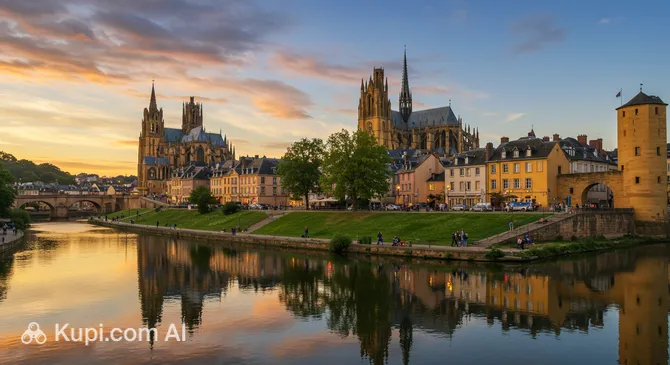
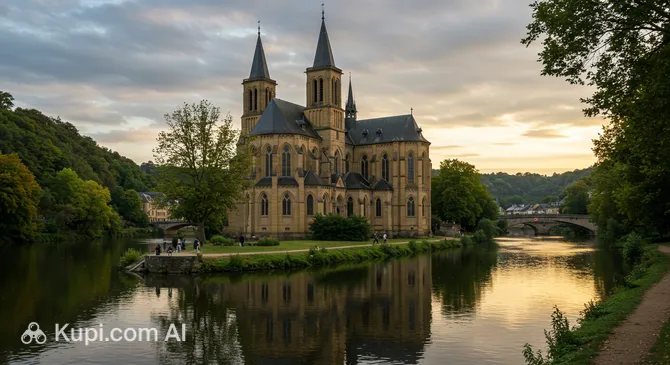
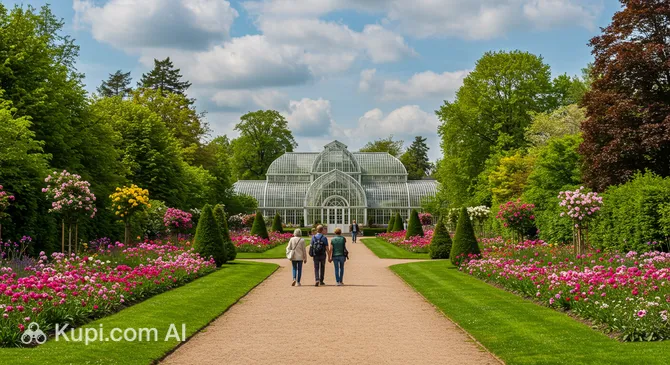
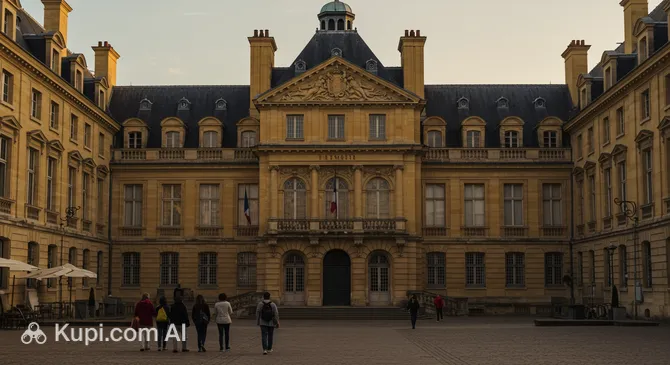
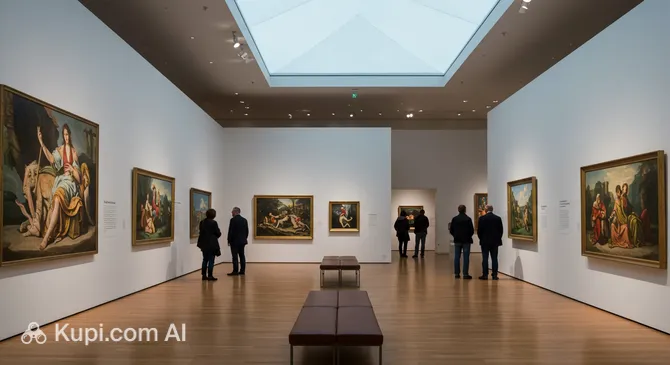
Metz is a captivating city located in the northeast of France, serving as a cultural and economic hub in the Grand Est region. Situated at the confluence of the Moselle and Seille rivers, it is known for its abundant green spaces and the distinctive golden hue of its buildings, constructed from the local "Pierre de Jaumont" limestone. With a population of approximately 118,000, Metz offers a vibrant yet relaxed atmosphere, perfectly blending urban energy with riverside tranquility.
Metz. Illustration.
Source: Kupi.com AI
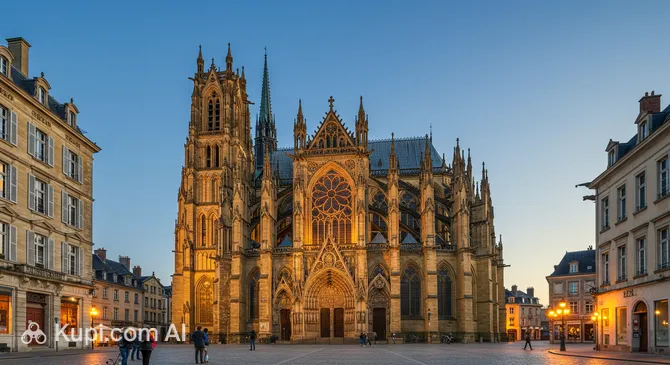
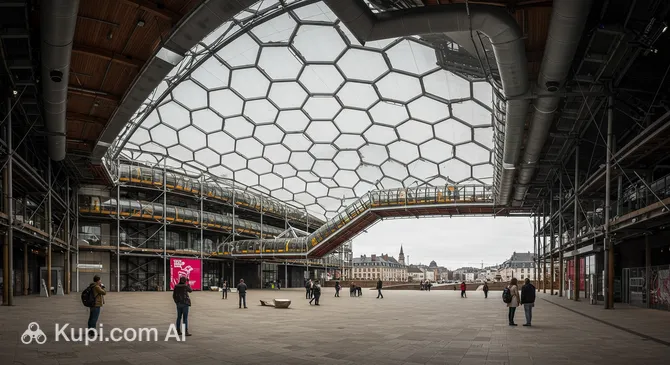
The rich history of Metz spans over three millennia, leaving behind a diverse architectural heritage that reflects both French and Germanic influences. One of the city's crown jewels is the breathtaking **Saint-Étienne Cathedral**, renowned for having one of the tallest naves in the world and an extensive collection of stained glass windows, including masterpieces by Marc Chagall. In striking contrast to this Gothic wonder stands the **Centre Pompidou-Metz**, a futuristic venue dedicated to modern and contemporary art that has become a symbol of the city's cultural dynamism.
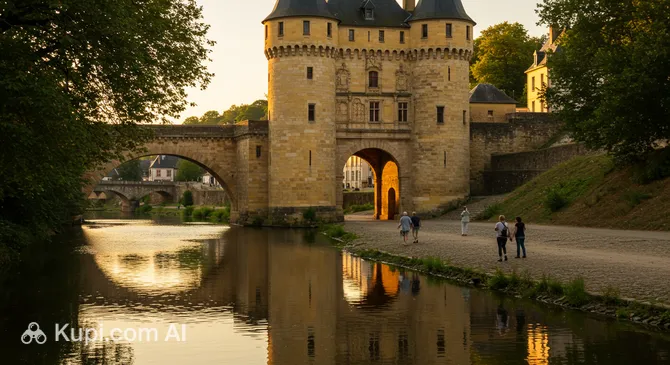
Visitors are often charmed by the **Imperial Quarter**, a district showcasing imposing architecture from the early 20th century, and the medieval **Porte des Allemands**, a fortified castle bridge that once guarded the city. Whether you are strolling through its beautifully landscaped gardens or exploring its unique museums, Metz invites you to discover a destination where ancient traditions and modern creativity coexist in harmony.
Weather Overview
The weather in Metz is characterized by distinct seasons, offering a climate that transitions from warm, pleasant summers to cold, damp winters. Visitors can generally expect moderate temperatures during the peak travel months, although precipitation is a fairly constant companion throughout the year.
Summer, spanning from June to August, is typically the warmest period, with average temperatures ranging between 18.4°C and 19.9°C. July and August are particularly inviting, with daytime highs often reaching around 24.5°C. Despite the warmth, rain is not uncommon, with approximately 10 to 12 wet days per month, so packing a light raincoat is always a good idea.
Winters are significantly colder, creating a crisp atmosphere suitable for indoor sightseeing. January is usually the coldest month, seeing average temperatures of 3.2°C and lows dipping to 1.0°C. December tends to be the dampest month in terms of frequency, with up to 18 wet days, making waterproof footwear and warm layers essential for any winter itinerary.
Average monthly temperature
Average monthly precipitation
Interesting Facts
Beyond the main attractions, Metz holds many fascinating secrets that surprise even the most seasoned travelers. From ancient legends to architectural marvels, the city offers a treasure trove of stories waiting to be uncovered.
The city is home to the oldest church in France, Saint-Pierre-aux-Nonnains. Originally built as a Roman gymnasium in the 4th century, this historic structure has survived millennia of change, serving as a testament to the city's deep-rooted antiquity.
The Metz Cathedral is often nicknamed the "Lantern of God" because it possesses the largest surface area of stained glass in the world, spanning nearly 6,500 square meters. This Gothic masterpiece is celebrated for the sheer volume of light that floods its nave, creating a luminous and spiritual atmosphere distinct from other cathedrals.
Local folklore is dominated by the legend of the Graoully, a terrifying dragon that is said to have lived in the ruins of the local amphitheater. According to the tale, Saint Clement, the first bishop of the city, vanquished the beast by leading it to the banks of the Seille River and commanding it to disappear into the waters.
The roof of the Centre Pompidou-Metz is a marvel of modern design, inspired by a traditional Chinese woven hat found in Paris by the architect Shigeru Ban. This intricate hexagonal wooden structure is covered in a waterproof membrane that allows natural light to filter through, creating a unique atmosphere inside the galleries.
Metz Cathedral. Illustration.
Source: Kupi.com AI
Traveler photos:
How to Get There
Reaching this historic destination is straightforward thanks to its central location in Europe and excellent transport connections. Whether you prefer flying or taking the train, there are several convenient options to suit your itinerary. For a comprehensive guide on all available routes and transport tips, you can read more about how to get to Metz on our detailed page.
For air travel, the closest facility is Metz-Nancy-Lorraine Airport (ETZ), located approximately 16 km from the city center. While it serves the region, it is a relatively small hub. Many international travelers find it more convenient to fly into Luxembourg Airport (LUX), situated in Luxembourg City, about 57 km away. This is a significant international airport offering a wider range of flights. A transfer from Luxembourg Airport to Metz typically takes 45 to 60 minutes by car, or around 1 hour and 15 minutes by shuttle bus.
For clarity, here is a summary of the main airports:
Traveling by train is another popular option, particularly given France's extensive high-speed rail network. The Lorraine TGV Station (XZI) is a key hub for high-speed trains, located about 19 km from the city center. Although it is not right in the downtown area, it connects the region to major cities like Paris. A taxi or shuttle bus from this station to Metz typically takes 20 to 30 minutes. For those exploring the wider region, Strasbourg Railway Station (XWG) in Strasbourg is a major railway hub, though it is located approximately 129 km away.
Below is an overview of the nearby railway stations:
Metz boasts a delightful array of attractions that bridge the gap between ancient history and contemporary culture. From soaring religious monuments to cutting-edge art venues, the city offers diverse experiences for every type of traveler. Exploring these sites provides a deep dive into the region's unique heritage and artistic spirit.
Standing tall in the heart of the city, the Metz Cathedral is a masterpiece of Gothic architecture that commands attention. Known as the "Lantern of God" due to its immense surface area of stained glass, it features works by renowned artists such as Marc Chagall. Visitors are captivated by its soaring nave, one of the highest in France, which creates a sense of grandeur and spiritual luminosity that is truly unforgettable.
For art enthusiasts, the Centre Pompidou-Metz is an absolute must-see. This sister institution to the famous Parisian museum hosts rotating exhibitions of modern and contemporary art. Beyond the artworks, the building itself is a marvel, featuring a unique hexagonal roof structure inspired by a Chinese woven hat. It serves as a vibrant cultural hub where creativity meets architectural innovation.
Centre Pompidou-Metz. Illustration.
Source: Kupi.com AI
Traveler photos:
A striking remnant of the city's medieval fortifications, the German Gate (Porte des Allemands) spans the Seille River with its impressive towers and ramparts. This castle-bridge allows tourists to walk along the old defensive walls, offering excellent views of the surroundings. It is a perfect spot for history buffs to imagine the city's past while enjoying a scenic stroll along the riverbanks.
German Gate. Illustration.
Source: Kupi.com AI
Traveler photos:
Situated on the tip of the Petit-Saulcy island, the Temple Neuf is one of the most photographed landmarks in Metz. Built in a Neo-Romanesque style during the German annexation, its grey sandstone silhouette contrasts beautifully with the surrounding river and greenery. It is particularly enchanting at night when the lights reflect off the Moselle River, creating a magical atmosphere for an evening walk.
Temple Neuf. Illustration.
Source: Kupi.com AI
Traveler photos:
To dive deeper into local history, visit the La Cour d'Or Museum. This extensive museum takes you on a journey through time, from Gallo-Roman thermal baths preserved in situ to medieval sculptures and Renaissance fine arts. The labyrinthine layout adds a sense of adventure, making it a fascinating exploration for families and history lovers alike.
Local Cuisine
The culinary landscape of Metz is a delightful reflection of its location in the heart of the Lorraine region, offering a cuisine that blends French finesse with hearty, rustic traditions. Visitors cannot leave the city without trying the world-famous Quiche Lorraine. While this savory tart is known globally, tasting the authentic version here—made with a buttery shortcrust pastry, eggs, heavy cream, and smoked bacon (lardons)—is a revelation. Another local favorite is the Pâté Lorrain, a delicious specialty consisting of marinated pork wrapped in flaky puff pastry, often enjoyed as a starter or a quick snack.
For those with a sweet tooth, the region is synonymous with the Mirabelle plum. This small, golden fruit is the pride of Lorraine and features heavily in local desserts, particularly the classic Mirabelle tart. It is also the base for the region's signature digestive, eau-de-vie de Mirabelle, a fruit brandy that often concludes a traditional meal. To accompany your food, look for white wines from the Moselle vineyards, which are known for their fresh and fruity notes, perfectly balancing the richness of the local dishes.
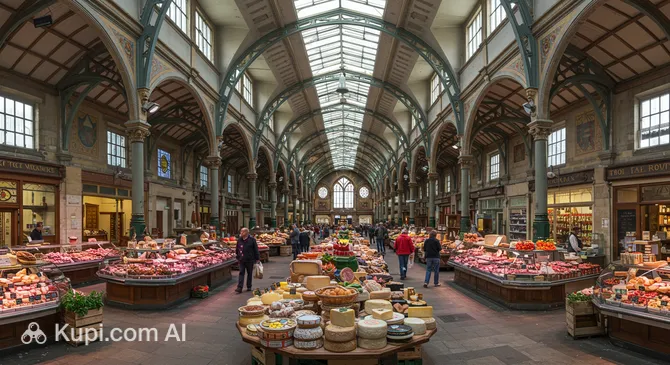
The food culture in Metz revolves around conviviality and fresh, high-quality produce. A central hub for gourmets is the Metz Covered Market. Housed in a grand U-shaped building near the cathedral that was originally intended to be a bishop's palace, this bustling market offers an array of cheeses, meats, and local delicacies. It is an ideal spot to mingle with locals, grab a quick bite, or simply admire the vibrant display of regional ingredients.
Metz Covered Market. Illustration.
Source: Kupi.com AI
Traveler photos:
Travel Tips
Welcome to Metz! To ensure your visit to this charming city in the Grand Est region is as smooth and enjoyable as possible, we have compiled a list of essential travel advice covering everything from packing essentials to local customs.
Clothing and Gear: The climate in France varies, and Metz is no exception; layers are highly recommended. Winters can be damp and cold, requiring a warm coat and waterproof footwear, while summers are generally pleasant but can still see rain showers. Since the historic center features many cobblestones, bring comfortable walking shoes. France uses Type E power outlets (230V), so ensure you have a suitable adapter for your electronics.
Transportation: The city center is compact and best explored on foot. For longer distances, the LE MET' public transport network is excellent, featuring the Mettis (a high-frequency bus rapid transit system) which connects major points of interest. Tickets can be purchased at vending machines at stops. While taxis are available, they can be expensive; renting a car is generally unnecessary for the city itself but useful if you plan to tour the surrounding countryside.
Finances: The local currency is the Euro (€). Credit and debit cards (Visa and Mastercard) are widely accepted in most hotels, restaurants, and shops. However, it is wise to carry some cash for small purchases at the covered market or independent bakeries. Tipping is not mandatory as a service charge is legally included in the bill, but leaving small change or rounding up is a polite gesture appreciated by service staff.
Health and Safety: Metz is considered a safe destination for tourists. Pharmacies are easily recognizable by a flashing green cross sign and can provide advice and medication for minor health issues. For serious emergencies, dial 112. Standard precautions apply: keep an eye on your personal belongings in crowded areas like the train station or during events.
Communication: The main language is French. While English is spoken by many younger people and those in the tourism industry, it is not universally understood. Locals appreciate it if you start interactions with a polite Bonjour (Hello) or Excusez-moi (Excuse me). Free Wi-Fi is often available in public squares and cafes; for constant connectivity, prepaid SIM cards can be bought at "Tabac" shops or mobile operator stores.
Local Etiquette: Politeness is key in French culture. Always greet shop assistants when entering a store and say "Au revoir" when leaving. When dining out, ask for the bill (l'addition) when you are ready to pay, as waiters will rarely bring it unprompted to avoid rushing you. In religious sites like the cathedral, dress modestly and maintain a respectful silence.
What to Avoid: Do not assume everyone speaks English immediately; asking "Parlez-vous anglais?" (Do you speak English?) first is much more polite. Also, avoid touching produce at market stalls without asking permission, as it is customary for the vendor to select the items for you to ensure hygiene and quality.
Additional Tip: Be aware of opening hours. Many smaller shops, banks, and businesses may close for a lunch break, typically between 12:00 PM and 2:00 PM. Additionally, most shops and grocery stores are closed on Sundays, so plan your shopping needs accordingly.
With these practical tips in hand, you are well-prepared to navigate the city with ease and confidence. We hope you have a wonderful time discovering the rich history, stunning architecture, and vibrant atmosphere of Metz!
Entertainment & Nightlife
Metz comes alive after sunset, offering a nightlife scene that perfectly balances its historic charm with a youthful, energetic vibe. Thanks to a significant student population from the University of Lorraine, the city boasts a variety of evening entertainment options ranging from cozy pubs and wine bars to lively night spots. In the warmer months, the banks of the Moselle River become a popular gathering place where locals enjoy drinks and conversation under the open sky.
The heart of the action is undoubtedly found around the city's picturesque squares. Place Saint-Louis, with its distinctive medieval arcades, is a favorite starting point for a night out. Here, terraces fill up quickly as friends gather for aperitifs. Another hotspot is Place de Chambre, located near the cathedral and often referred to as the "Gourmet District." This area offers a more sophisticated atmosphere with numerous wine bars and restaurants. For a bustling vibe with plenty of variety, Place Saint-Jacques remains a central hub for late-night revelers.
For those seeking a specific venue to enjoy a drink, Les Berthom is a must-visit institution. Located near the cathedral, this bar is famous for its extensive selection of draft beers and warm, wood-paneled interior. If you prefer a more whimsical setting, Vivian's Pub Fairy offers a unique, fantasy-inspired decor that transports guests into a magical world, making it a memorable spot for cocktails and themed evenings.
While Metz is not primarily known for mega-clubs, there are several venues where you can dance the night away. Le Wenge is one such establishment classified as a night club, offering a space for those looking to extend their evening into the early hours. The atmosphere in local clubs is generally casual to smart-casual; a relaxed but neat outfit is usually sufficient. Most bars stay open until 1:00 AM or 2:00 AM, while clubs may operate until dawn, particularly on weekends.
During the winter season, the city offers a spectacular form of evening entertainment known as The Lantern Trail (Sentier des Lanternes). This enchanting light festival illuminates the parks and riverbanks with hundreds of glowing sculptures, drawing crowds for magical night walks. It is a family-friendly alternative to the bar scene that highlights the city's festive spirit.
The Lantern Trail. Illustration.
Source: Kupi.com AI
Traveler photos:
Practical Advice and Safety: Metz is generally a safe city for night walks, especially in the busy center and well-lit squares. However, as with any city, it is advisable to stay in populated areas late at night. Public transport, including the Mettis bus lines, runs until around midnight or slightly later on weekends, but for late-night returns, calling a taxi is the most reliable option. Ride-sharing apps are also active in the area. Prices for drinks are reasonable compared to larger French metropolises, with a pint of beer typically costing between €6 and €8.
Beyond the nightlife, Metz offers diverse daytime entertainment. The Opéra-Théâtre de Metz Métropole is one of the oldest operating opera houses in France, hosting high-quality performances of opera, theater, and ballet. For shopping enthusiasts, the Muse shopping center provides a modern retail experience with numerous shops and restaurants. Whether you are interested in high culture or casual leisure, the city provides ample ways to stay entertained around the clock.
Parks & Museums
Metz is frequently celebrated as one of the greenest cities in France, earning the nickname "La Ville Verte." With over 40 square meters of green space per inhabitant, the city offers a refreshing blend of urban sophistication and natural beauty. Visitors will find that the parks here are not just patches of grass but integral parts of the city's lifestyle, seamlessly connecting historical monuments with serene riverbanks and vibrant cultural venues.
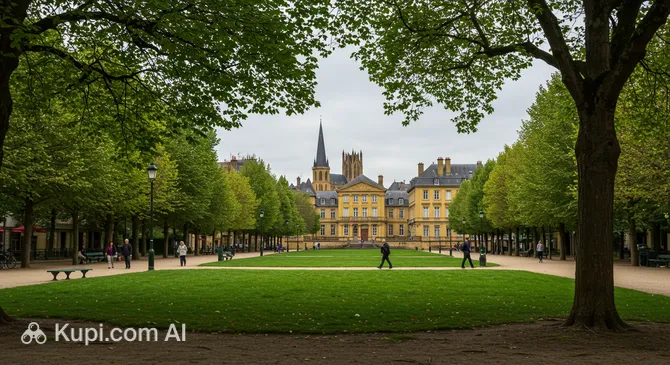
One of the most popular green spaces is the Esplanade Garden of Metz. Located in the heart of the city near Place de la République, this classic French-style garden is perfect for a leisurely promenade. It offers stunning views overlooking the Moselle valley and Mont Saint-Quentin. The park is adorned with statues, fountains, and meticulously manicured lawns, making it a favorite spot for locals to relax. Just a stone's throw away, you can admire the imposing architecture of the Arsenal concert hall and the ancient citadel.
Esplanade Garden of Metz. Illustration.
Source: Kupi.com AI
Traveler photos:
For botany enthusiasts, the Metz Botanical Garden (Jardin Botanique) is an absolute must-visit. Situated slightly outside the city center in Montigny-lès-Metz, this 4.4-hectare landscape garden dates back to 1866. It features a romantic English-style layout with winding paths, rare trees, and vibrant flowerbeds. The garden is also home to large greenhouses that shelter exotic plant species, ranging from cacti to tropical orchids, providing a lush escape regardless of the weather.
Metz Botanical Garden. Illustration.
Source: Kupi.com AI
Traveler photos:
A more modern take on urban nature can be found at the Jean-Marie Pelt Gardens – Seille Park. This extensive 20-hectare park stretches along the Seille River and is designed with ecological sustainability in mind. It blends wild riverside vegetation with landscaped areas, featuring meadows, reed beds, and playgrounds. It is an excellent location for jogging, cycling, or simply observing the local wildlife, including storks and herons that frequent the riverbanks.
In terms of museums, Metz offers rich cultural experiences beyond the famous Centre Pompidou-Metz. History buffs should explore Fort Queuleu. Originally built as a military fortification in the 19th century, it served as a detention center and internment camp during World War II. Today, it stands as a poignant memorial and museum dedicated to the resistance and deportation, offering guided tours that delve into this somber chapter of history while preserving the site's architectural integrity.
Another architectural gem that serves as a testament to the city's past is the Governor's Palace of Metz. While primarily an administrative building, its exterior is a museum-piece in itself. Built during the German annexation in the early 20th century, this massive Neo-Renaissance structure stands in stark contrast to the French classicism of the nearby Esplanade. Its turreted silhouette and intricate stonework make it one of the most striking landmarks in the Imperial Quarter.
Governor's Palace of Metz. Illustration.
Source: Kupi.com AI
Traveler photos:
For a truly authentic experience, take a walk along the "Promenade des Remparts." This path follows the old city walls and the banks of the Moselle, offering hidden views of medieval towers and the backs of historic houses that you might miss from the main streets. It is a peaceful route that perfectly captures the harmonious relationship between the city's stone heritage and its abundant waters.
Getting Around
Public transport in Metz is managed by a network known as LE MET', which offers a modern and efficient way to explore the city and its suburbs. While the city does not have a traditional underground metro or tram system, it boasts an innovative Bus Rapid Transit (BRT) service called Mettis. These high-capacity, multi-section vehicles resemble trams in appearance and run on dedicated lanes, ensuring punctuality and speed. The two main lines, Mettis A and Mettis B, connect key locations such as the main railway station, the Centre Pompidou-Metz, Place de la République, and the university campuses, making them the most convenient option for tourists.
Complementing the Mettis lines is a comprehensive network of standard buses that cover neighborhoods not served by the main corridors. For visitors staying in the historic center, the free city shuttle (Navette de Centre-Ville) is particularly useful. This compact minibus loops through the pedestrian zones and narrow streets of the downtown area, allowing passengers to hop on and off at various points of interest without purchasing a ticket. The entire fleet is designed to be accessible and user-friendly, with clear digital displays and voice announcements helping non-French speakers navigate easily.
The payment system is integrated and straightforward. Travelers can purchase a rechargeable contactless card, often referred to as "Le Ticket," which can be loaded with single trips or day passes. Tickets are available at vending machines located at all Mettis stops, which accept both cash and credit cards. You can also buy them at the "Espace Mobilité" office in Place de la République or at approved tobacco shops. For added convenience, mobile apps allow users to buy tickets directly on their smartphones. Prices are reasonable, with a single journey costing under two euros and day passes offering excellent value for unlimited travel.
Operating hours for the network are tourist-friendly, with Mettis lines typically running from early morning, around 5:00 AM, until approximately midnight, extending slightly later on weekends. Regular bus lines may stop earlier in the evening. A crucial rule to remember is that you must validate your ticket every time you board a vehicle, including when transferring between buses. Validators are located near the doors inside the bus. Failure to validate can result in a fine, even if you have a valid ticket on you.
For those who prefer active mobility, Metz is a bike-friendly city with a dedicated rental service called VELOMET'. Visitors can rent bicycles for a few hours or several days from stations near the train station and the cathedral. The city's flat terrain and extensive network of cycle paths make this a pleasant alternative. Taxis are also available, primarily waiting outside the railway station, or they can be booked via phone and ride-sharing apps. However, given the compact nature of the city center, walking remains one of the best ways to soak in the atmosphere, with public transport serving perfectly for longer trips to museums or parks on the outskirts.
Accommodation
Finding the perfect place to stay in Metz is an easy task, as the city offers a wide range of accommodation options to suit every preference and budget. From luxurious establishments housed in historic military buildings to charming boutique hotels and reliable international chains, the hospitality scene here is as diverse as its architecture. Most visitors choose to stay within the city center or near the train station, where the main attractions are easily accessible on foot or by public transport.
For those who want to be in the heart of the action, the Historic Center is the ideal location. Staying here places you just steps away from the magnificent Metz Cathedral and the lively pedestrian streets filled with shops and cafes. This area is perfect for first-time visitors who wish to soak up the city's medieval charm. Hotels in this district often occupy beautifully restored old buildings, offering a unique blend of character and modern comfort. You will also be close to the Metz Covered Market, making it convenient for food lovers to explore local gastronomy.
Another popular area is the Imperial Quarter (Quartier Impérial), located near the majestic railway station. This district is renowned for its grand, heavy stone architecture dating back to the German annexation. It is a strategic choice for travelers arriving by train or those planning to explore the wider region. The area offers a selection of mid-range and upscale hotels that provide spacious rooms and easy access to the Centre Pompidou-Metz, which is just a short walk away via the station underpass.
If you prefer a more contemporary setting, consider the developing Amphitheater District. Situated behind the train station, this modern hub is home to the Muse shopping and leisure complex. Hotels here are typically newer, offering sleek designs and up-to-date amenities. This location is particularly convenient for business travelers or those attending events at the nearby congress center, while still being within walking distance of the historic sights.
Prices in Metz are generally reasonable compared to larger French tourist hubs, but it is always wise to book in advance. This is especially true during the month of December, when the city's famous Christmas markets and the The Lantern Trail attract thousands of visitors, causing room rates to rise and availability to drop quickly. Whether you choose a cozy room with a view of the Moselle River or a functional suite near the transport hubs, you will find a welcoming base for your stay.
Nearby Cities
For those looking to explore the surroundings, Metz serves as an excellent base for day trips to several interesting nearby locations:
City
Population
Distance
Montigny-les-Metz
21 879
3 km
Woippy
14 014
4 km
Maizières-lès-Metz
11 668
10 km
Hagondange
9 287
15 km
Rombas
9 861
16 km
One of the most popular excursions is a visit to Nancy, the former capital of the Dukes of Lorraine. Located less than an hour away, it is renowned worldwide for the breathtaking Place Stanislas, a UNESCO World Heritage site that is often cited as one of the most beautiful squares in Europe. The city is also a haven for Art Nouveau enthusiasts, boasting numerous villas and museums dedicated to the movement, such as the École de Nancy Museum.
Heading north towards the border with Luxembourg, Thionville offers a different slice of history. This riverside town has a rich military past, best experienced by visiting the Fort de Guentrange, a massive fortification that provides panoramic views of the region. The town center invites leisurely strolls along the Moselle River and features the Tour aux Puces, a medieval tower that now houses a museum of local archaeology.
These nearby destinations offer a glimpse into the diverse culture and landscapes of the region, making them perfect additions to your travel itinerary.
Shopping & Souvenirs
Shopping in Metz is a delightful experience that combines the charm of a historic setting with a wide array of retail options. The city center boasts one of the largest pedestrian areas in France, allowing visitors to browse through high-end boutiques, popular international brands, and quirky independent shops without the hassle of traffic. Whether you are looking for the latest fashion trends, local artisanal crafts, or regional culinary specialties, the city offers a diverse shopping landscape that caters to all tastes.
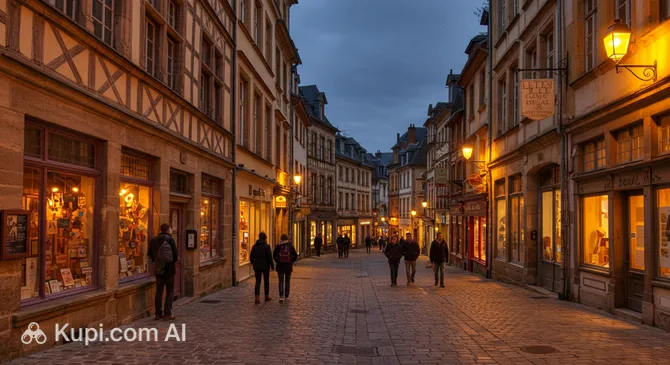
The primary retail activity is concentrated along two main arteries: Rue Serpenoise and Rue des Clercs. These bustling pedestrian streets are lined with major department stores, fashion chains, and beauty shops, making them the go-to destination for window shopping and wardrobe updates. For a more unique experience, head to the picturesque Rue Taison. Located near the cathedral, this narrow, cobblestone street is famous for its "Graoully" dragon effigy hanging above the path and is home to charming boutiques selling jewelry, home decor, and toys.
For those who prefer a modern, all-in-one shopping environment, the city features the impressive Muse shopping center. Situated in the Amphitheater District right next to the Centre Pompidou-Metz, this creative retail hub hosts over 100 shops and restaurants. Its contemporary architecture and curated selection of fashion and lifestyle brands make it a favorite spot for locals and tourists alike.
Muse. Illustration.
Source: Kupi.com AI
Traveler photos:
No shopping trip to Metz would be complete without visiting the Metz Covered Market. While it is a culinary hotspot for lunch, it is also the perfect place to purchase authentic regional products to take home. Here, you can find vacuum-packed cheeses, cured meats from Lorraine, and fresh local produce. It serves as a vibrant showcase of the region's gastronomy, bustling with activity from Tuesday to Saturday.
When searching for souvenirs, the golden Mirabelle plum is the star of the show. You can buy it in many forms, including jams, candies, teas, and the famous Mirabelle brandy (eau-de-vie). Another popular keepsake is items featuring the Graoully, the legendary dragon of Metz, which appears on everything from mugs to plush toys. Wine lovers should also look for bottles of AOC Moselle wine, a crisp white wine produced in the vineyards surrounding the city.
Most shops in Metz are open from 10:00 AM to 7:00 PM, Monday through Saturday. It is important to note that, like in much of France, the vast majority of stores are closed on Sundays, although exceptions are often made during the festive season in December. Smaller independent boutiques may close for a lunch break between 12:00 PM and 2:00 PM. Payment by credit card (Visa and Mastercard) is widely accepted, but carrying some cash is advisable for small purchases at markets.
Travelers residing outside the European Union may be eligible for a VAT refund (détaxe) on purchases exceeding a certain amount, typically around €100 in a single store. Look for the "Tax Free" sign in shop windows and remember to ask for a refund form at the checkout, which you will need to validate at customs upon leaving the EU.