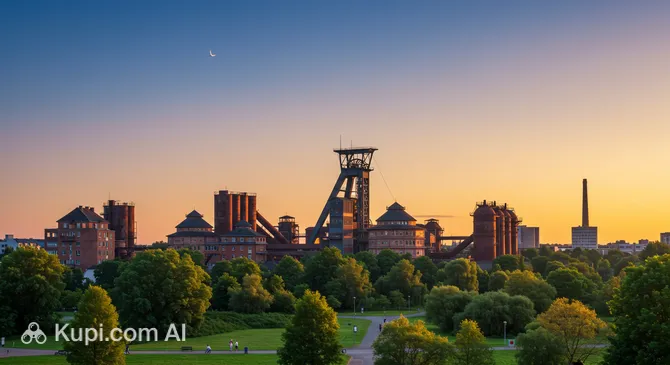
Essen is a vibrant metropolis located in the heart of the Ruhr region in Germany. Often celebrated for its remarkable transformation from an industrial powerhouse to a modern cultural hub, the city offers a unique atmosphere where history and innovation coexist. Situated in the federal state of North Rhine-Westphalia, Essen is home to approximately 582,000 inhabitants, making it one of the country's significant urban centers.
While the city was once synonymous with coal and steel, it has successfully reinvented itself as the "Green Capital of Europe" (a title it held in 2017). Travelers interested in the history of Essen will find a fascinating narrative of change, evolving from its heavy industrial roots into a center for services, arts, and education. Despite its urban character, the city is surprisingly lush, with extensive parks and forests providing a refreshing contrast to its architectural landmarks.
Essen. Illustration.
Source: Kupi.com AI
Visitors are drawn to Essen for its world-class attractions. The most iconic landmark is undoubtedly the Zollverein Coal Mine Industrial Complex, a UNESCO World Heritage Site that is often referred to as the "most beautiful coal mine in the world" due to its stunning Bauhaus architecture. Another highlight is the magnificent Villa Hügel, the former residence of the industrialist Krupp family, which offers a glimpse into the region's wealthy past. For relaxation, Grugapark serves as the city's green lung, featuring botanical gardens, sculptures, and leisure activities for all ages.
Whether you are an architecture enthusiast, a history buff, or a nature lover, Essen provides a diverse and memorable travel experience. We invite you to explore this dynamic city and discover the compelling charm of the new Ruhr area.
Weather Overview
Essen experiences a moderate climate typical of Western Germany, characterized by distinct seasons and frequent cloud cover. The city generally enjoys comfortable summers and cool winters, though travelers should be prepared for precipitation throughout the year. For a detailed forecast during your specific travel dates, you can consult the guide to weather in Essen.
The warmest period occurs from June to August, where average temperatures hover between 18.3°C and 19.4°C, with daytime maximums reaching up to 23.7°C. This is a popular time for visitors, although it is wise to anticipate some rain, as these months typically see around 12 to 15 wet days. Conversely, winters are chilly, with average temperatures in January and February dipping to approximately 3.8°C to 5.1°C. December is usually the dampest month, recording about 19 wet days.
Spring and autumn offer mild and often pleasant conditions, particularly in May and September when average temperatures range from roughly 13.7°C to 15.8°C. Overall, you can expect warm summers with occasional showers and cold, damp winters. Since rain is a possibility in any season, packing layers and a reliable umbrella is recommended for exploring the city comfortably.
Average monthly temperature
Average monthly precipitation
Interesting Facts
Beyond the main attractions, Essen holds many fascinating secrets that reveal its depth as a cultural and historical treasure trove. While its industrial past is well-documented, few visitors realize the city's significant contributions to religious art, urban planning, and modern design.
Hidden within the Essen Cathedral is the Golden Madonna, an artifact of immense historical value. Dating back to approximately 980 AD, this statue is widely acknowledged as the oldest known fully plastic sculpted figure of the Virgin Mary in the world, making it a pivotal piece in Western art history.
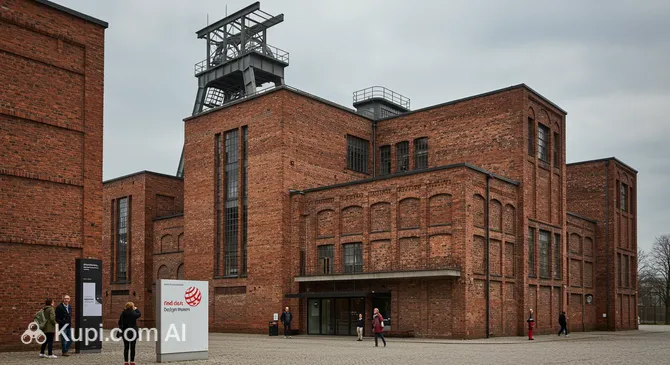
The city is home to the Red Dot Design Museum, which offers a striking contrast between old and new. Located inside the former boiler house of the Zollverein coal mine, it houses the world's largest exhibition of contemporary design, displaying over 2,000 everyday objects from around the globe in a rugged industrial setting.
Essen features the historic Margarethenhöhe district, which is often celebrated as Germany's first "garden city." Established by Margarethe Krupp in the early 20th century, this settlement was designed to provide high-quality housing for workers and remains a beautifully preserved example of humane urban architecture.
The Museum Folkwang holds a special place in the art world as one of the first museums of contemporary art in Europe. Founded in 1902, it played a pioneering role in making modern art accessible to the public and continues to showcase masterpieces of painting, sculpture, and photography.
Red Dot Design Museum. Illustration.
Source: Kupi.com AI
Traveler photos:
How to Get There
Reaching this dynamic city in the Ruhr region is straightforward thanks to its excellent transport connections. For a complete guide on travel options, you can read more about how to get to Essen. The city is well-integrated into the German transport network, making arrival easy whether you are flying or taking the train.
The city of Essen does not have its own airport, but you can fly into Dusseldorf International Airport (IATA: DUS) in the city of Dusseldorf, which is about 26.5 km from Essen. As a major international hub with high passenger traffic, it offers numerous flight connections. Reaching Essen from here is very convenient, taking approximately 25 to 30 minutes by train or car. Another viable option is Dortmund Airport (DTM) in Dortmund, located roughly 41.5 km away. This regional airport is accessible via a drive of around 35 to 45 minutes. Travelers may also consider Cologne Bonn Airport (CGN) in Cologne, situated about 65 km from Essen; the journey typically takes around 50 to 60 minutes by car.
For clarity, here is a summary of the main airports:
Traveling by train is often the most efficient way to arrive. The city is served by Essen Hauptbahnhof (ESZ), which is located directly in the city center, just 1.0 km from the main attractions. As a major railway hub with very high annual passenger traffic, it connects Essen to major cities throughout Germany and Europe via high-speed ICE and regional trains.
Essen offers a compelling mix of industrial heritage, expansive green spaces, and rich cultural history. The city's landmarks tell the story of its transformation from a coal and steel giant to a modern center of art and leisure. Below are some of the top places to visit that capture the unique spirit of this metropolis.
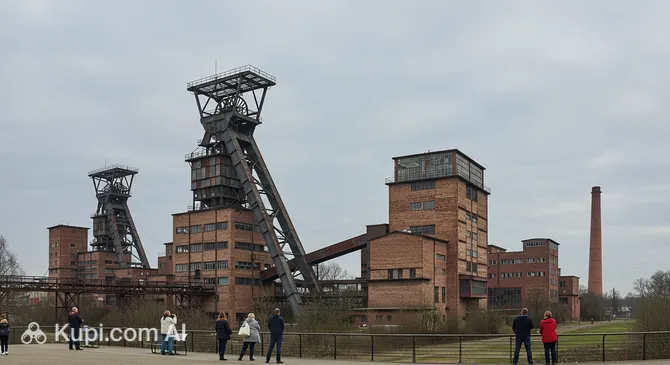
No visit to Essen is complete without exploring the Zollverein UNESCO World Heritage Site. Once the largest coal mine in the world, it is now an architectural icon and a vibrant cultural center. Visitors can marvel at the impressive Bauhaus-style Shaft XII, often called the "Eiffel Tower of the Ruhr," and wander through the vast industrial grounds which have been reclaimed by nature. It is a fascinating place to understand the region's history while enjoying contemporary art and design events hosted on-site.
Zollverein UNESCO World Heritage Site. Illustration.
Source: Kupi.com AI
Traveler photos:
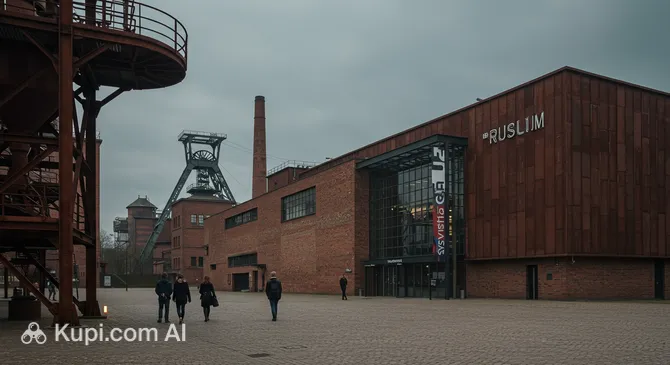
Located directly within the Zollverein complex is the Ruhr Museum. Housed in the former coal washery, this museum offers a deep dive into the natural and cultural history of the Ruhr area. The journey begins at the top, accessed by a spectacular external escalator, and leads visitors downwards through exhibitions that showcase everything from the region's geological formation to its industrial era and present-day identity. The setting itself, with its preserved heavy machinery, makes the experience truly atmospheric.
Ruhr Museum. Illustration.
Source: Kupi.com AI
Traveler photos:
For those seeking relaxation and nature, Grugapark Essen is one of the largest and most beautiful urban parks in Europe. It serves as a green oasis in the city, featuring themed botanical gardens, an animal enclosure, and large sculptures. Families will appreciate the playgrounds and the park railway, while others can enjoy the tranquility of the music pavilion or the spa facilities. It is the perfect spot for a leisurely afternoon walk or a picnic.
Grugapark Essen. Illustration.
Source: Kupi.com AI
Traveler photos:
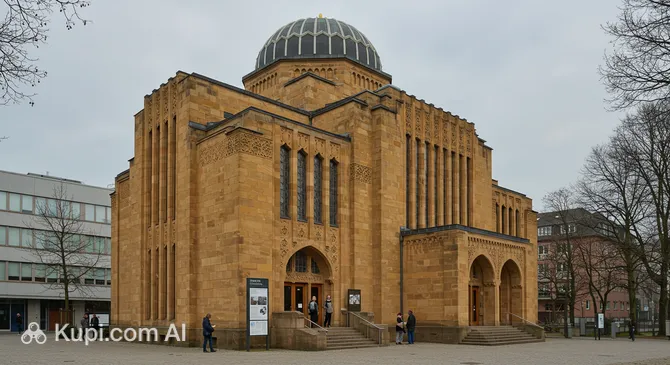
Another significant cultural landmark is the Old Synagogue Essen. This architectural gem is one of the largest and best-preserved free-standing synagogue buildings in pre-war Germany. Today, it serves as a "House of Jewish Culture," offering exhibitions that provide insights into Jewish traditions, history, and contemporary life. The interior is stunningly restored, creating a respectful and educational space for visitors to learn and reflect.
Old Synagogue Essen. Illustration.
Source: Kupi.com AI
Traveler photos:
Local Cuisine
The culinary landscape of Essen is a reflection of the Ruhr region's honest and hearty character, blending traditional Westphalian recipes with the diverse influences of a modern metropolis. The food here is often designed to be comforting and filling, a nod to the city's industrial working-class roots. While you will find international cuisine throughout the city, the local favorites remain grounded in meat, potatoes, and savory sauces.
No visit to the Ruhr area is complete without tasting the iconic Currywurst. This sliced pork sausage, drenched in a spicy ketchup-based sauce and dusted with curry powder, is more than just a snack; it is a cultural institution. You will find it served at "Buden" (traditional kiosks) and snack bars across the city, often accompanied by fries or a bread roll. For a more substantial traditional meal, look for Pfefferpotthast, a spicy beef stew with onions, or Himmel und Äad (Heaven and Earth), a dish featuring mashed potatoes, apple sauce, and fried black pudding.
When it comes to drinks, Essen takes great pride in its local beer culture. The city is home to the private brewery Stauder, and enjoying a freshly tapped "Stauder Pils" is a quintessential local experience. It is a premium pilsner that you will find on the menu in many pubs and restaurants. For a dining experience that combines local flavors with a stunning view, you can visit Jagdhaus Schellenberg. Located high above the Baldeneysee lake, it offers a traditional beer garden atmosphere and hearty German cuisine in a picturesque setting.
Jagdhaus Schellenberg. Illustration.
Source: Kupi.com AI
Traveler photos:
The gastronomic heart of the city beats strongest in the Rüttenscheid district, particularly along the Rüttenscheider Straße (often called the "Rü"). This vibrant street is lined with countless restaurants, cafes, and bars, offering everything from high-end dining to casual street food. It is the perfect place to mingle with locals in the evening. For those looking to combine dinner with world-class entertainment, the GOP Varieté Theatre Essen in the city center provides a unique opportunity to enjoy a seasonal menu while watching spectacular acrobatic shows.
Another beloved aspect of Essen's food culture is the "Trinkhalle" or kiosk. These small shops are historically the social hubs of the neighborhoods. While you can grab a quick coffee or beer there, they are also famous for their "mixed bags" of sweets, a nostalgic treat for many locals. Whether you are grabbing a quick Currywurst on the go or settling down for a roast dinner, eating in Essen is always a warm and welcoming affair.
Travel Tips
To ensure your visit to Essen is as smooth and enjoyable as possible, we have compiled a list of essential practical advice. Whether you are here to explore the industrial heritage or relax in the extensive parks, these tips will help you navigate the city like a local.
Clothing and Gear: The weather in the Ruhr region can be quite changeable, so the best strategy is to pack layers that can be easily added or removed. Bring a waterproof jacket and a sturdy umbrella, as rain showers can occur year-round. Since exploring sites like the massive Zollverein Complex involves a lot of walking, comfortable, flat shoes are a must. Don't forget a power adapter for Type F sockets (standard European two-pin plugs) to keep your devices charged.
Transportation: Essen has an excellent public transport network operated by Ruhrbahn, consisting of trams, buses, and a light rail system (U-Stadtbahn). You generally do not need a rental car to get around the city. Tickets are part of the VRR (Verkehrsverbund Rhein-Ruhr) system; buying a day pass is often the most economical option for tourists. Taxis are available at designated stands, and ride-hailing apps like Uber or Free Now also operate here.
Finances: The local currency is the Euro (€). While credit and debit cards (Visa, Mastercard) are widely accepted in hotels, major restaurants, and large shops, Germany is still somewhat cash-reliant. It is advisable to carry some cash for small purchases at bakeries, traditional kiosks ("Buden"), or smaller cafés. ATMs are plentiful throughout the city. Tipping is customary; leaving around 5% to 10% or simply rounding up the bill is polite service etiquette.
Health and Safety: Essen is generally a safe city for travelers. In case of a medical emergency, dial 112. For minor health issues, look for a pharmacy (marked with a large red "A" for Apotheke); they are knowledgeable and helpful. While the city center is safe at night, it is always wise to stay aware of your surroundings near the main train station after dark, just as you would in any major metropolis.
Communication: The official language is German. However, English is widely spoken, especially by younger people and in tourism-related sectors. Learning a few basic phrases like "Guten Tag" (Good day) and "Danke" (Thank you) is always appreciated by locals. Free Wi-Fi is available in many public areas and cafes, but for consistent connectivity, you can purchase a prepaid SIM card at most supermarkets or drugstores.
Local Etiquette: Germans value punctuality, so try to be on time for any reservations or tours. When entering a shop or restaurant, a simple greeting is the norm. Sunday is traditionally a day of rest; expect most retail shops and supermarkets to be closed, although restaurants, museums, and bakeries (in the morning) usually remain open. Keep your voice down on public transport to respect the local preference for a quiet commute.
What to Avoid: Be very careful not to walk in designated bike lanes, which are often marked in red or located on the sidewalk. Cyclists in Essen move fast and expect their path to be clear. Additionally, avoid jaywalking; locals strictly adhere to pedestrian traffic lights, and crossing on red can result in a fine or disapproving looks.
Shopping Hours: Keep in mind that standard shop opening hours are typically from 10:00 AM to 8:00 PM, Monday through Saturday. Unlike in some other countries, late-night shopping is rare, and as mentioned, Sundays are strictly quiet days for retail. Plan your grocery and souvenir shopping accordingly.
Armed with these practical tips, you are well-prepared to dive into the unique culture and history of Essen. We hope you have a fantastic time discovering the hidden gems and warm hospitality of this fascinating city in the heart of the Ruhr area.
Entertainment & Nightlife
Essen offers a diverse and welcoming nightlife scene that caters to a variety of tastes, from laid-back pubs to energetic dance floors. While it may not have the non-stop intensity of Berlin, the city provides a convivial atmosphere where locals and visitors mingle easily. The nightlife here is less about exclusivity and more about enjoying good company, great drinks, and memorable evenings.
The undisputed heart of Essen’s evening entertainment is the Rüttenscheid district, specifically along the famous Rüttenscheider Straße, affectionately known by locals as the "Rü." This bustling avenue is lined with trendy bars, cocktail lounges, and restaurants that stay open late. On weekends, the street transforms into a vibrant promenade where people hop from one venue to another. The atmosphere is generally smart-casual; you will fit in perfectly with neat, comfortable clothing, though some upscale clubs may expect a more polished look.
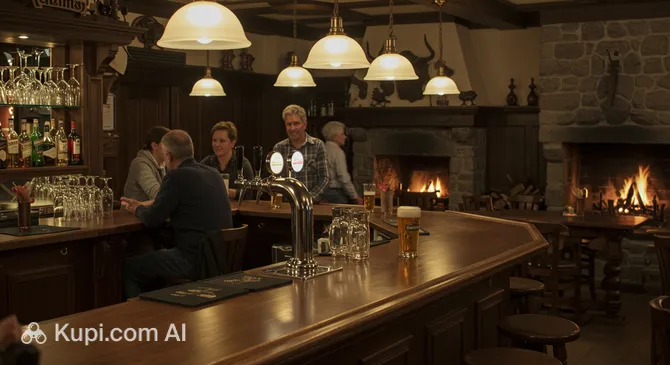
For those seeking a classic pub experience with a bit of an edge, Cafe Nord is a local institution located near the city center. Known for its rock and alternative music vibe, it is a popular meeting point for students and music lovers. It is the perfect place to start your night with a cold beer and lively conversation before heading out to dance.
Cafe Nord. Illustration.
Source: Kupi.com AI
Traveler photos:
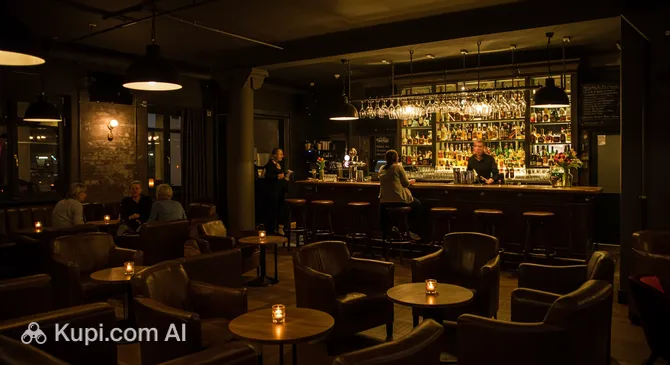
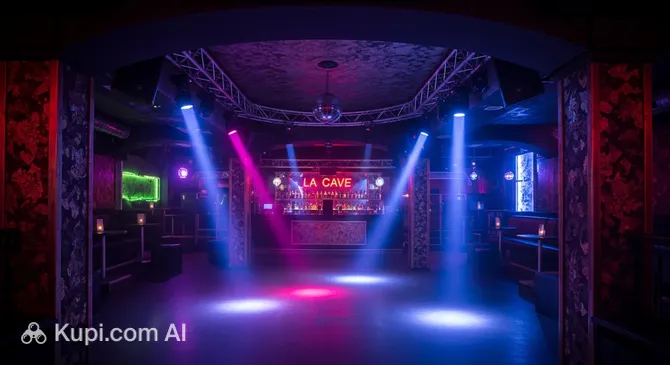
If you are in the mood for clubbing, the city has several options that keep the energy high until the early hours. La Cave is a well-known spot for night owls, offering a mix of chart hits and classics in a cellar-style setting that creates an intimate party vibe. For a more relaxed evening focused on high-quality drinks, you might visit the BZK Shisha & Cocktail Lounge, where you can unwind with flavorful hookahs and expertly crafted cocktails in a modern environment.
La Cave. Illustration.
Source: Kupi.com AI
Traveler photos:
Regarding practicalities, the nightlife in Essen peaks on Friday and Saturday nights. Most bars are open until at least 1:00 AM or 2:00 AM, while clubs often stay open until 5:00 AM. Prices are generally moderate compared to other major German cities, with a beer typically costing between 4 and 5 Euros. Getting around at night is safe and convenient; the Night Express (NE) buses run hourly on weekends, connecting the city center with outlying districts. Taxis are readily available at designated stands or via apps, and walking in the main entertainment districts like Rüttenscheid is considered safe, though standard urban precautions should always be taken.
Beyond the bars and clubs, Essen offers plenty of entertainment during the day and early evening. The city is home to renowned cultural venues like the Aalto Theatre and the Grillo Theatre, which host world-class opera, ballet, and drama. For a more playful experience suitable for groups or families, you can try Blacklight Mini Golf Essen. This indoor attraction features glowing 3D murals and creative obstacles, providing a fun and unique way to spend a few hours before the sun goes down.
Parks & Museums
Essen is widely recognized as one of the greenest cities in Germany, offering a surprising abundance of nature alongside its rich cultural landscape. Beyond the industrial monuments, the city is woven with extensive parklands, forests, and gardens that provide residents and visitors with ample space for recreation. Exploring these green zones and the city's diverse museums reveals the multifaceted character of this modern metropolis.
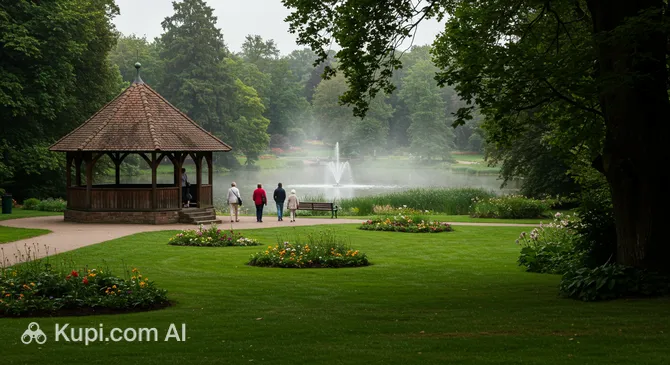
While the vast Grugapark is the city's most famous green space, Krupp Park stands as a fascinating symbol of Essen's structural transformation. Located just a short walk from the city center near the ThyssenKrupp headquarters, this park was created on the site of a former cast steel factory. Today, it features a scenic lake, rolling hills, and forest areas, offering a perfect blend of urban design and nature. It is a popular spot for jogging, walking, and enjoying the view of the modern skyline contrasting with the greenery.
Krupp Park. Illustration.
Source: Kupi.com AI
Traveler photos:
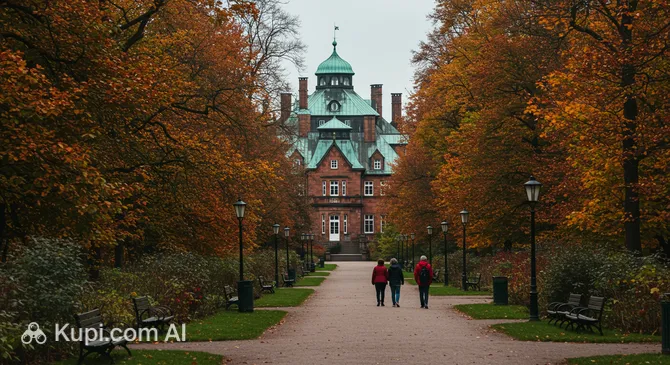
For a more traditional park experience in the heart of the city, the Stadtgarten Essen is the oldest public green area in Essen. Situated adjacent to the Aalto Theatre and the Philharmonic Hall, it serves as a cultural and recreational hub. Visitors can stroll past manicured lawns, old trees, and various sculptures, making it an idyllic place for a lunch break or a quiet moment of reading amidst the bustle of the city.
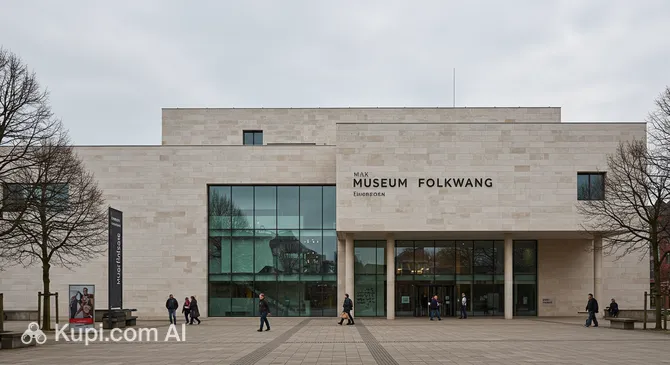
Art enthusiasts will find a world-class collection at the Museum Folkwang. Renowned internationally, this museum presents an outstanding collection of 19th-century painting, classical modernism, and photography. Visitors can admire masterpieces by artists such as Van Gogh, Cézanne, and Gauguin. The building itself, designed by David Chipperfield, is an architectural highlight, and the museum is notable for often offering free admission to its permanent collection, making high culture accessible to everyone.
Museum Folkwang. Illustration.
Source: Kupi.com AI
Traveler photos:
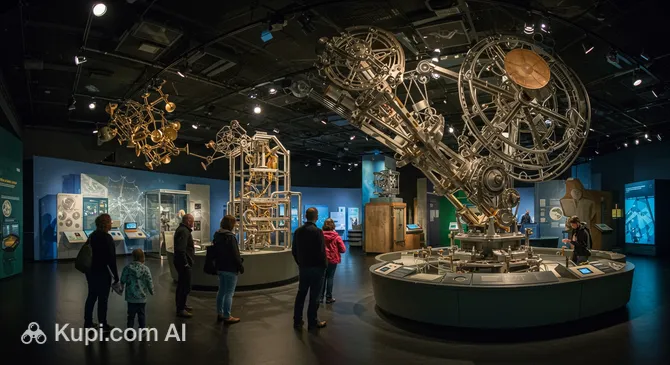
For a completely different museum experience that appeals to families and curious minds, Phänomania Erfahrungsfeld is a must-visit. Located on the grounds of the historic Zollverein coal mine, this interactive museum invites guests to explore the laws of physics and human perception through over 120 experiment stations. It is a hands-on venue where you can engage your senses, from optical illusions to acoustic phenomena, set within the atmospheric backdrop of a former machine hall.
Phänomania Erfahrungsfeld. Illustration.
Source: Kupi.com AI
Traveler photos:
History buffs looking to explore beyond the industrial era should visit the Neue Isenburg Castle Ruins. Perched on a hill overlooking the Baldeneysee lake, these medieval ruins date back to the 13th century. Although only the foundations and parts of the walls remain, the site offers a romantic atmosphere and splendid views of the Ruhr valley, providing a glimpse into the region's feudal past.
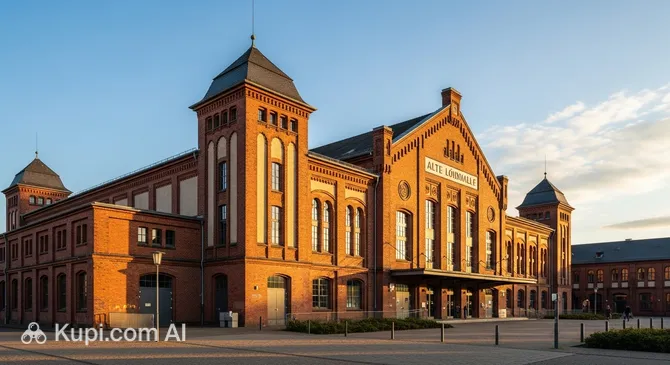
For an authentic local experience, consider visiting the Alte Lohnhalle in the Kray district. This "Old Wage Hall" has been transformed from a mining administrative building into a hotel and cultural center. It is a hidden gem where you can appreciate the beautifully preserved brick architecture and perhaps catch a local event, offering a tangible connection to the daily lives of the miners who once worked there.
Getting Around
Public transport in Essen is efficient, extensive, and well-integrated into the larger regional network, making it easy for visitors to navigate the city without a car. The local system is operated by Ruhrbahn and consists of a combination of the U-Stadtbahn (a light rail system that runs underground in the city center), street-level trams, and a comprehensive bus network. These services connect all major districts, tourist attractions, and neighboring cities, ensuring reliable mobility throughout the day.
The city operates under the VRR (Verkehrsverbund Rhein-Ruhr) tariff system, which means a single ticket is valid across all modes of transport within the designated zone. For most tourists exploring Essen, a ticket for Price Level A is sufficient. Visitors can choose from various options, such as a Single Ticket (EinzelTicket) for a one-way journey or a 24-Hour Ticket and 48-Hour Ticket, which offer unlimited travel for one or up to five people. Tickets can be purchased via the official Ruhrbahn app, the "eezy" electronic tariff system, or at ticket machines located at almost every stop.
Travelers should be aware of a few practical details to avoid fines. If you purchase a paper ticket from a machine, you must validate it before boarding trains or immediately upon entering buses and trams by inserting it into the orange stamping boxes. Ticket machines usually offer instructions in multiple languages, including English. While the main lines run frequently until around midnight, the city also offers a Night Express (NE) bus service that operates hourly on weekends and before public holidays, ensuring safe transport for those enjoying the nightlife.
A unique feature of the local transport network is the KulturLinie 107 (Culture Line 107). This tram line is particularly useful for tourists as it connects the main train station with the southern cultural district (home to the Museum Folkwang) and runs all the way north to the UNESCO World Heritage Site Zollverein. Riding this line effectively serves as a self-guided sightseeing tour, linking many of the city's most significant architectural and historical landmarks.
For those who prefer alternatives to public transit, taxis are readily available at designated stands or can be hailed via apps like Uber and Free Now. The city is also bike-friendly, with the metropolradruhr bike-sharing scheme (operated by nextbike) providing stations throughout the urban area. This allows visitors to rent a bicycle via a smartphone app for short trips or leisure rides through the city's many parks. Additionally, e-scooters from various providers are widely distributed across the city center for quick, short-distance travel.
Accommodation
Finding the perfect place to stay in Essen is relatively easy, as the city offers a broad spectrum of accommodation options to suit various budgets and preferences. As a major business and trade fair hub, the city is well-stocked with modern business hotels, ranging from functional budget chains to upscale international brands. For leisure travelers, there are also charming guesthouses, serviced apartments, and unique boutique hotels often housed in converted industrial buildings, reflecting the region's heritage.
The most convenient area for first-time visitors is the City Center (Stadtkern). Staying here places you within walking distance of the main train station (Essen Hauptbahnhof), the cathedral, and major shopping streets like Limbecker Straße. It is the best choice for those relying on public transport or planning day trips to nearby cities in the Ruhr area. Alternatively, the Rüttenscheid district is highly recommended for those who value nightlife and dining. Located just south of the center, this trendy neighborhood is famous for the "Rü" promenade, lined with cafes, bars, and restaurants, and is close to the Grugapark and the trade fair grounds (Messe Essen).
For a quieter and more scenic experience, consider the southern districts like Werden or Kettwig. These areas are situated along the River Ruhr and near Lake Baldeney, offering a historic, village-like atmosphere with timber-framed houses and easy access to nature. While they are a bit further from the industrial landmarks, they provide a relaxing retreat after a day of sightseeing.
Travelers looking for a truly distinctive stay can immerse themselves in the region's history at the Alte Lohnhalle. This protected monument has been transformed into a hotel, allowing guests to sleep within the architectural beauty of the industrial era. High ceilings and brick aesthetics make it a memorable alternative to standard accommodations.
Alte Lohnhalle. Illustration.
Source: Kupi.com AI
Traveler photos:
Booking Tip: Essen is a major trade fair city, hosting large international events such as the "Essen Motor Show" or the "SPIEL" gaming fair. During these periods, hotel prices can spike significantly, and availability becomes scarce. It is highly checking the trade fair calendar and booking your room well in advance if your visit coincides with a major event. In general, mid-range hotels typically cost between €70 and €120 per night, and booking via major online platforms is the most convenient method to secure the best rates.
Nearby Cities
For those looking to explore the surroundings, Essen serves as an excellent base for day trips to several interesting nearby locations:
Just a short distance away lies Duisburg, a city that has masterfully repurposed its industrial past. It is world-famous for the Landschaftspark Duisburg-Nord, a decommissioned ironworks that has been transformed into a unique public park. Visitors can climb old blast furnaces for panoramic views, explore light installations by night, or even dive in a former gasometer.
Bochum is another essential stop in the Ruhr area, offering a mix of culture and lively atmosphere. It is home to the German Mining Museum, one of the foremost museums of its kind, where you can descend underground to experience the life of a miner. In the evening, the "Bermuda3eck" district comes alive with its high concentration of bars and restaurants.
For shopping and exhibitions, Oberhausen is a top choice. The city features the Gasometer, an enormous former industrial gas holder that now hosts spectacular large-scale art exhibitions. Nearby is CentrO, one of Europe's largest shopping and leisure centers, providing ample entertainment options for the whole family.
City
Population
Distance
Gelsenkirchen
260 126
8 km
Bottrop
117 383
10 km
Mülheim
170 921
11 km
Oberhausen
209 566
12 km
Hattingen
54 562
13 km
These nearby destinations offer a glimpse into the diverse culture and landscapes of the region.
Shopping & Souvenirs
Shopping:
Essen has long held the reputation of being the "Shopping City" of the Ruhr region, attracting visitors from all over North Rhine-Westphalia. The city offers a comprehensive retail experience that ranges from bustling pedestrian zones filled with high-street favorites to charming neighborhoods known for their independent boutiques. Whether you are looking for international fashion brands, luxury items, or unique local products, the city provides a diverse shopping landscape that caters to every taste and budget.
The heart of the action lies in the city center, specifically along the two main pedestrian arteries: Kettwiger Straße and Limbecker Straße. These streets form one of the busiest shopping miles in Germany, lined with major department stores, shoe shops, and well-known fashion chains. For a more exclusive and relaxed atmosphere, travelers should head to the Rüttenscheid district. The Rüttenscheider Straße, or "Rü," is famous for its owner-operated boutiques, concept stores, and delicatessens, offering a perfect alternative to the mainstream offerings of the city center.
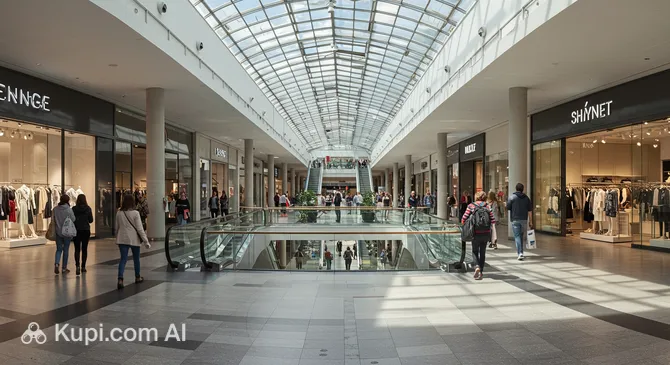
A major highlight for shopaholics is Limbecker Platz, one of the largest inner-city shopping centers in Germany. With over 200 shops spread across three floors, it offers everything from electronics and fashion to groceries and dining. Its modern architecture and vast selection make it a convenient one-stop destination, especially on rainy days. Another notable location is the Kronenberg Center, located near the Altendorf district, which provides a mix of large retail stores and everyday conveniences.
Limbecker Platz. Illustration.
Source: Kupi.com AI
Traveler photos:
For those who enjoy the atmosphere of open-air commerce, Essen's markets are a delight. The Rüttenscheider Markt at Rüttenscheider Stern is particularly popular among locals for its fresh regional produce, flowers, and gourmet snacks. It is a great place to experience the local lifestyle on Wednesdays and Saturdays. Additionally, if you visit during the holiday season, the Essen Christmas Market is widely considered one of the most beautiful in the country, featuring medieval stalls and a canopy of lights that transform the city center into a festive wonderland.
When looking for souvenirs, the city's industrial heritage offers unique inspiration. Items related to mining, such as "Brikett" (coal briquette) replicas or clothing from local labels like "Grubenhelden" (which incorporate original miner's workwear fabric), make for meaningful gifts. Merchandise from the local private brewery, Stauder, is also a popular choice for beer enthusiasts. For something more traditional, shops near the cathedral often sell high-quality replicas of religious art or regional Westphalian specialties.
Standard opening hours for most shops in the city center are from 10:00 AM to 8:00 PM, Monday through Saturday. Smaller boutiques in neighborhoods like Rüttenscheid may close earlier, around 6:30 PM or 7:00 PM. It is important to remember that, in accordance with German law, almost all shops are closed on Sundays, except for bakeries and shops within the main train station. While major credit and debit cards (Visa, Mastercard) are widely accepted in malls and large stores, carrying some cash (Euros) is still advisable for smaller cafes, market stalls, and kiosks.
Tourists residing outside the European Union are eligible for a VAT refund on purchases exceeding a certain amount. Look for the "Tax Free" signage in store windows. You can request a tax refund form at the checkout, which must be stamped by customs upon your departure from the EU to claim your money back.