Support

Koblenz

About

Koblenz is a captivating destination situated at the scenic confluence of the Rhine and Moselle rivers, a meeting point famously known as the Deutsches Eck (German Corner). As one of the oldest and most beautiful cities in Germany, it serves as a gateway to the romantic Upper Middle Rhine Valley, a UNESCO World Heritage site. The city seamlessly blends over two millennia of heritage with a lively, modern atmosphere, making it a favorite stop for river cruisers and cultural travelers alike.
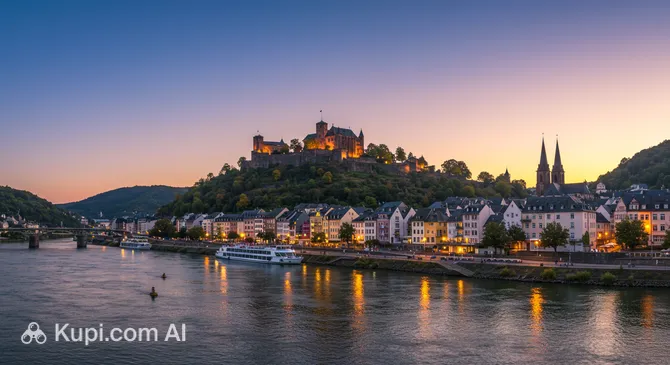
Koblenz. Source: Kupi.Binoculars

Geographically located in the federal state of Rhineland-Palatinate, Koblenz is home to approximately 114,000 residents. The city enjoys a relatively mild climate due to its river valley location, which is also ideal for the vineyards that terraced the surrounding hills. Visitors are often drawn to the deep and fascinating history of Koblenz, which dates back to Roman times when it was established as a military post around 9 B.C.

The city boasts several must-see attractions that highlight its strategic importance through the ages. The majestic Ehrenbreitstein Fortress, one of the largest preserved fortresses in Europe, towers above the Rhine and offers breathtaking panoramic views. It is easily accessible via a spectacular cable car ride across the river. Down in the city center, the Basilica of St. Castor stands as the oldest church in Koblenz, featuring impressive Romanesque architecture and beautiful gardens.

Whether you are strolling through the charming lanes of the Old Town, enjoying a glass of local Riesling, or admiring the monumental statue of Emperor William I at the river junction, Koblenz offers a unique travel experience. It is a city that invites you to slow down and appreciate the harmonious blend of nature, history, and culture.
Weather Overview

Koblenz generally experiences a moderate climate with four distinct seasons, offering a pleasant atmosphere for exploration throughout much of the year. To ensure you are prepared for your visit, it is a good idea to review the current weather in Koblenz before you travel. The city is at its warmest during the summer months of June, July, and August, where average temperatures range from 17.7°C to 19.1°C, with daily highs reaching up to 23.7°C.

In contrast, the winter season brings cooler air, particularly in January and December, when average temperatures dip to between 2.8°C and 3.7°C. While extreme cold is not the norm, minimum temperatures can hover just above freezing. Precipitation is fairly consistent year-round, with the number of wet days ranging from 10 in September to 18 in December, so packing a rain jacket or umbrella is recommended regardless of the season.

Interesting Facts

Beyond its famous river confluence and scenic vineyards, Koblenz holds many fascinating secrets and quirky local legends that often escape the casual observer. From mischievous statues to architectural marvels, the city's history is peppered with unique details waiting to be discovered.
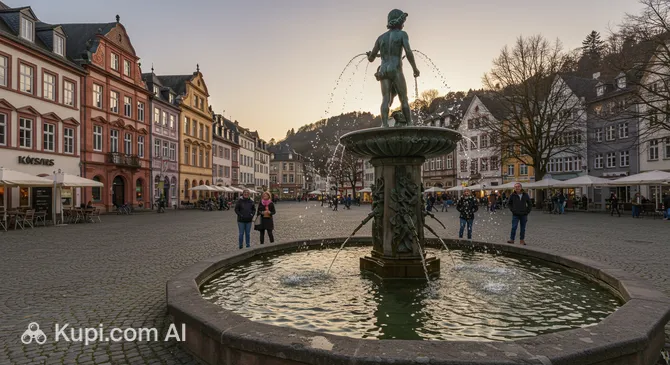
Schängel Fountain. Source: Kupi.Binoculars
  • One of the city's most beloved symbols is the Schängel Fountain, located in the courtyard of the Town Hall. The statue depicts a young boy who unexpectedly spits a stream of water at passersby every few minutes, symbolizing the mischievous nature of the local street urchins from the 19th century. The term "Schängel" itself is a dialect corruption of the French name "Jean," dating back to the time when Koblenz was under French administration.

  • High above the Rhine, the Ehrenbreitstein Fortress was once known as the "Gibraltar of the North" due to its massive fortifications. It is said that during its Prussian era, the fortress was considered impregnable, designed to hold enough provisions to support a garrison of thousands for a long siege without needing outside supplies.

  • If you look up at the clock tower of the Florinskirche in the Old Town, you might spot the "Augenroller" (Eye Roller). This mechanical face rolls its eyes in time with the clock's pendulum and sticks out its tongue every half and full hour. Legend says it depicts a robber baron who, upon being sentenced to death, rolled his eyes and stuck out his tongue at the judges.

  • The city's name, Koblenz, is a direct evolution of its Roman Latin name, "Castellum apud Confluentes," which means "Fort at the Confluence." This ancient moniker perfectly describes its geographic location where the Moselle river flows into the Rhine, a meeting point that has defined the settlement's strategic importance for over 2,000 years.

How to Get There

Reaching this picturesque city at the confluence of the Rhine and Moselle is straightforward due to its central location in Western Germany. Whether you prefer flying or taking the train, there are excellent connections from major hubs. You can find more about how to get to Koblenz and plan your specific route on the detailed transport page.

The city does not have its own airport, but it is well-served by several nearby international hubs. The most popular choice for international travelers is Frankfurt Airport (FRA) in Frankfurt am Main, located approximately 77.5 km from Koblenz. The most efficient way to travel from the airport to Koblenz is by train, with a journey time of approximately 1 hour and 15 minutes directly from the airport's railway stations. Another convenient option is Cologne Bonn Airport (CGN) in Cologne, roughly 66.8 km away, which also offers easy rail connections to the city.

For clarity, here is a summary of the main airports:

Airport Name City Passenger Traffic Km from City
Frankfurt AirportFrankfurt am MainHigh77.5
Dusseldorf International AirportDusseldorfHigh118.0
Cologne Bonn AirportCologneHigh66.8
Frankfurt-Hahn AirportFrankfurt am MainMedium51.0
Frankfurt Egelsbach AirportEgelsbach87.1

Traveling by train is often the most relaxing way to arrive, offering scenic views of the river valleys, particularly along the Left Rhine line. The city is served by Koblenz Hauptbahnhof, which is conveniently located just 0.7 km from the city center. While direct trains are available from many locations, travelers often connect through major hubs like Frankfurt (Main) Hauptbahnhof or Cologne Central Station before taking a regional or long-distance train to Koblenz.

Here is an overview of the nearby railway stations:

Station City Passenger Traffic Km to Center
Frankfurt (Main) HauptbahnhofFrankfurt am MainHigh81.5
Cologne Central StationCologneHigh79.0
Bonn HauptbahnhofCologneMedium54.4
Koblenz HauptbahnhofKoblenzMedium0.7
Messe/Deutz StationCologne78.1

Main Attractions

Attractions:

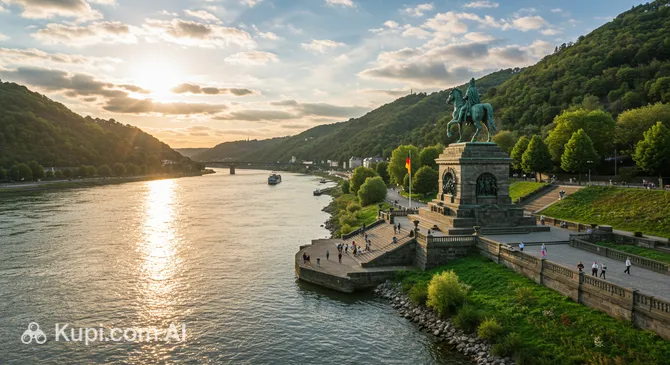
Koblenz is a city defined by its landmarks, where monumental history meets the beauty of the Rhine and Moselle rivers. A tour of the city naturally begins at the German Corner (Deutsches Eck), the iconic headland where the two rivers merge. This site is dominated by the imposing equestrian statue of Emperor William I, making it a favorite spot for photography and riverside walks.

German Corner. Source: Kupi.Binoculars

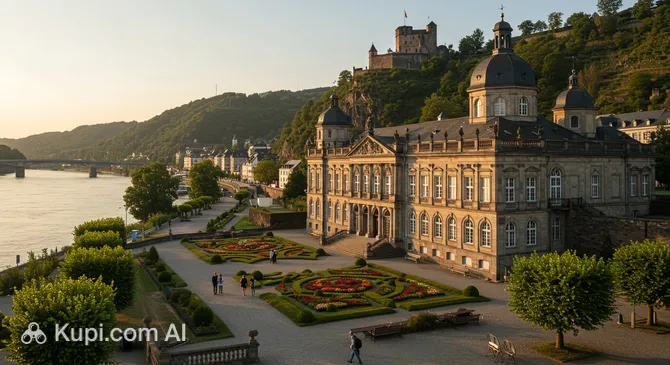
Just across the Rhine from the German Corner sits the majestic Ehrenbreitstein Fortress. As one of the largest preserved fortresses in Europe, it offers fascinating exhibitions and sweeping views of the valley. To reach it, visitors can take the Koblenz Cable Car, which provides a spectacular aerial journey over the river. Back in the city center, the Koblenz Palace (Kurfürstliches Schloss) impresses with its neoclassical architecture and beautifully landscaped gardens, which were significantly restored for the 2011 Federal Horticultural Show.

Koblenz Palace. Source: Kupi.Binoculars

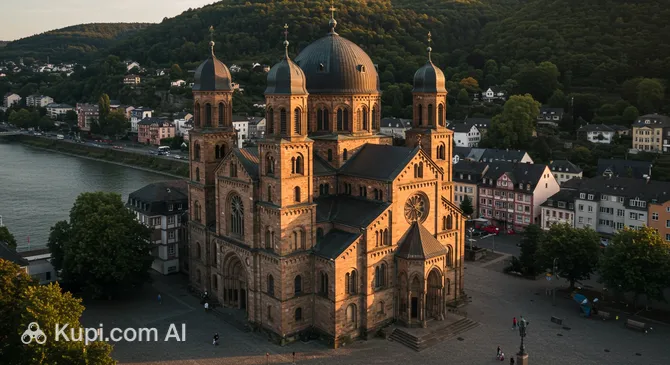
The city's religious heritage is equally compelling. The Basilica of St. Castor, located near the confluence, is the oldest church in Koblenz, dating back to the early 9th century. Its Romanesque design and vaulted ceiling are architectural highlights. A short walk away in the Old Town, the Church of Our Lady (Liebfrauenkirche) stands out with its onion-domed towers, which have become a signature part of the city's skyline.

Basilica of St. Castor. Source: Kupi.Binoculars

For those interested in technical history, the Defence Technology Study Collection Koblenz offers an extensive array of military engineering exhibits. Alternatively, nature lovers can stroll along the Konrad Adenauer Embankment, a scenic promenade that links many of the city's major sights and offers a relaxing atmosphere by the water.

Local Cuisine

The culinary scene in Koblenz is a delightful reflection of its location at the confluence of two famous wine rivers, the Rhine and the Moselle. The local cuisine is grounded in the hearty traditions of the Rhineland-Palatinate region, characterized by robust, savory flavors and a love for potato-based dishes. Dining here is not just about the food; it is about the conviviality of the Weinstuben (wine taverns) and the scenic terraces that line the riverbanks.

The absolute signature dish of the city is Döppekooche. Originally a "poor man's feast" prepared for St. Martin's Day when goose was too expensive, this savory cake is made from grated potatoes, onions, eggs, and spices, usually topped with bacon or sausage. It is baked until it develops a delicious, crispy crust. Unlike the potato pancakes found elsewhere in Germany, Döppekooche is cooked in a cast-iron pot (a "Döppe") and served in thick, satisfying slices, often accompanied by apple sauce.

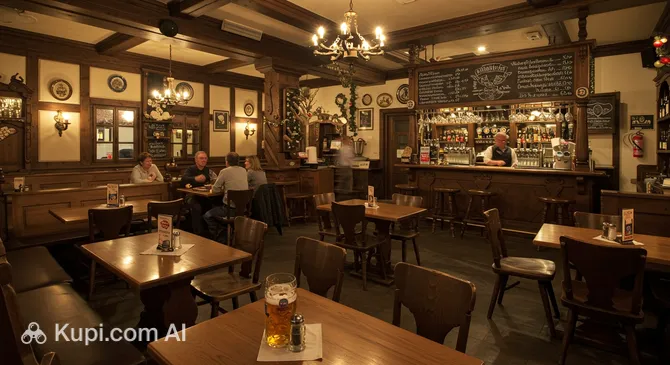
Altes Brauhaus. Source: Kupi.Binoculars

Another regional favorite is Rheinischer Sauerbraten, a pot roast that is marinated for several days in a mixture of vinegar, water, and spices to tenderize the meat. In the Rhineland style, the sauce is often sweetened with raisins or beet syrup to balance the acidity, creating a unique sweet-and-sour flavor profile. It is typically served with potato dumplings and red cabbage, making for a comforting meal, especially in the cooler months. For a taste of traditional German fare in a rustic setting, travelers often visit the Altes Brauhaus, a popular spot known for its hearty portions and authentic atmosphere.

When it comes to drinks, Koblenz is undeniably a wine city. The steep vineyards surrounding the city produce some of the world's finest Riesling wines. Visitors should not miss the chance to try a glass of crisp, mineral-rich white wine from the Middle Rhine or Moselle regions. If you visit in early autumn, look for Federweißer, a young, fermenting wine that is sweet and cloudy, traditionally paired with a slice of warm onion cake (Zwiebelkuchen).

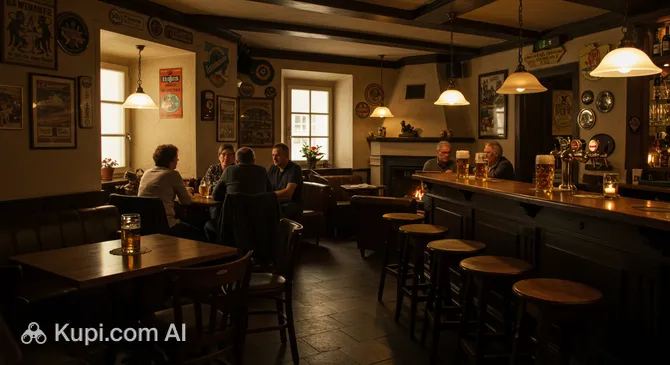
Alt Coblenz. Source: Kupi.Binoculars

While wine takes center stage, beer lovers are also well catered to. The local beer culture is vibrant, with breweries producing excellent pilsners and wheat beers. The Old Town (Altstadt) is the heart of the city's nightlife and dining, filled with cozy pubs and bars where locals gather. Places like Alt Coblenz offer a classic pub environment to enjoy a cold drink after a day of sightseeing. Whether you prefer a sophisticated wine tasting or a relaxed evening with a beer, the city's hospitality ensures a memorable gastronomic experience.

Travel Tips

To help you make the most of your visit to this historic city where the Rhine and Moselle rivers meet, we have compiled a list of essential travel advice. These practical tips will ensure your stay in Koblenz is as smooth and relaxing as a leisurely river cruise.

  1. Clothing and Gear: Koblenz is best explored on foot, so bring sturdy, comfortable walking shoes to navigate the cobblestone streets of the Old Town and the expansive grounds of the fortress. The weather in the river valley can be changeable; it is wise to dress in layers and pack a waterproof jacket or umbrella, even in summer. If you plan to visit religious sites like the Basilica of St. Castor, modest clothing covering shoulders and knees is appreciated.

  2. Transportation: The city center is compact and walkable, making it easy to reach most major attractions on foot. For longer distances, the local bus network (VRM) is efficient and reliable. A rental car is generally unnecessary within the city due to limited and expensive parking; instead, use the spectacular cable car to cross the Rhine to the fortress.

  3. Finances: The official currency is the Euro (€). While credit cards (Visa and Mastercard) are widely accepted in hotels and larger restaurants, smaller traditional Weinstuben (wine taverns), bakeries, and kiosks often prefer cash. ATMs are plentiful, and it is customary to tip by rounding up the bill or leaving 5-10% for good service.

  4. Health and Safety: Koblenz, like the rest of Germany, is a very safe destination for travelers. Pharmacies are marked with a large red "A" and can assist with minor health issues. In case of a serious emergency, dial 112 for ambulance or fire services. The water from the tap is of excellent quality and safe to drink.

  5. Communication: The official language is German, but English is widely spoken in the tourism and hospitality sectors. Locals appreciate it if you start a conversation with a friendly "Guten Tag" (Good day) or "Hallo." Free Wi-Fi is often available in the city center and at major tourist spots, but purchasing a local SIM card at a drugstore or supermarket is a cheap option for constant connectivity.

  6. Local Etiquette: Politeness is highly valued; always greet shopkeepers when entering a store. If you are sharing a table or drinking with locals, remember the golden rule of toasting: look each person in the eye when you clink glasses and say "Prost," otherwise, it is considered rude (and bad luck according to superstition).

  7. What to Avoid: Be very careful not to walk on the designated bicycle lanes, which are often marked in red or located on the sidewalk level; cyclists ride quickly and expect the path to be clear. Additionally, avoid crossing the street at a red pedestrian light, as this is strictly frowned upon and can result in a fine.

  8. Additional Tip: If you plan to visit several museums and use public transport frequently, ask the tourist information center about the "KoblenzCard." It often provides 24-hour access to buses and discounts on entry fees for major attractions, offering great value for a day of sightseeing.

With these practical insights, you are well-prepared to navigate the charming streets and scenic promenades of Koblenz. Whether you are tasting the local Riesling or soaking in the history at the German Corner, you can look forward to a hassle-free and memorable experience.

Entertainment & Nightlife

While Koblenz is renowned for its history, the city transforms as the sun sets over the Rhine and Moselle, offering a vibrant and welcoming nightlife scene. The evening entertainment is largely concentrated in the picturesque Old Town (Altstadt), where the cobblestone streets and historic squares, such as Florinsmarkt and Münzplatz, bustle with activity. Thanks to the local university, the atmosphere is a lively mix of student energy and traditional Rhineland conviviality, making it easy for visitors to mingle with locals.

For those seeking a dynamic night out with music and dancing, Circus Maximus is a cornerstone of the local scene. Located centrally, this versatile venue operates as a cultural hub, bar, and nightclub. Depending on the night, you might encounter a poetry slam, a live concert, or a DJ set spinning tunes late into the night. It is a place where the dress code is relaxed, and the focus is purely on having a good time.

Circus Maximus. Source: Kupi.Binoculars

If you prefer a more conversation-friendly environment with a focus on quality drinks, Drei Hefen is an excellent choice. This modern bar has gained popularity for its selection of craft beers and wines, perfectly paired with their signature tarte flambée. It represents the newer, trendier side of Koblenz's gastronomy and is a perfect spot to start your evening or wind down after dinner.

Drei Hefen. Source: Kupi.Binoculars

Practical advice for enjoying Koblenz at night is straightforward. The city is generally very safe, and walking between venues in the Old Town is comfortable and common. Most bars stay open until 1:00 AM or 2:00 AM on weekends, while clubs typically keep going until the early morning hours. Prices are reasonable compared to larger German cities; expect to pay average prices for beer and cocktails. If you need to travel further, taxis are readily available at designated stands in the city center or can be called by phone.

Beyond the nightlife, Koblenz offers diverse entertainment options for the daytime hours. Culture enthusiasts can explore the extensive collection of historic locomotives at the Koblenz Railway Museum in the Lützel district. For families or those seeking active fun, Salto Koblenz provides an exciting indoor trampoline park experience, perfect for burning off energy regardless of the weather.

Salto Koblenz. Source: Kupi.Binoculars

Parks & Museums

Koblenz is not only a city of rivers and fortresses but also a destination rich in lush green spaces and fascinating cultural institutions. The city's layout, defined by the Rhine and Moselle, naturally integrates scenic promenades and parks, while its museums offer deep dives into technical achievements and regional history.

For a relaxing escape within the city limits, the Konrad Adenauer Embankment (Rheinanlagen) is the perfect place to start. Stretching for approximately 3.5 kilometers along the west bank of the Rhine, this landscaped promenade is one of the most beautiful in Germany. Originally commissioned by Empress Augusta in the 19th century, it features manicured gardens, ancient trees, and plenty of benches to admire the river views. It serves as the city's green lung, connecting the urban center with nature and providing a delightful route for a leisurely stroll or a morning jog.

Konrad Adenauer Embankment. Source: Kupi.Binoculars

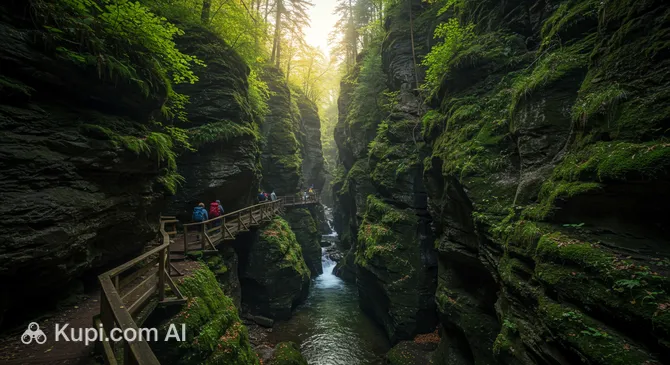
Nature enthusiasts seeking a more adventurous experience should visit the Ruppertsklamm. Located just a short distance from the city center, this dramatic ravine is a designated nature reserve that feels worlds away from the urban bustle. A roughly 1.5-kilometer hiking trail winds through the gorge, requiring visitors to navigate over rocks and small bridges. It is a fantastic spot for those who enjoy outdoor activities and want to experience the rugged natural beauty of the Rhineland landscape.

Ruppertsklamm. Source: Kupi.Binoculars

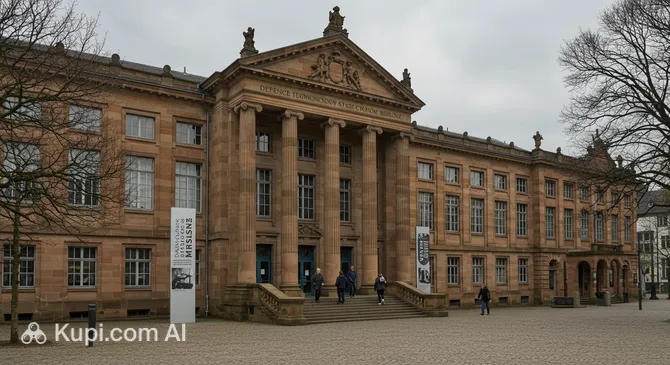
When it comes to museums, Koblenz offers unique collections that appeal particularly to those interested in engineering and technology. The Defence Technology Study Collection Koblenz (Wehrtechnische Studiensammlung) is one of the largest exhibitions of its kind in Europe. Housed in a massive complex, it displays a vast array of military technology, including tanks, aircraft, prototypes, and firearms. The museum provides a comprehensive technical overview of defense engineering throughout the 20th century and is a treasure trove for history buffs and technology fans alike.

Defence Technology Study Collection Koblenz. Source: Kupi.Binoculars

Another highlight for technical enthusiasts is the Koblenz Railway Museum, located in the Lützel district. This museum preserves the heritage of the German railway system, showcasing a variety of historic electric, diesel, and steam locomotives. Visitors can explore vintage carriages and learn about the evolution of rail transport, which played a crucial role in the development of the region.

Beyond technical exhibits, the city's history is artistically chronicled at the Historiensäule (History Column) at Görresplatz. This striking fountain sculpture visualizes the 2,000-year history of Koblenz in ten distinct layers, from Roman times to the present day. Nearby, you can admire the Balduin Bridge, the oldest preserved bridge in Koblenz. Built in the 14th century, this stone arch bridge spanning the Moselle is an architectural masterpiece that has withstood centuries of conflict and flooding.

For a unique perspective, stop by the Pegelhaus (Water Level House) on the Rhine promenade. Originally a crane house and water gauge, it has been transformed into a restaurant with a glass-enclosed viewing platform. It is a wonderful insider spot to watch the ships pass by while enjoying a coffee, offering a blend of historic architecture and modern hospitality.

Getting Around

Public transport in Koblenz is efficient, reliable, and the most convenient way to navigate the city and its surrounding districts. The system is primarily based on an extensive bus network and regional trains, as the city does not have a metro or tram system. The buses, operated largely by the local transport company (koveb), cover the city center thoroughly and connect to outlying neighborhoods. For travel to suburbs or nearby towns along the rivers, the regional trains (Regionalbahn and S-Bahn) are a fast option, stopping at the main station and smaller stations like Koblenz-Stadtmitte.

One of the most unique and scenic modes of transport in the city is the Koblenz Cable Car (Seilbahn). While it serves as a major tourist attraction, it is also a functional link connecting the Konrad-Adenauer-Embankment near the Basilica of St. Castor to the Ehrenbreitstein Fortress across the Rhine. Additionally, small passenger ferries, such as the popular "Liesel" on the Moselle, provide charming shortcuts between the riverbanks during the warmer months, offering a delightful alternative to walking across the bridges.

The city operates within the VRM (Verkehrsverbund Rhein-Mosel) tariff zone, meaning a single ticket is valid for both buses and trains within the designated zones. Travelers can choose from various ticket options, including single journey tickets, day passes (Tageskarte), and group tickets, which often offer better value for couples or families. Prices are reasonable, with a single trip within the city limits costing a few euros, while a day pass allows for unlimited travel until the end of operations on that day.

For tourists, the easiest way to purchase tickets is through the official VRM app or the DB Navigator app, which saves the hassle of carrying cash. Physical tickets can also be bought from yellow vending machines at train stations or directly from bus drivers (usually cash only, small change recommended). If you buy a paper ticket from a machine that is not pre-stamped, remember to validate it in the orange or red stampers located on buses and platforms before starting your journey to avoid fines.

Transport services typically run from early morning, around 5:00 AM, until midnight. On weekends and public holidays, night buses ensure safe travel for those enjoying the nightlife, though they run less frequently. If you prefer more flexibility, taxis are readily available at designated stands, particularly at the main train station and central squares, or can be ordered via phone. Ride-sharing apps are less common than in major metropolises, so traditional taxis remain the standard for private car hire.

Given the city's flat riverside terrain, renting a bicycle is a highly popular alternative. Koblenz is extremely bike-friendly, with dedicated paths running along both the Rhine and Moselle rivers. Bike rental stations are easy to find, and using a bicycle allows you to explore the scenic promenades at your own pace, turning a simple commute into a sightseeing experience.

Accommodation

Koblenz offers a diverse array of accommodation options suited to various budgets and travel styles. Visitors can choose from modern chain hotels, charming family-run guesthouses (Gasthäuser), and holiday apartments. For those who enjoy the outdoors, there are also scenic campgrounds located directly along the riverbanks. Whether you are a backpacker looking for a hostel or a couple seeking a romantic riverside retreat, the city provides a comfortable base for exploring the Upper Middle Rhine Valley.

The most popular area to stay is undoubtedly the Old Town (Altstadt). Booking a room here places you within walking distance of the main historic sights, the lively squares filled with cafes, and the famous German Corner. Alternatively, the districts along the Rhine and Moselle promenades offer hotels with spectacular water views. For a quieter experience, some travelers prefer the district of Ehrenbreitstein across the river, which sits at the foot of the fortress and offers a unique perspective of the city skyline.

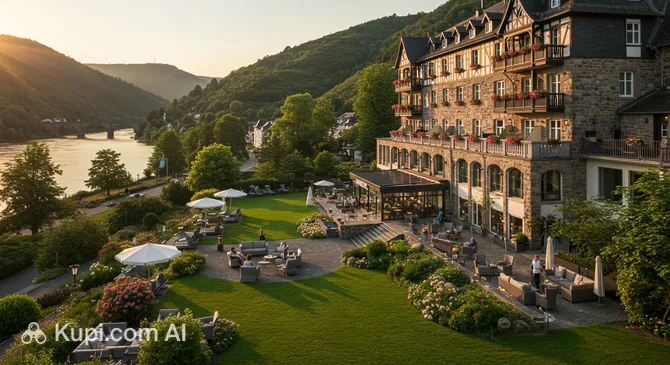
Travelers looking for a blend of contemporary comfort and a relaxing atmosphere might consider WohnGut Koblenz. This resort hotel is a notable example of the high-quality accommodation available in the city, offering modern amenities that cater to both short-term visitors and those planning a longer stay to explore the region.

WohnGut Koblenz. Source: Kupi.Binoculars

Accommodation prices in Koblenz are generally moderate compared to major German metropolises like Frankfurt or Munich. You can expect to find affordable options in the budget range, a wide selection of mid-range hotels, and a few upscale properties. Booking is typically done through major online platforms or directly with the hotels. A crucial tip for travelers is to book well in advance if you plan to visit during the summer months or during major local events, such as the spectacular "Rhine in Flames" festival in August, as hotels fill up very quickly during these peak times.

Nearby Cities

For those looking to explore the surroundings, Koblenz serves as an excellent base for day trips to several interesting nearby locations. The region is dotted with historic towns, scenic vineyards, and architectural gems that are easily accessible by train or car.

One of the most fascinating stops is Andernach, located just a short distance down the Rhine. As one of Germany's oldest cities, it invites visitors to wander along its medieval town walls and explore the "Geysir Andernach," the world's highest cold-water geyser, which erupts on a peninsula in the river. For lovers of half-timbered architecture, a visit to Limburg an der Lahn is highly recommended. The town's historic center is incredibly well-preserved, featuring narrow alleys lined with colorful centuries-old houses, all overlooked by the majestic St. George Cathedral with its seven towers. Additionally, Bad Neuenahr-Ahrweiler offers a delightful mix of spa culture and history, famous for its red wine production and the medieval fortifications that encircle the Ahrweiler district.

City Population Distance (km)
Neuwied65,13712
Limburg an der Lahn35,78335
Andernach30,12615
Bad Neuenahr-Ahrweiler28,25139
Mayen19,33526

These nearby destinations offer a glimpse into the diverse culture and landscapes of the region, making them perfect additions to your travel itinerary.

Shopping & Souvenirs

Shopping:

Shopping in Koblenz is a pleasant experience that ranges from browsing modern retail centers to exploring historic streets lined with independent boutiques. The city's main shopping artery is Löhrstraße, a bustling pedestrian zone that has been a center of commerce for decades. Here, visitors will find a wide array of well-known fashion chains, shoe stores, and department stores, making it the primary destination for a classic shopping spree.

For those who prefer a concentrated selection of shops under one roof, the city boasts two major shopping malls located in the immediate vicinity of the central train station. The Löhr Center is a long-established favorite, housing over 130 shops, cafes, and service providers on three levels. It offers a diverse mix of international brands and local retailers, providing everything from clothing to electronics.

Just a short walk away, the architecturally impressive Forum Mittelrhein stands on the Zentralplatz. With its striking white façade and modern design, this center features around 80 stores and dining options. It forms a modern urban hub together with the adjacent cultural building, the Forum Confluentes, creating a vibrant space for both shopping and leisure.

Away from the large commercial centers, the Old Town (Altstadt) offers a more intimate atmosphere. In the narrow, winding lanes around squares like Jesuitenplatz, you can discover charming owner-operated boutiques, antique dealers, and specialty shops. This is the ideal place to find unique souvenirs, such as a bottle of fine Riesling wine from the nearby vineyards or traditional stoneware pottery from the region.

Travelers should be aware of local opening hours when planning their visit. In line with German regulations, most shops in Koblenz are closed on Sundays, with the exception of bakeries and some stores within the train station. On weekdays and Saturdays, the larger stores and malls typically remain open until 8:00 PM, while smaller boutiques in the Old Town may close earlier.

Reached the end of the page?

That means the route is fully explored