Support

Amsterdam Airport Schiphol

About the Airport

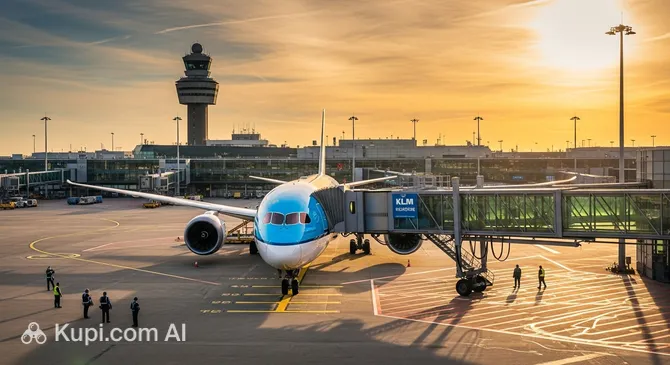
Amsterdam Airport Schiphol. Source: Kupi.com Binoculars

Schiphol Airport is not merely an air gateway to Amsterdam and the Netherlands, but a true city within a city, living its own vibrant life. Its uniqueness begins with its location: the airport is situated approximately 3-4 metres below sea level, on the site of Lake Haarlemmermeer, which was drained in the 19th century. As one of the busiest and most technologically advanced airports in the world, it is designed around the concept of a single large terminal, making navigation and transfers surprisingly convenient for millions of passengers.

IATA Code AMS
ICAO Code EHAM
City Amsterdam
Distance to Centre 17.5 km
Status International
Annual Passengers Over 66 million
Popular Airlines KLM Royal Dutch Airlines, Transavia, Delta Air Lines
Schedule "Schiphol" Online Board

Schiphol is rightfully considered one of the best airports in the world thanks to its meticulously thought-out infrastructure and unique services. It is the only airport in the world with a branch of a national museum. Here, you can visit the exhibition of the famous Rijksmuseum free of charge and view masterpieces of Dutch art without leaving the transit zone. For those wishing to rest in silence or catch up on work, the world's first airport library is open with thousands of books and comfortable armchairs.

The immense Schiphol Plaza shopping centre is accessible to both passengers and general visitors, offering a wide selection of shops and restaurants. For travellers wishing to relax, there are spas, showers, and even a small rooftop park with exercise bikes that generate energy to charge your gadgets. Thanks to convenient navigation, a vast array of services, and thoughtful spatial organisation, waiting for a flight at Schiphol transforms into a pleasant and interesting part of your journey.

Contact Information

  • Official Website: www.schiphol.nl. The site provides all up-to-date information on flights, parking, services, and security regulations.
  • Information Service Phone: You can contact the airport by calling +31 20 794 0800. A chatbot is also available on the website for quick answers to standard questions.
  • Airport Address: Evert van de Beekstraat 202, 1118 CP Schiphol, Netherlands.
  • Email: For most inquiries, the airport suggests using the contact forms on the official website, as this allows your question to be directed to the correct department more quickly.
  • Social Media: Schiphol Airport is actively present on social networks such as Facebook, X (formerly Twitter), and Instagram, where updates are frequently published, and assistance can be obtained.
  • Lost Luggage Information: If your luggage was lost during a flight, you should first contact your airline's representative. If you have lost personal items within the terminal, you must fill out a form in the "Lost & Found" section on the airport's official website.
  • Passenger Support Contacts: The best way to receive support is through the official website ("Contact" section) or via the information service telephone.

How to Get to the Airport

Getting to Schiphol Airport from the centre of Amsterdam or other cities in the Netherlands is possible in several ways. The airport possesses excellent transport infrastructure, making the journey there fast and convenient from almost anywhere in the country. The choice of transport depends on your budget, amount of luggage, and personal preferences.

Train is the fastest and most popular way to reach Schiphol. The railway station is located directly underneath the main airport terminal. Direct trains from Amsterdam Central Station (Amsterdam Centraal) depart every 10-15 minutes, and the journey takes just 15-20 minutes. This is the ideal option to avoid city traffic. A one-way ticket costs approximately 5-6 Euros. Trains also directly connect Schiphol with cities such as Rotterdam, The Hague, and Utrecht.

Bus is an excellent budget alternative. The most well-known route is the Amsterdam Airport Express (Bus No. 397), which departs from stops in the city centre, including Museumplein and Leidseplein. The trip takes about 30-40 minutes depending on traffic. This is a convenient option if you are not staying near the train station. Additionally, many regional buses connect the airport with surrounding towns and districts.

Taxi and Transfer offer maximum comfort, especially if you have a lot of luggage or are travelling with family. Official taxi stands are located at the arrivals hall exits. A trip from central Amsterdam to the airport will take 20-30 minutes (excluding traffic jams) and will cost approximately 40-60 Euros. Car booking services via apps (such as Uber) and pre-booked transfer services are also available, often offering a fixed and more favourable price.

If you plan to travel around the country by car, you can use car rental services. All major international and local rental companies have counters at the airport. Schiphol is easily accessible via the main A4 and A9 motorways. The airport offers various parking options: from short-term P1 right at the terminal to more budget-friendly long-term parking (P3), from where free shuttles run to the terminals. For the best rates, it is strongly recommended to book long-term parking online in advance.

Terminals and Map

Schiphol Airport in Amsterdam is one of the largest and busiest in Europe, yet it is distinguished by a surprisingly logical and convenient structure. The main feature of Schiphol is the "one terminal" concept. All main facilities, check-in counters, security zones, and boarding gates are located under one roof, which significantly simplifies navigation and transfers.

The entire airport can be roughly divided into several key zones:

  • Schiphol Plaza: This is the public area before passing security control. Here you will find check-in counters (divided into Departure Halls 1, 2, and 3), the railway station, shops, cafes, and arrival halls. This is the heart of the airport from where passengers begin their journey.
  • Departure Zones (Lounges): After passing passport and customs control, you enter a vast transit zone, which is divided into several halls (Piers) with boarding exits (Gates), designated by letters.

Terminal Map and Navigation:

Although there is one terminal, it is divided into three departure halls, and gates are grouped by piers. It is important to pay attention to the letter of your gate, as it determines which part of the airport you need to go to.

  • Schengen Zone: Piers B, C, and part of Pier D service flights within the Schengen Agreement. There is no border control between gates here.
  • Non-Schengen Zone: Piers E, F, G, and the upper level of Pier D are intended for international flights outside the Schengen area. Access to these requires passing passport control.
  • Budget Airlines: Piers H and M are often used by low-cost carriers.

Movement between all zones is done on foot. Distances can be significant—a walk from one end of the airport to the other may take up to 20-30 minutes. Convenient travelators are available everywhere to help speed up movement. Navigation at Schiphol is top-notch: clear signs and information boards are installed everywhere, indicating not only the direction but also the estimated walking time to the required gate.

Time for Procedures:

Schiphol is a very busy airport. It is recommended to arrive at least 2 hours before flights within Europe (Schengen) and 3 hours before international flights. During peak seasons and holidays, queues for check-in and security screening can be long, so it is better to have extra time. After passing security control, you may still need to pass passport control if your flight departs from the non-Schengen zone, which also takes time.

Navigation Recommendations:

  • Immediately after check-in or arrival at the airport, find your gate number on the board and follow the signs.
  • Estimate the travel time to your gate indicated on the information screens, and do not leave going there until the last moment.
  • If you have a transfer, check if you need to move from the Schengen zone to the non-Schengen zone (or vice versa), as this will require passing passport control.

Airport History

The history of Schiphol Airport is a fascinating journey from a military airfield to one of the busiest and most modern aviation hubs in the world. Its story began on 16 September 1916, when the "Schiphol" military airfield was founded on the drained Haarlemmermeer polder. Initially, it consisted of a few wooden barracks and a grass landing field. Civil aviation arrived here in 1920, when the first KLM flight took place.

A significant trial for the airport was the Second World War, during which it was almost completely destroyed. However, post-war reconstruction became the starting point for its transformation into a modern airport. A key moment in Schiphol's history was the opening of a new terminal in 1967. This was a revolutionary decision: instead of several scattered buildings, a single large terminal was built, gathering all services under one roof. This "one terminal" concept remains to this day, although the airport has expanded multiple times.

In the following decades, Schiphol continued to grow. In the 1990s, new piers were built, an underground railway station was opened directly linking the airport with major cities in the Netherlands and Europe, and the Schiphol Plaza shopping centre appeared, accessible not only to passengers but to everyone. These modernisations strengthened its status as an "AirportCity"—a full-fledged city with developed infrastructure.

Among Schiphol's achievements are numerous awards as the best airport in Europe and the world. It was one of the first in the world to implement an automated baggage sorting system and is constantly at the forefront of technological innovation. Interesting fact: the name "Schiphol" is thought to translate as "ship's hole" or "ship's haven". This place used to be part of a large lake where ships often sank due to storms. Another unique feature is that the airport is located approximately 4 metres below sea level, making it one of the lowest-lying airports in the world.

Services and Amenities

Schiphol Airport (AMS) is a modern and high-tech complex that offers passengers a wide range of services, making waiting for a flight as comfortable as possible. Here you will find a huge number of shops: from global brand boutiques and electronics to classic Duty Free with souvenirs and delicacies. Gastronomic opportunities are also impressive—numerous cafes and restaurants offer dishes for every taste, from quick snacks to exquisite dinners.

For those who value enhanced comfort, business lounges and VIP lounges operate at the airport, accessible to premium class passengers as well as for a fee to all travellers. Free Wi-Fi is available throughout Schiphol, and conveniently located charging stations for electronic devices will help you stay connected.

Practical matters are easily resolved in the terminals. At your disposal are bank branches, numerous ATMs, and currency exchange points. To care for passenger health, a medical centre and several pharmacies operate around the clock, where you can purchase all necessities.

Schiphol is excellently equipped for travellers with families: for young passengers, there are special play areas and mother-and-child rooms. The airport also provides a full range of services for passengers with reduced mobility, including special assistance and escort, which is recommended to be booked in advance through the airline.

Business travellers can utilise modern conference halls and business centres. And if you have a long layover or an early departure, you can rest in one of the hotels located either directly within the airport territory or in the immediate vicinity, with convenient access to the terminals.

Where to Eat

Schiphol Airport in Amsterdam offers an impressive variety of establishments for every taste and budget, turning the wait for a flight into a genuine gastronomic adventure. Whether you are looking for a quick snack or a full dinner, you will find a suitable option both before and after passing security control.

For those short on time, numerous cafes and eateries are ideal. In the public Schiphol Plaza zone (before security control) and in the departure lounges (airside), chains such as Starbucks and Leon operate, offering healthy fast food. For true Dutch flavour, head to local cafes to try famous "broodjes" sandwiches or fresh stroopwafels. An excellent option for a quick and budget-friendly snack is the Albert Heijn To Go supermarket, where you can buy salads, sandwiches, and drinks.

If you have time for a leisurely lunch or dinner, Schiphol will not disappoint. Full-service restaurants with à la carte menus operate in the airport. For example, at Tastes from the Lowlands, you can enjoy Dutch cuisine, from herring to hearty soups. For lovers of international cuisine, there are establishments such as Jamie's Deli. And at the Heineken Bar, visitors can relax while waiting for boarding.

Schiphol cares for passengers with special dietary needs. In most restaurants and cafes, you will find vegetarian, vegan, and gluten-free dishes. Halal options are also available. Prices range from €7-15 for a quick snack to €25-50 and above for dinner in a restaurant. Most establishments in the departure zones operate from early morning until late evening, and some are open 24 hours to serve passengers on night flights.

Tips for Travellers

To ensure your journey through Schiphol Airport goes as smoothly as possible, take advantage of our tips. This is one of the busiest and most modern airports in Europe, and proper preparation will help save time and reduce stress.

Arrival Time at the Airport. Schiphol is a large and bustling airport. We recommend arriving 2-3 hours before departure for flights within the Schengen zone and at least 3-4 hours for intercontinental flights. This will give you enough time for check-in, luggage drop-off, and passing security control without rushing.

Check-in and Security Control. The fastest way to check in for a flight is to do it online. The airport has self-service check-in kiosks and baggage drop-off points, which also speeds up the process. Schiphol is equipped with modern 3D scanners at security control, thanks to which you often do not need to remove electronics and liquids from your hand luggage. However, rules can change, so it is better to be prepared for the standard procedure.

Choosing a Seat on the Plane. If the airline allows you to choose a seat in advance, take advantage of this opportunity. Window seats offer beautiful views during take-off and landing, while aisle seats provide more legroom and freedom of movement around the cabin. For long-haul flights, consider seats with extra legroom, which are often available for an additional fee.

Hand Luggage Regulations. Standard EU rules apply here: liquids in containers up to 100 ml must be packed in a single transparent bag with a volume of no more than 1 litre. Sharp objects, weapons, and flammable substances are prohibited. All large electronics with lithium batteries (laptops, power banks) must be carried in hand luggage.

For Transit Passengers. Schiphol is one of the most convenient airports for transit. All gates are under one roof, and navigation is very clear. If you are flying from a non-Schengen country to a Schengen country (or vice versa), you will have to pass passport control. During the wait, you can visit shops, restaurants, or even the branch of the Rijksmuseum state museum.

Customs Control. Customs regulations in the Netherlands comply with EU standards. If you are arriving from a country outside the European Union, use the "green channel" if you have nothing to declare, and the "red channel" if you are carrying goods exceeding established limits (for example, large amounts of tobacco or cash).

Saving Time and Money. To save money, bring an empty reusable bottle—after security control, you will find many fountains with drinking water. Getting from the airport to Amsterdam and back is most convenient and cheapest by train, the station for which is located directly under the terminal building. Tickets can be bought at a machine or online.

In Case of Flight Delay. In the event of a delay or cancellation, first contact your airline representative. Under EU rules (EU261), for long delays, passengers are entitled to meals, refreshments, and, if necessary, hotel accommodation. Schiphol Airport has many comfortable waiting areas, business lounges, and even hotels where you can rest.

Reached the end of the page?

That means the route is fully explored